Over the past 24 hours, Hormuz presented a starkly divided picture. A tanker was hit by an unknown projectile and caught fire; the fire was extinguished and everyone rescued, but the security threat remained. At the same time Iran and Oman advanced talks on a temporary joint passage, discussing minesweeping and transit rules while actual maritime risks showed no easing. Qatar's prime minister traveled to Tehran, raising mediation to presidential and parliamentary-speaker level, while the White House said no negotiations were taking place. Economically, Washington pursued maximum pressure through Operation Economic Isolation but remained evasive about the decisive step of sanctioning major Chinese banks. Military, diplomatic and financial pressure tightened together, with no sign of the deadlock easing.
Tanker attack versus temporary passage: reopening cannot remove security and mine risks
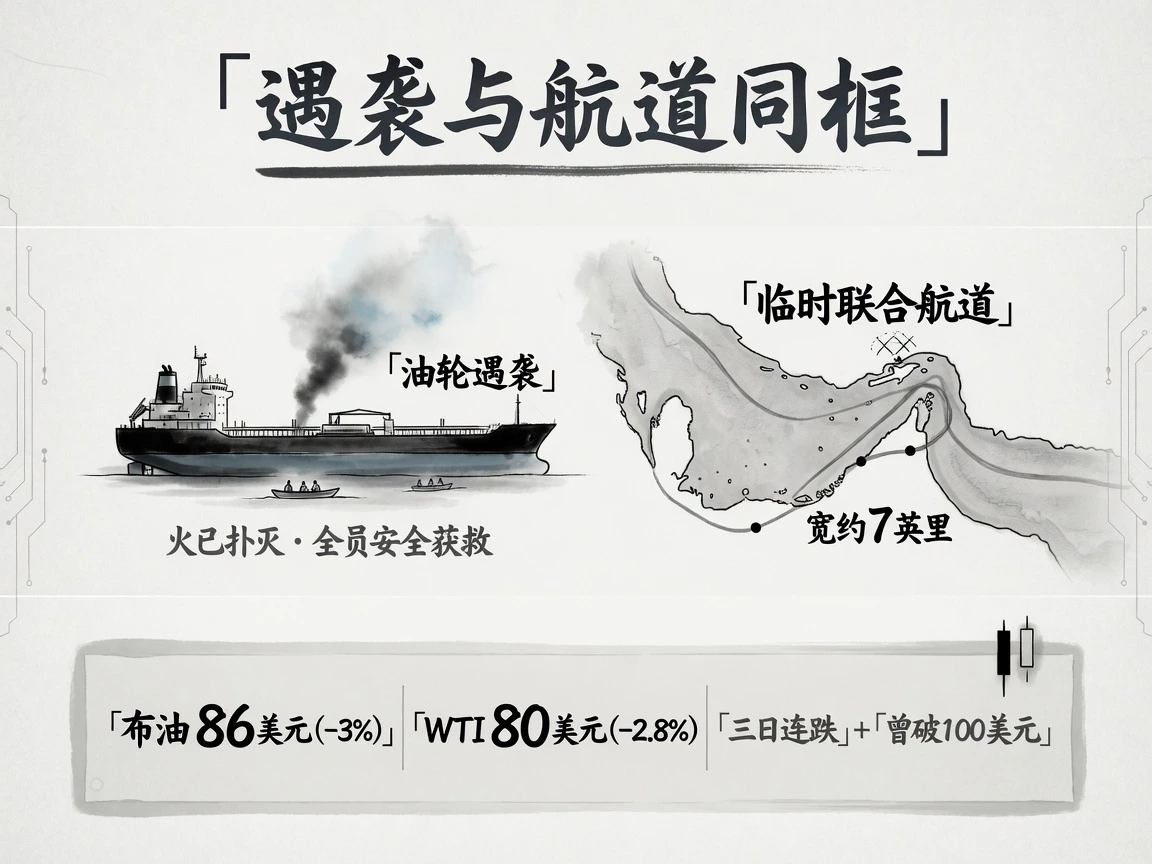
UK Maritime Trade Operations (UKMTO) said Thursday that an unknown projectile struck a tanker in Hormuz, causing a fire that was subsequently extinguished. All crew were reported safe and accounted for, with no pollution reported. The notice identified neither vessel, projectile type nor attacker; motive remained under investigation.
The attack emerged almost simultaneously with progress on Iran–Oman temporary joint-passage talks. Discussed for weeks, the framework covered a temporary transit corridor and joint minesweeping. Iranian official details described a route approximately 7 miles wide through Iranian waters for all merchant vessels entering and leaving the Gulf, likened to a ring road. Tehran stressed that this was only an emergency commercial-transit arrangement, with the strait still closed militarily and full reopening conditional on US fulfillment of commitments. Iran also insisted on closing the previously UN-authorized southern route along Oman's coast, which it had long opposed, forcing traffic both ways through Iranian waters. Oman's official statements did not mention this key demand.
Oman's foreign minister called the outlook positive and said the mechanism would be formalized quickly. A Revolutionary Guard spokesman again claimed agreement on rights and revenue-sharing in the strait, blaming US obstruction for delays. These unilateral claims had circulated only in Iranian state media without independent or third-party corroboration.
Washington remained hard-line. Trump claimed all mines had been cleared or detonated, threatened to destroy any vessel laying more and said US forces monitored every inch of the strait. Defense and maritime experts were more cautious. Chatham House researcher Raab and senior UN demining expert Heslop said Iran's capabilities favored rapid laying and lacked precise meter-by-meter sonar scanning and multi-depth operations. Without exact coordinates of Iran's mines, complete clearance could not be guaranteed. A unilateral reopening declaration could neither eliminate mine risk nor restore confidence among international shippers and protection-and-indemnity (P&I) insurers.
Commodity markets priced the two signals differently. Global crude benchmarks declined for a third session: Brent fell about 3% toward $86 a barrel and WTI 2.8% toward $80, with sentiment generally cautious. Prices had retreated substantially from Brent's levels above $100 early in the conflict. Trading suggested anticipated supply recovery from a possible temporary passage was already driving selling, while the nearly simultaneous tanker attack elicited a muted response and no substantial extra geopolitical premium. The gap between expectations and actual security was the largest near-term uncertainty.
Qatari mediation reaches the highest level; White House says there are no talks
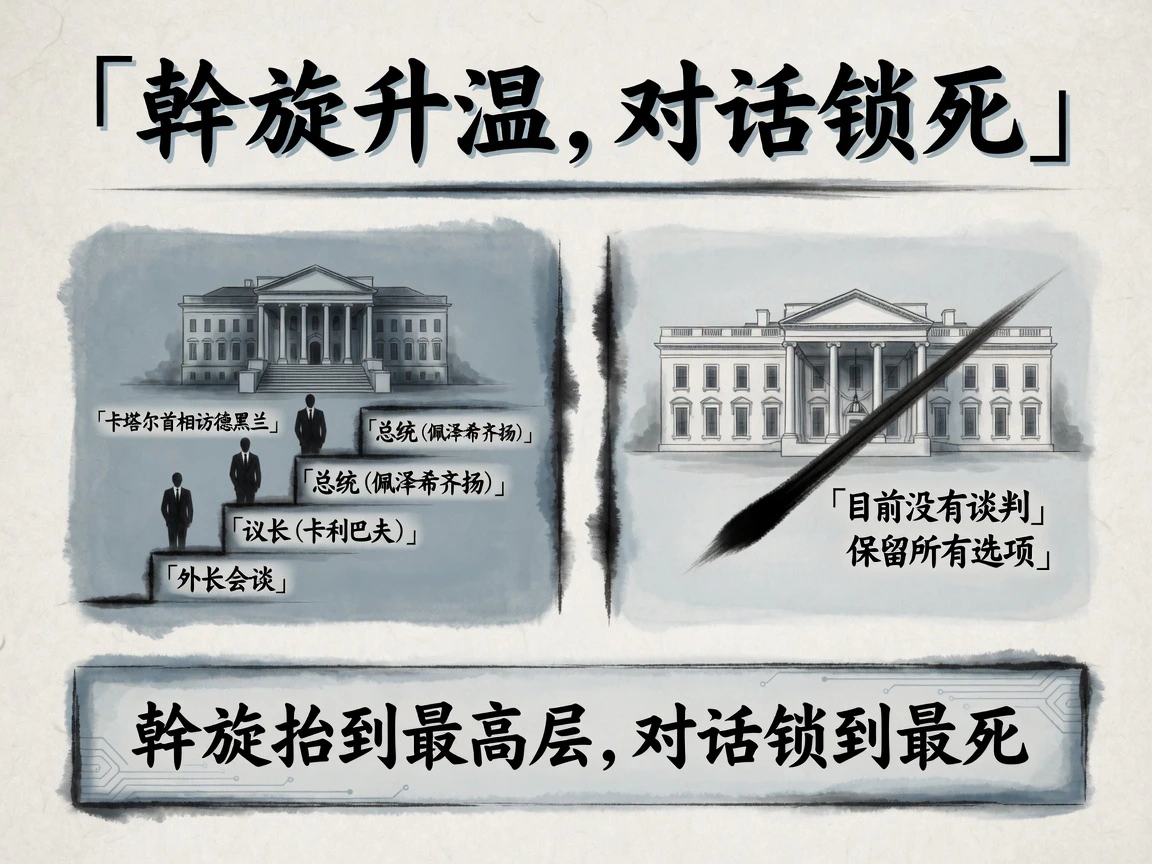
Qatari Prime Minister and Foreign Minister Mohammed bin Abdulrahman visited Tehran Thursday for intensive high-level shuttle diplomacy. He first discussed temporary passage, minesweeping and de-escalation with Araghchi, then met chief negotiator and Speaker Ghalibaf, and finally President Pezeshkian. Qatar's Foreign Ministry urged a rapid restart of diplomacy, describing dialogue as the only viable route to resolving differences and preventing regional loss of control.
Tehran struck a firm posture. Ghalibaf accused the Trump administration of making dangerous decisions based on false information, depriving Iranians of legitimate rights and causing prolonged regional instability. Pezeshkian said Iran's demands rested on sovereignty and lawful rights and it would not yield to external pressure or military coercion. Qatar and Pakistan chiefly relayed and coordinated indirect US–Iran messages, while Oman separately led shuttle negotiations on Hormuz transit.
Washington quickly cooled mediation expectations. White House Press Secretary Leavitt said there were no US–Iran negotiations and that this would not change until the president judged Iran had returned meaningfully to the table, something Washington had not seen. She reiterated that all options remained available, saying Operation Epic Fury had severely damaged Iranian military power and Operation Economic Isolation was now aimed at destroying its economic foundations.
The firm US stance rapidly chilled Qatar's prominent effort and renewed scrutiny of the previous week's much-discussed claim. Trump had said a direct channel existed with the Revolutionary Guard, which promptly denied it. Regional allies raised mediation to heads of state while Washington closed the door on direct dialogue, leaving diplomatic contacts deeply disconnected.
Economic warfare encounters implementation limits: China-related financial sanctions remain unresolved
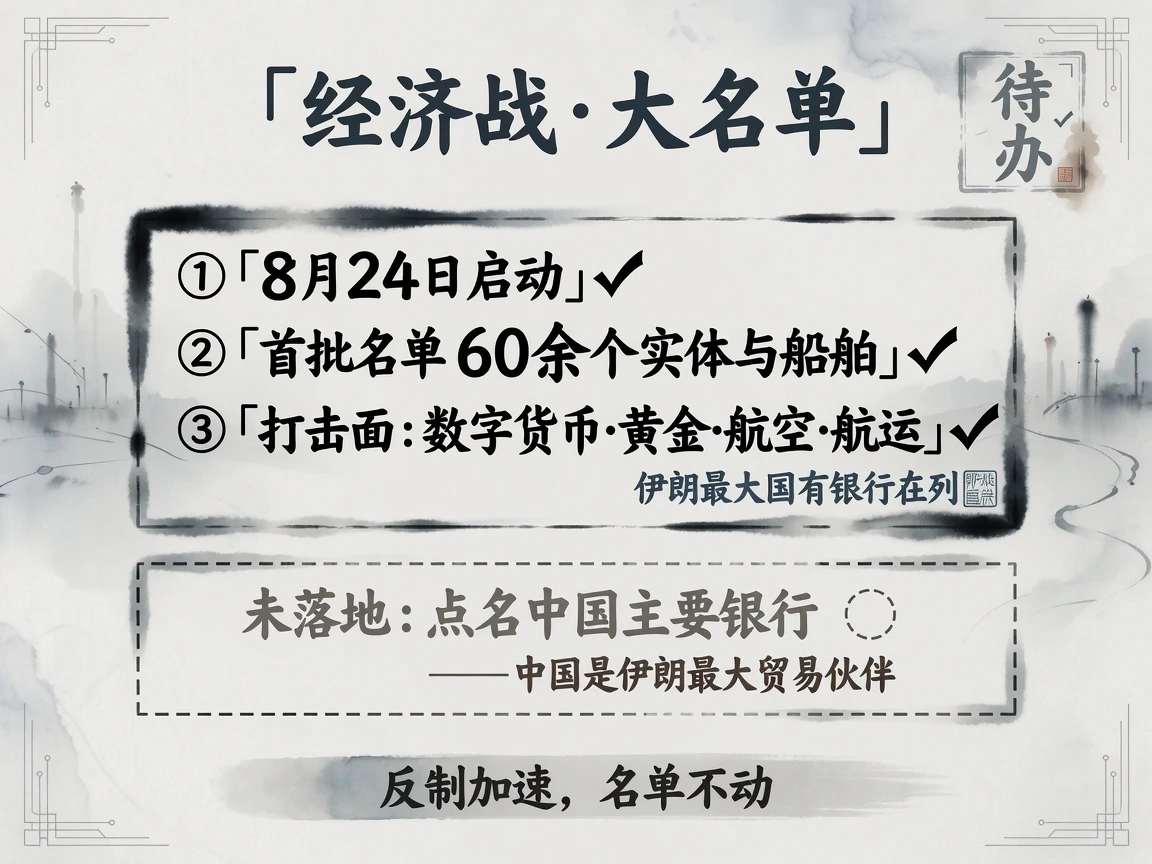
US sanctions enforcement faced practical obstacles. Asked whether he would impose secondary sanctions on major Chinese banks maintaining business with Tehran, Trump avoided a direct answer. He suggested he might already be sanctioning them without announcing every measure, leaving the position deliberately ambiguous.
That ambiguity diverged from Treasury Secretary Bessent's Monday signal that Trump was calling foreign leaders with specific demands to cut all economic ties with the regime. Asked whom he had called, Trump declined details and said there was nothing to discuss, no desire for dialogue and no pursuit of meetings.
US official information said Operation Economic Isolation formally began August 24, initially blacklisting more than 60 entities and vessels across digital currencies, gold, air cargo and shipping, including Iran's largest state-owned bank. Industry observers generally saw one decisive step still absent: naming and sanctioning major Chinese financial institutions directly. China remained Iran's largest trade and crude-settlement partner. Analysis suggested that without confronting key settlement channels, comprehensive isolation would be substantially weakened in implementation.
Iran accelerated diplomatic and legal defenses. Araghchi wrote UN Secretary-General Guterres seeking systematic assessment of humanitarian and human-rights harm from sanctions and urging countries to reject unilateral extraterritorial jurisdiction. Atomic Energy Organization head Eslami accused the US and Israel of pressuring IAEA inspections of damaged nuclear sites to assess previous airstrike destruction, and refused access on grounds of wartime conditions and unprepared facilities. Iran's multilateral legal countermeasures followed one another, while a further major US sanctions list remained delayed.
Military deployments and energy realities: carrier rotations show strain; South Pars reconstruction will take years
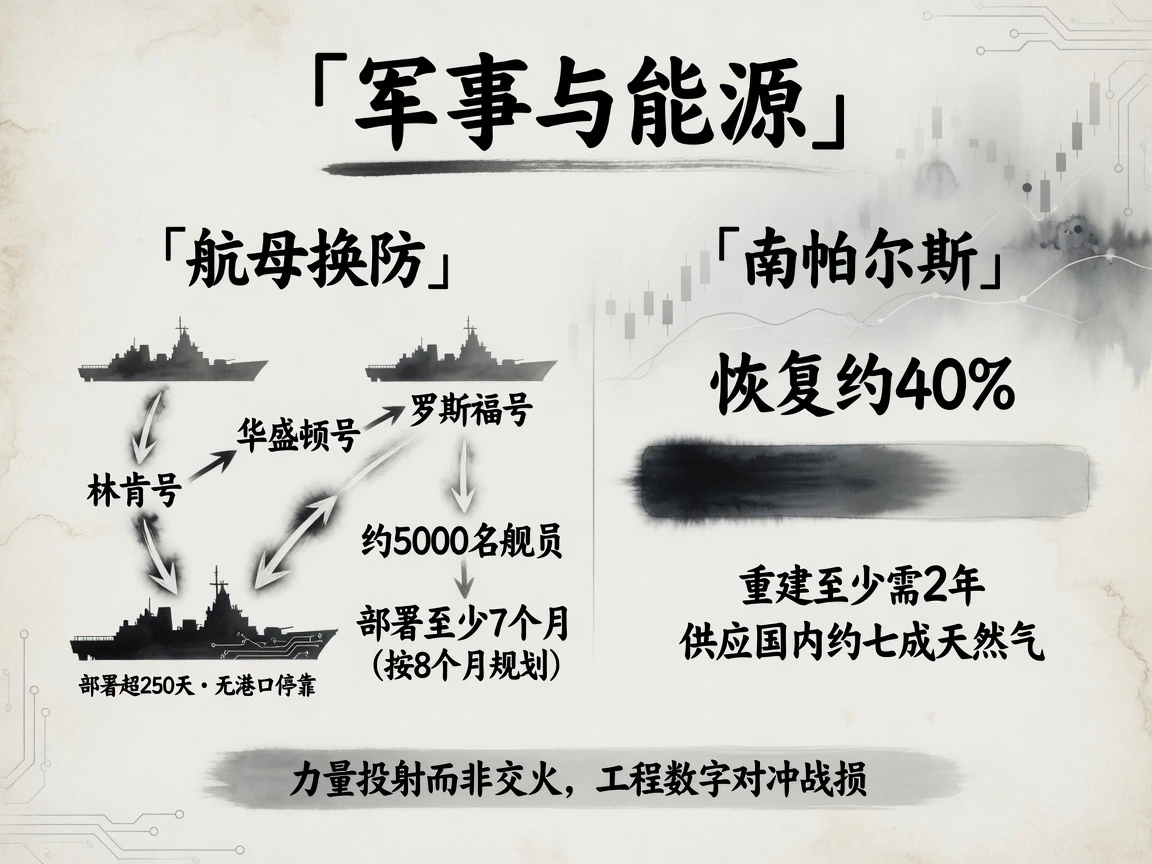
Military action centered on maintaining deterrence and rotating carriers rather than direct exchanges. US officials announced that Theodore Roosevelt and about 5000 crew would sail within weeks for a Middle East combat deployment of at least 7 months. Master Chief Petty Officer Perryman said commanders were actually planning for 8 months. The intensity exposed strain in deployed surface forces: Abraham Lincoln had spent more than 250 consecutive days at sea without a rest port call, amid reports of sailors overboard and shortages of routine supplies. Washington had replaced Lincoln the previous week, Roosevelt would later replace Washington, and George H. W. Bush remained in theater. Maintaining two carriers in the Middle East was becoming rapidly more costly.
Chief of Naval Operations Caudle acknowledged the severe fleet pressure from sustained readiness. He preferred a strict 7-month deployment limit and normally strongly opposed extensions, but said the enemy had a say in combat conditions.
Iranian authorities used repair figures to support domestic confidence. Deputy Oil Minister Zeratkar said about 40% of damaged South Pars capacity had been repaired and restarted, while acknowledging severe surface-facility destruction and at least 2 years merely to rebuild the affected sites. South Pars shares an underground structure with Qatar's North Field, is part of the world's largest offshore gas field and supplies about 70% of Iran's gas. Earlier Israeli strikes on its facilities sharply escalated the conflict; Trump later threatened to destroy the energy lifeline. Zeratkar argued that its production sustains broad quasi-welfare support and that damaging this foundation to create hardship in difficult seasons was the attackers' strategic aim. Oil Minister Paknejad also acknowledged this week that crude sales had declined somewhat under air and maritime blockade, while overall export channels continued.
Key developments in the past 24 hours
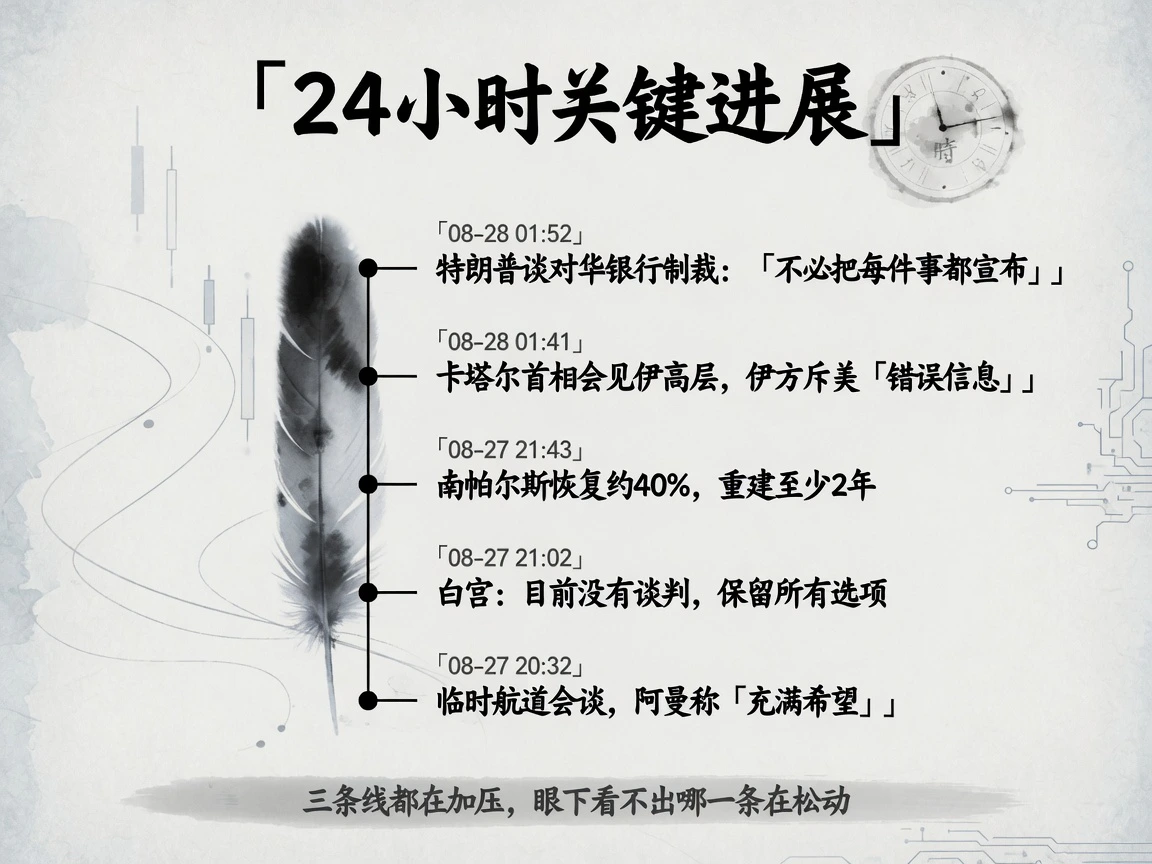
| Key developments |
|---|
| 08-28 01:52 Beijing timeAsked about sanctions on Chinese banks, Trump said nobody could know whether he was already acting and he did not need to announce everything. This coexisted with Bessent's account of calls to foreign counterparts making specific demands. |
| 08-28 01:41 Beijing timeQatar's prime minister met Iranian leaders. Ghalibaf accused Washington of acting on false information and creating regional instability; Pezeshkian said Iran would not yield to pressure or coercion. |
| 08-27 21:43 Beijing timeIran's deputy oil minister said approximately 40% of damaged South Pars capacity was restored, but rebuilding the sites would take at least 2 years. |
| 08-27 21:02 Beijing timeWhite House spokesperson Leavitt said there were no US–Iran talks, all options remained available, and Operation Economic Isolation aimed to destroy Iran's economy. |
| 08-27 20:32 Beijing timeQatar's prime minister and Araghchi discussed temporary Iran–Oman passage and minesweeping. Oman's foreign minister called the prospects hopeful and promised rapid formalization. |
| 08-27 12:30 Beijing timeAnalysis interpreted Iran's reference to seismic-scale retaliation against Operation Economic Isolation as hinting at a nuclear-weaponization option. |
| 08-27 12:07 Beijing timeIn an interview, Trump described Khamenei as seriously wounded but alive. This remained officially unconfirmed (earlier reporting). |
| 08-27 12:07 Beijing timeMinesweeping experts said Iran was stronger at laying mines than meter-by-meter scanning; without Iranian mine intelligence, political promises could not ensure reopening. |
| 08-27 12:07 Beijing timeRoundup of the Iran–Oman proposal and oil: a phased framework advances and Iran calls for closure of the southern route. Brent near $86 and WTI $80 after three consecutive declines. |
| 08-27 12:06 Beijing timeEslami accused the US and Israel of pressuring IAEA inspections of damaged nuclear sites, refusing entry under wartime conditions (earlier reporting). |
| 08-27 12:06 Beijing timeAraghchi wrote Guterres requesting assessment of sanctions' humanitarian and human-rights effects (earlier reporting). |
| 08-27 12:06 Beijing timeQatar's Foreign Ministry announced the prime minister's planned Iran visit (earlier reporting). |
| 08-27 12:06 Beijing timeUKMTO reported a tanker in Hormuz hit by an unidentified projectile and set ablaze; the fire was extinguished and all crew were safe. |
| 08-27 12:06 Beijing timeThe United States announced a Middle East deployment by Theodore Roosevelt with about 5000 crew for at least 7 months; commanders were planning for 8 months. |
| 08-27 12:06 Beijing timeCombined report: Roosevelt deployment, three consecutive oil-price declines and a Revolutionary Guard claim that strait revenue shares were agreed but the US was obstructing progress. |
| 08-27 12:06 Beijing timeUS Central Command posted promotional material about military dogs, with no additional combat-capability development. |


