Over the past 24 hours, the public information stream on Iran's war fell into an unusual silence: no new airstrike notices, air-defense interceptions or maritime escalation. Hourly live conflict tracking had added no entries for about 45 hours. After fighting lasting nearly a summer, the abrupt quiet could feel more oppressive than combat. Just a week earlier, Hormuz shipping diplomacy, economic bargaining and Qatari mediation had been intensive; now public channels seemed suddenly cut off.
During this delicate vacuum, two substantial observations released the same day showed opposing sides of the contest. A Washington-side analysis argued that Iran had not won and that its central Hormuz leverage was eroding for the first time. A Tehran-side report identified the real obstacle to ending the war as an internal strategic split among Iran's rulers rather than the White House.
Washington's view: Hormuz leverage begins to erode
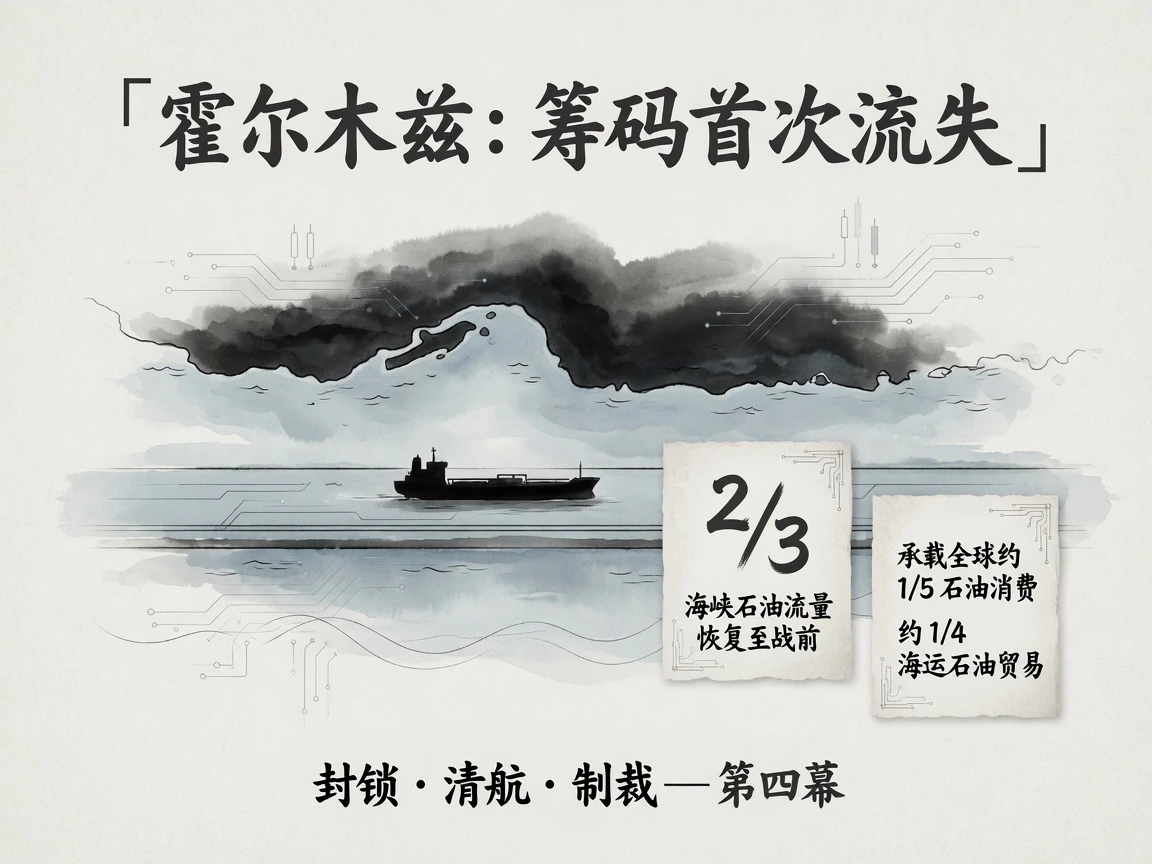
In an August 30 analysis, global-affairs analyst Brett McGurk challenged the narrative of an Iranian victory. He divided the war into four stages: large-scale joint US-Israeli strikes on February 28; a temporary ceasefire on April 7 followed by a US-Iran memorandum on June 17; renewed Iranian harassment of Hormuz shipping and retaliatory strikes; and the current fourth stage, beginning in mid-July, of US blockades of key Iranian ports, comprehensive escalation of oil-trade sanctions and continued route-clearing and escort operations.
McGurk viewed this combination as the first substantive physical isolation of Iran's economic lifelines by international forces since the 1979 revolution. Bloomberg, citing Goldman Sachs monitoring that week, said Hormuz crude flows had recovered to two-thirds of prewar levels while global energy benchmarks remained relatively stable. In his interpretation, pressure and lost leverage were accumulating on Tehran rather than Washington. He argued that Iranian deterrence through drones and mines had failed for the first time; most Gulf states, though deeply worried about spillovers, refused demands backed by threats to close shipping.
On Friday, August 28, Central Command commander Cooper described the mission as enforcing the blockade and ensuring commercial navigation. McGurk inferred that Washington's strategic end state should force Iran to abandon unlawful passage claims and uranium enrichment or leave blockade and suppression as a new geopolitical normal. This was his personal assessment, not an officially declared US policy red line.
EIA and IEA data show Hormuz normally carries around one-fifth of global oil consumption and a quarter of seaborne crude trade. Whether port blockade, safe passage and sanctions remain mutually reinforcing will directly determine the balance in this fourth stage.
Tehran's strategic divide: A dignified exit or humiliating peace
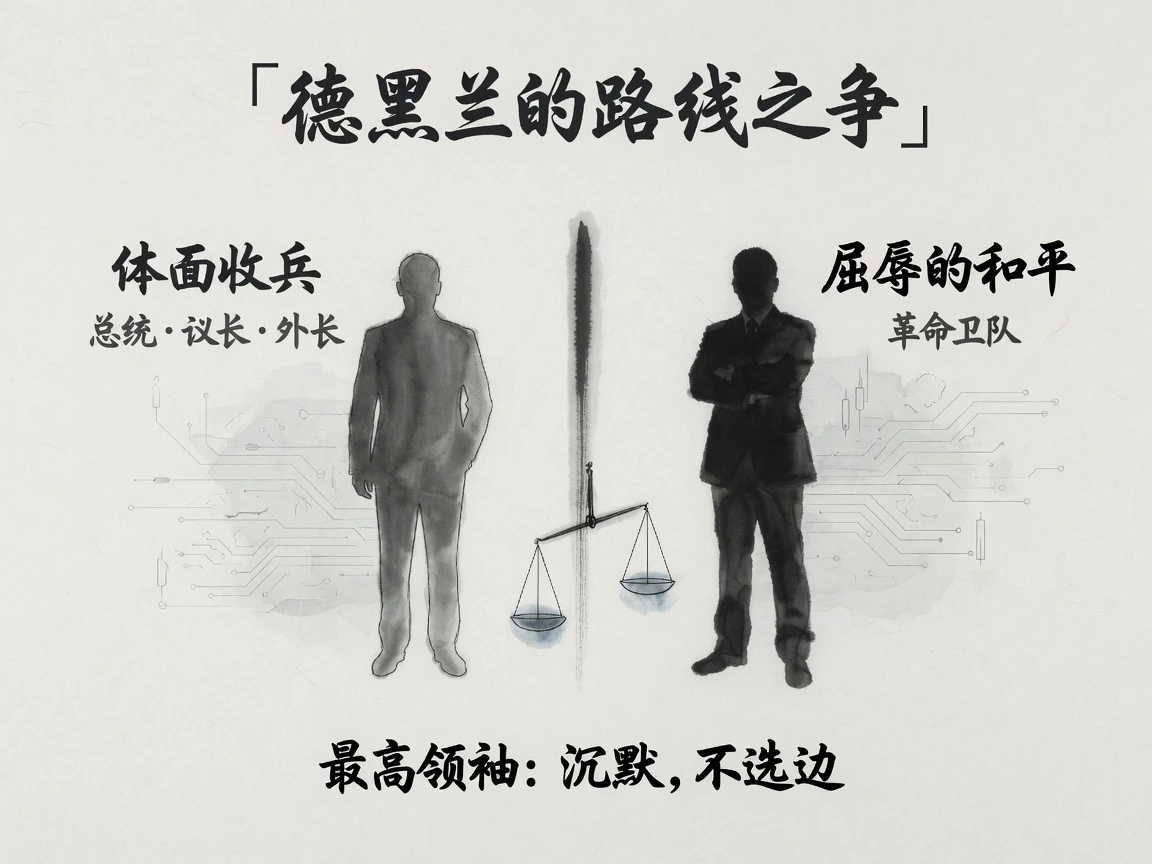
Reporting by foreign correspondent Salim described an openly divided power center. The pragmatic moderate camp around President Pezeshkian, speaker Qalibaf and Foreign Minister Araghchi wanted a deal while Iran retained leverage and dignity, facing economic pressure, a tighter blockade and damaged infrastructure. Pezeshkian publicly argued that war must eventually end and the best time was while Iran retained dignity and strength and outsiders still recognized its posture of victory.
Hardline conservatives rooted in the Revolutionary Guard sharply opposed them. To them, the war vindicated distrust of the US and made June's ceasefire a major liability for the president's camp. Lawmaker Ghazanfari attacked advocates of dialogue in parliament Thursday for betraying the late supreme leader's legacy, warning that compromise had no end and Washington sought total surrender. Lawmaker Raisi questioned whether public finances truly faced exhaustion or officials were inventing that predicament to justify peace.
Chatham House Middle East program director Vakil argued the hardliners' backlash was chiefly about securing long-term authority against internal political rivals rather than extracting a better agreement from Washington.
The largest unresolved strategic variable was new supreme leader Mojtaba Khamenei. At the top of the hierarchy, he remained publicly detached and avoided choosing sides. On Friday he praised cabinet resilience under external pressure but ordered political and military leaders not to amplify systemic weakness publicly, lest they encourage enemies and demoralize allies. His eventual preference would fundamentally determine the terms and cost of Iran's exit.
Economic backdrop: More than 5% contraction and 70% inflation, one dataset with two political interpretations

Underlying economic deterioration was accelerating. Foreign media cited the IMF's latest forecast of more than 5% GDP contraction this year and inflation approaching 70% under war and blockade. Internal Labor Ministry officials estimated over 1 million jobs disappeared in the first three months of war. McGurk interpreted these indicators as showing that endurance depended on more than missile stocks: the speed of economic depletion was becoming decisive in breaking the stalemate.
The same data were heavily politicized in Tehran. Hardliners accused pro-deal officials of exaggerating hardship to manipulate public opinion into accepting surrender, with some radical lawmakers alleging a soft coup. Whether the economy was genuinely exhausted or distress was being politically constructed had become a deeply divisive issue at the top.
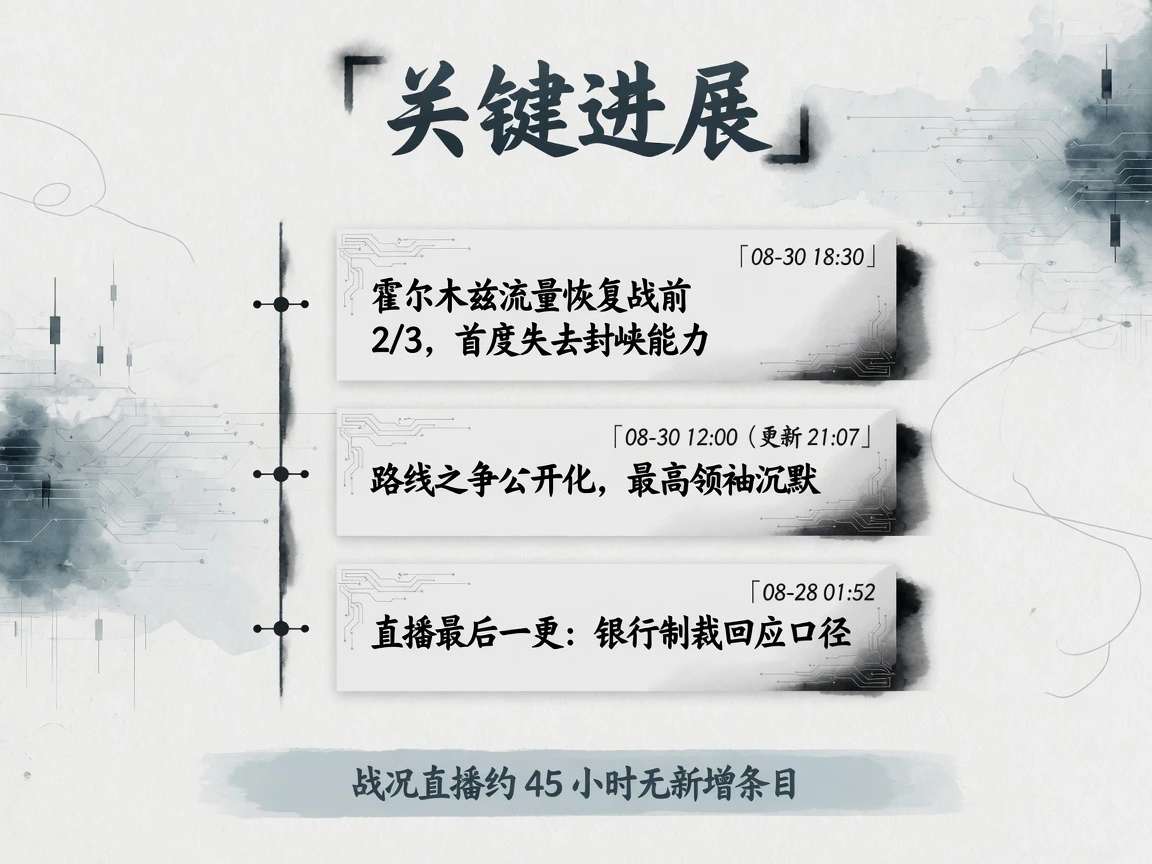
Key developments
| Key developments (Beijing time) |
|---|
| 08-30 18:30Foreign media published an analysis arguing Iran had not won: fourth-stage blockade, route-clearing and sanctions were working together; Hormuz oil flows had recovered to two-thirds of prewar levels, according to Bloomberg citing Goldman, and Iran was said to have lost the initiative over closing the strait for the first time. Central Command emphasized enforcing the trade blockade and ensuring navigation. |
| 08-30 12:00 (updated 21:07)Tehran's split became public: Pezeshkian's camp urged a dignified exit while the Guards and conservatives called it humiliating surrender and accused peace advocates of exaggerating hardship. The new supreme leader remained restrained and declined to choose sides. |
| 08-28 01:52The final live-update entry before the pause: the US leader, asked about foreign-bank sanctions, said he had imposed sanctions and not every action needed publicity. This matched the Treasury secretary's description of calling foreign counterparts with specific compliance demands. |


