In the past 24 hours, Gulf fighting escalated abruptly after more than a month of quiet. U.S. aircraft struck two rocket-launch positions on Iran's Larak Island, a strategic point off Bandar Abbas, the first direct U.S. attack on Iranian territory since July 29. Iran retaliated with ballistic missiles at U.S. facilities in Jordan and the UAE, prompting urgent air-defense interceptions across Gulf states. Renewed direct confrontation sent oil nearly 3% higher on Monday, August 31, and pressured U.S. equities.
In prior weeks, U.S. operations centered mainly on sanctions, escorting and clearing hazards; markets had expected direct Hormuz confrontation to ease. The strikes shattered that low-friction expectation and returned U.S.–Iran relations to direct military fire.
U.S. strikes Larak after a month-long lull, targeting Strait mine-laying forces
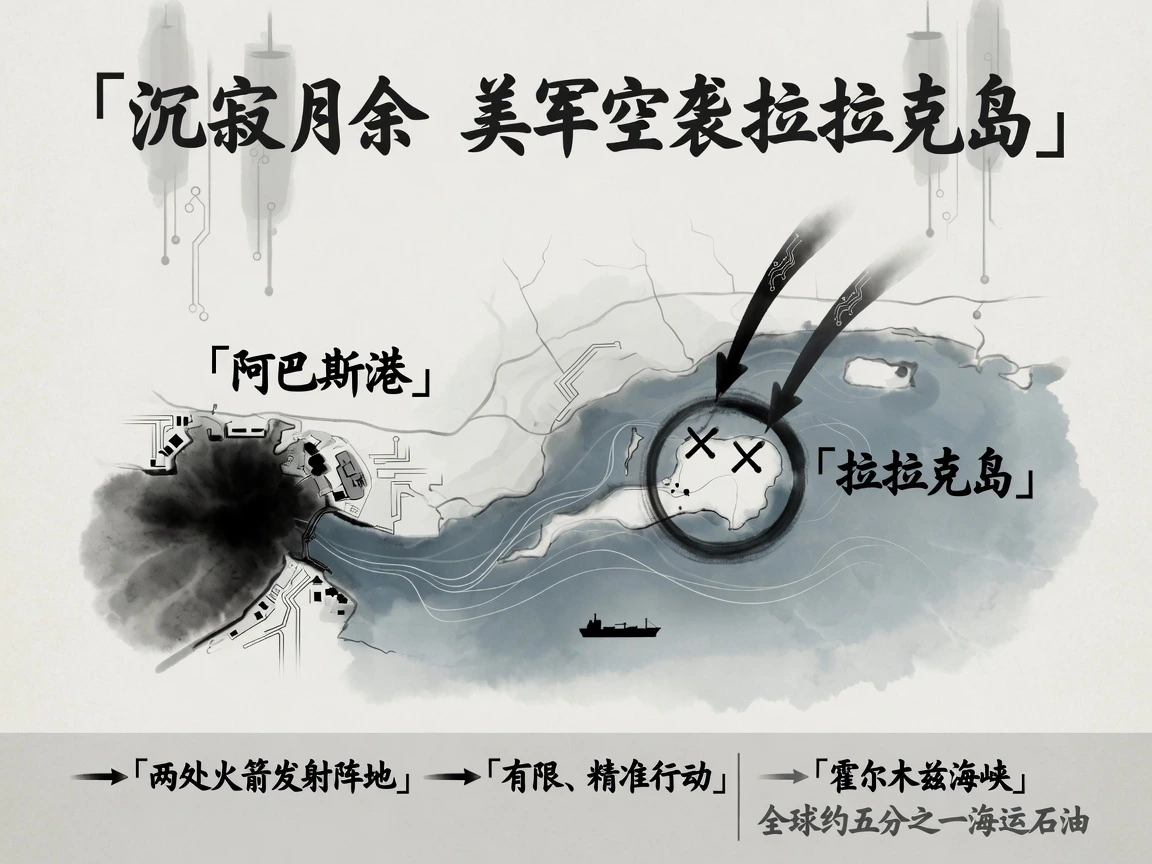
Multiple media reports placed the strikes late Sunday night to early Monday Eastern time, August 31 Beijing time. They destroyed two Iranian rocket-launch positions on Larak at the Hormuz chokepoint, which normally carries about one-fifth of global seaborne crude. CENTCOM described a limited, precise operation against mine-laying units posing an imminent threat, intended to protect merchant crews and navigation freedom. Spokesman Hawkins said intelligence indicated Iranian forces were preparing to launch mine-carrying rockets into the channel.
Washington had not published an exact strike time. Iran's official news agency quoted the Qeshm county head saying at least two people died and several were injured; nearby residents heard powerful explosions. The casualties came from Tehran's official account and lacked independent verification.
Iran retaliates with missiles toward U.S. bases in Jordan and the UAE
Iran called the strikes intolerable aggression. The Guard condemned a strategic and fatal mistake and vowed reciprocal retaliation. President Pezeshkian said on state broadcasting that Iran did not seek war but would not stand idle against aggression and had the will and ability for a decisive response. The armed forces warned neighboring states that allowing U.S. forces to use their territory, airspace or coasts as a staging ground would prompt decisive strikes on the source of aggression, while reiterating respect for neighbors' sovereignty.
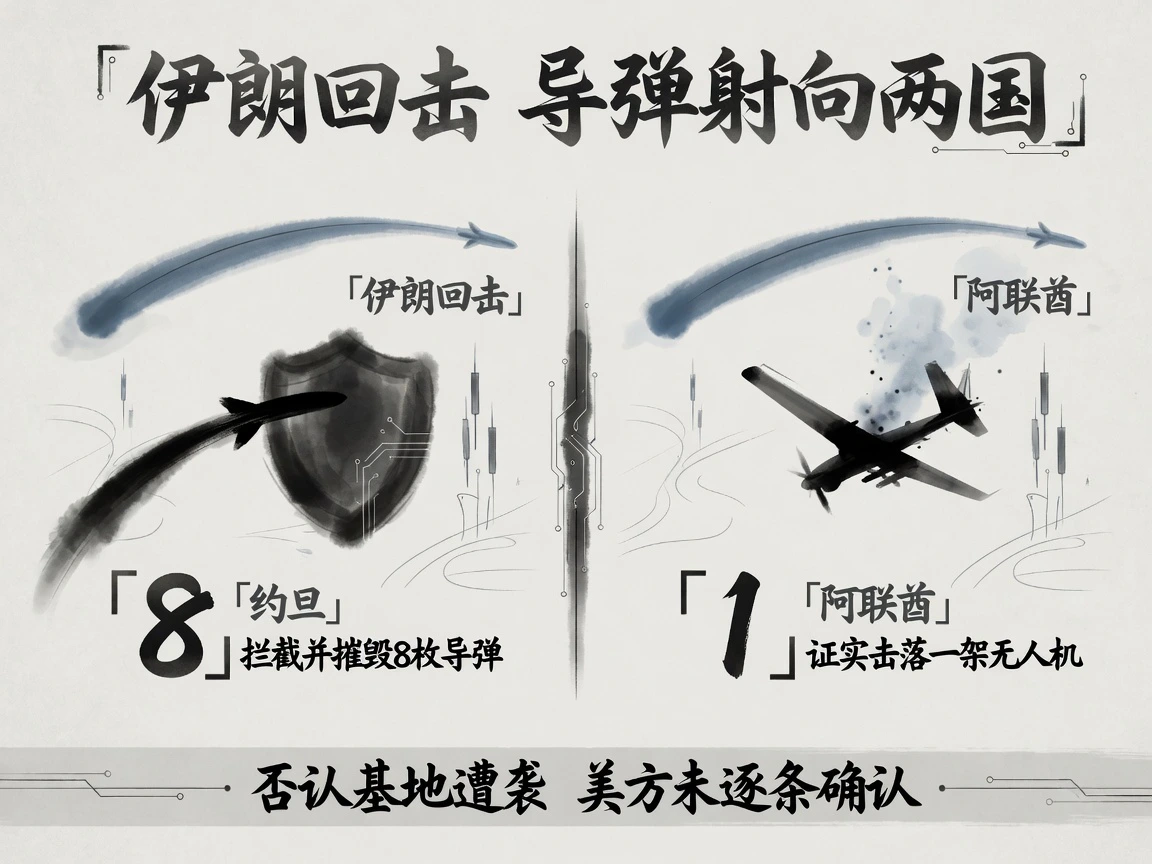
Military retaliation followed. Iran claimed ballistic-missile launches against U.S. facilities in Jordan and the UAE. Jordan said it intercepted and destroyed eight incoming missiles without threats to civilians or ground infrastructure. The UAE reported drone activity over territorial waters, condemned a dangerous escalation and reserved full response rights, while denying Iranian state-media claims of a direct hit on a U.S. base. Foreign reports identified the intended UAE target as an airbase hosting U.S. forces; the UAE confirmed shooting down one drone from Iran's direction. Iran also claimed to down a U.S. drone over Hormuz. At publication, the U.S. military had not verified each claimed result.
White House calls Iran a failed state as information warfare and deterrence intensify

On Truth Social, Trump called Iran a failed state and said its leadership was in total disarray and unable to represent the country. He then told reporters U.S. forces would strike hard and there would be follow-up action.
Information warfare accompanied the rhetoric. Foreign media noted his account posted an AI-generated video claiming Kharg Island, Iran's oil-export lifeline, had been blown apart. Field intelligence and commercial satellite imagery instead showed its main terminals undamaged; export bottlenecks still stemmed from shipping security and insurance, rather than new physical destruction. The account also interspersed updates on Washington's Reflecting Pool and Kennedy Center renovations. Observers viewed this rapid switching between military crisis and domestic projects as his customary asymmetric communication rhythm.
Mine risk returns to pricing; oil jumps nearly 3% and sanctions intensify
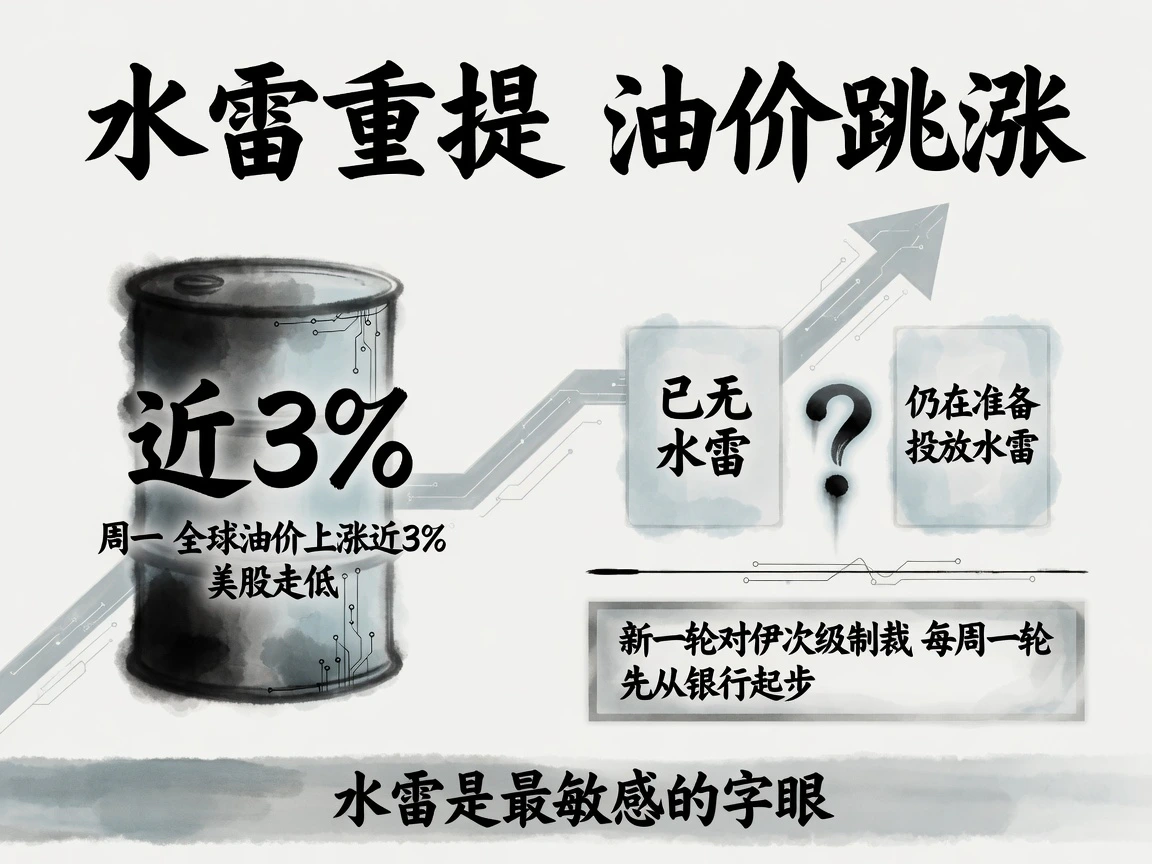
The exchange revived mine risks that had briefly eased the preceding week. U.S. leaders had previously claimed Hormuz was free of mines, but CENTCOM intelligence explicitly described new Iranian mine-laying preparations. The contradictory accounts expose fragile shipping security. For energy markets, channel-blockade risk is a highly disruptive supply shock. Global oil futures jumped nearly 3% Monday while risk aversion drove broad U.S. equity losses.
Economic sanctions accelerated alongside military action. Ahead of the G20 finance ministers' meeting, Treasury Secretary Bessent said weekly rounds of secondary Iran sanctions were being prepared, first targeting financial intermediaries. He said banks should not continue holding Iranian funds or facilitating regime settlement. Washington was intensively cutting external funding channels in a broad economic containment effort.
Diplomacy lags the military pace, unsettling the neither-war-nor-peace balance

After six months of confrontation, direct official talks remained effectively frozen. The White House had said there was no substantive negotiating channel. Remaining contact relied on regional multilateral mediation: Iran and Oman discussed limited passage arrangements and Qatar and other mediators sought to preserve dialogue.
UAE presidential diplomatic adviser Anwar Gargash said Monday that a prolonged neither-war-nor-peace stalemate was unsustainable and urged a pragmatic, durable political solution addressing the crisis's political and economic demands. This reflected Gulf allies' concern: frontline escalation was moving faster than expected, beyond the capacity of fragile diplomatic mechanisms.
Key developments
| Key developments (Beijing time) |
|---|
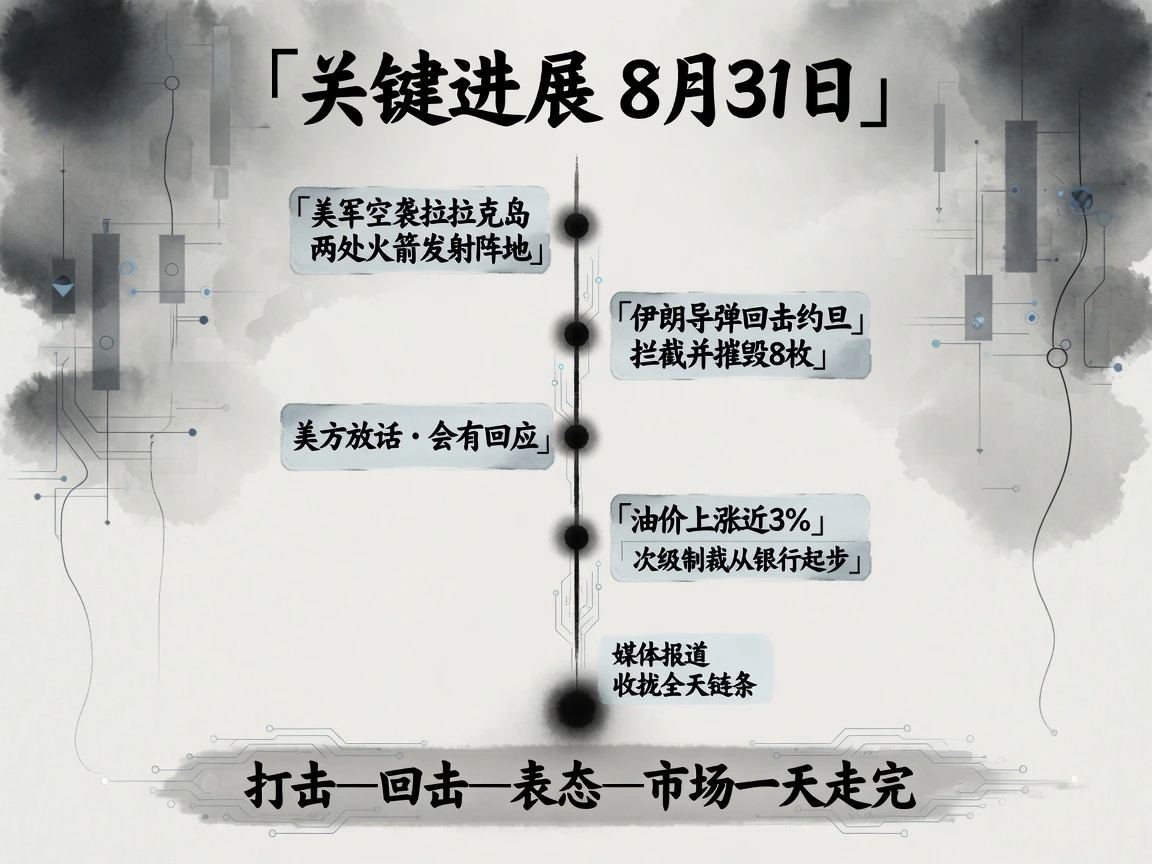
| 09-01 06:25 Beijing timeForeign media completed final updates on Larak, tracing Monday's strikes, retaliation, statements and market response. The first U.S. strike's timing remained described as late Sunday night to early Monday Eastern time. |
| 08-31 daytime, Beijing timeU.S. precision strikes hit two Larak rocket-launch positions; CENTCOM said the strikes targeted mine-laying forces posing an imminent threat. Iran's official agency quoted local officials reporting at least two dead and several injured. |
| 08-31 daytime to late night, Beijing timeIran claimed missile launches at U.S. targets in Jordan and the UAE. Jordan reported eight incoming missiles intercepted and destroyed; the UAE denied a base strike and confirmed one drone downed from Iran's direction. |
| 08-31 daytime, Beijing timeThe Guard condemned a strategic, fatal U.S. mistake and vowed retaliation; Pezeshkian said Iran did not seek war but could respond decisively. |
| 08-31 late night, Beijing timeTrump called Iran a failed state and publicly warned of severe strikes and a response; his account also posted Washington renovation updates. |
| 08-31 Monday U.S. stock-market closeGlobal oil jumped nearly 3% and U.S. stocks fell. Ahead of the G20 finance meeting, the Treasury secretary announced prospective weekly secondary sanctions, initially against Iran-related banks. |
| 08-31 Beijing timeUAE adviser Gargash said the neither-war-nor-peace stalemate was unsustainable and urged a realistic political solution. |


