US July JOLTS job openings and August ISM manufacturing PMI were released together on September 1, both below consensus. Yet the marginal cooling did not shake rates-market tightening expectations. Governor Barr explicitly signaled that the Fed should hike decisively if inflation failed to ease sufficiently, while the closing statement of the G20 finance ministers and central-bank governors' meeting included central-bank independence and price stability. September hike pricing remained firm at elevated levels. Markets clearly gave more weight to oil-price rebound risks and a hawkish consensus at the Fed's core than to marginal slowing in growth indicators.
Economic Data: Growth Cools but Prices Do Not
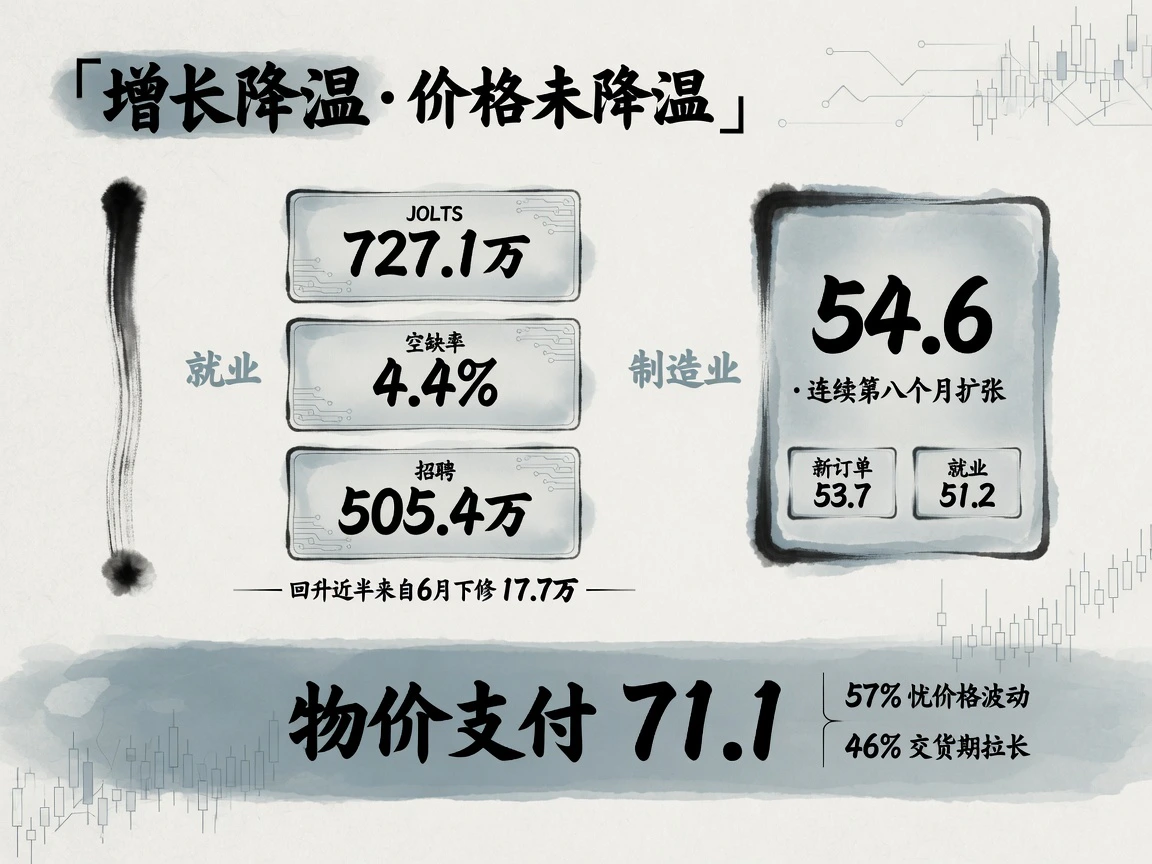
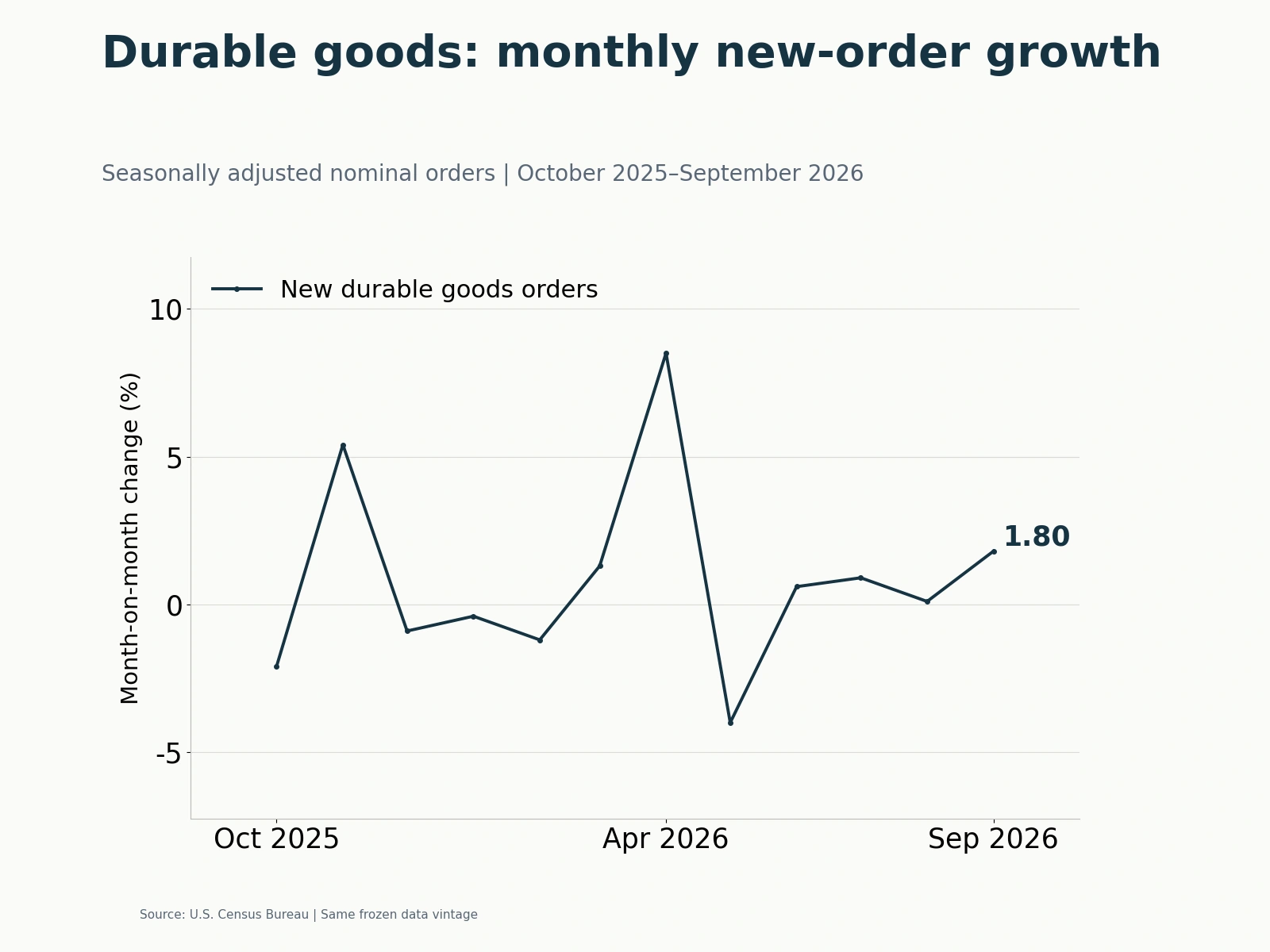
July JOLTS openings were 7.271 million, with the vacancy rate unchanged at 4.4%, up 89,000 from June's reading. The apparent rebound warrants scrutiny: June's initial 7.359 million was revised down 177,000 to 7.182 million, with more than half the apparent increase attributable to the lower base. The headline remained slightly below consensus near 7.30 million. Hiring fell to 5.054 million, layoffs and quits held steady, and manufacturing openings increased against the trend. Mainstream observers described a holding pattern: neither enough overheating to keep aggravating sticky inflation nor enough fragility to trigger a recession warning from rapidly rising unemployment.
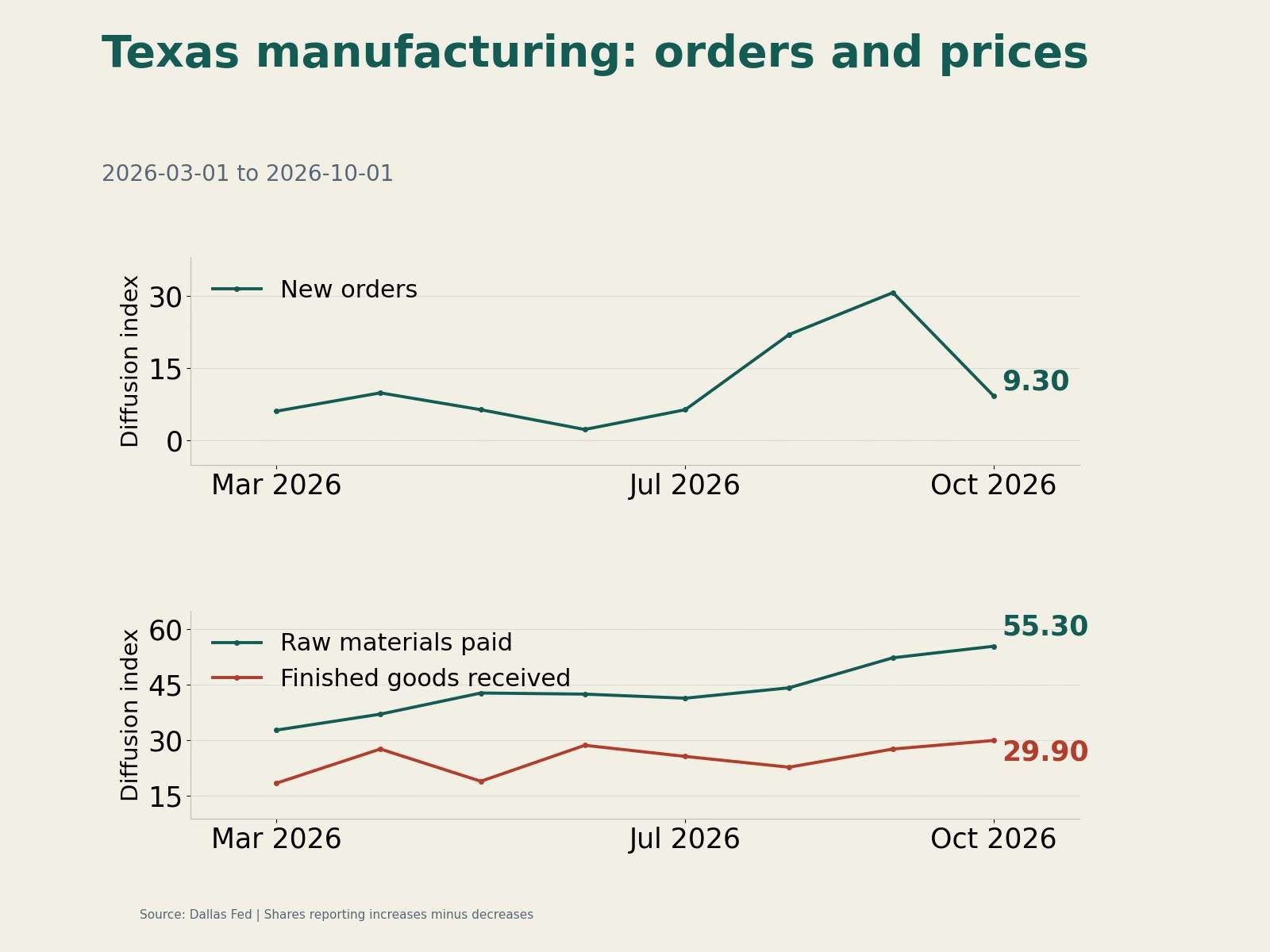
August ISM manufacturing PMI was 54.6, its eighth consecutive expansionary month, but down 1.0 percentage point from July's 55.6 and below the 55.2 forecast. Components diverged: new orders weakened markedly to 53.7 and employment fell to 51.2, while prices paid remained high at 71.1. Among negative business feedback, 57% mentioned raw-material price volatility and 46% longer supplier lead times. Cooling demand and employment alongside elevated upstream costs show supply-side price pressure still passing into production, providing no basis for Fed easing.
Policy Meetings: The FOMC Anchor and G20 Statement
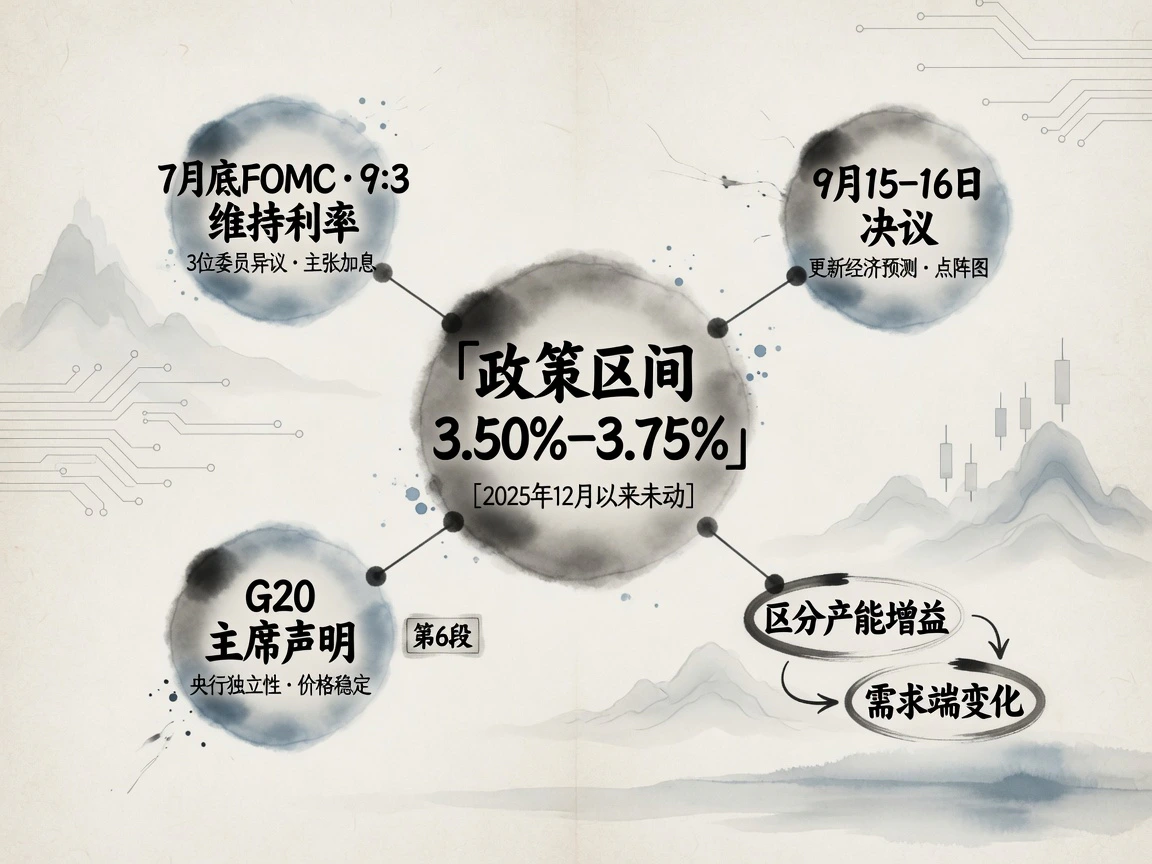
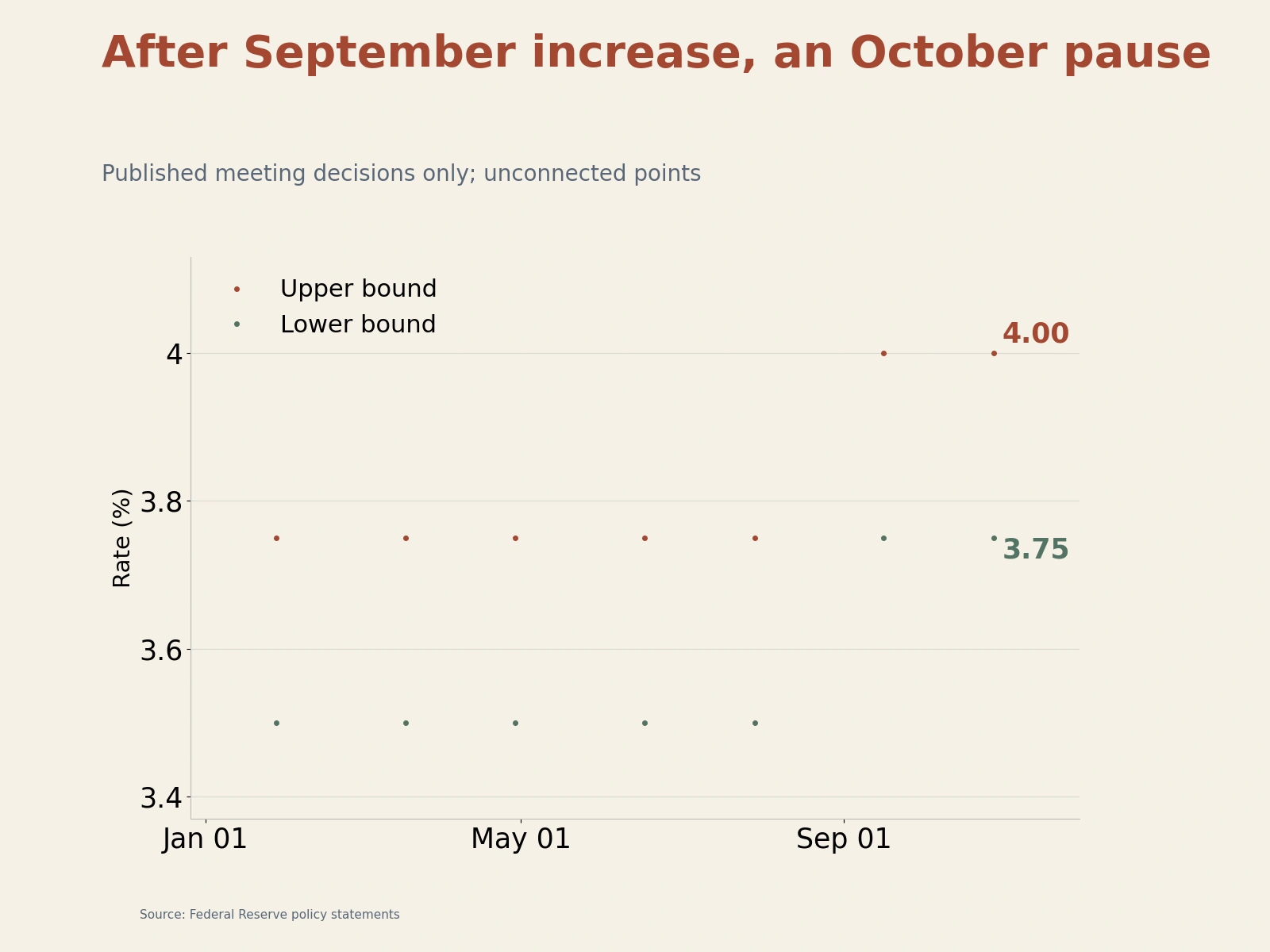
The federal funds target range remained 3.50%–3.75%, unchanged since December 2025. At the late-July meeting, the FOMC held rates by a 9:3 vote, with three members dissenting in favor of a hike. The next decision is September 15–16, accompanied by an updated quarterly Summary of Economic Projections (SEP) and rate dot plot.
The G20 finance ministers and central-bank governors' meeting ending September 1 in Asheville concluded with a chair's statement rather than a unanimously agreed communiqué. Paragraph 6 explicitly stated central banks' firm commitment to price stability, reaffirmed the importance of independence, and called for careful distinction between supply-side capacity gains and demand-driven changes. The wording closely aligned with the supply and potential-productivity framework Fed Chair Warsh emphasized in his opening address. Although some participants reserved their positions on paragraphs concerning energy prices, Hormuz risks, global imbalances and IMF surveillance, major economies were closely aligned on price stability and central-bank credibility.
Official Communication: Barr's Conditional Call for Decisive Hikes
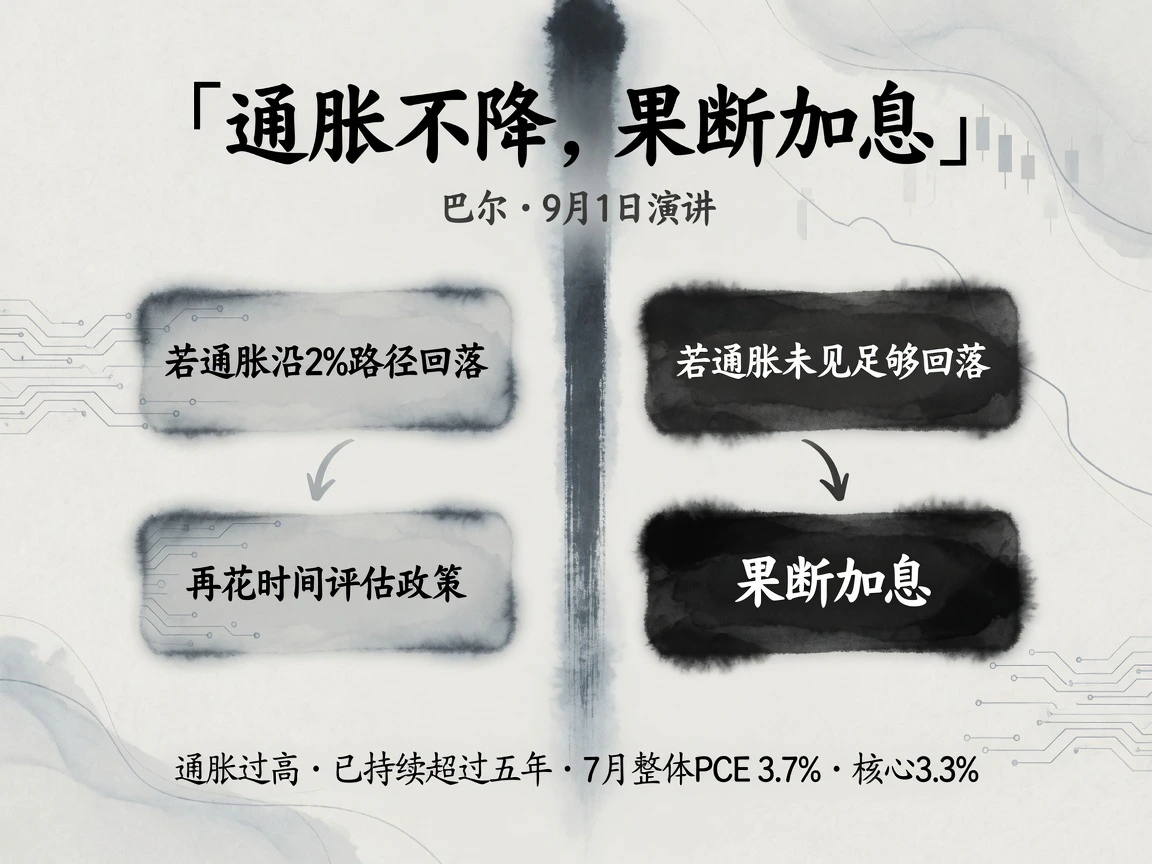
Barr spoke on September 1, the only public event by a Fed policymaker on that day's official calendar. He reiterated a baseline of economic resilience: AI capital spending was accelerating productive capacity, labor markets remained balanced, and higher productivity and entrepreneurship supported potential growth. His inflation assessment was much harsher: inflation remained too high and had been so for more than five years. After falling from over 7% in 2022 to slightly above 2% in 2024, disinflation stalled in 2025, with core nonhousing services especially persistent. The latest July headline and core PCE inflation readings were 3.7% and 3.3% year on year.
Barr set out a clear conditional policy choice: if data convinced him inflation was returning toward 2%, more time could be spent assessing the existing stance; if inflation did not fall sufficiently, the Fed should raise rates decisively. Markets quickly read this as materially opening the door to a September hike, closely echoing Warsh's earlier Jackson Hole message that the inflation fight remained unfinished.
Policy Expectations: Hike Pricing Holds Near Two-Thirds
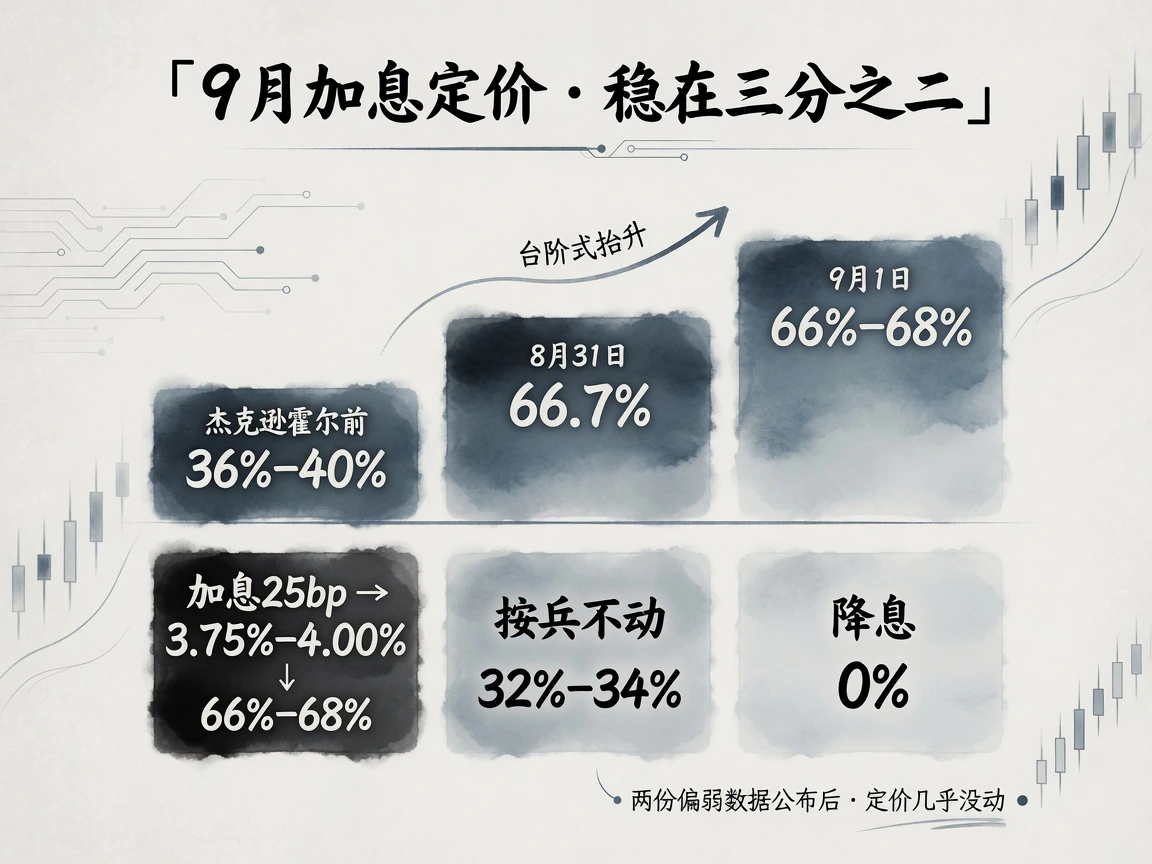
CME FedWatch readings from intraday through late trading on September 1 US Eastern time put the implied probability of a 25-basis-point hike on September 16 to 3.75%–4.00% steadily at 66%–68%. Odds of no change were about 32%–34%, and rate-cut expectations had disappeared. Although broadly unchanged from August 31's 66.7%, this marked a stepwise repricing from approximately 36%–40% before Jackson Hole.
Hike bets in rate futures barely moved despite both JOLTS and ISM missing expectations. This reflects the deeper logic of current bond trading: markets give significantly greater weight to resilient cost components, potential oil-price increases from Middle Eastern geopolitical premiums, and hawkish guidance from senior Fed officials than to marginal changes in headline activity.
What to Watch Next
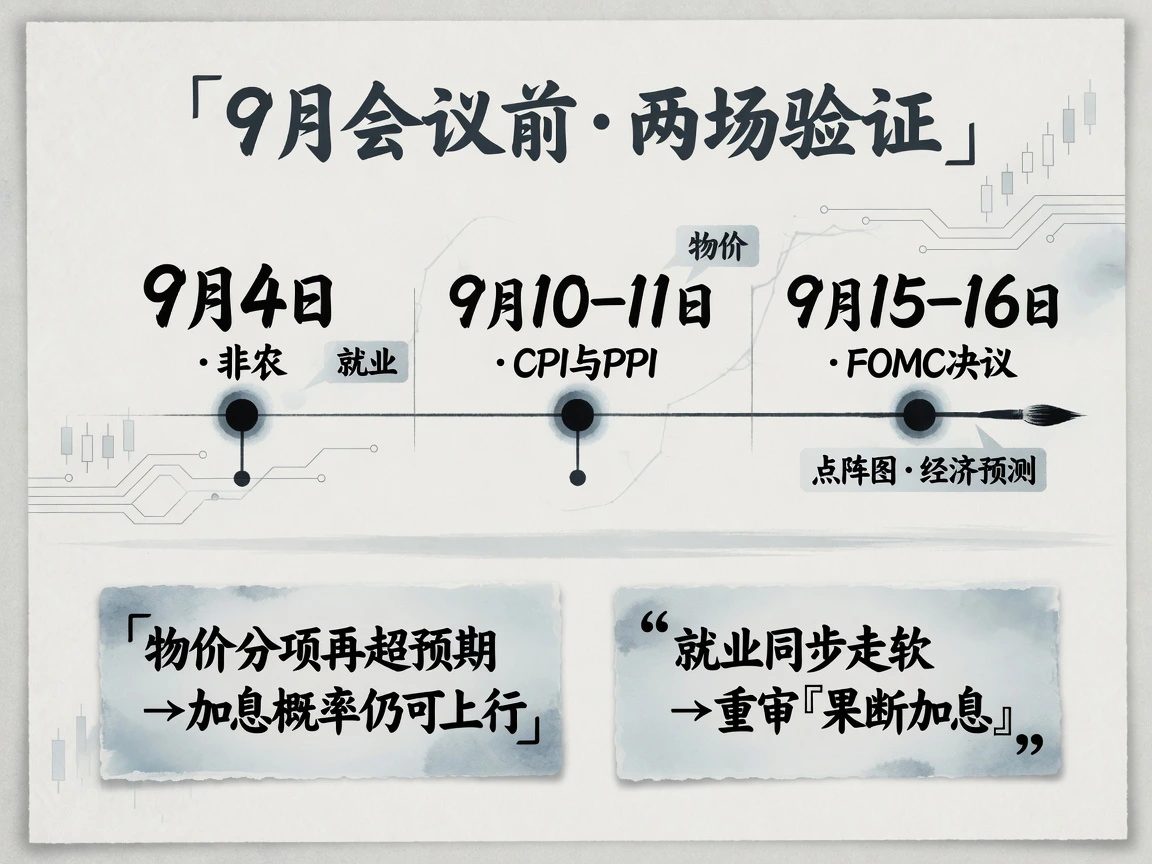
Before the mid-September FOMC meeting, two major macro tests remain: the August payroll report on September 4, followed by August CPI and PPI on September 10–11. Another upside price surprise could push hike pricing above its nearly 70% level. Only unexpectedly sharp employment deterioration together with broad disinflation would prompt markets to reassess Barr's threshold for decisive hikes.