On October 27, 2026, U.S. durable goods orders and consumer confidence data brought different signals to the Federal Reserve’s ongoing policy meeting. Business equipment investment continued to expand and household confidence improved, but high prices still weighed on intentions to spend. Demand remained resilient, while the consumption outlook was less robust. Between those signals, markets leaned toward a pause in rate increases at this meeting while the Fed awaited further inflation and growth data.
Equipment orders and shipments both rise, supporting business investment
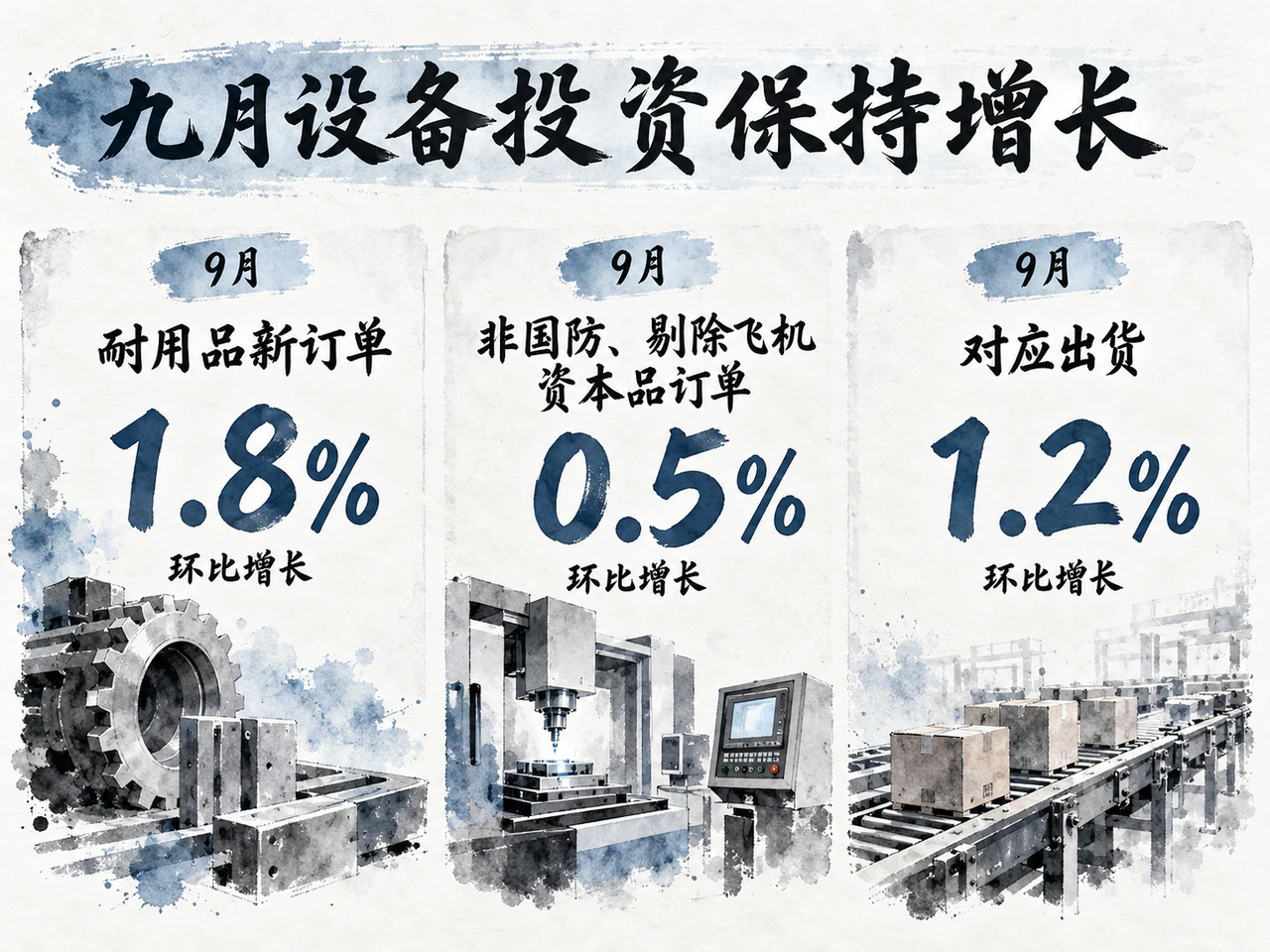
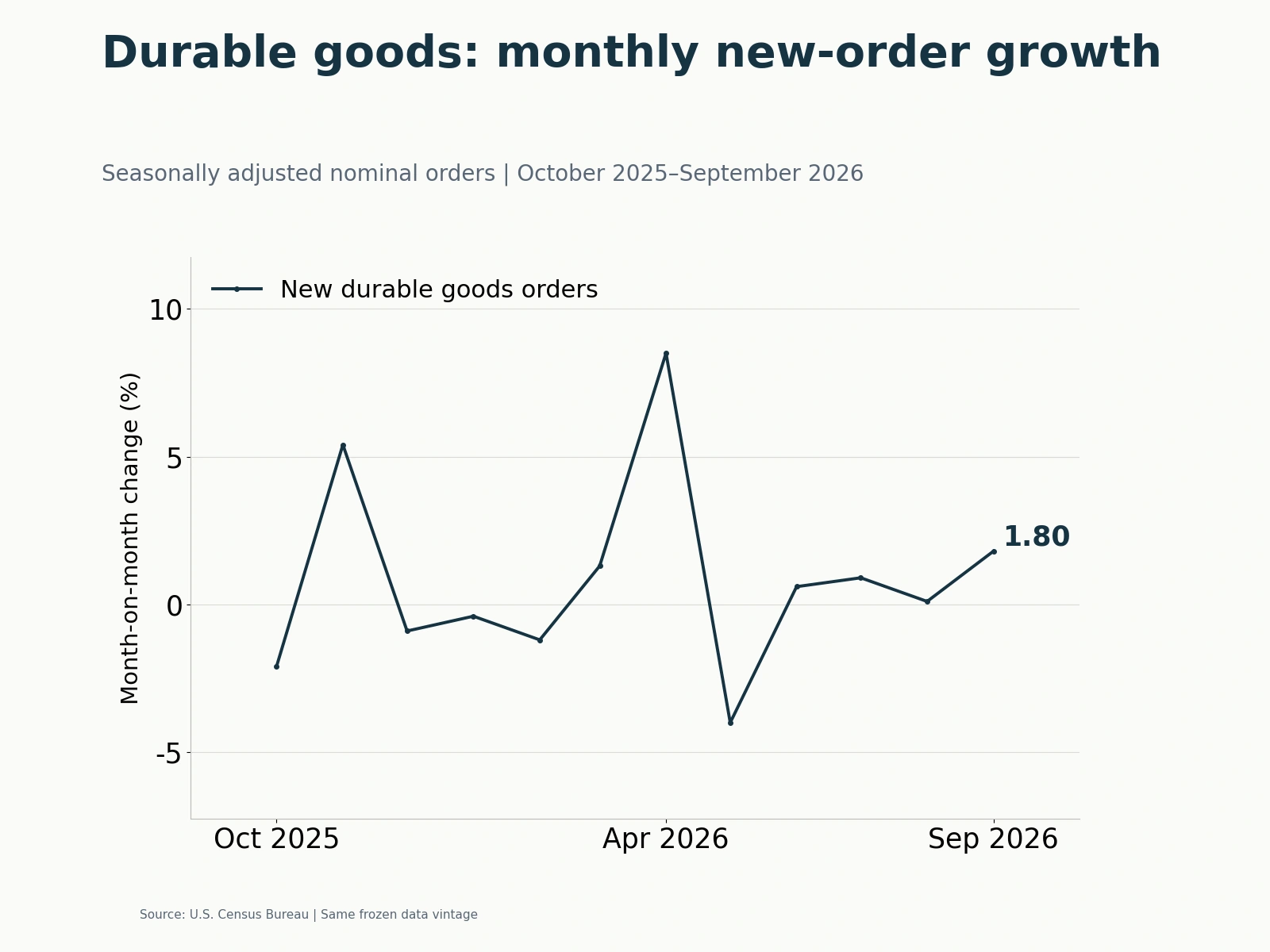
The U.S. Census Bureau reported that seasonally adjusted new orders for durable goods rose 1.8% in September from the preceding month to US$345.4 billion. August’s increase was revised to 0.1%. Transportation equipment orders rose 4.6% and accounted for most of the gain, while orders excluding transportation also increased 0.5%. All these figures are nominal amounts that have not been adjusted for price changes.
Orders for nondefense capital goods excluding aircraft, a closer measure of business equipment demand, increased 0.5%. Corresponding shipments rose 1.2%, up from a 0.6% increase in August. Orders reflect future purchasing arrangements, while shipments are closer to completed equipment deliveries. Growth in both measures suggests continued support for business investment. For the Fed, resilient business demand means the growth outlook has not yet broadly constrained its room to combat inflation.
Household confidence recovers, but future spending plans remain weak
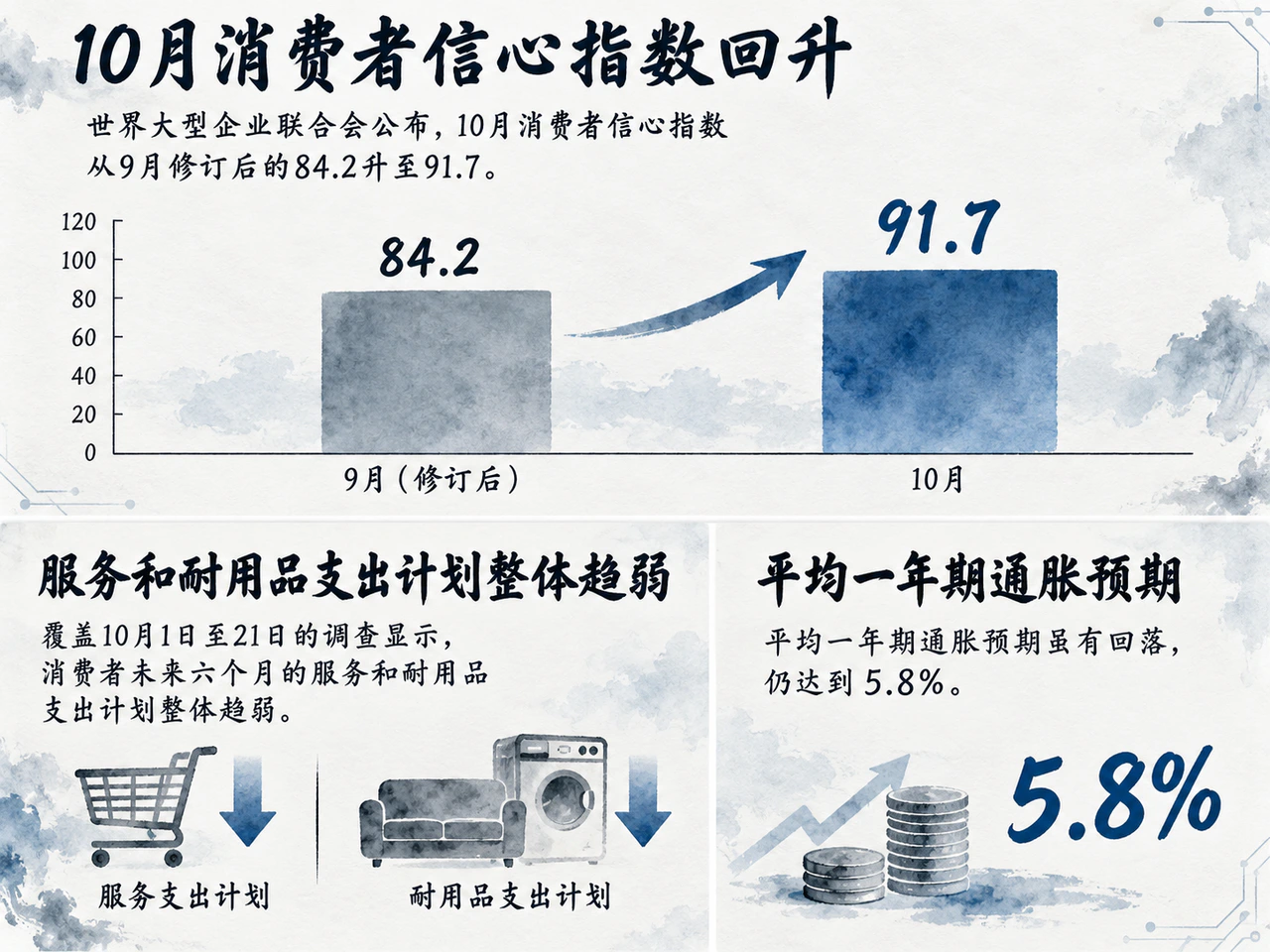
Changes among households were more complex. The Conference Board reported that its Consumer Confidence Index rose to 91.7 in October from a revised 84.2 in September. The Present Situation Index climbed to 120.4, while the Expectations Index recovered to 72.6. The share of respondents saying jobs were plentiful minus the share saying jobs were hard to get rose to 5.3 percentage points, an improvement of 2.4 percentage points from September.
The survey organization linked the improvement in confidence to an easing in retail gasoline prices compared with September. However, the survey, conducted from October 1 through October 21, also showed an overall weakening in consumers’ plans to spend on services and durable goods over the next six months. Average one-year inflation expectations declined but still stood at 5.8%. Slower price increases help restore sentiment, yet accumulated cost-of-living pressures continue to affect purchasing power. Improved confidence will take time to translate into actual consumption.
Markets favor a pause; the policy path awaits subsequent data
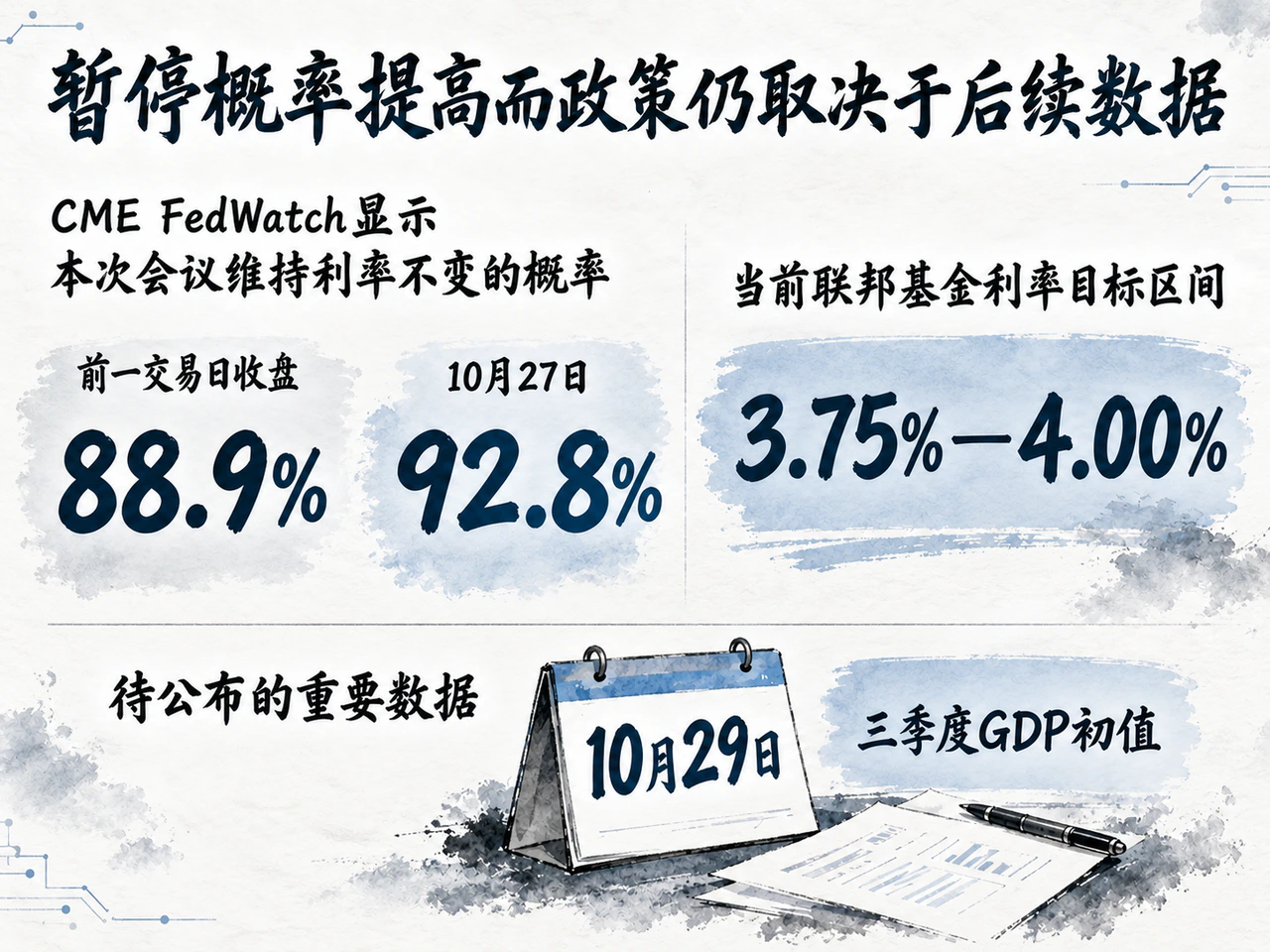
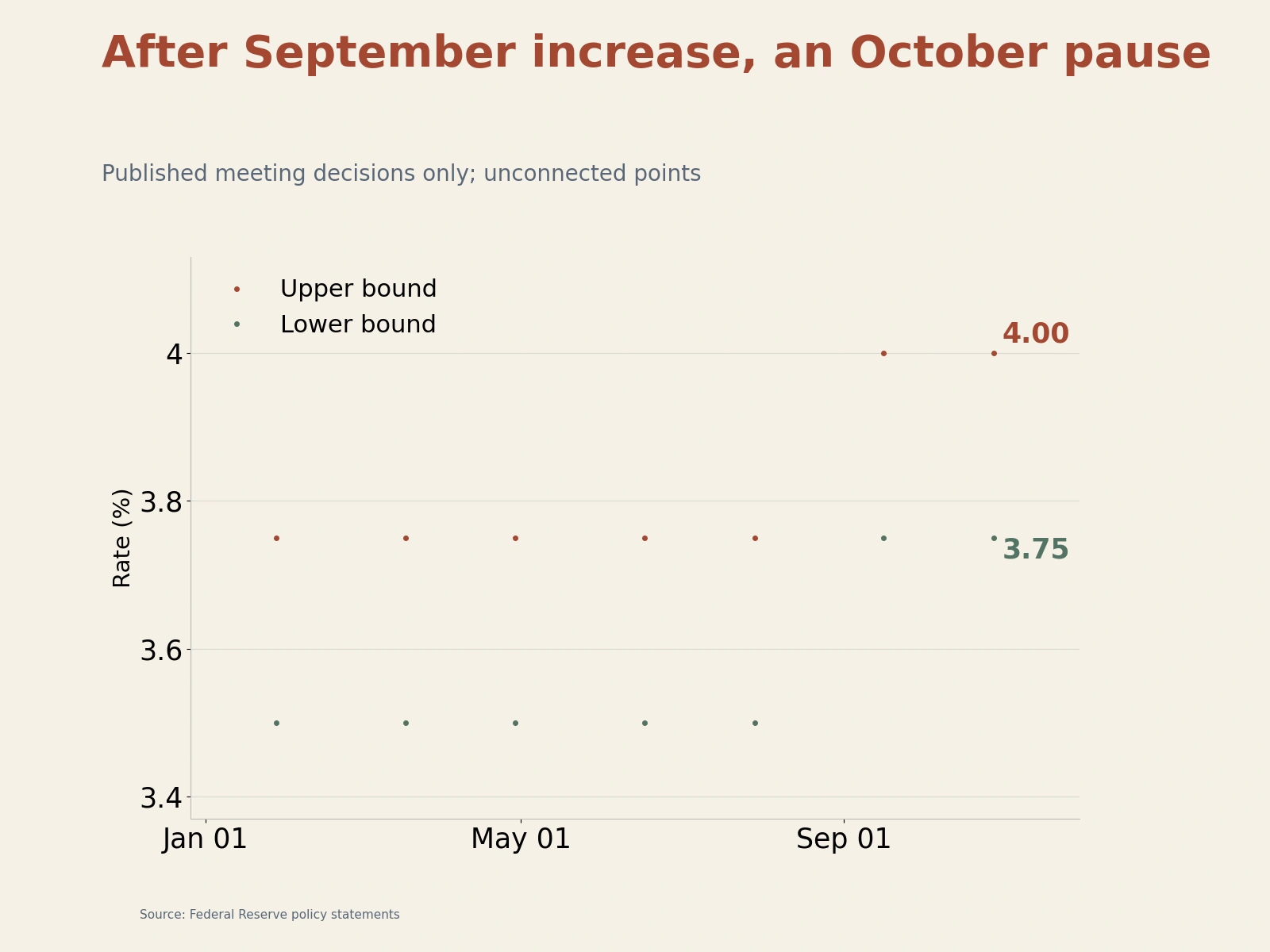
On September 16, the Fed raised its federal funds target range by 25 basis points to 3.75%–4.00% and emphasized returning inflation to its 2% objective in a timely manner. Stronger business investment and improved household expectations currently leave some room to continue combating inflation. Weaker spending plans, meanwhile, give the Fed reason to observe how successive rate increases affect demand.
According to Kiplinger’s October 27 update at 16:06 U.S. Eastern time, CME FedWatch put the probability of unchanged rates at this meeting at 92.8%, up from 88.9% at the preceding trading day’s close. Markets favored waiting at this meeting. Subsequent policy would still depend on whether inflation continued to ease and on the ability of demand and employment to withstand tighter conditions.
The rate decision on the afternoon of October 28 U.S. Eastern time and the subsequent press conference will show how the committee balances price pressures against divergent demand signals. The advance estimate of third-quarter GDP and September personal income and outlays report, both due October 29, will provide fresh evidence on growth, consumption and PCE inflation. If investment and consumption continue to expand while inflation improves only slowly, the case for further tightening will remain. If weaker spending plans gradually translate into slower actual expenditure, the case for continued observation will strengthen.