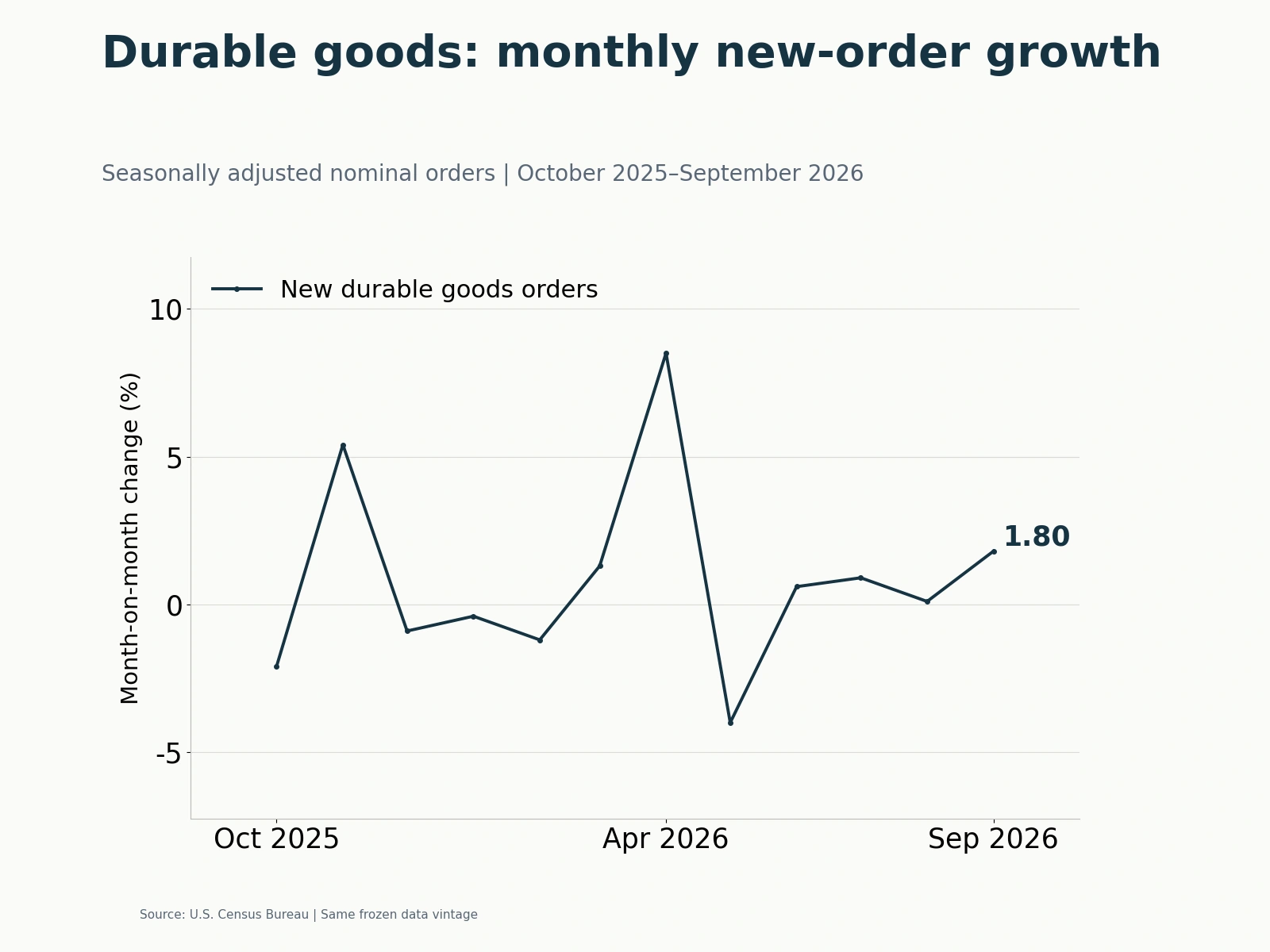
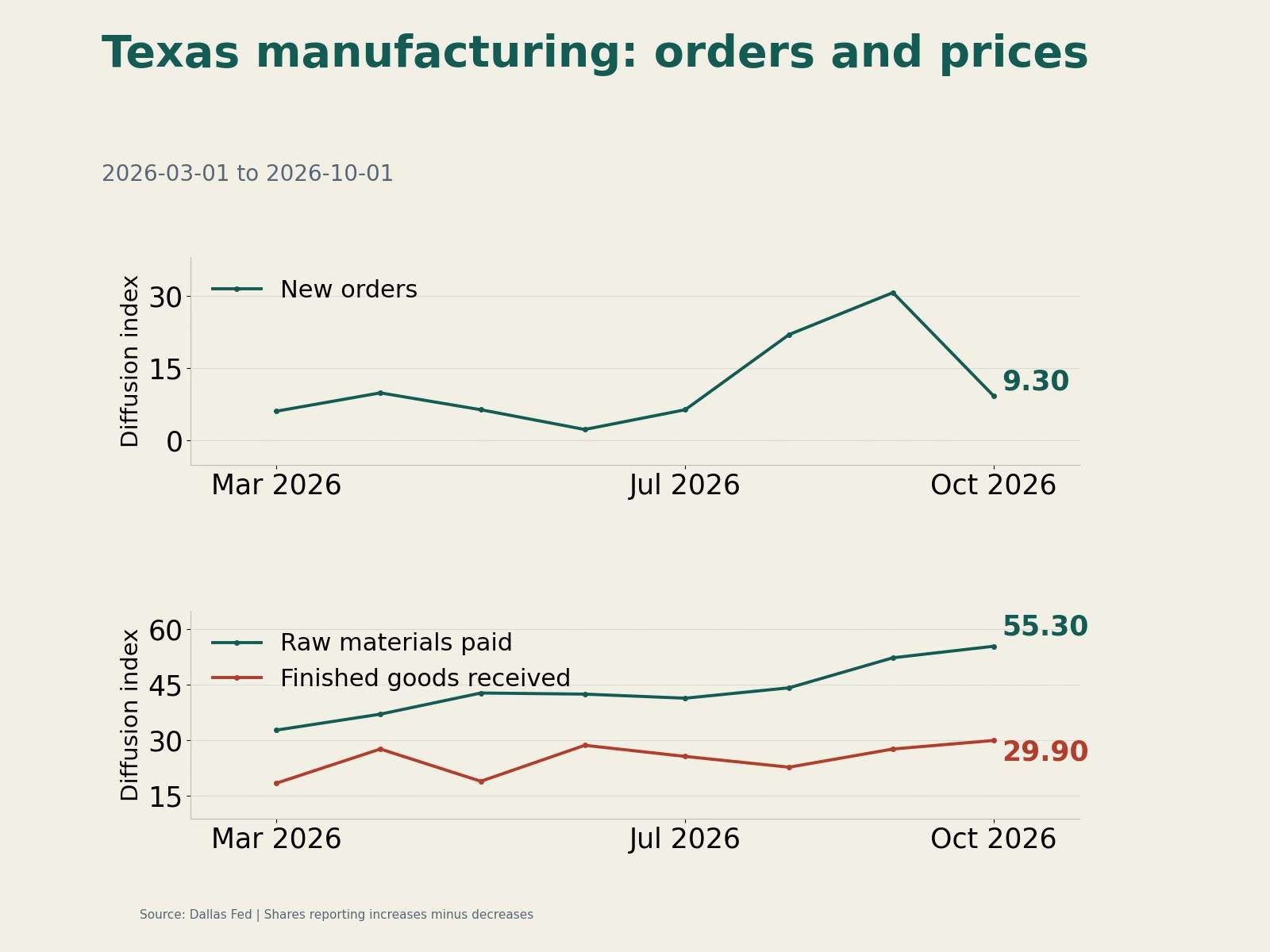
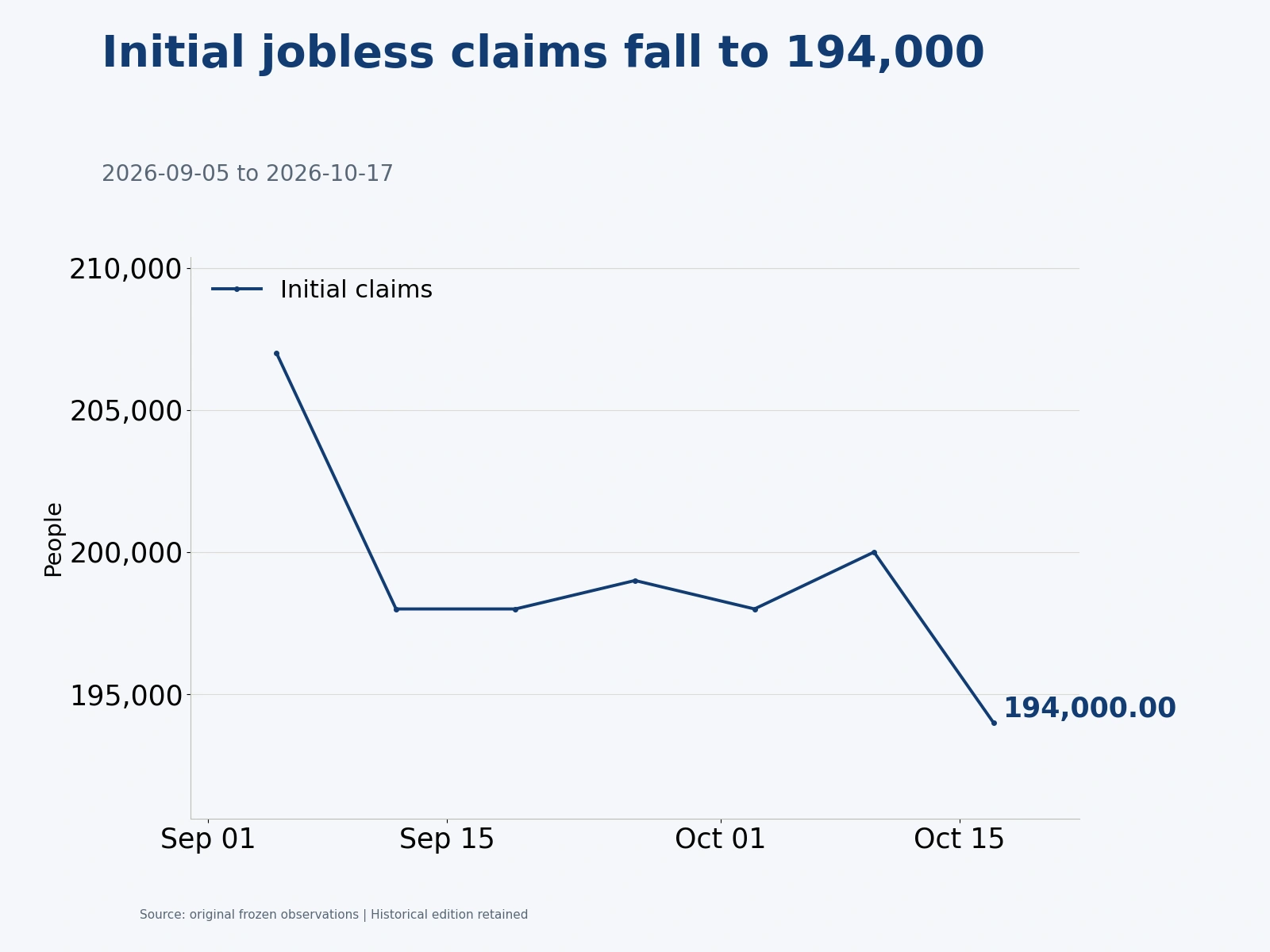
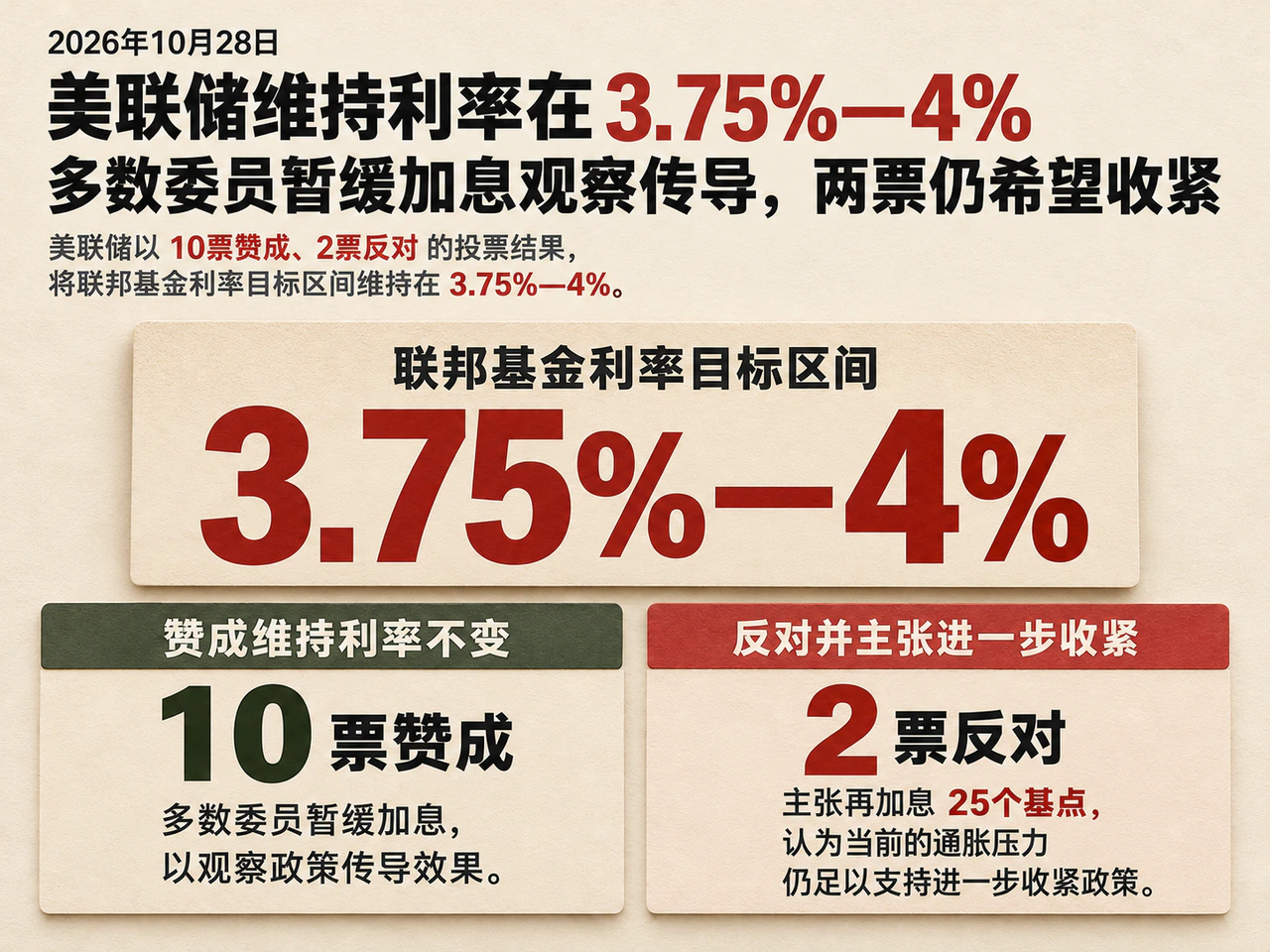
On October 28, 2026, the Federal Reserve voted 10–2 to keep the federal funds target range at 3.75%–4.00%. Following a 25-basis-point increase in September, most members chose to pause to assess how policy was working through the economy. Governor Lisa Cook and Cleveland Fed President Beth Hammack dissented in favor of another 25-basis-point increase, showing that current inflation pressure still provides a case for further tightening.
Growth assessment upgraded to “strong”; the pause allows time to assess tighter credit
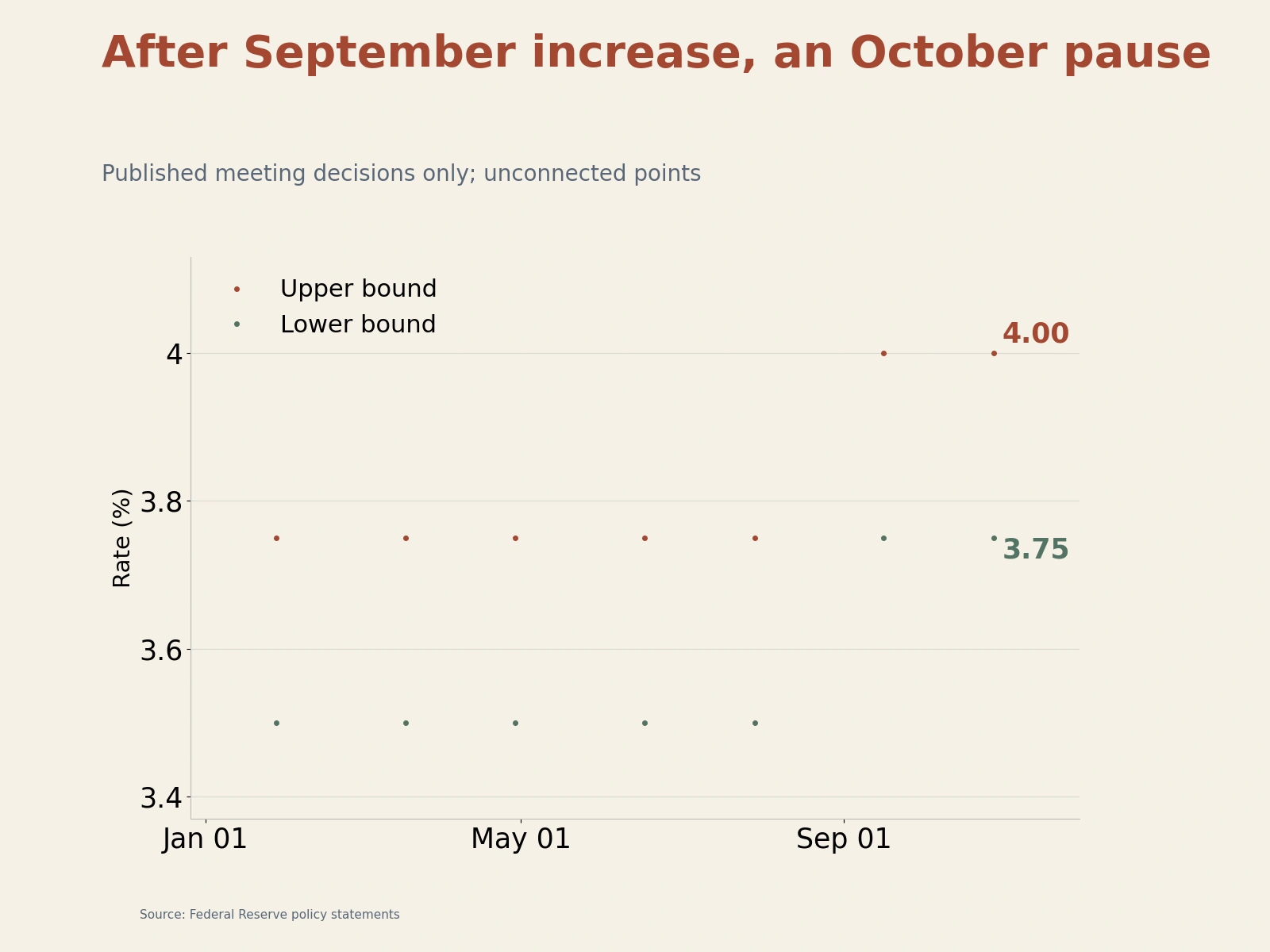
The policy statement offered a more positive assessment of economic fundamentals than in September. It upgraded the description of the pace of economic expansion from “solid” to “strong,” while continuing to emphasize resilient domestic spending, strong productivity growth and robust capital investment. Employment growth has kept pace with the labor force, and unemployment has changed little. At the same time, the statement retained its assessment that inflation remains elevated and added a key point: further information will help the committee determine the appropriate policy stance to return inflation to 2% in a timely manner. Taken together, these judgments suggest that the pause reflects a desire to observe policy transmission rather than deteriorating growth. Further rate increases remain an important subject for subsequent policy discussions.
According to CNBC's coverage of the post-meeting press conference, Chair Kevin Warsh said financial and credit conditions had tightened for some businesses and households since September's increase, and investors had become more selective in allocating capital. However, he also said overall financial conditions were not yet tight. This explains the majority's rationale for waiting: assess how much the increase in financing costs already under way will reduce demand before deciding how much more tightening is needed. The two calls for an immediate increase reflect a disagreement about timing under the same economic conditions. Resilient growth and investment warrant observing the previous increase's effects, but they also raise the risk that inflation will decline too slowly. Waiting can reduce errors in assessing the economy, yet persistent price pressure could still require further action.
Less forward guidance and fewer rate-setting meetings; GDP and PCE provide the next test
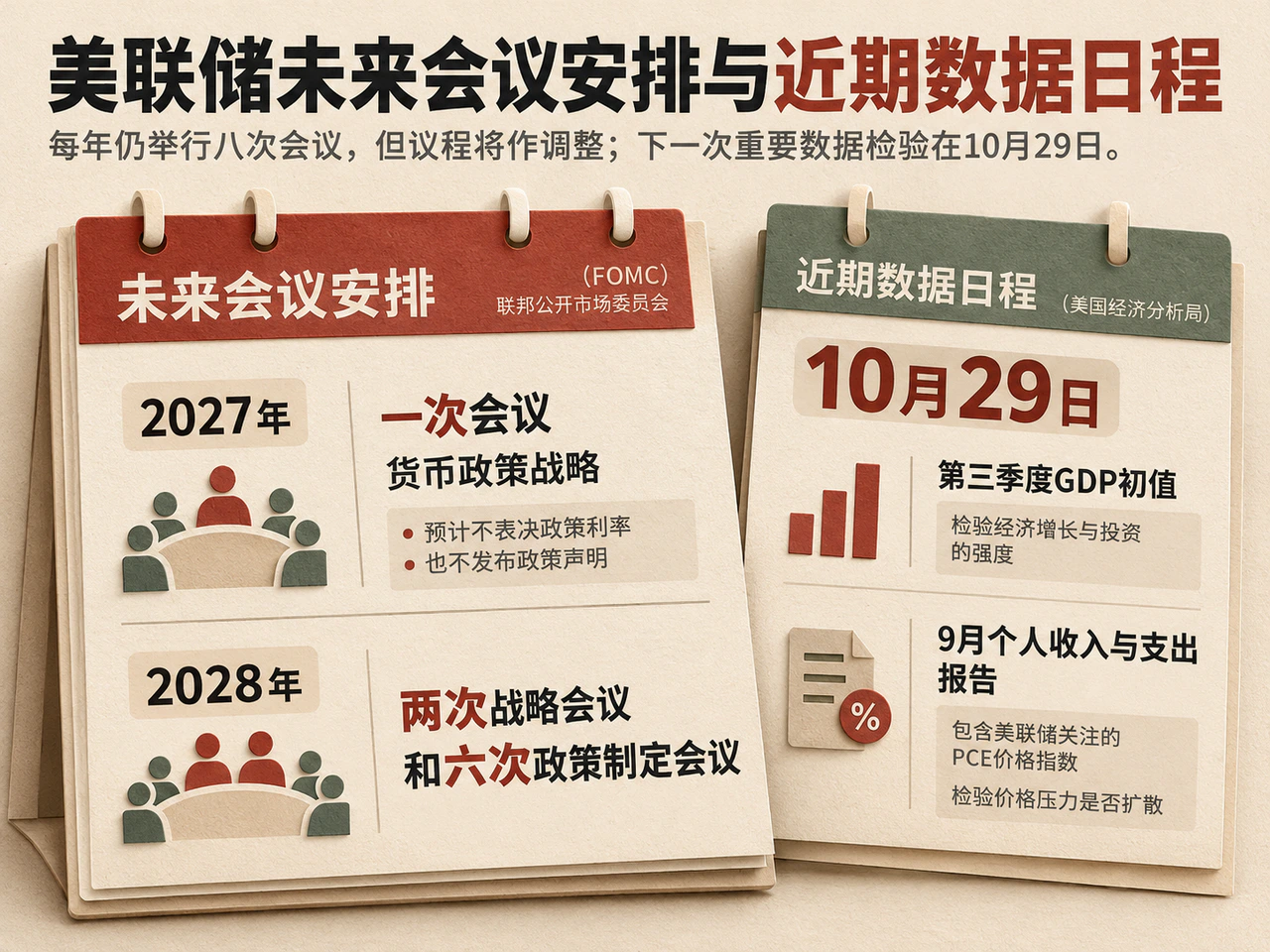
On communication and meeting arrangements, Warsh reiterated at the press conference that he opposes using forward guidance to signal the path of interest rates except in special circumstances such as a crisis. Without a commitment to a particular path, this pause provides an observation period. Markets will need to infer the next decision from inflation, employment and financing conditions. Warsh also announced that the Federal Open Market Committee will continue to meet eight times a year, with changes to the agenda. In 2027, one meeting will focus exclusively on broad monetary policy strategy and is not expected to include a policy-rate vote or statement. In 2028, two strategy meetings and six policy-setting meetings are expected. The change makes room for longer-term policy discussion while reducing the number of scheduled rate-decision occasions.
The nearest test comes on October 29, when the Bureau of Economic Analysis is due to release both its advance estimate of third-quarter GDP and September personal income and outlays, including the PCE price index watched by the Fed. The former will test the strength of growth and investment; the latter will show whether price pressure is broadening. If both confirm strong demand and sticky inflation, the case for further increases will strengthen. If price pressure eases while financing conditions continue to tighten, the committee will have stronger grounds for waiting for its earlier action to take effect.