On October 26, the Dallas Fed’s manufacturing survey sharpened the central tension in the week’s monetary-policy discussions: weaker demand takes time to feed through to prices, raising the question of how much growth must cool to bring down costs and selling prices materially. U.S. data available on the morning of October 27 Beijing time, ahead of the Fed meeting, were mixed. National activity remained near its historical trend growth rate, but regional manufacturing orders and shipments expanded much more slowly, while businesses still faced rising cost and pricing pressures.
Texas manufacturing orders fall to 9.3 as input and output price indicators rise
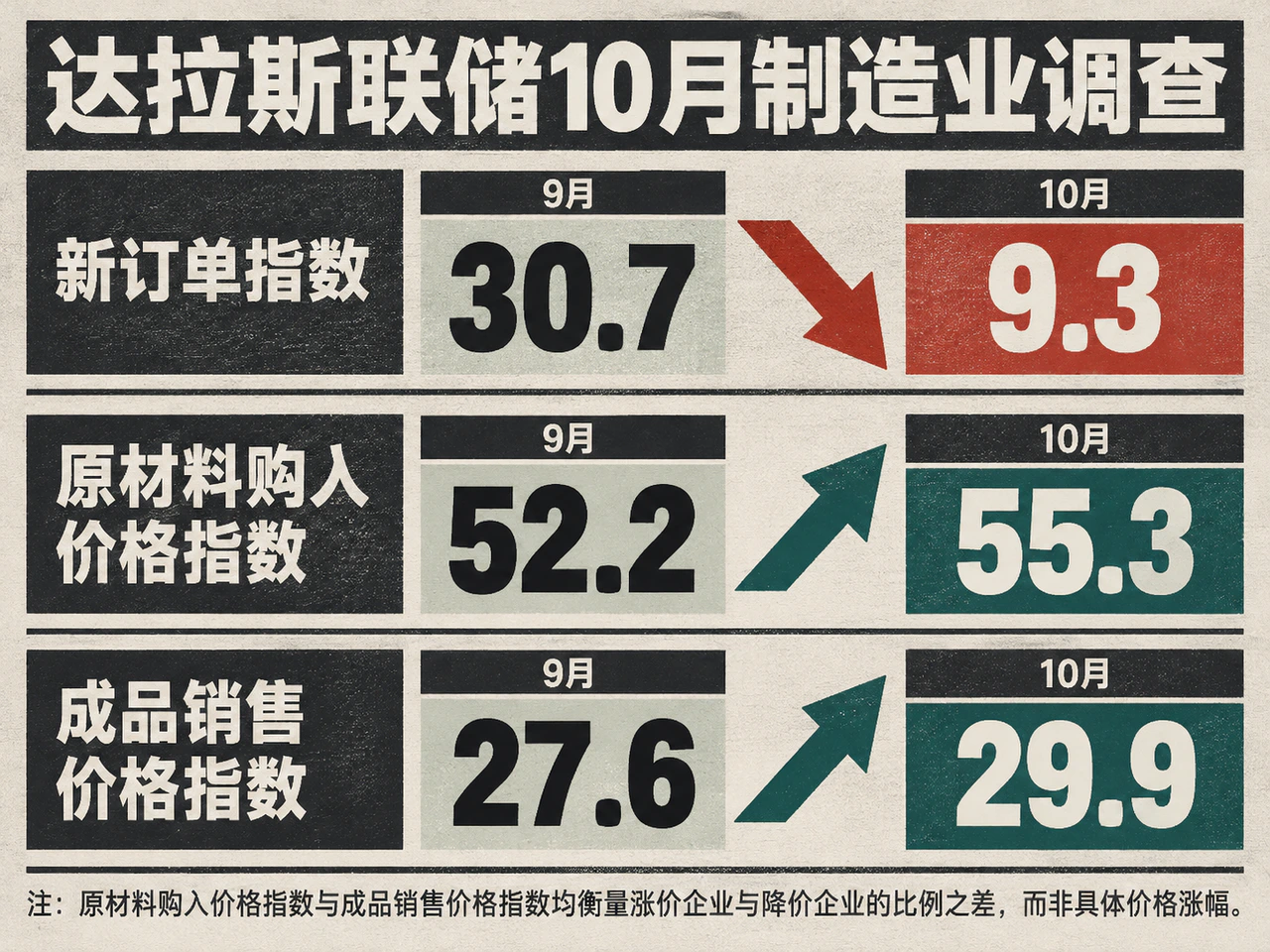
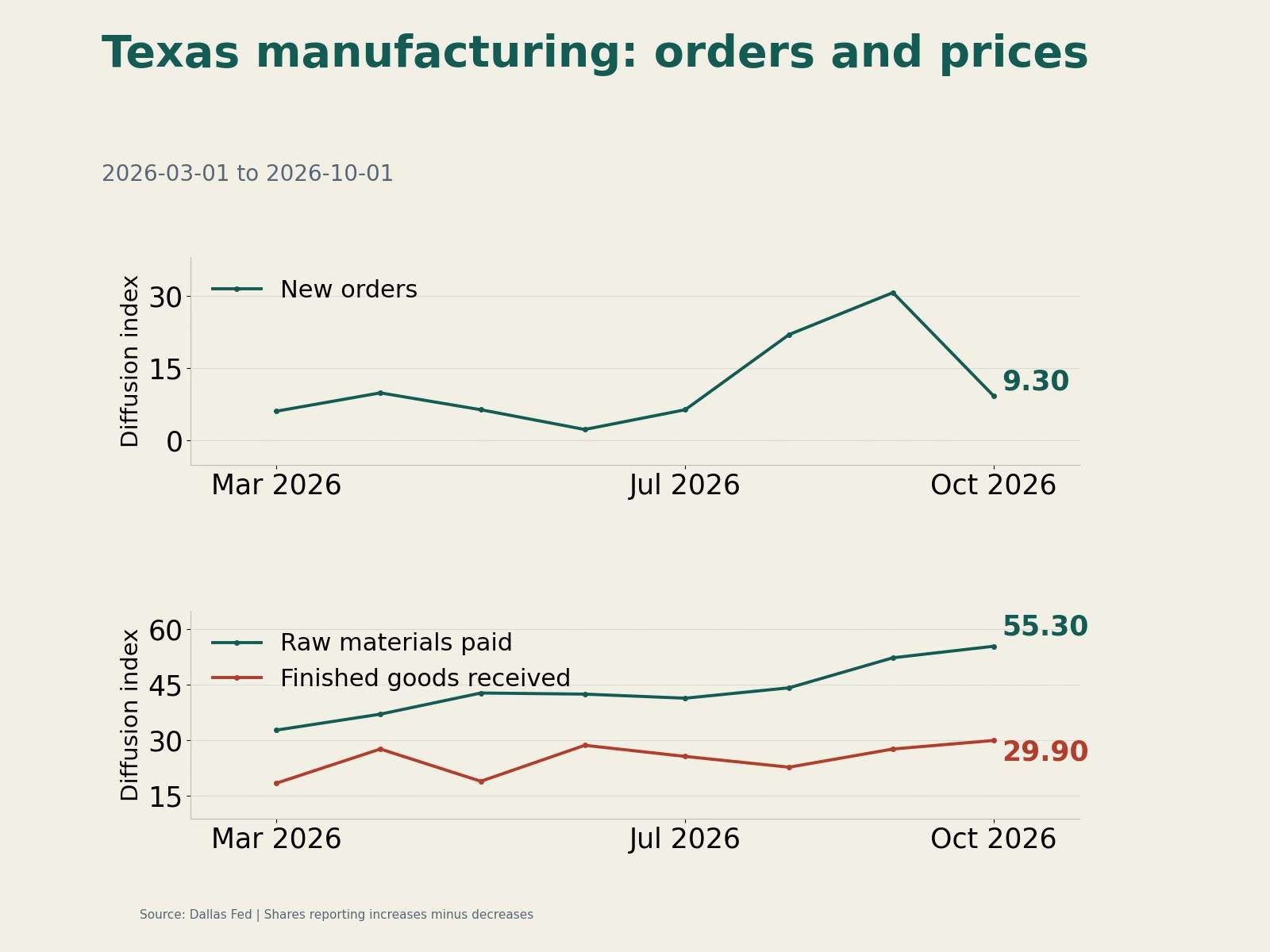
The Dallas Fed’s October manufacturing survey showed both production and demand expansion slowing in Texas. The production index fell from 29.5 in September to 15.8, the new-orders index dropped sharply from 30.7 to 9.3, and shipments declined from 24.8 to 8.4. These indicators remained positive, meaning the share of firms reporting monthly increases still exceeded the share reporting declines, but the breadth of expansion had narrowed substantially.
Employment and wage indicators also eased. In October, the employment index fell from 15.1 to 11.6, while wages and benefits declined from 27.4 to 20.8, signaling some marginal relief in labor-cost pressure. Slower current orders did not weaken firms’ overall assessment of conditions, however. The general business activity index instead rose from 9.8 to 13.4, and expectations for business activity six months ahead also improved markedly. Respondents had not broadly shifted toward expecting contraction.
In contrast to slower orders and wage growth, upward price pressure continued to spread. The raw-materials prices-paid index rose from 52.2 to 55.3 in October, and finished-goods prices received increased from 27.6 to 29.9. Both measure the difference between the shares of firms reporting price increases and decreases, rather than the magnitude of actual price changes. Some respondents said suppliers had raised raw-material quotations because of higher diesel costs, squeezing margins. Cooling orders alongside selling-price pressure meant that weaker demand would take time to affect inflation.
At the national level, overall activity also showed no clear loss of momentum. Trading Economics’ compilation of data released October 26 showed the September Chicago Fed National Activity Index turning positive at 0.07 from −0.08 in August. Its three-month average was 0.03, close to the zero level associated with historical trend growth. Production-related indicators improved, while the consumption and housing component’s contribution turned negative. Growth retained support, but its internal composition was uneven.
Markets price a pause this week and nearly 75% chance of another hike this year; focus turns to October 28
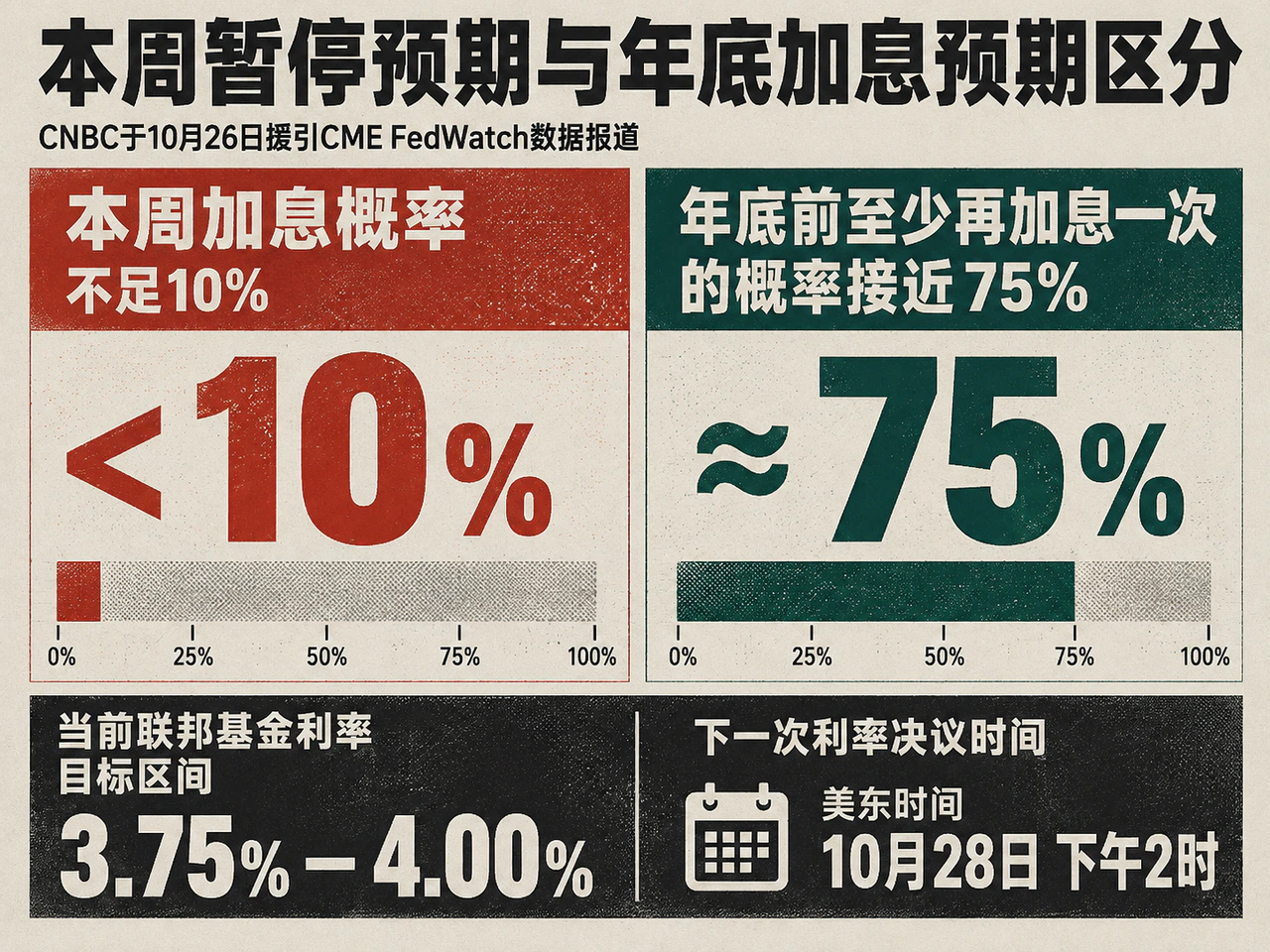
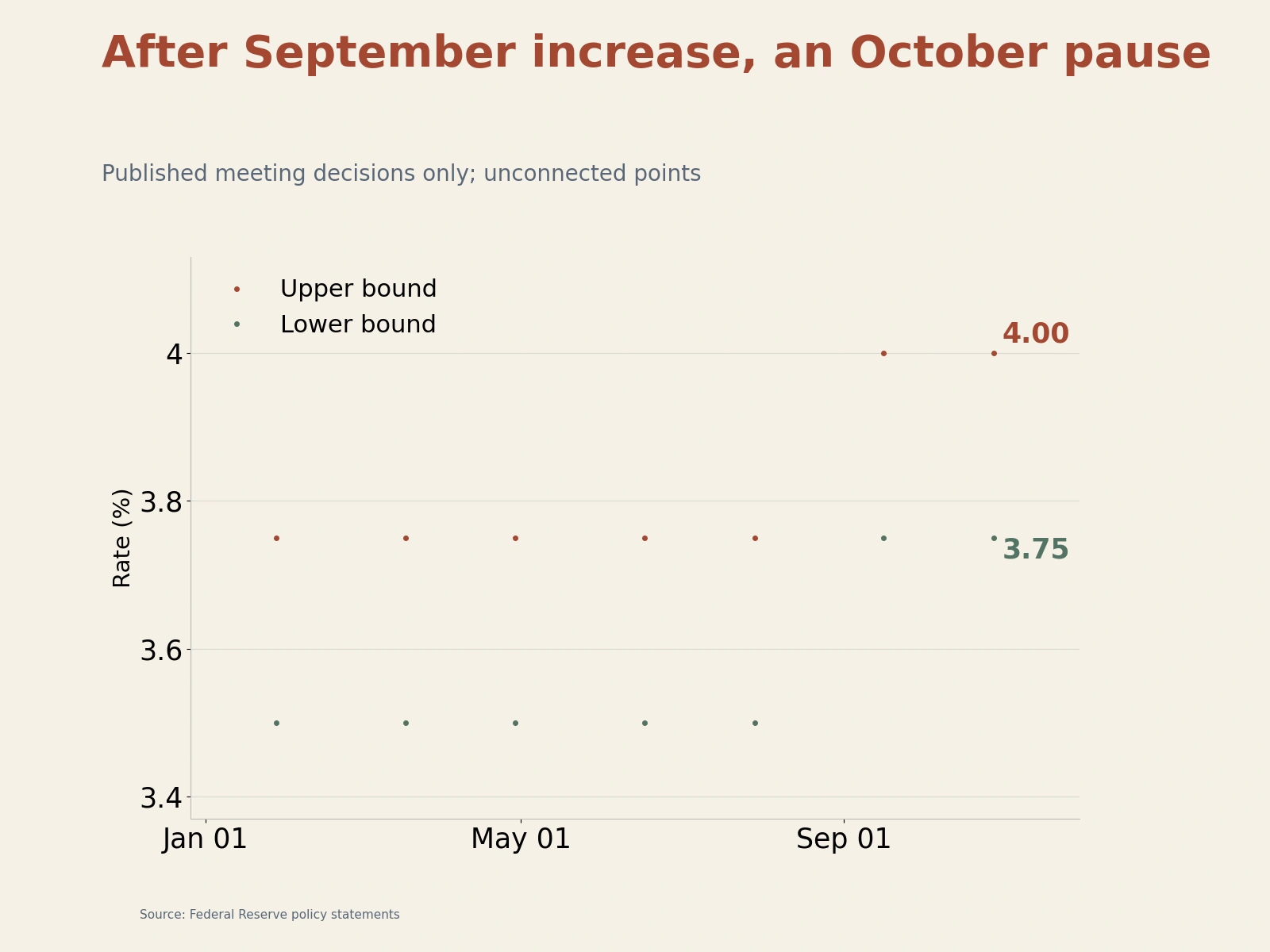
On September 16, citing still-elevated inflation and solid economic expansion, the Fed had raised the federal funds target range by 25 basis points to 3.75%–4.00%. Against the recent combination of cooling growth and persistent price pressure, markets distinguished clearly between the current meeting and the rest of the year. CNBC, citing CME FedWatch on October 26, reported a less-than-10% probability of a hike that week but a nearly 75% probability of at least one further increase before year-end. That structure showed that briefly waiting for more data could coexist with maintaining a restrictive policy stance.
As a regional manufacturing sample, the Texas survey illustrated how orders, hiring and business pricing could cool at different speeds. If demand and wage pressure continued to weaken, the Fed would gain more room to observe. If raw-material costs continued to pass through to end prices, the policy cost of waiting would rise.
The immediate test was the rate decision scheduled for 2 p.m. U.S. Eastern time on October 28, followed by the press conference half an hour later. With unchanged rates highly likely at this meeting, the policy statement’s assessment of inflation and growth, and the Fed chair’s conditions for subsequent action, would provide the key basis for judging the policy direction before year-end.