Over the past 24 hours, US forces launched a second round of strikes against Iran's Revolutionary Guards, widening targets considerably from Monday's localized rocket launchers to air defenses, radar, maritime facilities and minelaying capabilities. Iran then claimed ballistic-missile launches toward Jordan and threatened devastating retaliation. Fears of escalating conflict in Hormuz sent international crude futures above $94/barrel to their highest since late July. The confrontation followed two tracks: Trump publicly warned that the largest strikes were still to come while urgently gathering refining executives to discuss lower oil prices, revealing military deterrence abroad alongside domestic inflation constraints.
US airstrikes expand to minelaying and communications assets; Iranian missiles again probe Jordan
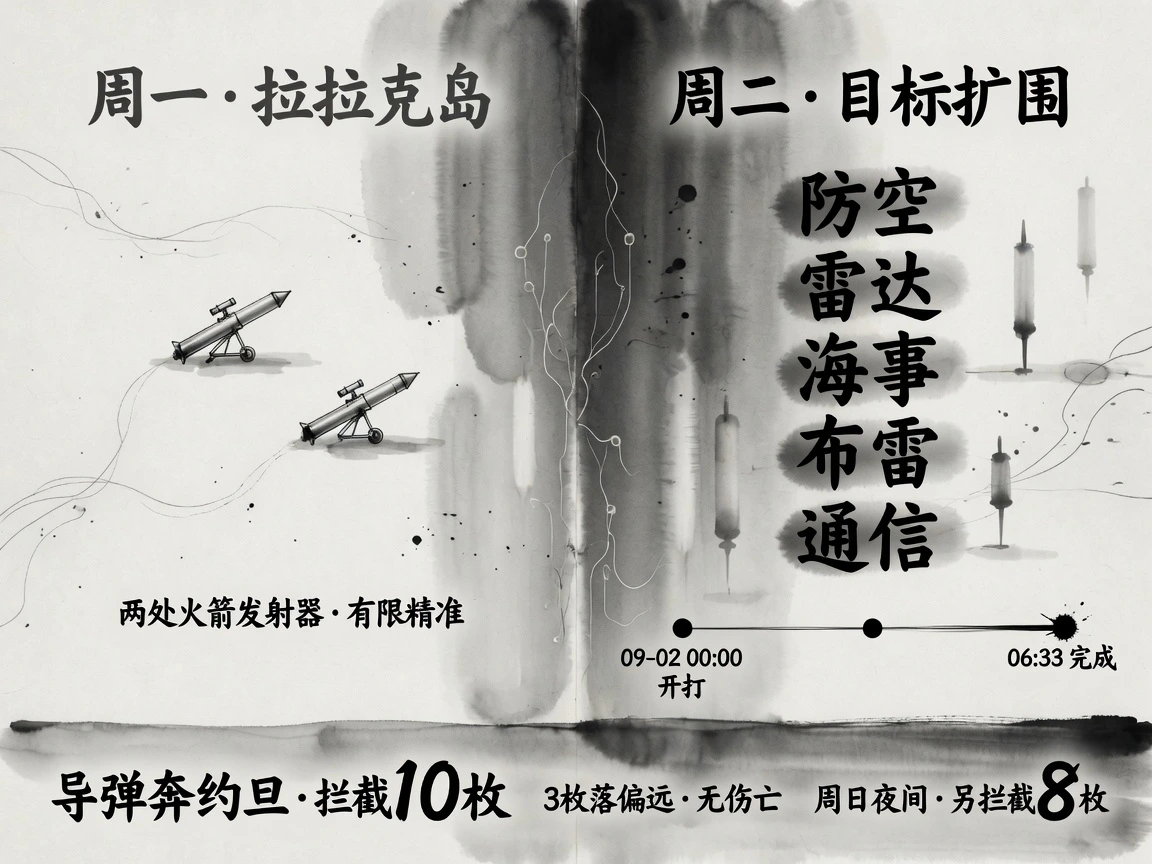
US Central Command (CENTCOM) began the new strikes at midday Tuesday US Eastern time, or 00:00 Beijing time on September 2. Its statement said they responded to recent Revolutionary Guard harassment of commercial shipping in Hormuz and attempted attacks on US forces in the region. At 06:33 Beijing time, the US announced completion. Compared with Monday's limited precision operation against two rocket launchers on Larak Island, the new target set broadened substantially to air-defense positions, radar networks, maritime facilities, minelaying assets and communications nodes.
Washington had repeatedly signaled a shift toward economic pressure, but the direct attack on maritime and minelaying capabilities indicated an intention to first strip Iran of asymmetric tactical means to close the strait.
Iran combined public intimidation with long-range probing. Its armed-forces general staff warned on state television of crushing strikes against the United States, saying the longer US forces remained in the region, the greater their cost would be. On Tuesday Iran released missile-launch footage, claiming launches toward Jordan. Jordan's military said air defenses intercepted ten missiles while three others fell in remote unpopulated land, causing no casualties. Air-raid sirens sounded in Mafraq and Aqaba. This was another cross-border long-range probe in the same launch window, following Jordan's interception of eight missiles on Sunday night.
The 'largest strike' remains pending as the White House meets refiners to contain oil-price spillovers
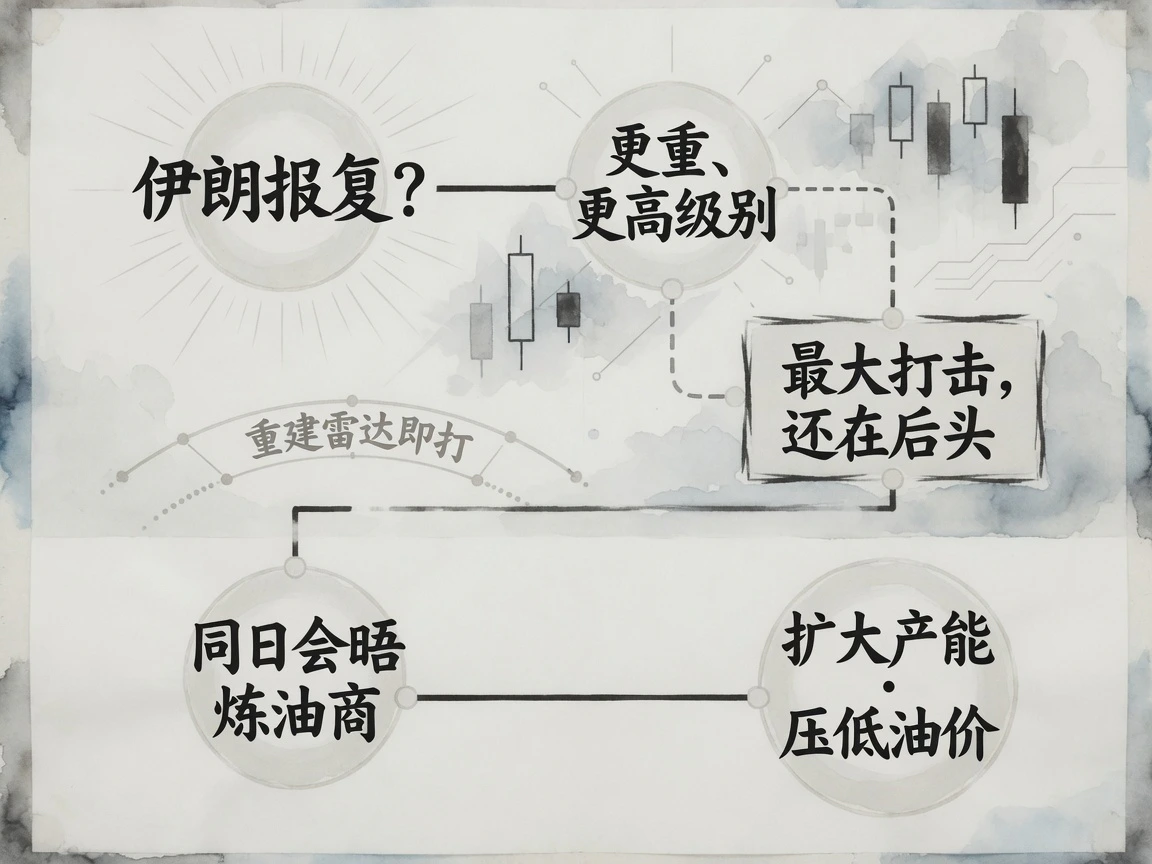
Trump maintained maximal deterrence on social media, warning: 'If Iran retaliates, it will face an even more forceful response. But this is still not the largest strike—that operation is still ahead, and little of the Islamic Republic of Iran will remain afterward.'
In a subsequent Fox News interview, Trump explained the tactical logic: US forces targeted radar networks Iran was trying to repair. 'They were trying to restore the radar because they had already lost their battlefield vision; we waited until the radar was close to completion before striking.' He confirmed Gulf allies had been notified beforehand. On negotiations, he said a deal with Iran had no value because it could not constrain the other side.
As the airstrikes proceeded, Trump urgently met executives from nearly ten refining and distribution companies at the White House to discuss expanding refining capacity and lowering US retail gasoline prices. External military coercion and domestic concern about energy-inflation blowback stood side by side on the same day's agenda.
Iranian officials report damage to a wedding and petrochemical hubs; US offers no comment
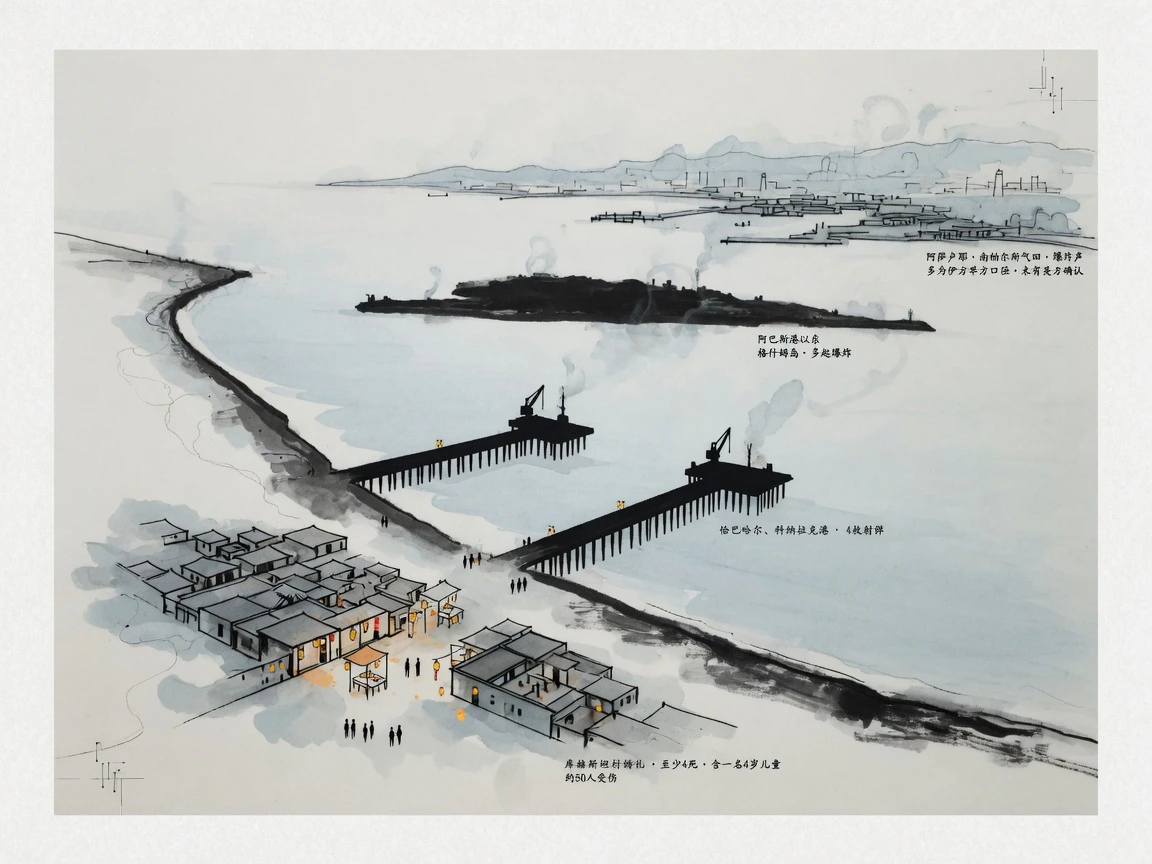
Iranian official media issued multiple damage claims. Hormozgan's deputy governor told state television that a US strike hit a wedding in Kuhestan village, Sirik county, killing at least four people, including a four-year-old child, and injuring around 50. The United States did not respond to the allegation.
Iranian officials also said four projectiles struck the strategic southeastern ports of Chabahar and Konarak. State television reported multiple explosions east of Bandar Abbas and near Qeshm Island, a key location on Hormuz's northern side. Other reports described strikes on Jiroft's regional airport and a fishmeal plant on Qeshm. Fars News Agency reported loud explosions in Asaluyeh, the Gulf gas and petrochemical hub adjacent to South Pars. Local officials confirmed unusual sounds but disclosed neither cause nor damage.
These damage reports remained based on Tehran's unilateral sources, without US confirmation or an independent third-party battle-damage assessment.
Oil rises above $94 as US Treasury reiterates a long-term economic-strangulation strategy bypassing Hormuz
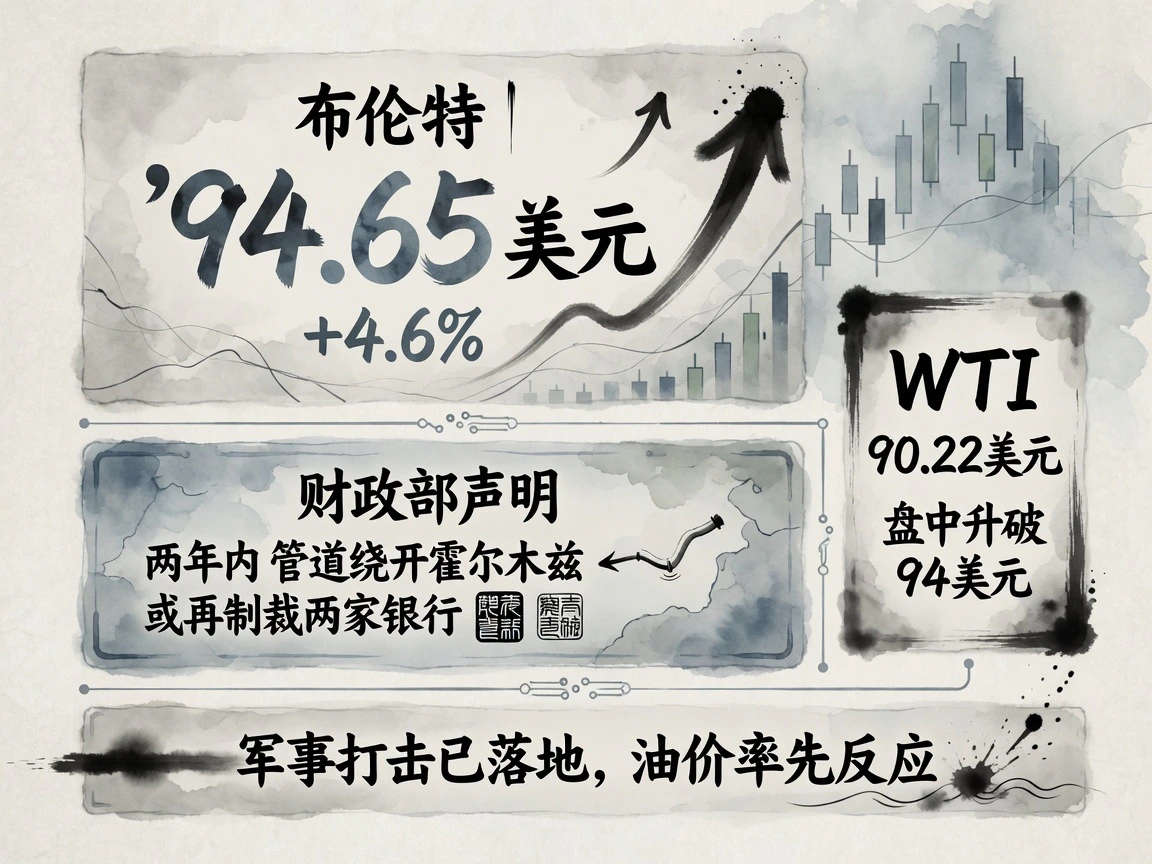
Substantive escalation rapidly fed into international commodity pricing. After the second US strike announcement, crude risk premiums widened sharply. Reuters data showed Brent futures settling up 4.6% at $94.65/barrel, the highest close since late July, while WTI closed at $90.22. Oil bulls were pricing both tactical strikes and the Treasury's warning of unprecedented sanctions.
At the G20 finance ministers' meeting in North Carolina, the US Treasury secretary reiterated the Iran strategy: 'Hormuz will eventually be bypassed by overland oil pipelines; within two years its strategic importance will be greatly diminished.' He said the aim was to economically strangle Iran by cutting external financing and force it back to negotiations. After initially identifying a Dubai bank linked to Iran, Treasury planned sanctions against two additional financial institutions within weeks. He remained cautious about directly sanctioning Iran's largest trading partner, saying shared interests on Iran greatly exceeded differences.
Key developments in the past 24 hours

| Key developments |
|---|
| 09-02 06:33CENTCOM announced completion of new strikes on Iran, expanding targets to air defenses, radar, maritime facilities, minelaying capabilities and communications nodes. |
| 09-02 00:00US forces began airstrikes, describing them as a response to Revolutionary Guard threats against Hormuz merchant shipping and US personnel. |
| Night of 09-01–09-02Trump warned that retaliation would trigger stronger counterstrikes, claiming the largest strike remained ahead and would leave little of Iran's government. |
| Night of 09-01–09-02In a US media interview, Trump explained the tactical aim of striking Iran's radar network under reconstruction and said Gulf allies were notified in advance. |
| Night of 09-01–09-02Trump met nearly ten refiners and distributors at the White House, seeking more refining capacity to restrain domestic gasoline prices. |
| 09-01–09-02Iran's armed-forces general staff threatened devastating strikes, saying a longer US military presence would carry greater costs. |
| 09-01Iran released footage of missiles fired toward Jordan. Jordan reported ten interceptions and three missiles falling in remote land, without casualties. |
| 09-01Iranian officials alleged a US strike accidentally hit a wedding in Kuhestan, Sirik county, killing four and injuring around 50. The US did not respond. |
| 09-01Iranian officials reported four projectiles striking Chabahar and Konarak ports, with explosions east of Bandar Abbas, at Jiroft airport and on Qeshm Island. |
| 09-01Pro-government media reported explosions in petrochemical center Asaluyeh, associated with the South Pars gasfield. Local officials confirmed unusual sounds but provided no details. |
| 09-01–09-02Oil jumped after the US strike announcement, with Brent closing above $94.6/barrel at its highest since late July. |
| 09-01At the G20 finance ministers' meeting, the Treasury secretary emphasized economic strangulation, saying pipelines would bypass Hormuz within two years and sanctions on two Iran-linked banks were planned within weeks. |