Over the 24 hours through the morning of September 3, Beijing time, the Gulf conflict's focus shifted fully to Tehran's retaliation. Just an hour and a half after the U.S. announced completion of fresh strikes on IRGC targets, tensions escalated again. Iranian retaliation spread beyond Jordan to overnight salvos at bases in Bahrain, Kuwait, the UAE and Erbil in Iraqi Kurdistan. After a wedding in Hormozgan was hit, Iran's Health Ministry raised its nationwide tally to 18 dead and 108 injured. Washington denied targeting civilians, while Trump claimed almost complete control of Hormuz and proposed renaming it the Trump Strait. Shipping neared paralysis: daily merchant transits fell to single digits amid tanker attacks and disputed mine incidents at both ends.
Retaliation expands across countries as Gulf bases come under overnight attack

From Tuesday noon Eastern time, U.S. strikes targeted IRGC air defenses, radar, maritime facilities, minelaying capability and communications sites, lasting more than six hours. The conflict began with joint U.S.–Israeli strikes in late February, after which Iran announced a Hormuz blockade. Repeated ceasefires broke down over merchant attacks and mining disputes. Tuesday's intensive strikes marked another major escalation after a truce collapsed.
Despite Trump's warning of heavier attacks if Iran retaliated, Tehran launched multidirectional responses: ballistic missiles toward Jordan and drones toward Bahrain and Kuwait. Jordan said ten missiles were intercepted and three landed in remote desert without casualties. Bahrain and Kuwait also reported drone interceptions. One drone caused a residential fire in Kuwait, extinguished without casualties. The IRGC claimed combined missile-drone strikes destroyed a repair center, warehouses and a U.S. surveillance balloon's guidance system in Erbil. AFP correspondents confirmed loud explosions near Erbil airport.
Accounts of U.S. base damage and casualties diverged sharply. Two U.S. officials told Reuters preliminary assessments showed no U.S. casualties; the IRGC claimed major U.S. casualties in Jordan and Erbil. Neither supplied independent verification. Iranian state media listed attacks east of Bandar Abbas, on Qeshm, in Chabahar, Konarak, Jiroft airport and Asaluyeh, substantially overlapping earlier unilateral reports; Washington did not confirm each site. Tasnim also reported four Iranian aerospace personnel killed in Kermanshah and three militiamen on Lavan Island.
Wedding attack: civilian casualty accounts differ as Washington avoids specific building-damage questions

A wedding strike in Kuhestan village, Sirik county, Hormozgan, became the day's most controversial event. Iranian media said fragments struck the wedding home, killing several people including four-year-old Amirali Karimi and injuring at least 68. Local health officials said at least nineteen injured children were under ten—seven boys and twelve girls. The Red Crescent had earlier reported five dead and nearly seventy injured. Definitions and counts differed, and on-site verification remained incomplete.
Geolocated footage placed the building in a residential area about 135 meters from a heavily damaged communications tower; foreign media noted details could not be independently verified. Foreign Ministry spokesman Baghaei condemned the strike Wednesday as a brutal war crime and accused Washington of normalizing civilian bombing. Health Minister Zafarghandi later gave a nationwide tally of eighteen killed and 108 injured in overnight U.S. strikes; Khuzestan officials separately reported seven deaths. The UN secretary-general's spokesman expressed grave concern over escalation and deep shock at reports of a civilian wedding being hit.
Washington responded cautiously without directly addressing whether a missile affected the wedding home. A Pentagon spokesman said it was aware of Iranian state-media reports, that U.S. forces never target civilians, and that the IRGC put them in danger. Whether Washington would disclose the nature of specific targets remained to be seen.
Trump claims control and proposes renaming the strait, escalating the geopolitical contest
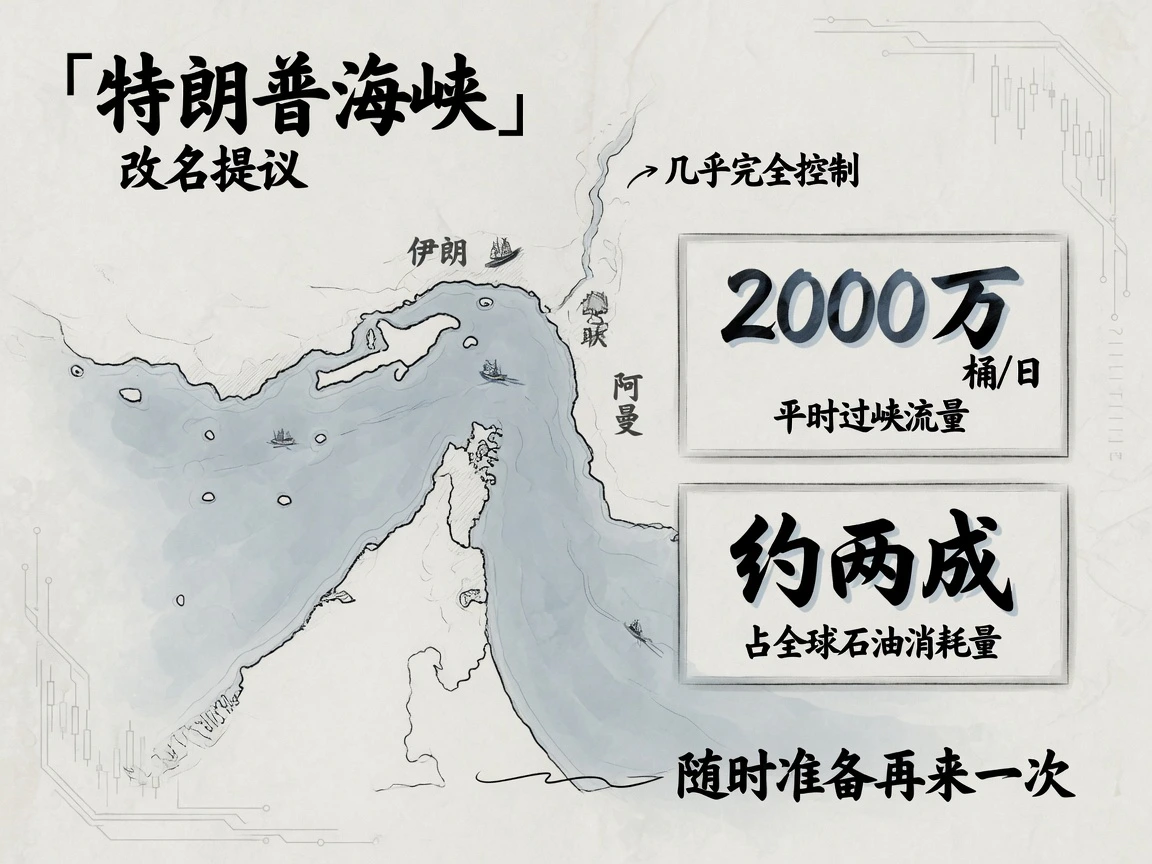
On Tuesday evening Beijing time, Trump wrote on Truth Social that he did not care whether Iran signed what he called a worthless agreement. He said he preferred the current position of almost complete control over Hormuz while Iran's economy collapsed, and asked when Iranians would rise in opposition.
In an Oval Office interview Wednesday he called Tuesday's attack a very heavy blow and said another could be launched at any time. He claimed Iran could no longer see ships because its radars had been destroyed, adding that more than radar was hit. He also proposed renaming Hormuz the Trump Strait on the claim that it was under U.S. control.
Regional diplomatic reactions intensified. The GCC secretary-general condemned Iran's overnight attacks on U.S. bases as outrageous; the UAE issued condemnation Wednesday. Pakistan urged restraint and said mediation had not failed. Secretary of State Rubio downplayed outside assistance to Iran, saying it could not prevent necessary U.S. military action to protect American security.
Hormuz remained irreplaceable despite the naming provocation. Normally about 20 million barrels of crude pass daily, around one-fifth of global consumption. Public claims of control and renaming served psychological and maximum-pressure aims against Tehran while preparing opinion for a larger U.S. air and naval presence.
Shipping freezes: single-digit transits amid tanker attacks and disputed mine incidents
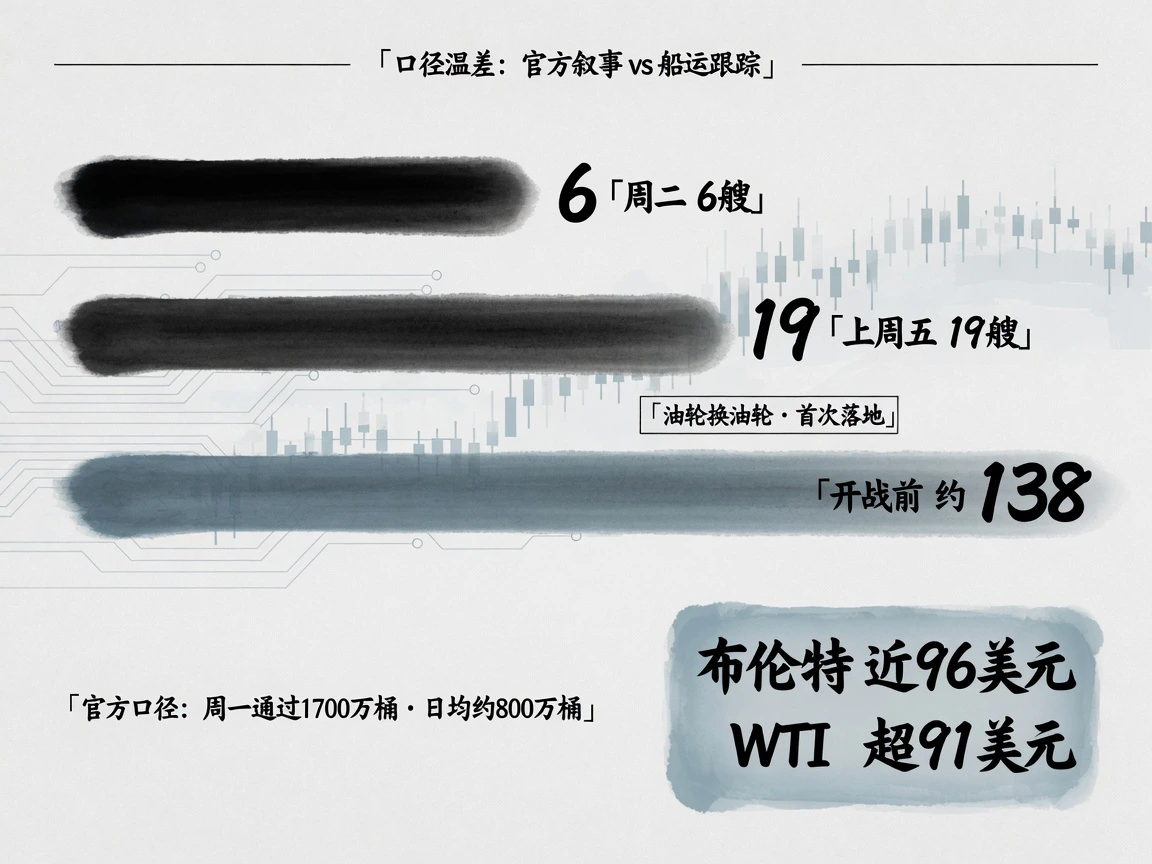
Official optimism contrasted sharply with independent tracking. Wright said Monday that 17 million barrels passed Hormuz that day, the highest since the war began, versus an earlier daily average near 8 million. Real-time tracking instead showed only six merchant ships crossed Tuesday, versus nineteen the previous Friday and approximately 138 daily before war. These are different measures—one day's oil volume and ship counts—but strong shipowner risk aversion and near-paralysis were unmistakable.
Tanker reports intertwined and conflicted. UKMTO and third-party trackers reported at least two tankers hit by projectiles since Sunday. U.S. officials said Tuesday's targets included two Iranian government tankers, the first implementation of Trump's approved tanker-for-tanker policy; the military's public statement referred only to maritime assets. Wednesday brought reports of another attack causing two crew casualties. Saudi Arabia accused Iran of deliberately attacking a Saudi tanker; the IRGC countered that two tankers entered illegal routes at U.S. urging and struck mines. The full picture awaited independent verification.
Oil's response was relatively restrained. By Tuesday night Eastern time, front-month Brent was around $96 a barrel and WTI fluctuated narrowly above $91. Until merchant passage clearly escaped single-digit stagnation, substantial geopolitical premiums would continue weighing on the market.
Key developments over the past 24 hours (Beijing time)

| Key developments |
|---|
Fighting continued overnight. The Red Crescent reported five dead and nearly seventy injured at the wedding; the IRGC announced attacks on U.S. bases in Iraq, the UAE, Bahrain, Kuwait and Jordan. |
Trump called the strikes a heavy blow and said further action was ready; the Pentagon released strike footage. Rubio said outside help for Iran would not obstruct U.S. military action. |
Foreign-media updates covered retaliation against Jordan, Bahrain and Kuwait; Iran's health minister gave a nationwide eighteen dead and 108 injured; Washington denied targeting civilians. |
Trump proposed the Trump Strait name. Tracking showed six Tuesday transits. British maritime reporting described two crew casualties in a tanker attack; the GCC condemned overnight strikes. |
Oil fluctuated under pressure: Brent near $96 and WTI above $91. |
Trump claimed almost complete Hormuz control, dismissed the ceasefire agreement and urged Iranians to rise in opposition. |
Foreign media reported at least four civilians killed at the Sirik wedding, including a four-year-old; Khuzestan separately reported seven deaths. |
U.S. officials confirmed strikes on two Iranian government tankers in the first tanker-for-tanker action. Iranian unilateral reports said four aerospace personnel died in Kermanshah and three militiamen on Lavan. |
Iranian media said Sirik's communications tower was hit. The IRGC reported strikes on Jordan and Erbil sites; initial U.S. assessment found no personnel casualties. |
Iranian drones and missiles targeted U.S. facilities across Gulf states. A falling drone caused a Kuwait residential fire without casualties. |
Foreign media said overnight U.S. strikes exceeded six hours, the largest escalation so far that month. Iran initially reported at least four wedding deaths. |
U.S. forces announced completion of IRGC-facility strikes; the Red Crescent reported five wedding deaths and nearly seventy injured. |
Iran's Foreign Ministry alleged war crimes; the UN secretary-general expressed shock over wedding reports. Pakistan said mediation had not failed, and the UAE condemned the attacks. |
Wright said Monday Hormuz flow reached 17 million barrels, the conflict's daily high, against a current average near 8 million. |


