By the morning of September 4, Beijing time, Gulf attention had shifted fully to Iran's second retaliatory round. No new US military action had recently been publicized; Tehran drove nearly all developments. Kuwait again intercepted missiles and drones from Iran's direction, Iranian state TV confirmed strikes on US targets in Gulf countries, and a senior security official declared a new strategy would crush US foundations. Foreign-media casualty compilations revised deaths from US airstrikes to at least 19. On the flank, Israel said it would retaliate forcefully alone if attacked during coming Jewish holidays. Military escalation was proceeding in one direction while mediation remained stalled.
Second night: Kuwaiti air defenses activate again as Tehran confirms US-base attacks
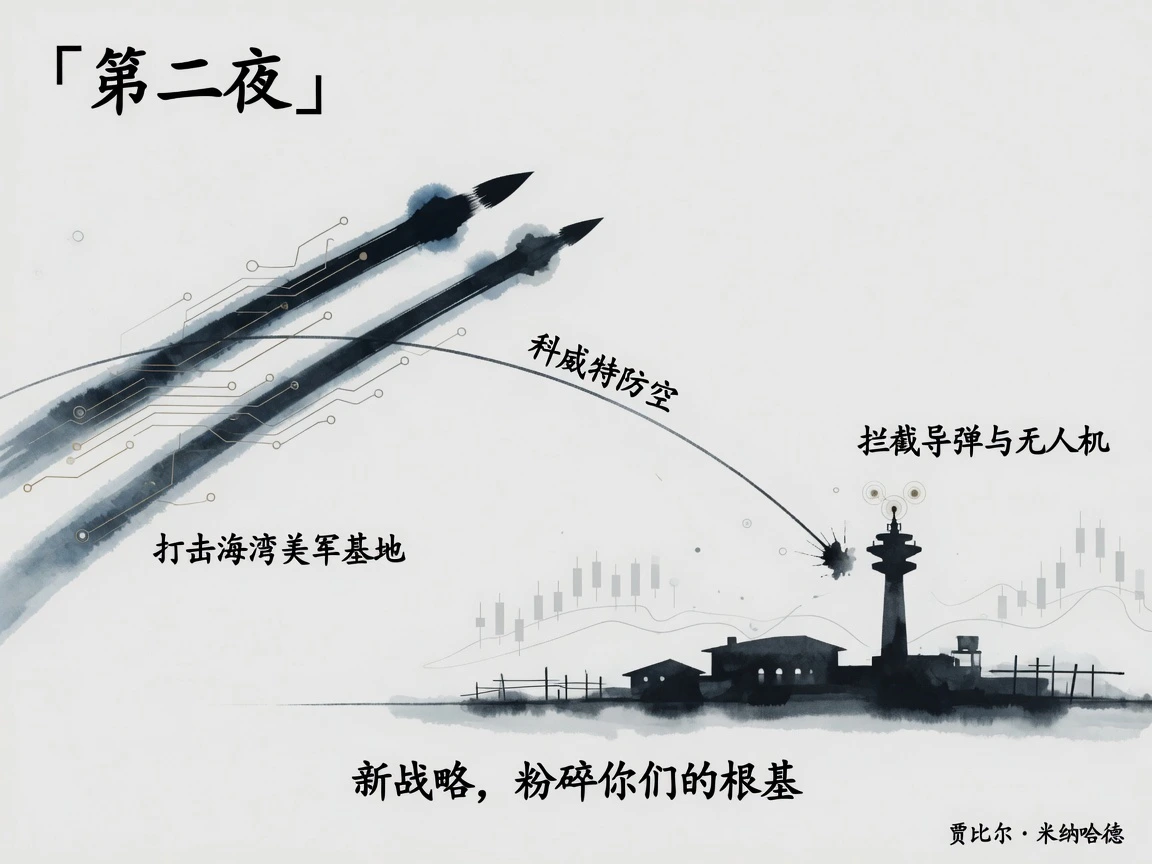
Kuwait remained the most direct military front. Its military reported emergency interception Thursday of multiple waves of Iranian missiles and drones. Iranian state TV confirmed strikes on US facilities in Gulf states, describing retaliation for US crimes against Iranians. Analysts linked this to Washington's earlier reservation of the right to further strikes. Neither side disclosed the exact base or launch location, and Kuwait had reported no casualties or major damage.
Iranian claims shifted subtly. The Revolutionary Guards mainly claimed September 1–2 cross-border strikes; Thursday media compilations first referred to regular Iranian forces jointly claiming attacks on US bases in Kuwait and the UAE, naming Ahmed Al-Jaber and Al-Minhad. Independent corroboration was absent, but actual regular-army participation would elevate the conflict from asymmetric Guards retaliation to coordinated national-force operations. Supreme National Security Council secretary Rezaei said Tehran had adopted a new strategy to crush US foundations. No intelligence showed new weapons or tactics, leaving this primarily a deterrent signal.
Casualties revised to at least 19, with independent site verification still absent

Iran's health minister reported 18 dead and 108 injured on state TV Wednesday. AFP's Thursday compilation revised deaths from US strikes to at least 19 Iranians. Officials had not explained the additional death.
Previously compiled deaths included 7 in Khuzestan, 4 aerospace-force personnel in Kermanshah, 3 militia members on Lavan Island and 4 at a wedding house in Kuhestan, Sirik county, including a child. The residential strike remained central to controversy. Iran's Red Crescent reported over 50 injured; ISNA quoted local medical workers saying at least 19 were children under 10. Washington remained noncommittal; CENTCOM repeated Wednesday's position that US operations never target civilians but the Guards do. Authoritative third-party verification at the site was still absent.
Israel's flank: aircraft on constant alert for Jewish holidays

The most consequential political signal on the flank came from Jerusalem. Defense Minister Katz warned Israel was fully prepared for possible Iranian holiday attacks, with fighters ready to launch at any time, and would respond overwhelmingly without outside help. He cited Iran's history of attacking on Jewish holidays but acknowledged current strikes across Gulf US installations had avoided Israel. Originally made September 2 Israeli time, the remarks drew renewed attention in Thursday reporting.
The sensitive holiday sequence explains the concern: Rosh Hashanah begins September 11 evening, followed by Yom Kippur September 20 and Sukkot September 25. With the first only about a week away, observers watched for preemptive Israeli action or closer US-Israel defense coordination.
Mediation stalls as positions persist without substantive progress

Mediation was largely frozen, though willingness to engage was not entirely absent. Pakistan's Foreign Ministry cautioned against prematurely declaring failure and said its army chief's earlier Tehran visit had fostered positive momentum over Hormuz. Qatar condemned attacks on Arab Gulf states as seriously damaging diplomacy. These mostly repeated existing positions, producing neither new multilateral talks nor a concrete dialogue mechanism. Earlier US comments about renaming the strait, later clarified as unserious, had no substantive effect.
Shipping and commodities: sanctions expectations rise while oil trades near $95

US sanctions remained at threat and advance-notice stage. Energy Secretary Wright said economic partners of Iran would face expanded maximum-pressure sanctions. Treasury had sanctioned one Dubai bank and warned of two more institutions within two weeks. Hormuz transit remained constrained: latest tracking showed actual daily merchant passages still in single digits, a collapse from normal traffic.
Brent traded narrowly around $95 a barrel, broadly near Tuesday's almost $96, without an extreme jump on Iran's second-night retaliation. Hormuz normally carries roughly one-fifth of global crude maritime flows, around 20 million barrels daily, making its strategic role irreplaceable. Traders treated the premium as manageable geopolitical friction, but disruption risk cannot be dismissed if commercial tanker traffic fails to recover.
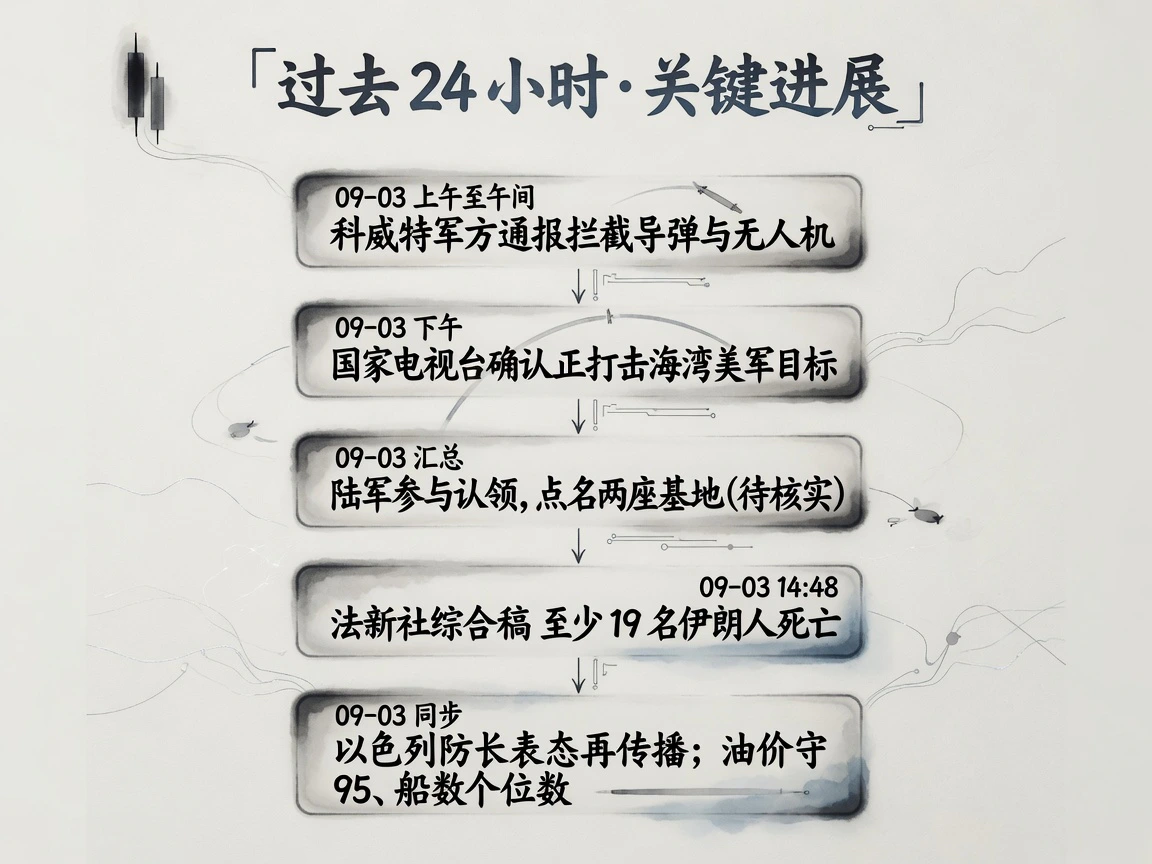
Key developments in the past 24 hours
| Key developments |
|---|
| 09-03 14:48, Beijing timeAFP compilation: Iran attacks US bases in Kuwait; Kuwait intercepts missiles and drones; Iranian state TV confirms retaliation for US crimes; Rezaei warns of a strategy to crush US foundations; deaths rise to at least 19. |
| 09-03 afternoon, Beijing timeIranian state TV confirms attacks on US installations in Gulf countries, describing retaliation for US crimes against Iranians. |
| 09-03 morning to midday, Beijing timeKuwait reports interception of multiple Iranian missile and drone waves, with no casualties or major damage yet reported. |
| 09-03 media compilationReports refer to regular Iranian forces jointly claiming strikes on US bases in Kuwait and the UAE, naming Ahmed Al-Jaber and Al-Minhad; independent verification remains pending. |
| 09-03 evening follow-upForeign media repeat Katz's warning of overwhelming independent retaliation if Israel is attacked over Jewish holidays, with aircraft ready to launch. |
| 09-03 market monitoringBrent fluctuates near $95 without an extreme jump; tracking still shows single-digit Hormuz merchant passages. |