There was no large-scale direct fighting on the Gulf front over the past 24 hours, but Washington's attitude was contradictory. The White House sought to cool tensions by describing six months of exchanges as an insignificant minor affair and insisting no continuing fighting was underway. At the same time, it publicly revealed that the U.S. might soon strike Pickaxe Mountain, the core underground nuclear facility near Natanz.
On the financial front, Washington shifted toward third-party intermediary channels, sanctioning a Turkish bank directly on Friday. Energy markets kept rising despite deeply conflicting Hormuz transit data. Trading thinned ahead of Labor Day, but oil still posted its biggest weekly gain since mid-July and U.S. average diesel prices reached an all-time high.
Two strategic tracks: White House minimizes the conflict but signals a strike on Pickaxe Mountain
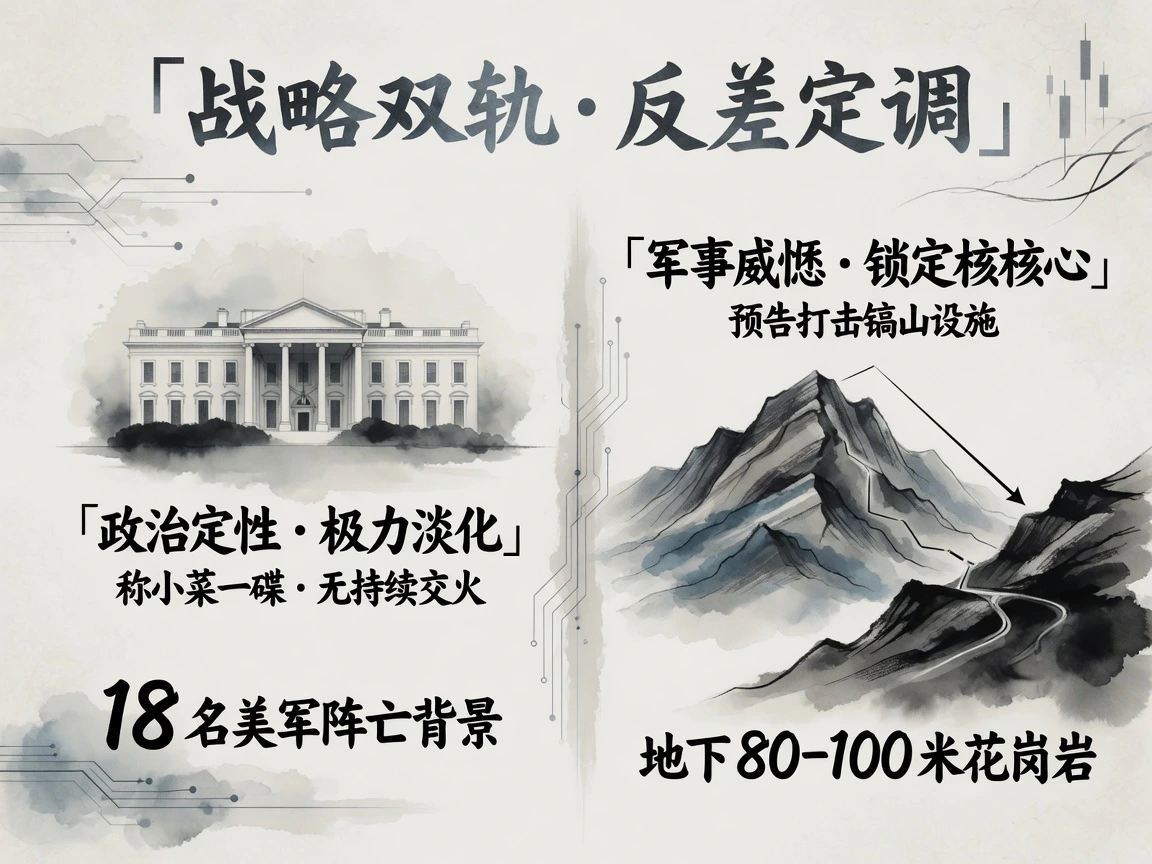
Although the war had killed 18 U.S. service members and wounded hundreds, Trump echoed Vice President Vance's minimization in Friday's Oval Office remarks. He described the exchanges as a minor matter for America and said many did not call it a war; he called it a military conflict because it was insignificant for the U.S.
Trump described operations as intermittent strikes and repeatedly insisted there was no fighting now. Facing elections and public opinion, the White House clearly wanted to portray prolonged attrition as manageable local friction rather than another full Middle Eastern war bogging the country down.
In the same remarks, however, Trump named a highly sensitive target: 'We may strike Pickaxe Mountain soon.'
Pickaxe Mountain, locally Kuh-e Kolang Gaz La, lies around 1-2 kilometers south of Natanz's enrichment site. Construction began around 2020, with tunnels excavated 80-100 meters into granite. Defense experts generally assessed that even the largest operational U.S. bunker-buster, the GBU-57, could not reliably penetrate that thickness. Earlier foreign reports suggested Tehran may have moved centrifuges and highly enriched uranium there for protection. Iran firmly denied this and reiterated that no undeclared nuclear activity occurred there.
Trump said U.S. intelligence watched everyone on the mountain and would strike hard if anything appeared wrong. CENTCOM had not issued operational orders or a schedule, but publicly placing Iran's underground nuclear core on an immediate target list sharply increased regional tension.
Economic-war shift: Rubio cable orders branches to go dark as a Turkish bank is sanctioned
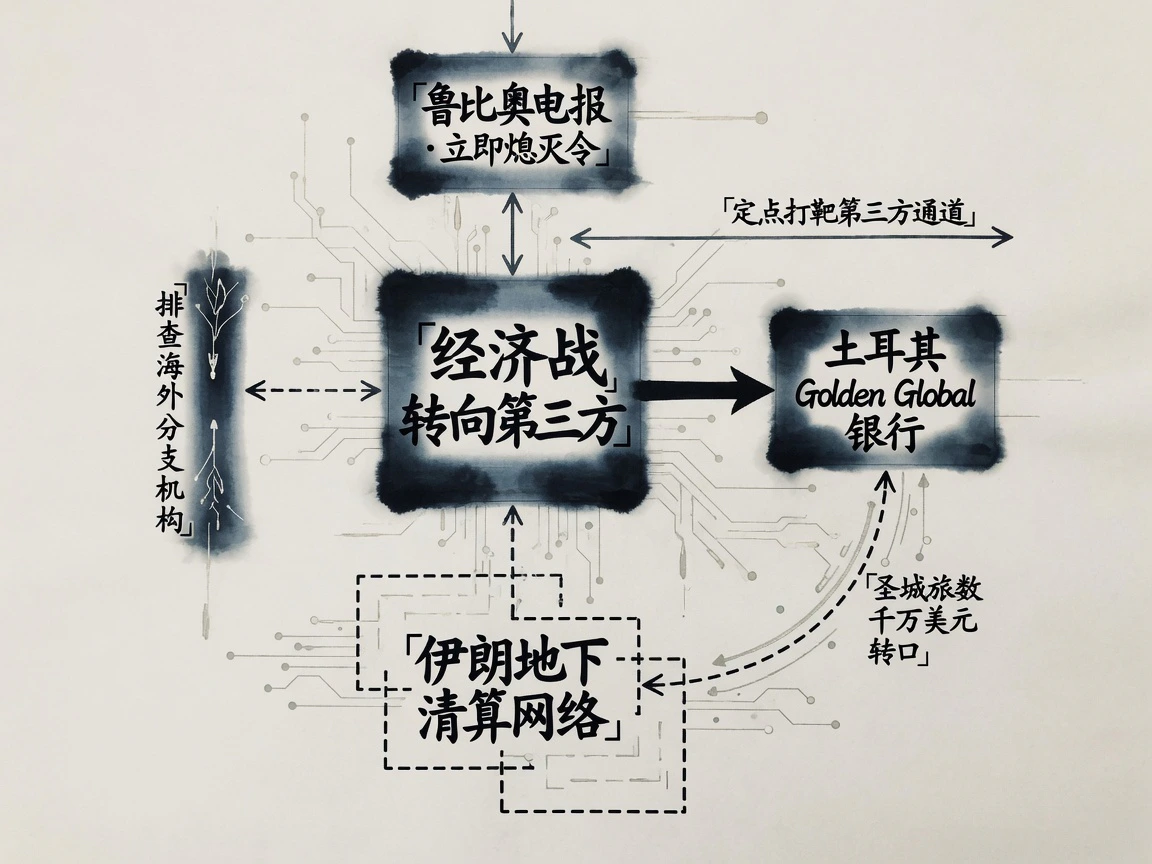
While direct military strikes were intermittent, economic pressure was shifting from broad containment of Iran itself toward specifically cutting third-party intermediary routes.
Foreign media disclosed an urgent Rubio cable to overseas missions demanding a comprehensive review and cutoff of Iranian dealings and urging host countries to close overseas Iranian bank branches. Its coercive wording demanded that branches immediately 'go dark.'
On Friday, September 4, the U.S. Treasury sanctioned Turkey's Golden Global Bank and affiliates, alleging it was a critical financial lifeline for Tehran that had processed tens of millions of dollars in settlements and transfers for the Revolutionary Guard's Quds Force, including cross-border energy-trade clearing.
This was the first concrete target two weeks after the White House's late-August announcement of a so-called economic-expulsion operation. Observers nevertheless saw incremental targeted removals rather than the sweeping financial storm initially proclaimed.
By prioritizing intermediary routes such as Turkey, Washington sought to sustain pressure while avoiding immediate upheaval in major multilateral supply chains. Iran had accumulated decades of sanctions resistance and sophisticated underground clearing networks, however. Closing one or two overseas branches was unlikely to fundamentally damage them and could instead generate new financial-compliance disputes around the Gulf.
Energy and shipping: sharply conflicting Hormuz flows as oil posts its strongest week in nearly two months
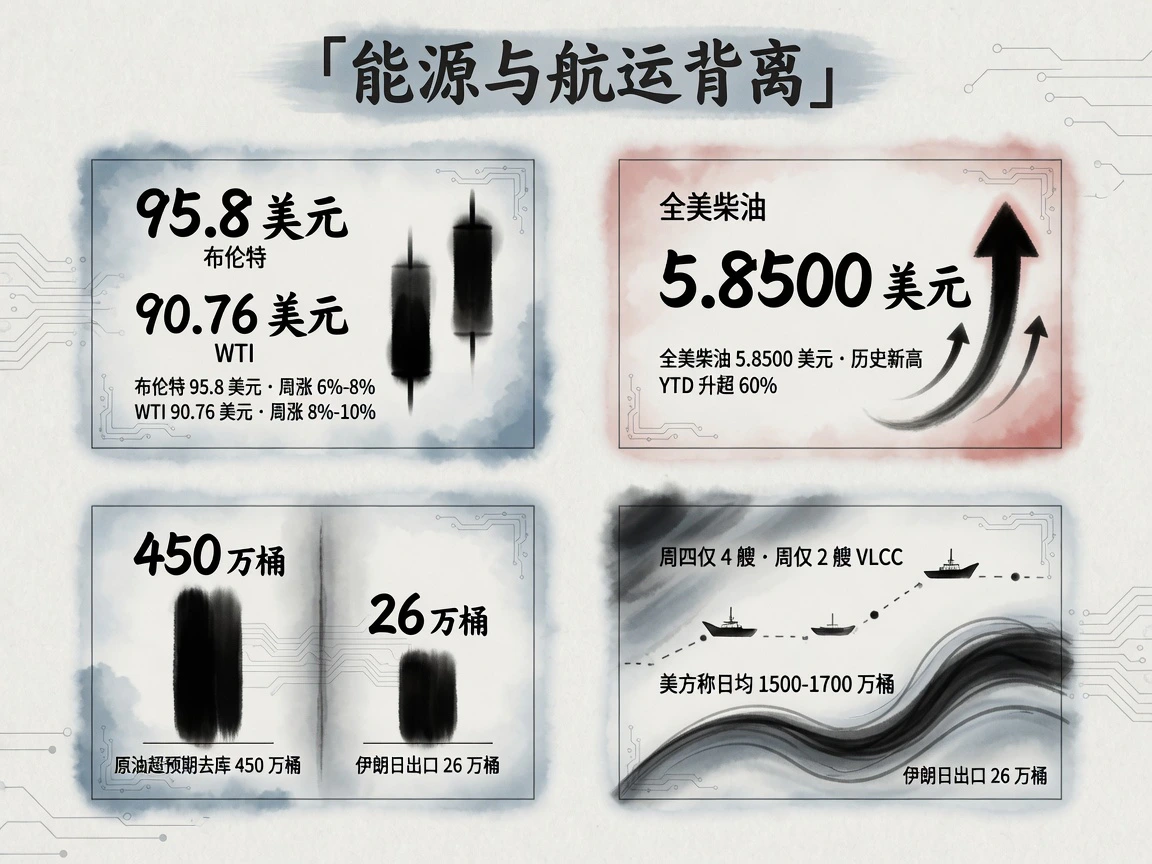
Trading was thin Friday, Eastern time, ahead of the Labor Day holiday. Oil consolidated near flat but remained strong over the week. Brent gained roughly 6%-8%, closing near $95.29 a barrel, with a $95.8 settlement; WTI gained about 8%-10%, near $90.76, with settlements reported at $90.75-$91.48. Both recorded their largest weekly gains since mid-July.
Upstream gains quickly reached consumers. Friday's U.S. diesel average rose to a record $5.8500 a gallon, above June 2022's high and more than 60% higher year to date, directly affecting freight logistics. U.S. commercial crude had fallen an unexpectedly large 4.5 million barrels the preceding week. Citi raised its Q3 Brent average forecast to $86; ANZ warned that months of disrupted strait transit could push prices to $114-$120.
Hormuz remained the true support for crude's risk premium, but transit data presented two very different pictures.
Independent civilian trackers showed only four commercial commodity vessels crossing Thursday, versus nine the day before, with a ten-day average around fifteen. Only two VLCCs crossed during the entire week. High war-risk costs and actual attack probabilities led most commercial owners to avoid sailing.
The White House instead portrayed normality. Vance insisted Iran's blockade effectively no longer existed, while U.S. officials claimed daily flows of 15 million to 17 million barrels. CENTCOM said it had cumulatively diverted 87 merchant vessels, disabled three threatening ships and boarded two; it had previously even claimed escorts for 40 merchants and about 18 million barrels in a single day.
Tehran used notification requirements as leverage, expanding its list of violating vessels and threatening seizure or fines for unreported crossings. At least 13 merchant attacks had occurred around the strait since August, and a recent strike on MT Sidr killed two crew. U.S. blockade pressure also constrained Iran's own crude exports to a historical low of 260,000 barrels a day. The struggle over the chokepoint was deeply deadlocked.
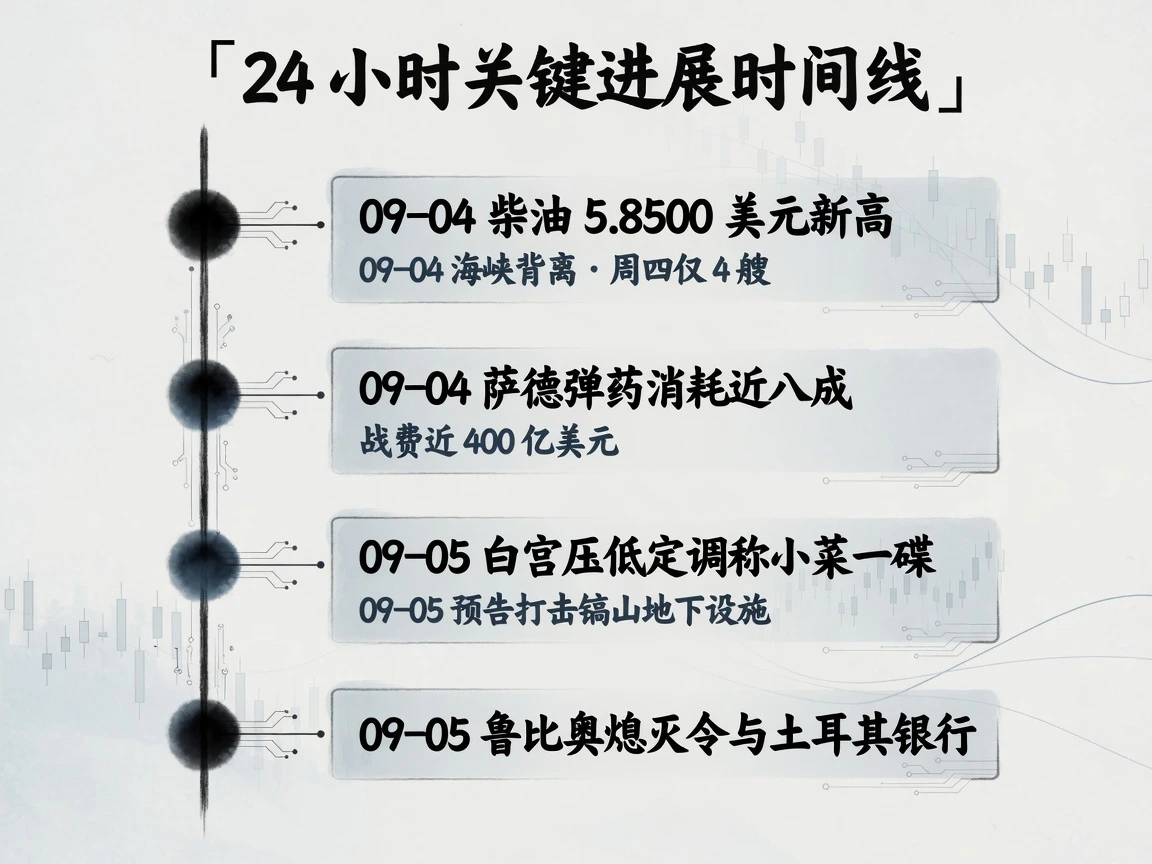
Timeline of key developments over the past 24 hours
| Key developments |
|---|
| 09-05 04:31 Beijing time U.S. economic pressure shifts toward third parties. Media disclose Rubio's urgent cable demanding identification and closure of local Iranian bank branches, ordering them to go dark. Treasury sanctions Golden Global Bank and its branches the same day. Washington remains cautious about sweeping expansion, mainly using targeted pressure. |
| 09-05 03:46 Beijing time White House characterization and strike warning: Trump acknowledges 18 U.S. dead and hundreds wounded but calls the conflict insignificant and denies continuing fighting. He also says a strike on Pickaxe Mountain near Natanz may come soon and that alternative overland pipelines are being studied. |
| 09-04 night, Beijing time Oil posts large weekly gains. Thin pre-Labor Day trading leaves daily prices near flat, but weekly gains are the largest since mid-July: Brent about 6%-8%, settlement $95.8; WTI about 8%-10%, settlement $90.75-$91.48. Citi raises Q3 Brent to $86; ANZ warns prolonged disruption could mean $114-$120. U.S. weekly commercial crude stocks draw 4.5 million barrels. |
| 09-04 night, Beijing time Transit figures diverge. Independent monitoring shows only four merchants Thursday, a ten-day average around fifteen, and only two VLCCs all week. CENTCOM claims 87 cumulative escorts or diversions and three hostile vessels disabled, stressing control of transit. Iran expands its violation list while its crude exports fall to around 260,000 barrels a day under sanctions. |
| 09-04 21:11 Beijing time Attrition assessment: defense analysts view the week's clashes as limited, with both sides avoiding full confrontation. The U.S. emphasizes sanctions deterrence; Iran uses ship attacks and the strait. Vance refuses an oil-price or ceasefire timetable. Defense data indicate heavy interceptor use: nearly 80% of THAAD stocks and around half of Patriot missiles consumed, with operating costs approaching $40 billion. |
| 09-04 daytime, Beijing time Pickaxe Mountain background: 1-2 kilometers south of Natanz, construction from around 2020, 80-100 meters deep in granite. Defense analysis suggests centrifuges and highly enriched uranium feedstock may have moved there; Tehran firmly denies undeclared work. The U.S. claims close monitoring of people entering and leaving. |
| 09-04 daytime, Beijing time U.S. fuel inflation: diesel reaches a record $5.8500 a gallon, up more than 60% year to date. Industry forecasts Labor Day gasoline above $4.03, a seasonal record. Estimates put additional household energy costs since the war began above $97 billion. |
| 09-03, retrospective item outside the reporting window, Beijing time Kuwait's military says defenses intercepted missiles and drones from Iran's direction. An Iranian general vows retaliation and the military confirms six naval personnel killed by U.S. strikes this week. White House briefings continue to characterize the war as local conflict. |
| 09-01 to 09-02, Beijing time Earlier background: U.S. forces escorted 40 merchant vessels and about 18 million barrels in a single day. A residential building in Kuhestan, Hormozgan, was damaged in earlier exchanges with civilian casualties; the U.S. says it is investigating. |
| 08-28 13:29 Beijing time The media's live conflict updates conclude, transitioning to features and irregular war updates. |


