The past 24 hours brought a substantive military escalation in the Middle East. On Saturday, Eastern time, shortly after the White House sought to minimize the conflict as a minor affair with no fighting underway, intense direct exchanges erupted in the Persian Gulf and Hormuz. The Islamic Revolutionary Guard Corps fired multiple ballistic missiles at a U.S. carrier and guided-missile destroyer formation patrolling the Gulf. After evading the attack, U.S. air and naval forces retaliated against three Iranian tankers, permanently disabling two and completely destroying one in the Gulf of Oman.
The U.S. explicitly framed the operation as reciprocal punishment—two U.S. ships attacked, three tankers taken out—and warned it could destroy Iran's entire tanker fleet if U.S. vessels were attacked again. Tehran announced retaliation against unauthorized strait crossings. A tanker-for-tanker crisis around the global energy chokepoint was escalating fully.
The exchange: evading ballistic missiles, then tanker-for-tanker retaliation
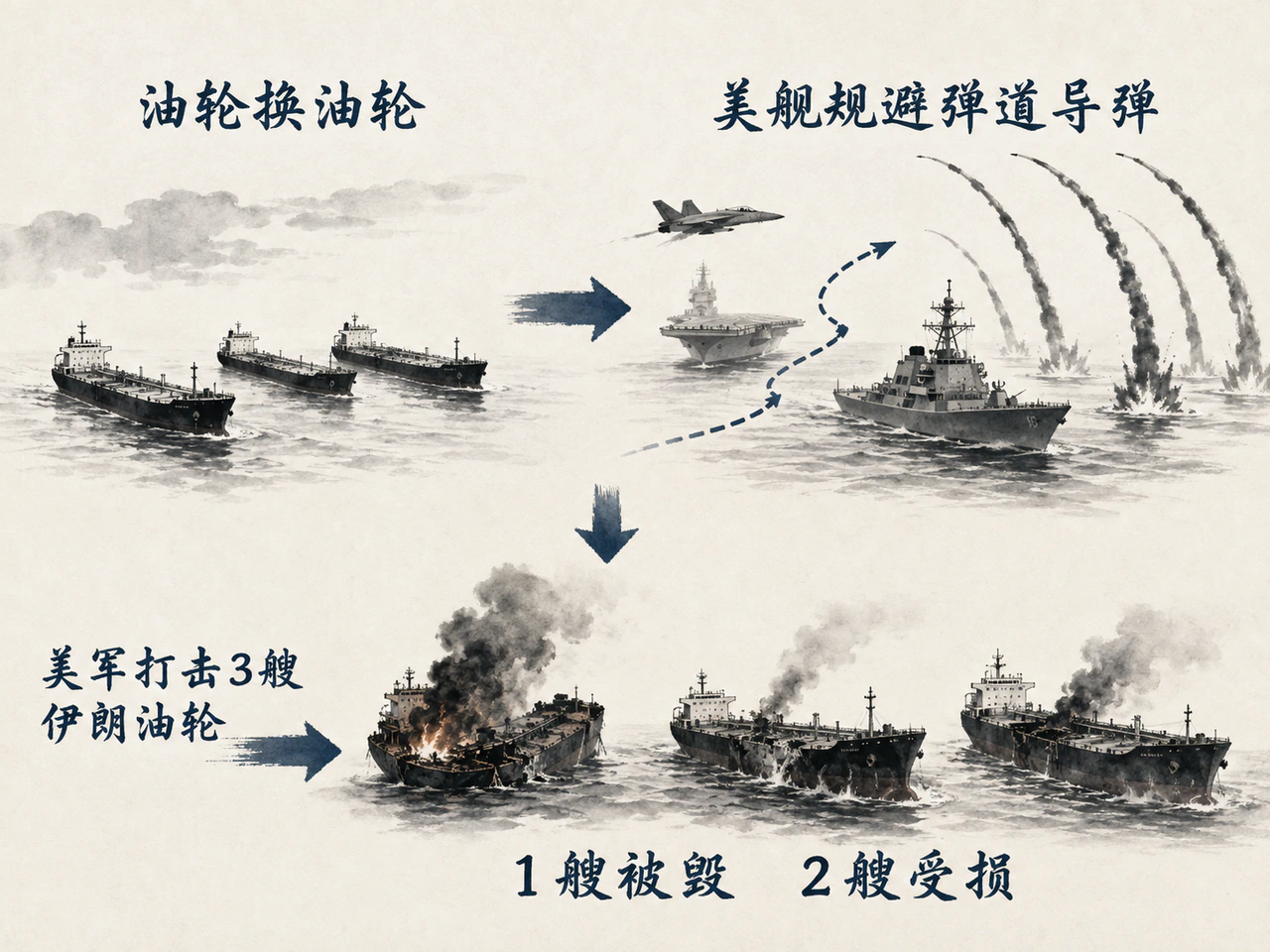
According to U.S. Central Command, the Revolutionary Guard directly attacked a U.S. patrol formation on Saturday, Eastern time, targeting a naval carrier and guided-missile destroyer with multiple ballistic missiles. The U.S. said maneuvering and defensive systems successfully evaded the attacks with no personnel casualties or equipment damage, describing them as multiple unprovoked provocations.
Rather than inland targets, the U.S. focused retaliation on Iran's energy-transport lifeline, conducting targeted strikes on tankers alleged to fund the Guard and its regional proxy network:
- M/T Downy: struck at anchorage near Kharg Island, Iran's principal crude-export hub, and declared permanently disabled by the U.S. Iranian semiofficial media subsequently confirmed four U.S. missile hits at the anchorage, emergency crew evacuation, the fire extinguished and no casualties.
- M/T Stark 1: precisely struck near Jask at Hormuz's eastern exit and likewise permanently disabled. Emergency-channel audio verified by foreign media recorded a U.S. aircraft warning before firing: 'Motor tanker Stark 1, this is a U.S. military aircraft. I am preparing to fire at your stern. You have 10 minutes to move your crew away from the stern,' followed by a final warning to board lifeboats and abandon ship immediately.
- M/T Kylo: also known as Noxen, Comoros-flagged, repeatedly struck in the Gulf of Oman. The U.S. said the tanker was empty and, after confirming crew abandonment as instructed, hit multiple critical areas and completely destroyed and sank it.
CENTCOM commander Brad Cooper publicly described explicit reciprocal punishment: 'We are sending a clear message to the Guard: you attacked two of our warships, so we will impose a greater economic cost—taking out three of your tankers.' He warned that the U.S. would defend itself without hesitation and, if Iran continued attacking its ships, would if necessary destroy Iran's limited and highly exposed entire tanker fleet.
Deterrence intensifies: Pentagon threatens the whole fleet as Tehran announces countermeasures
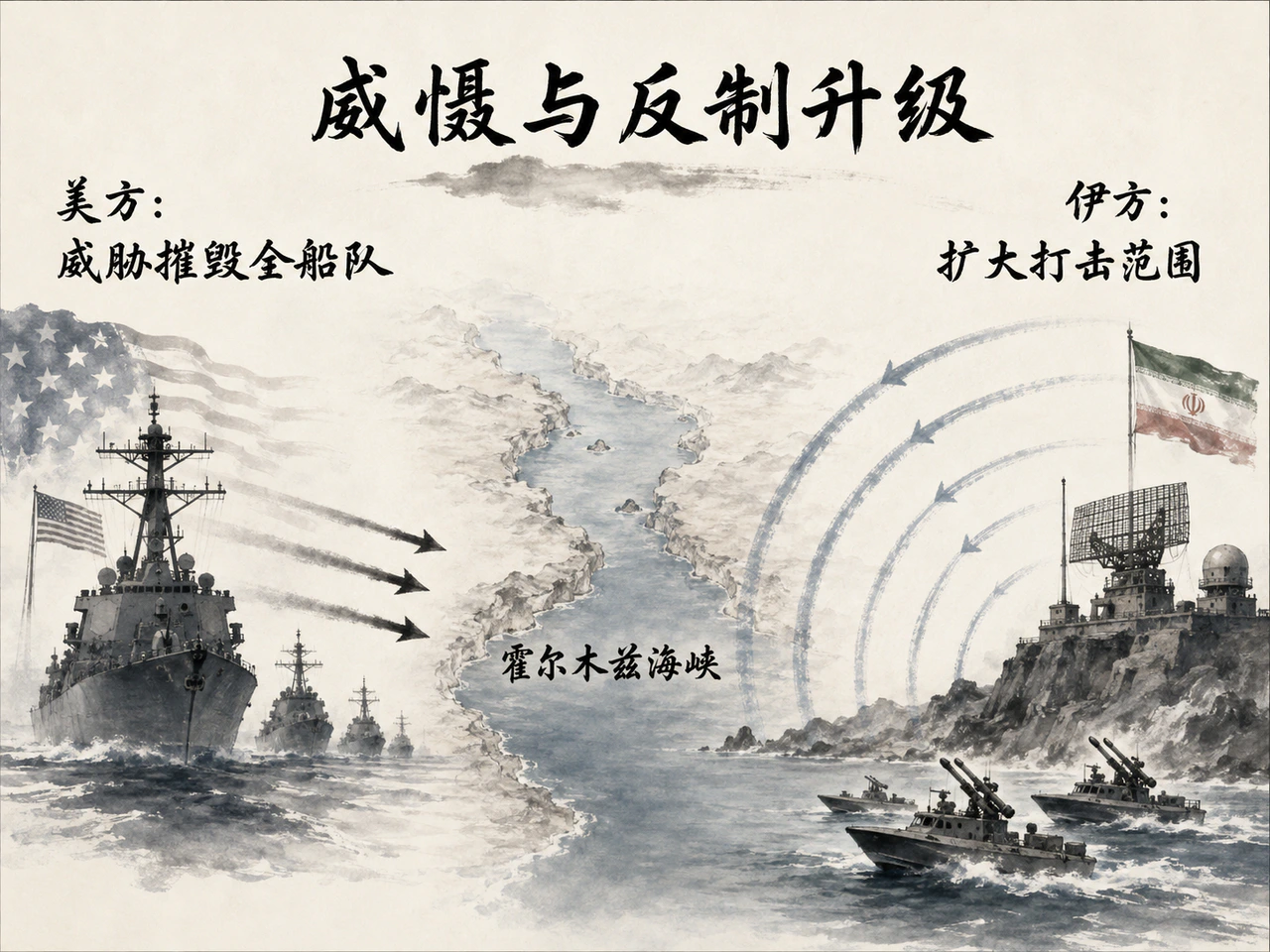
The targeted strikes quickly reverberated through political and military leadership on both sides. Defense Secretary Hegseth escalated pressure in a public social-media post: 'The logic is simple. Iran attacks American warships, and we will destroy and sink their tankers. All they need to do is stop firing at the U.S. Navy.'
Hegseth further said Iran lacked modern air superiority and ocean-going surface combat power, leaving its tanker fleet defenseless at sea. He stressed U.S. aircraft, ships and submarines could strike throughout CENTCOM and Indo-Pacific Command areas, publicly suggesting for the first time an interception range beyond the Persian Gulf into the Indo-Pacific, directly targeting shadow tankers on Iran's overseas transshipment routes.
The White House's political response contrasted sharply with military leaders' repeated statements. The president traveled to Bedminster, New Jersey, for the weekend and made no public comment on the strait fighting Saturday. This differed starkly from Friday's Oval Office remarks to farmers, when the conflict was described as a minor matter and intermittent friction, with claims that no fighting was underway and the U.S. firmly controlled Hormuz. A day later, ballistic missiles and burning tankers broke that narrative.
Iran responded diplomatically and militarily. Its foreign minister condemned the tanker attacks as illegal and highly aggressive, calling them an open threat to international commercial navigation and regional peace, a clear violation of the UN Charter, and asserting Iran's lawful right to respond strongly to any attack.
Iran's military command then escalated its posture. Spokesman Zolfaghari warned that unless harassment and maritime blockade stopped, strikes on U.S. regional vessels would become fiercer and broader. Hours later the Guard navy claimed through official media to have fired on three tankers crossing Hormuz without authorization and three U.S.-linked ships elsewhere. Independent vessel-position and attack imagery evidence was lacking. Iran also warned Gulf merchants not to trust U.S. escort deception or enter unauthorized waters, indicating an attempt to normalize forced interception rules against selected commercial vessels.
Energy arteries hit: Kharg exports obstructed as tanker risk premiums face upheaval
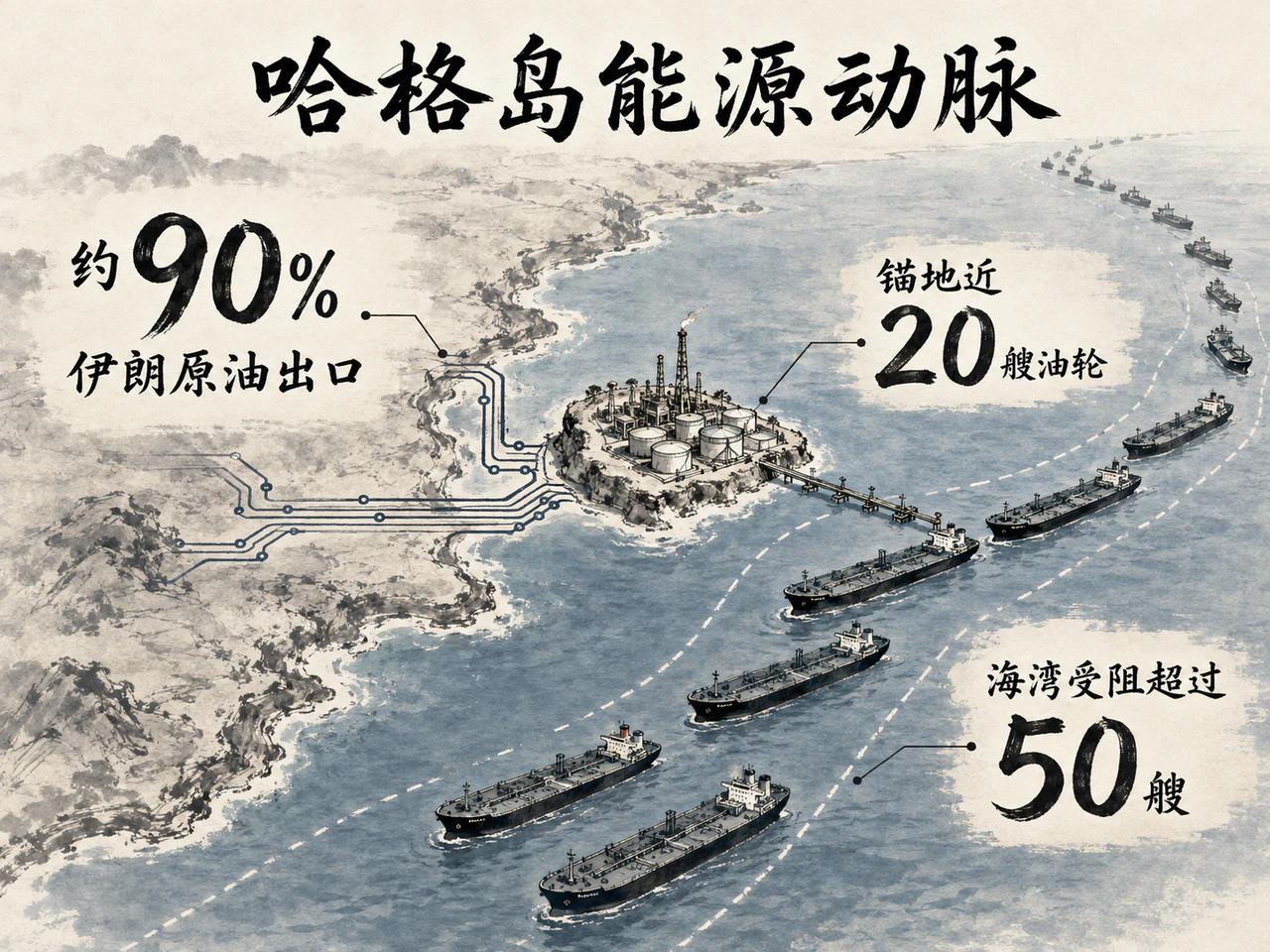
The escalation struck at a particularly vulnerable point in global energy supply. Kharg Island, central to the strikes, is Iran's energy lifeline: roughly 90% of its crude exports rely on the island's terminals and large storage and transport facilities. U.S. aircraft disabling tankers offshore brought the conflict directly to Iran's core export hub.
Shipping monitoring and satellite snapshots showed nearly 20 Iranian tankers at Kharg anchorage unable to leave smoothly, most fully loaded, under continuing fighting and blockade threats. Across the Persian Gulf and Gulf of Oman, more than 50 tankers were stranded or obstructed. With U.S. threats against the entire fleet, Iran's maritime exports faced a systemic risk of effective severance.
Global commodity markets were closed for the weekend, but Friday's volatility had already priced some anxiety. Brent futures settled at $92.68 a barrel, up 0.8% that day, and WTI at $91.48, up 0.2%. Weekly gains were 7.6% and nearly 10%, respectively, while the U.S. diesel benchmark average reached a record.
Shipping and commodity institutions generally viewed the weekend's actual tanker attacks at both ends of Hormuz as moving reciprocal retaliation beyond verbal threats. If shipping data confirmed Iranian attacks on merchants before Monday's open, or commercial traffic collapsed, crude and maritime war-risk rates would face another violent repricing.
24-hour timeline of key developments
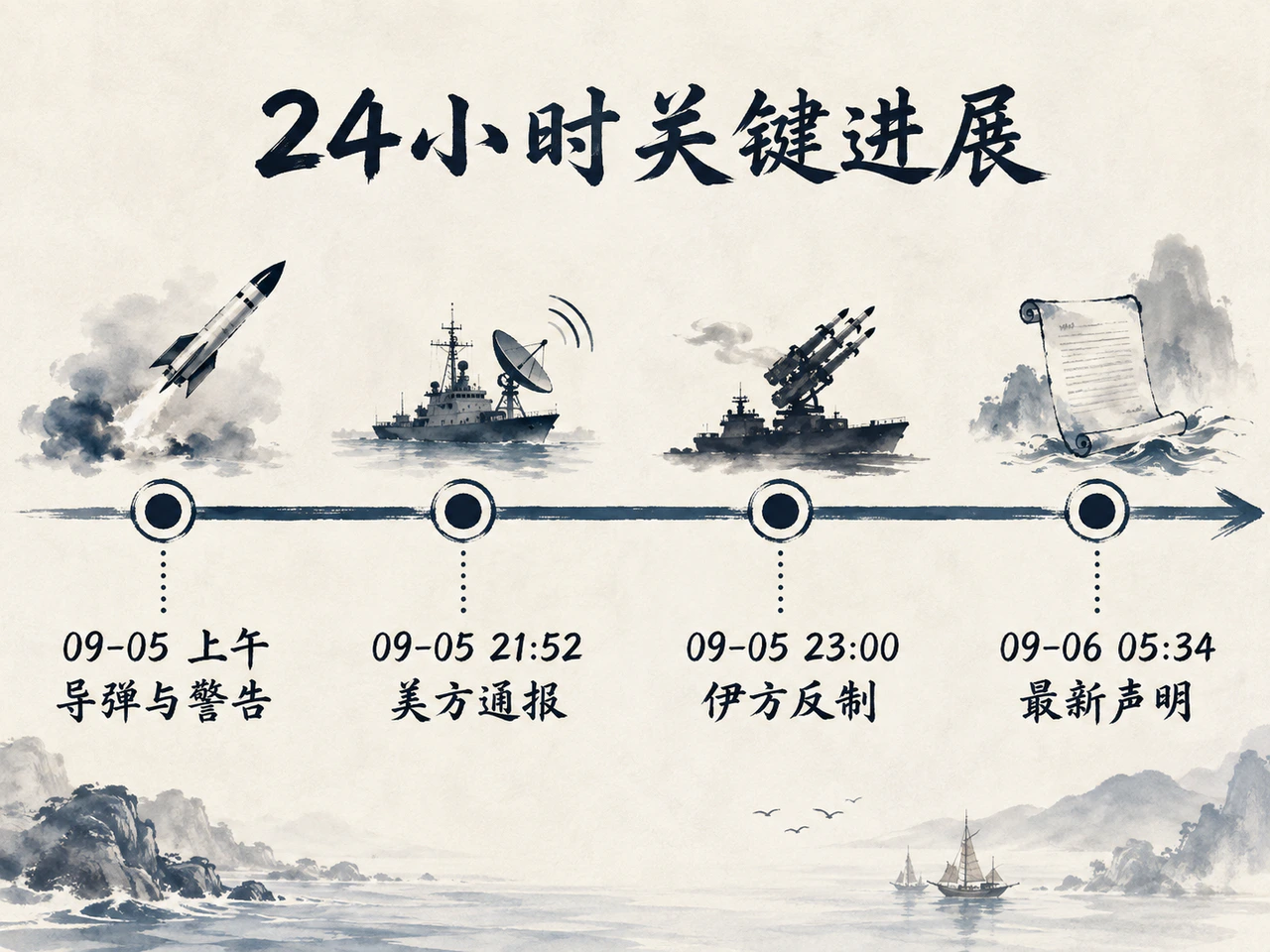
The following publicly disclosed military and geopolitical developments around Hormuz over the past 24 hours are listed in reverse Beijing-time order:
| Key developments |
|---|
| 09-06 05:34 Beijing time Media relay the Guard navy's claim to have struck three unauthorized Hormuz tankers and three U.S.-linked vessels elsewhere. A military-command spokesman warns of stronger attacks on U.S. ships. |
| 09-06 02:59 Beijing time Foreign media updates add the foreign minister's condemnation, four missile hits on the Kharg tanker, and verified radio audio of U.S. aircraft warning Stark 1 to evacuate. |
| 09-05 23:00 Beijing time The Guard navy issues a retaliation statement; official Iranian media stress Tehran will respond strongly to any aggression. |
| 09-05 22:05 Beijing time Foreign media follow up on official Iranian claims of attacks on three tankers and three U.S.-linked vessels. This is a unilateral claim without independent third-party verification. |
| 09-05 21:52 Beijing time Initial foreign-media reports relay CENTCOM's announcement of strikes on three Iranian tankers: two near Kharg and Jask permanently disabled, one in the Gulf of Oman destroyed. A U.S. carrier and guided-missile destroyer had evaded multiple ballistic missiles without casualties. |
| 09-05 afternoon, Beijing time Brad Cooper states the two-U.S.-ships/three-tankers punishment formula. Hegseth threatens destruction of Iran's whole fleet if attacks recur, extending strike scope to the Indo-Pacific. Iran's foreign minister condemns the action as illegal and contrary to the UN Charter. |
| 09-05 morning, Beijing time An Iranian semiofficial agency reports four U.S. missile hits on the Kharg tanker, no casualties and the fire extinguished. Foreign media report explosions near Kharg. |
| 09-05 morning, Beijing time U.S. aircraft warn M/T Stark 1 on an emergency channel to move away from the stern within 10 minutes and then to abandon ship immediately. Foreign media have verified the audio. |
| 09-05 morning, Beijing time The Guard fires multiple ballistic missiles at a patrolling U.S. carrier and guided-missile destroyer in Gulf waters. The ships evade them without casualties. |


