After weekend US-Iran attacks on tankers and warships, no new ship combat was reported over the past 24 hours, but restrictions on Hormuz shipping had not eased. On Monday, Iran previewed a restricted maritime zone extending from the US blockade line through Hormuz into the Persian Gulf. The Revolutionary Guard navy called Khasab, Oman, the endpoint of safe passage for unauthorized ships. The Foreign Ministry said a temporary safe-channel agreement with Oman was nearly complete and would be registered with the IMO.
These arrangements were not formally confirmed but already pointed toward transit permission, insurance and future passage eligibility. Meanwhile, US Central Command's cumulative diverted merchant vessels rose to 94, and independently tracked average commodity-vessel traffic reached its lowest since May. Fewer combat reports did not establish lower shipping risk; economic pressure was also reaching Iran through gasoline supply and prices.
Channel controls: Iran plans to link passage permission to insurance eligibility
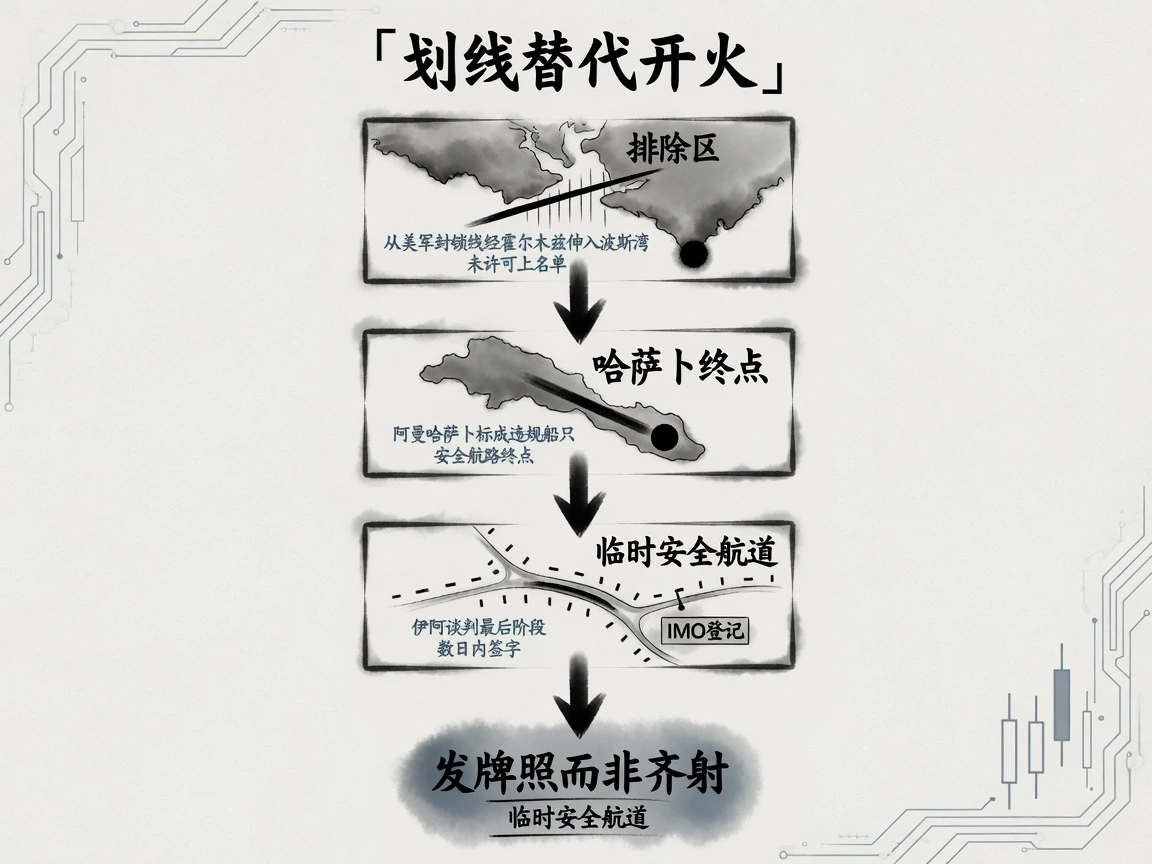
Supreme National Security Council secretary Mohsen Rezaei told state television that Iran planned an exclusion zone outside Hormuz in the coming days to weeks, extending from the US blockade line through the strait into the Gulf and targeting vessels seeking passage without permission. Uncoordinated entrants would be placed on sanctions lists affecting insurance and future transit.
This would extend restrictions beyond direct interception into insurance and future passage rights. Rezaei gave no coordinates, effective date or execution details. Media accounts of the same remarks also described an agreed map for a new Iran-managed international corridor in Iranian and Omani waters, intended for signature within days. He still linked reopening to an end to US sabotage, threats and attacks.
Revolutionary Guard navy political deputy Ali Mohammadi called Khasab the endpoint of safe passage for unauthorized ships and said Iran would act there against maritime violations. Khasab lies at Hormuz's southern entrance, near the Omani coastal corridor used by the US. The statement targeted passage bypassing Iranian approval.
Foreign Ministry spokesman Baghaei said Oman negotiations on a temporary safe channel were in their final stage and the understanding would be registered with the IMO within days. Oman had not reciprocally confirmed by the reporting cutoff; specialist shipping media said Monday the IMO had received no formal proposal.
The statements collectively aimed at transit licensing, but a gap remained between announcement and practical constraint. Effectiveness depended on implementation and responses by owners, insurers and states. Arrangements awaiting signature and registration were not effective rules.
Shipping: Visible transits decline as US-diverted merchant ships reach 94
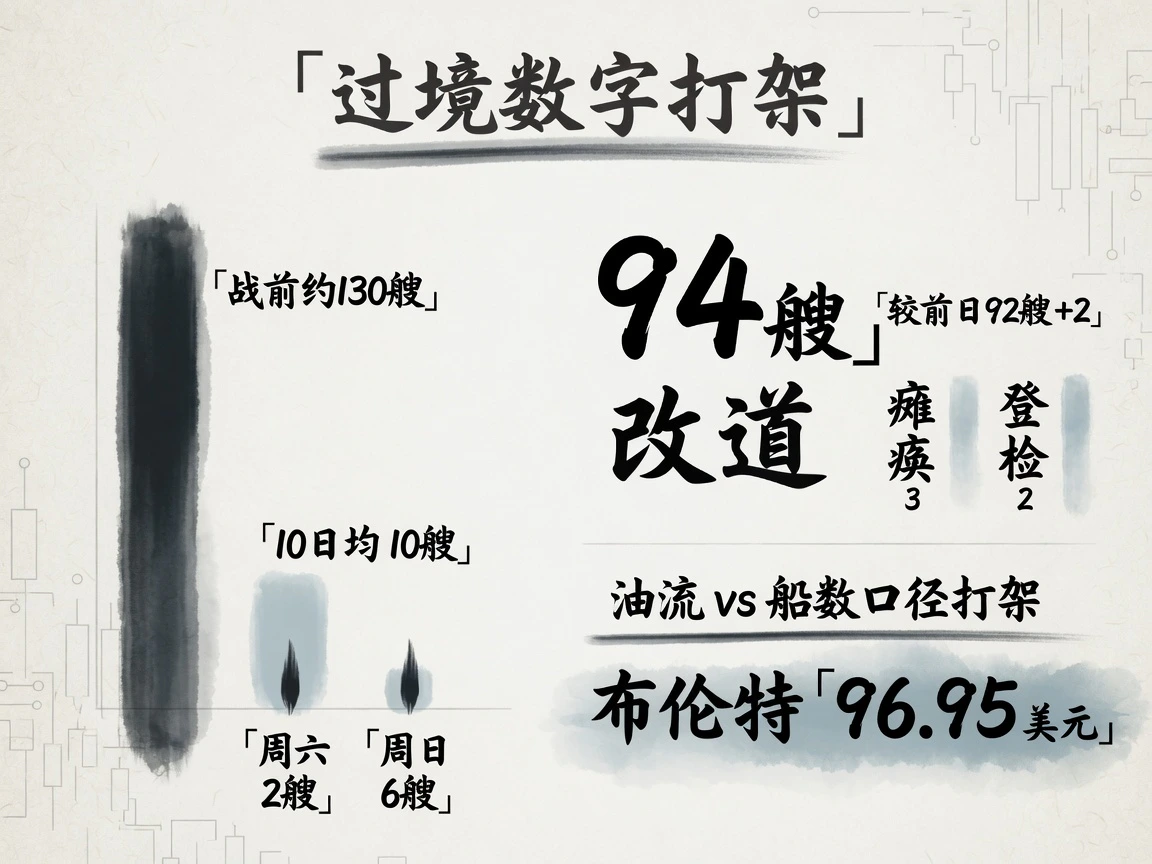
Kpler put the ten-day average of Hormuz commodity-vessel transits at 10 daily, the lowest since May. Friday still had over 15, Saturday only 2 and Sunday 6, mostly on Iranian-approved routes. Prewar traffic averaged around 130 vessels daily, leaving visible flows markedly depressed.
US Energy Secretary Wright said more than 9 million barrels of oil crossed daily and regional flows had recovered to two-thirds or more of pre-conflict levels, with naval escorts not ending soon. Vessel counts and oil flows are different measures. Ship size, disabled transponders and escort coverage can affect comparison; the datasets cannot be mapped directly.
Rezaei claimed the strait was completely closed and rejected US accounts, while acknowledging ships traveling near Oman's coast with transponders off. He also claimed most such vessels had been struck and Iran was avoiding sinkings for environmental reasons. His account itself allowed continued passage, but strikes and motives lacked independent verification.
Central Command said Monday that 94 merchant ships had been diverted for suspected breaches of the Iranian port blockade, up 2 from 92. Cumulative figures of 3 disabled and 2 boarded were unchanged. Public operational logs recorded September 6–7 Eastern time as the first daily period since the 4th without strikes on Iranian territory or Iranian-flagged ships. Defense Secretary Hegseth's earlier warning of retaliation against tankers for attacks on US ships was not followed by a new public strike notice during that period. The US also published no new damage report responding to the Guards' claim of attacking unmanned surface vessels.
Brent traded around $96.95 Monday, briefly near $97 and a nearly seven-week high, reflecting continued digestion of weekend risk rather than proof of a new hit that day. The preholiday US regular gasoline average was about $4.14 a gallon.
Domestic energy: Third-tier gasoline price rises as import dependence exposes supply strain
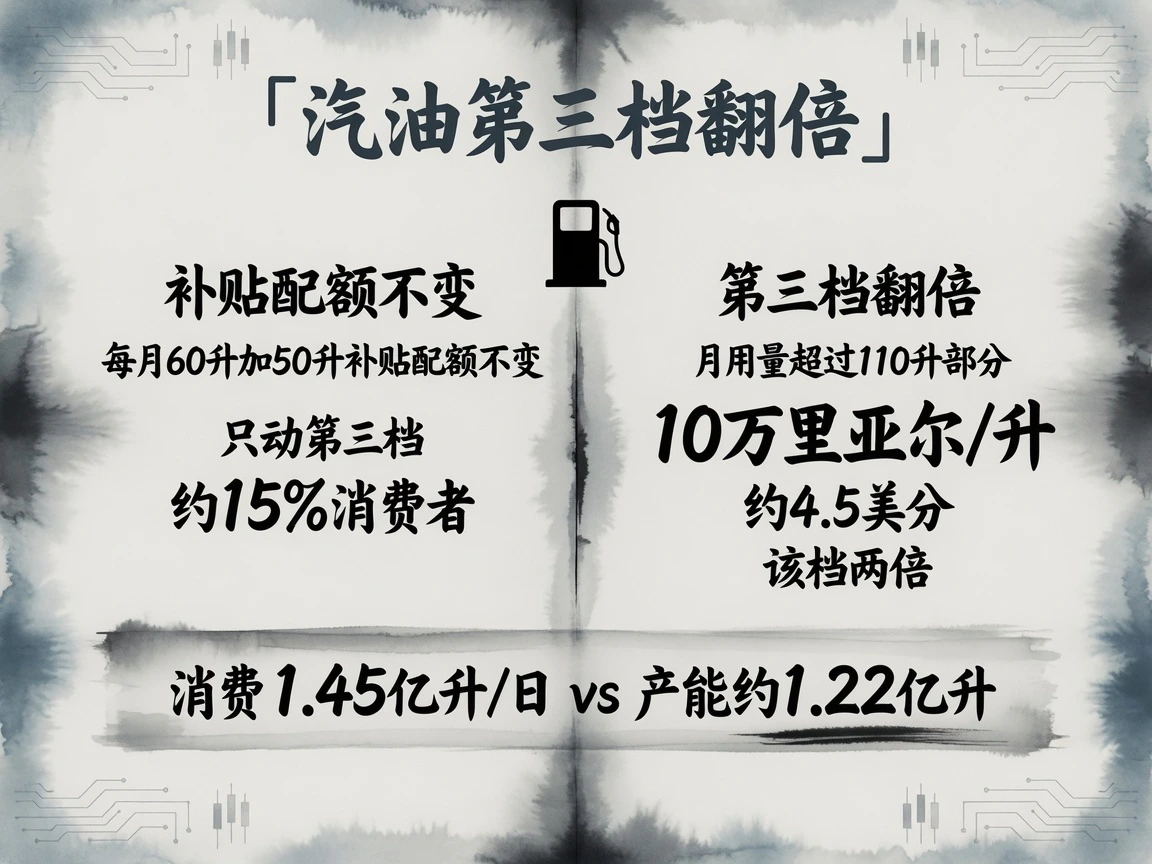
State media reported that early Tuesday Beijing time Iran raised gasoline prices for high-use consumers. Monthly use above 110 liters would cost 100,000 rials per liter, double that tier's price since December. Reports converted this to around 4–7 US cents at different exchange rates; at Monday's black-market rate near 2.22 million rials per dollar it was about 4.5 cents. The monthly subsidized allocations of 60 plus 50 liters were unchanged.
The national petroleum distribution company said the new rate affected about 15% of consumers. August gasoline consumption reached a record 145 million liters daily, versus domestic capacity near 122 million, leaving imports to fill the gap. The government cited current conditions and said extra revenue would fund household assistance. After 2019 fuel changes sparked protests, raising only the third tier while retaining subsidies reflected concern over burdens and social reaction.
Oil Minister Paknejad claimed Kharg Island remained operating after about 550 strikes over prior months, a number not independently verified. A Dubai media overview also cited speaker and US negotiator Qalibaf's earlier warning of faster, heavier retaliation and continued measures by the Economy Ministry's economic-war command. Gasoline increases showed maritime conflict and import constraints reaching domestic allocation and pricing.
Diplomacy and nuclear affairs: Inspections stalled as Gulf states stress security autonomy

IAEA chief Grossi told Monday's board meeting there was currently no contact with Iran, which linked cooperation to a broader political agreement. Safeguards obligations did not disappear because of political talks, he said. Iran had not explained the status of safeguarded material in attacked sites, and renewed inspections required direct contact. The US had previously threatened possible near-term strikes on Pickaxe Mountain, but no new strike was reported over the past 24 hours.
Regional states also grew more cautious about existing security arrangements. Qatar's Foreign Ministry spokesman said the US strategic partnership was extremely important but insufficient for all security needs, emphasizing autonomy. UAE presidential adviser Gargash said necessary working relations with Iran remained important, but restoring damaged trust would be harder.
Iran's Foreign Ministry warned South Korea that joint US deployments in the Gulf or Hormuz would be seen as direct support for aggression and have serious consequences. Seoul's Friday position was still consideration without a decision. Transit arrangements and regional security were adjusting together, but policy differences had not produced a stable new mechanism.
Peripheral conflicts: Fighting continues in southern Lebanon and casualties rise around the Red Sea

Southern Lebanon saw continuing clashes. Its Health Ministry said overnight Israeli strikes killed 12. Reports showed a destroyed Kafr Rumman building with 11 dead, including two children and four women; a rescue vehicle in the same town was also hit, killing another paramedic. Textbook fragments were visible at the building and residents said occupants were civilians.
Israel said it remained committed to the ceasefire and would remove Hezbollah threats, describing the strikes as a response to two explosive drones and weapons-transfer activity. Fighting around Beaufort Castle lightly wounded two soldiers. Israel said it was reviewing reports of uninvolved people being harmed, while Lebanese President Aoun condemned damage to ceasefire efforts.
Oman's Maritime Security Centre added that the Royal Navy evacuated 16 of 25 crew from an attacked Saudi tanker the previous week; Saudi Arabia had confirmed two Filipino crew deaths. The Houthis said Saudi strikes on a prison in Al Jawf killed 7, including a child visiting, a unilateral toll from health authorities in Houthi-controlled territory.
No renewed Hormuz ship combat did not coincide with cooling on other fronts. Shipping, regional operations and domestic energy pressure remained intertwined. A brief lull in exchanges could not establish overall de-escalation.
Main developments over the past 24 hours

Reports and notices listed in reverse Beijing-time order; actual timing of supplementary reports is separately indicated.
| Report or notice time | Main development |
|---|---|
| 09-08 07:33 | Iran raised gasoline above 110 liters monthly to 100,000 rials per liter, affecting about 15% of consumers; August use was 145 million liters daily versus capacity around 122 million. |
| 09-08 06:04 | Central Command said diverted merchant ships rose from 92 to 94; cumulative disabled vessels were 3 and boarded vessels 2. |
| 09-08 03:55 | The Houthis said Saudi strikes on an Al Jawf prison killed 7 and wounded 7, including a child among the dead; their unilateral tally put several days of fighting around the Red Sea entrance above 300 deaths. |
| 09-08 01:28 | Israel said it would remove Hezbollah threats in response to drone and weapons transfers. Beaufort fighting lightly wounded 2 soldiers; reports of uninvolved casualties were under review. |
| 09-08 01:22 | Oman's Maritime Security Centre reported the previous week's evacuation of 16 of 25 crew from an attacked Saudi tanker; Saudi Arabia had confirmed 2 Filipino deaths. |
| 09-07 22:45 | Rescue work continued at the Kafr Rumman building; Lebanon's Health Ministry put overnight deaths at 12. |
| 09-07 21:31 | Grossi said there was no contact with Iran and safeguards obligations did not disappear with political talks. |
| 09-07 20:37 | Kpler put ten-day average Hormuz transits at 10 daily, the lowest since May; Saturday 2 and Sunday 6, mostly on Iranian-approved routes. |
| 09-07 about 20:00 | Public logs showed no new strikes on Iran during September 6–7; the US did not answer unmanned-vessel attack claims. Brent opened Monday near $97. |
| 09-07 19:39 | Lebanese President Aoun condemned Israeli strikes as undermining ceasefire efforts. |
| 09-07 19:10 | Qatar said Gulf security could not depend solely on US forces and called for greater autonomy. |
| 09-07 18:46 | Baghaei said Iran-Oman safe-channel talks were in their final stage, with IMO registration planned within days; Oman had not confirmed. |
| 09-07 18:22 | Gargash said working relations with Iran were necessary, but trust was harder to rebuild. |
| 09-07 17:31 | Baghaei warned of serious consequences if South Korea joined US operations in the Gulf or Hormuz. |
| 09-07 15:41 | Rezaei said an exclusion zone was planned and uncoordinated entrants would face insurance and future-passage restrictions. |
| 09-07 around 15:40 | Brent was about $96.95 intraday; preholiday US regular gasoline averaged about $4.14 per gallon. |
| 09-07 (Monday, Tehran) | Revolutionary Guard navy official Mohammadi called Khasab the endpoint of safe passage for unauthorized vessels. |
| 09-07 published at 13:35 | A Dubai media overview cited Qalibaf's retaliation warning and economic-war measures. Iran's oil minister claimed Kharg still operated after about 550 strikes, without independent confirmation. |


