The U.S.–Iran conflict is increasing both maritime-transport risk and diplomatic pressure. Tankers and merchant vessels have suffered repeated attacks and crew casualties; the IAEA has again referred Iran's nonproliferation issue to the UN Security Council. As of 7:32 Beijing time September 10, neither side had announced a ceasefire. Expanding maritime retaliation and escalating verification disputes leave the conditions for ending the conflict unclear.
Merchant vessels repeatedly damaged as risks spread to ports
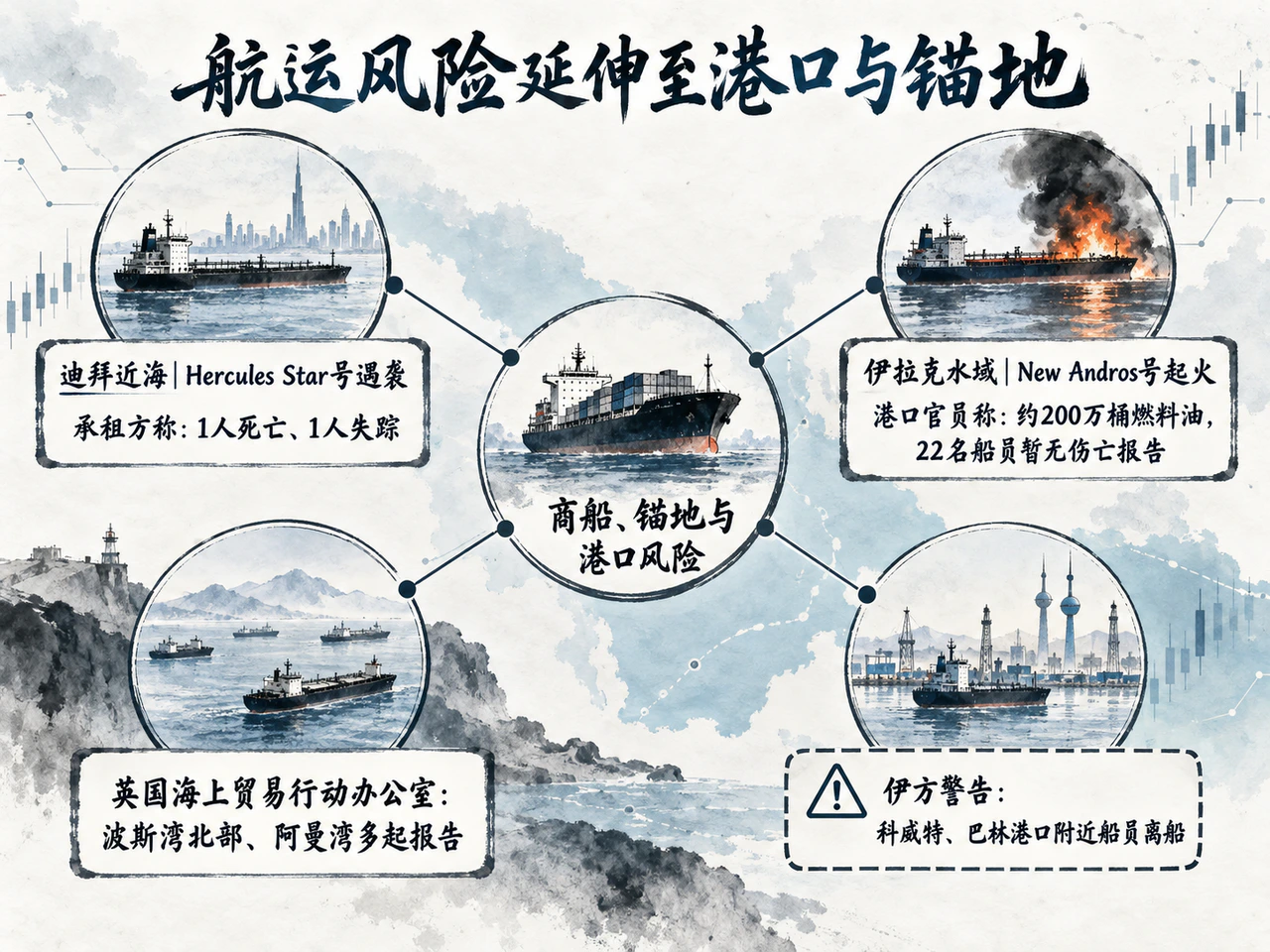
This round of maritime retaliation began with U.S. strikes on Iran-related tankers. The U.S. military said it struck five tankers linked to the Revolutionary Guard in response to ballistic-missile attacks on U.S. warships. CENTCOM listed locations in the Gulf of Oman and near Kharg Island, saying crews had been told to evacuate and the objective was to disable navigation.
The Guard then claimed attacks on two U.S. ships and eight tankers. CENTCOM denied any U.S. warship was hit, while specific merchant damage reports emerged. Reuters cited charterer Peninsula saying Hercules Star, anchored off Dubai, was attacked, killing one crew member and leaving another missing. Iraqi port officials said New Andros, carrying about 2 million barrels of fuel oil, caught fire after a drone strike in Iraqi waters; no casualties among its 22 crew had been reported.
UKMTO also received reports of several merchant vessels attacked and disabled in the northern Persian Gulf and Gulf of Oman. Responsibility for some incidents remained unclear. The attacks extend risk from Hormuz to anchorages, port approaches and waters on both sides of the Strait.
The Guard also told tanker crews near Kuwaiti and Bahraini ports to leave and said it would announce an expanded maritime exclusion zone toward Chabahar near Pakistan.
Missiles target Jordan as Yemen fighting affects the Red Sea
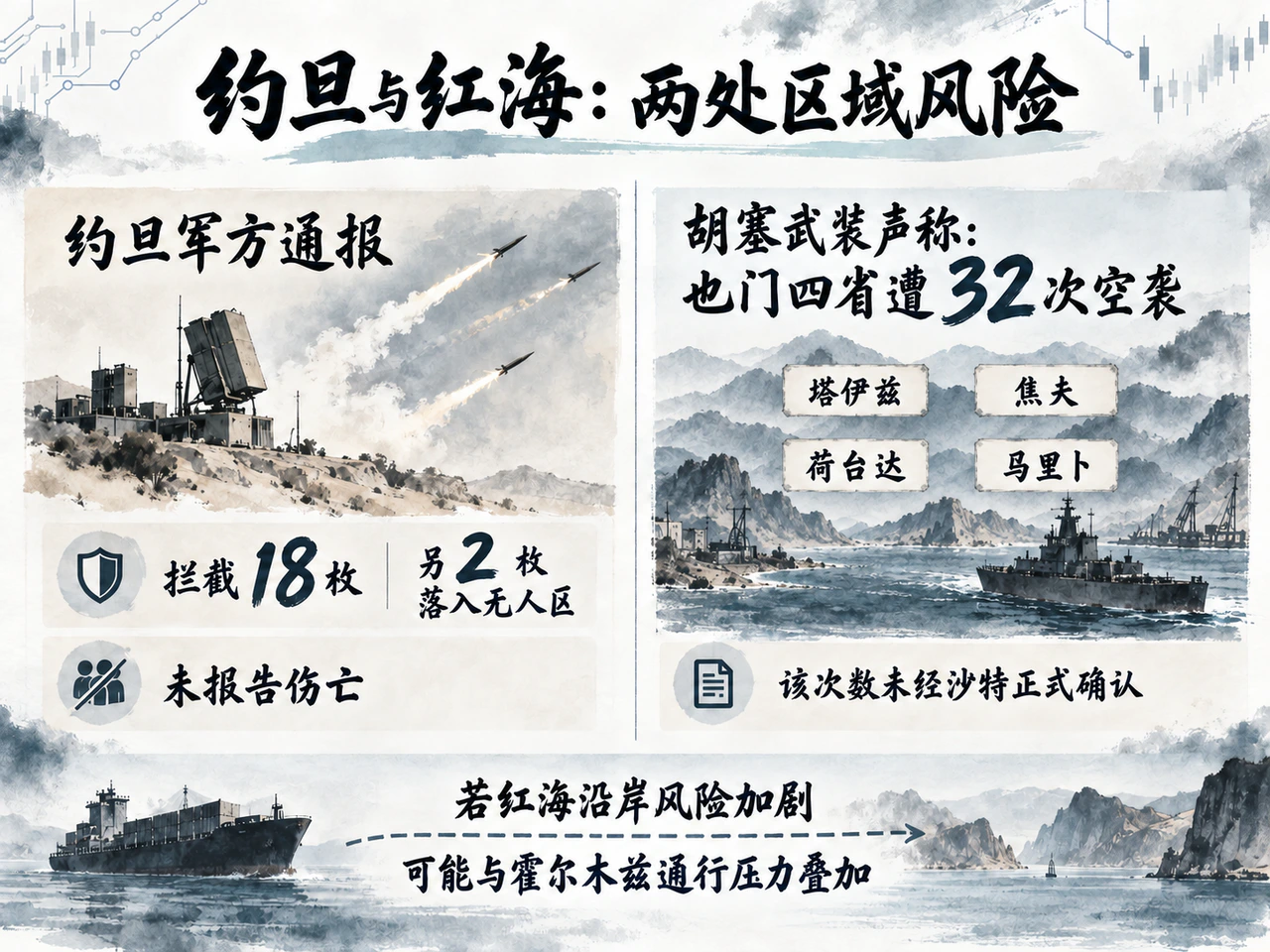
Iran said it fired ballistic missiles at U.S. bases in Jordan. Jordan's military reported intercepting 18, with two others landing in uninhabited areas and no casualties reported. U.S. officials said all U.S. personnel in Jordan were accounted for. Iran's claims of severe base damage conflict with U.S. and Jordanian accounts.
Yemen fighting continued. The Houthis claimed Saudi-backed forces launched 32 airstrikes across Taiz, Hodeidah, Al Jawf and Marib, a count not officially confirmed by Saudi Arabia. The Saudi-led coalition said the Houthis again attacked Khamis Mushait, Abha and Jizan on September 9. Iran denied directing the Houthis.
Hodeidah lies on the Red Sea coast, making nearby fighting relevant to shipping. Hormuz disruption has increased the Red Sea route's importance for Saudi exports; worsening coastal security could compound pressure at the two chokepoints.
Verification dispute escalates; ceasefire terms remain unclear
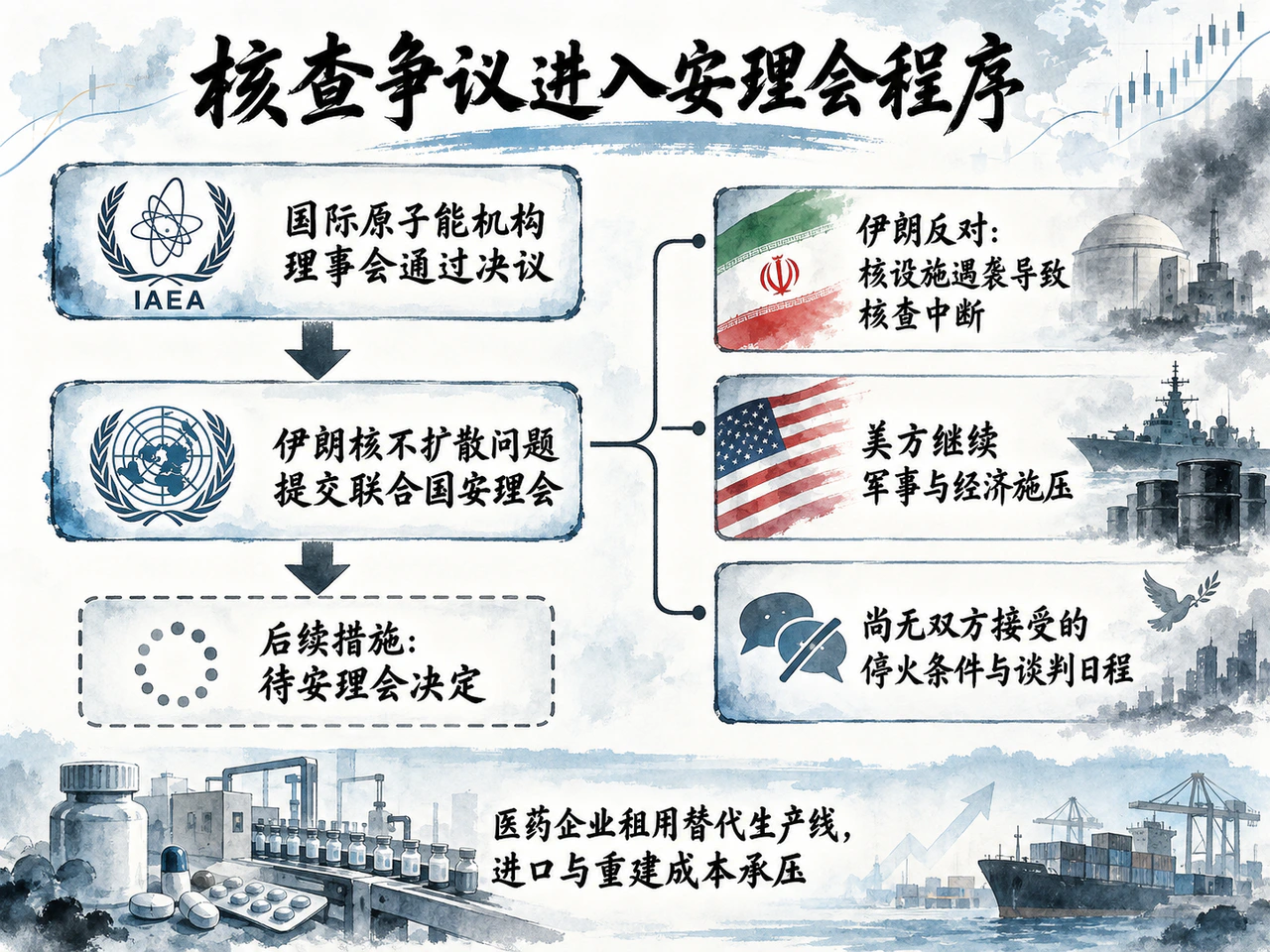
On September 9, the IAEA Board adopted a U.S.-, UK-, French- and German-backed resolution referring Iran's noncompliance with nonproliferation obligations to the UN Security Council. Iran objected that attacks on nuclear facilities caused interrupted verification, now being used to condemn it. Referral increases diplomatic pressure; further measures await Council decisions.
Trump said that day the war might end after U.S. midterm elections and talks could happen but were not currently being sought by Washington. Rubio said U.S. tanker strikes would continue in response to attacks on warships, alongside economic pressure. Neither statement provided mutually accepted ceasefire conditions or a clear timetable.
The conflict also affects production and supplies. In a media investigation published September 9, Iranian pharmaceutical firm Tofigh Daru's head said damaged facilities had led it to rent replacement lines to maintain output, while imports and rebuilding remained difficult. Iran's drug regulator said the industry could keep operating. Firms maintaining production while bearing import and reconstruction costs show the conflict reaching medicine supply.
Key developments
| Key developments (Beijing time) |
|---|
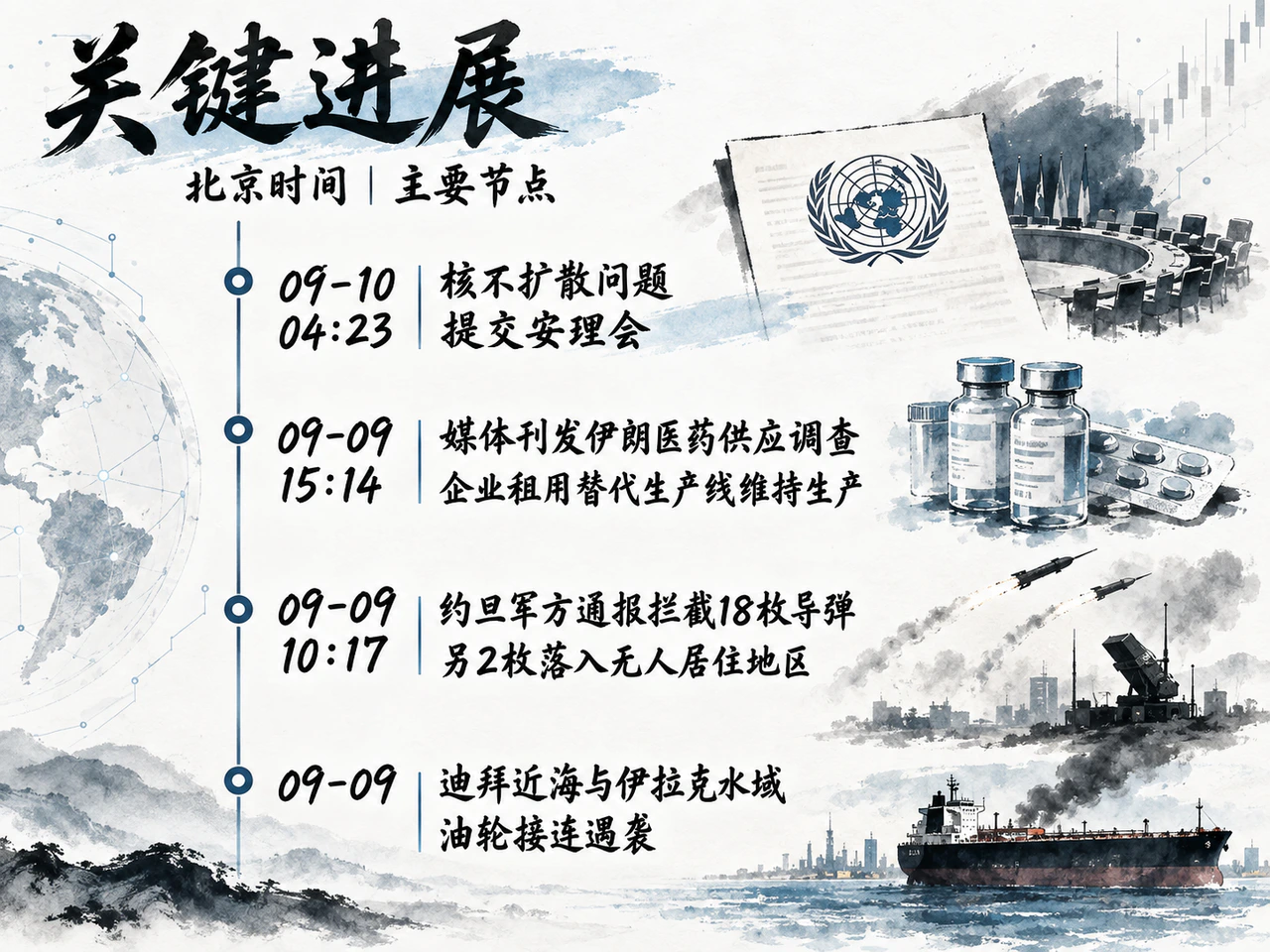
| 09-10 04:23 Beijing timeThe IAEA Board adopted a resolution referring Iran's noncompliance with nonproliferation obligations to the Security Council; Iran opposed it. |
| 09-09–09-10 Beijing timeTrump said the war might end after the U.S. midterms and talks might occur but were not currently sought; no ceasefire had been announced. |
| 09-09–09-10 Beijing timeRubio said Washington would continue striking Iranian tankers in response to warship attacks and maintain economic pressure. |
| 09-09 15:14 Beijing timeA media investigation of Iranian medicine supply quoted Tofigh Daru's head saying replacement production lines were rented to maintain output, with import and rebuilding costs still pressured. |
| 09-09 10:17 Beijing timeJordan's military said it intercepted 18 ballistic missiles and two landed in uninhabited areas, with no casualties reported; Iran said it targeted U.S. troops in Jordan. |
| 09-09 Beijing timeThe Guard claimed attacks on two U.S. ships and eight tankers; CENTCOM denied any U.S. warship was hit. |
| 09-09 Beijing timeCharterer Peninsula said Hercules Star was attacked off Dubai, killing one crew member and leaving one missing. |
| 09-09 Beijing timeIraqi port officials said New Andros, carrying about 2 million barrels of fuel oil, caught fire after a drone strike in Iraqi waters; no casualties among 22 crew were reported. |
| 09-09 Beijing timeUKMTO received reports of several merchant ships attacked and disabled in the northern Persian Gulf and Gulf of Oman; responsibility remained unclear in some cases. |
| 09-09 Beijing timeMaritime-security sources said an LNG carrier was damaged at Khor Fakkan port in the UAE. |
| 09-09 Beijing timeThe Guard warned tanker crews near Kuwaiti and Bahraini ports to leave and planned an expanded exclusion zone toward Chabahar. |
| 09-09 Beijing timeThe Houthis claimed 32 Saudi-backed airstrikes across four provinces—Taiz, Hodeidah, Al Jawf and Marib; Saudi Arabia had not officially confirmed the count. |
| 09-09 Beijing timeIran denied directing the Houthis; the Saudi-led coalition said they again attacked Khamis Mushait, Abha and Jizan that day. |


