On September 10, 2026, oil surged, Treasury yields rose across maturities, and U.S. stocks and gold fell. Rising energy costs intensified concern about inflation and prolonged high rates: 2- and 10-year yields reached 4.56% and 4.95%, while the Nasdaq 100 and Russell 2000 both lost more than 1%. Producer-price inflation excluding food, energy and trade services nevertheless slowed, and Oracle's after-hours results showed rapid cloud growth. The debate centered on how much expensive energy erodes demand and whether earnings withstand higher funding costs.
As of 07:33 on September 11 Beijing time, Oracle's results were a major post-close development. August U.S. CPI, due at 20:30 that day, would provide new evidence on consumer-price pressure.
Energy raises transport costs; underlying prices remain mixed
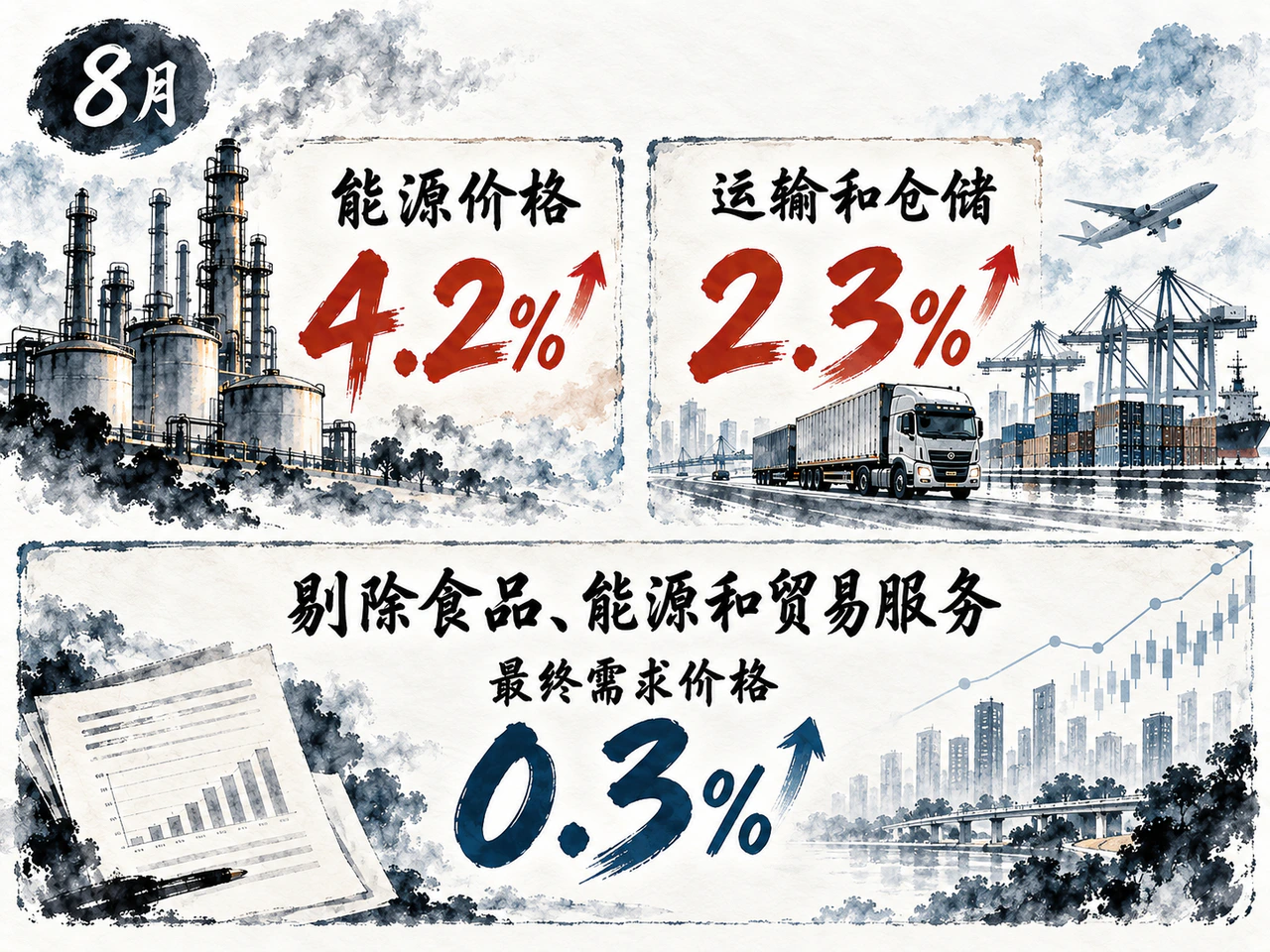
BLS reported September 10 that August final-demand PPI rose 0.4% monthly, matching Reuters' survey; July was revised from zero to 0.1%. Annual inflation rose from 4.8% to 5.4%. The headline was not a surprise, but its composition still pressured bonds.
In August, energy was the main driver, up 4.2% monthly, including diesel +24.1%. Final-demand goods rose 1.1%, with energy accounting for more than three quarters of the increase. Costs spread to logistics: transportation and warehousing services rose 2.3%, trucking 2.0%, and intermediate processed energy 7.3%. Fuel increases burden both household refueling and corporate transport and production.
Other components were milder. Final demand excluding food, energy and trade services rose 0.3%, below July's 0.4%; services overall rose only 0.1%, and services excluding trade, transportation and warehousing were flat. Energy and transport inflation had not yet brought synchronized acceleration in underlying services; further spread remains central to policy.
Employment stayed resilient while housing faced funding constraints. Initial claims in the week ending September 5 were 206,000, down 1,000 from the revised preceding week; the four-week average was also 206,000, without clear expanding layoffs. August existing-home sales fell 2.0% to a 3.98 million seasonally adjusted annual rate, below 4 million for the first time since June 2025. Inventory cover rose from July's 4.6 to 4.9 months.
Figures cited by the National Association of Realtors put the average August 30-year fixed mortgage rate at 6.67%, versus July's 6.54%. Financing reduced purchasing power and more inventory improved buyers' bargaining position, yet median prices still rose 1.6% year on year. Rate effects were visible in sensitive sectors without a general economic stall.
August CPI would test breadth. If inflation remained energy-led and core services kept easing, pressure for more tightening might lessen. Faster core prices with still-low layoffs would strengthen inflation's policy constraint.
Treasury yields rise broadly under policy and supply pressure
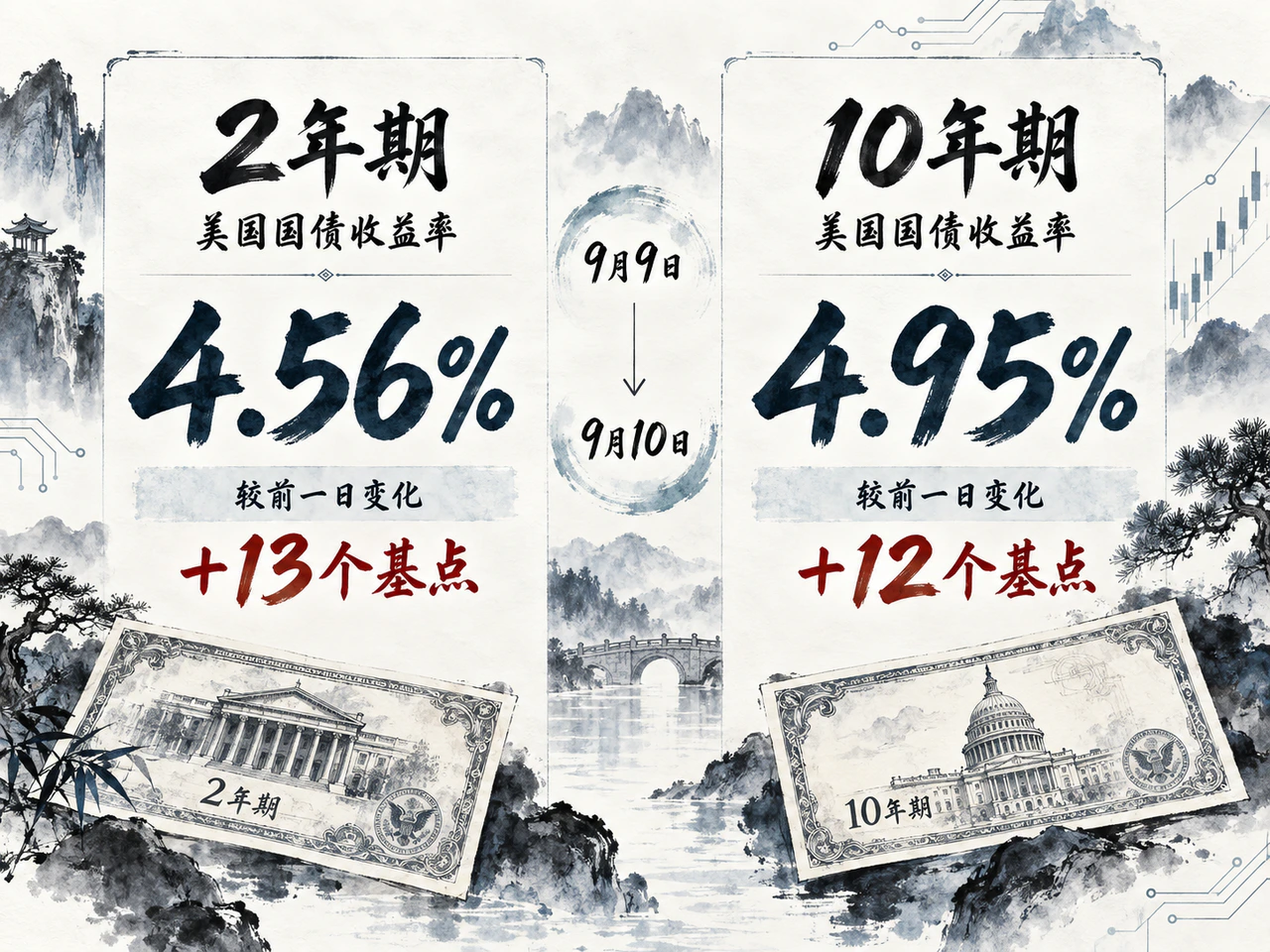
September 10 yields rose across maturities, with short and intermediate moves slightly larger than the ultra-long end. Adjacent-day U.S. Treasury daily-curve closes showed:
| Maturity | September 9 | September 10 | Daily change |
|---|---|---|---|
| 2-year | 4.43% | 4.56% | +13 basis points |
| 5-year | 4.61% | 4.75% | +14 basis points |
| 10-year | 4.83% | 4.95% | +12 basis points |
| 30-year | 5.28% | 5.37% | +9 basis points |
The 10-year/2-year spread narrowed from 40 to 39 basis points and the 30-year/5-year from 67 to 62. Larger short/intermediate adjustment fit tighter near-term expectations. MarketWatch cited CME at 14:37 Eastern pricing about a 70% chance of a hike next week, versus 61% the prior day. Reuters' gold report nevertheless said most surveyed economists still expected no September or year-end change. Trading prices and economists' baseline views diverged clearly.
The long end also faced supply. Treasury had raised a long-dated off-the-run buyback cap from $2 billion to $6 billion; MarketWatch put actual purchases that day around $5.2 billion. It quoted Mischler's Tom di Galoma calling the $22 billion 30-year auction weak. Buybacks improve older-bond liquidity, but markets still must absorb new debt, while inflation, deficits and funding demand remain rate pressures.
On September 9 evening Trump proposed $5,000 for every adult U.S. citizen if Republicans retained both chambers after November. CBS estimated more than $1.2 trillion using roughly 245 million adults. Legislation, funding and details remained unresolved. Implementation could raise consumption and fiscal funding needs together; for now it remained a proposal affecting expectations.
Credit spreads moved modestly. ICE BofA figures updated September 10 put September 9 investment-grade spreads unchanged at 81 basis points and high yield up 4 to 271. These relate to the preceding trading day. Even stable credit spreads leave higher Treasury benchmarks raising dollar issuance and refinancing costs. Existing fixed-rate borrowers feel higher interest according to maturities and refinancing.
Oil surges and gold falls as supply risks dominate energy
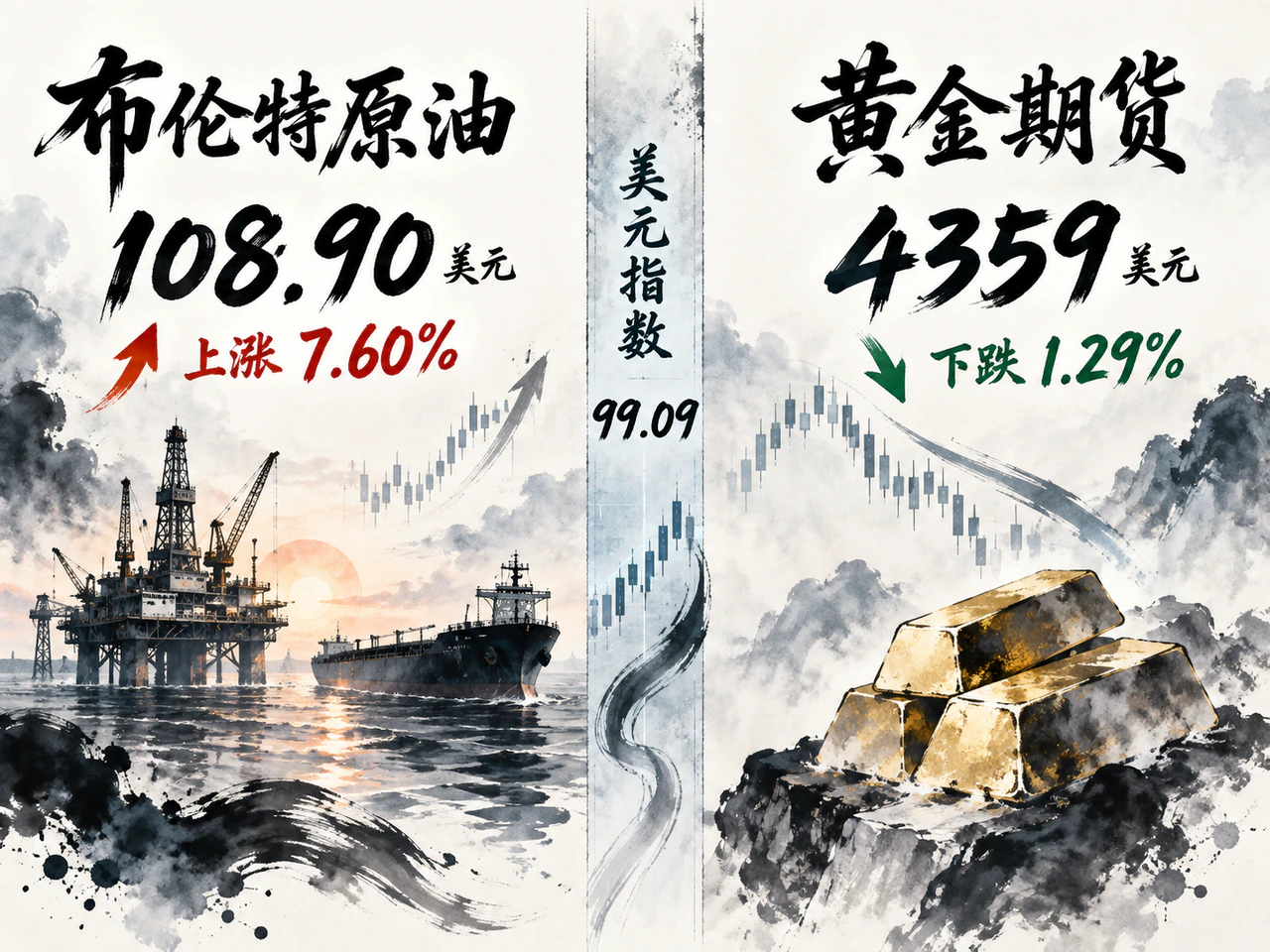
Vendor continuous-futures closes September 10 put Brent at $108.90 a barrel, +7.60%; WTI $103.84, +8.11%; and gold $4,359 an ounce, -1.29%. The dollar index rose 0.32% to 99.09. Supply risk supported oil while higher dollar and yields pressured gold.
Reuters said restricted Hormuz passage, ship-attack risks and Red Sea threats increased supply uncertainty. Demand and inventories offered less support: OPEC cut its 2026 demand-growth forecast for a fifth time to 380,000 barrels a day. Reuters cited EIA showing a 391,000-barrel U.S. crude draw in the week ending September 4, below the expected 1.55 million. Rising supply premiums explain the surge better than stronger demand.
If energy strengthens inflation and hike expectations, the dollar and yields can reduce gold's appeal; Reuters linked its decline to these factors. Yet earlier World Gold Council August figures showed $18 billion entering physically backed gold ETFs and record holdings of 4,189 tonnes. Strong monthly allocation demand and short-term rate restraint coexist; their balance will continue shaping prices.
Technology and small caps lead losses; cloud growth supports earnings
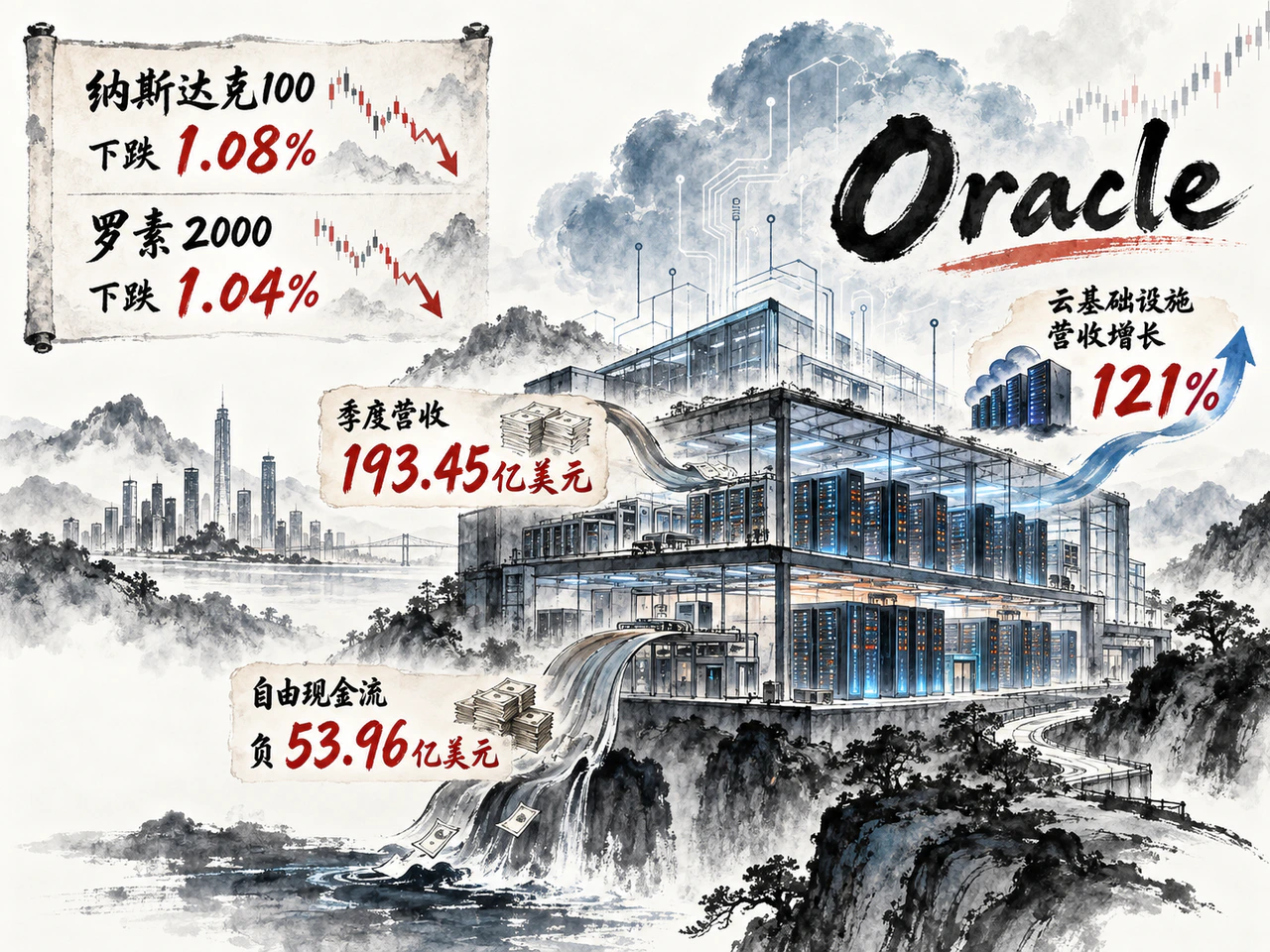
At the September 10 regular U.S. close, the S&P 500 was 7,591.70, -0.58%; Dow 52,064.10, -0.60%; Nasdaq 100 29,103.51, -1.08%; and Russell 2000 2,890.95, -1.04%. The VIX rose 1.38 points to 17.84.
Technology and small-cap underperformance reflected both growth-valuation and funding/growth concerns. Reuters reported 9 of 11 S&P 500 sectors lower, with decliners outnumbering advancers about 2 to 1. Nvidia fell about 2.3%, Micron 4.7%; Apple gained 3.6% after its new iPhone launch. Macy's fell 4.7% despite higher full-year forecasts and American Eagle lost 14%. Weakness was broad, but product progress and earnings guidance still differentiated stocks.
XLK fell 1.41%, XLF 0.33% and XLE 0.58%. Energy shares failing to follow crude also showed the complexity of cost shocks: higher oil may improve producer revenue while raising other firms' costs, squeezing purchasing power and reinforcing high-rate expectations.
After the close, Oracle's fiscal first-quarter 2027 results through August 31 showed $19.345 billion revenue, up 30% year on year, and non-GAAP EPS of $1.92, both above LSEG consensus reported by CNBC. Cloud-infrastructure revenue rose 121% to $7.388 billion; remaining performance obligations reached $664 billion. Those obligations include contracted revenue still to be recognized and depend on future performance. CNBC's 17:42 Eastern report showed shares up about 4% after hours.
Growth required enormous investment. Oracle's quarterly capex was $28.499 billion, operating cash flow $23.103 billion and free cash flow negative $5.396 billion; it completed $20 billion of common-equity issuance before commissions. Cloud expansion supports chips, servers and data centers but consumes substantial funds. Under rising financing costs, converting orders into cash increasingly matters for AI-chain profits and valuations.
Asia faces external cost pressure; trade and financing policy provide buffers
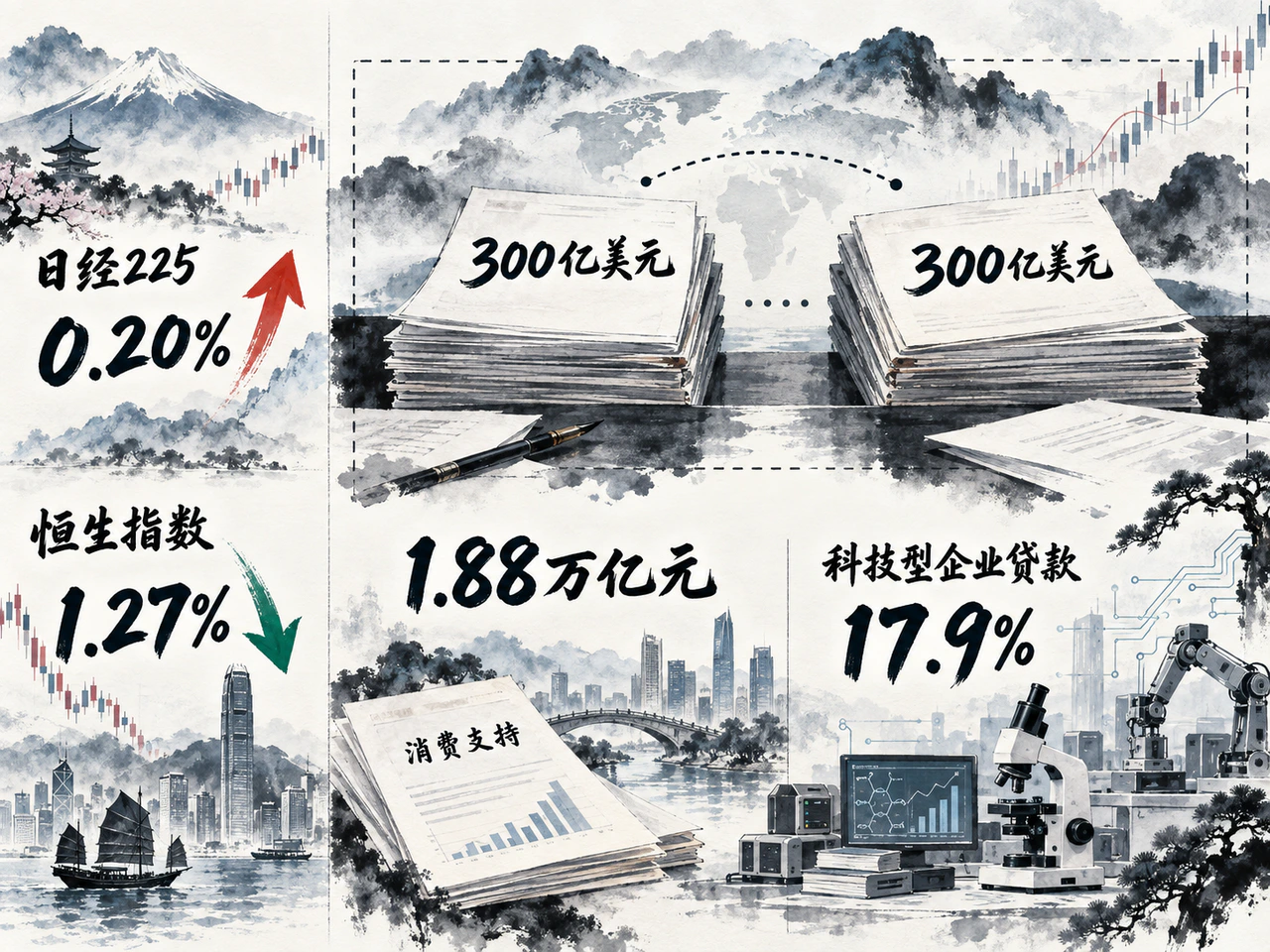
September 10 Asian performance diverged: Nikkei 225 +0.20%, Hang Seng about -1.27%, KOSPI -0.25%. KOSPI recovered most of an earlier sharp decline, while technology-heavy KOSDAQ rose 0.79%. Asian closes preceded that evening's U.S. session; later U.S. equity and bond moves remained for subsequent trading to absorb.
For Japan and Korea's semiconductor chain, dollar rates and U.S. technology weakness pressure valuations while Oracle cloud growth supports demand. Hong Kong technology also faces dollar rates, with earnings, local liquidity and policy producing differences. Higher energy import costs could further squeeze Asian margins and household purchasing power.
Trade policy offered some easing potential. AP reported September 10 that China and the U.S. were seeking early reciprocal tariff cuts covering $30 billion of goods each, still under discussion. Barclays considered targeted cuts more likely than a comprehensive agreement. Implementation could lower covered import costs and improve margins, depending on products and tariff changes.
Chinese financial-policy plans and implementation disclosed that day emphasized structural monetary tools, fiscal interest subsidies and cross-border financing. The financial regulator said consumer- and service-business loan subsidies supported roughly RMB 1.88 trillion consumption in the first seven months. End-July technology-company loans were RMB 26.9 trillion, +17.9% year on year; manufacturing loans RMB 41.7 trillion, +9.8%. Funds continued tilting toward consumption and technology manufacturing, but earnings support depends on financing generating spending, orders and capex.
Currency funding conditions also differed. H World announced September 10 pricing of RMB 3.35 billion senior unsecured bonds at 2.25%, due 2031 and intended for Hong Kong listing, illustrating funding beyond dollars. Actual external-rate effects on dollar borrowers depend on liability currency, exchange-rate arrangements and maturity structure.