Saudi Arabia's oil route bypassing Hormuz is also threatened. As of 07:31 Beijing time on September 12, Saudi Arabia had confirmed a precautionary shutdown of its east-west pipeline after an attack. Reuters reported Houthi forces had advanced to the Bab el-Mandeb coast and Perim Island. Energy-transport risks are spreading from the overland pipeline to the southern Red Sea entrance.
Iran meanwhile confirmed plans to meet Iraqi and Gulf Arab foreign ministers in Oman on September 14 to discuss safe merchant-shipping routes through Hormuz. Regional states are still seeking restored passage, but spreading conflict adds obstacles to diplomacy.
Pipeline attack adds risk to Red Sea alternatives
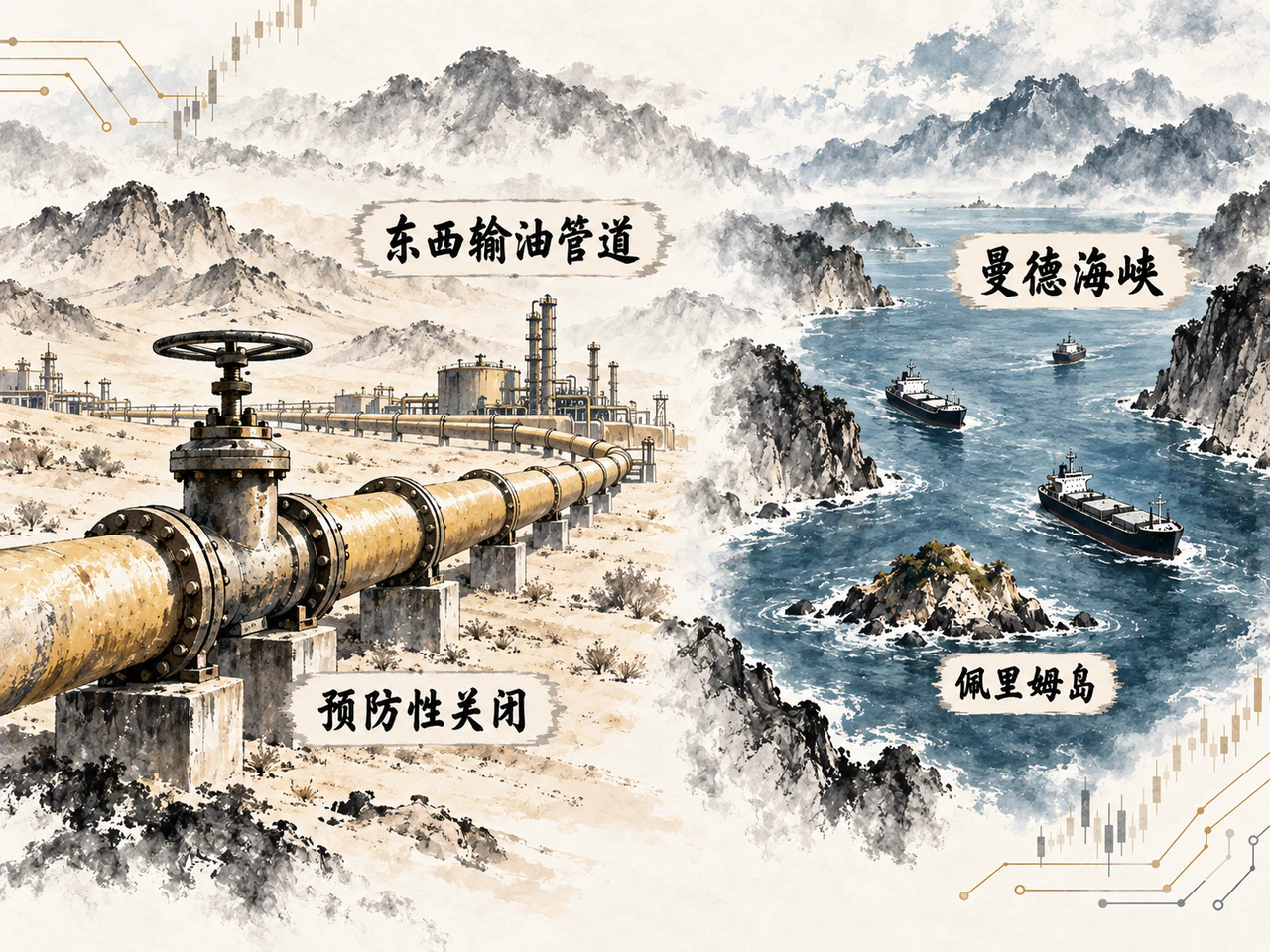
Saudi Press Agency quoted an Energy Ministry source September 11 saying east-west pipeline facilities in Riyadh and Medina regions were attacked repeatedly on the morning of September 10. Saudi Arabia shut the pipeline as a precaution, treated the injured and sent technical teams to assess safety. Earlier satellite images showed smoke near the line; the official notice confirmed the attack and shutdown.
Reuters reported Saudi Arabia saying the drones came from Iraq, injuries occurred and damage was still being assessed. At the Iraqi prime minister's request, it had not retaliated, but reserved necessary action. The responsible organization remained unclear.
The pipeline links eastern Saudi oilfields to the Red Sea and is an important Hormuz bypass. Its shutdown affects that alternative without implying a complete halt to Saudi exports. Even if it resumes, navigation risks at the Red Sea's southern end have risen.
Reuters cited four Yemeni government sources saying Houthis reached Perim on September 11 after government troops withdrew; Dhubab on the opposite mainland coast also fell to them. Control of the island in Bab el-Mandeb and nearby coast increases their ability to threaten passage.
Bab el-Mandeb was not fully closed. Houthi spokesman Saree said Saudi vessels remained banned but other shipping was safe. This indicates selective pressure, but a unilateral statement cannot remove shipowners' and insurers' security risks.
Hormuz passage also remained restricted. Reuters cited preliminary tracking showing seven ships transiting September 10, two outbound and five inbound. Vessels with identification systems off may be omitted, so this is not a complete count. With Hormuz still abnormal, pressure on the Red Sea alternative further increases energy-transport uncertainty.
Oman promotes talks; passage conditions still require coordination

Iranian Foreign Ministry spokesman Baghaei said September 11 that Iran planned Oman talks with Iraqi and Gulf Arab foreign ministers on safe merchant routes. Earlier reports placed the meeting in Salalah, with Oman seeking regional support for temporary arrangements.
Media citing the Financial Times said an Iran–Oman proposal would have vessels enter through Iranian waters and leave mainly through Omani waters. Gulf states want traffic restored but emphasize a temporary arrangement. Consultations remain some distance from restored passage and do not mean acceptance of permanent Iranian control.
The key differences remain between Washington and Tehran. Reports said Iran sought an end to its port blockade and restoration of oil exports, while the U.S. wanted the arrangement also to address the nuclear issue. Regional talks help coordinate routes, but full recovery depends on U.S.–Iran progress on those conditions.
Yemen further complicates mediation. Iran urged Saudi Arabia to end its Yemen blockade and resume talks immediately; in a foreign-ministers' call it emphasized diplomacy to prevent escalation. Pakistan conveyed Saudi warnings to restrain the Houthis while seeking de-escalation and avoiding deeper involvement through regional defense commitments.
The U.S. had not agreed to expand direct military involvement against the Houthis. Axios and Reuters sources said Saudi Arabia's crown prince twice requested Trump strikes, but Washington declined direct action and planned intelligence and targeting support.
Civilians already bore the cost. The International Organization for Migration said September 11 that at least 46,000 people had been displaced since southwestern Yemen's escalation the previous week. Government forces vowed to recover territory and warned civilians away from the Taiz–Mokha road and Houthi concentrations. Advances, airstrikes and counterattack preparations are shrinking safe civilian routes.
In coming days, safe pipeline resumption, further attacks around Bab el-Mandeb and enforceable temporary arrangements from Oman will determine whether transport risk eases. Diplomacy continues, but the security guarantees and political conditions needed for restored passage remain incomplete.
| Key developments (Beijing time) |
|---|
| 09-12 04:32 Beijing timeTurkish diplomatic sources said Foreign Minister Fidan spoke with his Saudi counterpart about regional developments and attacks on Saudi Arabia. |
| 09-12 04:16 Beijing timeSaudi Arabia said drones attacking the east-west pipeline came from Iraq and it had withheld retaliation at the Iraqi prime minister's request; the responsible organization remained unclear. |
| 09-12 02:20 Beijing timeA Saudi Energy Ministry source confirmed precautionary pipeline shutdown after repeated attacks in Riyadh and Medina regions, injuries and ongoing technical safety assessment. |
| 09-11 22:27 Beijing timeIranian spokesman Baghaei said Iran planned September 14 Oman talks with Iraqi and Gulf Arab foreign ministers on safe merchant routes through Hormuz. |
| 09-11 21:08 Beijing timeThe Houthis said shipping remained safe except for Saudi vessels they had banned. This was their statement, not a guarantee of passage. |
| 09-11 20:16 Beijing timeIran's Foreign Ministry urged an end to Saudi Arabia's Yemen blockade and immediate resumption of talks, offering mediation support. |
| 09-11 18:51 Beijing timeYemeni government forces vowed to retake territory and warned civilians away from the Taiz–Mokha road and Houthi equipment concentrations. |
| 09-11 18:15 Beijing timeIOM said at least 46,000 people had been displaced since fighting escalated in southwestern Yemen the previous week, with numbers still rising rapidly. |
| 09-11 18:10 Beijing timeReuters cited Pakistani officials saying Pakistan had conveyed Saudi warnings to Iran to restrain the Houthis, while its military promoted renewed diplomacy and de-escalation. |
| 09-11 18:00 Beijing timeIran's Foreign Ministry said Foreign Minister Araghchi and Saudi counterpart Faisal discussed preventing wider regional tension through cooperation and diplomacy. |
| 09-11 17:40 Beijing timeAxios cited U.S. officials saying Trump twice declined the Saudi crown prince's requests to strike the Houthis; the U.S. planned intelligence and targeting support without direct combat for now. |
| 09-11 17:20 Beijing timeReuters cited Yemeni government sources saying Houthis reached Perim in Bab el-Mandeb after government withdrawal; mainland Dhubab also fell to them. |
| 09-11 17:20 Beijing timeHouthi-run Al Masirah said Saudi Arabia launched two airstrikes on Mokha airport. |
| 09-11 13:43 Beijing timeSouth Korea's Foreign Ministry said Foreign Minister Cho Hyun discussed Hormuz navigation freedom with Iran's minister; Seoul had not decided whether to deploy troops to the Strait. |
| 09-11 13:05 Beijing timeReuters cited preliminary tracking recording seven Hormuz transits September 10, two outbound and five inbound; ships with identification systems off might be omitted. |
| 09-11 12:10 Beijing timeMedia reported Iran and Oman seeking temporary routes, with entry through Iranian waters and departure mainly through Omani waters, and seeking Gulf-state support. |
| 09-11 10:41 Beijing timeUN Yemen envoy Grundberg warned an emergency Security Council meeting that renewed fighting ended four years of relative calm and could have consequences beyond Yemen. |


