On September 14, Yemen's Houthis again announced attacks on military targets in southern Saudi Arabia, while a Gulf–Iran meeting scheduled in Oman that day failed to take place. President Trump said he was open to contact with Iran, but halting attacks and restoring Hormuz navigation still required concrete arrangements among the parties.
As of 07:32 Beijing time on September 15, the preceding 24 hours further highlighted pressure on Saudi energy exports. With Hormuz passage restricted, the East–West pipeline and Red Sea routes serving as bypasses were also affected by fighting. Strait-management disagreements persisted, while US–Iran nuclear disputes extended to the IAEA General Conference.
Houthis attack Saudi Arabia again; Red Sea export routes come under pressure
The Houthis said on the 14th that they fired dozens of missiles and drones at an air base in Khamis Mushait, southern Saudi Arabia, targeting hangars, radar, runways and ammunition depots in retaliation for Saudi airstrikes in Yemen. Saudi authorities issued emergency alerts in that city and three other southern cities. The reported scale and target list came from the Houthis' statement.
The attack followed the Houthis' capture the previous week of Mocha port and Perim Island at the entrance to Bab el-Mandeb. Those positions command the Red Sea coast and its gateway, increasing pressure on Saudi seaborne export routes.
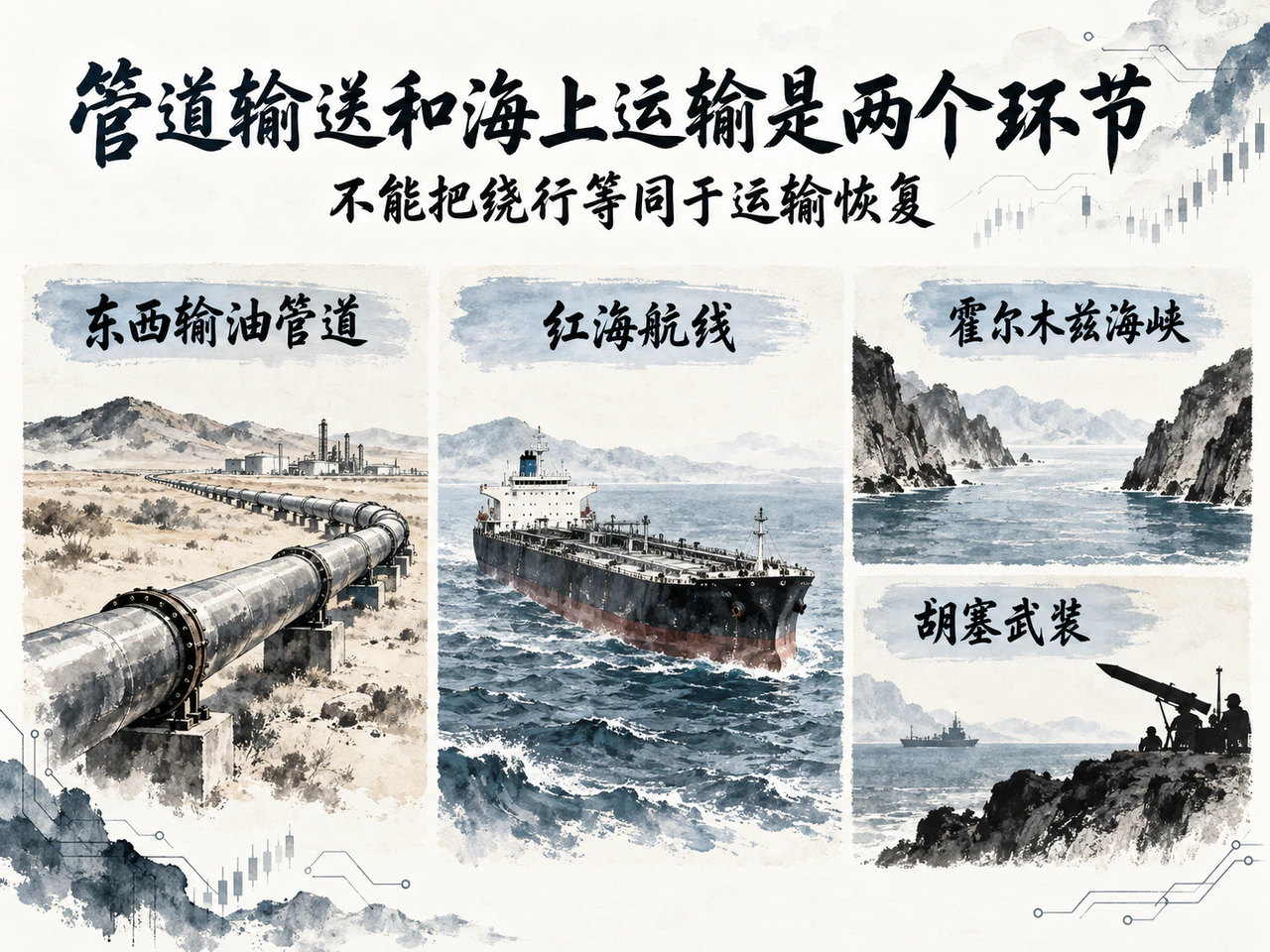
Saudi Arabia's East–West pipeline, shut by an earlier attack, is an important export route bypassing Hormuz. Reuters reported on the 14th that Saudi Arabia had not announced a restart date. The pipeline determines whether oil reaches Red Sea export ports; waterway security determines whether tankers can depart. Pipeline closure combined with route risks was weakening Saudi bypass capacity.
Saudi Arabia also sought US support. Saudi state media said Crown Prince Mohammed bin Salman met US Central Command commander Brad Cooper in Jeddah on the 14th. Reuters, citing three sources, said Washington had so far refused Saudi requests for direct military intervention beyond intelligence support.
The fighting also intensified humanitarian pressure in Yemen. Media reports on the 14th, citing IOM estimates, said more than 82,000 people had been displaced since September began, including over 2,000 who fled across the strait to Djibouti.
Gulf meeting postponed; passage arrangements remain disputed

The regional meeting on Hormuz arrangements scheduled in Oman on the 14th did not occur. Omani Foreign Minister Badr al-Busaidi had announced its postponement the previous day to facilitate consensus. Iran said some regional countries requested the delay. Media cited a Gulf official saying Saudi Arabia sought changes to arrangements being discussed by Iran and Oman over concerns about long-term effects on other Gulf states.
Trump said on the 14th that Iran wanted a quick agreement and the United States was open to contact, with participation his decision. This left room for engagement, but the two sides had not jointly announced formal negotiations, and no new date was set for the postponed Gulf meeting.
Passage rules remained central. Reports on the 14th said Iran published a list of 77 vessels it accused of violating Hormuz regulations, warning of possible fines, detention or confiscation on future passages. Iran thereby continued asserting management authority over the strait.
Actual transport showed no clear improvement either. US Energy Secretary Chris Wright said the average number of vessels secretly transiting with US support was increasing. Reuters also noted independent monitors' view that oil flows might have fallen as fighting intensified this month. Vessel counts and oil volumes are different measures; more ships crossing does not establish that crude transport is normal.
Nuclear-conference access disputed again; US–Iran differences persist

At the IAEA General Conference opening on the 14th, Iran protested that Atomic Energy Organization head Mohammad Eslami could not travel to Vienna and summoned Austria's chargé d'affaires, demanding that the host guarantee representatives' right to attend international meetings.
Austria said it had sought a travel-ban exemption from the UN Security Council sanctions committee, but the request was rejected, requiring denial of entry. The US representative in Vienna confirmed US opposition to the exemption, linking it to Iran's lack of substantive safeguards cooperation. Other Iranian delegates still attended.
The postponed Gulf meeting, ship-passage warnings and nuclear-conference access dispute showed continuing differences over regional interests, strait management and inspections. Trump's openness to contact offered diplomatic room. Relief for energy transport and security ultimately depended on actual talks, consensus on navigation rules and an end to attacks.
Key developments

The following are news-release times, all in Beijing time.
| Key developments |
|---|
| 09-15 01:02 Beijing timeNetanyahu warned of heavier strikes if Israel was attacked again and reiterated continued destruction of what he called armed infrastructure. |
| 09-15 00:49 Beijing timeTrump said he was open to contact with Iran and participation would be his decision. The two sides had not jointly announced resumed formal negotiations. |
| 09-15 00:31 Beijing timeHouthis said they fired dozens of missiles and drones at an air base in Khamis Mushait. Saudi Arabia issued alerts there and in three other southern cities. |
| 09-15 00:31 Beijing timeSaudi state media said Crown Prince Mohammed bin Salman met US Central Command commander Brad Cooper in Jeddah. |
| 09-15 00:31 Beijing timeThe regional meeting scheduled for September 14 in Oman did not occur. Oman's foreign minister had announced postponement the previous day to seek consensus on Hormuz arrangements. |
| 09-15 00:31 Beijing timeReports said Iran listed 77 vessels accused of violating strait regulations and warned of possible fines, detention or confiscation during future passages. |
| 09-15 00:31 Beijing timeUS Energy Secretary Wright said the average number of ships secretly crossing Hormuz with US support was increasing. Reuters cited independent monitors' assessment that oil volumes might have fallen after renewed fighting this month. |
| 09-14 19:48 Beijing timeIran protested Eslami's inability to attend the Vienna conference and summoned Austria's chargé d'affaires. The United States confirmed opposing his travel-ban exemption. |
| 09-14 19:00 Beijing timeMedia citing IOM estimates said Yemen's fighting had displaced more than 82,000 people since September began, including over 2,000 who fled to Djibouti. |