As of 07:31 Beijing time on September 17, conflict and energy-supply risks were spreading toward the Red Sea coast and Saudi territory. The Houthis claimed a strike on Yanbu, Saudi Arabia's western crude outlet and the seaward end of the East–West pipeline bypassing Hormuz. Repair timelines were disputed. Although Washington reported higher single-day Hormuz flows and U.S. officials met Houthi representatives in Oman, damaged infrastructure, unsecured shipping and tighter U.S. financial restrictions left actual supply and navigation risks unresolved.
Houthis claim strikes on Yanbu Aramco facilities, disrupting Saudi Arabia's western export route
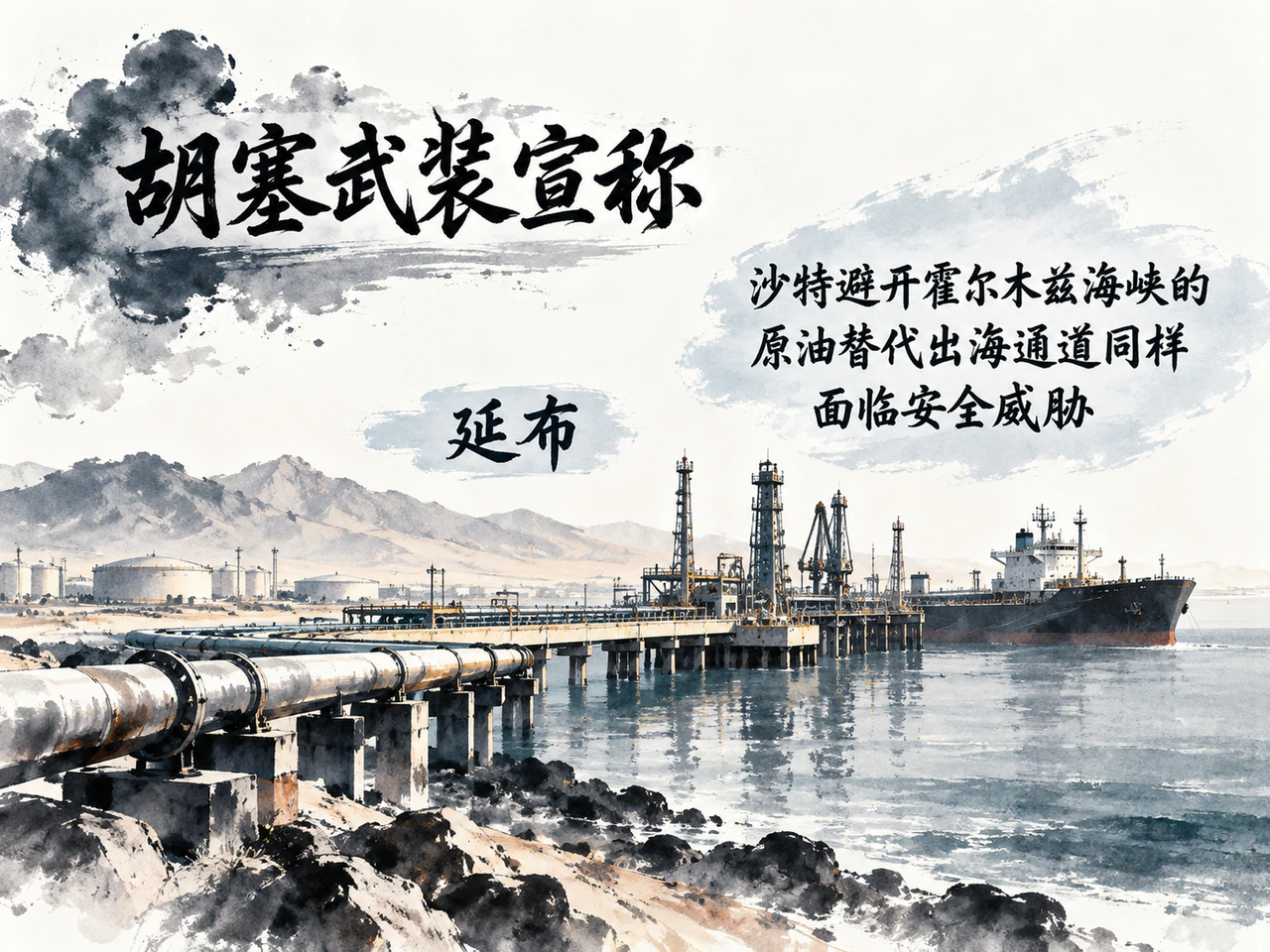
Houthi spokesman Saree said September 16 that attacks hit Aramco facilities at Yanbu and ballistic missiles targeted Khamis Mushait air base in southwestern Saudi Arabia, claiming severe damage. Neither Saudi authorities nor independent parties had verified the extent. Yanbu is the Red Sea export terminal of Petroline, the key bypass around Hormuz. Direct harassment there meant the alternative crude route also faced security threats.
After the cross-border attacks, Saudi defenses reported intercepting and destroying an incoming drone south of Mecca. The Houthis denied targeting the holy city, while Jordan, Kuwait and other countries condemned the incident. In Yemen's Al-Jawf province near the Saudi border, government forces and Houthis clashed; government claims of advances awaited independent verification. The Associated Press cited Turkish and Pakistani officials saying neither country had received a Saudi request for military reinforcements.
Pipeline repair estimates diverge; one day's Hormuz flow cannot prove sustained recovery
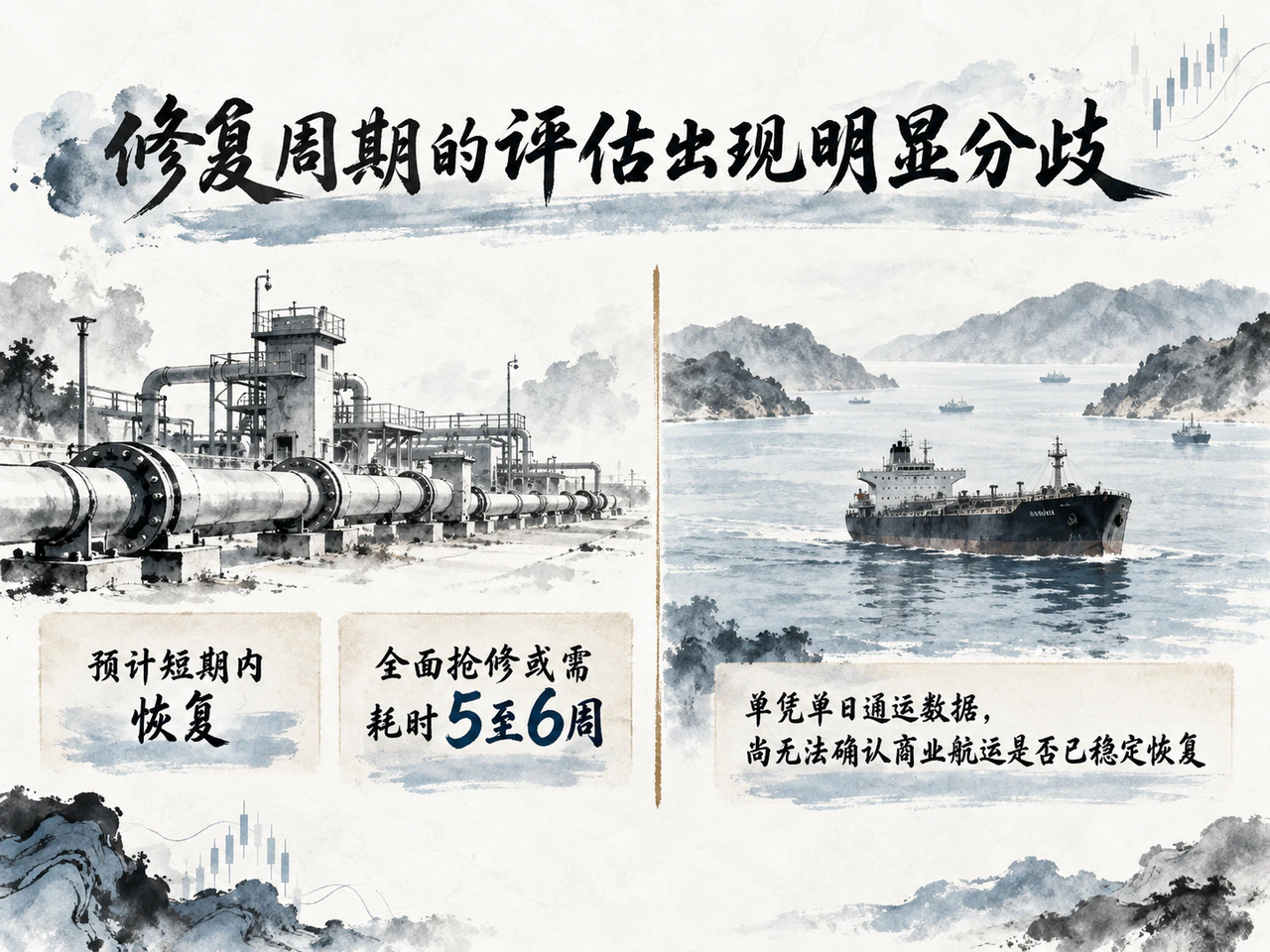
Reliable East–West pipeline transfers were crucial to supply security. Energy Secretary Wright said assessments were advancing quickly and expected near-term restoration. Reuters, however, cited industry sources saying pumping stations 8 and 9 were damaged and full repairs might take five to six weeks. Without an official damage assessment or firm schedule, the recovery pace remained uncertain.
A single figure could not establish navigation recovery either. Wright said U.S. military assistance helped move 18 million barrels of crude and products through Hormuz the previous day. The measure included products, and the preceding seven-day moving average was approximately 11 million barrels. One day could not confirm stable commercial shipping. Even if pipeline flows gradually resume, frequent drone and anti-ship threats along the Red Sea would still constrain berthing, loading and onward voyages.
Iranian energy repairs also required time. Its oil minister said reconstruction had begun at four previously attacked gas refineries and Tehran storage and transport facilities. Only some capacity was expected back by year-end, with remaining work extending into the first half of 2027. Physical damage to critical infrastructure imposed supply constraints unlikely to disappear fully in the short term.
Washington contacts the Houthis while advancing Iran-related financial restrictions

Reuters disclosed private meetings between U.S. officials and Houthi representatives in Muscat the previous weekend. Sources said the Houthis told Washington they targeted Saudi vessels and did not intend to attack U.S. or Israeli ships. Such verbal assurances could not provide substantive security to international commercial shipping; Red Sea navigation risk remained high.
The U.S. House passed a resolution aimed at restricting the president's authority to wage war against Iran, 220–204, revealing domestic disagreement. Financial sanctions and supervision intensified simultaneously. FinCEN convened major global financial institutions on September 16 to block Iranian cross-border energy settlement and military procurement channels. Diplomatic engagement and policy contests could not directly remove physical-route risks. Safe tanker passage and actual restoration of damaged energy output remained the main tests of the supply shock.
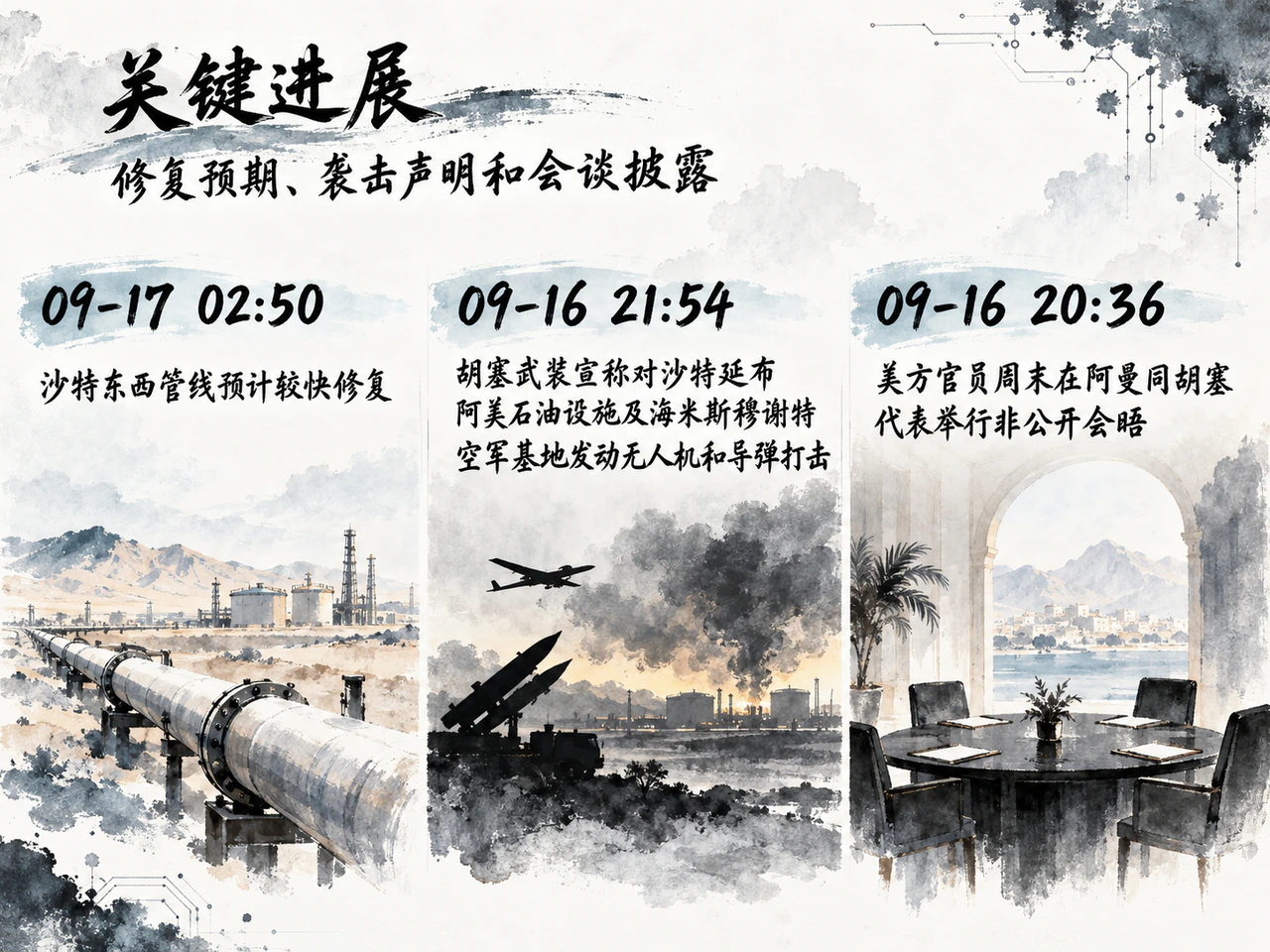
Key developments (Beijing time)
| Key developments |
|---|
Wright expected relatively rapid East–West pipeline repairs and said U.S.-escorted Hormuz crude and product flows reached 18 million barrels in one day. |
FinCEN coordinated with major global institutions to block Iranian cross-border procurement and settlement channels. |
Turkish and Pakistani officials told AP they had not received Saudi requests for military help over escalating Yemen fighting. |
Government and Houthi forces clashed in border-region Al-Jawf. Government claims of advances awaited independent verification. |
Mahan Air suspended Tehran–Muscat service and planned to stop Ankara flights from September 21 because of the situation. |
Reuters cited industry sources saying pumping stations 8 and 9 were damaged and full repairs could take five to six weeks; no firm official timetable existed. |
The Houthis claimed drone and missile attacks on Yanbu Aramco facilities and Khamis Mushait air base; Saudi Arabia had not confirmed damage. |
Reuters disclosed private U.S.–Houthi meetings in Oman over the weekend; sources said the Houthis focused attacks on Saudi vessels. |
Iran's oil minister announced reconstruction of four gas refineries and Tehran storage and transport facilities, with some capacity back by year-end and full recovery extending into first-half 2027. |
The U.S. embassy advised Americans to reconsider Saudi travel because of cross-border drone and missile risks. |
Lebanese President Aoun told AFP he was open to a border-security agreement after Israeli withdrawal and sought transitional defense arrangements after peacekeepers leave. |
Saudi defenses intercepted a drone south of Mecca and condemned Houthi provocation; the Houthis denied it. |
The U.S. House passed a resolution limiting presidential war powers toward Iran, 220–204. |