As of 07:32 Beijing time on September 19, key Middle East crude-shipping routes faced overlapping security friction and spreading conflict. A tanker was attacked and caught fire in Hormuz during the preceding 24 hours. Iran was imposing a transit-permit system while US interdictions of merchant ships calling at Iranian ports expanded. Fighting on Yemen's west coast was spreading toward the Red Sea outlet. Combined with earlier damage to the East–West Pipeline, this led Saudi Aramco to notify at least two European refineries that it could not supply them crude in October, according to media citing sources.
Indirect diplomatic opportunities remained around UNGA attendance, and President Macron proposed a G7 meeting on measures such as strategic-reserve releases. Maritime security nevertheless had not improved materially, leaving substantial uncertainty over crude shipping and regional energy supply chains.
Fresh Hormuz Attack and Overlapping US–Iran Controls Increase Navigation Uncertainty
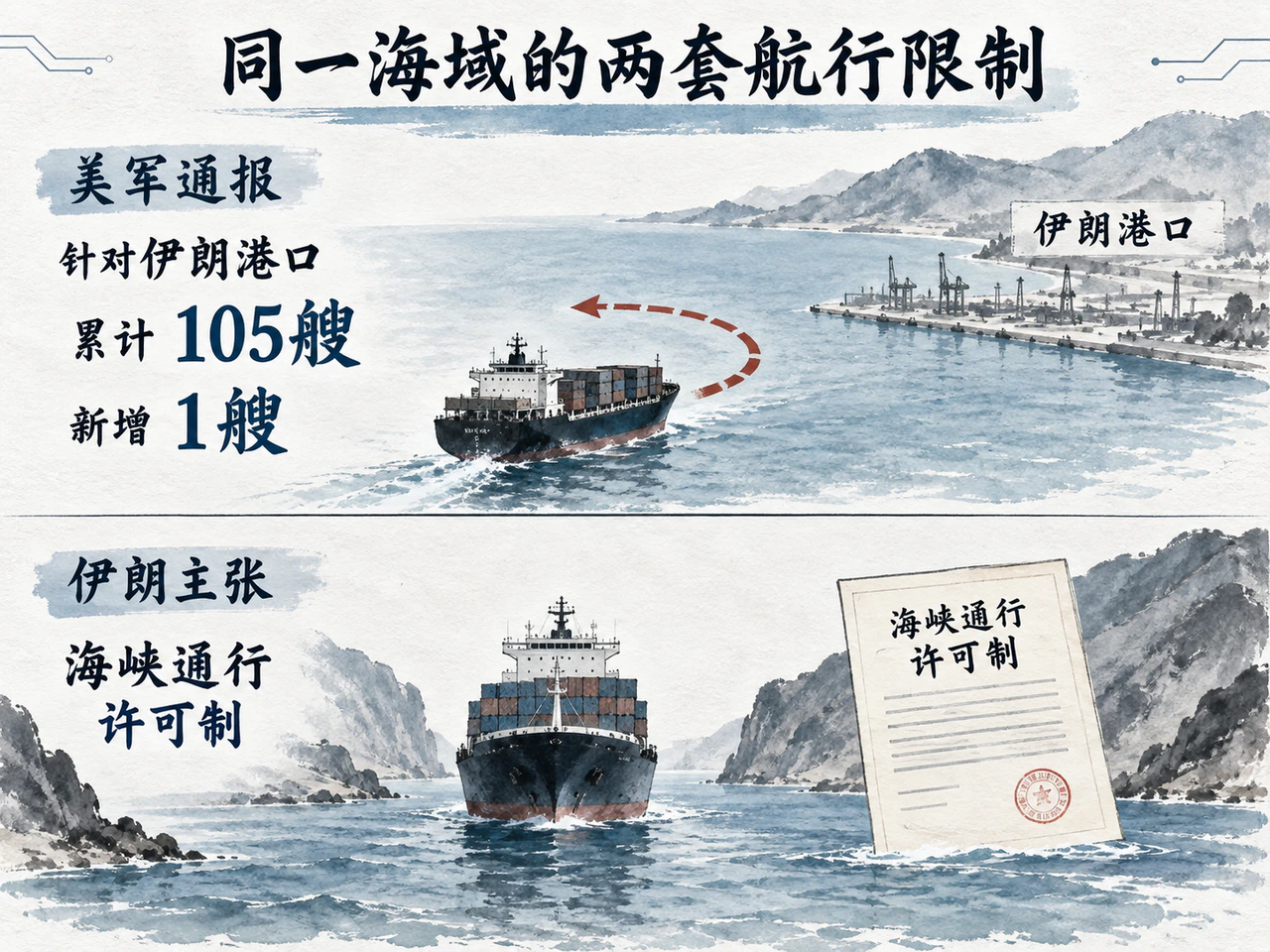
Commercial passage through Hormuz faced direct threats. UKMTO reported on the 18th that an unidentified projectile hit a tanker in a key shipping lane, causing a fire that was extinguished; the crew were safe. A separate tanker attack disclosed that day concerned an older September 16 incident, rather than two new attacks in one day.
Iran's Revolutionary Guards navy claimed the Togo-flagged tanker Trend had been hit the previous night for attempting unauthorized passage, catching fire and stopping. Whether its claimed target matched UKMTO's vessel still required cross-checking. The claim nevertheless showed Iran pressing its unilateral transit-permit system.
The US blockade of Iranian ports also continued. CENTCOM said maritime interdictions had forced a cumulative 105 merchant vessels to change course, one more than the previous day. US restrictions on Iranian port calls and Iranian limits on outside vessels crossing the strait applied opposing controls in the same waters, substantially complicating international commercial shipping and increasing transport uncertainty.
Yemen Fighting Reaches Red Sea Routes as Sources Say Aramco Notifies European Refineries of October Cuts
The Red Sea, an alternative route for Gulf crude exports, was also hit by escalating fighting in Yemen. The Houthis claimed 26 Saudi airstrikes on their areas over the previous 24 hours and approximately 300 over the week. Fighting spread toward the port of Mocha, forcing shops to close, schools to suspend classes and civilians to limit movement. UN figures showed at least 112,000 displaced within Yemen in two weeks, while nearly 3,000 refugees crossed to Djibouti in less than a week.
Coastal conflict directly disrupted transit at the Red Sea outlet. Kpler tracking showed only 5 vessels carrying Saudi products leaving through Bab el-Mandeb in the preceding 7 days. Commercial passage, including commodity tankers, had not stopped completely, but traffic and turnaround efficiency were materially impaired.
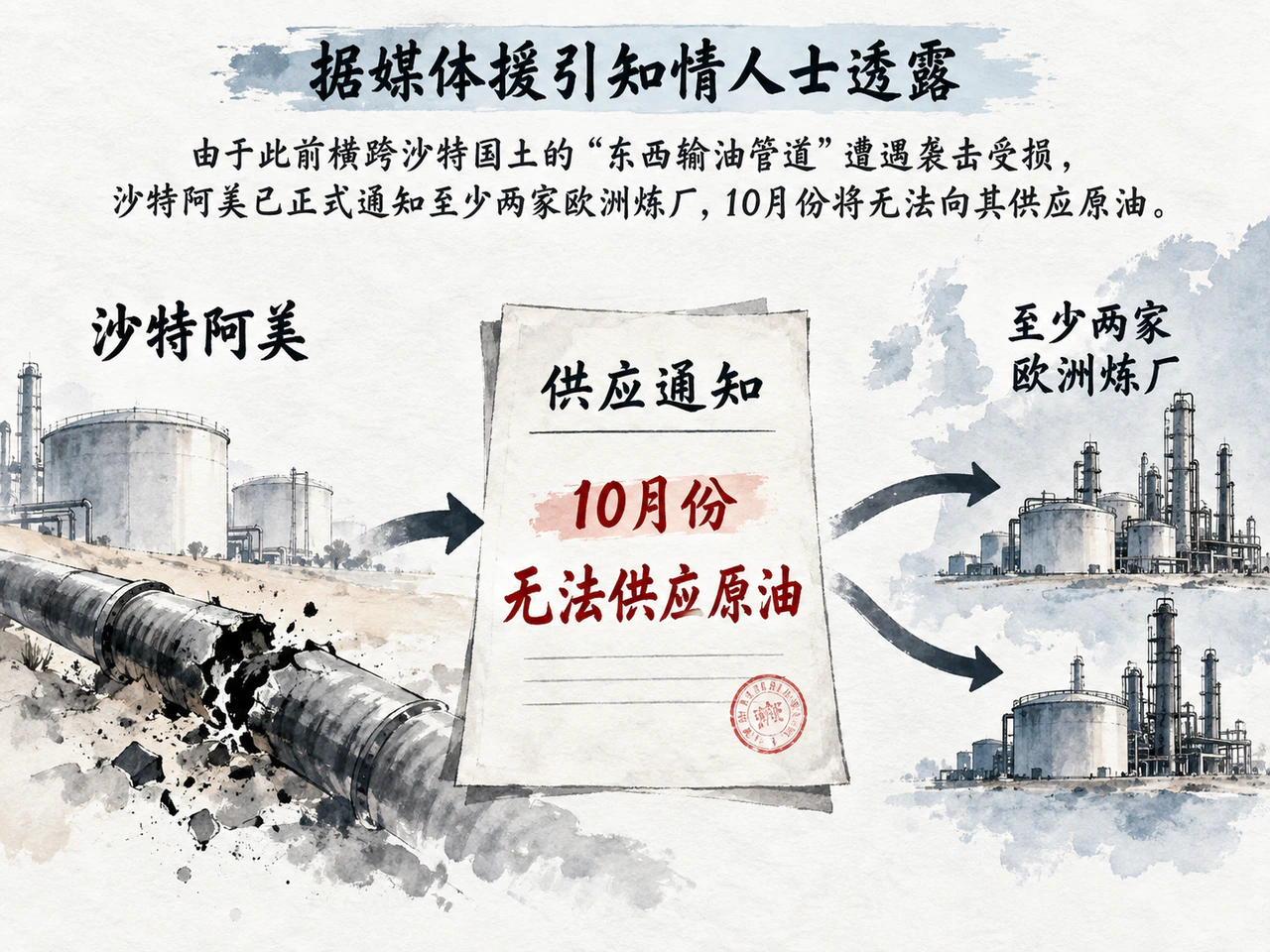
Red Sea disruption combined with earlier land-pipeline damage was reaching specific downstream contracts. Media citing sources said Aramco had formally notified at least two European refineries that October crude supply would be unavailable because of the attack on the pipeline crossing Saudi Arabia. Limits on Saudi export-diversion capacity were thus appearing in concrete supply reductions reaching European refining.
France Proposes G7 Emergency-Reserve Talks as Frontline Fighting Remains Unabated
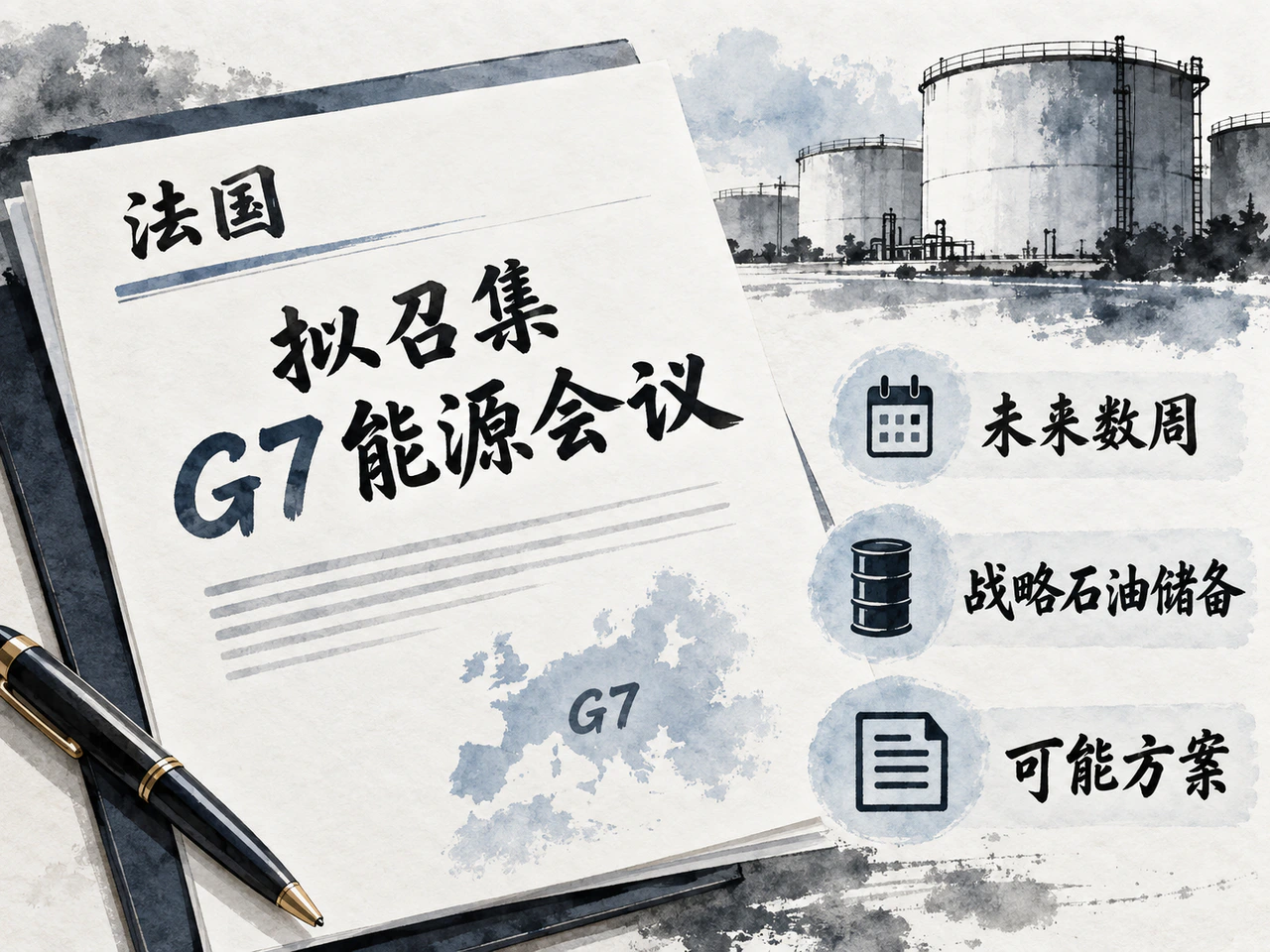
Europe was considering tools to cushion potential supply risks. Macron said he would convene a G7 energy meeting in the coming weeks, focused on possible coordinated strategic-petroleum-reserve releases. On the 18th, Kallas condemned Houthi attacks and emphasized that Hormuz passage must remain open and free of tolls.
Diplomatic pressure and contact continued in parallel. Media on the 18th reported Trump saying he would soon decide whether to expand military action against Iran and planned meetings with Gulf leaders the following week. The State Department offered up to $15 million that day for information to dismantle Revolutionary Guards financing networks. Reporting also said it confirmed visas for key members of Iran's UNGA entourage, subject to strict movement restrictions. Iranian state media estimated more than 300,000 participants in nationwide mobilization rallies, without independent verification.
For oil, even coordinated reserve releases would mainly provide temporary liquidity buffers, rather than replace physical navigation security at the Gulf and Red Sea chokepoints. Whether Hormuz attacks and blockades cease and Yemen's coastal fighting eases remains central to supply-chain risk premiums.
Key Developments
| Key Developments (Beijing time) |
|---|
| 09-19 03:00 The Houthis claimed 26 Saudi airstrikes on their territory in the preceding 24 hours and about 300 over the week. |
| 09-19 02:50 Fighting spread around Mocha on Yemen's Red Sea coast; businesses closed early, schools suspended classes and civilian movement was sharply restricted. |
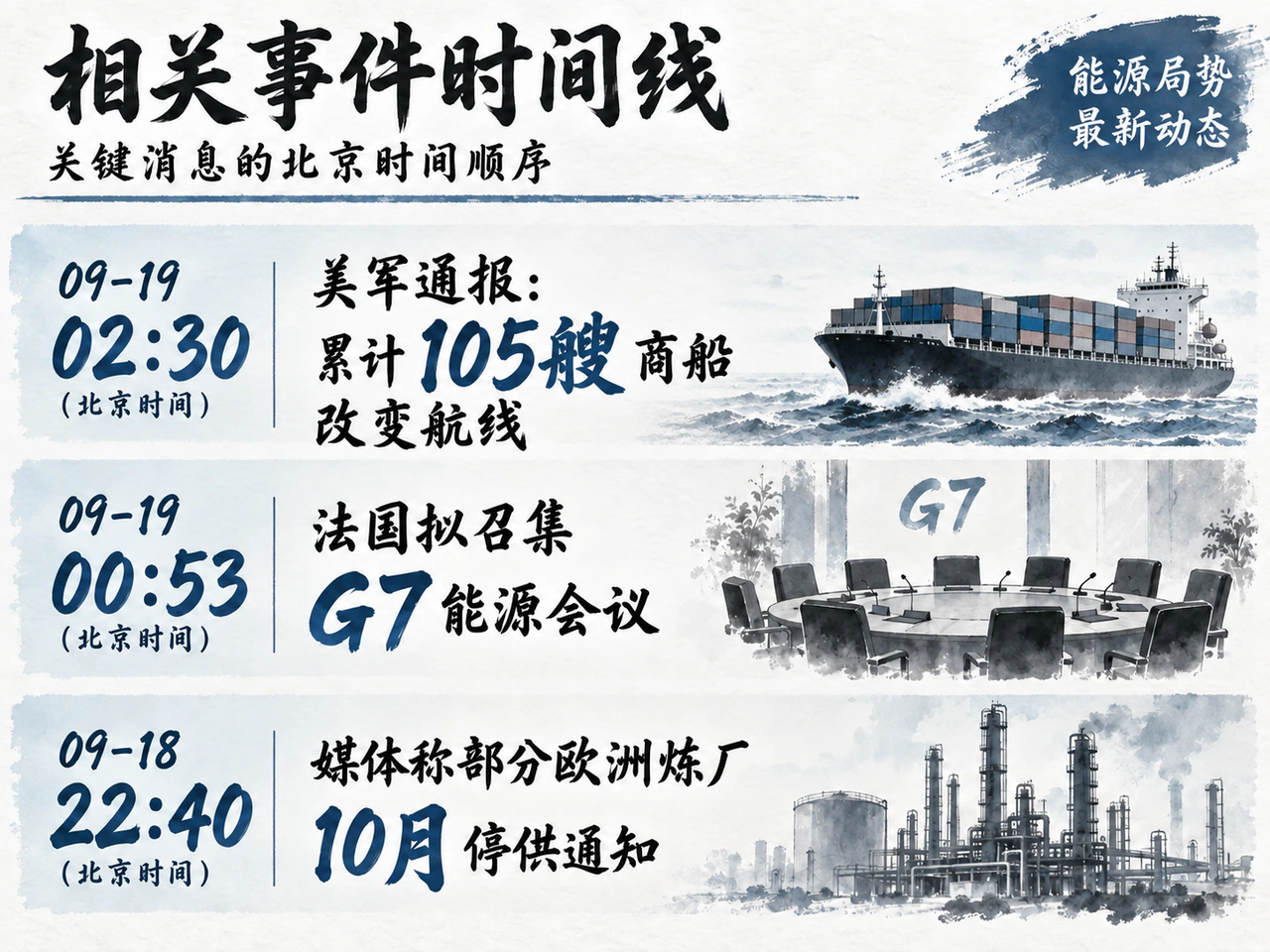
| 09-19 02:30 CENTCOM said its blockade of Iranian ports had forced 105 merchant ships to reroute cumulatively, one more that day. |
| 09-19 02:07 UNHCR data showed nearly 3,000 civilians fleeing Yemen by sea to Djibouti in less than a week, more than half women and children. |
| 09-19 01:43 Kpler showed only 5 vessels carrying Saudi products exiting the Red Sea through Bab el-Mandeb in 7 days; commodity-tanker passage was impeded but had not entirely stopped. |
| 09-19 01:21 Two Israeli tanks advanced near Deir Mimas in southern Lebanon into a standoff with Lebanese forces, which withdrew about 100 meters before maintaining defensive positions. |
| 09-19 00:53 Macron said he would convene a G7 energy meeting in the coming weeks to discuss possible coordinated reserve releases. |
| 09-18 23:09 Reporting on the 18th quoted Kallas condemning Houthi attacks on Saudi Arabia and stressing open, toll-free Hormuz passage. |
| 09-18 22:40 Media on the 18th cited sources saying Aramco notified at least two European refineries of an October crude-supply suspension following the earlier pipeline attack. |
| 09-18 22:05 Reporting on the 18th said the State Department offered up to $15 million for information to dismantle the Revolutionary Guards' and affiliates' financial and funding networks. |
| 09-18 20:04 Iranian state media on the 18th reported an official estimate of more than 300,000 participants in nationwide mobilization rallies; the figure was not independently verified. |
| 09-18 19:41 Media on the 18th reported Trump saying a decision on expanded military action was imminent, with Gulf-leader meetings planned for the following week. |
| 09-18 19:41 UKMTO reported on the 18th that an unidentified projectile hit a tanker in Hormuz, causing a fire that was extinguished; crew were safe. |
| 09-18 19:41 UKMTO disclosed on the 18th another tanker attack that occurred while exiting Hormuz on September 16. This updated an older incident rather than adding a new attack that day. |
| 09-18 19:41 Reporting on the 18th said the State Department confirmed visas for key members of Iran's UNGA entourage, with strict travel and activity restrictions. |


