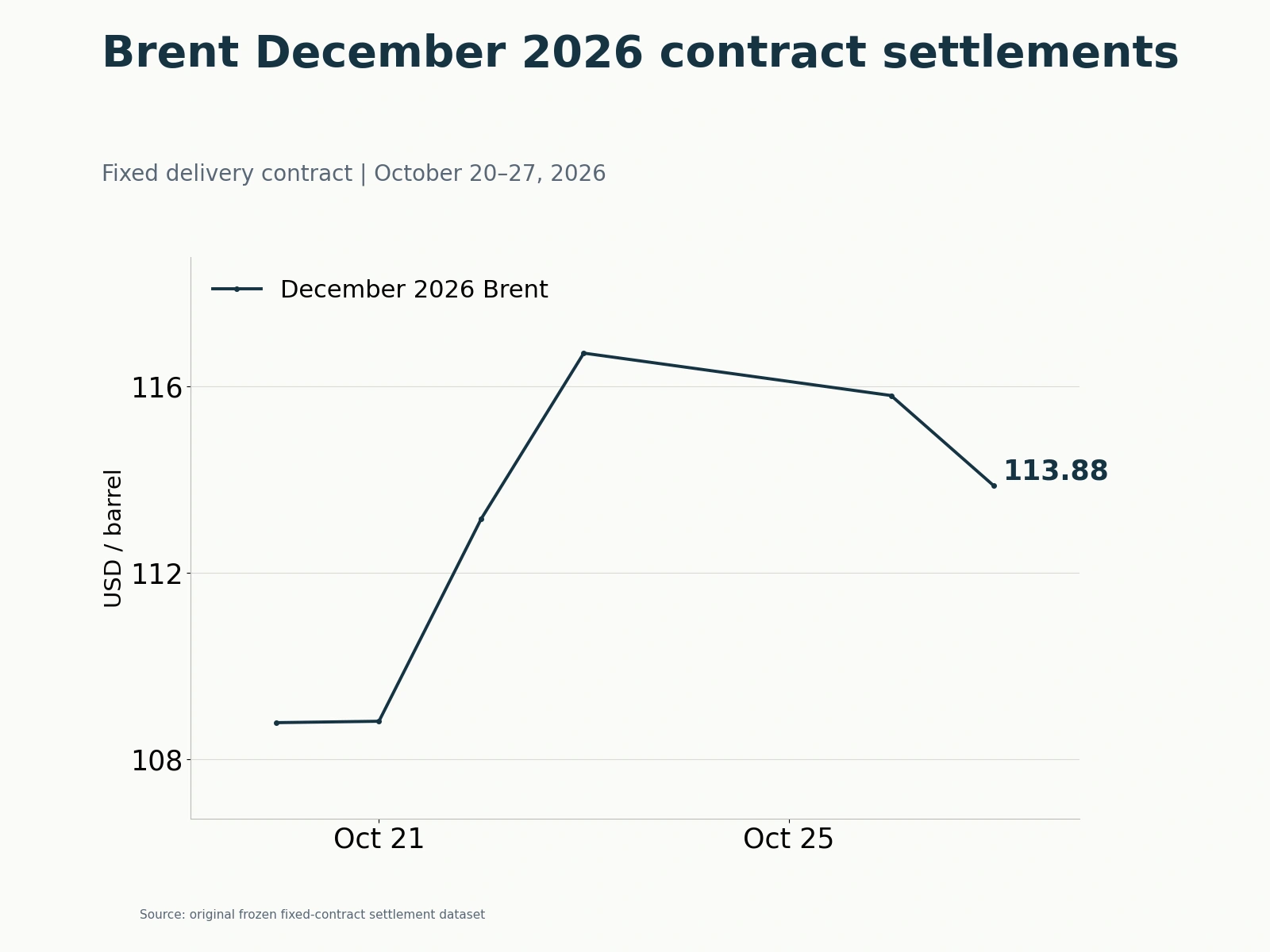
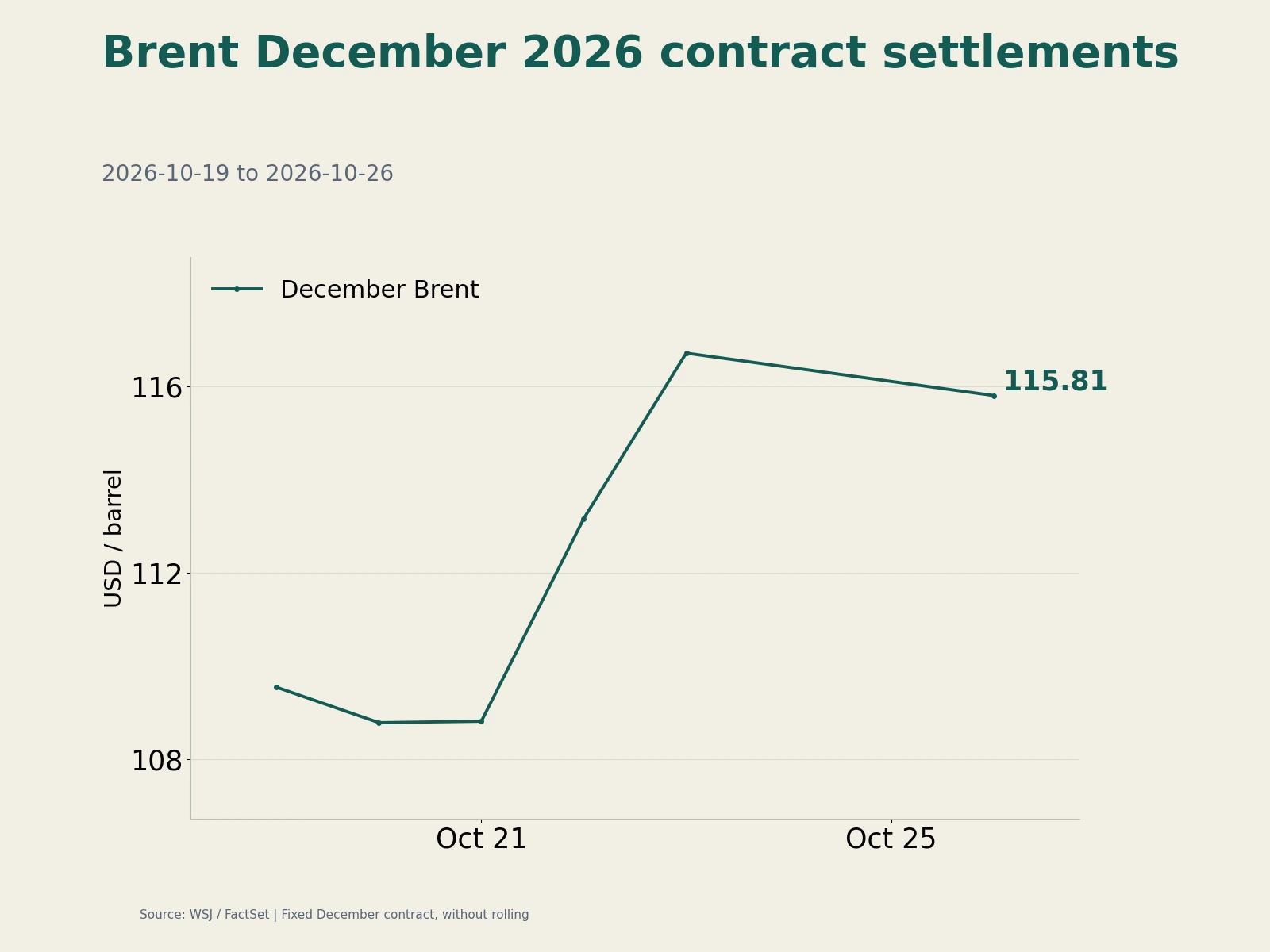
On September 18, international oil prices fell for a third consecutive session. November Brent closed at $103.87 a barrel, down 0.9%, while October WTI settled at $100.30, down 1.6%, on The Wall Street Journal's reporting basis. Earlier supply fears had sharply increased premiums during the week, before alternative Saudi export routes and pipeline-repair expectations reversed gains. Brent lost 0.7% for the week and WTI edged up 0.2%.
Cooling prices mainly reflected marginal relief on Saudi supply, but emergency transshipment was not a return to normal logistics. High prompt crude premiums and elevated product prices showed unresolved structural tensions between expected near-term supply tightness and downstream fuel costs.
Saudi Arabia arranges up to 60 million barrels of sales and shipments; full East-West pipeline restart still expected to take weeks

An alternative solution to Saudi export bottlenecks directly catalyzed the decline. Saudi Arabia's East-West pipeline, Petroline, connects eastern fields with Yanbu on the Red Sea, bypassing Hormuz. Its damage and shutdown had raised fears of a dual blockage: restricted Persian Gulf strait transit and obstructed Red Sea exports.
OilPrice, citing Reuters, reported Saudi sales of up to 60 million barrels scheduled to load from Persian Gulf port Ras Tanura in September-October and be delivered through ship-to-ship (STS) transfers near Sohar, Oman, outside Hormuz. The arrangement covered two months of loadings and was not immediate buyer receipt, but confirmed that alternative routes could still bring crude to market after the pipeline interruption, materially easing fears of extreme supply loss.
Pipeline-restart progress also cooled sentiment. The Wall Street Journal cited sources saying Saudi Arabia was working to restore partial capacity within days, but complete repairs to damaged pumping stations and full capacity were expected to take 6-8 weeks. Saudi energy authorities had not published an official timetable, and engineers were still assessing integrity.
This combination of emergency transshipment and partial restart limited how far risk premiums could unwind. Ras Tanura cargoes still depended on Hormuz transit conditions and connecting-tanker scheduling, while even partial flows within days would not quickly fill the entire capacity gap. Disappointing technical assessments or transshipment disruption could readily restore the premium.
WTI prompt premium remains above $2 as diesel prices hit a record
In sharp contrast to the day's crude-futures decline, the term structure and refined-product markets remained tight.
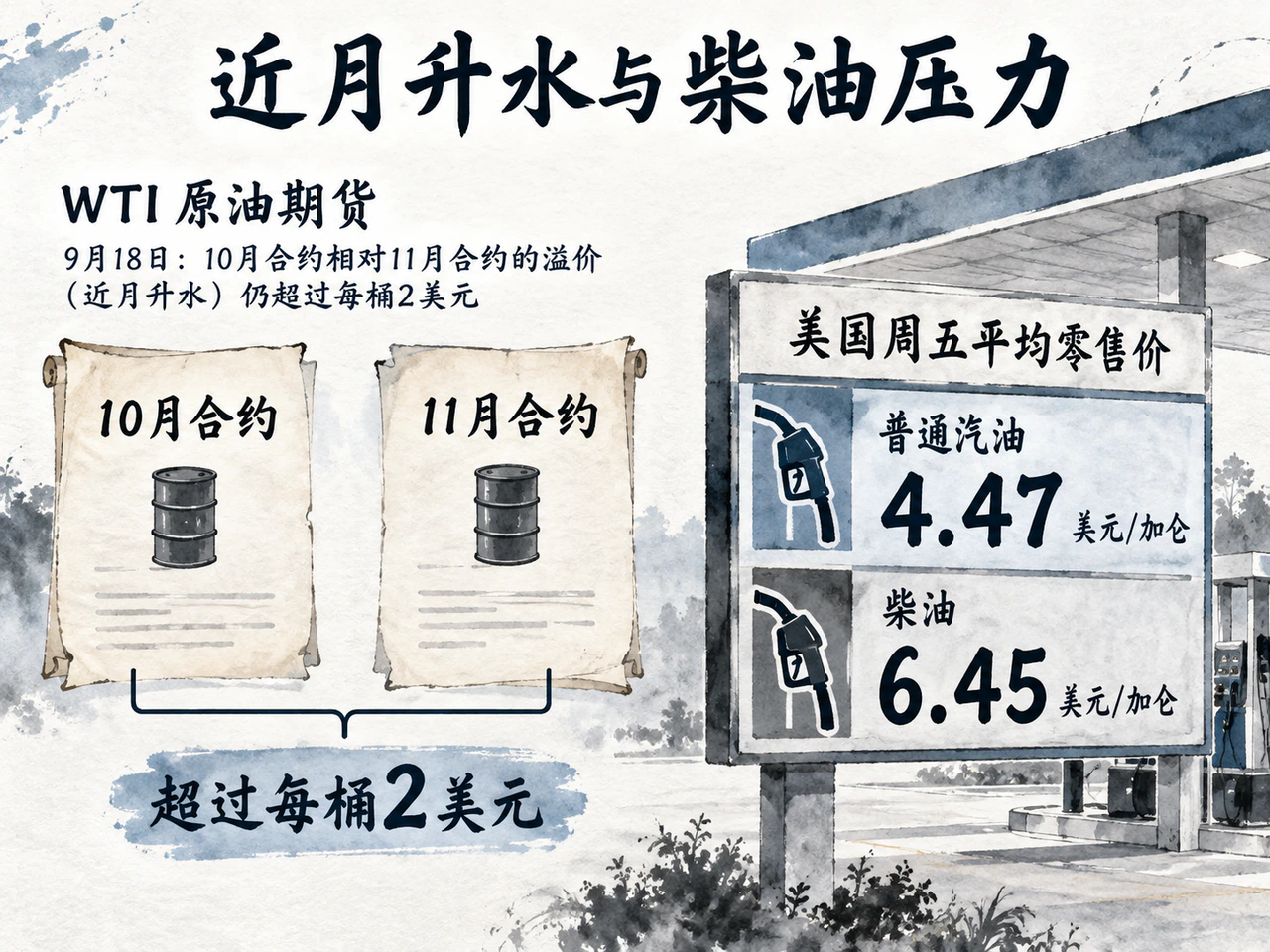
DTN data showed October WTI's premium to November still above $2 a barrel on September 18. This adjacent-month backwardation indicated tight expectations for prompt delivery despite easing extreme longer-term disruption fears. The spread primarily signals expected near-contract delivery tightness and does not directly establish the actual physical shortfall's size. Emergency transfers reduced extreme disruption risk, but vigilance over prompt supply had not fully faded.
Deeper supply-chain pressure was concentrated downstream. DTN showed October ultra-low-sulfur diesel (ULSD) futures edging lower Friday but gaining about 1.5% over the week after more than 9% the preceding week. October gasoline futures gained around 6%. Loading and crude transport, refinery processing, product output and product shipment all involve inherent logistical and processing lags.
The Wall Street Journal cited AAA data putting Friday's U.S. average regular gasoline retail price at $4.47 a gallon and diesel at a record $6.45. The end of summer travel season offered seasonal gasoline-demand relief, but persistently constrained diesel supply meant high fuel costs continued spreading through industry, commerce and logistics.
The dollar offers little direction; four physical-delivery and transmission indicators matter next

In macro conditions, the dollar index closed around 100.215, essentially unchanged from the previous session, offering no clear one-way signal for oil. Nominal Treasury yields rose, but this mainly reflected marginal risk-free-rate changes and did not directly establish a material weakening in expected demand. Pricing remained anchored principally in Saudi physical exports and logistics repair.
Whether oil develops a sustained trend depends on four core variables:
- Physical flows through the East-West pipeline: partial resumption within days could marginally ease sentiment, but stable supply support requires pipeline flows and actual pumping capacity to ramp up toward full operation;
- Delivery performance on Ras Tanura-to-offshore Oman transfers: smooth loading, connection and delivery of up to 60 million barrels in September-October will test alternative logistics capacity;
- The pace of narrowing in adjacent WTI premiums: a substantial retreat from above $2 would indicate easing prompt-delivery expectations; persistent high premiums would show continuing near-term supply anxiety;
- Recovery in refinery operations, exports and product inventories: meaningful relief in end-user fuel costs requires crude supply to become refinery output smoothly, rebuilding product exports and inventories such as diesel.
Three consecutive declines reflected a shift from initial panic toward a reasoned assessment of Saudi supply-chain resilience. Alternative transfers and restart expectations provided a near-term buffer, but high prompt premiums and record diesel prices showed the distance between emergency scheduling and supply-demand balance. The central question had shifted from whether Saudi Arabia could export oil to whether crude could arrive on time and transport capacity recover reliably.