Washington said US and Iranian representatives held about three hours of contact during the UN General Assembly, opening a diplomatic window amid sustained tensions. The Iranian delegation's level remained unclear, however, leaving a gap between expectations of substantive easing and reality. Iranian officials directly contradicted one another over reopening Hormuz within seven days, while parliament drafted transit restrictions. Red Sea and Yemeni spillover risks coexisted with limited pipeline repairs. As of the morning of September 23 Beijing time, the new fact extended only to contacts reportedly resumed by Washington; an executable ceasefire and navigation agreement remained distant.
US Reports Three-Hour Bilateral Contacts, but Core Demands Still Differ

US officials said direct contacts lasting around three hours took place on September 22 local time, involving White House Middle East envoy Witkoff and senior adviser Kushner. Trump said talks went well and another round would follow soon. Washington did not identify the Iranian participants or their seniority, and Tehran did not confirm details. Earlier US comments had expressed willingness to meet without specific arrangements; these contacts showed the communication channel had been activated.
Resumed contact did not bring reduced deterrence. In his UNGA speech that day, Trump mentioned a possible agreement while continuing to threaten expanded military action and reiterating that Iran would never be allowed nuclear weapons. Neither side disclosed substantive results. With no sign of reconciliation over enrichment, international inspections and sanctions relief, whether contacts would become a legally binding agreement remained untested.
Conflicting Seven-Day Reopening Statements as the Contest Over Transit Rules Intensifies
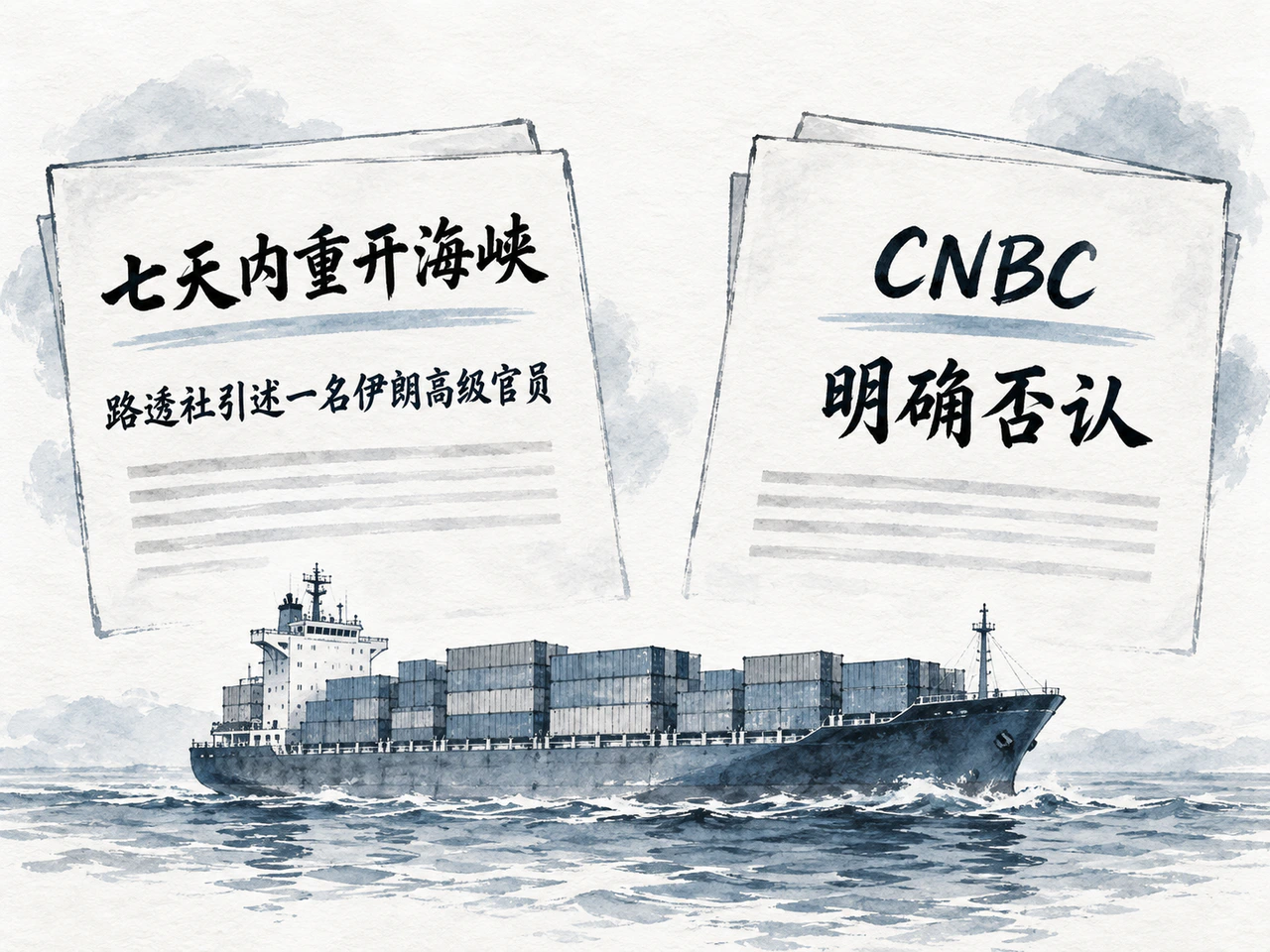
Hormuz, a core artery of global oil transport, received conflicting signals over the preceding 24 hours. Reuters cited a senior Iranian official saying it could reopen within seven days if Washington reduced military pressure and lifted the port blockade, and urging a timetable. CNBC subsequently cited another senior Iranian official explicitly denying the seven-day reopening account. These differences showed the lack of a certain near-term consensus.
Beyond timing, control and transit rules were becoming more prominent. After meeting Iran's foreign minister, EU foreign-policy chief Kallas reiterated that Hormuz and Bab el-Mandeb must allow free passage without postwar tolls. Fars reported that Iran's parliamentary security committee had approved a proposed rule imposing a fine equal to 20% of cargo value on vessels passing without permission. The contest was extending from military blockade to passage rules and authority.
Alternative Pipeline Resumes at Low Flow as Spillover and Humanitarian Pressure Continue
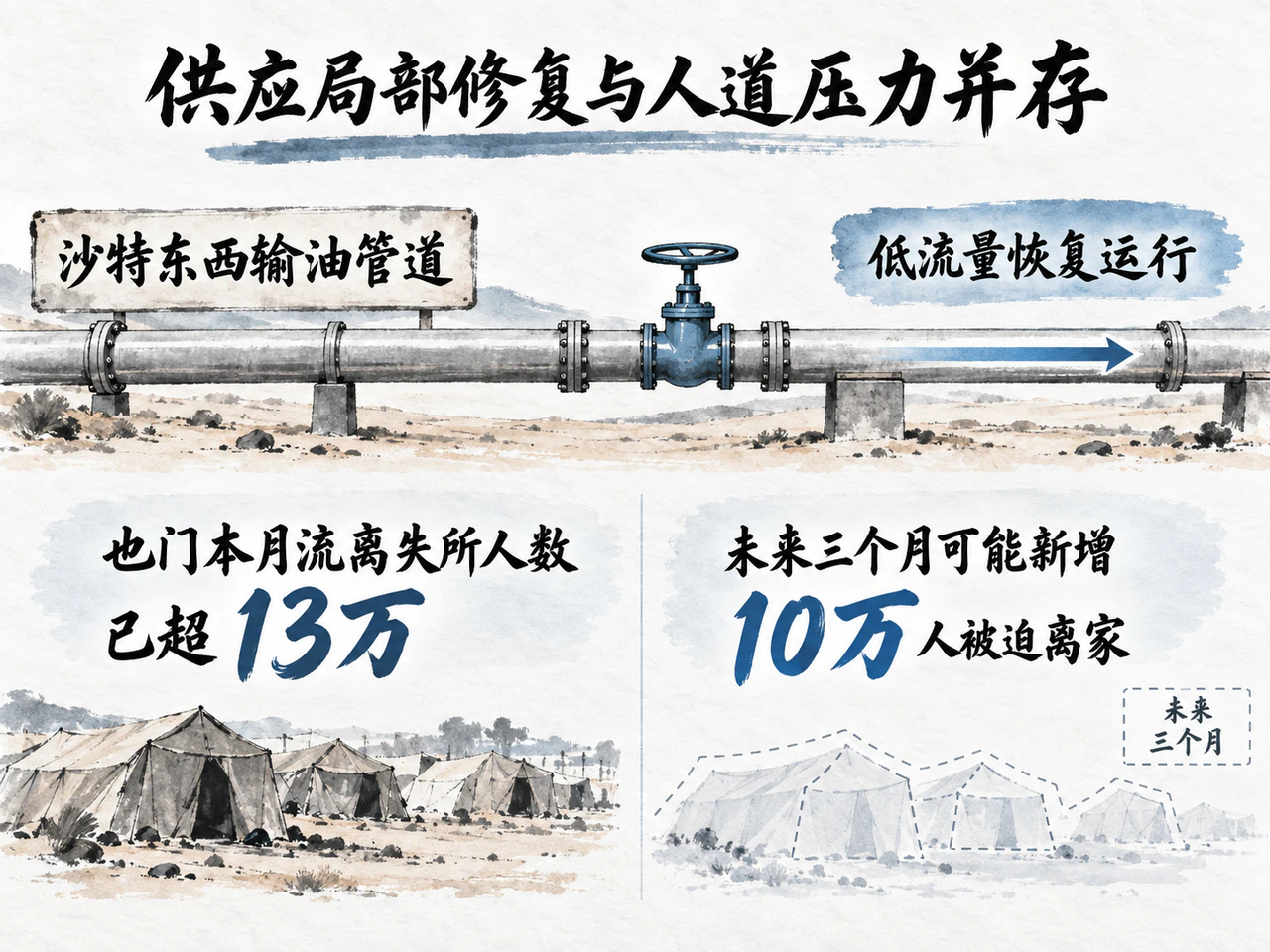
Limited alternatives emerged in the Middle East energy chain while the main maritime route remained obstructed. Reuters cited sources saying Saudi Arabia's East–West pipeline had restarted at low flow and Yanbu might gradually resume crude loadings. Full recovery could take weeks, but restarting the pipeline partly offset the risk of a complete export interruption.
Regional risks nevertheless persisted. Iranian media, citing civil aviation authorities, said sanctions and airport-service restrictions led Iran to cancel Baghdad and Muscat flights from local midnight, while Istanbul and other routes continued. On the Yemeni front, Britain's defense ministry announced on the 22nd that it would deploy one RAF Voyager tanker to Saudi Arabia to support defense. The Houthis alleged a Saudi airstrike on a prison in Hazm, Al Jawf, killed 9 people, without third-party confirmation. UNHCR reported more than 130,000 people displaced in Yemen that month; its baseline response plan projected another 100,000 over the next three months.
Overall, the UNGA contacts reported by Washington opened a path to easing tensions. But without breakthroughs on lifting the blockade, security guarantees and navigation, partial supply-chain repair could not conceal uncertainty from expanding regional fronts.
Key Developments
| Key Developments (Beijing time) |
|---|
| 09-23 03:02 Iranian media citing aviation authorities said Baghdad and Muscat flights were canceled from local midnight because of sanctions and airport-service restrictions; Istanbul and other routes continued. |
| 09-23 02:51 After meeting Iran's foreign minister, Kallas reiterated free navigation through Hormuz and Bab el-Mandeb, with no postwar tolls. |
| 09-23 02:51 Fars said Iran's parliamentary security committee approved a proposed 20%-of-cargo-value fine for unauthorized strait transit. |
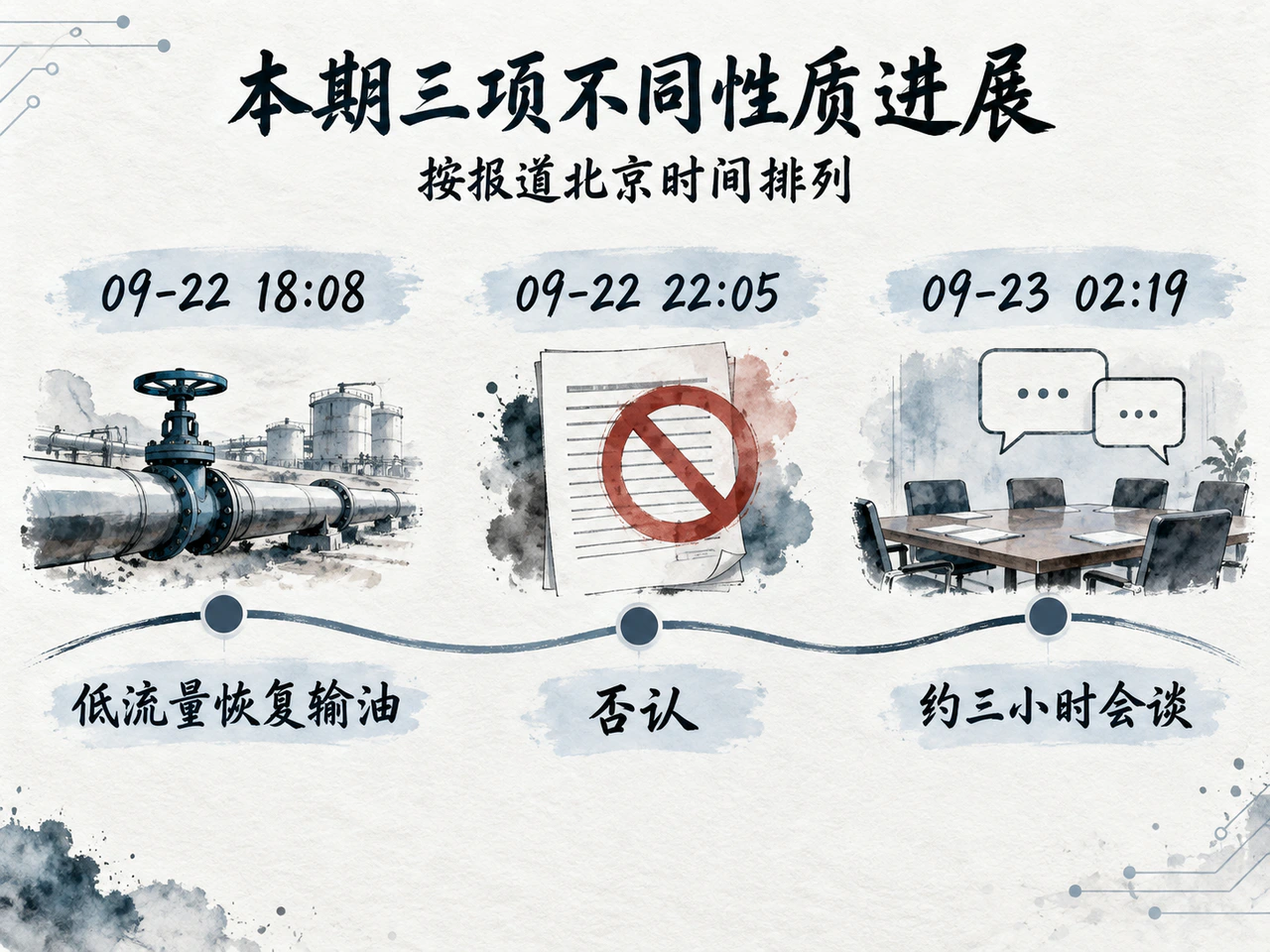
| 09-23 02:19 Trump disclosed roughly three hours of talks involving Witkoff, Kushner and Iranian officials, with another round planned soon, but no specific results or Iranian participants identified. |
| 09-23 00:24 Britain's defense ministry announced deployment of one RAF Voyager aerial-refueling aircraft to Saudi Arabia to reinforce defense support. |
| 09-22 23:18 Trump's UNGA speech mentioned a possible deal while again threatening expanded military strikes on Iran. |
| 09-22 22:48 The Kremlin said Putin and the Saudi crown prince discussed Yemen and Red Sea shipping security by phone and urged political and diplomatic solutions. |
| 09-22 22:05 A CNBC update cited another senior Iranian official denying that Hormuz might reopen within seven days. |
| 09-22 21:11 Houthi officials alleged a Saudi airstrike on a prison in Hazm, Al Jawf, killed 9 detainees; the account was not independently confirmed. |
| 09-22 18:13 Reuters cited a senior Iranian official saying Hormuz could reopen within seven days if Washington eased the military blockade and removed restrictions on Iranian ports. |
| 09-22 18:08 Reuters cited sources saying the Saudi East–West pipeline had resumed at low flow, with Yanbu possibly restarting crude loadings gradually and full recovery potentially taking weeks. |
| 09-22 17:58 UNHCR reported more than 130,000 people displaced in Yemen that month; its baseline response plan projected another 100,000 over the next three months. |
| 09-22 15:43 Saudi civil defense briefly issued and then lifted a potential-threat alert in Najran bordering Yemen; no attack was confirmed. |
| 09-22 14:12 Pezeshkian departed for New York to attend the UN General Assembly. |


