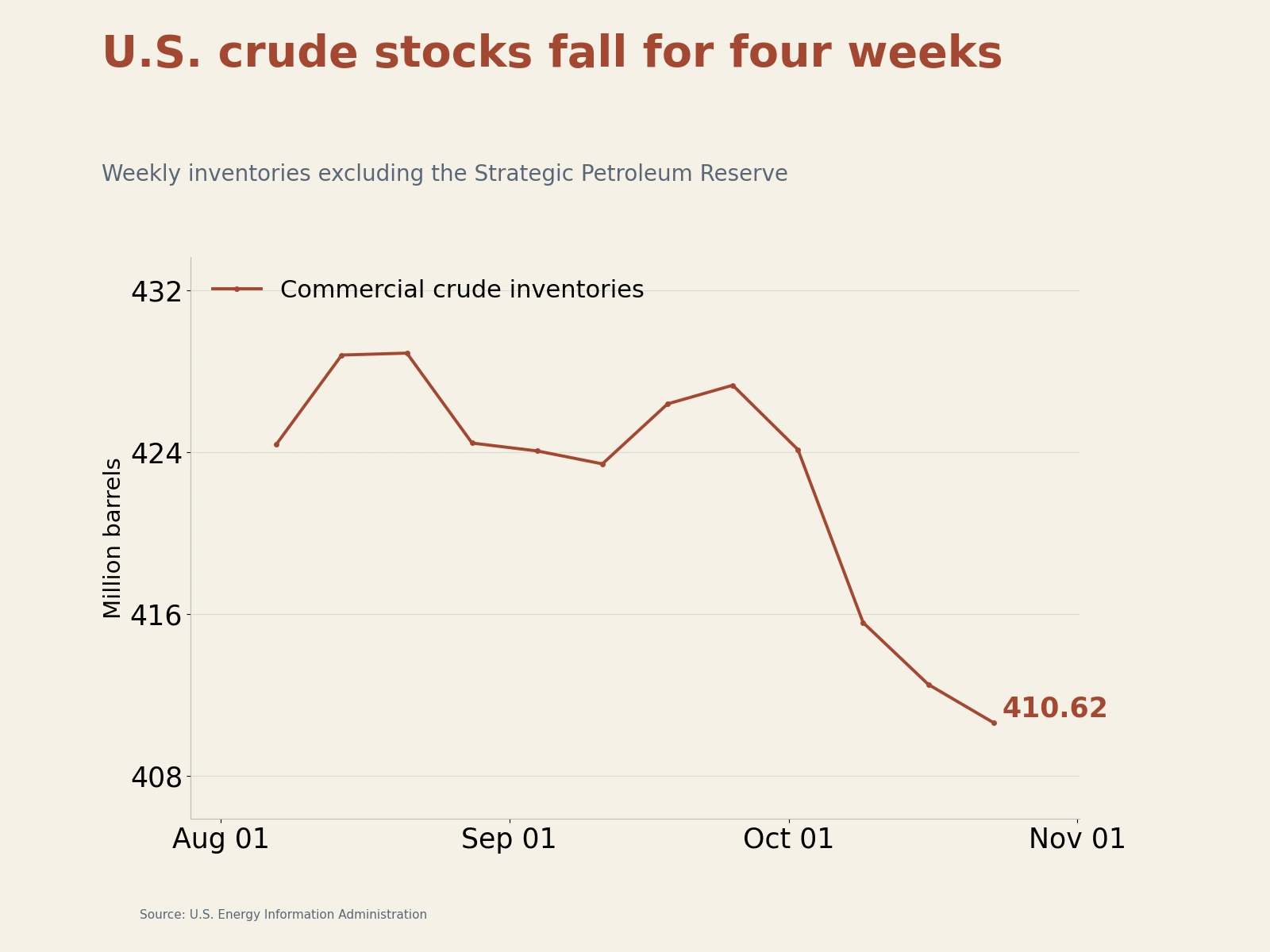
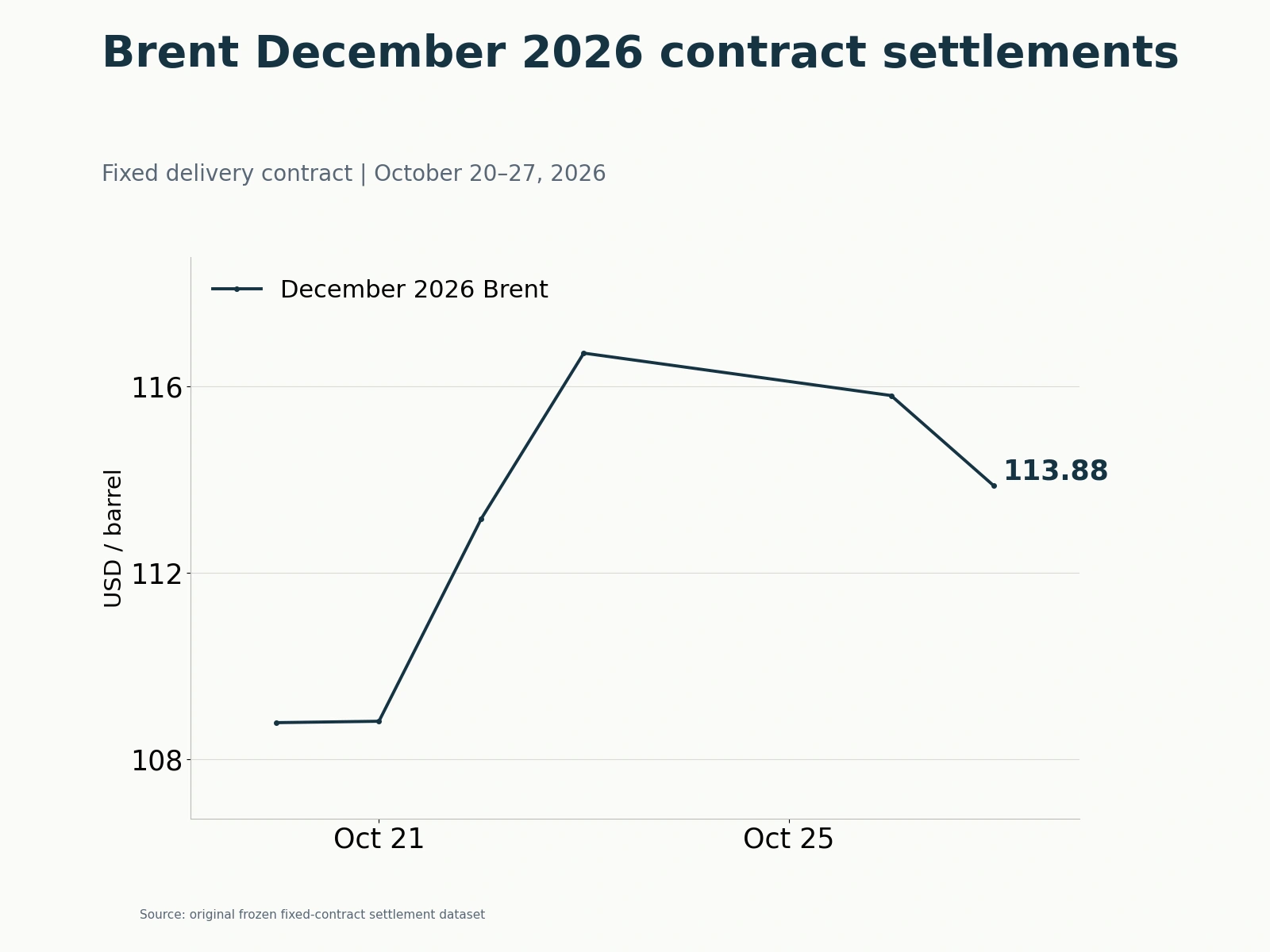
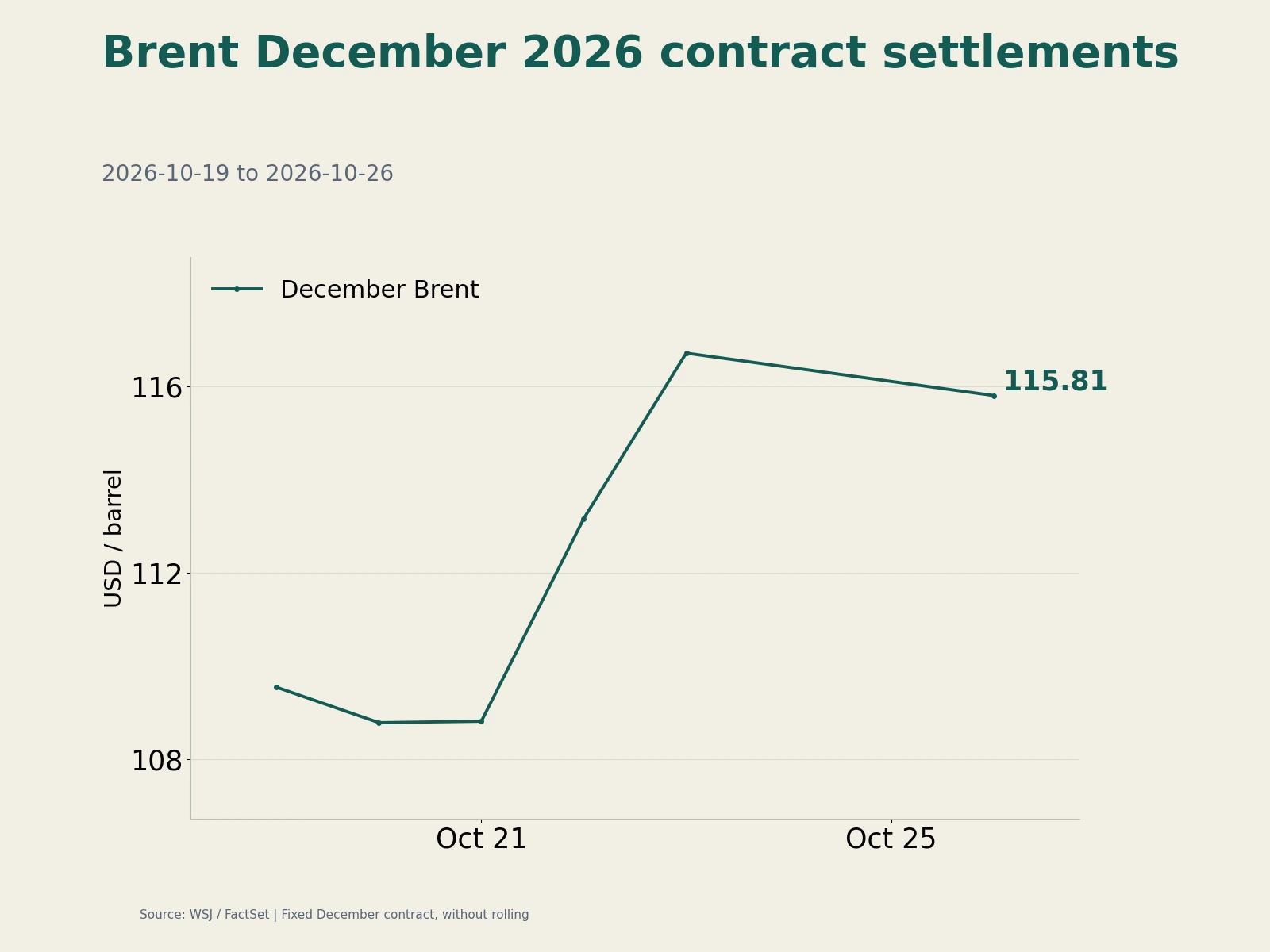
Oil extended its retreat on expectations of marginally improving Saudi exports. On September 22, main November Brent settled below $100 at $99.25 a barrel, down 1.09%, while expiring October WTI settled at $94.59, down 1.24%. Markets gradually removed earlier disruption premiums, but the east-west pipeline was only running low-speed trials and some Gulf loading did not establish full Hormuz passage. API's after-hours crude build alongside product draws also kept markets cautious about further downside given final-fuel supplies.
Contract rolling creates quotation gaps; deep backwardation reflects prompt tightness

October WTI expired September 22 as funds and positions rolled into the more active November contract. Reuters intraday quotations at 18:27 Beijing time that day showed October at $93.28 and November at $89.92, backwardation of $3.36. This significant curve premium indicates that even as the overall price level fell, immediately deliverable nearby barrels remained tighter than later-month supply.
Continuous-contract declines displayed by market software therefore include a technical gap from switching benchmarks. One third-party series fell from $95.78 to $89.66, an apparent 6.39%, which was not the actual daily decline of a single contract month. With deep backwardation, restored exports producing stable incremental supply would normally first narrow nearby spreads, then transmit to forward contracts and aggregate supply-demand expectations.
Land and sea routes improve marginally; uncertainty remains over Strait access
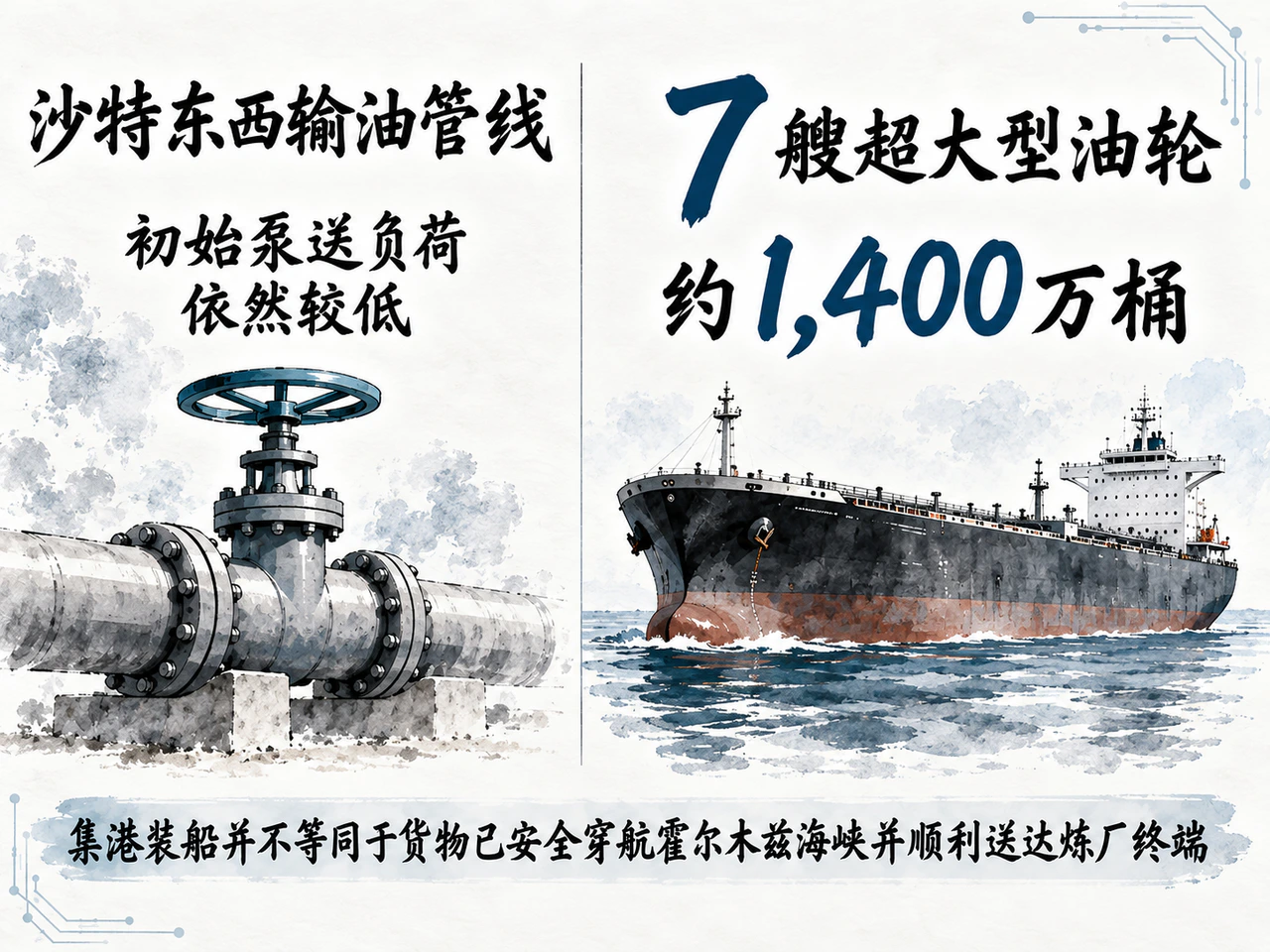
The low-speed restart of Saudi Arabia's east-west Petroline was a major recent factor reducing risk premium. Crossing the country from eastern fields to Red Sea port Yanbu, it bypasses Hormuz. Its earlier shutdown increased dependence on the maritime chokepoint. Renewed pumping and preparations to resume Yanbu exports provide an incremental route, but initial pumping loads remain low.
Some traditional sea-route loading also recovered. Vessel tracking showed seven VLCCs had loaded about 14 million barrels of Saudi crude inside the Gulf on September 20. Loading in port, however, does not mean cargoes safely passed Hormuz and reached refineries. Subsequent departures and effective transit remain central to logistics delivery.
Diplomatic statements amplified volatility. An anonymous senior Iranian official reportedly said Iran could reopen the Strait within seven days if the U.S. eased military pressure and lifted its port blockade, attaching explicit political preconditions. Trump subsequently placed a potential comprehensive peace deal after November's midterm elections, causing oil to narrow losses rapidly late in trading. Without clear implementation and enforcement, shipping-safety expectations remain vulnerable to repricing.
API crude and product stocks diverge as supply-demand tensions persist amid low global inventories
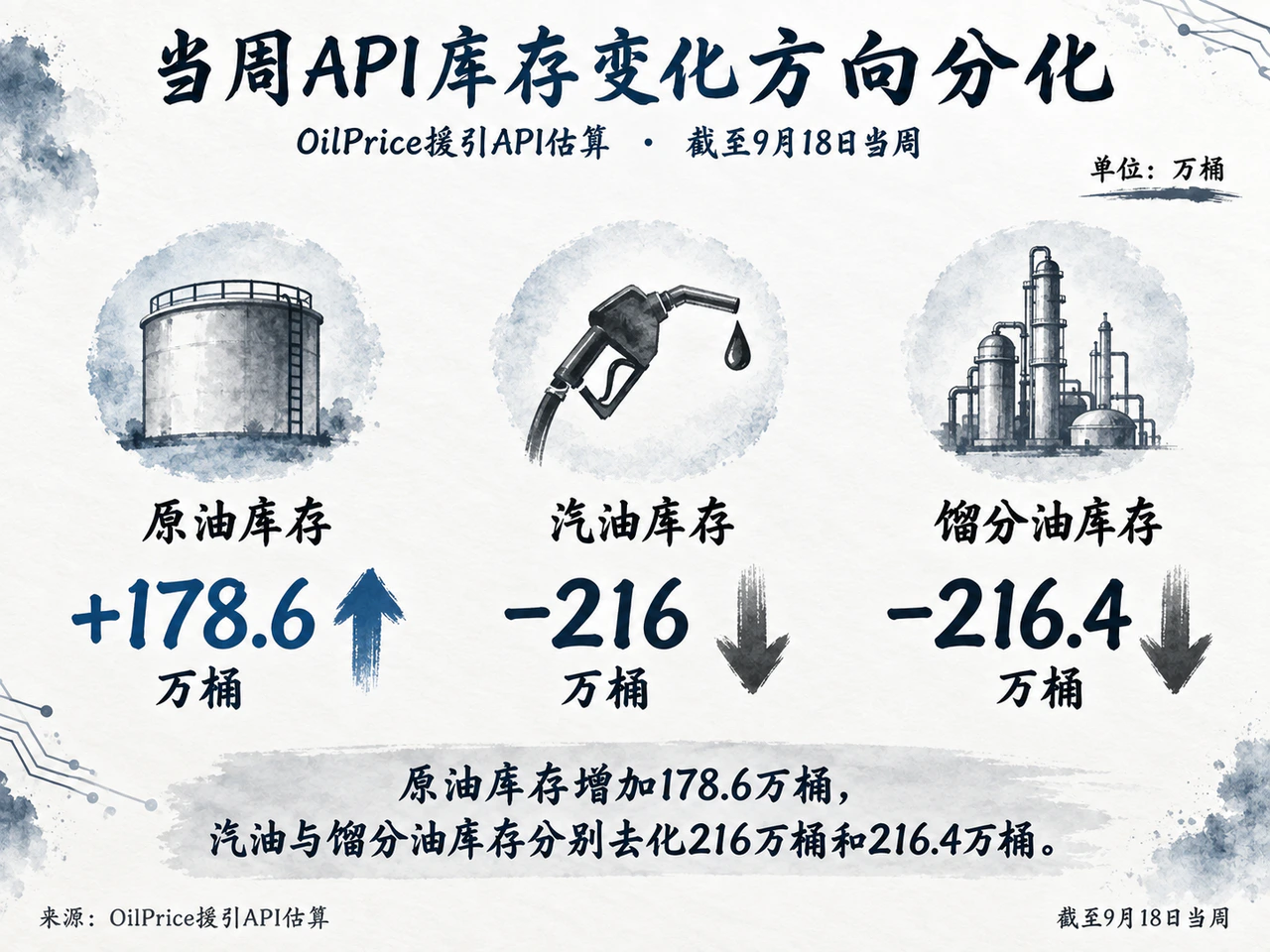
After settlement, U.S. feedstock and final-fuel data diverged. OilPrice cited API estimates for the week ended September 18 showing commercial crude stocks up 1.786 million barrels, gasoline down 2.16 million and distillates down 2.164 million. The previous week gasoline and distillates had risen 1.46 million and 1.61 million, respectively. Crude builds ease feedstock pressure, but products turned to draws. Given the prior builds, a one-way final-market imbalance cannot yet be established; matching supply and demand requires continued observation.
Globally low observable stocks limit the supply buffer during price declines. IEA's September report estimated an August draw of 95 million barrels and cumulative depletion since February of 507 million. Gulf exports remained around 13 million barrels daily, half the pre-conflict level. High prices were restraining consumption—the IEA expected 2026 global demand to fall 2.5 million barrels a day—but with low inventories and disrupted routes, relief to the prompt shortfall still depends on supply repair.
Financial variables had limited explanatory power: the dollar index rose only 0.11% on September 22, long Treasury yields were flat and short yields slightly lower. Geopolitics and physical balances dominated. Next tests include continuous Yanbu loading and faster pumping, actual tanker traffic through Hormuz, narrowing WTI backwardation, and the closely watched September 23 EIA inventory release to match gasoline and diesel changes with refinery activity. Sustained supply improvements could compress crude premiums further; unresolved product constraints could allow fuel crack margins to support crude prices.