According to online wags, half of China's computing power has already been devoted to Huaqiang buying melons.
Chips keep running, server rooms keep shedding heat, electricity keeps flowing in, and Liu Huaqiang keeps walking toward the melon stall. Technology companies push the boundaries of human intelligence; internet users push the boundaries of the melon-buying plot. How far humanity is from general artificial intelligence is hard to say. Huaqiang plainly still has a long way to go before finding a satisfactory melon.
This may be the AI industry's most straightforward meeting of supply and demand: businesses supply world-changing technology, and the public asks to buy the melon one more time.
Once the laughter fades, the joke touches AI's central question. We have seen it produce text, images, video and code at astonishing speed. But how much richer does the real world become as this content gets cheaper and more abundant?
A whole economy lies between “it can generate anything” and “life is actually better.”
Huaqiang's melon purchase offers a useful starting point. A decent remix once required editing, voice work and frame-by-frame changes. Now AI gives one person a chance to do work that once took a team. That is progress. Even if the result is only a laugh, laughter still has value.
But if the same technology helps growers prevent disease, keeps a few more melons from rotting in transit or helps sellers plan purchases more accurately, it changes real costs and supply as well as a story on a screen.
This is the distinction between productive capacity and productivity. The former describes what we are capable of producing; the latter asks how much useful output we obtain from a given amount of labor, capital and other resources. AI can expand capacity rapidly. How much it improves the input-output relationship requires a separate calculation.
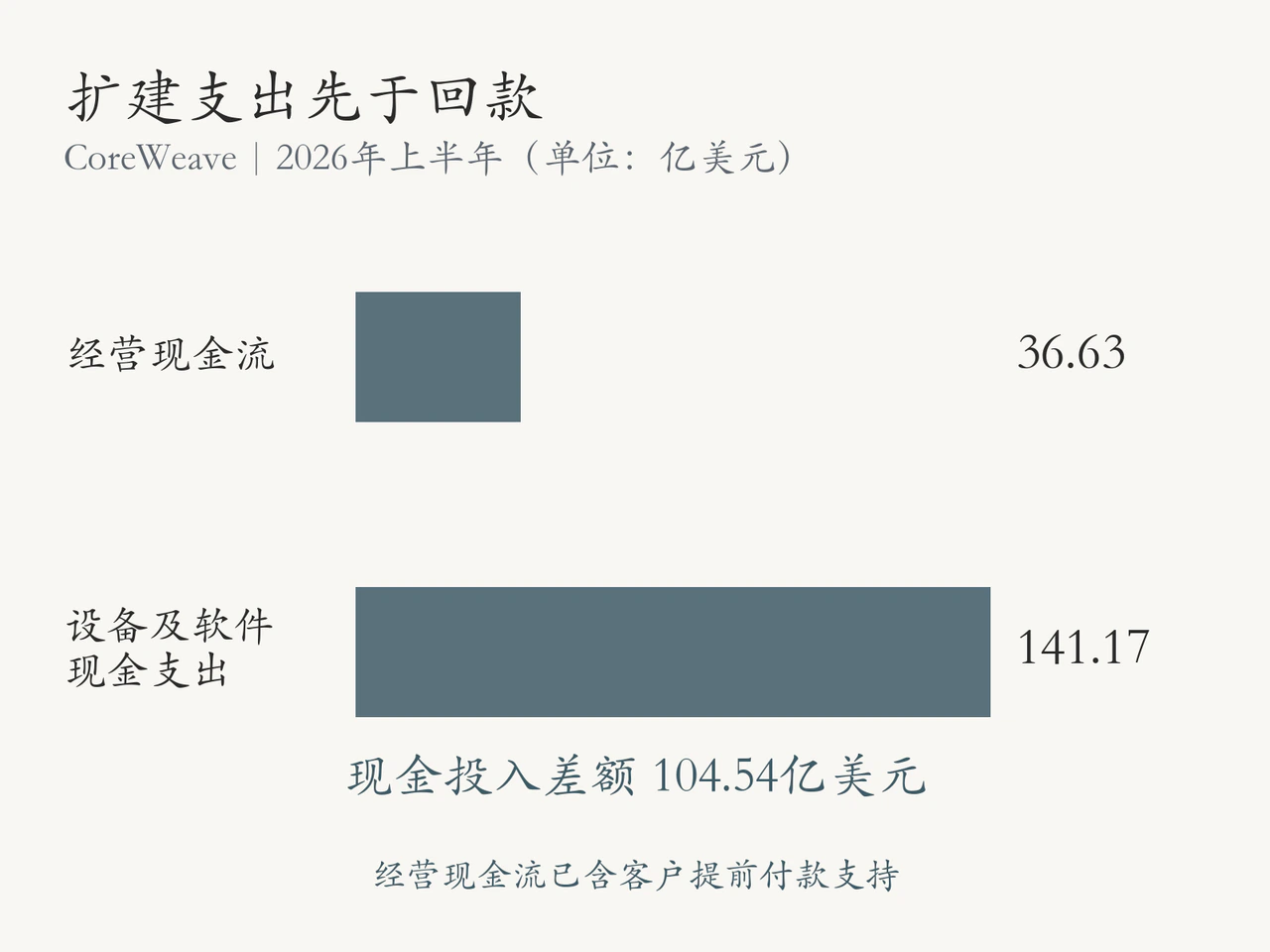
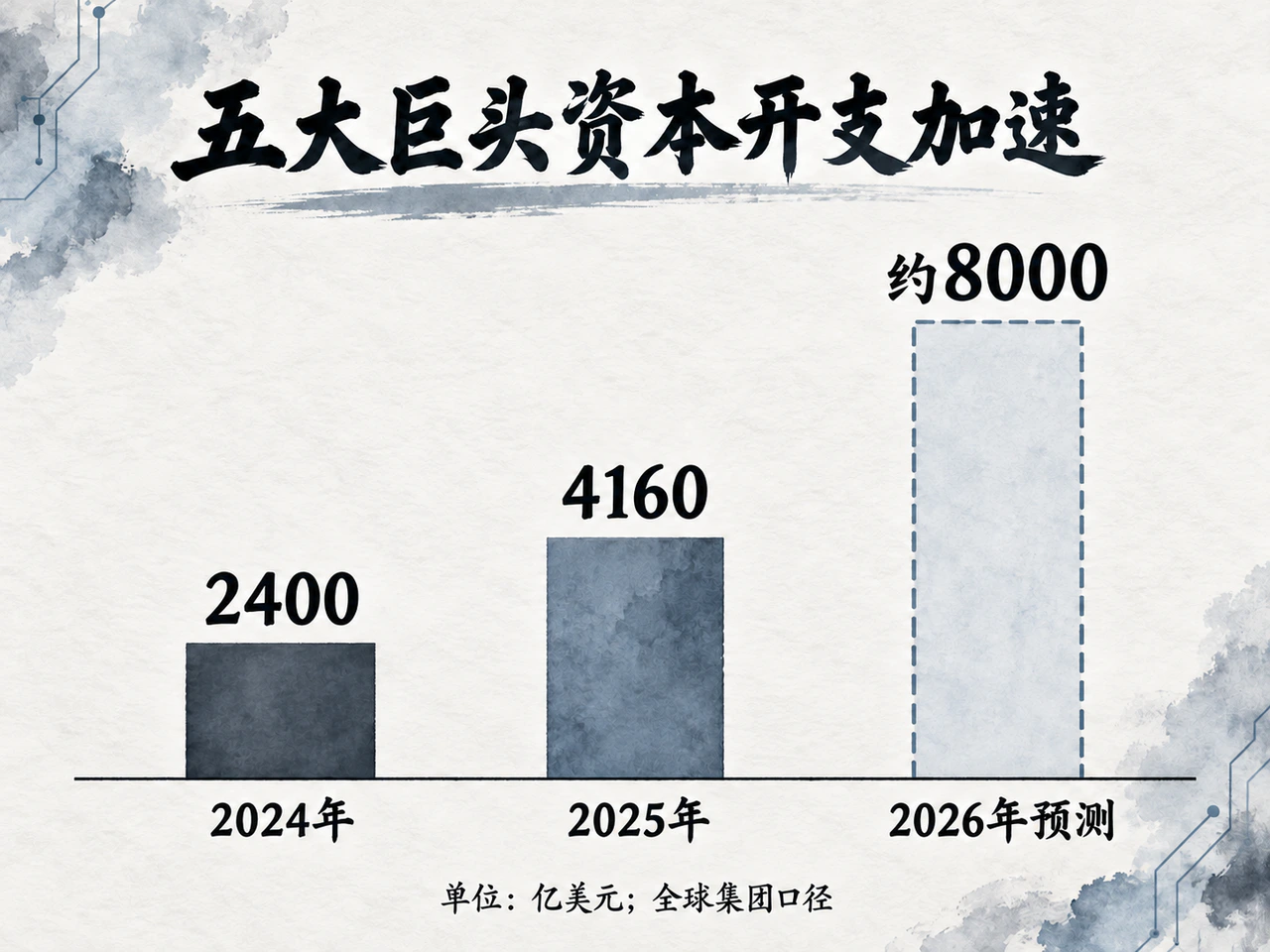
A server room running around the clock first proves that an electricity bill is accumulating. Whether it creates enough value to cover chips, energy, software, human review and deployment is not a question the servers answer for themselves.
Task-level gains are real and specific; company-wide returns remain farther away

AI's achievements so far are real, but highly uneven.
A study of more than five thousand customer-service workers found that introducing a generative-AI assistant raised average productivity, measured in issues resolved per hour, by about 15%. Less experienced and less skilled workers benefited especially. The improvement was concrete: more customer problems were actually resolved in the same hour.
This is more instructive than slogans about AI replacing everyone. One important function is to turn expertise once held by a few experienced workers into capabilities many can access whenever needed. New employees need not repeat their predecessors' mistakes, and small teams may obtain professional support previously beyond their budgets.
Technology's value thus extends beyond doing work for people to shortening learning. Lower costs of training capable workers and faster diffusion of knowledge and experience create a solid basis for productivity growth.
Zoom out from one job to an entire company, however, and the picture becomes less tidy.
A 2026 survey of nearly six thousand executives in the United States, Britain, Germany and Australia found that 69% of firms used AI, yet executives reported limited changes in employment and productivity over the preceding three years. Another study of nearly 750 executives found positive productivity gains with substantial industry differences, while noting that perceived efficiency improvements exceeded measured benefits. Samples and definitions differed, but together the surveys show layers of experience: some benefit, some are still experimenting, and finding a tool useful remains some distance from realizing a return.
These overseas samples cannot be translated directly into a Chinese growth estimate. They do remind us that making one task 15% more efficient does not raise the whole company's productivity, much less the entire economy's, by 15%.
Local acceleration moves bottlenecks; organizational and process changes determine the outcome

Suppose a document that once took two hours now takes twenty minutes. Time is clearly saved. But if three departments must still sign off and the meeting is a week away, final delivery may be no faster. If the saved time instead turns ten pages into fifty, the writer may have an easier job while readers do not.
AI can quickly eliminate inefficiency in some stages and quickly multiply pointless work in others.
That is why local efficiency does not automatically become overall growth. Production is a chain of interdependent steps; speeding one shifts the bottleneck to the next. Cheaper content makes selection and judgment scarcer. Easier code generation makes understanding requirements, testing and maintenance more important. A hundred proposals can emerge at once, but deciding which deserves execution and who is accountable for failure still requires organization.
Once AI lowers the cost of making something, deciding what to make, whether it is right and whether it is useful becomes more expensive.
A real productivity revolution therefore requires more than issuing every employee an account.
Companies must organize data, connect systems, change responsibilities and redesign processes built around manual work. Much investment comes before returns and looks unglamorous: data cleaning, permission settings, workflow adjustment and repeated rework. The productivity J-curve describes this process. New technology requires complementary organizational and intangible investment; early costs arrive first, and benefits may follow.
That gives optimism a basis without writing every loss a check against the future. Good redesign gradually converts investment into returns. Buying tools while refusing to change the organization will not produce miracles merely through waiting.
The opportunity extends to research and new services; final gains depend on where benefits flow

AI's most promising longer-term potential goes beyond doing today's work a little faster.
Saved hours are easiest to see now. Larger changes may come from extending services. Work once uneconomic because specialists were expensive or customers too small may become affordable; ideas abandoned because design and experiments cost too much may reach testing. Continuous technical support for a small business or fuller learning assistance for an individual matters beyond “an hour reduced to ten minutes.”
A further step is greater efficiency in creating knowledge. AlphaFold 3 has demonstrated structure prediction for several kinds of biomolecular complexes. Prediction does not mean a drug has reached the market, but it shows AI entering a core scientific task and giving researchers new tools.
If AI helps people screen hypotheses, design experiments, discover materials and improve processes more effectively, it changes the pace of future technological progress. Saving an employee a few hours improves current production. Helping a researcher find an effective method sooner may improve production for many years afterward.
This is among the most consequential possibilities and requires the most patient verification. Breakthroughs have appeared in some steps. Broadly improving R&D success and sustaining economy-wide productivity growth still require more real-world results.
For China, the question particularly cannot stop at model rankings and computing scale. Manufacturing, logistics, retail and professional services offer many concrete tests. Valuable progress might mean less production-line downtime, lower small-business inventories or shorter engineering commissioning. Such gains may not go viral, but widely replicated they can create solid economic growth.
Larger-scale adoption brings a second test: where do the savings ultimately go?
If every merchant generates advertising with AI, ad volumes can rise sharply without a matching increase in consumer attention. Competing faster and more cheaply for the same customers may advantage individual firms while adding limited social value. A melon seller's call amplified a hundredfold does not put a hundred extra buyers on the street.
If AI instead reduces waste and competition passes savings into lower prices, consumers benefit without using an AI product. A lack of soaring company profits does not prove a lack of productivity gains. Some benefits may already be in shoppers' baskets.
Some gains should also appear in people's time. Faster completion may mean more output, higher income or less overtime. Competition, demand, workers' bargaining power and corporate distribution choices determine which result occurs; model parameters do not decide for us.
AI's economic prospects must ultimately answer three questions together: how much machines can do, how well organizations can use them, and how much people can share.
The first is advancing fastest, the second is unfolding with difficulty, and the third is far from settled. Mixing them up turns demonstrations into economic results, then results into an assumption that everyone has already benefited.
Huaqiang buying melons is funny because it gives an excessively grand technology narrative an excessively concrete acceptance test.
Businesses discuss the future, capital discusses potential and models discuss capabilities. Huaqiang cares only about what he receives. That simplicity is precisely what AI needs: less attention to generated word counts and more to solved problems; fewer installed-tool counts and more calculation of value added after every cost.
When AI makes real melons easier to grow, less likely to rot and cheaper, and improves life for the people growing, transporting and selling them, its promise of productive progress will have increasingly solid fulfillment.
Until then, Huaqiang has every reason to step out of the screen and ask, for everyone paying for this technological revolution:
Is this productivity guaranteed ripe?