The contest over the Hormuz blockade reached a critical point on several fronts. On September 25, Iran offered a conditional “seven-day navigation plan” through mediators, seeking to link strait passage directly to U.S. removal of the blockade and waivers on oil sanctions. Iranian officials nevertheless reaffirmed a refusal to concede on issues such as autonomous enrichment rights, while the White House responded cautiously, indicating that short-term passage concessions were unlikely to resolve core nuclear differences. Meanwhile, the Houthis claimed missile and drone launches at Saudi targets. After interceptions, Saudi Arabia sounded air-defense alerts in Yanbu, a major Red Sea crude-export hub, and other cities. As Saudi Arabia coordinated defense with several countries, the Red Sea alternative export route for Middle Eastern crude also faced potential security threats. Limited strait-related contacts could not quickly calm the region's broader risks.
Seven-day navigation plan requires blockade relief and a ceasefire; Iran refuses concessions on core nuclear demands
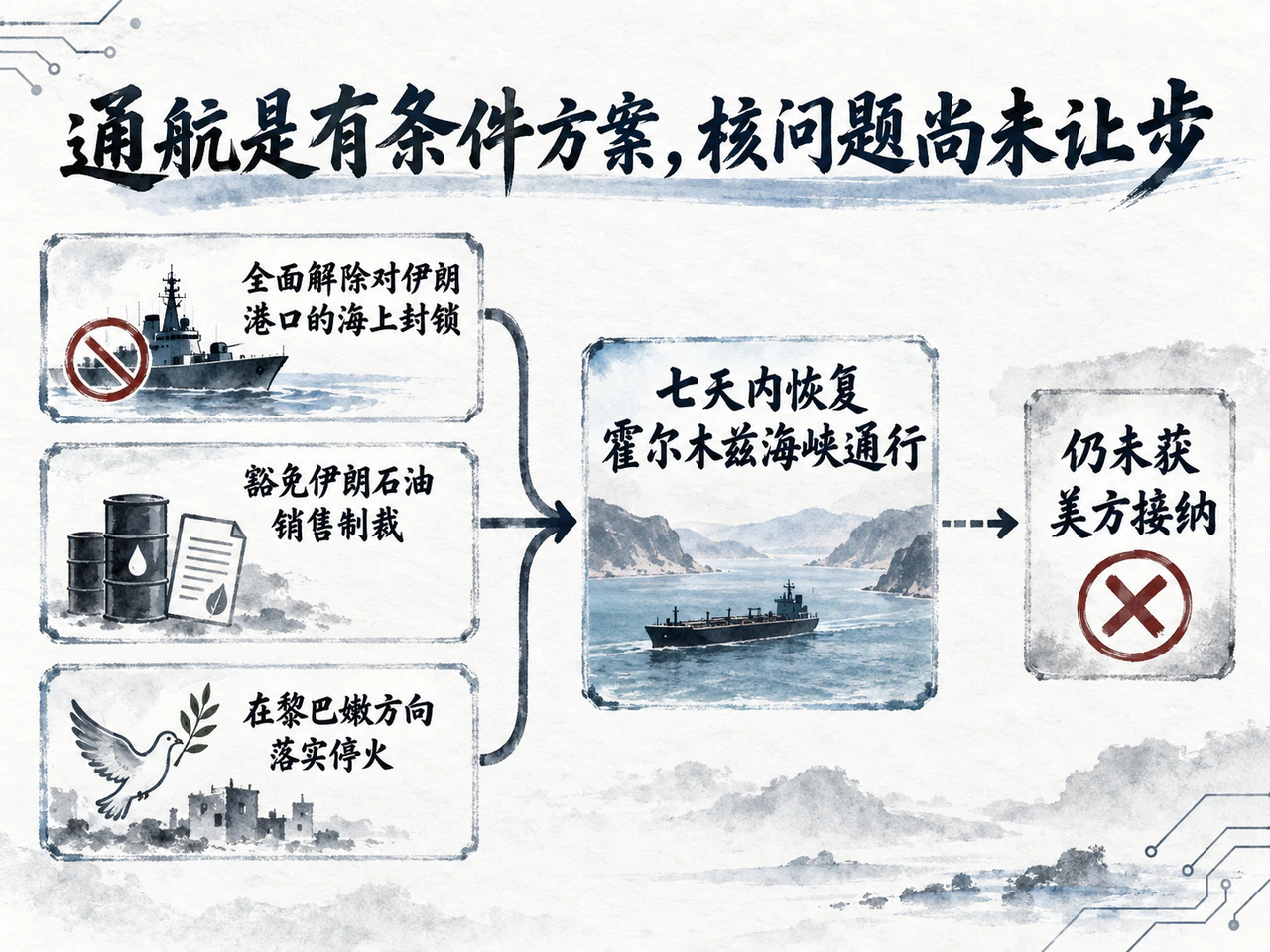
AP reported that Foreign Minister Abbas Araghchi formally proposed restoring Hormuz passage within seven days and restarting nuclear negotiations if the United States fully lifted its blockade of Iranian ports, waived sanctions on Iranian oil sales and implemented a ceasefire in Lebanon. The proposal had been conveyed through mediating countries. On September 25, the White House called contacts with mediators “positive and constructive” but did not announce acceptance.
Mediation channels remained highly active. Qatar's Foreign Ministry confirmed on September 25 that Prime Minister and Foreign Minister Mohammed met President Pezeshkian in New York to discuss mechanisms for regional de-escalation and preconditions for dialogue, preserving policy flexibility for phased exchanges of concessions.
Tactical bargaining over navigation was nevertheless clearly misaligned with the strategic nuclear dispute. Reuters cited a senior Iranian official on September 25 saying that even if the United States accepted the reopening plan, Iran would never concede on principles such as enrichment autonomy or shipping highly enriched uranium abroad. The official reiterated that Hormuz would not open before the United States met all the preconditions. Iran was seeking to use passage as immediate leverage for sanctions relief without softening its nuclear demands. The “seven days” was thus an implementation concept under stringent conditions, rather than an actual countdown to reopening. Without bridging fundamental strategic differences, even limited easing remained highly uncertain.
U.S. blockade continues; Yanbu alerts prompt multinational defense coordination
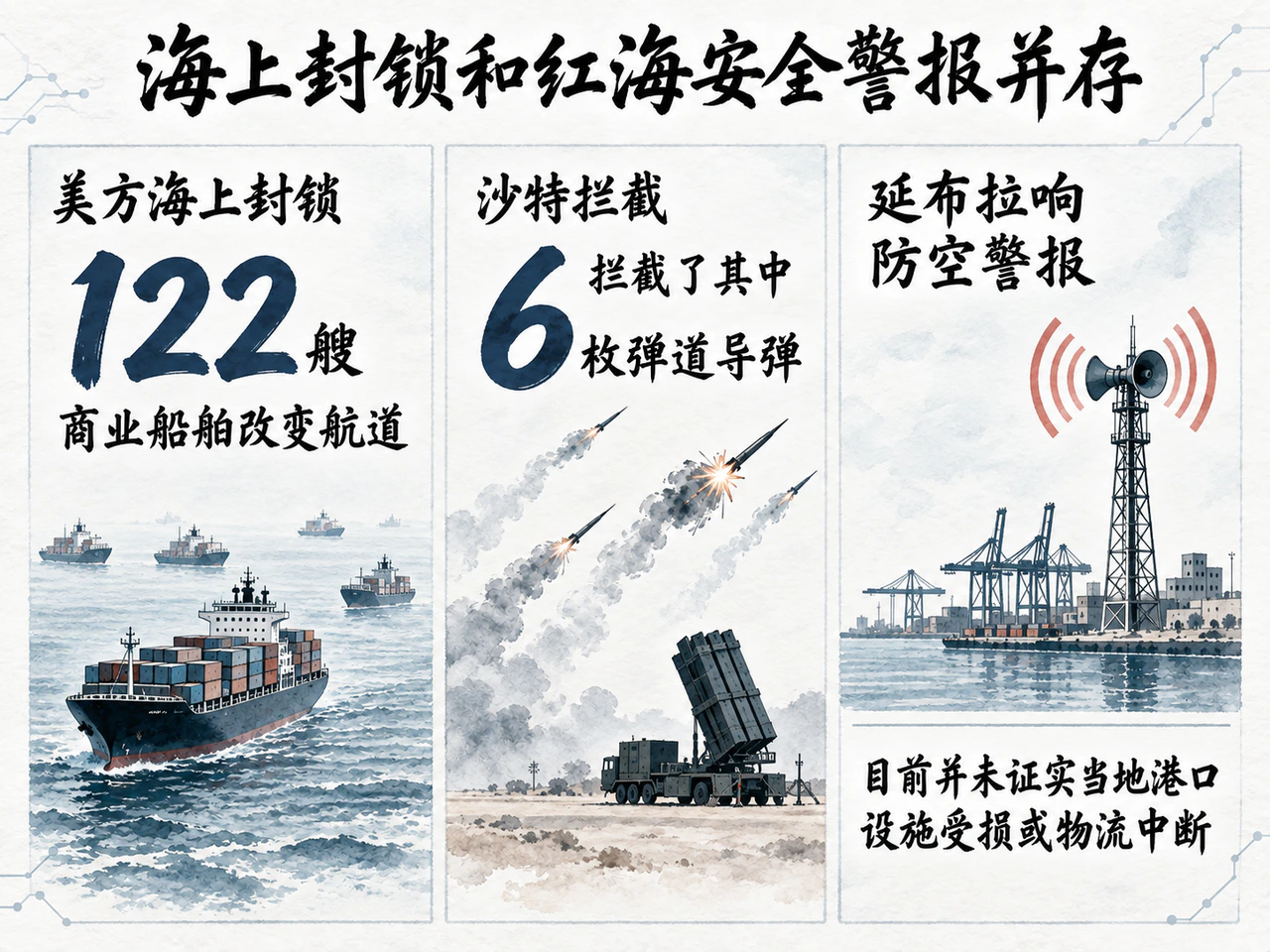
As diplomacy was tested, frontline blockade pressure showed no marginal easing. On September 25, U.S. Central Command confirmed it had forced 122 commercial vessels to change course since starting the maritime blockade of Iran. Continued restrictions demonstrated that military deterrence and blockade operations were still being enforced firmly.
Potential Red Sea risks also drew close attention. Reuters reported on September 25 that Yemen's Houthis claimed to have fired dozens of missiles and drones at Saudi targets. Saudi Arabia said air defenses intercepted six ballistic missiles and sounded alerts in Mecca, Jeddah and Yanbu. Yanbu is a strategic node for sending Saudi crude through the East–West pipeline to the Red Sea, bypassing Hormuz. The alarms highlighted potential aerial threats to alternative logistical hubs, but no damage to local port facilities or disruption of logistics had been confirmed.
The parties began defense coordination and announced deployment intentions. Saudi official statements confirmed that Saudi, Pakistani and Turkish foreign ministers were discussing an emergency meeting of their chiefs of staff to coordinate support for Saudi Arabia under a common-defense mechanism; the relevant defensive forces had not been confirmed in position. President Macron said France planned to send personnel, radar and air-defense systems to Yanbu to strengthen protection of energy facilities. AP noted that Yemen's conflict had not been explicitly included in Iran's seven-day proposal, leaving local talks unable to cover all actual Red Sea security concerns.
Sanctions spill into regional aviation; Iran warns of reciprocal measures
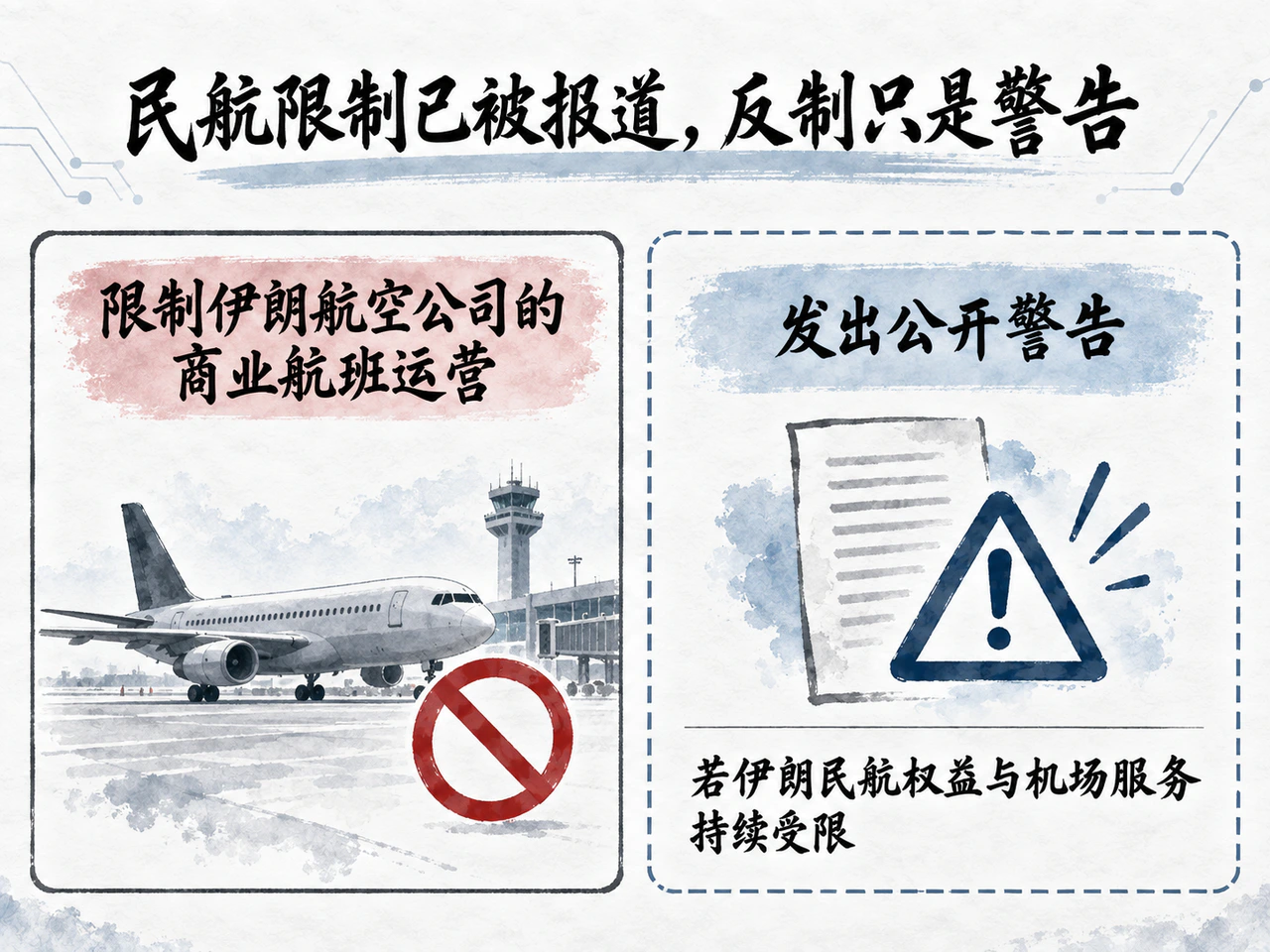
Conflict and blockade effects were spreading more quickly into civilian aviation. Reuters reported that the UAE, Oman and other Gulf countries had begun limiting Iranian airlines' commercial operations in connection with a new round of U.S. sanctions. Senior Iranian adviser Mohammad Mokhber publicly warned on September 25 that if Iran's civil-aviation rights and airport services remained restricted, comparable services in other regional countries would also become difficult to sustain.
The statement showed the risk of an escalating spiral between broad blockades and reciprocal retaliation. Maritime restrictions, oil sanctions and aviation limits were intertwined, extending the confrontation into the deeper structure of logistics and commercial networks. Without clear implementation sequencing, monitoring and cross-regional security consensus, even local commitments on passage would leave shipping, insurers and commercial institutions facing a long process of restoring trust and resolving risks.
Key developments
Items below are ordered by publication time in Beijing.
| Key developments |
|---|
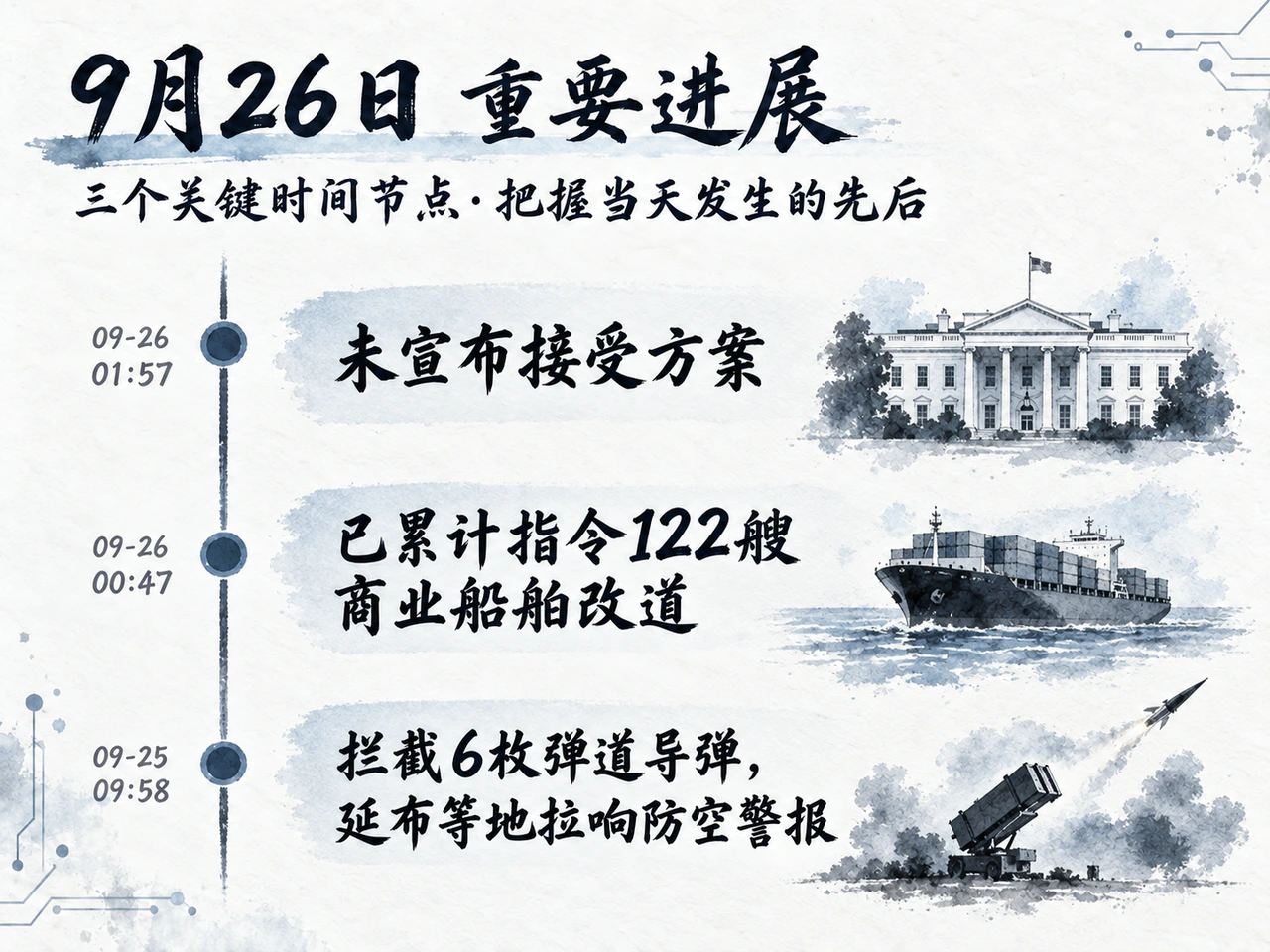
| 09-26 01:57 Beijing timeAP updated its report: the White House called contacts with mediators positive and constructive but had not announced acceptance of the plan. The report noted that Iran's proposal did not explicitly cover Yemen's conflict. |
| 09-26 01:08 Beijing timeReuters cited a senior Iranian official saying Iran would not concede on enrichment rights or sending highly enriched uranium abroad; opening Hormuz remained entirely conditional on the United States meeting preconditions. |
| 09-26 00:47 Beijing timeU.S. Central Command said it had ordered 122 commercial vessels to divert since beginning the maritime blockade; operations continued. |
| 09-25 22:31 Beijing timeAP detailed Iran's seven-day proposal: lift the port blockade, waive oil-sales sanctions and implement a full ceasefire in Lebanon. |
| 09-25 19:11 Beijing timeQatar's Foreign Ministry confirmed its prime minister and foreign minister met Iran's president in New York to discuss de-escalation mechanisms and dialogue preconditions. |
| 09-25 18:05 Beijing timeAfter neighboring states restricted Iranian flights, senior Iranian officials warned reciprocally that continued restrictions on Iran's aviation would also threaten other regional countries' flights and airport services. |
| 09-25 09:58 Beijing timeReuters reported Houthi claims of dozens of missiles and drones fired at Saudi targets. Saudi Arabia said it intercepted six ballistic missiles and sounded alerts in Yanbu and elsewhere; it was discussing an emergency chiefs-of-staff defense meeting with Pakistan and Turkey. |
| 09-25 Beijing timeFrance's president announced plans to send personnel, radar and air-defense systems to Yanbu to help protect key energy infrastructure. |