International oil prices fell sharply on September 25 as geopolitical negotiation hopes increased. November Brent settled at $104.32 a barrel, down $2.28, approximately 2.14%; November WTI settled at $92.41, down $2.20, approximately 2.33%. Their same-month spread reached $11.91, drawing attention to divergent performance. Concerns over obstructed seaborne crude shipments and possible disruption from U.S. refinery-export policy discussions were widely viewed as important context.
The selloff mainly reflected repricing of possible de-escalation. Whether sentiment-driven losses became a sustained decline depended on diplomacy producing actual tanker passage and deliveries through Hormuz, and on how possible U.S. diesel-export restrictions would affect refinery runs.
Diplomatic hopes precede logistics improvements; Brent's nearby premium stays near $7

OilPrice reported that U.S. and Iranian negotiators were discussing a phased arrangement exchanging an Iranian reopening of Hormuz for relaxed U.S. blockade measures. This remained a diplomatic framework, rather than normalized shipping. For coastal refiners needing prompt inventory replenishment, navigation safety, marine insurance and reliable sailing schedules determine landed costs more directly than statements.
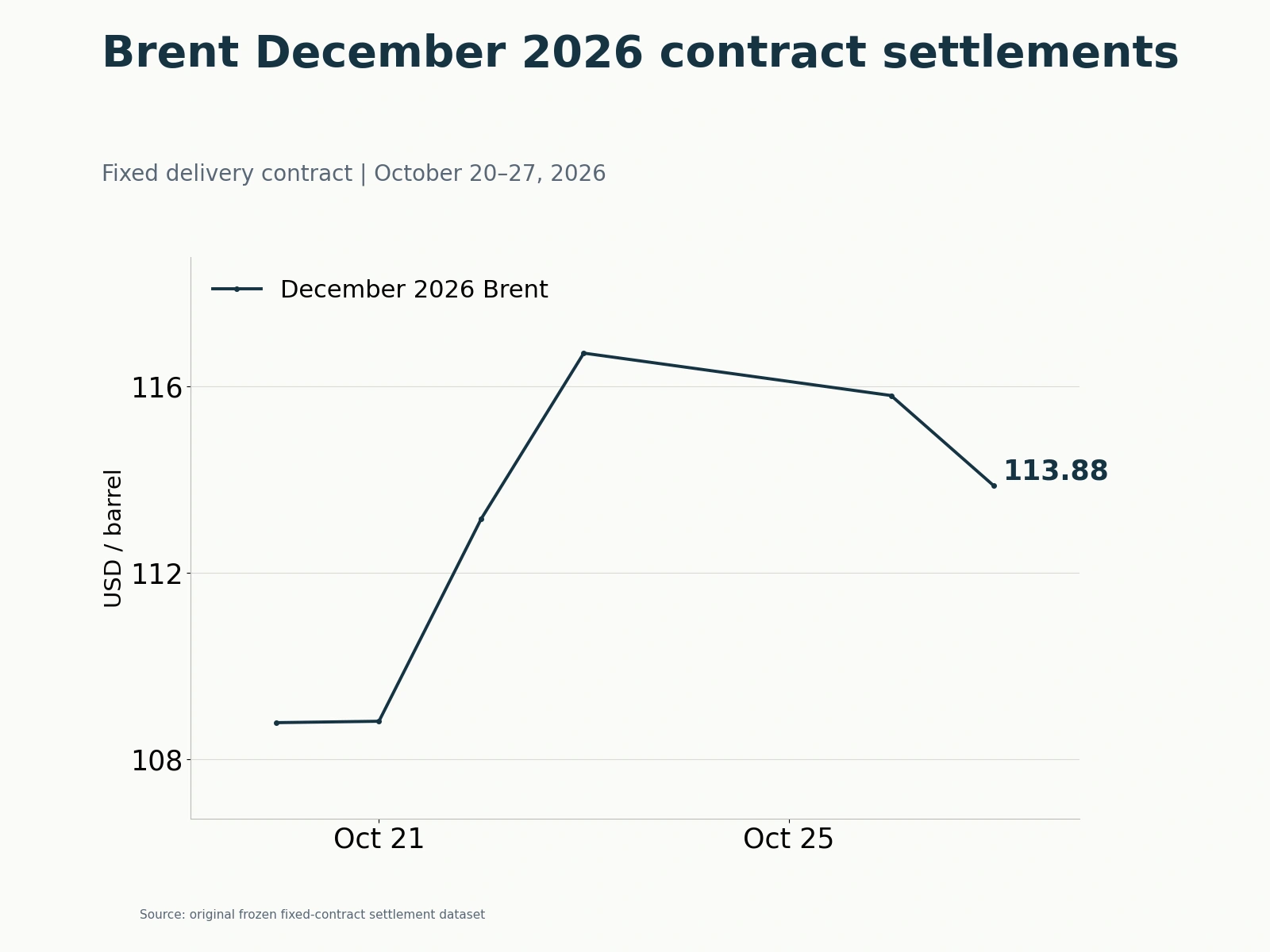
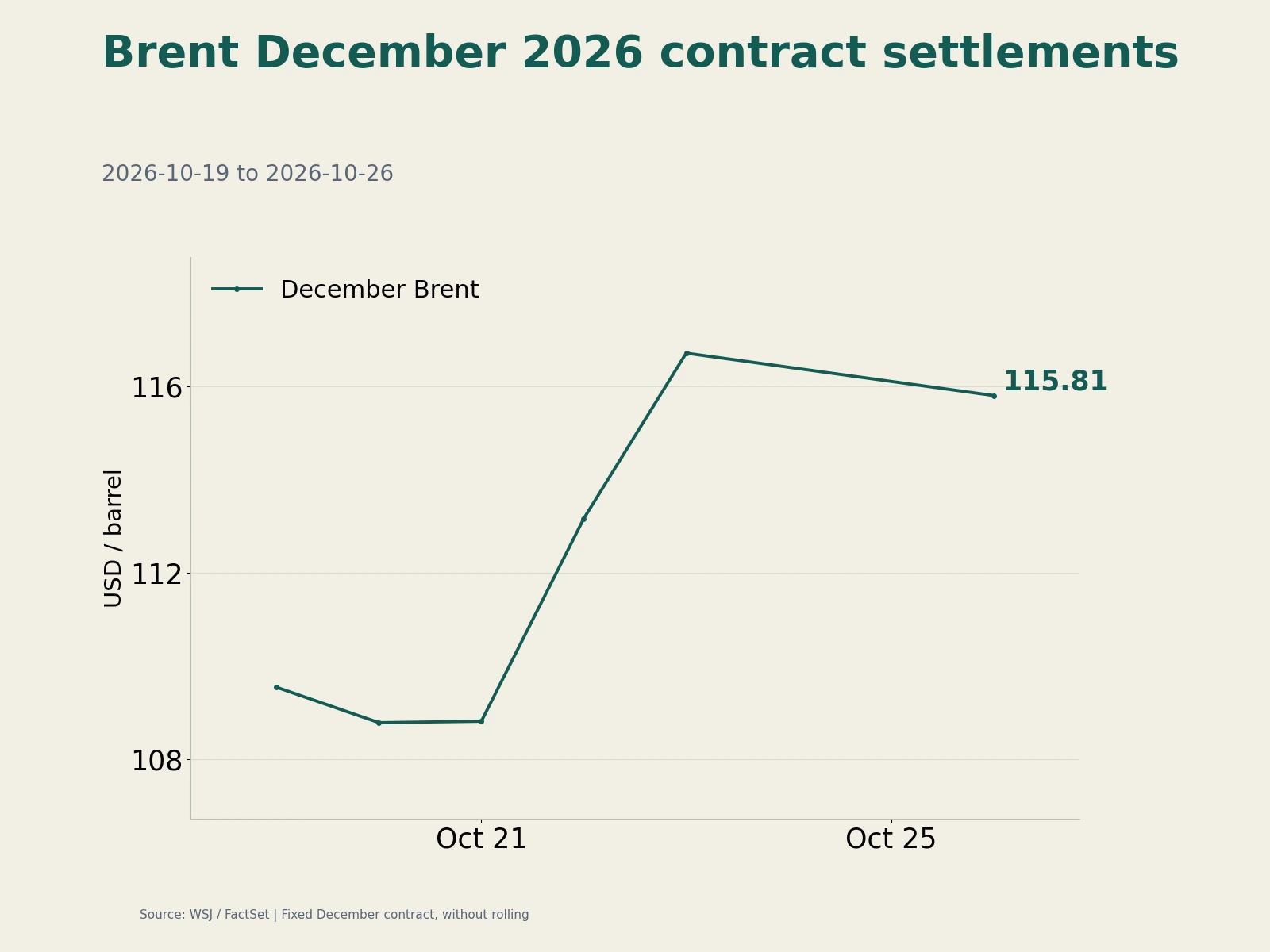
The futures curve reflected caution. On September 25, November Brent was $104.32 a barrel and December settled at $97.44, a $6.88 spread. A nearly $7 gap between adjacent delivery months showed continued pricing of tight prompt delivery; backwardation had not materially eased. A calendar spread should not be confused with one contract's daily price change.
November Brent rebounded from Tuesday's $99.25 low to Thursday's $106.60 high before falling, still ending Friday well above Tuesday's level. Sentiment repeatedly shifted with geopolitical expectations. The dollar index also fell approximately 0.25% that day, so oil declined alongside a weaker dollar. Negotiation hopes were the dominant explanation in reporting, but positioning adjustments and multiple supply-demand expectations also influenced prices.
U.S. crude builds coexist with fuel draws as diesel-export restriction discussions unsettle markets

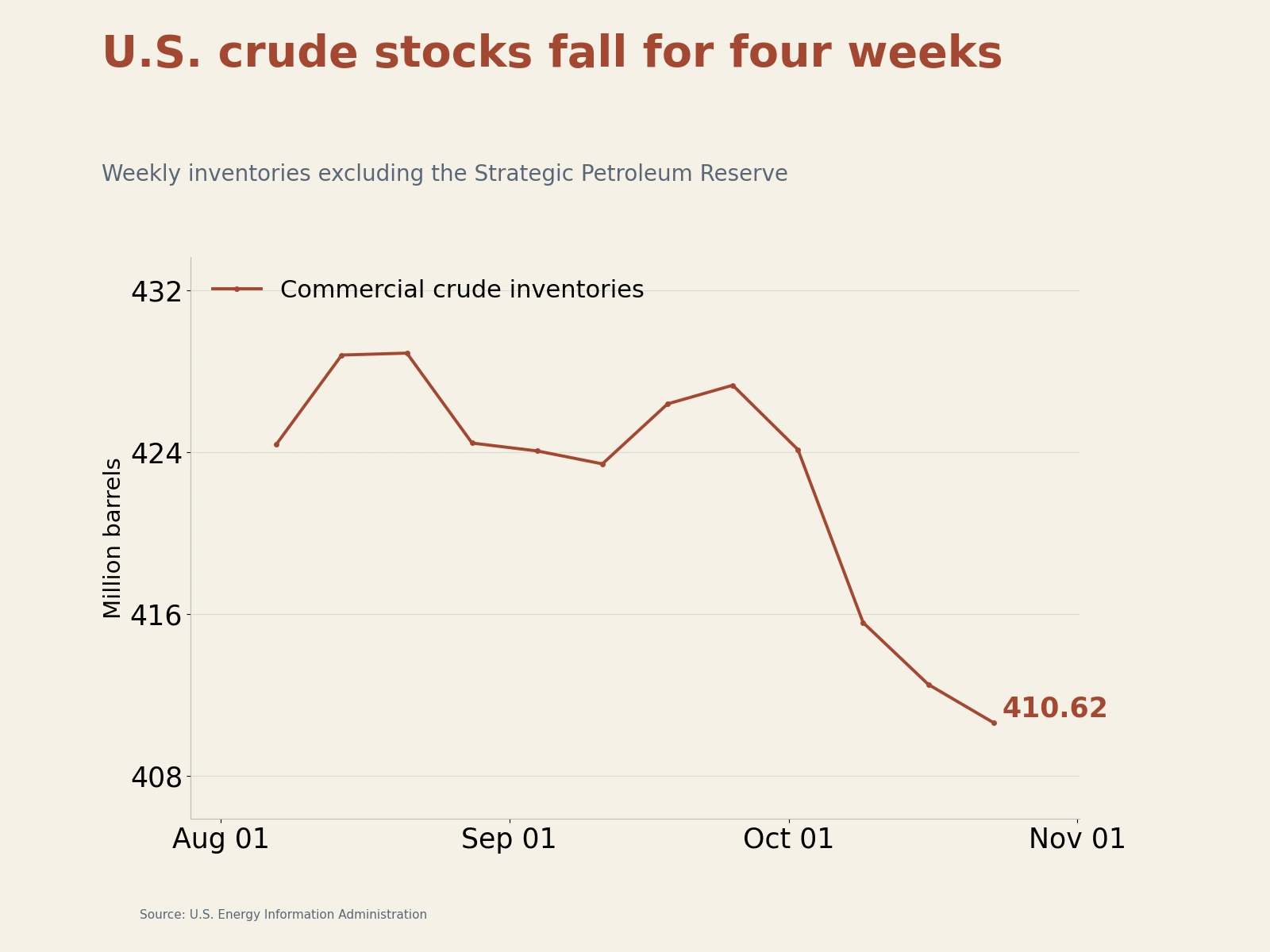
U.S. inventories differed from geopolitically sensitive seaborne crude. EIA data released September 23 for the week ending September 18 showed commercial crude stocks up approximately 3 million barrels to 426.4 million. Cushing stocks rose 2.2 million to 23.7 million. Refining slowed at the same time: crude runs fell 519,000 barrels a day and utilization dropped 2.8 percentage points to 94%.
The crude build did not imply broad product abundance. Gasoline inventories fell 1.7 million barrels and distillates approximately 400,000 barrels. This combination of crude accumulation and fuel depletion meant a crude build alone could not establish broadly weakening end demand.
Rumors that Washington might restrict diesel exports prompted debate over refinery operations. Columbia University's Center on Global Energy Policy analyst Jan Stuart said restrictions might theoretically lower retail fuel prices in some U.S. regions temporarily. But as storage filled, refiners could have to cut runs or alter output mixes, potentially weakening WTI demand and affecting gasoline supply. The restriction was still under discussion and had not been implemented. The scenario nevertheless led some participants to consider simultaneous pressure on U.S. crude and tight overseas fuel supplies, a possible perspective on the nearly $12 benchmark gap.
Supply policy depends on actual logistics; four physical indicators to watch
Seven OPEC+ countries decided September 6 to maintain existing October quotas without further changes. Markets awaited their October 4 meeting. Ports and waterways remained the fundamental bottleneck in turning nominal production into effective supply.
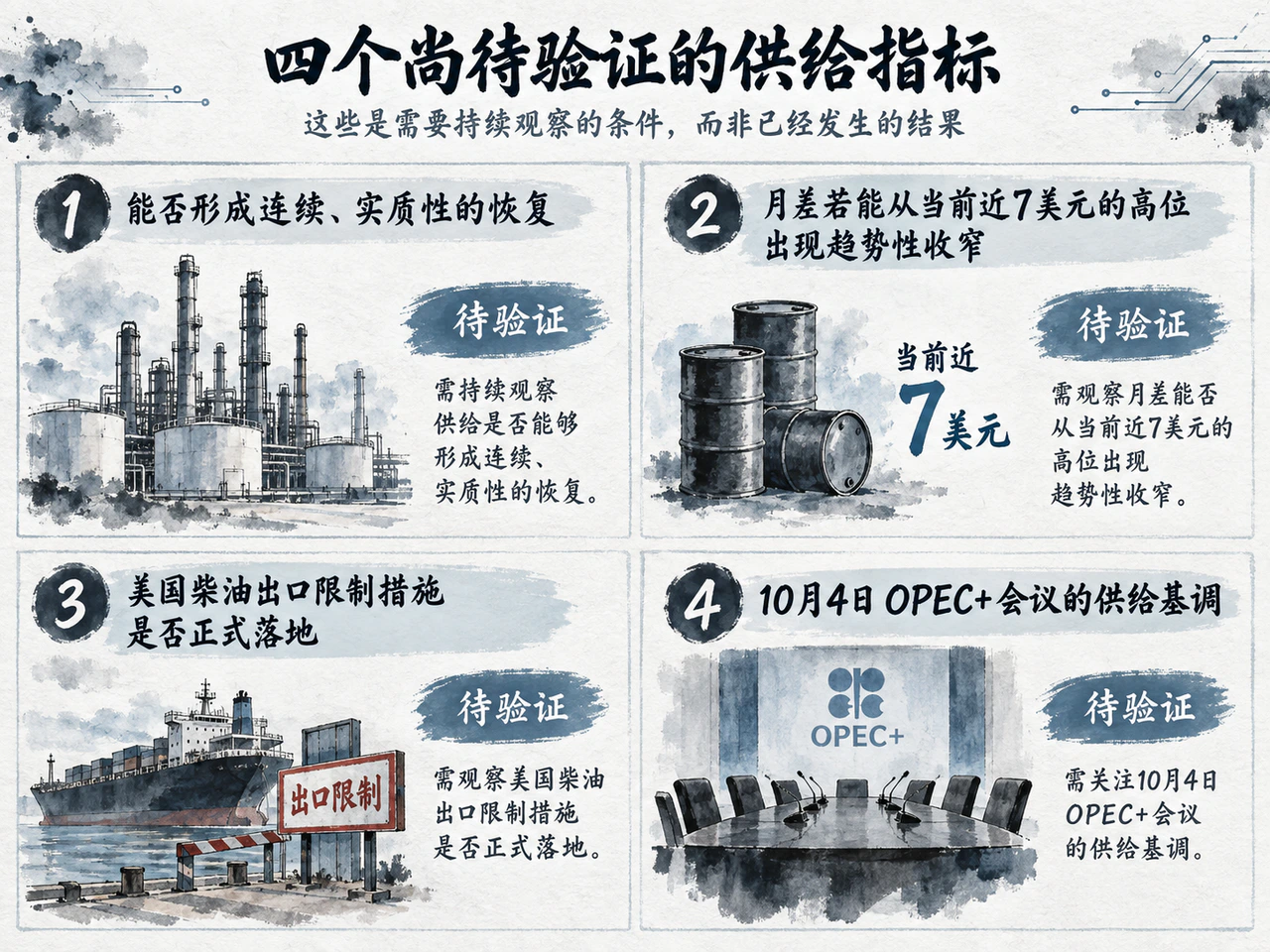
Four dimensions would test whether backwardation and the transatlantic gap could narrow sustainably:
First, whether commercial tanker passage and loading through Hormuz recover continuously and materially. Diplomatic statements without sustained logistics could leave prompt premiums intact.
Second, the rate of convergence in the November–December Brent spread. A sustained narrowing from nearly $7 would signal a meaningful easing of tight-delivery expectations.
Third, whether U.S. diesel-export restrictions are formally implemented, and how Cushing crude and nationwide distillate stocks move together.
Fourth, the October 4 OPEC+ supply stance and actual producer exports. Additional cargoes must reach destination ports to fundamentally change the prompt physical balance.
Prices had already reflected hopes of de-escalation, but the curve still priced tight near-term delivery. A material narrowing of backwardation and the transatlantic spread would reveal changing supply-demand expectations more clearly than a single day's pullback.