As of the morning of September 27 Beijing time, President Trump had publicly rejected Iran's seven-day ceasefire and shipping proposal conveyed through mediators. Tehran was still awaiting a formal US response through those channels, and contacts had not ended completely, but the wide gap in demands left diplomacy deadlocked again. Saudi air-defense interceptions and Israeli cross-border airstrikes continued alongside negotiations. Reopening Hormuz remained heavily dependent on bargaining over sanctions exemptions, blockade relief and ceasefires across regional fronts.
Trump Publicly Rejects the Seven-Day Plan as Core Demands Remain Far Apart

Speaking to reporters outside the White House on September 26, Trump explicitly rejected Iran's latest proposal, adding that Washington still wanted an agreement but could not accept the current terms. Foreign Minister Araghchi said Iran knew of Trump's preliminary comments but had not received an official response through mediators, and would assess its next step after confirming the final position. Washington had expressed opposition publicly while Tehran still awaited a formal reply; subsequent bargaining depended on confirmation of the official stance.
Iran had submitted the proposal through Qatar. It linked several conditions: normal Hormuz navigation would resume within 7 days if the United States lifted its naval blockade of Iranian ports, exempted oil sales from sanctions, unfroze restricted overseas funds and extended the ceasefire to all regional fronts.
The central disagreement concerned the timing and structure of exchanges. Iran sought to package maritime security, economic relief and regional geopolitical interests, while Washington said it could not accept the current terms. With little mutual trust and specific implementation arrangements unresolved, the seven-day plan remained a diplomatic initiative rather than an operational basis for commercial shipping schedules.
Pezeshkian Opens Discussion of Inspections Without Retreating on Nuclear Red Lines

In a newly released interview, President Pezeshkian said Iran was willing to admit UN inspectors as part of a potential long-term ceasefire, with specific arrangements negotiable. He reiterated that Iran did not intend to develop nuclear weapons.
This left diplomatic room to discuss renewed inspections without a fundamental concession on substantive nuclear constraints. Reuters cited senior Iranian officials that day saying Tehran would not compromise on enrichment rights or transferring highly enriched uranium abroad even if Washington accepted the ceasefire plan. Discussing inspector access and accepting substantive limits on nuclear capabilities are different levels of commitment. The core nuclear dispute remained unresolved.
Cross-Border Fighting Continues as Spillover Risks Weigh on Shipping and Aviation
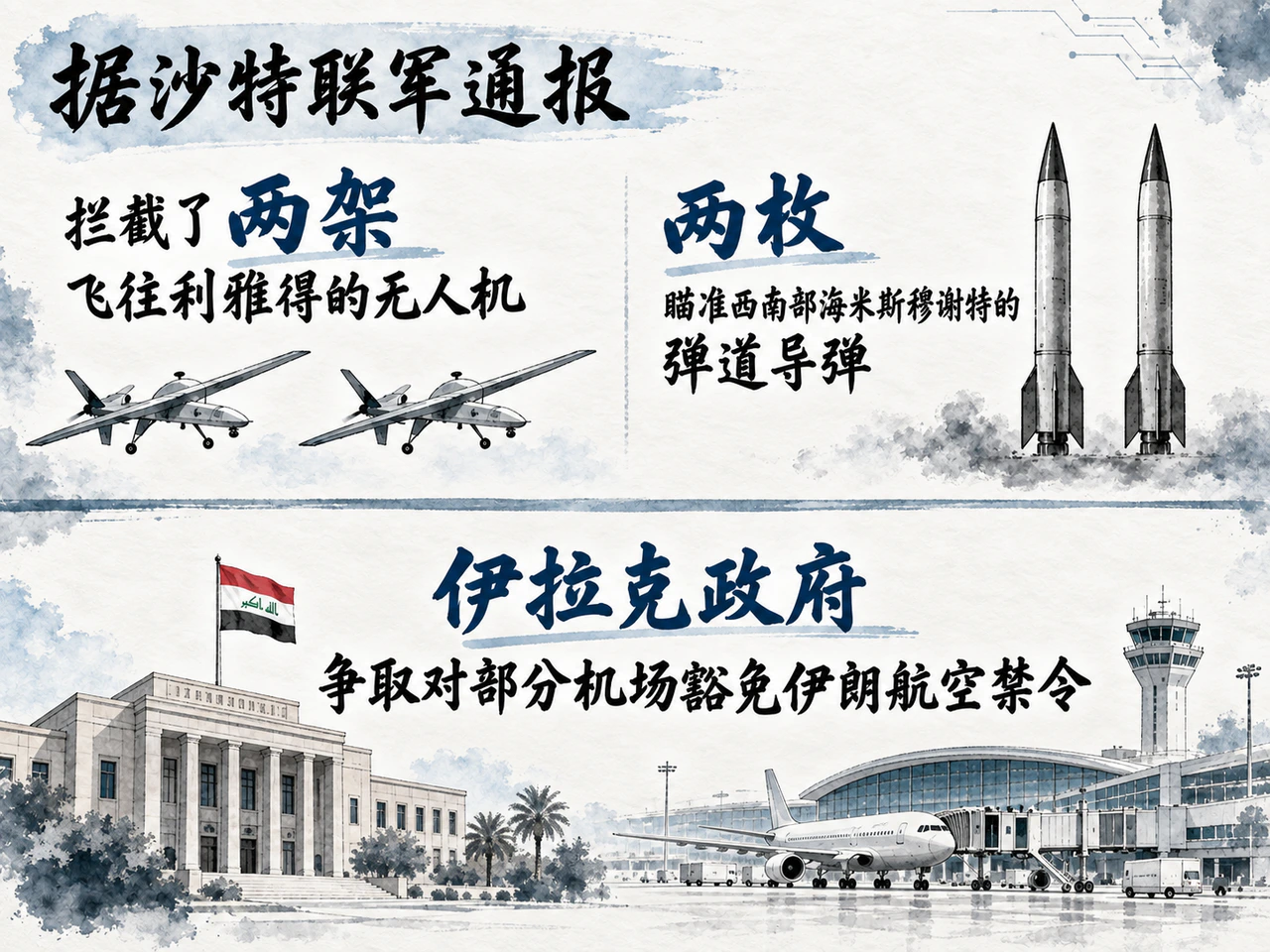
Military confrontation did not cool with diplomacy. The Saudi coalition said its air defenses intercepted two drones headed for Riyadh and two ballistic missiles targeting southwestern Khamis Mushait on September 26, attributing the attacks to Yemen's Houthis. Israel said the same day it struck a Hezbollah weapons-storage facility in Sejoud, southern Lebanon. Recurring conflict across fronts showed that security for key waterways remained difficult without a region-wide ceasefire.
Gulf and neighboring states called for insulating shipping from continued disruption. At the UN General Assembly, Saudi Arabia's foreign minister demanded free navigation through Hormuz, Bab el-Mandeb, the Red Sea and Gulf of Aden, explicitly opposing extra Hormuz transit charges. Oman's foreign minister reiterated willingness to help safeguard passage and urged restraint and dialogue. Aviation also faced pressure. Iraq said it was directly negotiating US exemptions from the Iranian aviation ban for some airports to restore medical, educational and religious travel. Iranian Supreme National Security Council secretary Rezaei said Tehran would pursue diplomatic resolution of aviation restrictions rather than military retaliation, while retaining nonmilitary countermeasures.
Hormuz reopening, inspector access and ceasefires across regional fronts remained under negotiation. Until mediation produced a mutually accepted formal agreement with implementation rules, the actual pattern of blockade, sanctions and military confrontation had not materially changed.
Key Developments
| Key Developments (Beijing time) |
|---|
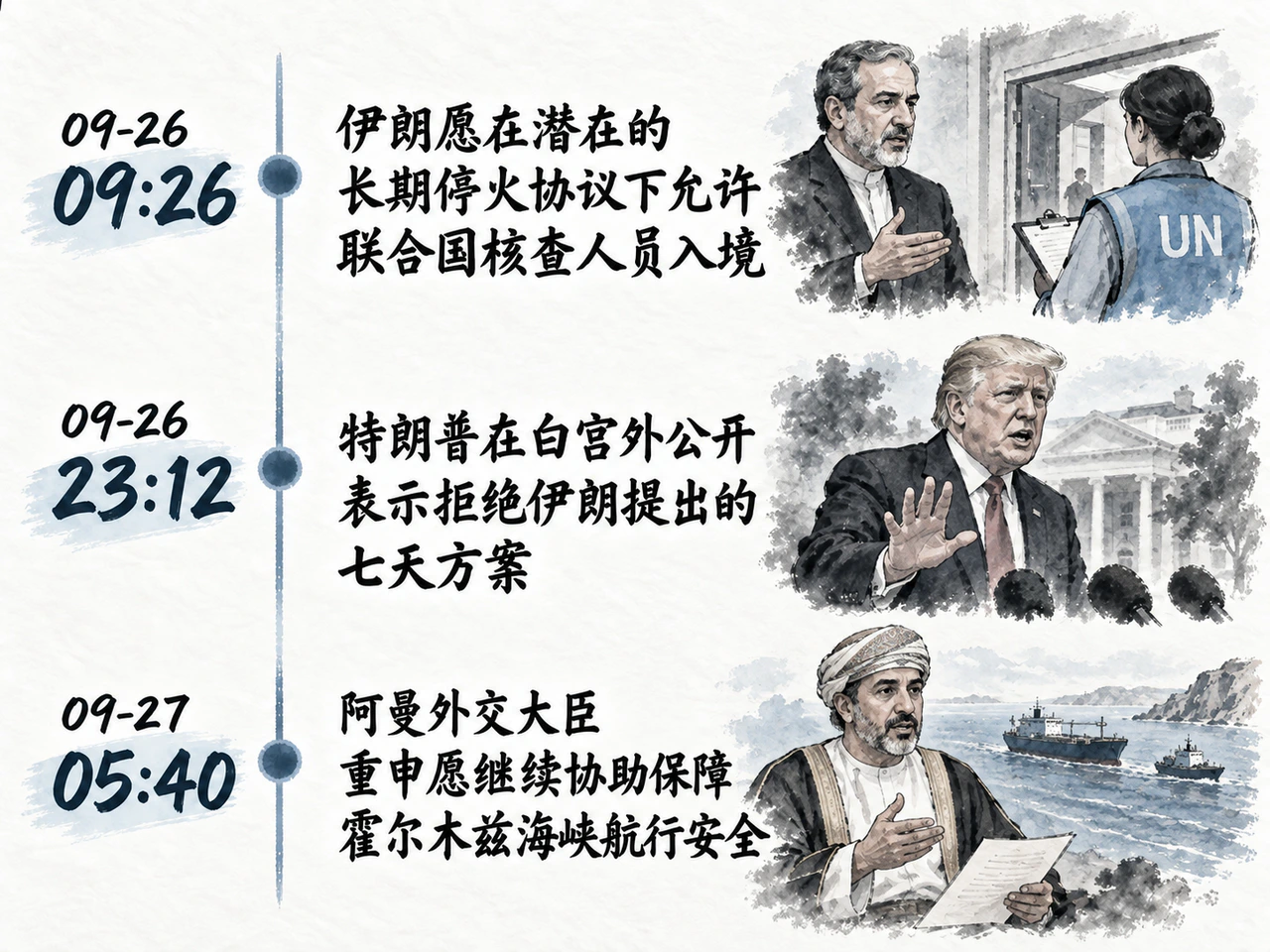
| 09-27 05:40 Oman's foreign minister urged restraint and dialogue at the UN and reiterated willingness to help protect navigation through Hormuz. |
| 09-27 01:50 Saudi Arabia's foreign minister called for free navigation through Hormuz, Bab el-Mandeb, the Red Sea and Gulf of Aden, opposing additional Hormuz transit charges. |
| 09-27 00:43 Russian Foreign Minister Lavrov said Russia was willing to help stabilize Hormuz and the Gulf. |
| 09-26 23:45 Israel said it struck a Hezbollah weapons-storage facility in Sejoud, southern Lebanon, that day. |
| 09-26 23:12 Trump publicly rejected Iran's seven-day plan outside the White House, saying he still wanted a deal but could not accept the current terms. |
| 09-26 21:48 Rezaei said Iran was discussing removal of aviation restrictions with relevant countries, would not retaliate militarily, but retained nonmilitary countermeasures. |
| 09-26 17:35 Iraq said it was negotiating directly with Washington for exemptions from the Iranian aviation ban for some airports, to restore medical, educational and religious travel. |
| 09-26 13:40 The Saudi coalition reported intercepting two drones bound for Riyadh and two ballistic missiles targeting Khamis Mushait, attributing the attacks to the Houthis. |
| 09-26 09:26 Pezeshkian said Iran was willing to admit UN inspectors under a potential long-term ceasefire, with details negotiable. |