As of 07:32 Beijing time on September 30, Iran's ceasefire and Strait of Hormuz reopening proposal, relayed through Qatari mediators, still awaited a formal US response. Over the preceding 24 hours, diplomacy remained unresolved while neither side yielded on incremental pressure. The US Treasury announced targeted sanctions on 10 individuals and entities assisting Iranian military procurement; unofficial Tehran exchange-market quotes exceeded 2.5 million rials per dollar, a fresh currency low; UK Maritime Trade Operations (UKMTO) relayed a third-party report that a vessel in the Strait of Hormuz had apparently been struck by an unidentified projectile and caught fire, with responsibility unconfirmed; and conflict affected nine Yemeni health facilities or assets amid a severe humanitarian funding gap. Diplomatic contacts had neither materially restored normal passage nor eased sanctions at the margin.
Seven-point ceasefire plan awaits formal US reply; military-procurement sanctions and pressure on Tehran's currency

Iranian Foreign Minister Araghchi confirmed that the seven-point proposal transmitted through Qatar was unchanged and awaited a formal US reply. Qatar had previously expected to convey a response on the 29th local time, but major differences remained over sequencing and core demands. The proposal envisaged a ceasefire within seven days and a phased reopening of Hormuz, conditional on Washington meeting Iranian prerequisites. Senior US officials had previously rejected the proposal publicly and denied offering sanctions relief or asset unfreezing. US signals of nuclear-related contact had not become policy commitments, leaving the plan highly uncertain.
US economic pressure increased again. On September 29, the Treasury sanctioned 10 individuals and entities accused of helping Iran's defense and armed-forces logistics authorities procure weapons and electronic components. The network covered cross-border procurement of key drone and missile parts, aiming to raise replacement costs in Iran's military supply chain. Analysis suggested the actual constraint would depend on third-country transit enforcement and Iran's room to adjust alternative procurement channels.
Persistent geopolitical tensions and external pressure also hit domestic finance. AP reported that unofficial Tehran foreign-exchange quotes on the 29th exceeded 2.5 million rials per dollar, a new record currency low. Continued depreciation directly worsened import costs and inflation pressure. Whether economic stress would compel negotiating concessions remained to be seen before substantive compromises over core security interests and sanctions.
Vessel attack reported in Hormuz; Iraq transports gasoline through Syria under bilateral agreement
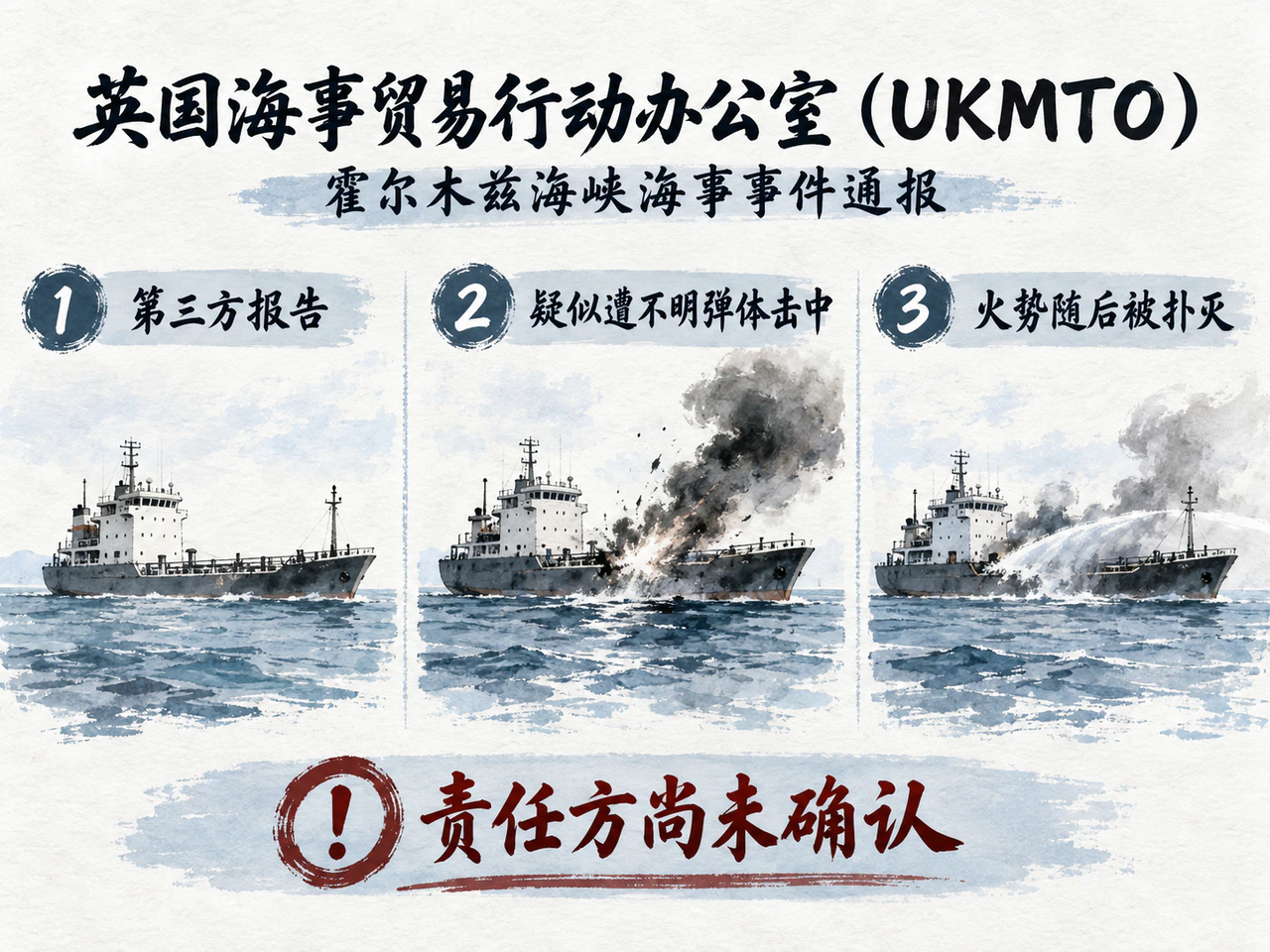
Security along the critical sea route remained fragile. A third-party report disclosed by UKMTO on the 29th said a vessel apparently caught fire after being hit by an unidentified projectile while transiting Hormuz. The fire was subsequently extinguished and no crew were injured, but responsibility was unconfirmed. Large-scale resumption of commercial passage would require stringent safety assessments and consideration of insurance premiums until security guarantees and responsibility became clearer.
Iran maintained its own hard-line pressure. Parliament Speaker Ghalibaf warned that regional infrastructure could not be safe if Iranian oil exports and national security were not guaranteed. A military spokesman reiterated that opponents would not be allowed to restore the previous pattern of passage through the strait. These remarks indicated that passage would remain unstable unless the ceasefire proposal became a credible, executable commercial-shipping safety mechanism.
With maritime disruption possible, regional overland logistics drew attention. AP reported that Iraqi tanker trucks loaded gasoline at Syria's Baniyas port on the 29th for road transport through Syria under a three-month bilateral agreement, supplementing domestic fuel supply. Such links could provide a local energy-distribution buffer, but road capacity, border-clearance efficiency and transport costs significantly limited their scale and economics as a substitute for large-scale shipping through Hormuz.
Nine Yemeni medical facilities or assets affected; WHO emergency aid faces a $7 million gap
Conflict spillovers continued to deepen Yemen's humanitarian crisis. WHO warned on the 29th that ongoing fighting had brought the public-health system close to its limits. UN figures showed at least 145,000 people displaced that month alone. Nine medical facilities or related assets in heavily affected areas including Taiz, Lahj and Hodeidah had been affected, including damage, suspension, closure or attack.
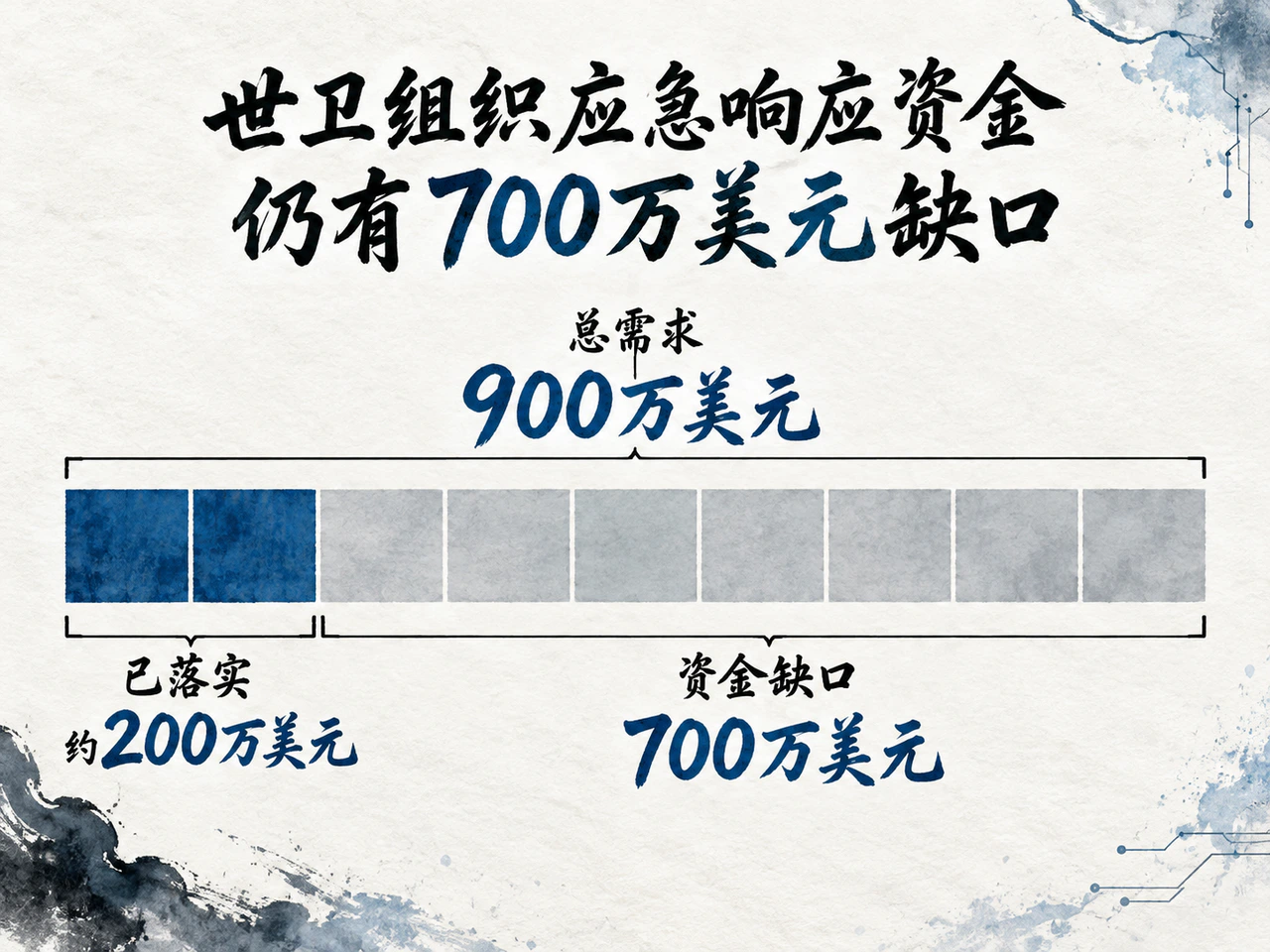
AFP, citing WHO, said two hospitals had suspended comprehensive emergency obstetric and newborn services and redirected resources toward conflict casualties. Displacement and deteriorating water and sanitation increased infectious-disease risks. Only approximately $2 million of WHO's required $9 million emergency-response funding had been secured, leaving a $7 million gap.
In diplomacy, UN Yemen envoy Grundberg disclosed on the 29th that he had previously met Houthi negotiators in Oman and contacted Yemen's government and regional parties to curb escalation. Shuttle diplomacy still centered on preventing loss of control and urging restraint; a frontline ceasefire agreement could not yet be established.
Key developments
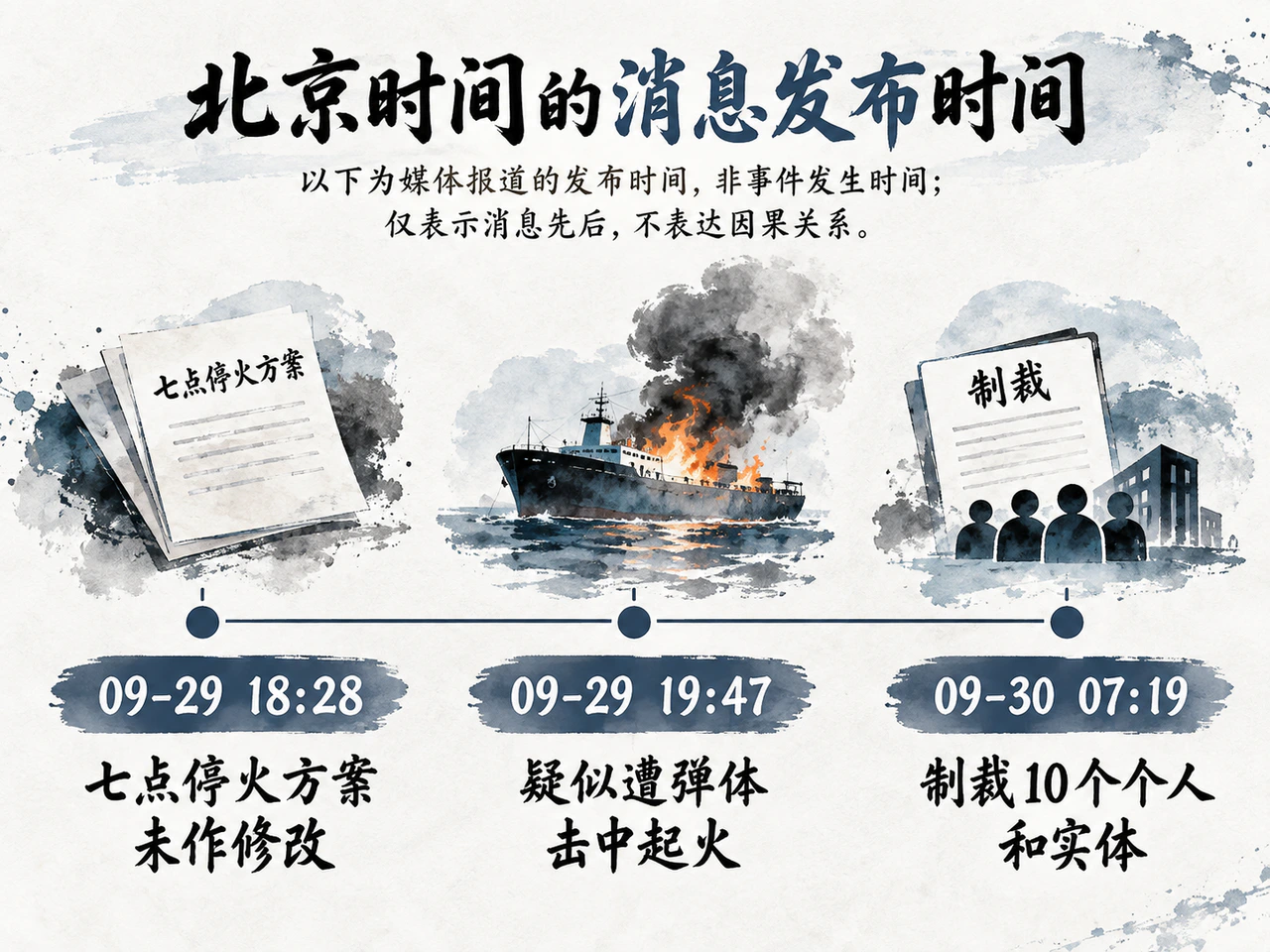
Times below are news-release times in Beijing time. Event times are specified separately in the entries.
| Key developments |
|---|
| 09-30 07:19 Beijing timeThe US Treasury sanctioned 10 individuals and entities accused of assisting Iranian military procurement of weapons and electronic parts. |
| 09-30 02:31 Beijing timeRezaei, head of Iran's Supreme National Security Council, said Iran had presented specific conditions and was still waiting for a formal US decision. |
| 09-30 01:56 Beijing timeAP reported that Iraqi tanker trucks loaded gasoline at Syria's Baniyas port that day, using the Syrian route under a bilateral agreement to supplement domestic supplies. |
| 09-30 01:04 Beijing timeTurkish officials confirmed that a Caspian Airlines passenger aircraft had been impounded over a commercial dispute, without linking it to US sanctions. |
| 09-29 23:43 Beijing timeWHO warned that Yemen's health system was approaching its limits; UN data showed at least 145,000 people displaced locally that month. |
| 09-29 23:19 Beijing timeThe UN Yemen envoy disclosed an earlier meeting with Houthi representatives in Oman and contacts with parties to prevent further escalation. |
| 09-29 22:42 Beijing timeAn Iranian military spokesman reiterated that opponents would not be allowed to restore the previous pattern of passage through the strait. |
| 09-29 21:22 Beijing timeNetanyahu said signs indicated Israel might be attacked before late-October elections, without providing specific intelligence details. |
| 09-29 19:47 Beijing timeUKMTO relayed a third-party report that a vessel in Hormuz apparently caught fire after a projectile hit. The fire was extinguished and the crew were safe; responsibility was unclear. |
| 09-29 19:24 Beijing timeAP reported unofficial Tehran foreign-exchange quotes above 2.5 million rials per dollar, a fresh record currency low. |
| 09-29 18:59 Beijing timeAn Iranian government spokesperson said aviation restrictions were being challenged through channels including the International Civil Aviation Organization, alongside continued diplomatic contacts. |
| 09-29 18:28 Beijing timeIran's foreign minister said the seven-point ceasefire proposal was unchanged and that Qatar's mediators had yet to convey a formal US reply. |
| 09-29 18:06 Beijing timeIran's Revolutionary Guard said it was advancing development and upgrades of new weapons and would deploy them if necessary. |
| 09-29 15:21 Beijing timeIranian Parliament Speaker Ghalibaf warned that regional infrastructure faced security risks if Iran's oil exports and national security were not guaranteed. |
| 09-29 13:48 Beijing timeIran's foreign minister said Qatari mediators hoped to deliver a US reply that day to the ceasefire and strait-reopening proposal. |


