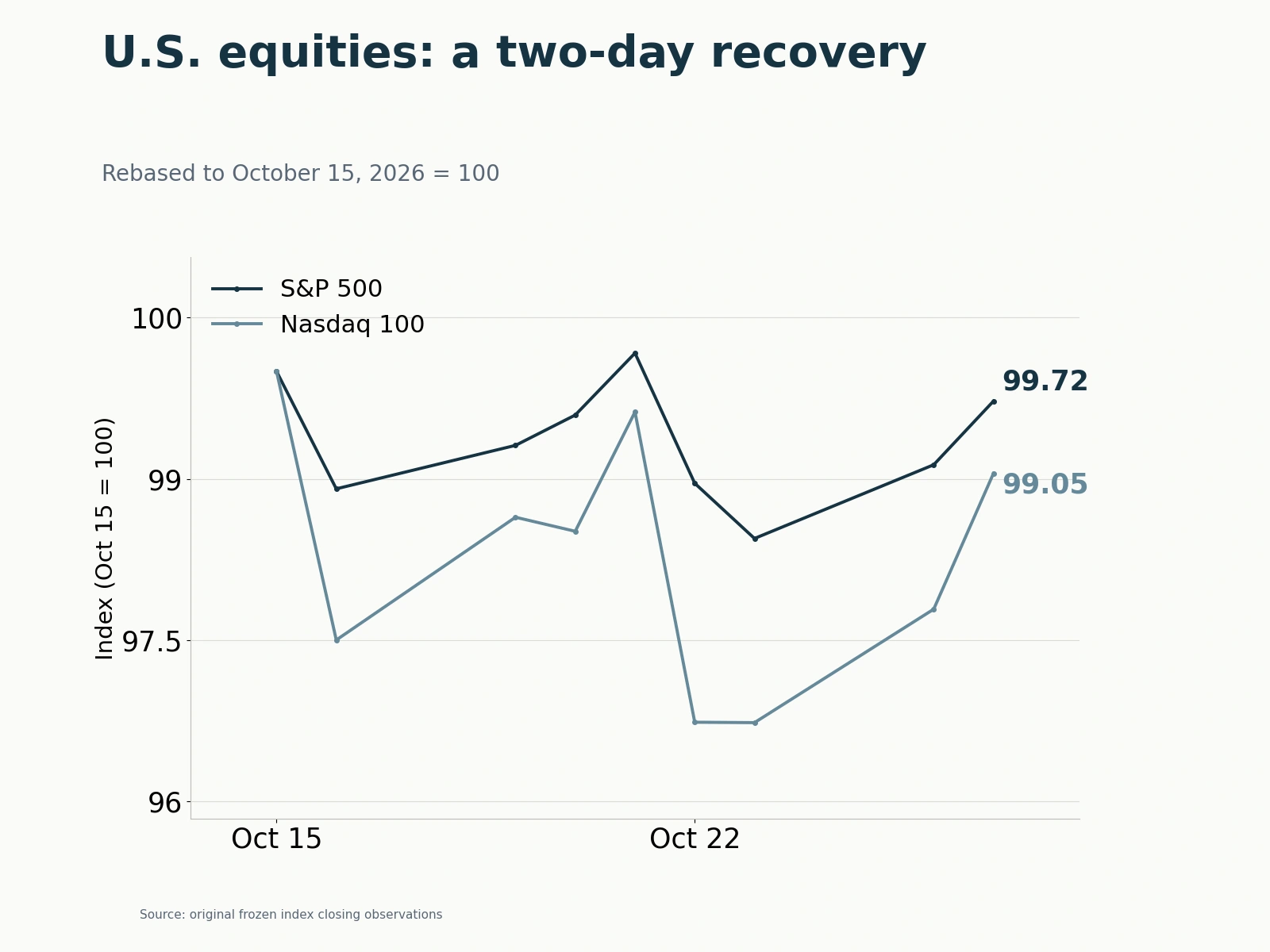
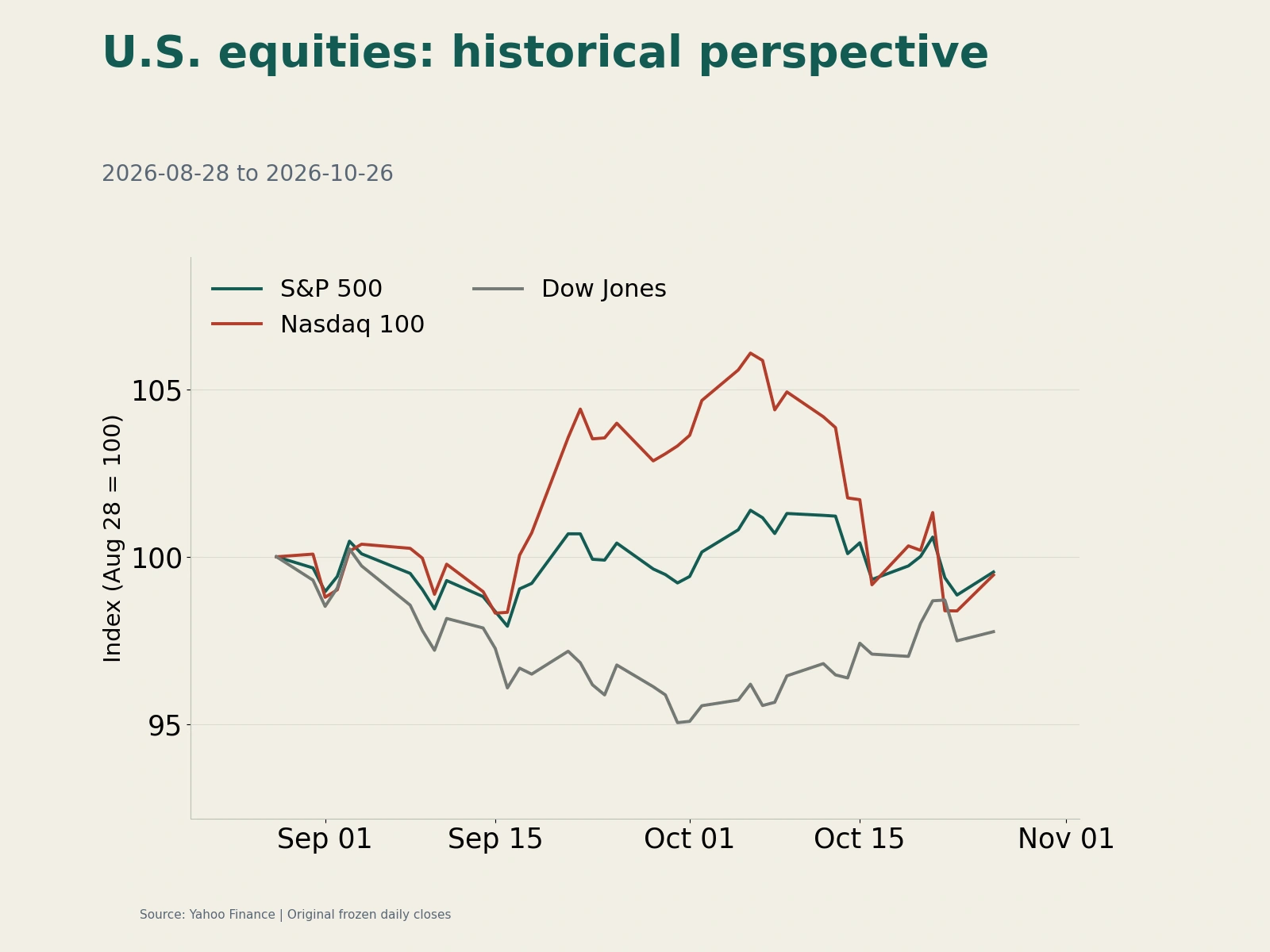
On September 29, 2026, weak U.S. data lowered short-term Treasury yields, while supply pressure and other factors pushed long-term borrowing costs higher. The Treasury's consistently measured daily curves showed the two-year yield down three basis points to 4.89% and the ten-year up two to 5.26%, widening their spread to 37 basis points. The main U.S. stock indexes moved narrowly: the S&P 500 fell 0.17%, while chips and memory stocks helped the Nasdaq 100 gain 0.21%. Commodity vendors' continuous-futures daily closes showed WTI plunging 3.56% to $89.30 a barrel, weighed down mainly by the restoration of Saudi Arabia's East-West pipeline to Yanbu on the Red Sea and expectations surrounding a U.S. Strategic Petroleum Reserve loan tender. COMEX continuous gold rebounded 1.06% to $4,212.70 an ounce, though firm dollar and real-rate levels continued to limit its upside.
Treasury curve steepens to a 37-basis-point spread as greater medium- and long-term issuance limits scope for yields to fall

The Treasury's consistently measured daily yield curves showed the following changes on September 29:
| Maturity | Yield | Daily change |
|---|---|---|
| 2-year | 4.89% | Down 3 basis points |
| 5-year | 5.06% | Unchanged |
| 10-year | 5.26% | Up 2 basis points |
| 30-year | 5.59% | Up 3 basis points |
The ten-year/two-year spread widened from 32 basis points the previous day to 37. The decline at the short end directly corresponded to weak consumer confidence and job-opening data that day. Rising long yields nevertheless showed that cooler near-term activity did not translate into lower long-term borrowing costs.
Breaking down the daily curves, the ten-year real yield rose from 2.90% to 2.91%, while ten-year inflation compensation, roughly measured as the difference between the nominal and real daily yield curves, edged up from 2.34% to 2.35%.
Institutions viewed the recent funding supply-demand balance as an important support for long-term rates. Principal Asset Management argued that U.S. resilience, policy-path repricing and AI-infrastructure financing needs jointly supported the long end. LSEG data showed technology giants' year-to-date debt issuance above $200 billion, more than double a year earlier. Greater long-term sovereign and technology-company issuance reduced long yields' responsiveness to slowing near-term activity, although high coupons continued to attract allocation demand.
In credit, data through September 25 put ICE BofA U.S. investment-grade and high-yield option-adjusted spreads at 81 and 293 basis points, widening two and thirteen basis points on the day, respectively. This suggested growing concern over refinancing and cash-flow pressures on weaker borrowers at high rates. Stronger issuers retained access: Hong Kong's government priced a multicurrency digital green bond equivalent to about HK$20 billion on September 28, including a three-year U.S. dollar tranche at 5.023%, with ample subscriptions for high-credit-quality assets.
September consumer confidence hits a twelve-year low of 81.9 as cooler hiring coexists with localized cost pressure
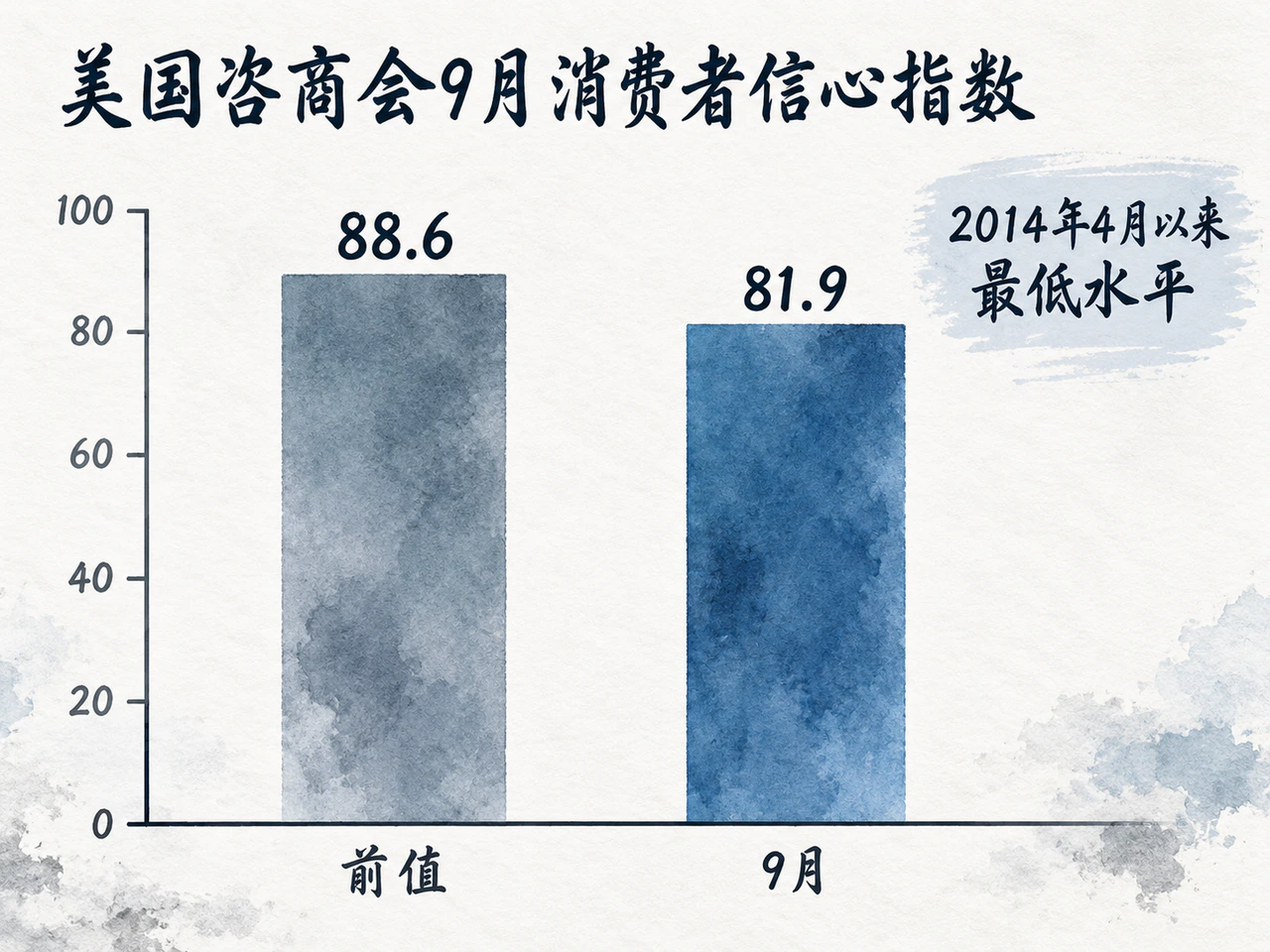
The Conference Board's September consumer-confidence index fell sharply from 88.6 to 81.9, below expectations of 89.2 and the lowest since April 2014. The gap between the shares saying jobs were plentiful and hard to get narrowed from 4.2 percentage points to 1.7, showing a cooler household assessment of employment conditions.
The Labor Department's August JOLTS release that day confirmed weaker labor demand. Job openings fell 256,000 to 7.079 million, below the 7.225 million consensus. Hiring edged up to 5.192 million and layoffs and discharges fell to 1.641 million. Recruiting momentum was weakening, but broad layoffs had not appeared.
On costs, the Conference Board survey's mean one-year inflation expectation rose from 5.8% to 6.1%. The Dallas Fed's Texas services revenue index fell from 6.6 into negative territory at -0.9, while input prices rose from 35.6 to 42.1. Regional services thus faced the dual constraint of localized revenue weakness and elevated costs.
KPMG economist Matthew Nestler said the ratio of job openings to unemployed people was approaching 1:1, narrowing employers' ability to absorb high-rate shocks by reducing vacancies. Markets were awaiting September payrolls on October 2 to establish the depth of labor cooling and how Fed expectations might evolve.
U.S. indexes move narrowly; memory and semiconductors lead while regulation and earnings separate individual stocks
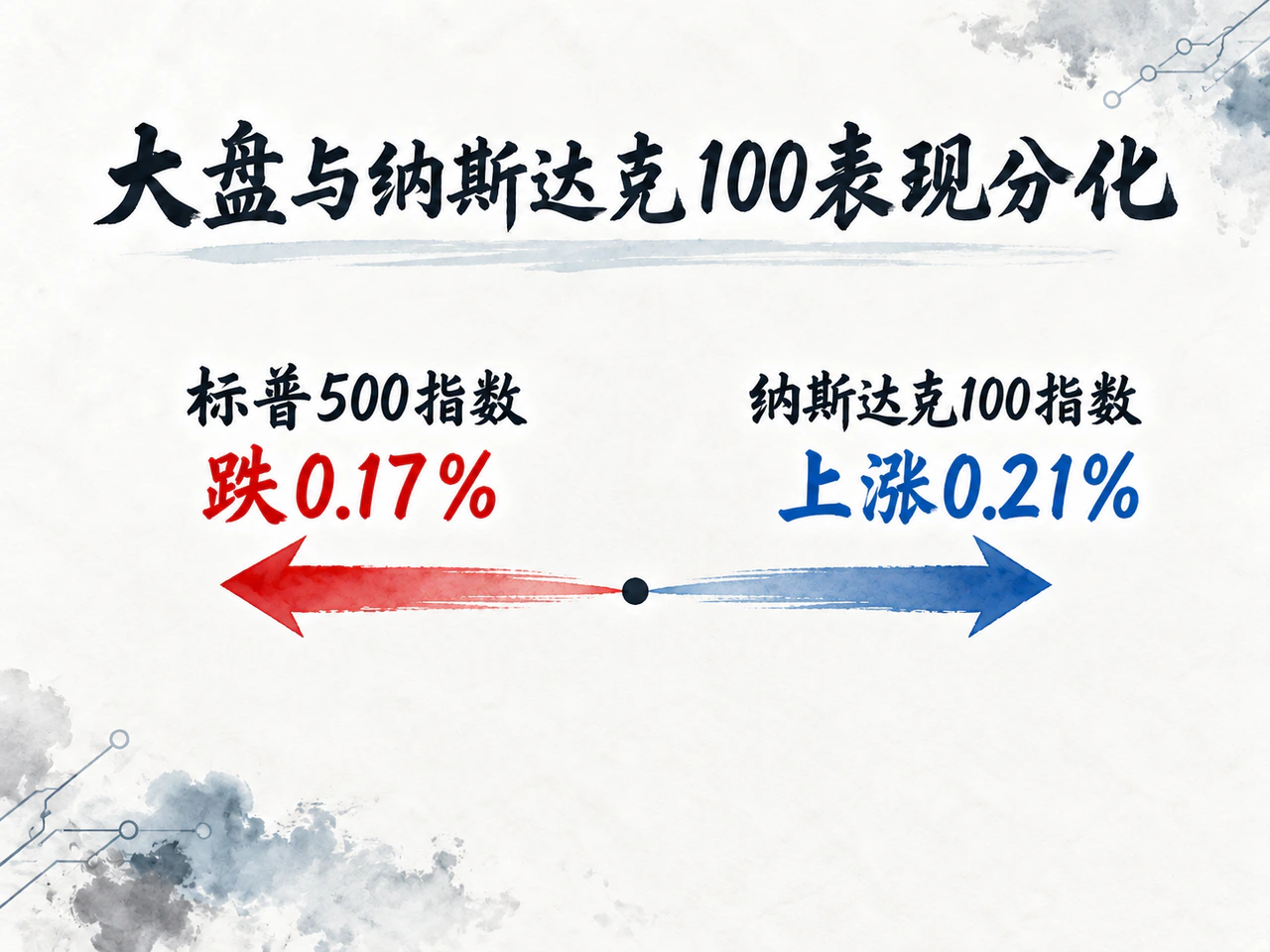
Major U.S. indexes closed mixed. The S&P 500 fell 0.17% to 7,670.84, the Dow 0.26% to 51,349.92 and the Russell 2000 0.35% to 2,807.92. The Nasdaq 100 rose 0.21% to 30,339.33 on large technology stocks, while the Nasdaq Composite edged lower. Overall volatility was stable: VIX slipped 0.03 points to 16.04, but decliners outnumbered advancers by 1.66:1 on the NYSE and 1.47:1 on Nasdaq.
Technology showed pronounced internal divergence. Memory-themed ETF DRAM rebounded about 3%, semiconductor ETF SOXX gained about 1% and Meta rose 3.3%, while Apple fell more than 2.5%.
Outside technology, earnings and regulatory change drove sharp differences. Carnival reported adjusted quarterly EPS of $1.43 and revenue of $8.44 billion, both above expectations. Management said 2027 bookings and prices were at record levels, helping the shares gain about 14%. Used-car retailer CarMax rose 4.7% on better earnings. Credit-scoring company Fair Isaac, by contrast, plunged 26.5% as the Federal Housing Finance Agency advanced a unified pricing framework for Fannie Mae and Freddie Mac and introduced competitor VantageScore. Investors feared a structural challenge to its monopoly pricing and fee model.
Restored Saudi pipeline to Yanbu and SPR tender expectations pressure oil; real rates constrain gold's rebound
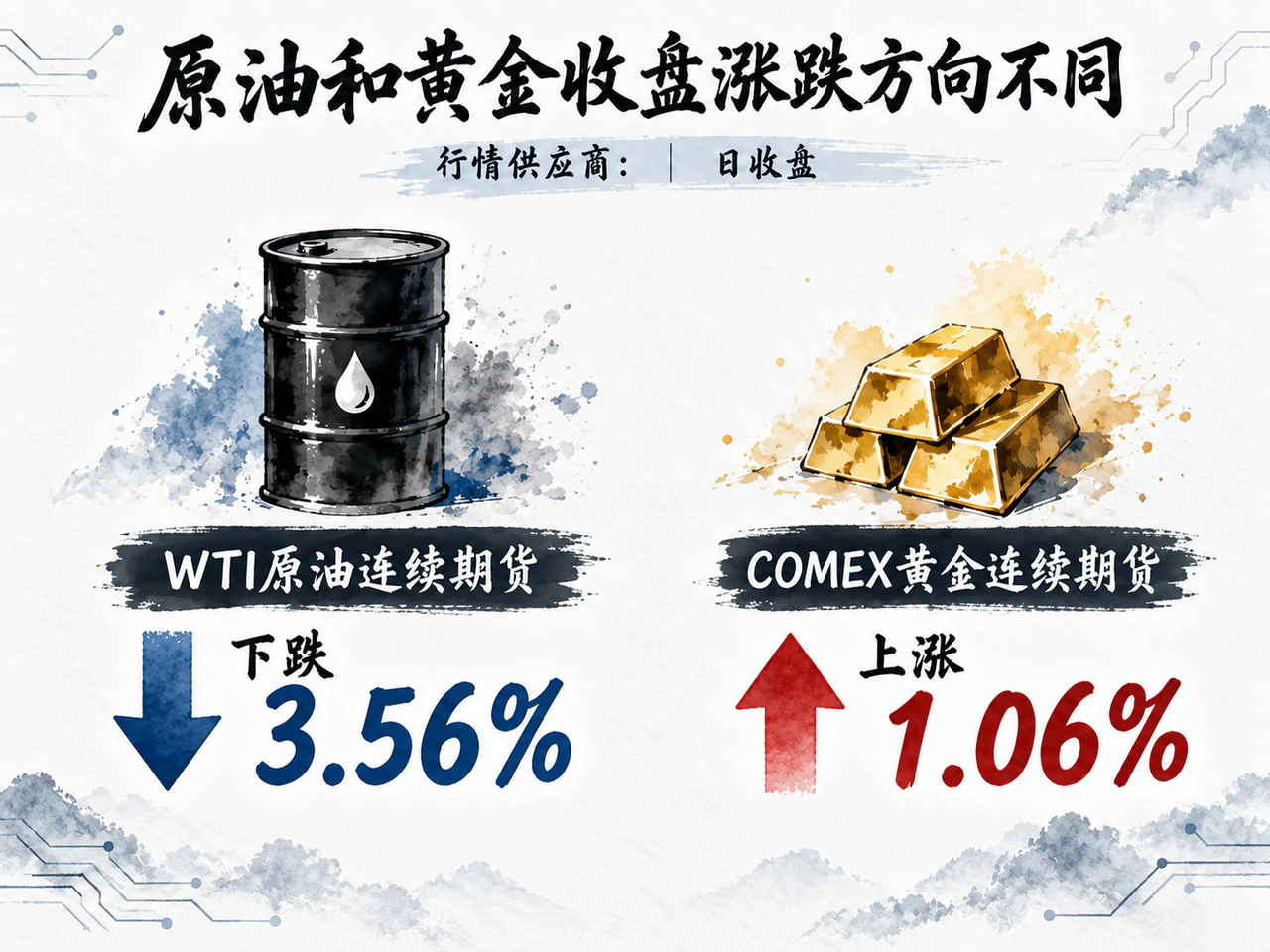
Crude fell sharply while gold rebounded moderately. Vendor continuous-futures daily closes showed WTI down 3.56% at $89.30 a barrel and COMEX gold up 1.06% at $4,212.70 an ounce.
Crude supply saw tangible relief. After Saudi Arabia's East-West pipeline restarted, tanker loading resumed at Yanbu on the Red Sea. This export route bypassing Hormuz eased immediate geopolitical disruption to crude shipments. On September 29, the U.S. Energy Department also announced a tender to lend up to 40 million barrels from the SPR, the final tranche of the plan approved in March. Bids were due October 6 and actual delivery had not begun, but expectations of more available spot supply were already weighing materially on prices.
COMEX continuous gold staged a corrective rebound, but macroeconomic conditions constrained the upside. The dollar index rose 0.17% to 101.377 that day and the ten-year real Treasury yield edged up to 2.91%. High real rates and a firm dollar continued to weigh on the valuation of non-interest-bearing assets.
U.S.-Canada import bans and pharmaceutical tariffs take effect, potentially reshaping multinational supply chains

External trade and regulatory restrictions advanced further. U.S. import bans on some Canadian alcoholic beverages, dairy products and motorcycles took effect on September 29. By directly blocking customs clearance, the measures could prompt restructuring of inventory allocation and logistics routes across affected supply chains and distribution channels.
U.S. pharmaceutical tariffs extended to a second group of covered companies that day. The baseline rate on patented drugs and ingredients was set at 100%, but actual rates depended on progress in U.S. factory investment and specific negotiated exemptions, potentially prompting differentiated localization adjustments. European multinationals' overseas asset risks also attracted attention: Russia placed the local assets of Nestlé, Metro and Auchan under temporary administration in September, creating long-term uncertainty over foreign entities' governance rights and returns from local subsidiaries.
China expands structural support and mortgage subsidies; markets focus on September PMI and Micron results

China strengthened countercyclical policy. On September 29, the PBOC lowered the one-year PSL rate 25 basis points to 1.50%. The relending quota for technological innovation and equipment upgrading increased RMB200 billion to RMB1.4 trillion, with the support ratio raised to 100%. Relending for agriculture and small firms increased RMB500 billion, including RMB300 billion more exclusively for private enterprises. These credit-quota adjustments still required subsequent transmission and implementation.
The finance ministry, PBOC and financial regulator jointly announced a fiscal interest subsidy for first-home commercial mortgages. For one year from October 1, 2026, qualifying newly issued first-home individual commercial housing loans would receive an annualized one-percentage-point subsidy for up to five years. Eligible principal was capped at RMB1 million per household and excluded refinancing of existing loans. Homes had to cost no more than RMB1.5 million and have floor area no larger than 120 square meters, targeting genuine demand for small and medium homes. The policy aimed to reduce household interest burdens and stimulate new credit demand.
Asia-Pacific markets mostly ended slightly lower on September 29: the Nikkei 225 fell 0.6%, Korea's Kospi 0.3% and the Hang Seng 0.5%. Reuters' midday report said the Hang Seng Tech Index had fallen as much as 1.4% intraday, while innovative-drug stocks rose 3.3% against the trend.
Global markets were closely focused on forthcoming economic and earnings tests. China's official September manufacturing PMI, expected at 50.1 versus 49.8 previously, would help assess the recovery in manufacturing conditions and internal momentum under the existing macroeconomic environment. Micron's approaching quarterly report and guidance, especially memory-price trends and capex expectations, would provide a central test for global semiconductor and AI-hardware supply chains.