As of 09:35 Beijing time on October 4, 2026, the main new developments concerned Yemen and spillovers into the Gulf interior. A fire broke out at Saudi Aramco's Riyadh refining facilities, with the Houthis claiming missile and drone attacks. Yemeni government forces struck important targets in Sanaa and Saada, while the Defense Ministry and General Staff initiated general mobilization. Senior U.S. officials discussed strategy behind closed doors at Camp David and maintained military pressure. Amid confrontation, the UAE released Iranian detainees and Iraq arranged to restore some Iran flights. Limited practical communication remained active, but had not altered the broader confrontation.
Energy-facility attacks become more closely linked to fighting in Yemen
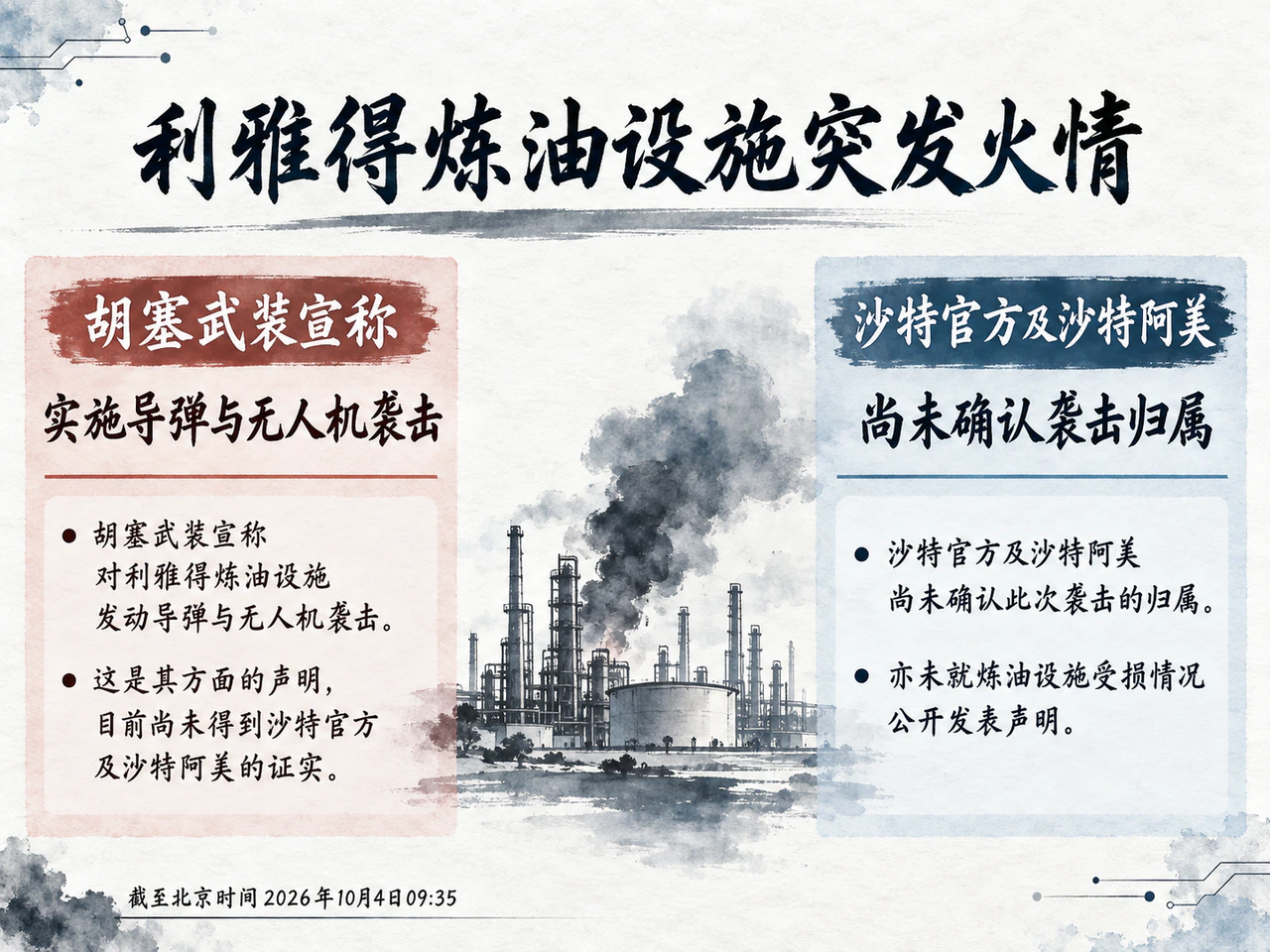
Thick smoke rose near Saudi Aramco's Riyadh facilities on October 3. AFP and Reuters reported ambulances and police vehicles at the scene as firefighters tackled the blaze. The Houthis subsequently said they had launched ballistic missiles and drones at the site in direct retaliation for Saudi airstrikes in Yemen. Saudi authorities and Aramco had not confirmed responsibility or publicly described facility damage.
Fighting escalated in Yemen in the early hours of October 4 local time. Reuters cited the internationally recognized government's armed forces as saying they were striking “important targets” in Sanaa and Saada. Witnesses in Sanaa saw aircraft fire missiles and heard explosions. Houthi media attributed the strikes to Saudi Arabia and reported 26 attacks on Sanaa. Yemen's Defense Ministry and General Staff announced full general and social mobilization, including recruitment and reserve deployment.
The exchanges showed deeper links between Gulf energy assets and Yemen's battlefield. The Houthis tied energy attacks to the war in Yemen as government forces began wartime mobilization, significantly increasing security risks to regional supply chains and energy infrastructure.
U.S. officials examine options at Camp David while maintaining military pressure
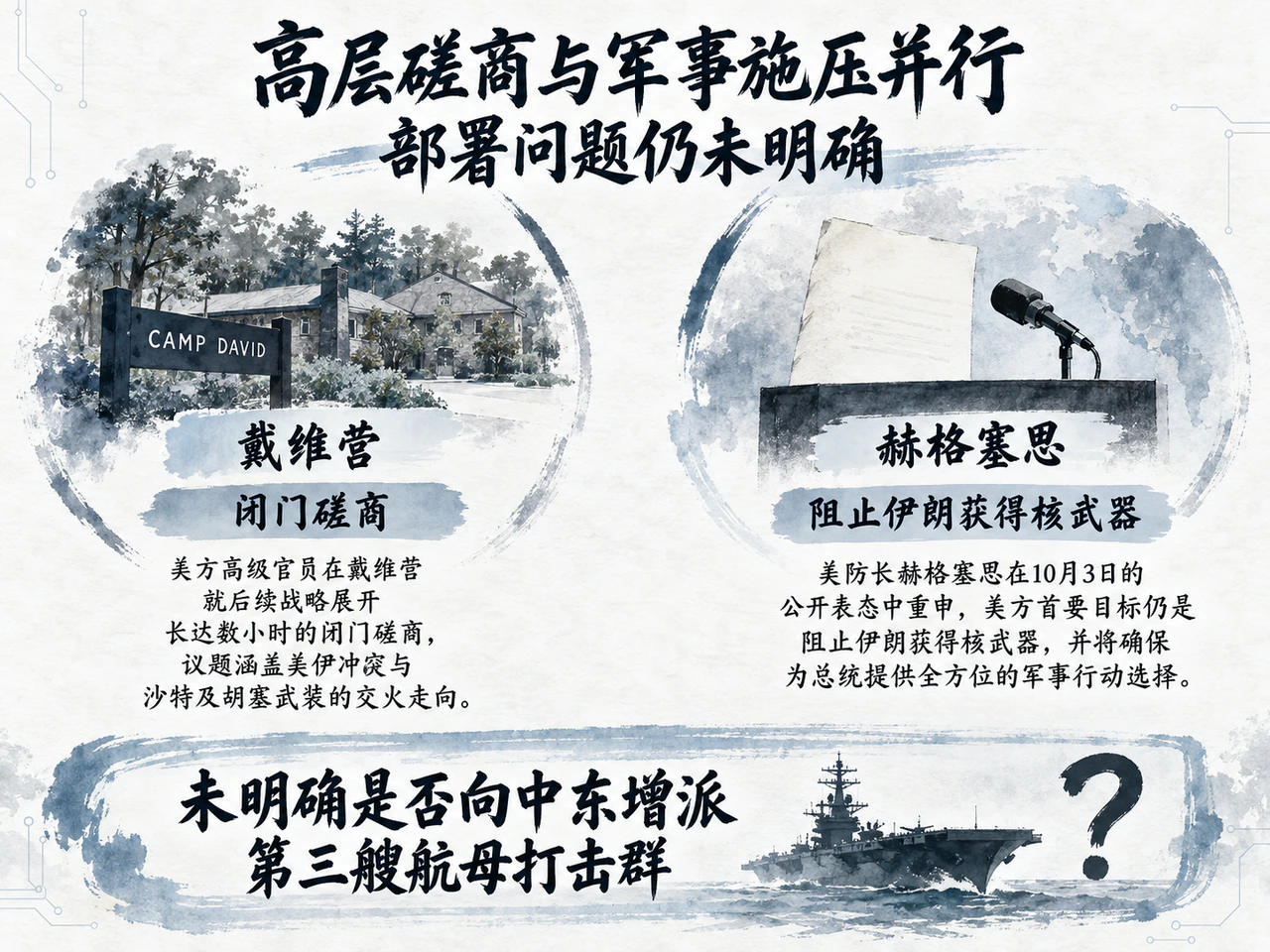
U.S. strategy and regional deployments remained confrontational. CBS on October 3 cited people familiar with the matter as saying Vice President Vance, Secretary of State Rubio, Defense Secretary Hegseth, envoy Witkoff and other core security officials had held hours of closed-door talks at Camp David the previous day, discussing the U.S.–Iran conflict and Saudi–Houthi fighting.
Hegseth reiterated publicly on October 3 that preventing Iran from obtaining nuclear weapons remained the primary objective and that the president would have a full range of military options. He did not clarify whether a third carrier strike group would be sent to the Middle East or provide an operational deadline. Washington also assessed that Iran was trying to rebuild damaged missile capabilities. The repeated statements showed military deterrence remained its main pressure tool.
Limited humanitarian and aviation contacts continue as Iran tightens domestic security
Despite intensifying confrontation, some diplomatic and travel channels remained open. The Times of India, citing Iranian state television, reported that negotiations by an Iranian diplomatic and security delegation had secured the release of citizens long detained in the UAE, including several women, with departure for Iran expected within hours.
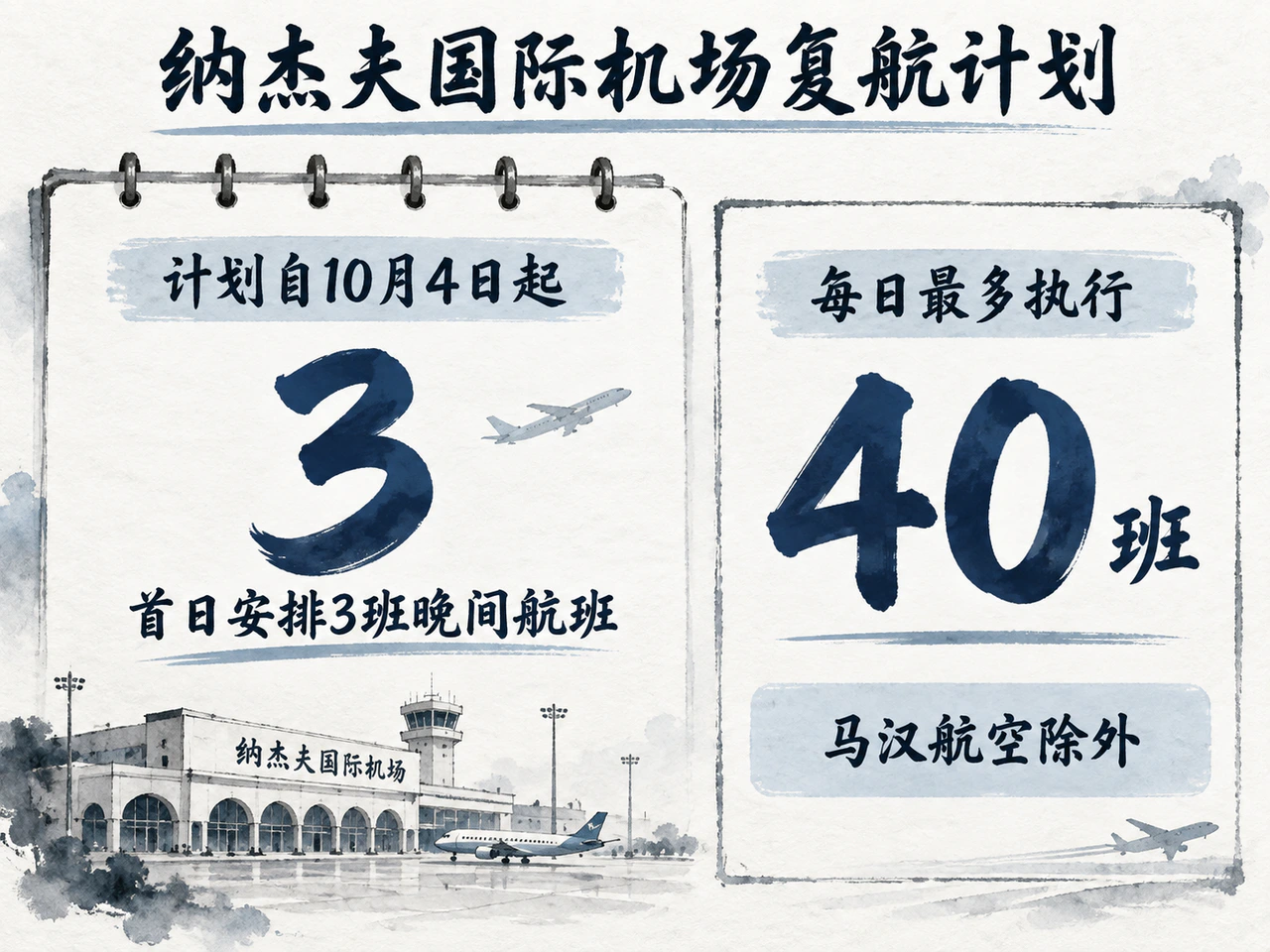
Civil aviation showed a partial thaw. The Iraqi News Agency reported that Najaf International Airport planned to gradually resume Iran commercial flights from October 4, with three evening flights on the first day. A previously announced U.S. waiver allowed relevant carriers, excluding Mahan Air, up to 40 flights a day to and from Najaf. If implemented, the schedule would partially reopen controlled passenger movement between Iraq and Iran.
Iran maintained heightened judicial and security controls. Its judiciary announced October 3 the execution of Siavash Jamshidi Kheyrabadi, accusing him of shooting at law enforcement during January protests. State television reported at least 31 arrests in Sirjan, Kerman province, alleging work for the United States and Israel and involvement in unrest. President Pezeshkian also said new mechanisms had been deployed against sanctions pressure. Domestic security tightening and limited external engagement formed another side of the situation.
Key developments
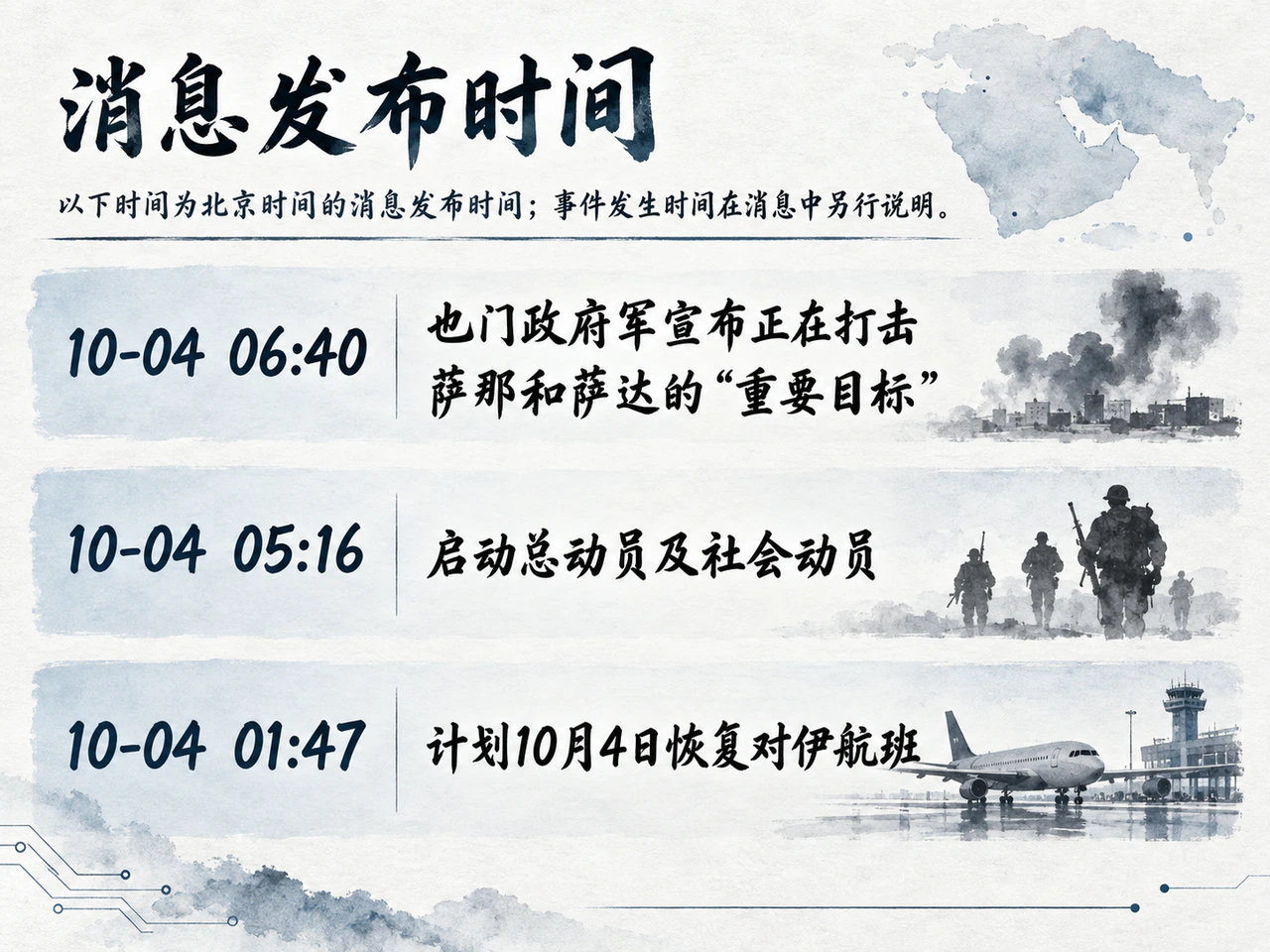
Times below are publication times in Beijing time; event times are specified separately in each report.
| Key developments |
|---|
Reuters reported that Yemeni government forces announced strikes on “important targets” in Sanaa and Saada. |
A fire broke out at Aramco's Riyadh refining facilities. The Houthis claimed ballistic-missile and drone attacks; Saudi authorities had not confirmed responsibility. |
Yemen's state news agency said the Defense Ministry and General Staff began general and social mobilization, arranging recruitment and reserves. |
Iranian President Pezeshkian said the government had adopted new arrangements against sanctions pressure. |
Iranian state television said negotiations by a diplomatic and security delegation secured the release of citizens detained in the UAE, expected home within hours. |
The Iraqi News Agency reported that Najaf airport planned to resume Iran services on October 4, starting with three evening flights. |
U.S. media reported that Vance and other senior officials spent hours at Camp David assessing the Iran war and Saudi–Houthi conflict. |
Iranian state television reported at least 31 arrests in Sirjan for allegedly working for the United States and Israel and fomenting unrest. |
British counterterrorism police said a 25-year-old British-Iranian man arrested over the RAF Fairford incident had been released on bail; the investigation continued. |
Iran's judiciary reported Jamshidi's execution, accusing him of shooting at police during January protests. |
IRGC spokesman Mohabbi urged Washington in an interview to accept Iranian conditions, taking a hard line. |


