During September 28–October 4, Middle Eastern developments combined a partial recovery in the core shipping route with continued conflict spillovers elsewhere. Shuttle mediation between the United States and Iran continued, but disagreements persisted over the order of reopening Hormuz, lifting the US blockade and beginning nuclear talks, with no substantive breakthrough. Washington meanwhile extended sanctions to Iranian overland transport and industry. Iran's exchange rate came under further pressure, Tehran reviewed retaliation plans for possible large-scale strikes, and US reinforcements remained en route. Although seven-day average crude flows through Hormuz had recovered close to the prewar benchmark, refined-product shipping remained heavily suppressed. Tanker attacks and renewed fighting in Yemen left the foundations of safe commercial passage fragile.
US and Iran dispute implementation of the 'seven-day plan,' with blockade relief and nuclear issues out of sequence
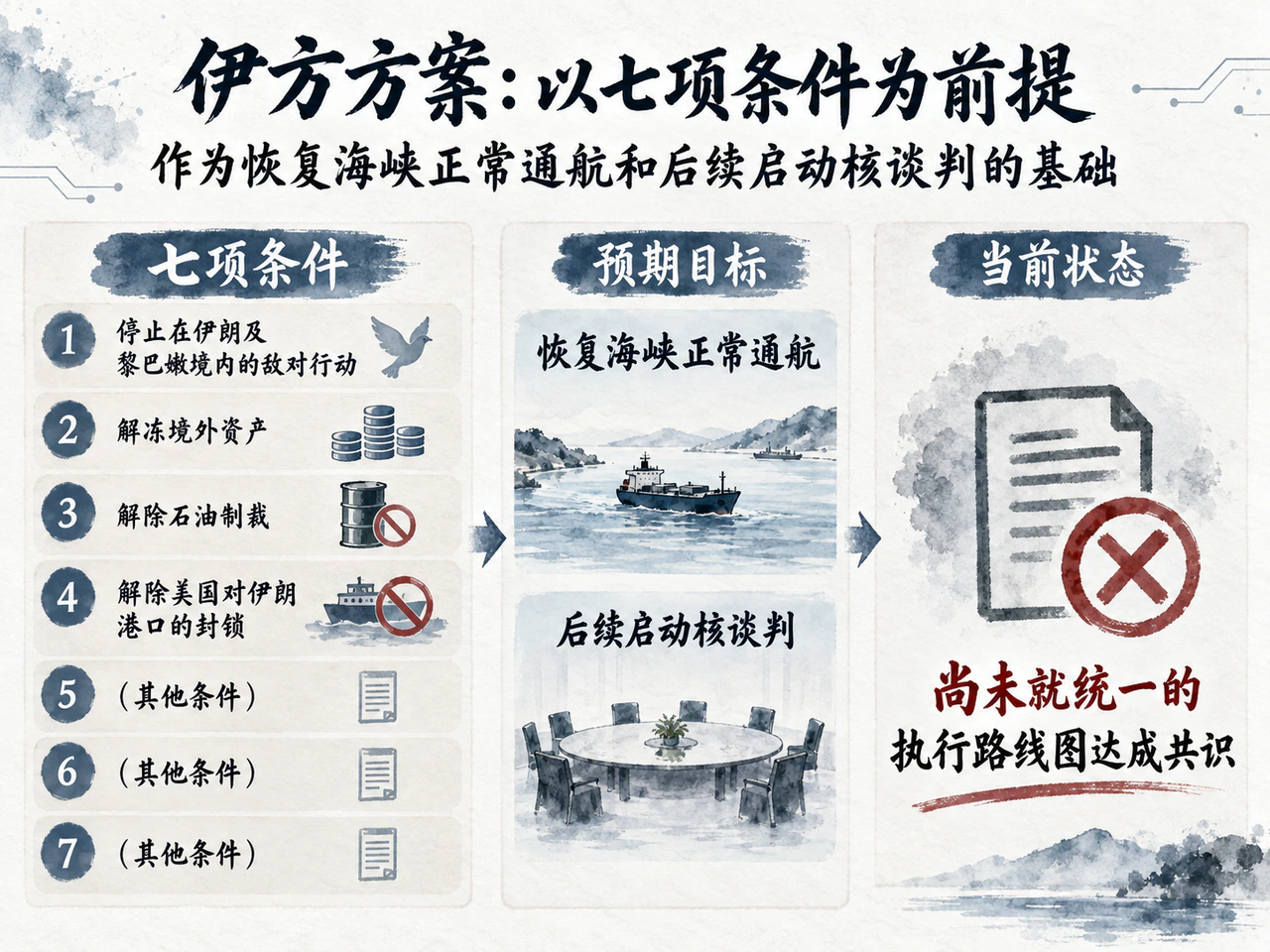
On September 28, US and Iranian officials separately consulted mediators. Iran proposed a plan with seven conditions, including an end to hostilities in Iran and Lebanon, unfreezing overseas assets, lifting oil sanctions and ending the US blockade of Iranian ports. Tehran treated these as prerequisites for normal passage through the strait and the later start of nuclear negotiations.
Qatar continued mediating and relaying messages. Reuters reported on September 30 that Iranian Foreign Minister Araghchi received US feedback in Doha on September 29. A non-Iranian official familiar with the talks said the main disagreement concerned the sequence of implementing measures rather than the issues covered by the framework. Public positions nevertheless remained opposed: Trump denied promising Iran sanctions relief or the release of frozen funds.
On October 4, Iranian parliamentary speaker Qalibaf reiterated that Hormuz would not reopen until the seven conditions were met. Foreign Ministry spokesperson Baghaei said that day that talks still focused on strait security. He denied that Iran had proposed accepting International Atomic Energy Agency inspections in return for US sanctions relief and explicitly said nuclear issues had not yet been discussed.
Iran continued insisting on economic relief from the blockade and security guarantees first, while Washington remained focused on the nuclear issue. Mediation contacts preserved a window for further bargaining, but public information showed no agreed unified implementation roadmap.
US sanctions expand to railways and auto parts as Iran's currency weakens and both militaries increase readiness
Economic restrictions and military deployments advanced alongside diplomatic deadlock. On October 1, the US Treasury extended sanctions to Iran's automotive and railway sectors and related supply chains, listing companies including Iran Khodro, SAIPA and the state railway company. Treasury said restricted sea access had made Iran increasingly reliant on rail and other overland routes to move oil and sustain regional trade. The measures directly targeted land logistics and industrial revenue.
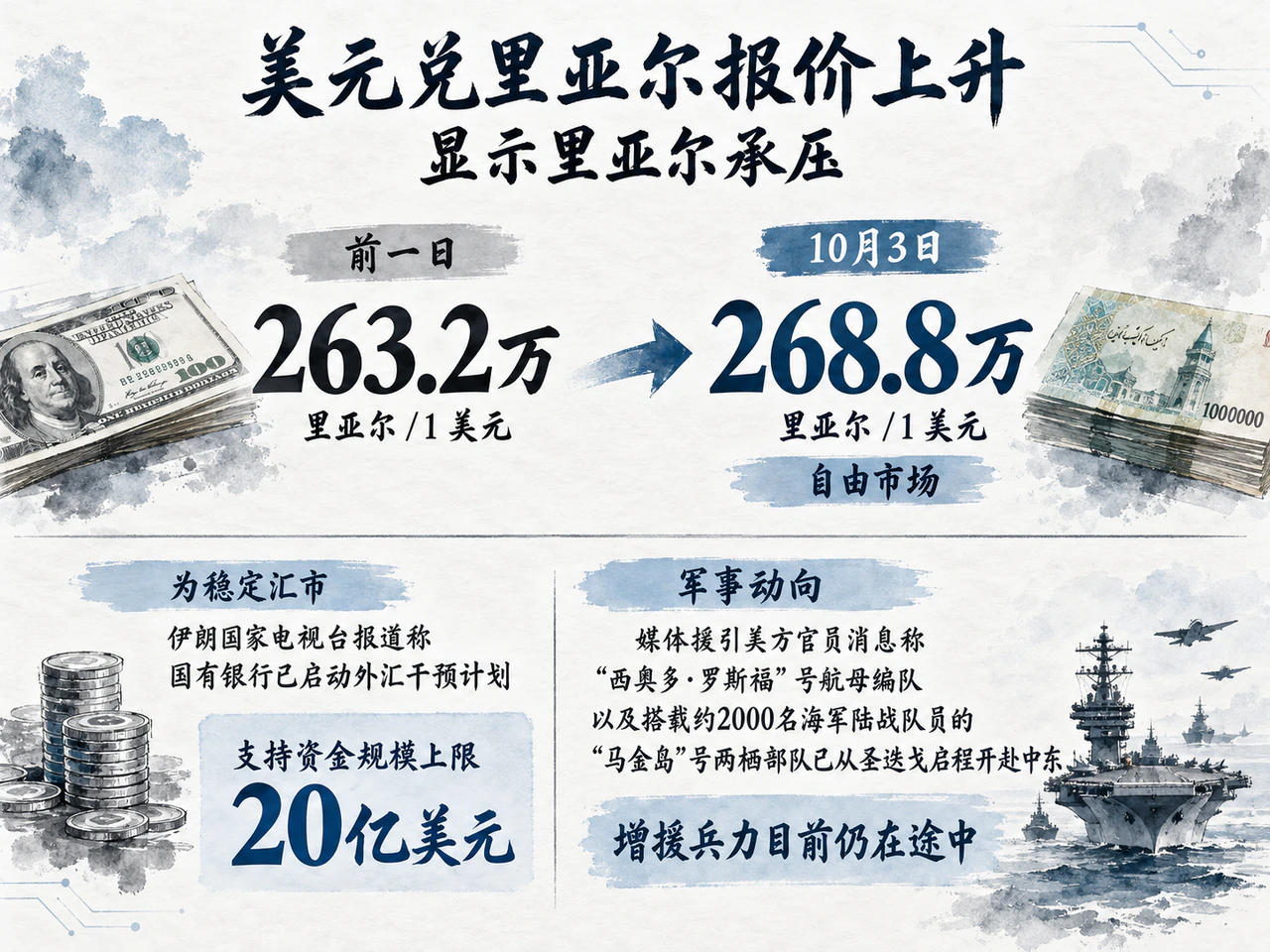
External restrictions intensified domestic currency volatility. Reuters reported that the free-market dollar quote rose to around 2.688 million rials on October 3, from 2.632 million the previous day; another quotation website showed 2.695 million. Iranian state television said state-owned banks had begun foreign-exchange intervention with support funding capped at $2 billion.
Both militaries raised readiness. Media citing US officials reported that the Theodore Roosevelt carrier group and the Makin Island amphibious force, carrying around 2,000 Marines, had departed San Diego for the Middle East and were still en route. Reuters reported on October 1, citing senior Iranian officials and other informed sources, that Iran was evaluating broader retaliation options if large-scale US strikes resumed, including a wider potential target set. The retaliation plans had not been finalized.
Hormuz crude flows recover to 13.5 million barrels/day, while products remain blocked and fighting spreads in Yemen
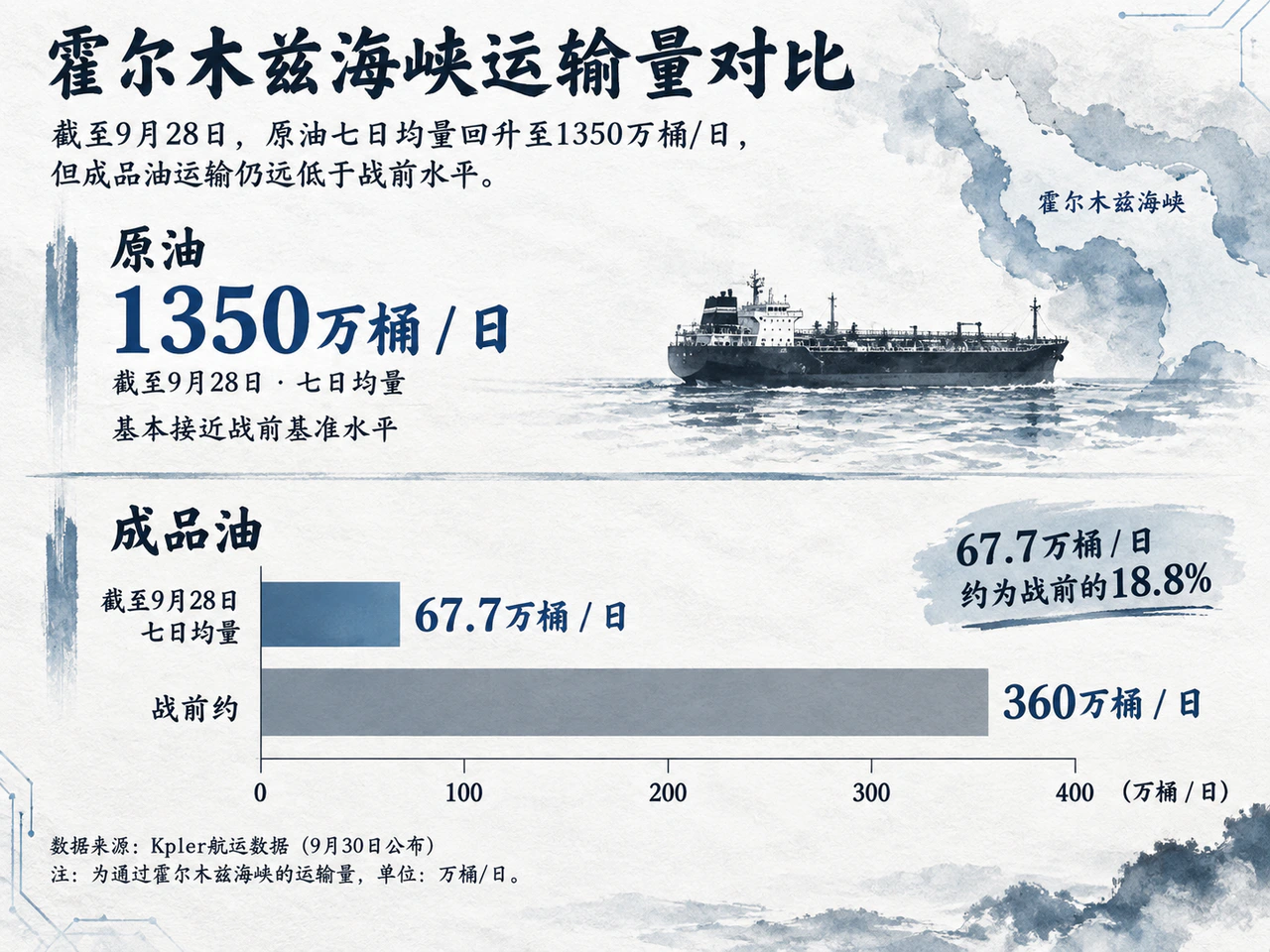
Despite continuing diplomatic and security threats to passage, energy logistics showed an asymmetric recovery. Kpler shipping data released September 30 showed seven-day average crude transport through Hormuz at approximately 13.5 million barrels/day as of September 28, close to the prewar benchmark. Refined-product flows averaged only around 677,000 barrels/day, far below roughly 3.6 million before the war. The recovery was therefore concentrated in crude, while seaborne product shipments remained severely constrained.
The partial crude recovery relied heavily on military escorts, specific transshipment arrangements and alternative routes; the underlying risks had not disappeared. UK Maritime Trade Operations reported over the weekend that tankers near Oman and inside Hormuz had been hit by unidentified projectiles, damaging one vessel's engine room. The notices did not identify the attackers or the exact event times.
Conflict spillovers spread further into the Red Sea and onshore energy infrastructure. On October 3, Yemen's Houthis claimed missile and drone attacks on Saudi Aramco facilities in Riyadh. Reuters witnesses saw heavy smoke and flames nearby, but Saudi authorities had not confirmed the attack at the time, and neither damage nor supply effects were disclosed. On October 4, Yemeni Presidential Leadership Council chairman al-Alimi announced operations to retake Houthi-controlled areas, with the Saudi-led coalition pledging combat support.
Spreading conflict and the continuing blockade directly worsened Yemen's humanitarian situation. On October 2, the World Food Programme said 74% of households in accessible government-controlled areas could not meet basic food needs. It sought to expand assistance to as many as 1.5 million people but faced a $109 million funding gap and had already been forced to use supplies originally intended for November distribution.
Across September 28–October 4, crude flows through Hormuz recovered to the prewar norm of 13.5 million barrels/day, weakening expectations of a completely closed route. Yet deeply constrained product shipments, attacks in the Gulf of Oman and escalating war in Yemen showed passage still depended heavily on outside military protection and lacked self-sustaining commercial stability. Fundamental US–Iran disagreements over the sequence of delivering measures remained the main obstacle to demilitarized, normal commercial passage.
Key developments
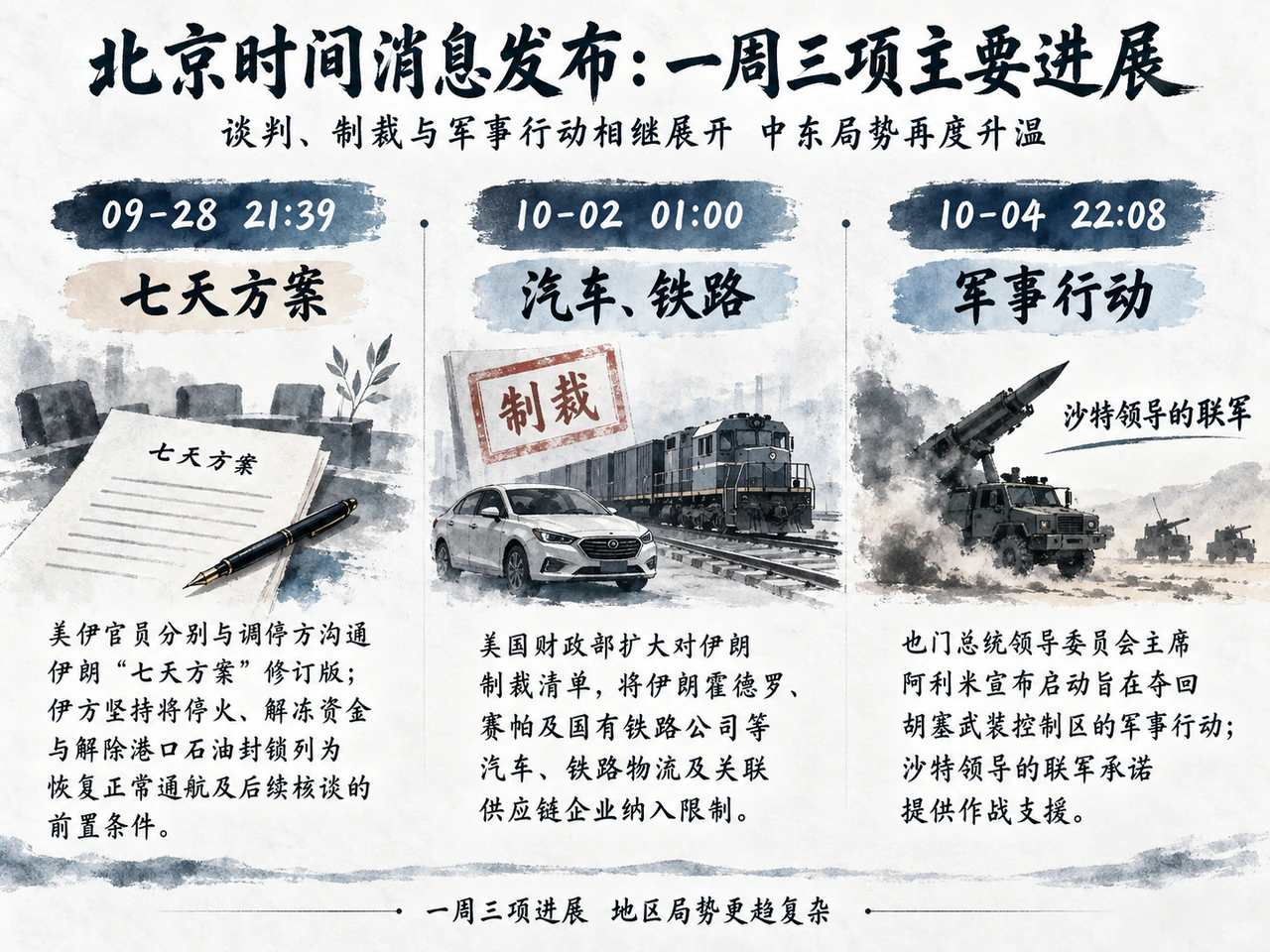
The times below are Beijing reporting times; event dates are separately specified within each entry.
| Key developments |
|---|
| 10-04 22:08Yemeni Presidential Leadership Council chairman al-Alimi announced military operations to recapture Houthi-controlled areas. The Saudi-led coalition pledged combat support. |
| 10-04 20:02UK Maritime Trade Operations reported tanker strikes by unidentified projectiles near Oman and in Hormuz over the weekend, with one engine room damaged. The notices did not identify the attackers or exact event times. |
| 10-04 15:59Iranian parliamentary speaker Qalibaf reiterated that the strait would not reopen until seven conditions were met. The Foreign Ministry spokesperson denied proposing inspections in exchange for sanctions relief and stressed that talks still centered on strait security. |
| 10-04 03:42Reuters reported that Iran's free-market dollar quote reached around 2.688 million rials on October 3, versus 2.632 million the previous day. State television said state banks had launched foreign-exchange support capped at $2 billion. |
| 10-03 19:48The Houthis claimed an attack on Saudi Aramco's Riyadh facilities; Reuters witnesses saw heavy smoke and flames nearby. Saudi authorities had not confirmed the attack, and damage and supply effects remained undisclosed. |
| 10-03 00:06WFP said 74% of households in government-controlled areas it could access in Yemen could not meet basic food needs. Expanding aid to up to 1.5 million people faced a $109 million funding gap, and some relief supplies had already been brought forward. |
| 10-02 14:51Media citing US officials said the Theodore Roosevelt carrier strike group and Makin Island amphibious ready group had departed San Diego for the Middle East. Reinforcements remained en route. |
| 10-02 01:00US Treasury expanded Iran sanctions to Iran Khodro, SAIPA, the state railway company and other automotive, rail-logistics and related supply-chain businesses. |
| 10-01 19:16Reuters, citing Iranian officials and other sources, reported that Iran was evaluating broader retaliation options if large-scale US strikes resumed. The plans were not finalized. |
| 10-01 01:59Financial media cited Kpler data showing Hormuz average daily crude flows of around 13.5 million barrels as of September 28, near the prewar benchmark, versus product flows of only around 677,000 barrels compared with approximately 3.6 million before the war. |
| 09-30 15:27Reuters reported that Araghchi received US feedback in Doha on September 29. An informed official said the central obstacle in the 'seven-day plan' was the order of implementing measures. |
| 09-29 14:45Qatar said it continued shuttling messages between the United States and Iran in search of agreement. Trump denied offering sanctions relief or frozen funds in return for Iranian nuclear concessions. |
| 09-28 21:39US and Iranian officials separately discussed a revised Iranian 'seven-day plan' with mediators. Tehran insisted that a ceasefire, unfreezing funds and ending the port and oil blockade precede normal passage and subsequent nuclear talks. |


