By the morning of October 7 Beijing time, Middle East tensions centered on pressured energy chokepoints and delayed diplomatic progress. Injuries in a Hormuz merchant-ship attack combined with fighting along Yemen's Red Sea coast; Saudi Arabia confirmed damage to southern airports, and threats reached U.S. bases in Europe. Shell said Middle Eastern oil flows had recovered above 80% of prewar levels, but physical navigation risk had not disappeared with higher flows. The U.S. and Iran continued indirect talks through Qatar and other partners, maintaining contact under military pressure.
Risks across two straits: Ship attack injures 12; coastal fighting delays security certainty
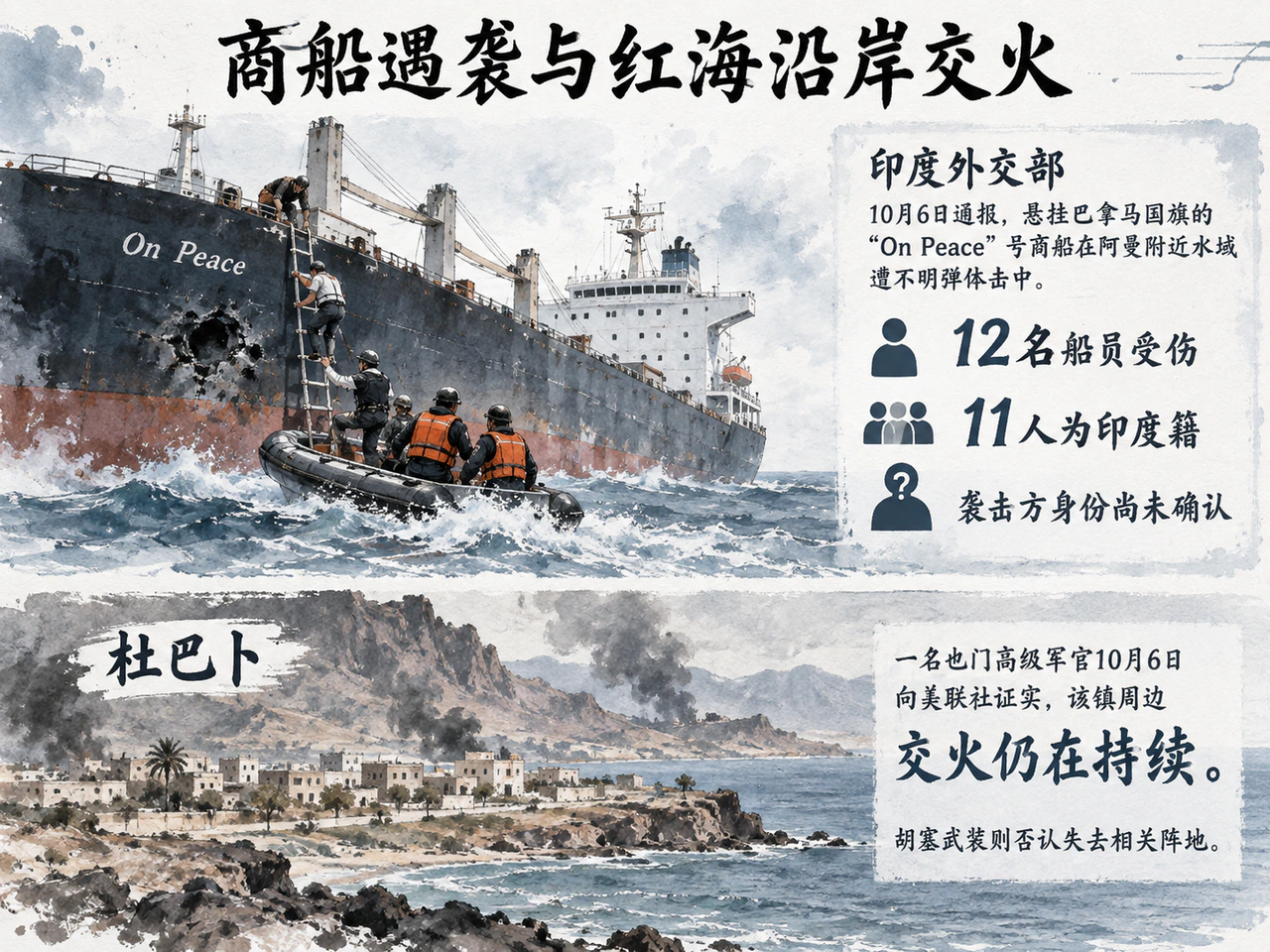
Hormuz navigation risk produced actual injuries. India's foreign ministry confirmed October 6 that the Panama-flagged On Peace was hit by an unidentified projectile near Oman, injuring 12 crew, including 11 Indians. Oman assisted emergency rescue, with its air force evacuating casualties to Khasab for treatment. The attacker had not been identified.
At the Red Sea's southern Bab el-Mandeb chokepoint, fighting likewise remained contested. Yemen's government had announced the recapture of strategic Dhubab, but a senior Yemeni officer told AP on October 6 that clashes continued around the town; the Houthis denied losing the positions. Conflicting accounts show control of the coastal chokepoint was unsettled, making reliable near-term shipping-security expectations difficult to base on one side's statements.
Rear-area targets and European bases face pressure: Two Saudi airports damaged; U.S. withdraws aircraft as precaution
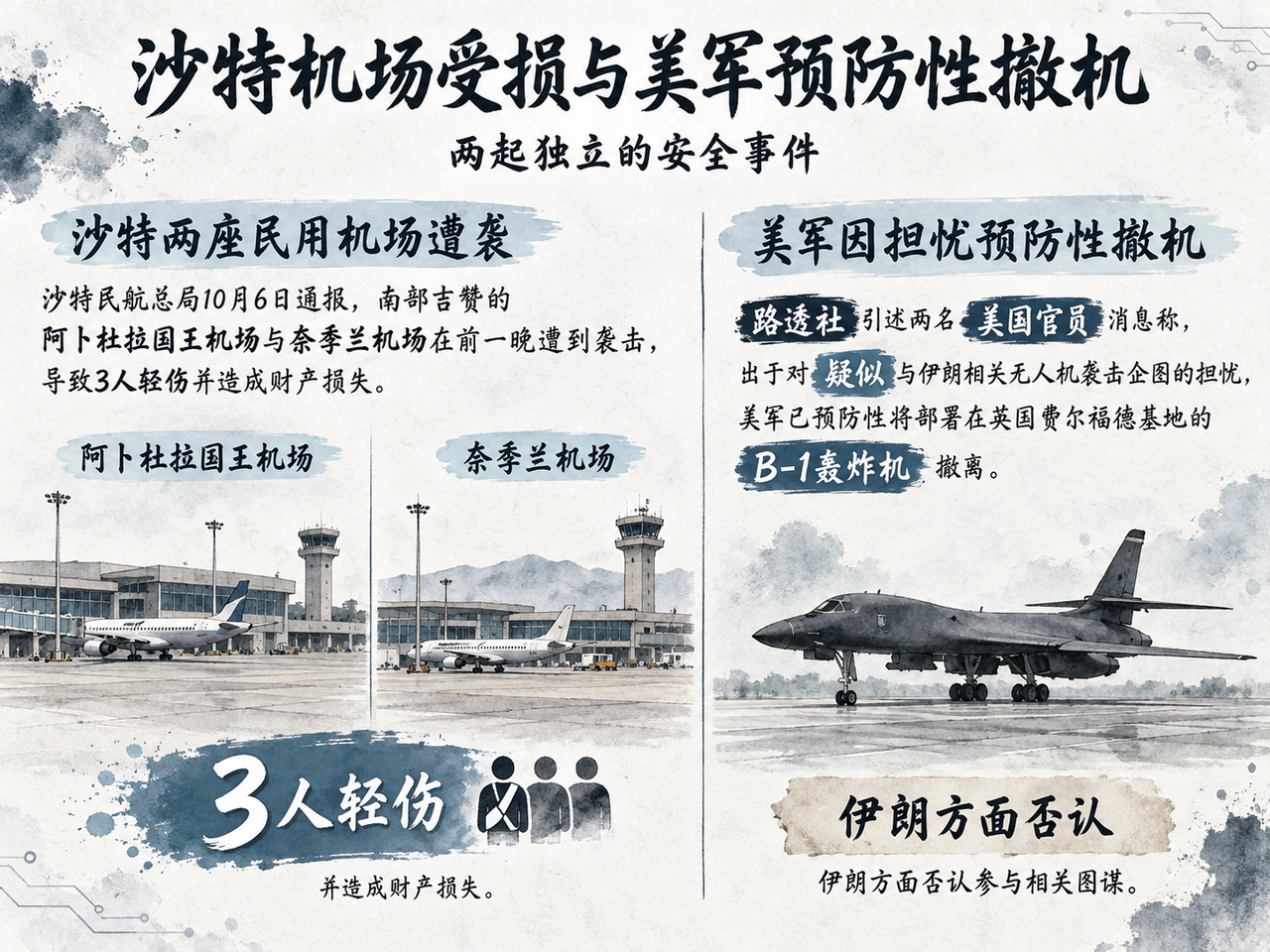
Security risks spread to rear areas and defense hubs. Saudi Arabia's civil aviation authority said October 6 that King Abdullah Airport in Jizan and Najran Airport had been attacked the previous night, causing three minor injuries and property damage. The Saudi-led coalition claimed it intercepted and destroyed a Houthi ballistic missile heading toward Khamis Mushait. Other targets claimed by the Houthis were not confirmed by Saudi officials.
Threats also reached Europe. Reuters cited two U.S. officials as saying the military had precautionarily withdrawn B-1 bombers from RAF Fairford in Britain over a suspected Iran-linked drone-attack plot. British police arrested a 22-year-old man in London as investigations continued. Iran denied involvement, and U.S. European Command declined comment on specific intelligence or protective deployments.
Friction also continued along southern Lebanon's border. Local media reported October 6 that an explosive device in Shoukin near Nabatieh injured one civilian, with local sources attributing it to Israel. Israeli ground vehicles briefly entered the outskirts of Kfar Shouba before withdrawing, keeping border tensions high.
Supply recovery does not eliminate risk premiums: Oil flows above 80%; chokepoint contest shapes marginal moves
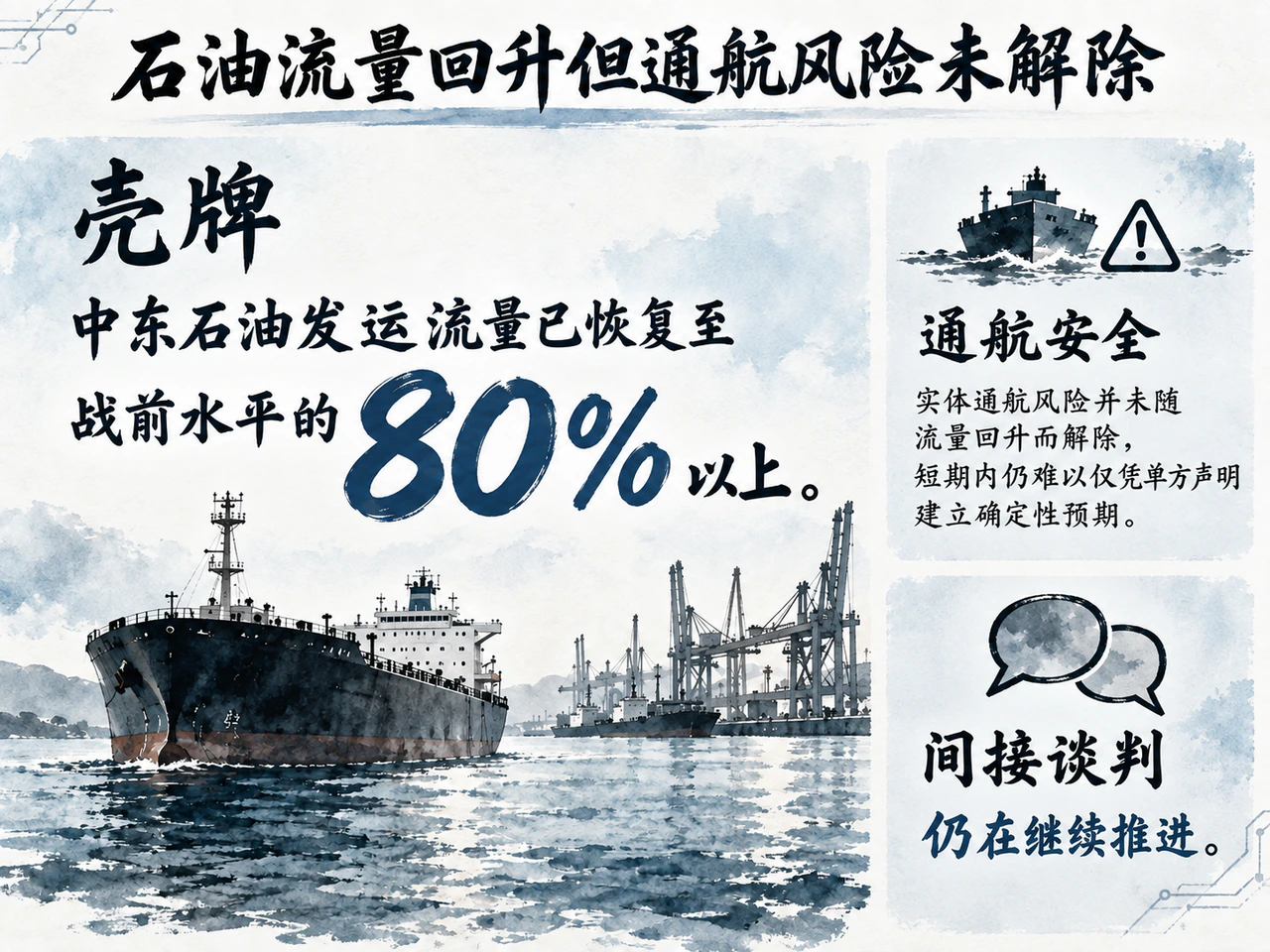
Physical supply disruption was uneven. Shell CEO Wael Sawan told London's Energy Intelligence Forum on October 6 that Middle Eastern oil shipments had recovered above 80% of prewar levels. This indicates considerable supply-chain resilience, but does not mean normal navigation security or transport costs. The On Peace attack and fighting near Bab el-Mandeb show individual vessels still face high security premiums.
Hardline public positions coexisted with behind-the-scenes contact. Iran's Supreme National Security Council secretary Mohsen Rezaei reiterated October 6 that external threats and pressure could not force Iran to open Hormuz. Qatar foreign ministry official Ibrahim al-Hashimi nevertheless confirmed that indirect U.S.-Iran talks and communication through regional partners were continuing.
The central issue is the race between maintaining physical transport and delivering diplomacy. With fighting around Bab el-Mandeb and attack risks in Hormuz, alternative routes offer limited room. Meaningful risk reduction still depends on indirect talks producing practically binding navigation arrangements.
Key developments
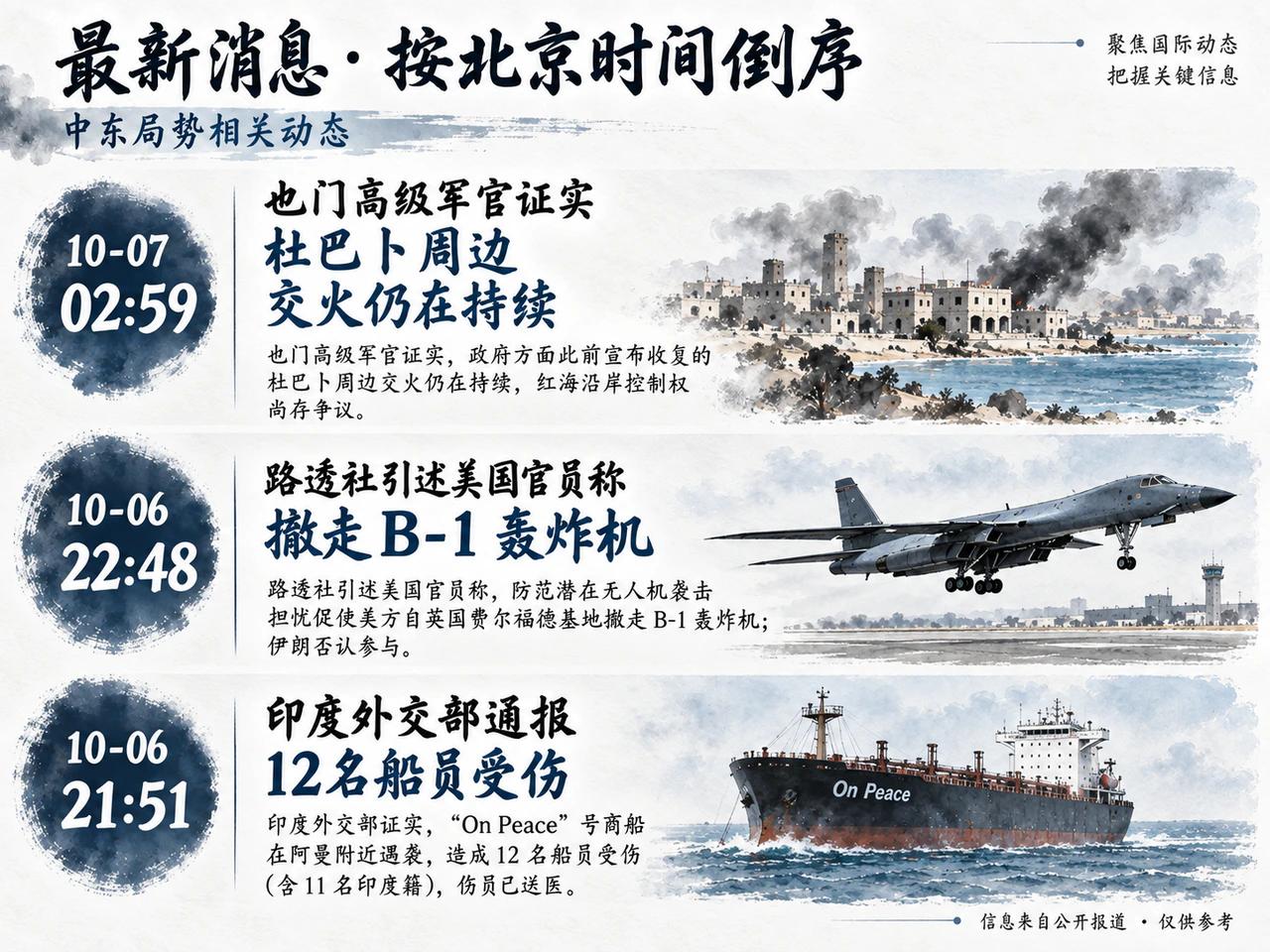
Items are in reverse order of publication or update; all times are Beijing time.
| Key developments |
|---|
| October 7, 02:59 Beijing timeA senior Yemeni officer confirmed continued fighting around Dhubab, which the government had announced recapturing; Red Sea coastal control remained disputed. |
| October 7, 02:27 Beijing timeThe Saudi-led coalition claimed interception and destruction of a Houthi ballistic missile heading toward Khamis Mushait. |
| October 7, 02:00 Beijing timeU.S. Central Command denied reports that a U.S. MH-60R helicopter crashed in the Red Sea. |
| October 6, 22:48 Beijing timeReuters cited U.S. officials saying drone-attack concerns prompted withdrawal of B-1 bombers from RAF Fairford; Iran denied involvement. |
| October 6, 22:05 Beijing timeLebanese media reported an explosion in Shoukin, Nabatieh, injured one civilian; Israeli vehicles entered the outskirts of Kfar Shouba and withdrew. |
| October 6, 22:02 Beijing timeIranian security official Rezaei reiterated that threats and pressure would not force Hormuz open, rejecting U.S. pressure. |
| October 6, 21:51 Beijing timeIndia's foreign ministry said On Peace was attacked near Oman, injuring 12 crew, including 11 Indians; the injured were taken to hospital. |
| October 6, 20:04 Beijing timeA Qatari foreign ministry official confirmed indirect U.S.-Iran talks and communication through regional partners continued normally. |
| October 6, 19:23 Beijing timeSaudi civil aviation authorities said King Abdullah Airport in Jizan and Najran Airport were damaged in attacks the previous night, causing three minor injuries. |
| October 6, 18:56 Beijing timeShell CEO Sawan said Middle East oil shipments had recovered above 80% of prewar levels, with shipping risks still present. |


