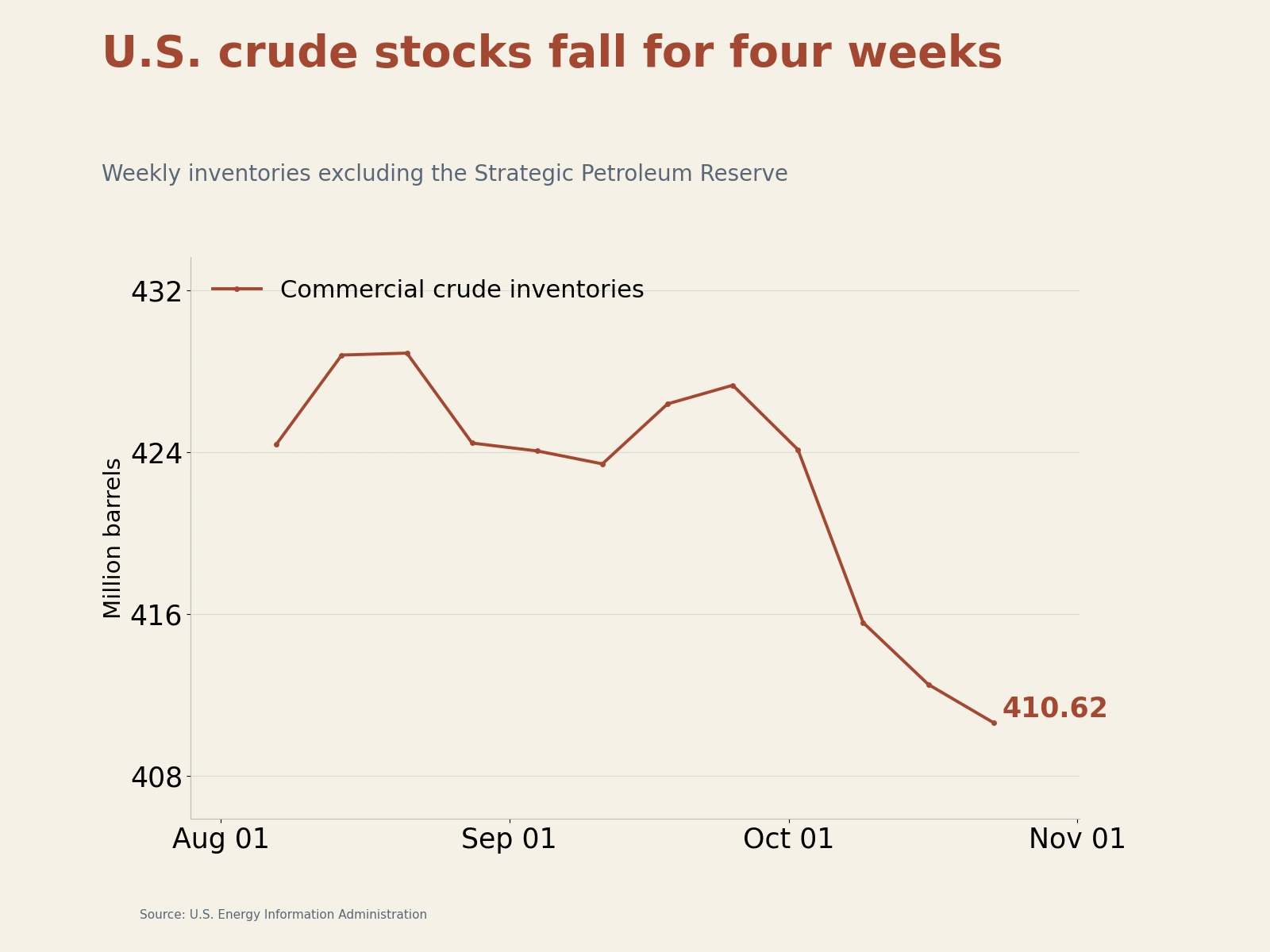
By the morning of October 7, Beijing time, the central issue in crude pricing was that marginally improving physical Middle Eastern supply had not materially relieved spot tightness, because inventories continued to drain and logistical delivery costs remained high.
Yahoo's continuous-contract vendor daily closes for October 6 put WTI at $89.87 a barrel, up $0.44, or 0.49%, from the previous session, and Brent at $101.04, up $0.72, or 0.72%. These are continuous-contract prices, rather than exchange settlement prices for a specified delivery month.
The day's more consequential development was a shift in the U.S. Energy Information Administration's official forecast. Its October Short-Term Energy Outlook raised the fourth-quarter 2026 Brent spot average to $105 a barrel, a substantial $14 increase from September's forecast. Gradually recovering exports alongside a higher benchmark forecast indicate that prices are being determined by the effective speed and reliability of delivery to refineries, and high transshipment costs, rather than loading volumes at origin ports alone.
Some shut-in output returns, but global inventories keep falling and extreme freight rates squeeze buyers
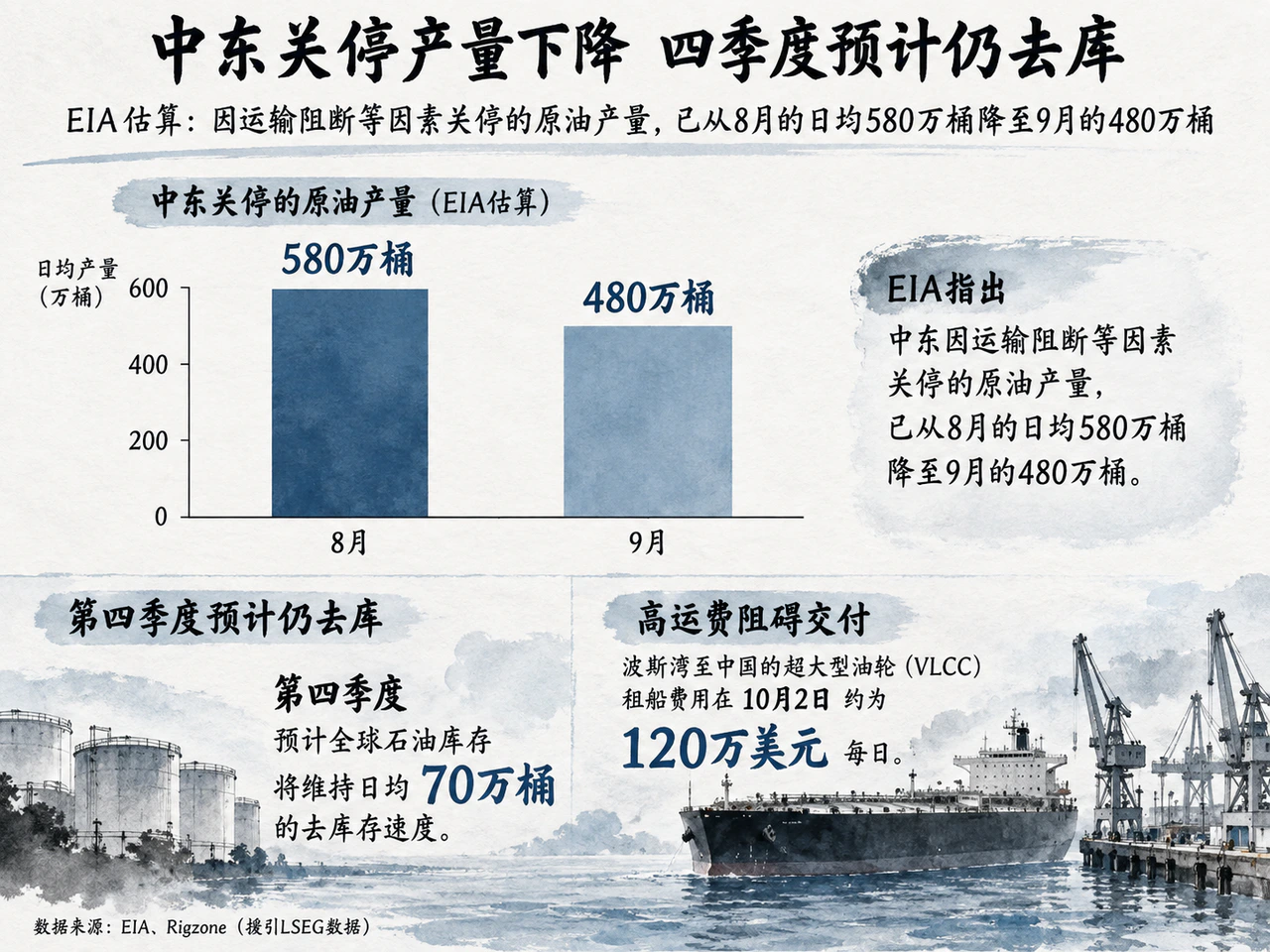
Supply showed marginal repair. The EIA estimated that Middle Eastern crude shut-ins caused by transport disruption and other factors fell from 5.8 million barrels a day in August to 4.8 million in September. Saudi Arabia's East-West pipeline resumed partial operations on September 22 after repairs. Along with alternatives such as ship-to-ship transfers, this began returning stranded crude to international trade. The recovery was not yet sufficient to reverse the underlying decline in global crude inventories.
The inventory buffer continued to shrink. EIA figures showed global oil stocks falling an average 1.9 million barrels a day in the third quarter, with a projected draw of 700,000 barrels a day in the fourth. The slower draw indicates a narrowing supply-demand gap, but continued depletion means the deficit has not reversed. With the safety cushion thinning, sudden navigation bottlenecks or facility disruptions retain exceptionally high price sensitivity.
Upstream production policy supplied no additional increment. On October 4, seven OPEC+ participants including Saudi Arabia and Russia decided to keep November quotas at the levels set in September. Unchanged official quotas and improved logistics are separate issues. Whether producers can deliver previously constrained output to end refineries depends on capacity in maritime corridors and land-based pipelines.
Logistics premiums sharply increased landed costs. PVM analysis published by Rigzone, citing LSEG data, put charter costs for very large crude carriers from the Gulf to China at about $1.2 million a day on October 2, against roughly $80,000 a year earlier. PVM said cushioning buyers against these exceptional freight costs was a central reason for Saudi Arabia's reduction in November official selling prices to Asia. Freight absorbed the seller's concession in the official free-on-board price; this did not mean refiners' overall landed procurement costs fell by an equivalent amount.
Backwardation is elevated on a monthly basis; low diesel inventories reinforce refinery feedstock demand
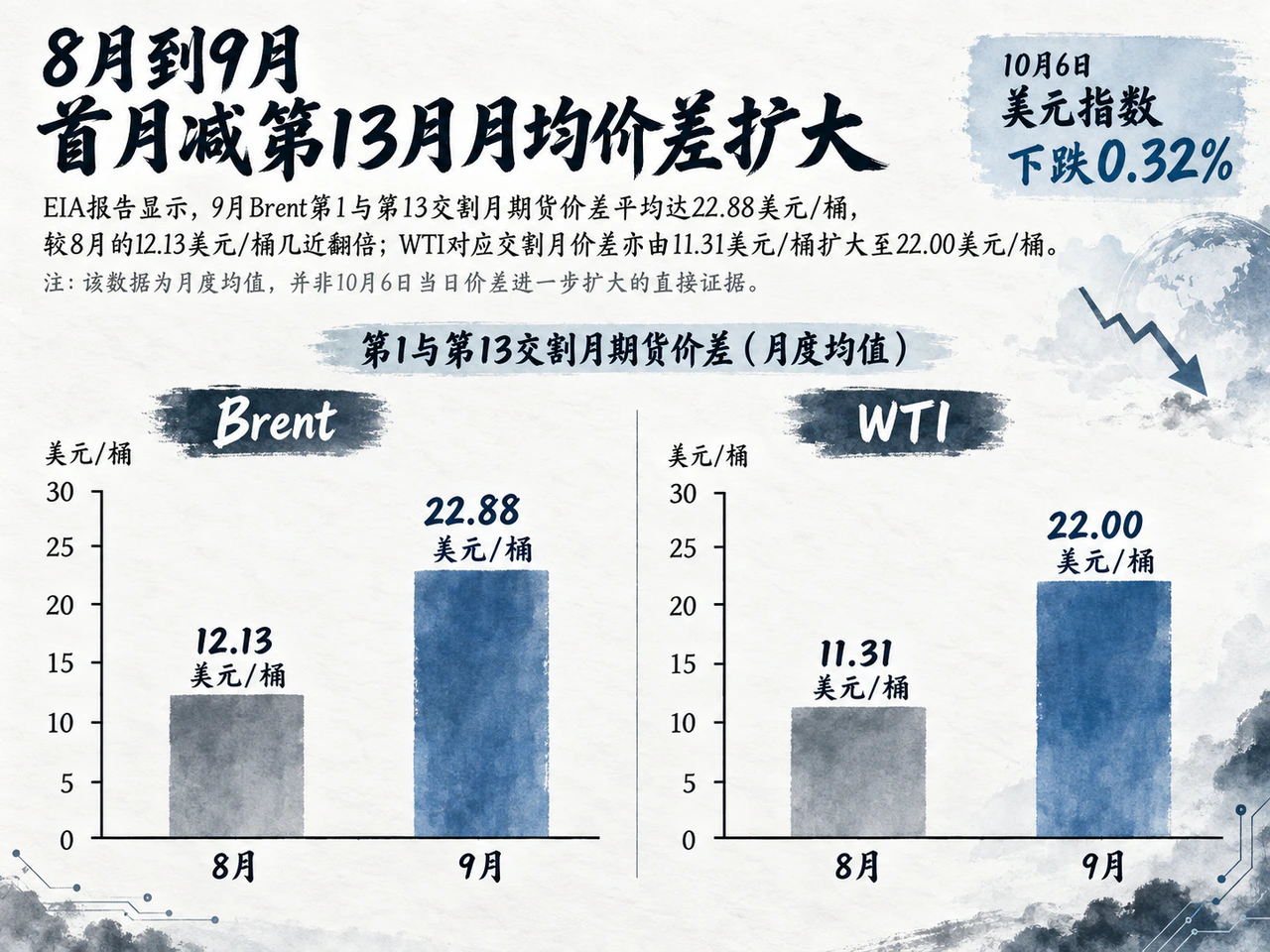
Crude's term structure confirmed extreme spot tightness. The EIA reported that Brent's spread between delivery months 1 and 13 averaged $22.88 a barrel in September, nearly double August's $12.13. WTI's corresponding spread widened from $11.31 to $22.00. Such deep backwardation shows the exceptionally large premium previously paid for near-term deliverable crude. These are monthly averages, however, rather than direct evidence that spreads widened further on October 6.
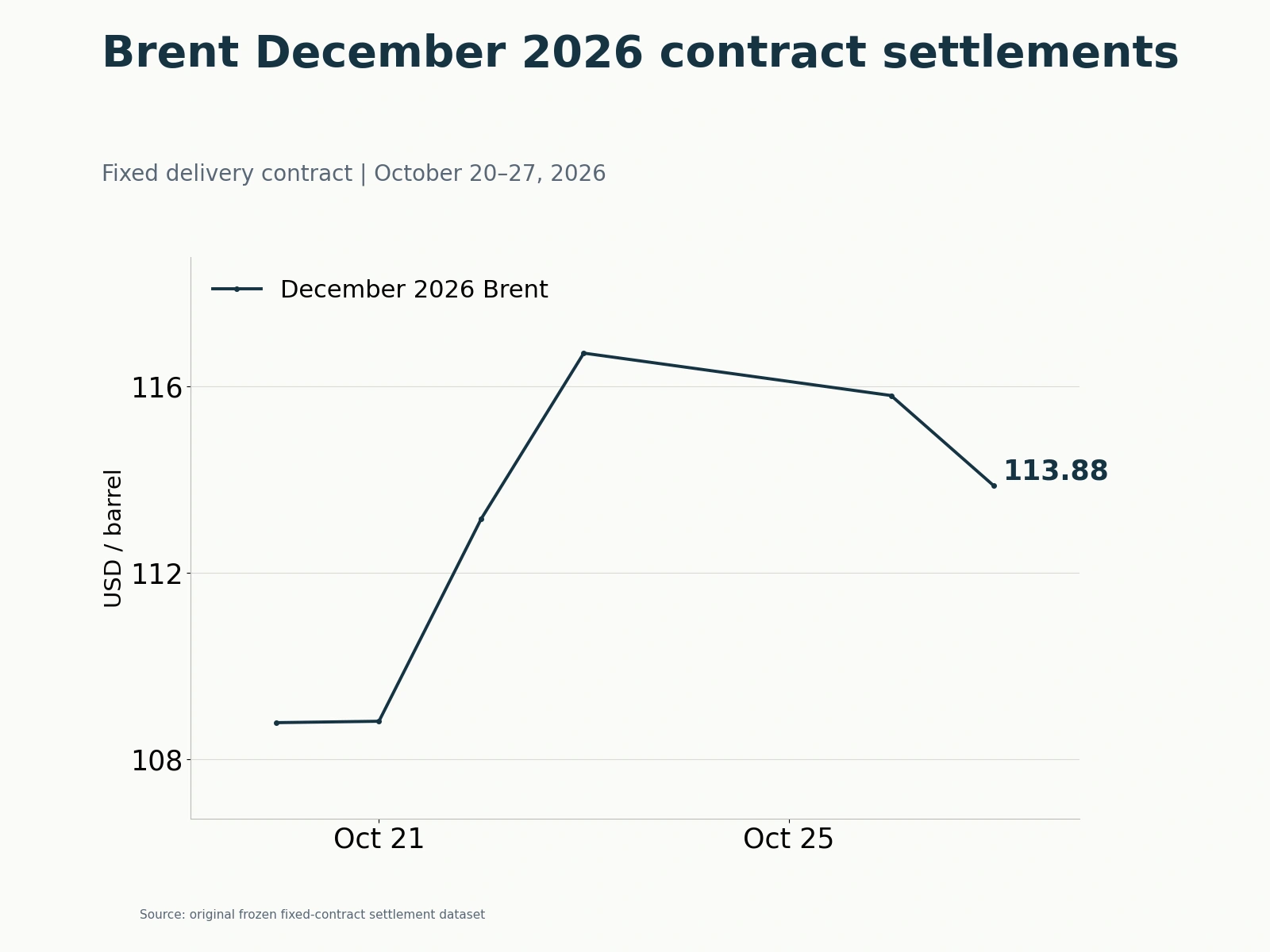
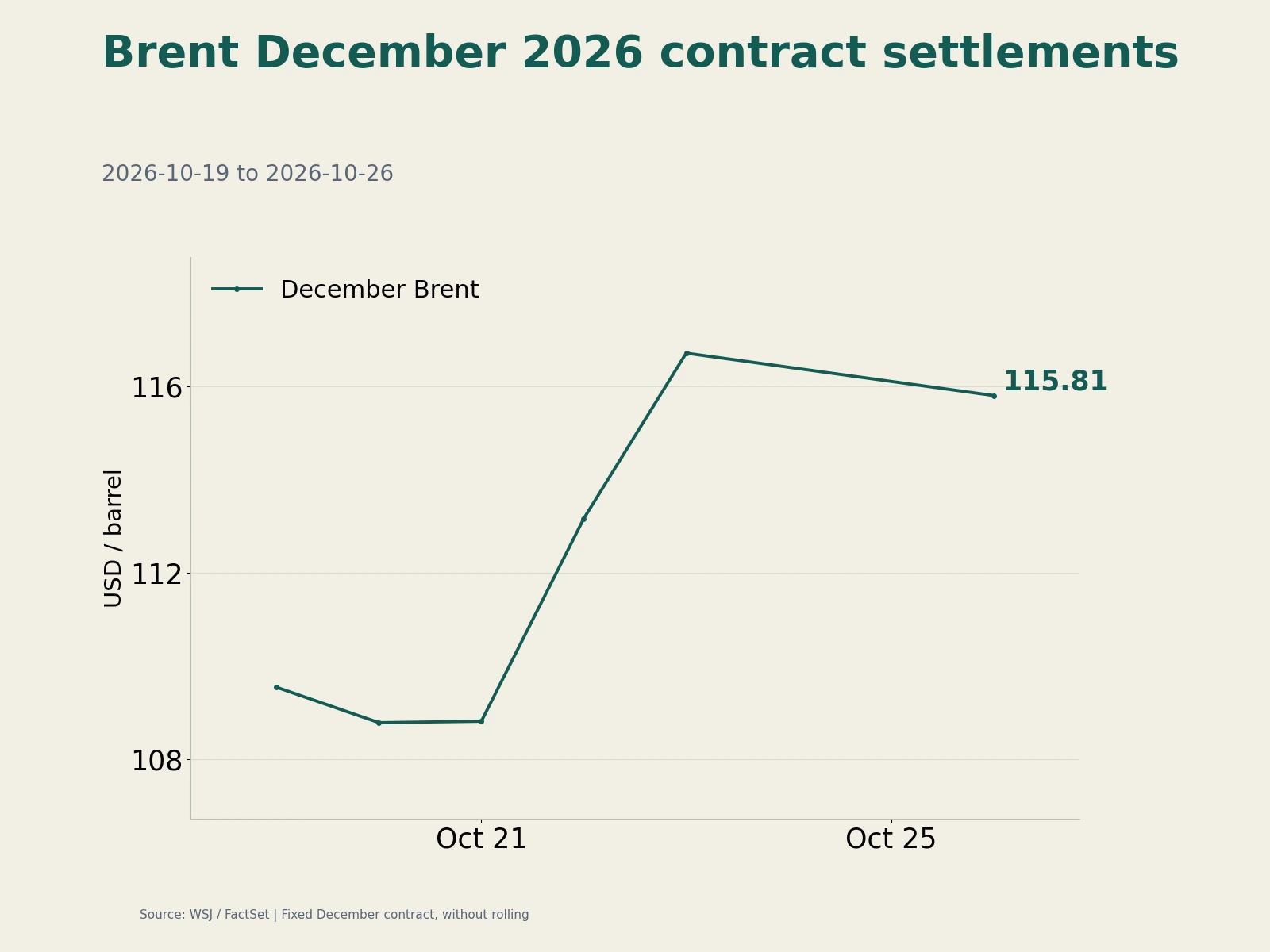
A divergence between physical conditions and forward expectations was emerging. Rigzone cited SEB analysis that immediate spot tightness was substantially greater than in Brent futures, whose benchmark front month was then December. Spot delivery shortages can coexist with expected future supply recovery, but discounted deferred prices represent current market pricing of the future, not a guarantee that later physical prices must decline.
Downstream refining margins also supported crude. EIA statistics showed September U.S. East Coast distillate inventories 32% below their 2021–2025 seasonal average. Scarce diesel raised refinery margins and willingness to increase runs, adding direct feedstock buying within operating limits. Even if upstream crude exports improve temporarily, imbalances in refined products can therefore support a floor under crude demand.
Macro-financial conditions provided some reinforcement on October 6. The dollar index closed down 0.32%, while two- and ten-year Treasury yields fell five and four basis points, respectively. A weaker dollar reduced procurement costs for non-U.S. buyers in currency terms. But synchronized daily financial moves do not establish the main cause of oil's rise, nor can lower nominal yields simply be equated with lower real rates.
A future decline is clearly expected; four groups of current signals will test near-term changes

Over the medium and long term, supply repair remains a significant force restraining prices. Assuming expanded alternative export routes and the gradual return of shut-in capacity, the EIA expected Brent spot prices to fall to an average $87 a barrel in the second quarter of 2027. The outlook's modeling was completed on October 1, however, and did not include the new crude and product reserve releases announced by the G7 on October 2. Subsequent physical delivery could accelerate relief from shortages.
A turning point now depends on four identifiable sets of immediate signals:
First, the October 7 U.S. official weekly inventory report, particularly commercial crude and distillate stock changes and refinery utilization, will test whether refining-margin-driven demand persists.
Second, actual departure volumes through Hormuz and alternative nearby routes, together with VLCC freight rates, will test progress toward normalized Middle Eastern logistics.
Third, convergence in consistently measured crude calendar spreads and crack spreads will gauge the cooling of near-month delivery premiums.
Fourth, actual delivery schedules and arrival progress for major economies' strategic reserve releases will establish when incremental policy supply enters physical circulation.
If effective shipments accelerate, tanker freight falls materially and commercial stocks turn to builds, the supply-demand support for high oil prices will begin to unravel. If better port exports continue to coexist with global inventory depletion and obstructive freight costs, near-term scarcity pricing will be difficult to regard as genuinely cleared.