As of the morning of October 8 Beijing time, Middle Eastern security had materially worsened for civilian aviation and commercial shipping. Successive long-range projectile attacks on Saudi civilian airports and Gulf shipping lanes caused civilian casualties and directly disrupted air routes, while control of the southern Red Sea chokepoint remained contested. The United States and Iran meanwhile maintained different positions on preconditions and sequencing for restarting nuclear talks. Diplomatic communication had yet to produce an operational ceasefire agreement.
Civilian aviation hubs attacked: three dead and 36 injured at two Saudi airports; Aden-bound passenger flight diverted
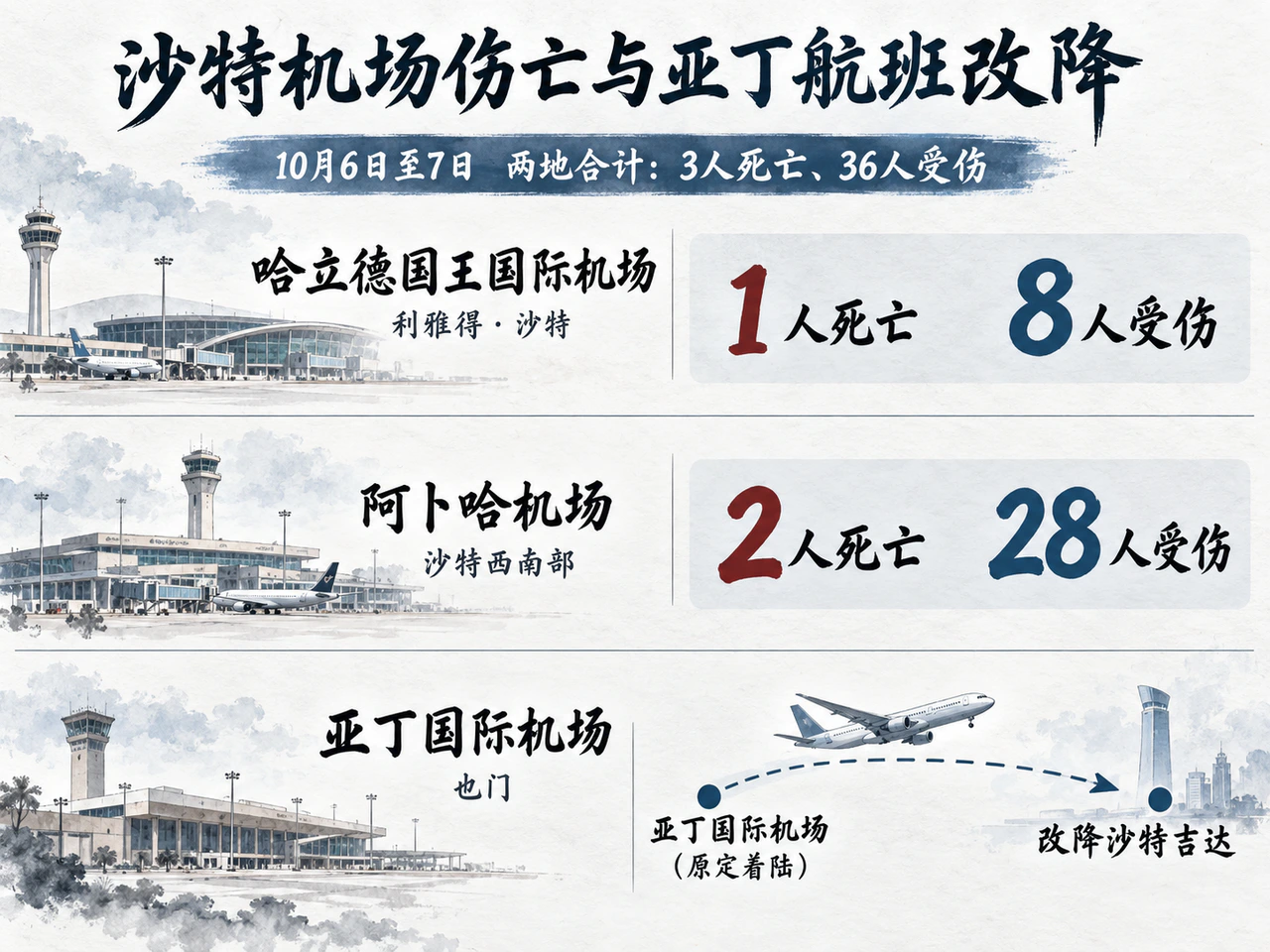
Cross-border attacks were having a substantially greater impact on regional aviation infrastructure. Saudi Arabia's General Authority of Civil Aviation announced on October 7 that two rounds of attacks on October 6–7 at Riyadh's King Khalid International Airport and southwestern Abha airport killed a total of three people and injured 36. King Khalid reported one death and eight injuries; Abha reported two deaths and 28 injuries. Yemen's Houthis claimed attacks on both airports and said Riyadh air transport had been disrupted. Saudi forces reported destroying a missile launcher in Sanaa.
Fighting inside Yemen also spread to a key transport hub. Yemen's Transport Ministry confirmed that the Houthis attacked Aden International Airport on October 7 with ballistic missiles and explosive-laden drones, with projectiles landing near the runway. A civilian airliner arriving from Cairo was on approach; the airport urgently withdrew landing clearance and diverted it to Jeddah, Saudi Arabia, while quickly relocating two aircraft parked near the runway. As the main international gateway to government-held Yemen, Aden's attack marked a deepening threat from ground fighting to ordinary regional travel.
Maritime chokepoint risks persist: Bab el-Mandeb high-ground fighting remains contested as a Gulf tanker is hit by multiple projectiles
Geopolitical security risks along key navigation routes continued to materialize rapidly.
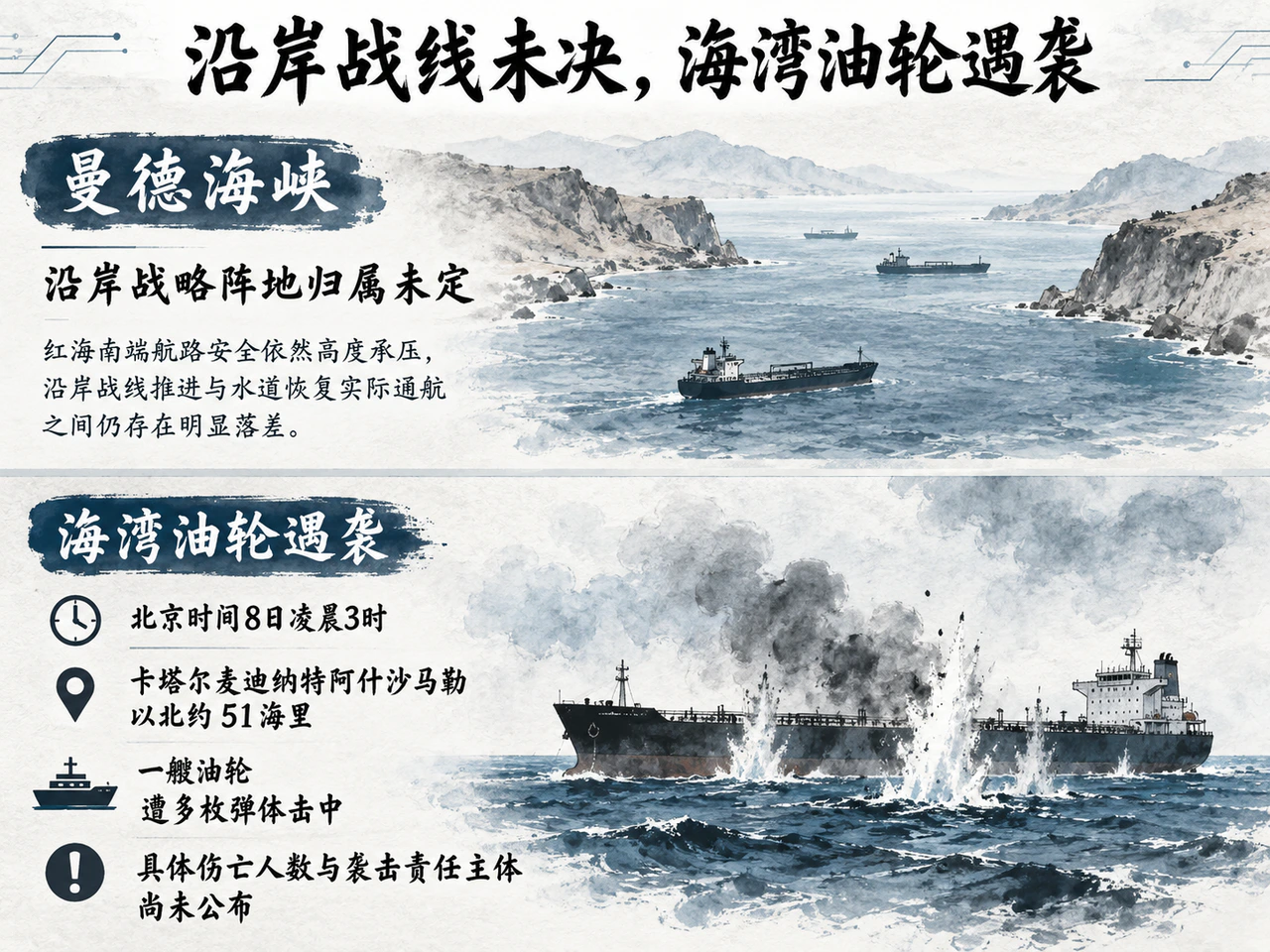
At the southern end of the Red Sea, fighting for coastal high ground around Bab el-Mandeb remained deadlocked. Addressing the Yemeni government's earlier statement that it had advanced to Mokha, Reuters cited military sources and defense analysis saying that assessment was premature. Government forces were trying to seize Dhubab, overlooking Bab el-Mandeb, and high ground to its east, while the Houthis claimed to have repelled the offensive. With strategic coastal positions still disputed, southern Red Sea shipping remained under severe pressure. A clear gap persisted between coastal military advances and restored actual passage.
Commercial shipping in Gulf waters also suffered a sudden attack. UK Maritime Trade Operations (UKMTO) reported that at 19:00 UTC on October 7, or 03:00 on October 8 Beijing time, a tanker about 51 nautical miles north of Madinat ash Shamal, Qatar, was hit by multiple projectiles. Casualties were reported, but their number and the party responsible had not been announced. Although Secretary of State Rubio claimed in Athens that day that Iran had lost effective control of Hormuz, the tanker attack showed that commercial navigation in the region still faced material threats.
Differences over restarting nuclear talks persist: Iran insists on enrichment rights and prior satisfaction of its conditions
As the military confrontation intensified, U.S.–Iran diplomacy became mired in a dispute over conditions and sequencing.
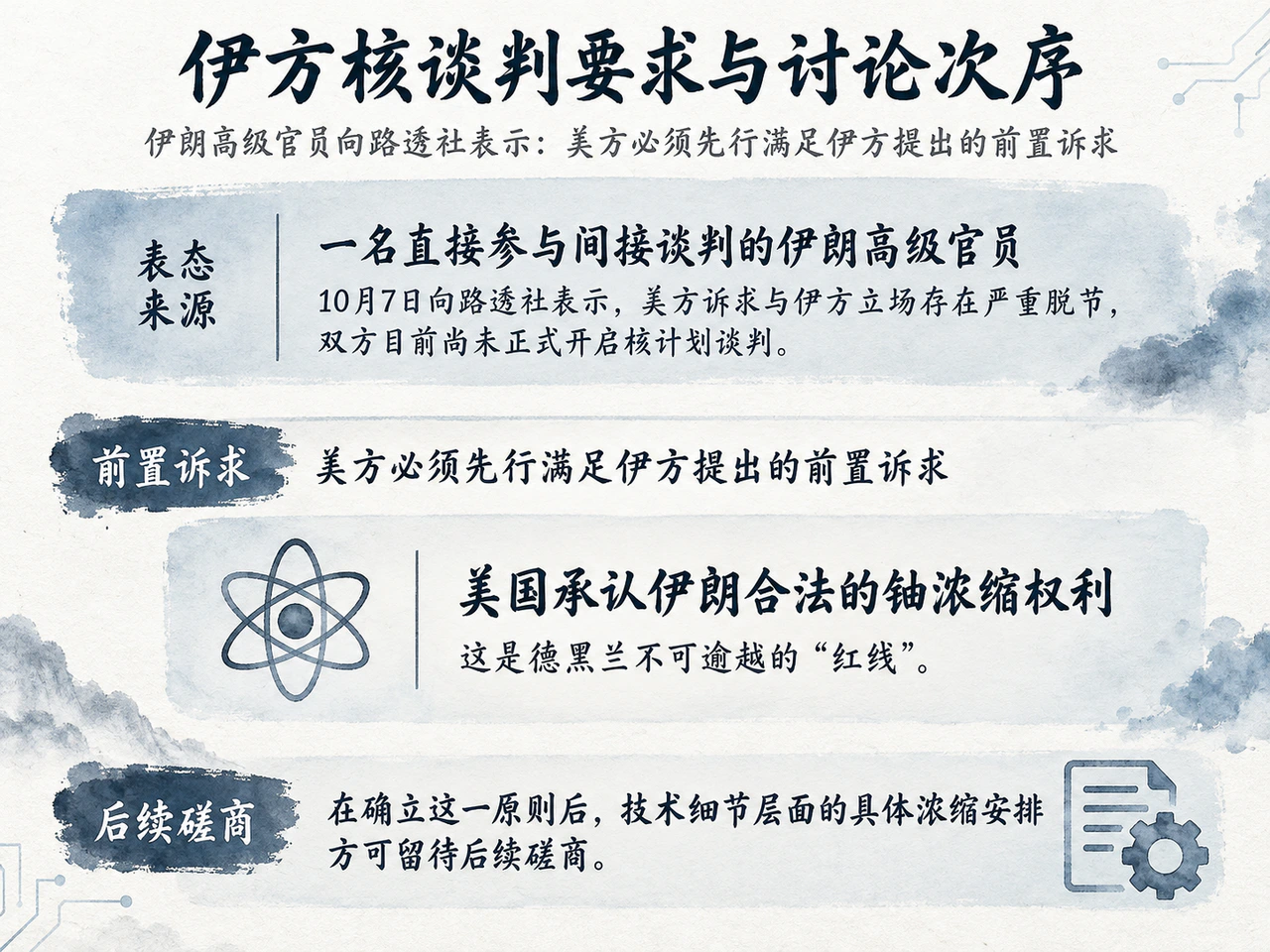
Responding to Vice President Vance's earlier call for substantial cuts to Iran's uranium-enrichment capability, a senior Iranian official directly involved in indirect talks told Reuters on October 7 that U.S. demands were seriously misaligned with Iran's position. Formal nuclear-program talks had not yet begun, and the United States first had to meet Iran's preconditions. The official said U.S. recognition of Iran's lawful enrichment rights was Tehran's inviolable “red line.” Once that principle was established, specific technical enrichment arrangements could be discussed later.
Diplomacy and humanitarian crisis: Putin offers mediation assistance; Yemen displacement exceeds 200,000
Regional multilateral diplomatic channels remained active. Iran's presidency said Pezeshkian spoke with Russian President Putin by phone on October 7. Putin supported mediation by the relevant countries and offered help to reduce regional tensions. The readout mainly reflected diplomatic contact and willingness to mediate; it disclosed no agreed ceasefire arrangements or negotiation date.
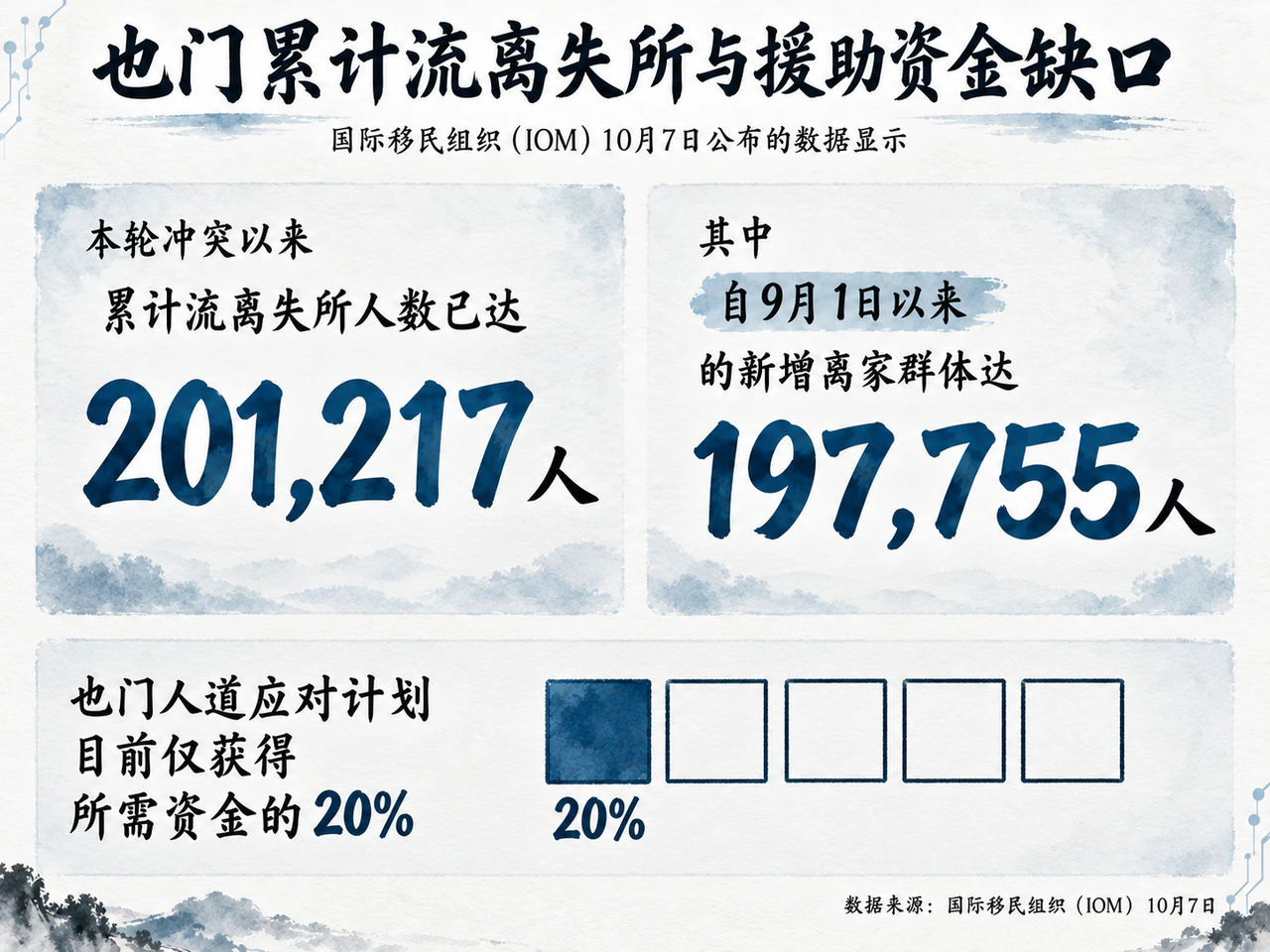
Meanwhile, protracted fighting accelerated the humanitarian crisis. IOM data published October 7 recorded cumulative displacement of 201,217 people in Yemen since this round of conflict began, including 197,755 newly displaced since September 1. Taiz governorate accounted for about 57% of displaced people. The organization also said Yemen's humanitarian response plan had received only 20% of required funding. Attacks on transport hubs, fluctuating coastal fighting and severe aid shortfalls were extending the conflict's destructive costs beyond military positions into civilian travel, housing and basic survival.
Key developments
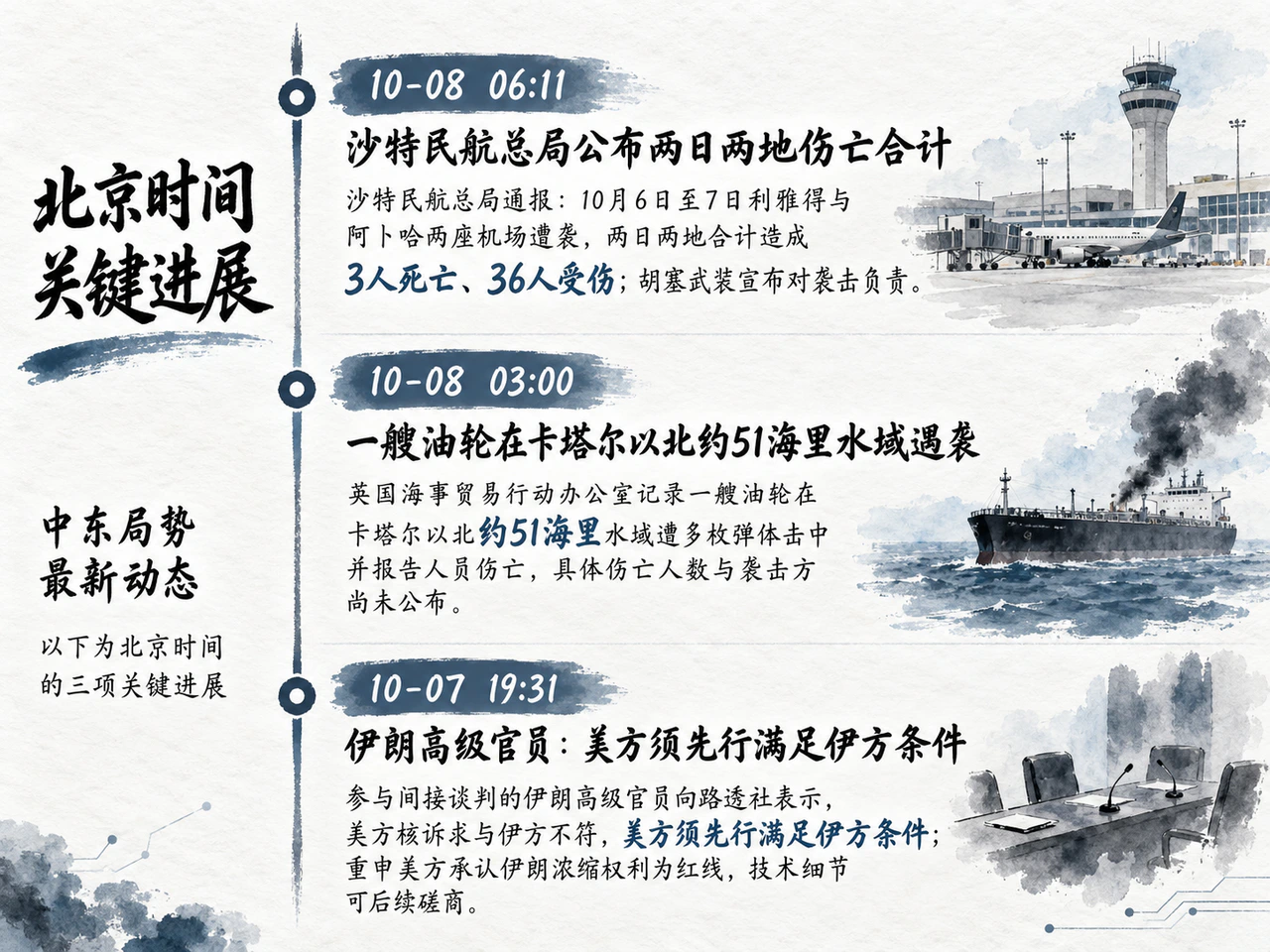
Times below are in Beijing time and refer to publication unless explicitly labeled as event times.
| Key developments |
|---|
| 10-08 06:11 Beijing timeSaudi civil-aviation authorities reported attacks on Riyadh and Abha airports on October 6–7, killing three people and injuring 36 across the two locations and days. The Houthis claimed responsibility. |
| 10-08 05:59 Beijing timeYemen's Transport Ministry reported an October 7 missile and drone attack on Aden airport; an airliner arriving from Cairo was diverted to Jeddah. IOM said the same day that cumulative displacement in this round of Yemen fighting exceeded 200,000. |
| 10-08 03:07 Beijing timeReuters cited sources saying Hezbollah received $200 million from Iran the previous month for assistance to displaced people in Lebanon; the U.S. State Department denied the funds existed. This was a disputed allegation disclosed that day. |
| 10-08 03:00 Beijing timeEvent time: UKMTO recorded multiple projectiles hitting a tanker about 51 nautical miles north of Qatar, with casualties reported. The casualty count and attacker had not been announced. |
| 10-07 19:31 Beijing timeA senior Iranian official involved in indirect talks told Reuters that U.S. nuclear demands did not match Iran's position and that Washington must first meet Iran's conditions. Recognition of enrichment rights remained a red line; technical details could be discussed later. |
| 10-07 18:58 Beijing timeMedia reported Rubio reiterating in Athens that Iran must not have nuclear weapons and claiming it had lost effective control of Hormuz. |