The University of Michigan consumer survey released October 9 made the Fed's trade-off between price expectations and actual demand more pressing. Households' assessment of current economic conditions deteriorated significantly, while expectations of medium- and long-term price increases continued rising. Pressure on consumption raised the economic cost of further tightening, while rebounding inflation expectations strengthened the need to retain policy restraint. An external investigation of Fed Governor Cook added uncertainty to the institutional environment for monetary policy.
Inflation expectations rise for a second month, increasing the need to contain their spread
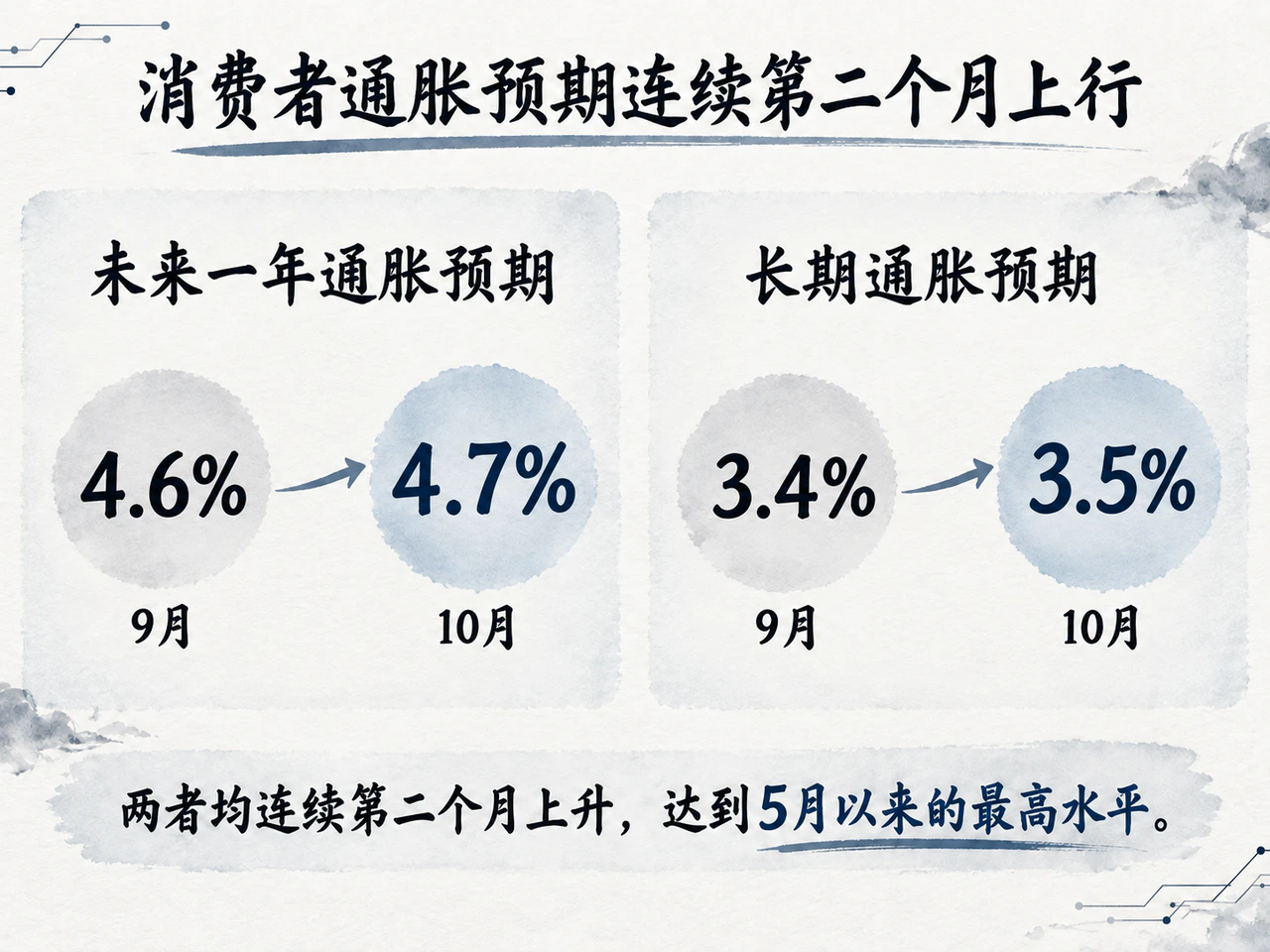
The survey showed a revival in inflation expectations. One-year expectations rose from 4.6% in September to 4.7%, and long-term expectations from 3.4% to 3.5%. Both increased for a second consecutive month to their highest levels since May. Although each monthly rise was only 0.1 percentage point, higher expected living costs amid generally weak household sentiment showed inflation pressure had not dissipated as demand sentiment cooled.
In an article published that day, New York Fed research director Kartik Athreya argued that central-bank policy cannot directly eliminate supply shocks to individual goods. Its central role is to prevent localized price increases from becoming broad and persistent inflation expectations. In this setting, households' judgments about how long price increases will last, and whether those judgments pass through to wage demands and business pricing, are central to inflation persistence.
Current conditions deteriorate sharply as high rates and prices restrain durable-goods consumption
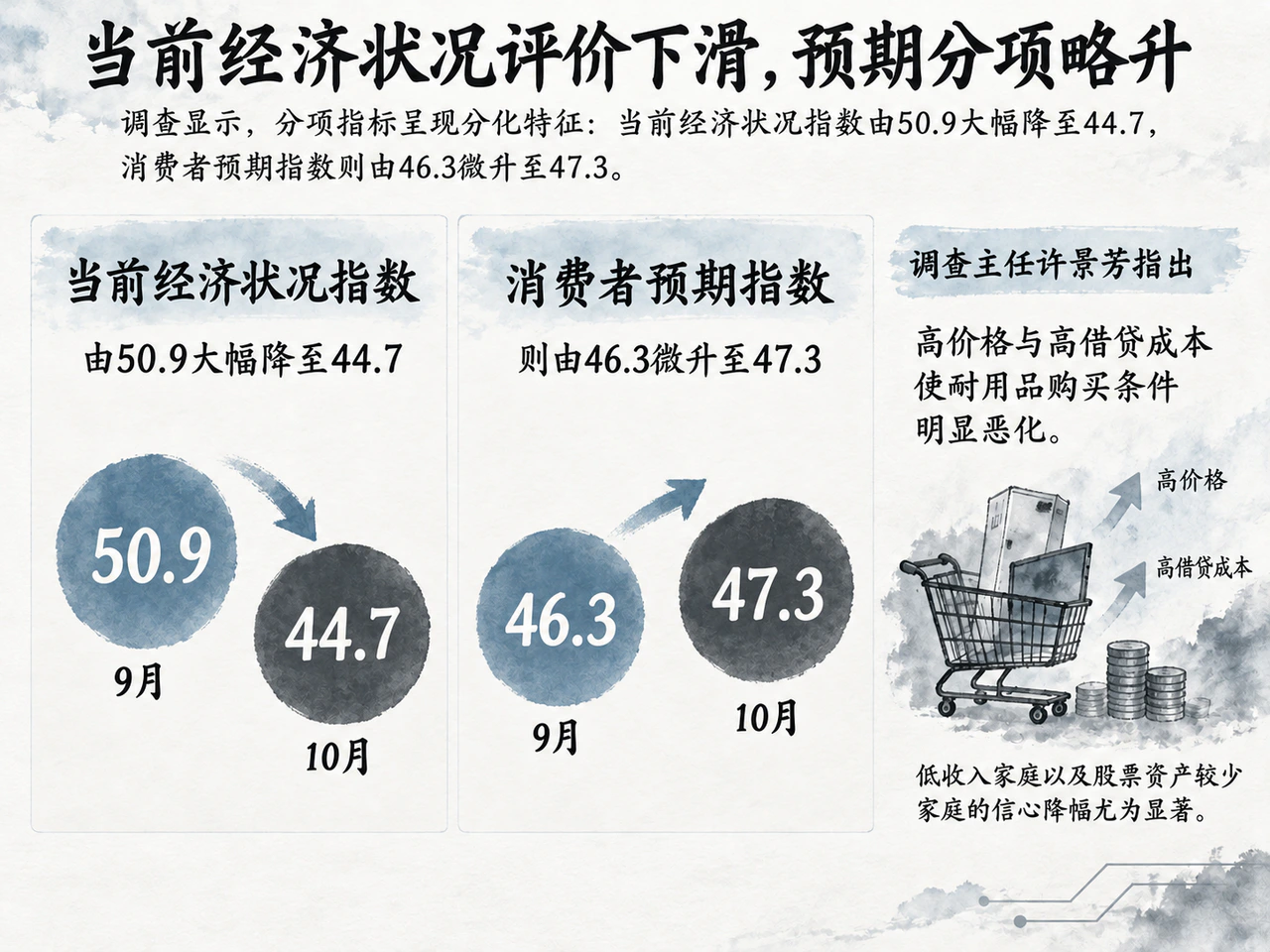
Alongside rising inflation expectations, households' current economic conditions came under significant pressure. The preliminary October University of Michigan sentiment index was 46.3, below September's 48.1. Components diverged: current economic conditions fell sharply from 50.9 to 44.7, while consumer expectations edged up from 46.3 to 47.3.
Survey director Joanne Hsu said high prices and borrowing costs had markedly worsened buying conditions for durables, with especially large confidence declines among lower-income households and those with fewer stock holdings. This indicated that current pressure was concentrated in immediate buying conditions and confidence, while households' assessments of medium- and longer-term prospects remained mixed.
Governor Cook faces a mortgage-review hearing, adding institutional uncertainty

Beyond macroeconomic fundamentals, the decision-making framework faced external institutional disruption. Reuters and the Associated Press reported on October 9 that Trump had established a committee to investigate alleged false statements in Fed Governor Cook's mortgage applications, with a closed-door White House hearing scheduled for November 5.
Cook denied wrongdoing, and her lawyers said there was no lawful basis for removal. She continued to carry out her duties. Even so, the investigation increased uncertainty over the composition of the Fed's decision-making team. If markets began questioning the central bank's ability to maintain anti-inflation policy, anchoring medium- and long-term expectations could become more difficult.
September CPI and final survey results provide key tests before the late-October meeting weighs the pace of policy
On September 16, the Fed raised the federal funds target range by 25 basis points to 3.75%–4%, aiming to return inflation promptly to its 2% target. Deteriorating durable-goods buying conditions required policymakers to assess how deeply earlier tightening had affected real spending. Rebounding inflation expectations strengthened the case for preventing expectations from becoming unanchored. Both the need for a hike and its timing required careful assessment.
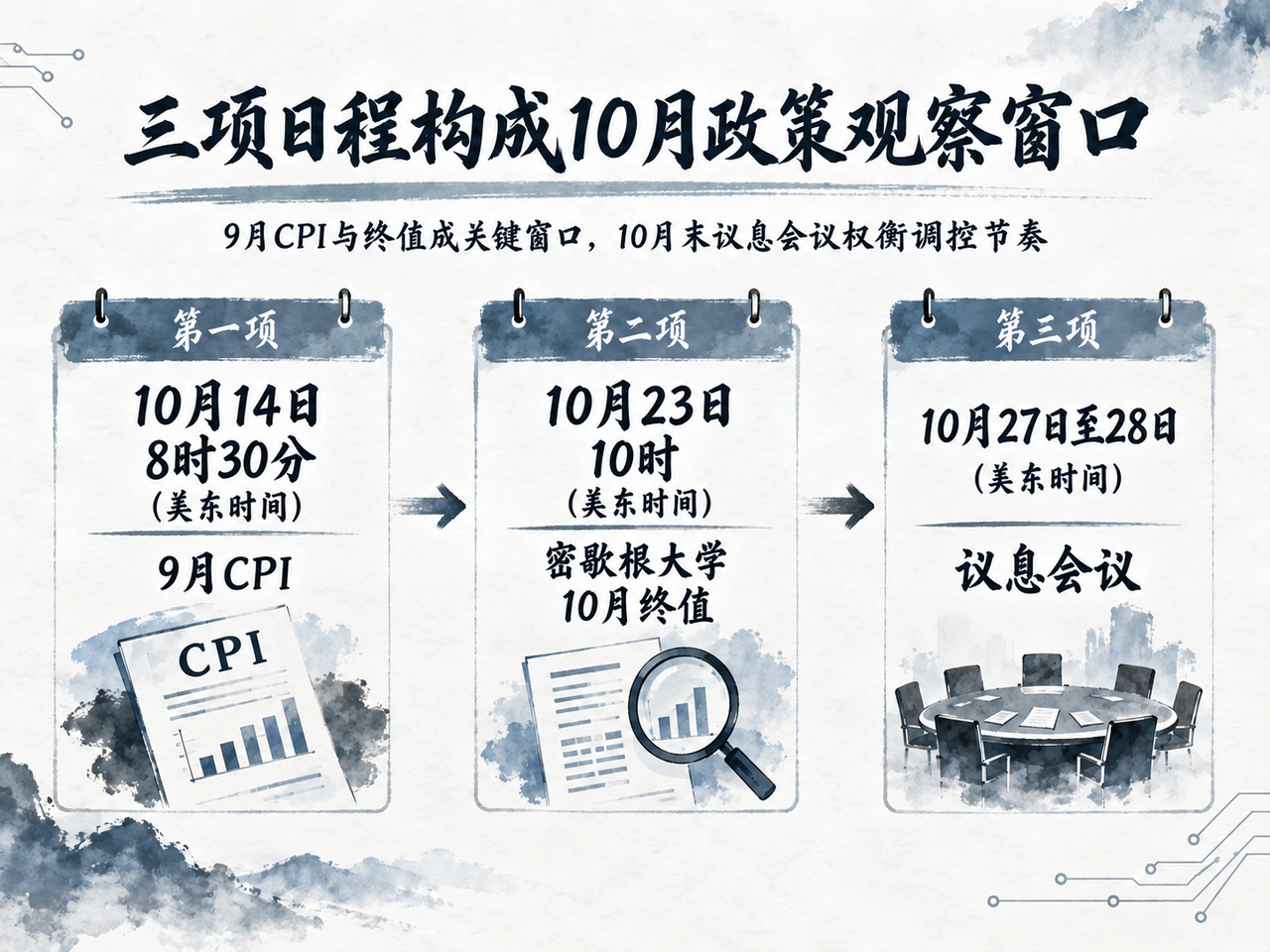
Two key releases before the October 27–28 policy meeting would provide important tests. September CPI, due October 14 at 8:30 a.m. US Eastern time, would test how broadly actual price pressure had spread. The final October Michigan survey, due October 23 at 10 a.m., would show whether the rise in expectations was persistent. Continued price pressure with resilient demand would strengthen the case for further tightening. Easing price pressure alongside worsening buying conditions would create room to slow the pace.


