In the 24 hours to the morning of October 10, Beijing time, Middle Eastern developments diverged as pledges of political restraint coexisted with spreading tactical conflict. US President Trump said on October 8 that he would not take direct military action against Iran before the November 3 US midterm elections, but would maintain the naval blockade. Meanwhile, an attack on a laden tanker off the UAE and continuing fighting in Yemen around Bab el-Mandeb showed that senior-level pledges of restraint had yet to reach the front lines. Actual risks to commercial shipping and key hubs continued accumulating.
Diplomatic probing and nuclear red lines: Strait proposal awaits a decision as Tehran rejects concessions under pressure
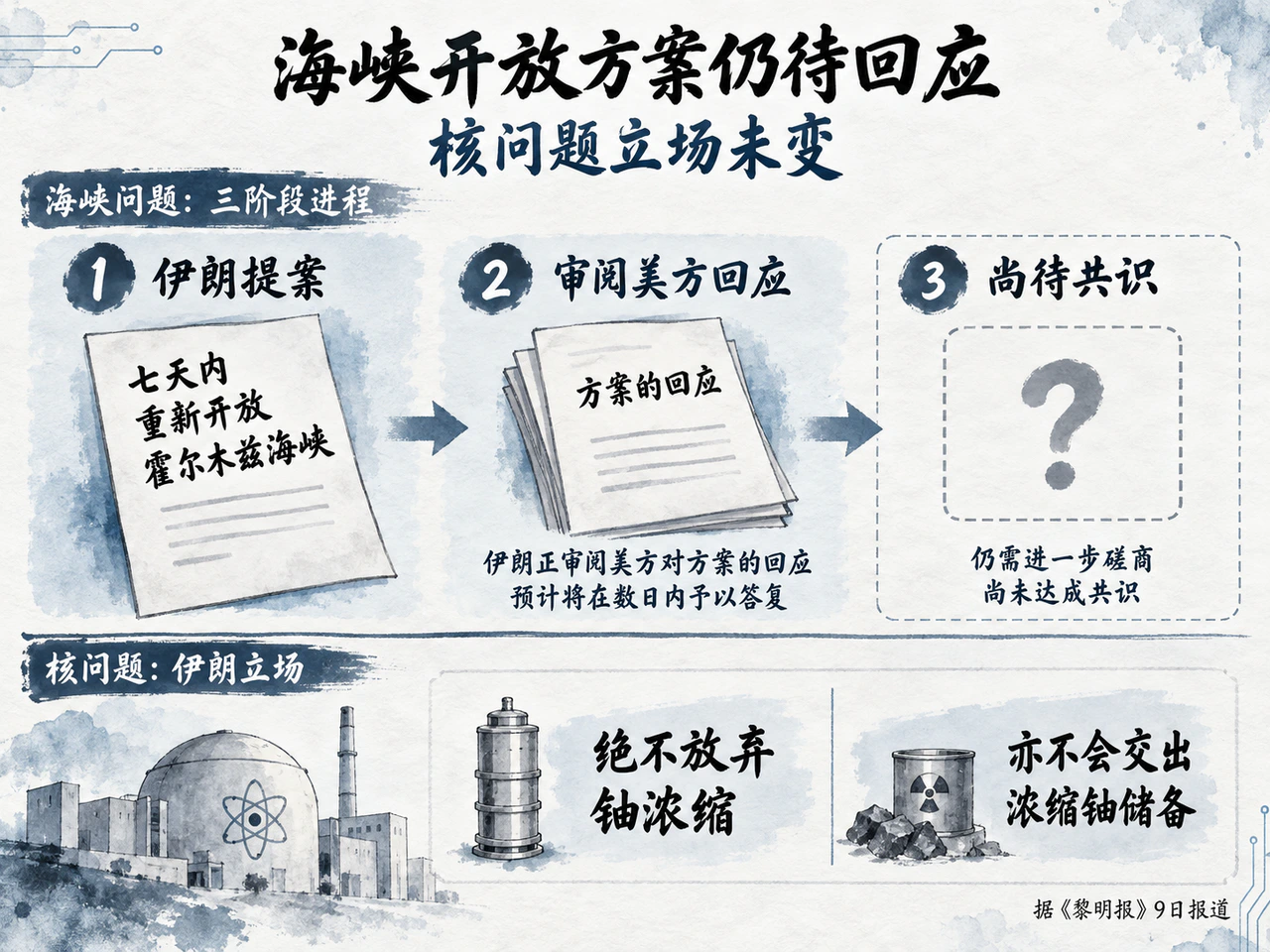
Diplomacy involved indirect probing over arrangements for the Strait of Hormuz and sanctions relief for Iran. Dawn reported on October 9 that Iranian Foreign Minister Araghchi said Tehran was reviewing Washington's response to its proposal to reopen the Strait of Hormuz within seven days and expected to reply within days. This created an important near-term window for watching whether the deadlock could be broken.
The gap between the parties' core positions nevertheless remained clear. At the CIS summit in Turkmenistan on October 9, Iranian President Pezeshkian said talks must be based on mutual respect and fulfillment of commitments, firmly excluding pressure and threats. He warned that sanctions on Iran would directly affect regional trade, transport networks and energy security. Separately, Atomic Energy Organization chief Eslami reiterated on October 8 that Iran would neither abandon uranium enrichment nor surrender its enriched-uranium stockpile. Without a mutually accepted framework on core concerns such as lifting the blockade and limiting nuclear capabilities, a substantive diplomatic breakthrough remained distant.
Economic pressure and resilient exports: Shipping nearly halted, while overland routes and stored oil provide a buffer
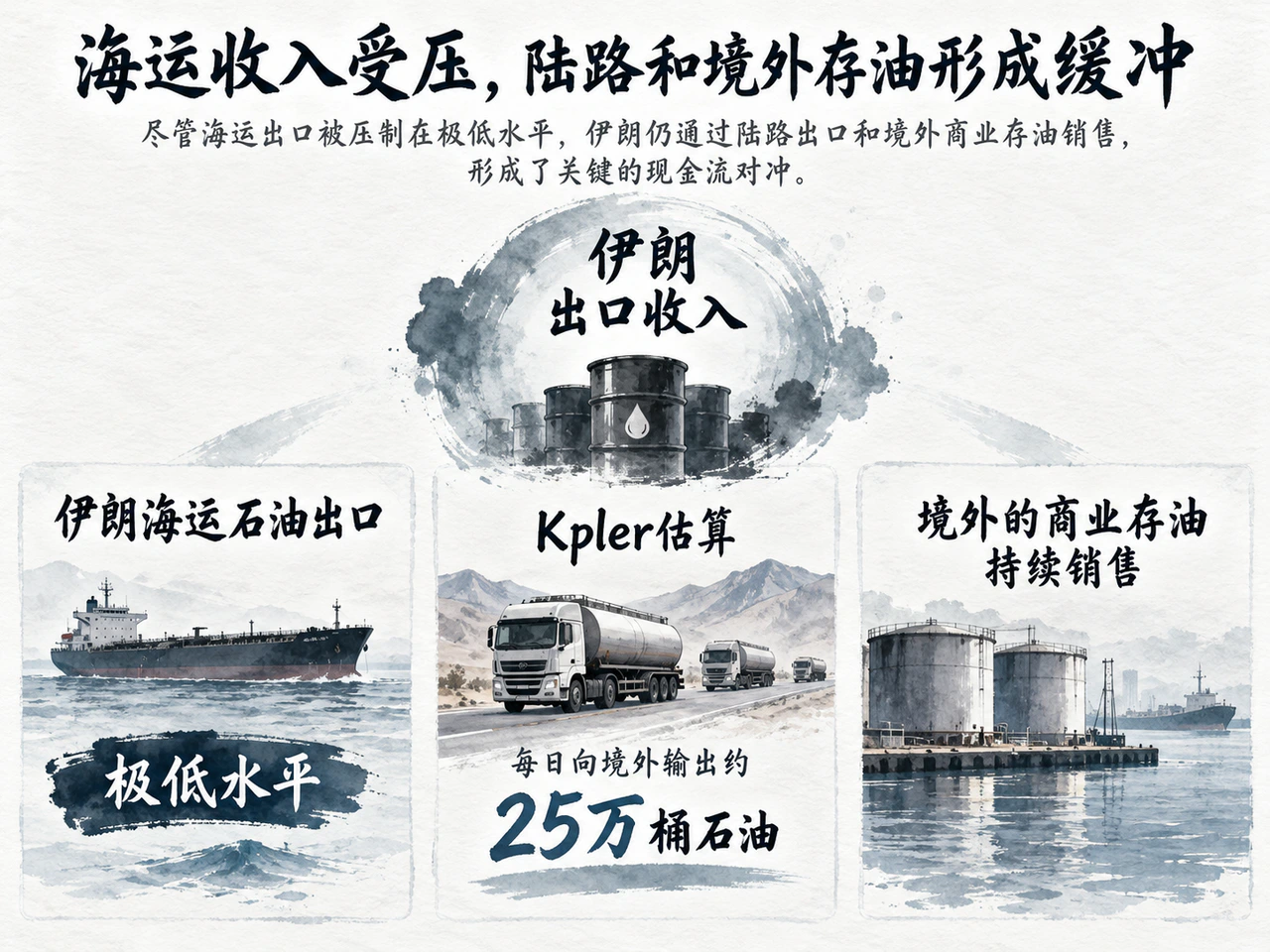
The comprehensive US naval blockade sharply constrained Iran's fiscal room, but had not quickly softened Tehran's diplomatic position. The Washington Post reported on October 9 that although the blockade had driven Iran's seaborne oil exports to extremely low levels, Tehran continued monetizing commercial oil stocks previously stored abroad, providing an important cash-flow hedge.
Commodity analytics firm Kpler also estimated that Iran was still exporting around 250,000 barrels of oil a day overland, while some international flights continued basic operations. Cross-border land transport and oil stocks abroad provided practical economic support for Tehran to sustain its negotiating demands under pressure.
Maritime and aviation risks spread: Tanker attacked off UAE as Bab el-Mandeb and civilian flights face pressure
Tactical conflict was crossing geographical boundaries, directly threatening merchant-vessel anchorage areas and regional civil aviation.
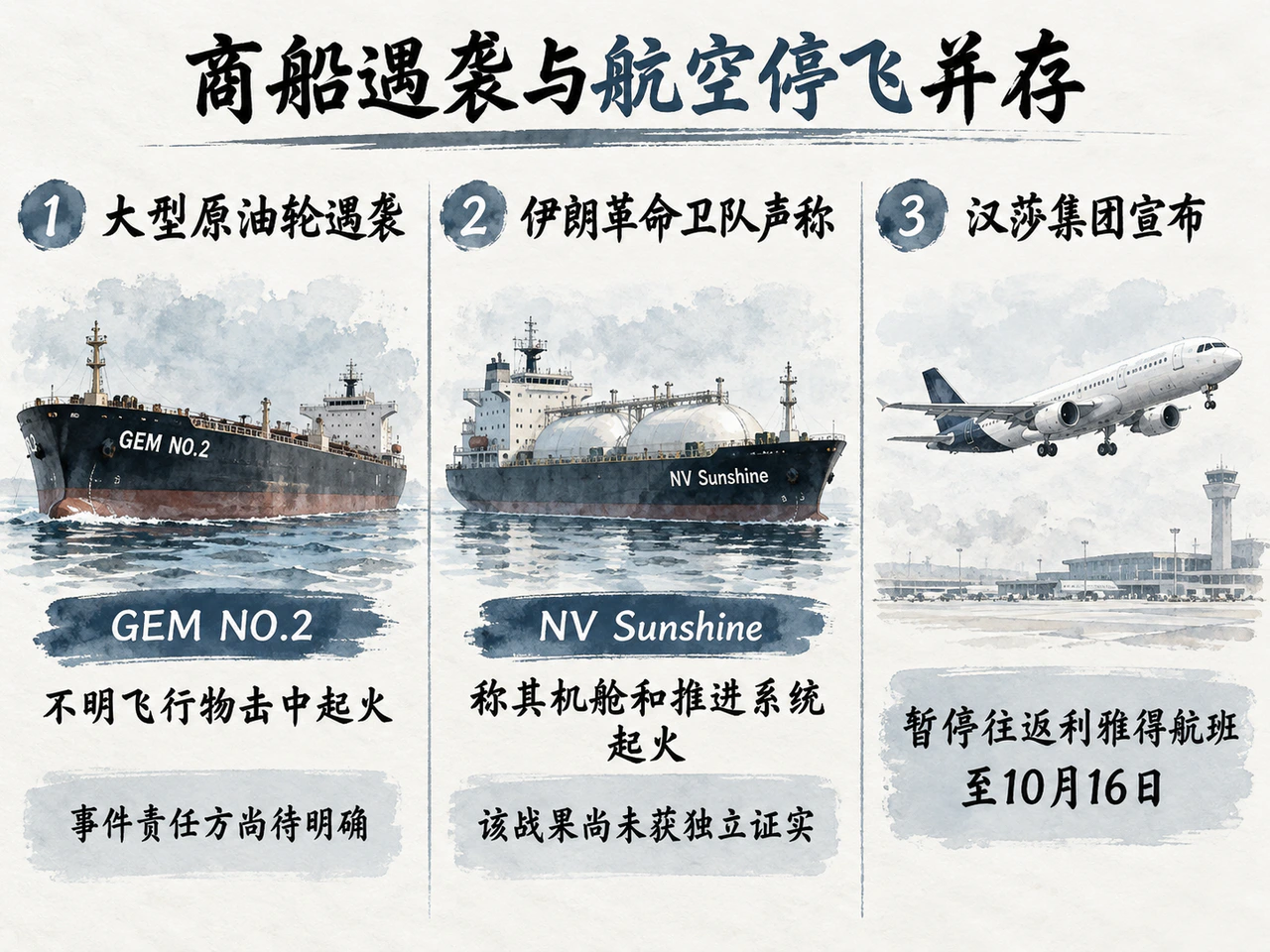
West of the strait, UK Maritime Trade Operations (UKMTO) and maritime-security firm Vanguard reported that at 18:00 Beijing time on October 9 the Panama-flagged large crude tanker GEM NO.2 was struck by an unidentified flying object around 13 nautical miles west of Al Jazeera in the UAE and caught fire. The fire was subsequently extinguished. Vessel tracking showed it was laden with crude and at anchor when attacked, indicating that threats had extended from narrow shipping lanes to offshore anchorages; responsibility remained undetermined. That same day, Iran's Revolutionary Guards claimed to have struck the LPG carrier NV Sunshine while it used the strait's southern route, setting its engine room and propulsion system on fire. They threatened to track vessels using 'unauthorized routes' throughout the region. The claimed strike had not been independently verified.
In the Red Sea, control of Bab el-Mandeb, an alternative sea outlet, was disputed. Saudi ambassador to Yemen al-Jaber claimed on October 9 that Yemeni government forces had cleared the area of Houthi fighters. A Houthi spokesperson denied this and said the attack had been repelled. Frontline Yemeni government sources cited by AFP confirmed that fighting remained intense and gains relatively limited, leaving safe passage through the alternative route difficult to guarantee.
Civil aviation had already suffered casualties and reduced capacity. Saudi aviation authorities confirmed on October 9 that the October 8 attack on Riyadh's King Khalid International Airport killed three Saudi citizens and injured several others. Saudia confirmed the death of a captain and damage to an aircraft; Yemen's Houthis had earlier claimed two attacks on the airport. Although Saudi authorities said airport operations had resumed, airlines moved quickly to avoid risk: Lufthansa Group suspended flights to and from Riyadh through October 16, while Pakistan International Airlines announced a suspension of the relevant routes on October 9.
Energy buffers and outside involvement: US temporarily eases Russian sanctions to bring in 300,000 tonnes of diesel
New tactical coordination among major powers emerged to offset the transmission of the Middle Eastern oil blockade and maritime risks into global energy markets. The Kremlin said on October 9 that Putin and Trump had discussed Iran by telephone that day, and that Trump welcomed Russian mediation in the conflict.
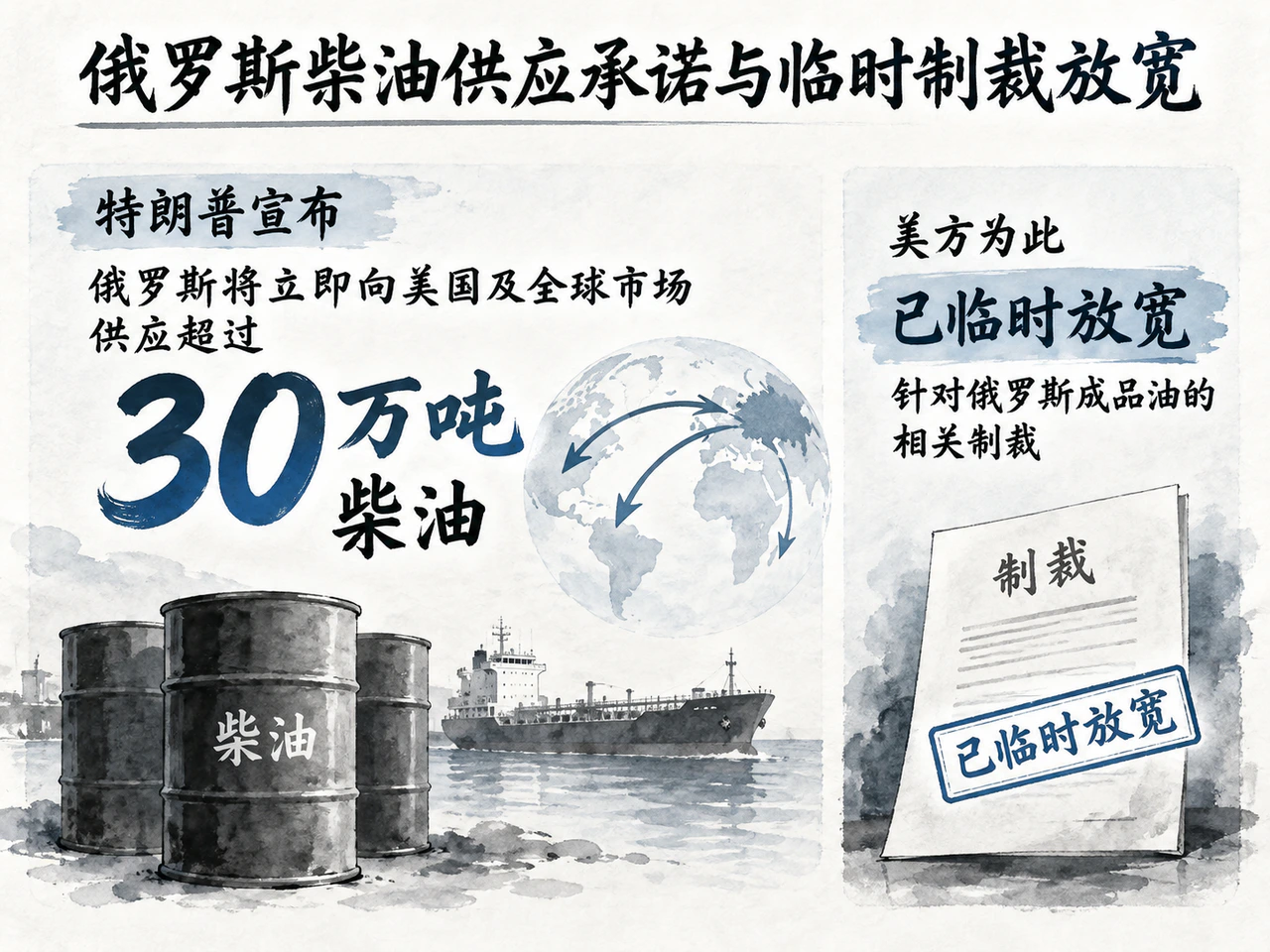
Trump also announced that Russia would immediately supply more than 300,000 tonnes of diesel to the United States and global markets. Reuters reported that Washington had temporarily eased the relevant sanctions on Russian refined products for this purpose. Russian diesel could offset part of the Gulf turmoil's fuel-supply shortfall in the short term. A systemic easing of the Middle Eastern geopolitical crisis nevertheless ultimately depended on whether maritime attacks stopped, how blockade measures changed, and whether Hormuz passage talks produced an implementable consensus.
Key developments
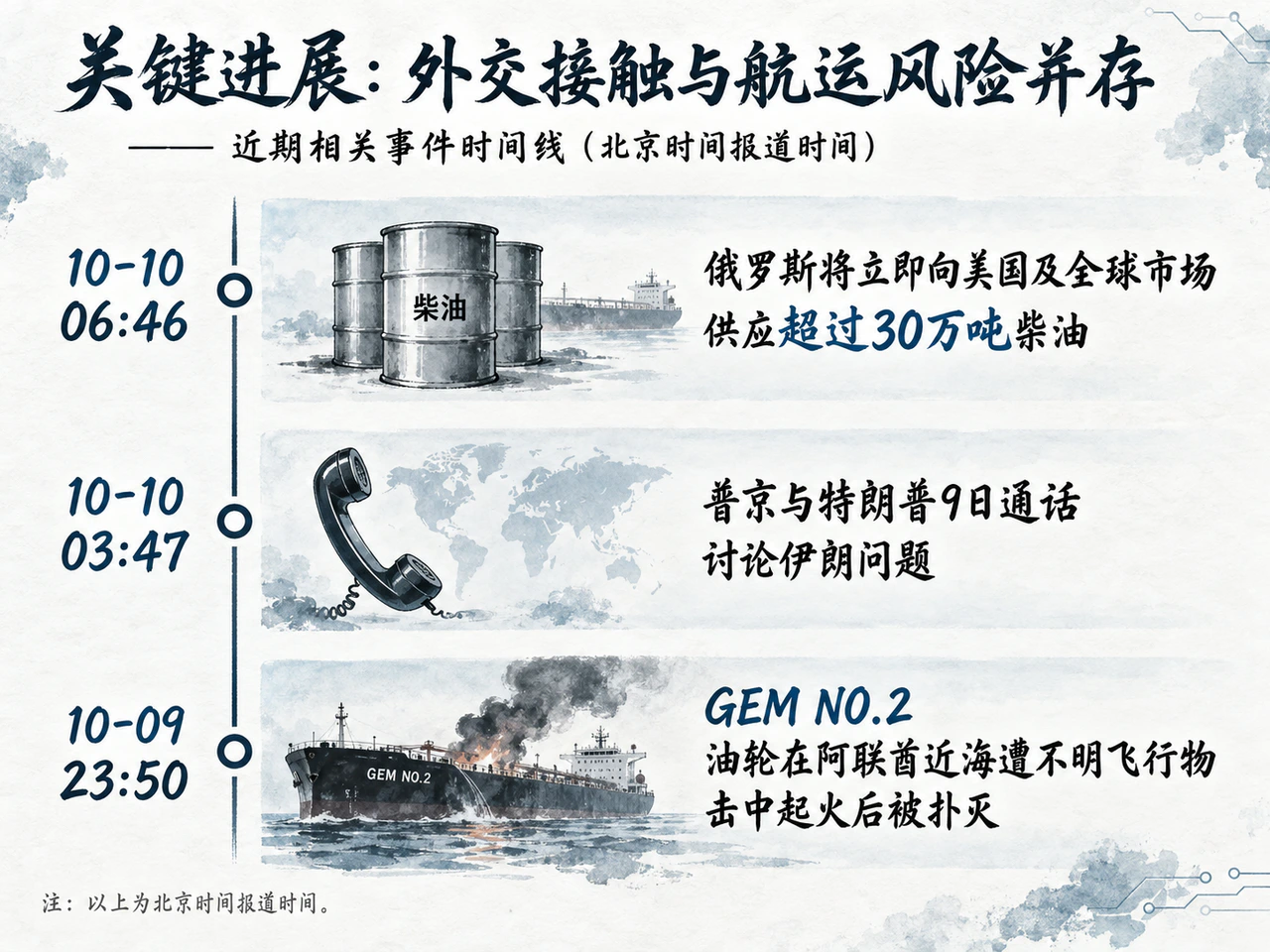
Entries below are in reverse order of reporting time, all in Beijing time; event times are specified within the entries.
| Key developments |
|---|
| 10-10 06:46Reuters reported that Trump announced Russia would immediately supply more than 300,000 tonnes of diesel to US and global markets. Washington had temporarily eased the relevant sanctions to relieve fuel-supply pressure. |
| 10-10 03:47The Kremlin said Putin and Trump discussed Iran by phone on October 9, with Trump welcoming Russian participation in mediation. |
| 10-10 01:54In Turkmenistan, Iranian President Pezeshkian said talks must rest on mutual respect and fulfillment of commitments, firmly excluding pressure and threats. |
| 10-10 01:29Iran's Revolutionary Guards claimed to have hit the LPG carrier NV Sunshine and threatened to track ships using 'unauthorized routes.' The claimed strike had not been independently verified. |
| 10-10 00:17Saudi Arabia's ambassador to Yemen claimed government forces had recaptured areas around Bab el-Mandeb; the Houthis denied it. Frontline government sources said fighting remained intense and gains limited. |
| 10-09 23:50Shipping and maritime-security agencies reported that the crude-laden GEM NO.2 was struck by an unidentified flying object off the UAE and caught fire before the blaze was extinguished. Vanguard placed the attack at 18:00 Beijing time on October 9. |
| 10-09 17:00The Washington Post reported that the US blockade sharply reduced Iranian seaborne oil exports, but sales from overseas commercial stocks, overland transfers of around 250,000 barrels/day and some international flights continued. |
| 10-09 16:48Saudi aviation authorities confirmed three citizens killed and several injured in the October 8 attack on Riyadh airport. Saudia confirmed a captain's death and damage to a passenger aircraft; Lufthansa and Pakistan International Airlines subsequently announced suspensions of the relevant routes. |


