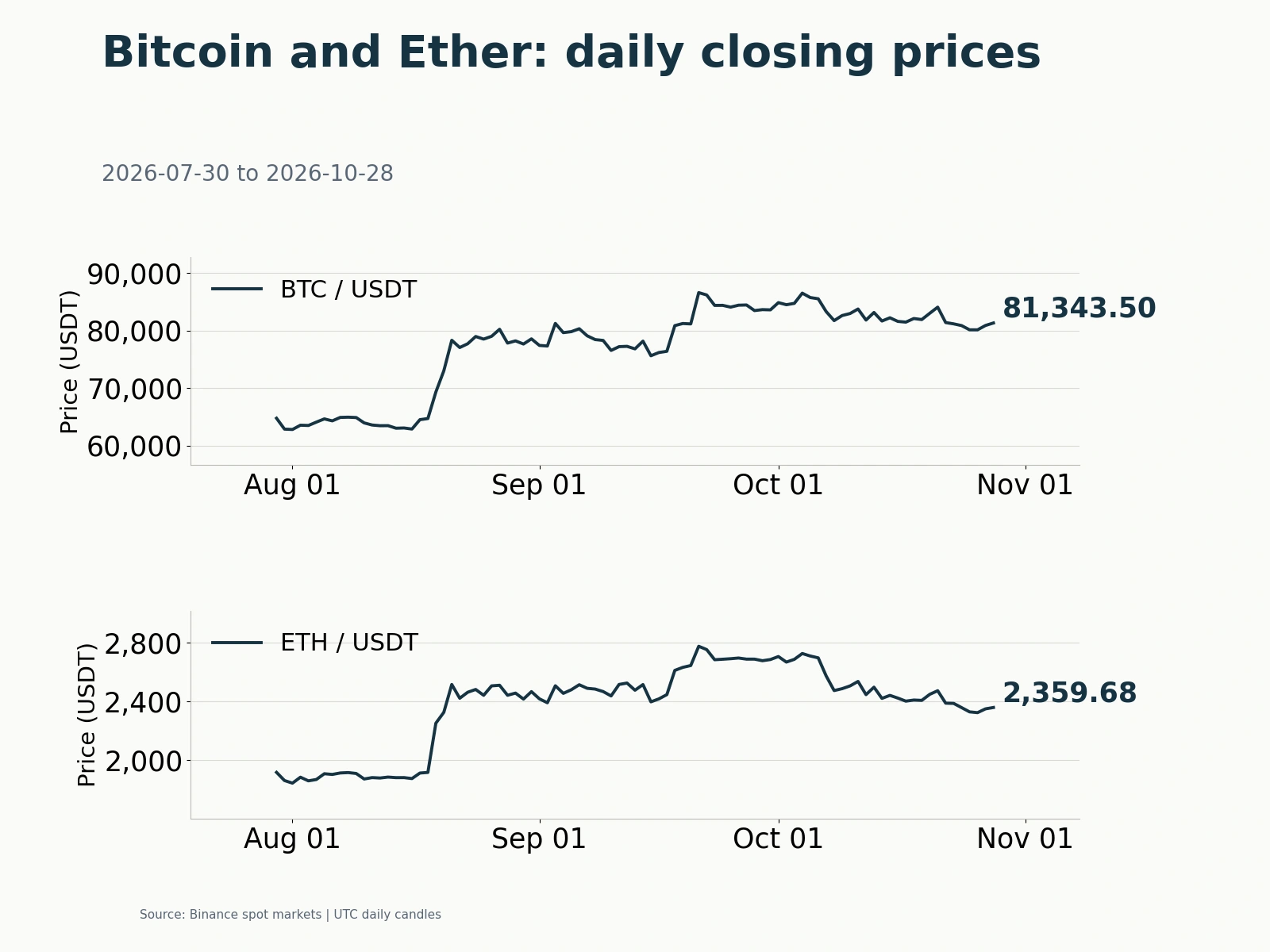
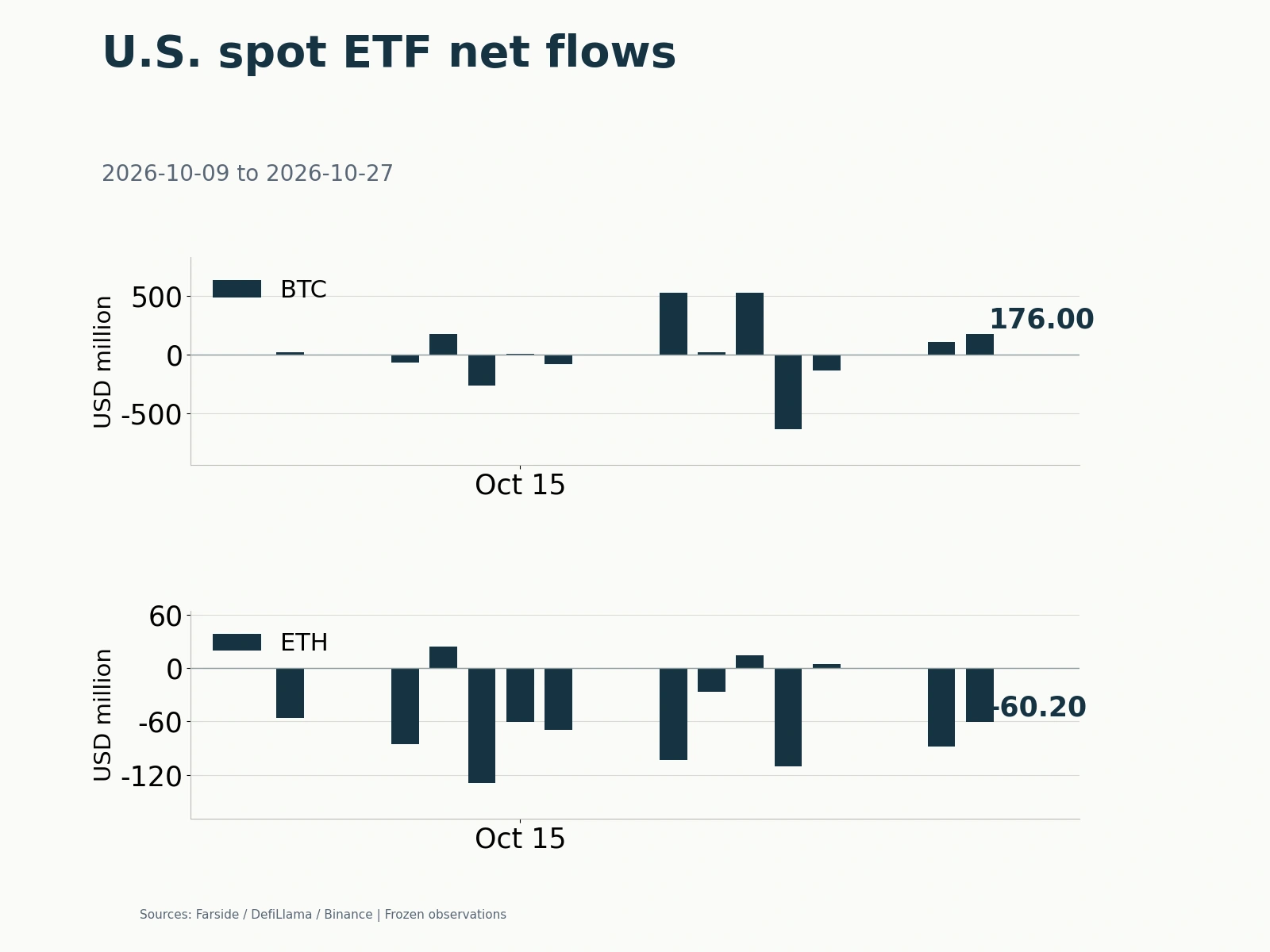
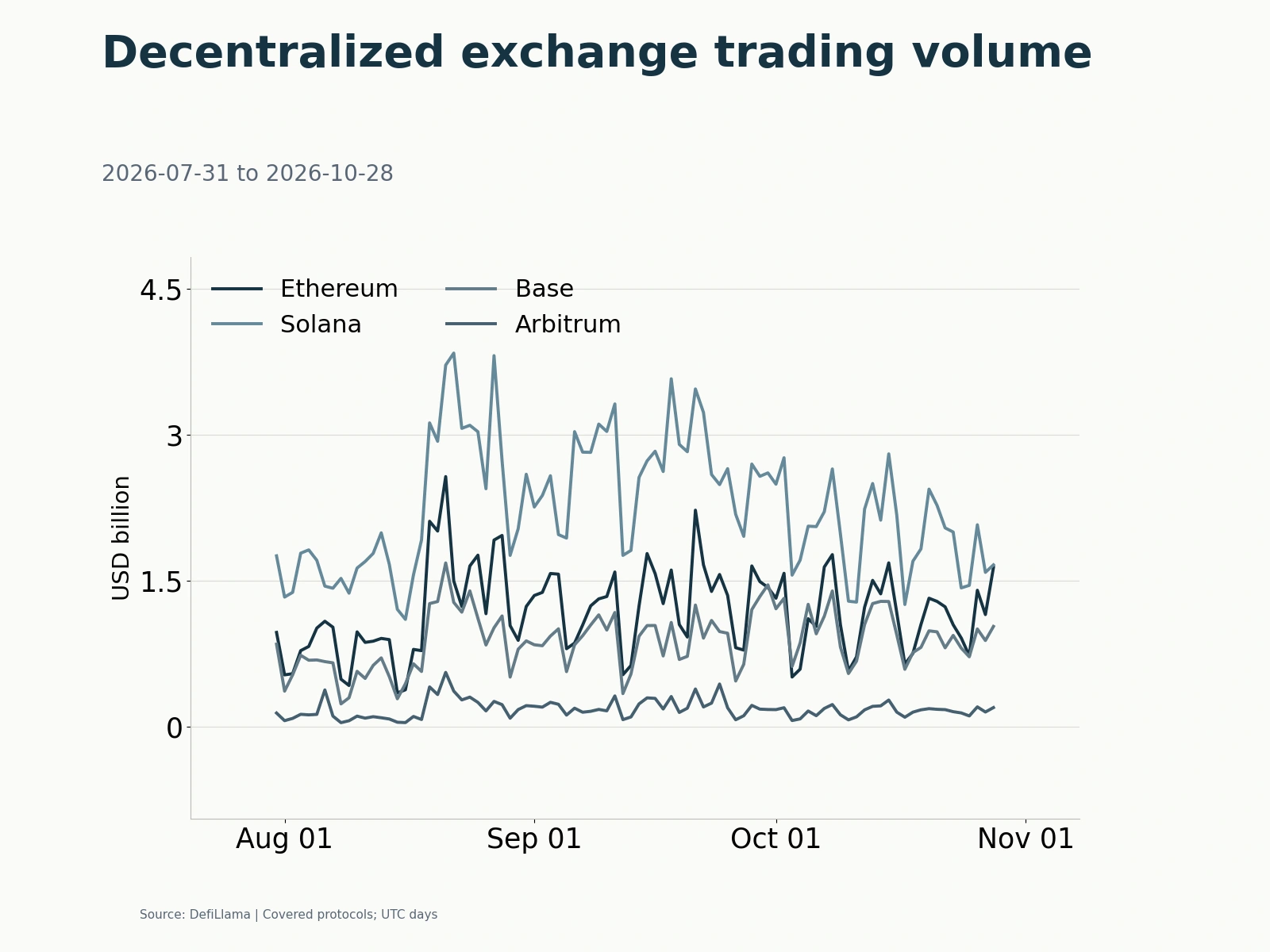
Crypto markets recovered modestly over the weekend, but spot turnover did not increase with prices. On Binance's UTC spot daily candles, closing at 8 a.m. Beijing time on October 11, Bitcoin finished at 82,988.36 USDT, up 0.43% from the previous session, while Ether closed at 2,506.52 USDT, up 0.76%. The rebound followed a temporary easing in macroeconomic and geopolitical concerns, but market microstructure remained sharply divided: near-market bid and ask depth increased substantially for major tokens, while liquidity support for peripheral small- and mid-cap assets remained weak.
Nine of ten major-token samples rise; turnover falls nearly 40%, indicating a low-volume recovery
During the complete October 10 UTC trading day, Bitcoin traded between 82,545.82 and 83,173.29 USDT and closed 352.81 USDT higher than the previous day. Ether traded between 2,486.03 and 2,519.51 USDT and closed 18.82 USDT higher. Based on closing prices on the same Binance platform, ETH/BTC rose to 0.03020, a modest increase of about 0.33%, indicating slightly stronger intraday performance by Ether.
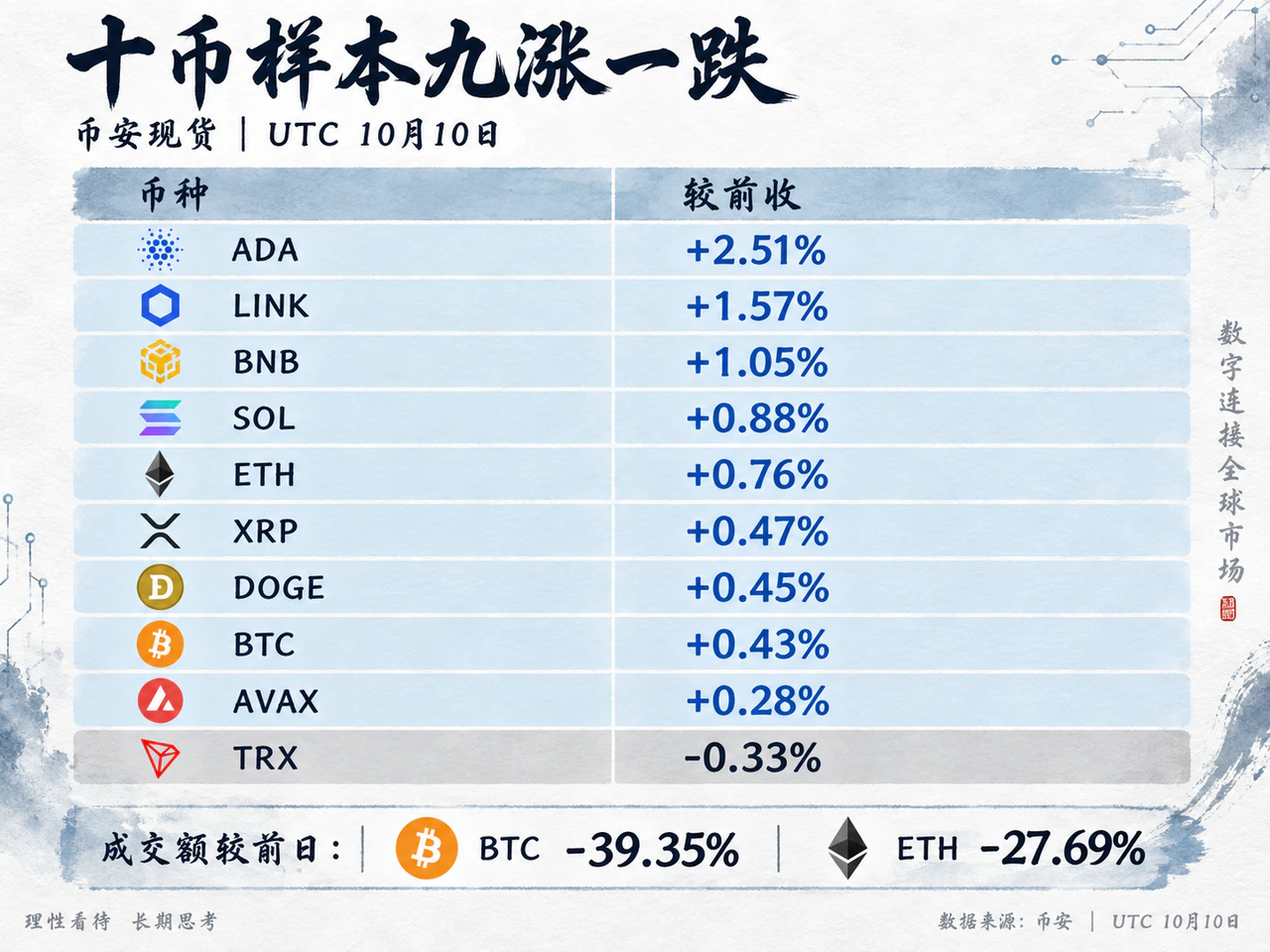
The fixed ten-token observation sample—BTC, ETH, BNB, SOL, XRP, DOGE, ADA, TRX, AVAX and LINK—recorded nine gains and one loss. ADA led with a 2.51% increase, followed by LINK at 1.57%, BNB at 1.05% and SOL at 0.88%; TRX slipped 0.33% against the trend. Small gains were widespread, while stronger performance was concentrated in a few tokens.
Turnover reflected a wait-and-see mood. Daily Binance BTC/USDT turnover was 616 million USDT, down a steep 39.35% from the previous trading day; ETH/USDT turnover was 310 million USDT, down 27.69%. Turnover in the corresponding SOL and XRP pairs fell by more than half. Only ADA saw turnover expand against the trend, by about 39.20%, as it rose, showing funds concentrating on selected opportunities. Weekend activity is normally lower than weekday activity. With current gains formed on reduced spot turnover, sustained incremental buying still requires confirmation from subsequent trading.
Easing macroeconomic and geopolitical expectations provided a backdrop of support. CoinDesk reported on October 9 that Trump's statement that he would not attack Iran before the midterm elections helped Bitcoin recover from its earlier lows and lifted U.S. equity futures. A declining safe-haven premium eased urgent selling for cash. Saturday's narrower intraday ranges and shrinking turnover indicated consolidation while the market awaited fresh fundamental catalysts.
Academic disagreement over underlying cryptographic security also continued to affect sentiment. Responding to Ethereum Foundation researcher Justin Drake's call for the industry to prepare a safe mode, Coinbase cryptography head Yehuda Lindell wrote on October 8 that no current evidence showed the mathematical hardness assumptions underpinning elliptic-curve cryptography had been broken. Galaxy likewise said in an October 9 report that extrapolating a possible long-term technological threat into an imminent risk lacked direct empirical support. Debate over resilience in underlying cryptography influenced risk appetite, but disagreement about security expectations should be assessed separately from an actual technical vulnerability.
Major tokens' near-market depth improves year on year, while peripheral tokens show a structural liquidity discount
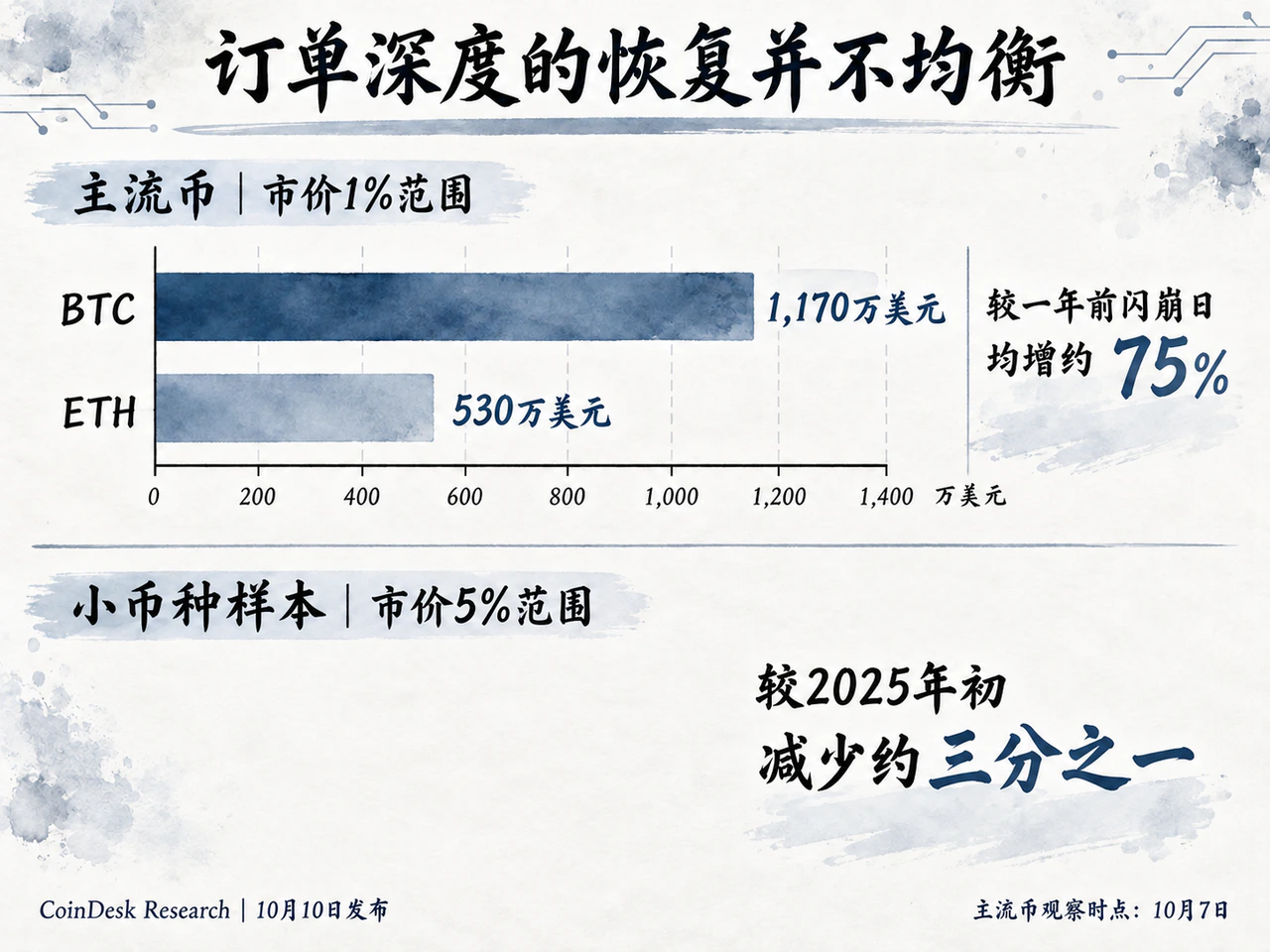
Changes in micro-liquidity provide a key perspective on the quality of this rebound. CoinDesk Research data released on October 10 showed marked divergence in trading depth between major tokens and long-tail assets. As of October 7, BTC order-book depth within 1% of the market price was approximately $11.7 million, about 75% above the flash-crash day a year earlier. ETH depth within the same band was about $5.3 million, also roughly three-quarters higher year on year. Yet in the sampled small-token basket, quoted depth within 5% of market prices had declined by about one-third since early 2025.
Order-book depth directly constrains the market-impact cost of large trades. Thicker near-market bids and offers in major tokens allow institutions to establish and rebalance positions with lower slippage. Deteriorating depth in peripheral tokens sharply increases the discount risk on exit: the same outflow often causes a more severe price decline. The gap between liquidity premiums and discounts explains the severe divergence in buying support beneath the appearance of broad gains.
Major-token order-book depth nevertheless retains procyclical vulnerabilities. CoinDesk Research recorded a rapid withdrawal of about 12% of BTC's bid-and-ask depth within 1% during the October 7–8 correction. Market-maker liquidity adjusts dynamically with market risk, so static orders do not fully represent actual resilience under pressure.
Another CoinDesk statistic that day showed that Bitcoin had already experienced ten sessions in 2026 with daily price moves equal to three times recent volatility, measured against trailing 30-day realized volatility. This exceeded the eight such days in all of 2018, although annualized volatility had declined from about 84% then to around 46%. Interviewed market participants suggested that macro shocks and crowded derivatives positions could amplify sudden repricing in a market characterized by subdued routine volatility but more pronounced tail moves.
Overall, the weekend recovery was primarily a defensive test of existing order-book support. Greater near-market depth in major tokens improved normal trading conditions, but sharply lower spot turnover and missing liquidity in peripheral assets limited the spread of the rebound into a trend. Sustained gains still depend on incremental spot buying returning alongside effective turnover recovery, and on the stability of bid depth under external pressure.
Click Read Original for the full details.