On October 28, 2026, cross-border payments platform Movantis announced its integration with Stellar, initially planning to use USDC for a U.S.–El Salvador settlement corridor. On the same day, DTCC's DTC announced the launch of its DTS tokenization service. In trading, DefiLlama data showed day-on-day increases in decentralized exchange volume on Ethereum, Solana, Base and Arbitrum, while protocol revenue was mixed. Trading, asset transfers and cross-border payments are all advancing, but they differ in maturity and in how they generate revenue.
Ethereum DEX volume rises 42.2%; Solana and Base revenue falls
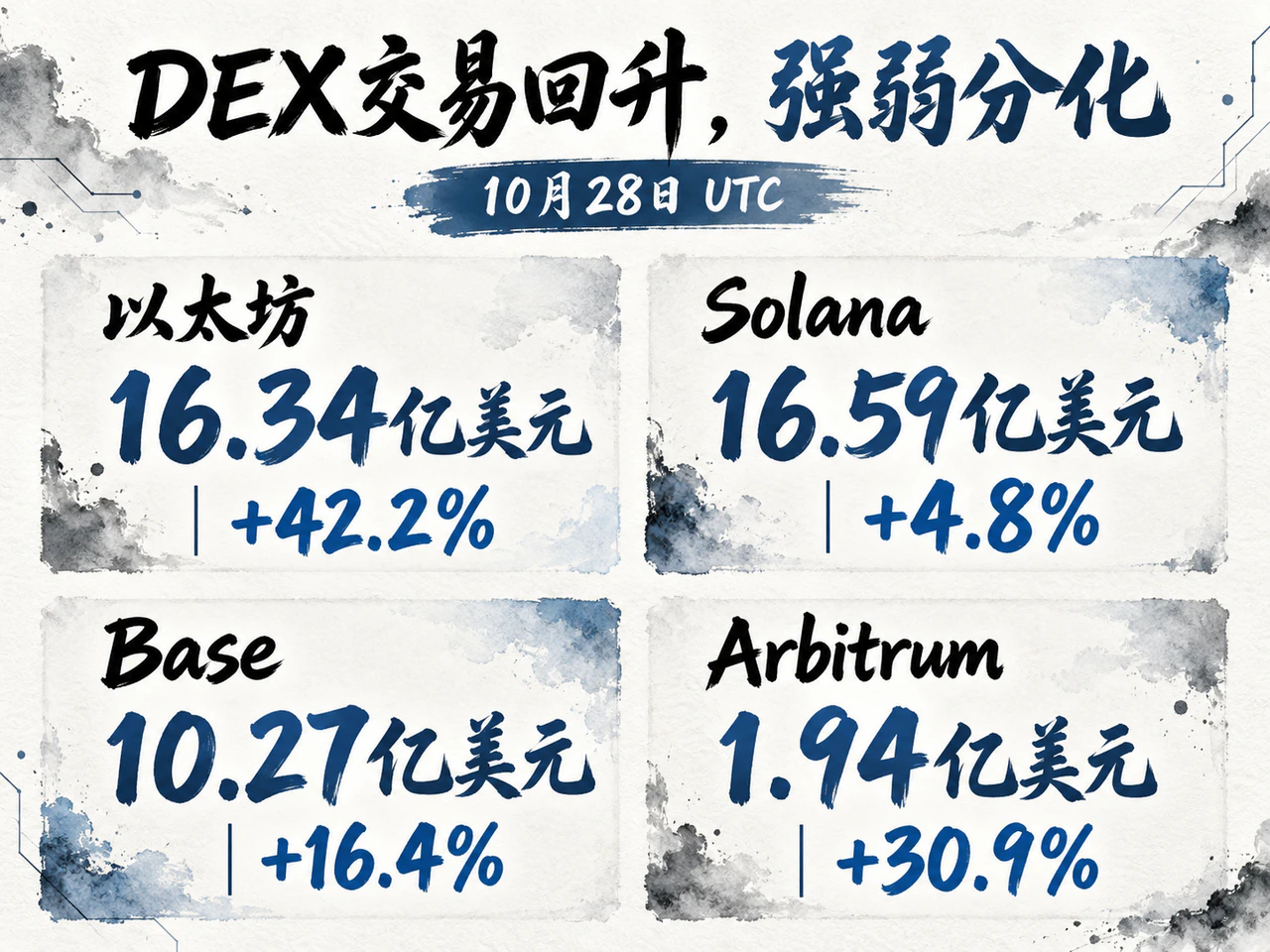
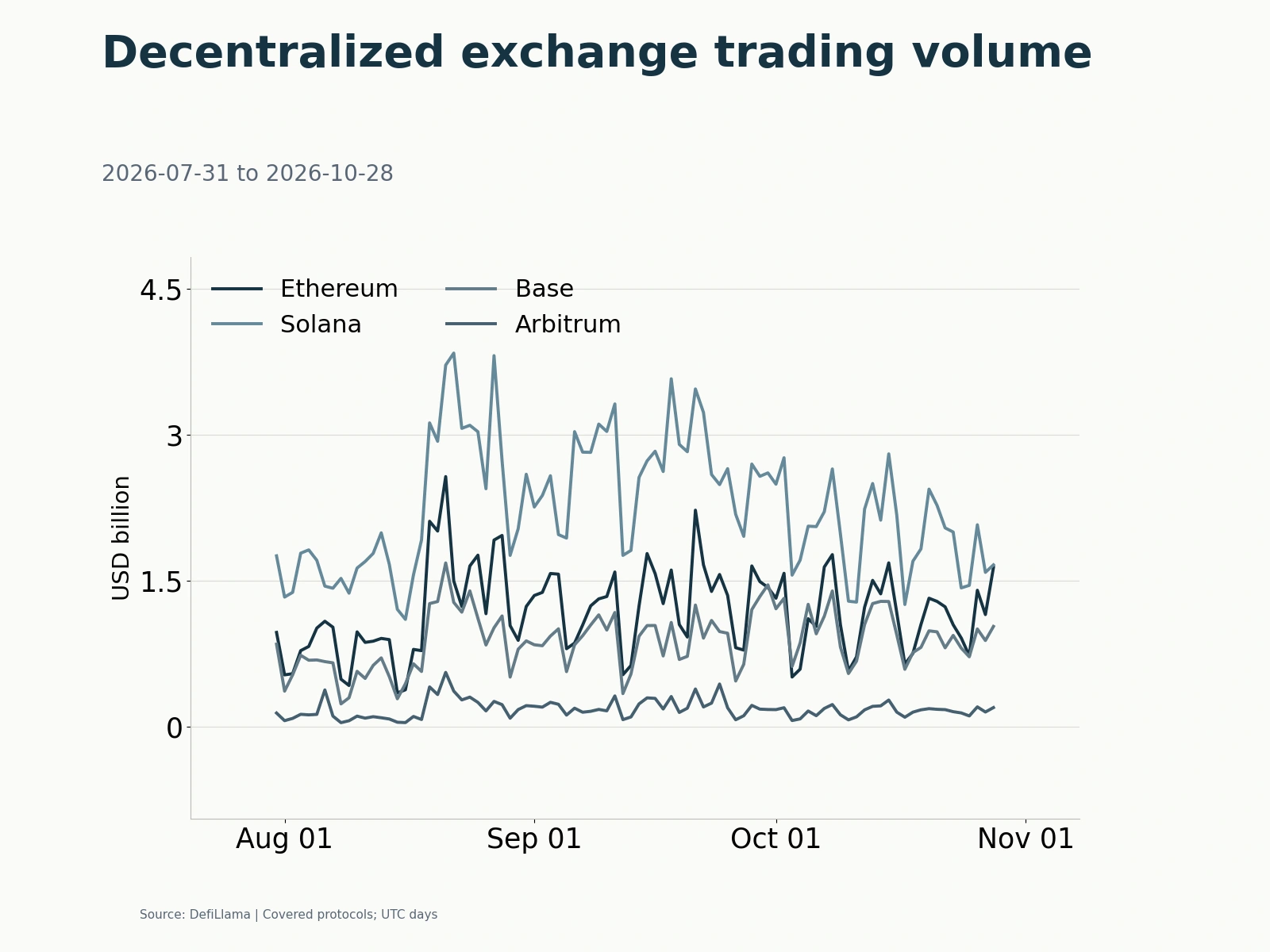
For the relevant UTC trading day on DefiLlama, Ethereum DEX volume totaled US$1.634 billion on October 28, up 42.2% from the previous day. Solana recorded US$1.659 billion, up 4.8%. The two networks had similar volumes, but the daily increase was much stronger on Ethereum. Base and Arbitrum recorded US$1.027 billion and US$194 million, up 16.4% and 30.9%, respectively, extending the recovery to Ethereum layer-2 networks.
Compared with the average of the 30 complete trading days through October 28, Ethereum's volume was 40.7% higher, while Solana's was 18.0% lower. Base and Arbitrum were 3.9% and 23.6% above their respective averages. All four networks grew day on day, but their relative strength differed: Ethereum activity rose markedly, while Solana remained below its recent norm. A sustained recovery will require subsequent volumes to remain above each network's normal range.
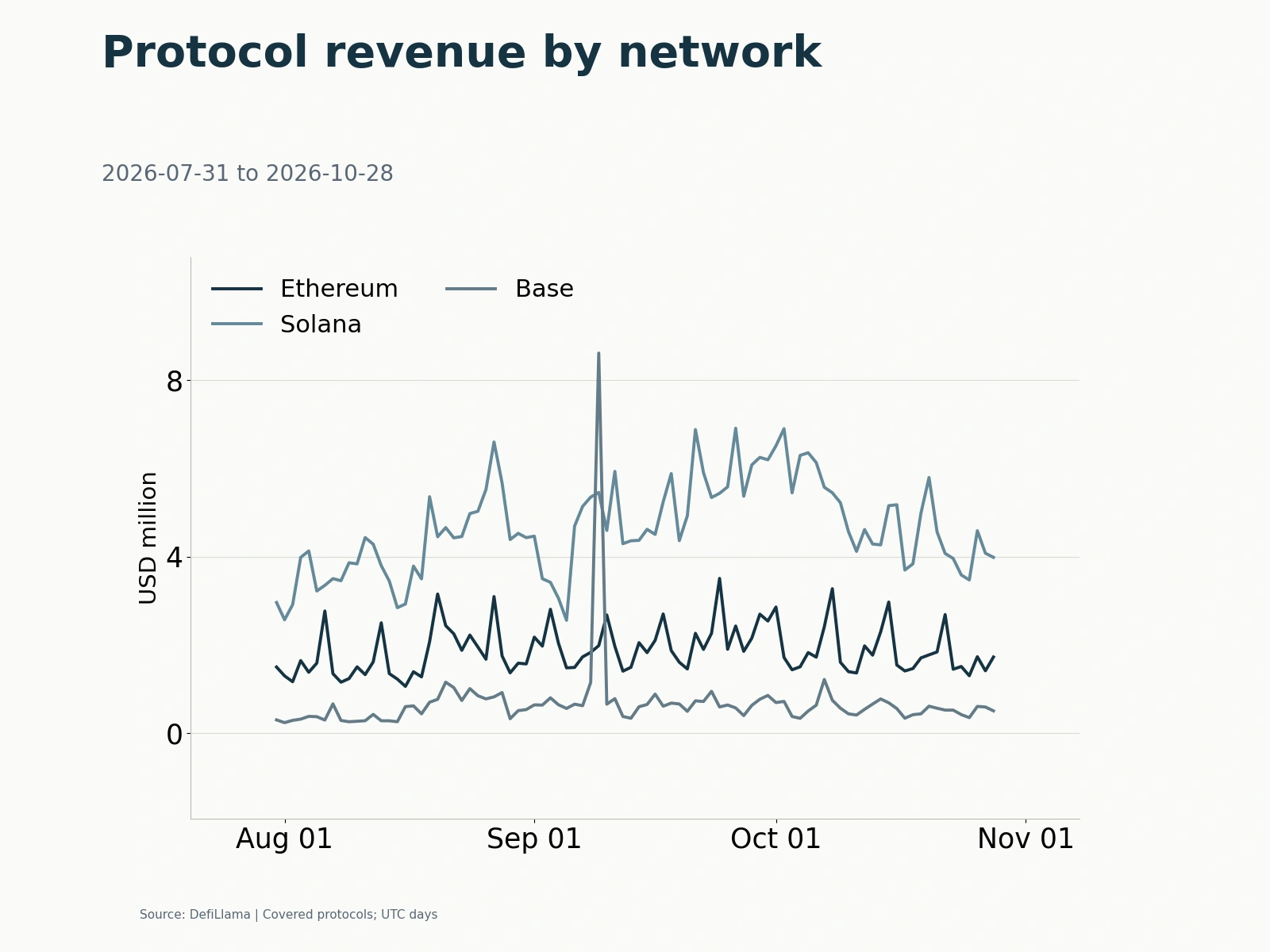
Volume and protocol revenue did not move together. In DefiLlama's network-level aggregation, which includes only protocols it covers, Ethereum generated approximately US$1.73 million in protocol revenue, up 22.0% on the day. Solana generated about US$3.99 million, down 2.3%, and Base about US$510,000, down 14.6%. Protocol revenue here means the portion of user fees retained by protocols themselves. It is accounted for separately from fees paid to liquidity providers and proceeds ultimately accruing to token holders. Differences in application mix and fee structures mean that higher turnover does not necessarily produce proportionately higher revenue.
Assessing on-chain activity therefore requires looking beyond volume rankings to the applications handling the trades and the layer retaining the revenue. High-volume networks can attract liquidity and market makers, but operating revenue may not increase alongside activity if most incremental business carries low fees. The day's data already illustrate this distinction.
DTC launches DTS; sustained demand awaits actual conversion volumes
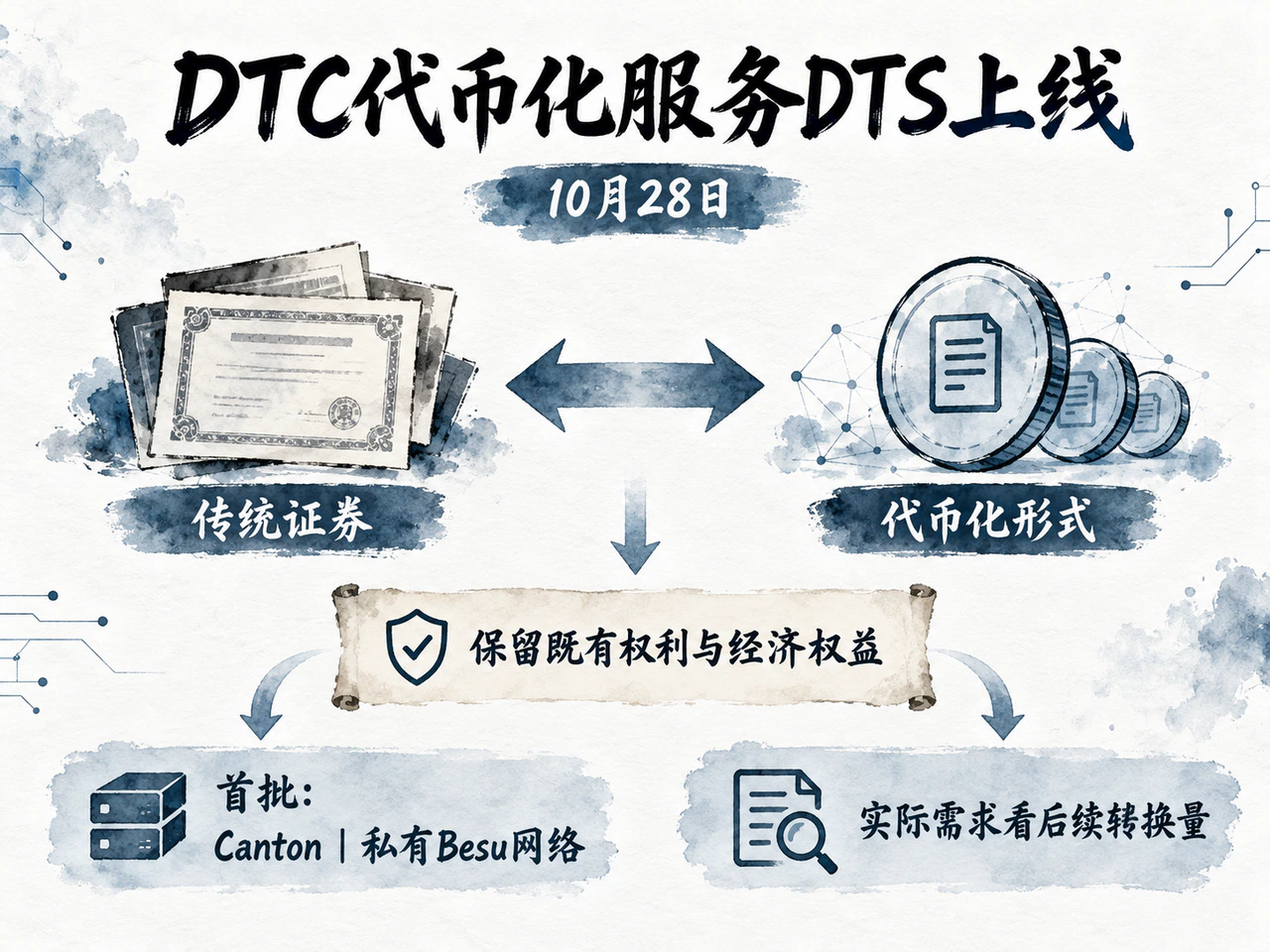
DTC, a DTCC subsidiary, announced the launch of its DTS tokenization service on October 28, initially connecting to Canton and DTCC's private Besu network. While preserving existing securities rights and economic interests, the service allows eligible users to convert holdings between conventional and tokenized forms and transfer them to digital wallets.
For the on-chain economy, this principally adds use cases involving asset transfers and collateral mobility. Launching the service puts the infrastructure in place; whether it creates lasting demand will depend on subsequent conversion and usage volumes.
Movantis integrates Stellar, but the first corridor remains planned
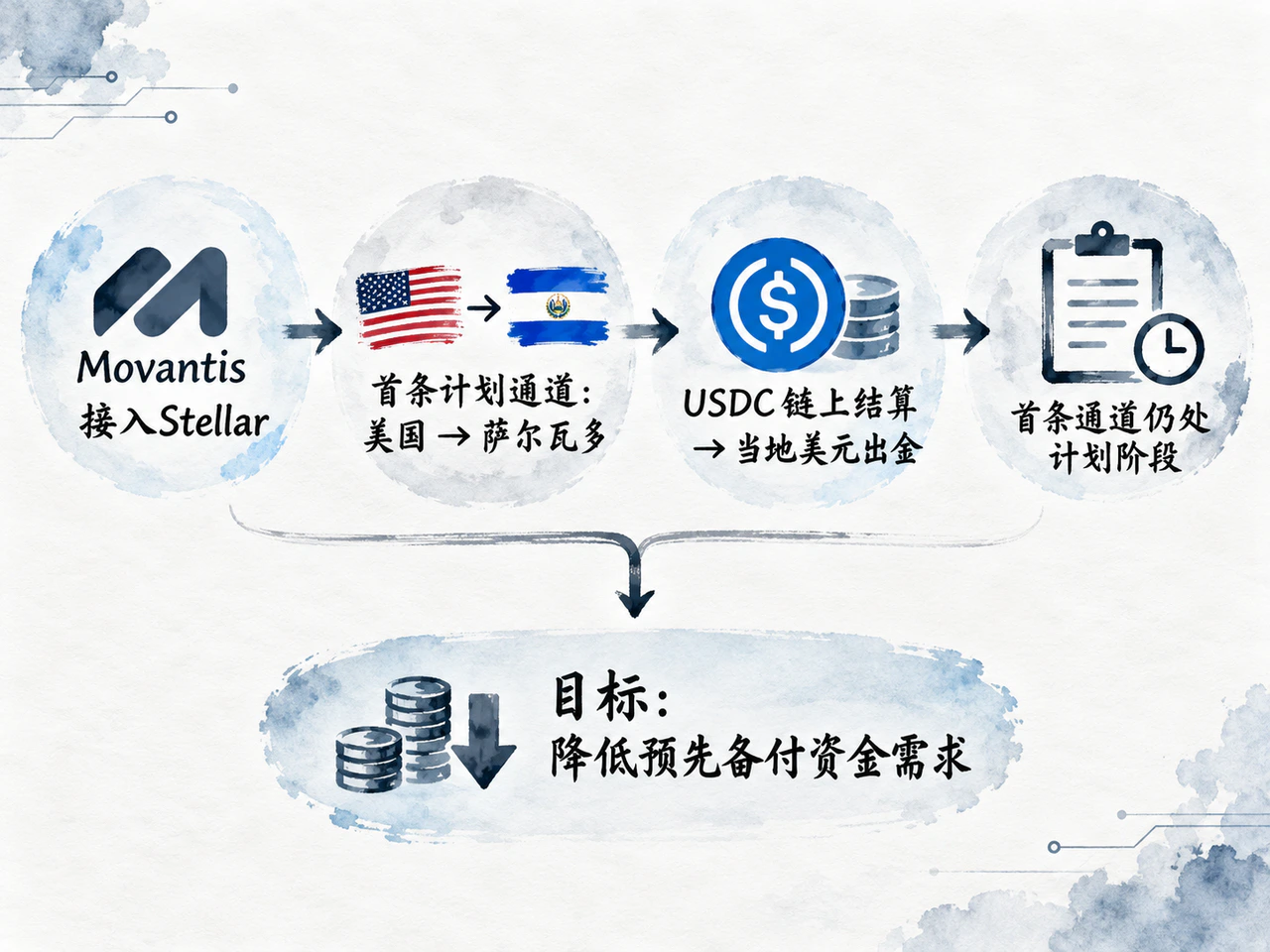
Movantis is adding Stellar as a digital settlement route within its multi-rail architecture. The blockchain handles the transfer of value, while Movantis and local partners provide liquidity, any necessary currency conversion and the final payout. The first planned use case is the U.S.–El Salvador corridor. Because El Salvador uses the U.S. dollar, USDC settlement can be followed by a dollar payment to the recipient, reducing an additional currency-conversion step.
The main economic benefit concerns working capital. Traditional cross-border payment providers typically prefund destination accounts to ensure recipients are paid on time. Movantis says on-chain settlement can operate around the clock, including weekends and holidays, potentially reducing the capital that must be prefunded in a corridor. Shorter settlement times could allow a provider to support the same transaction volume with less idle cash. Actual savings will still depend on settlement speed, local liquidity and off-ramp capabilities.
Movantis's existing customer network provides a foundation for future migration. The company says its overall network processes more than US$60 billion and over 200 million transactions annually, connecting more than 90,000 payout locations. Those figures describe the company's entire network. Its first Stellar corridor remains a planned use case and cannot be treated as an estimate of on-chain settlement volume. The proportion that actually migrates will depend on business decisions after launch.
The evaluation of such partnerships will increasingly shift from which blockchain is connected to actual settlement counts, the time funds remain tied up, payout success rates and unit costs. Lower on-chain fees can improve the user experience, but an individual payment may contribute little to network fee revenue. As payment volumes grow, the benefits may accrue separately to payment providers, local liquidity providers and network operators. How business growth reaches the native token will depend on the specific fee and distribution mechanisms.
The three developments on October 28 correspond to trading, asset transfers and real-world payments. Their common feature is that on-chain infrastructure is moving closer to established financial activity; their differences lie in maturity and revenue formation. Trading applications already provide operating data that can be compared over time. Whether DTS and new payment corridors generate stable demand must still be established through actual asset conversions, settlement volumes and fund flows.