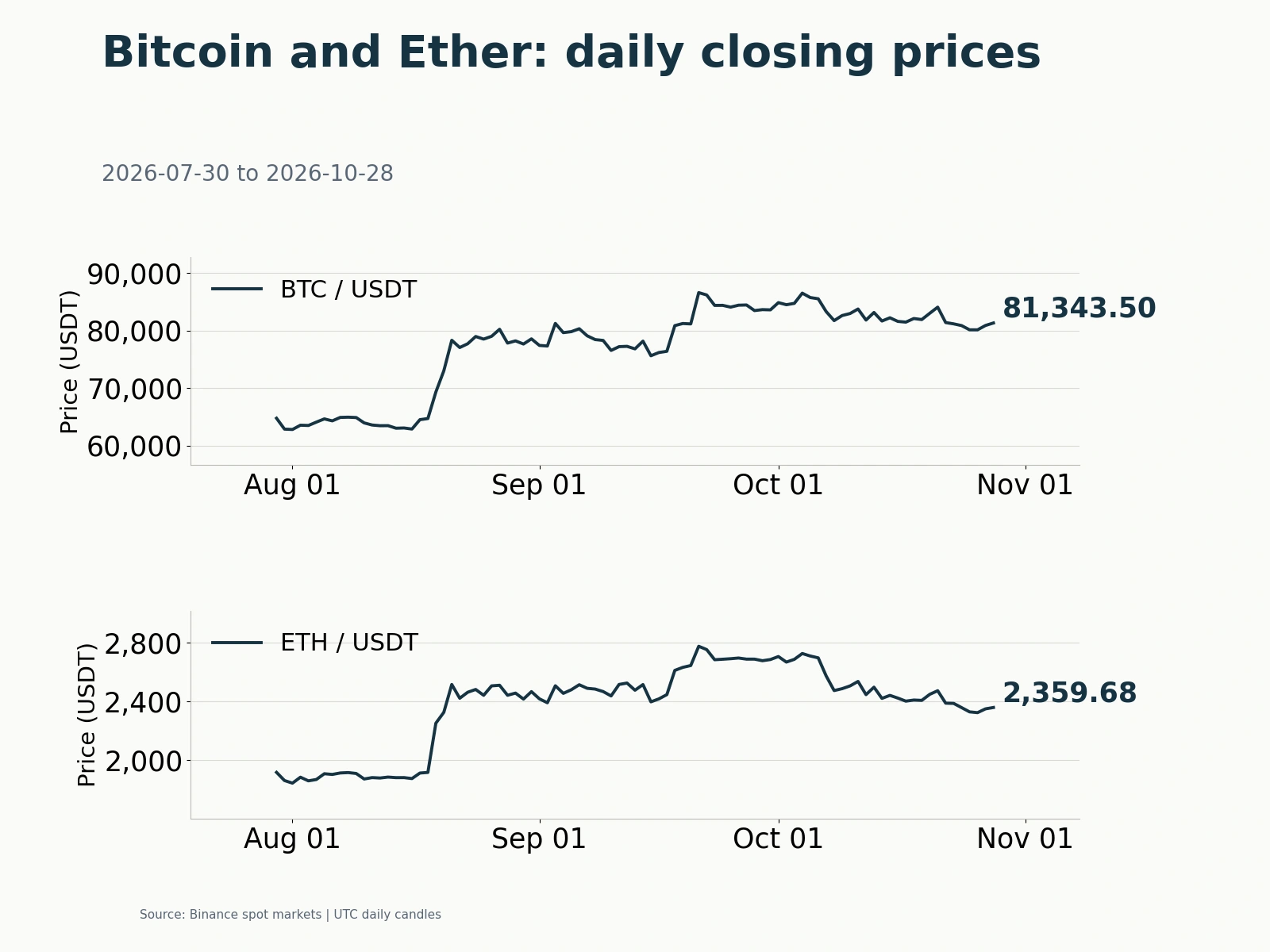
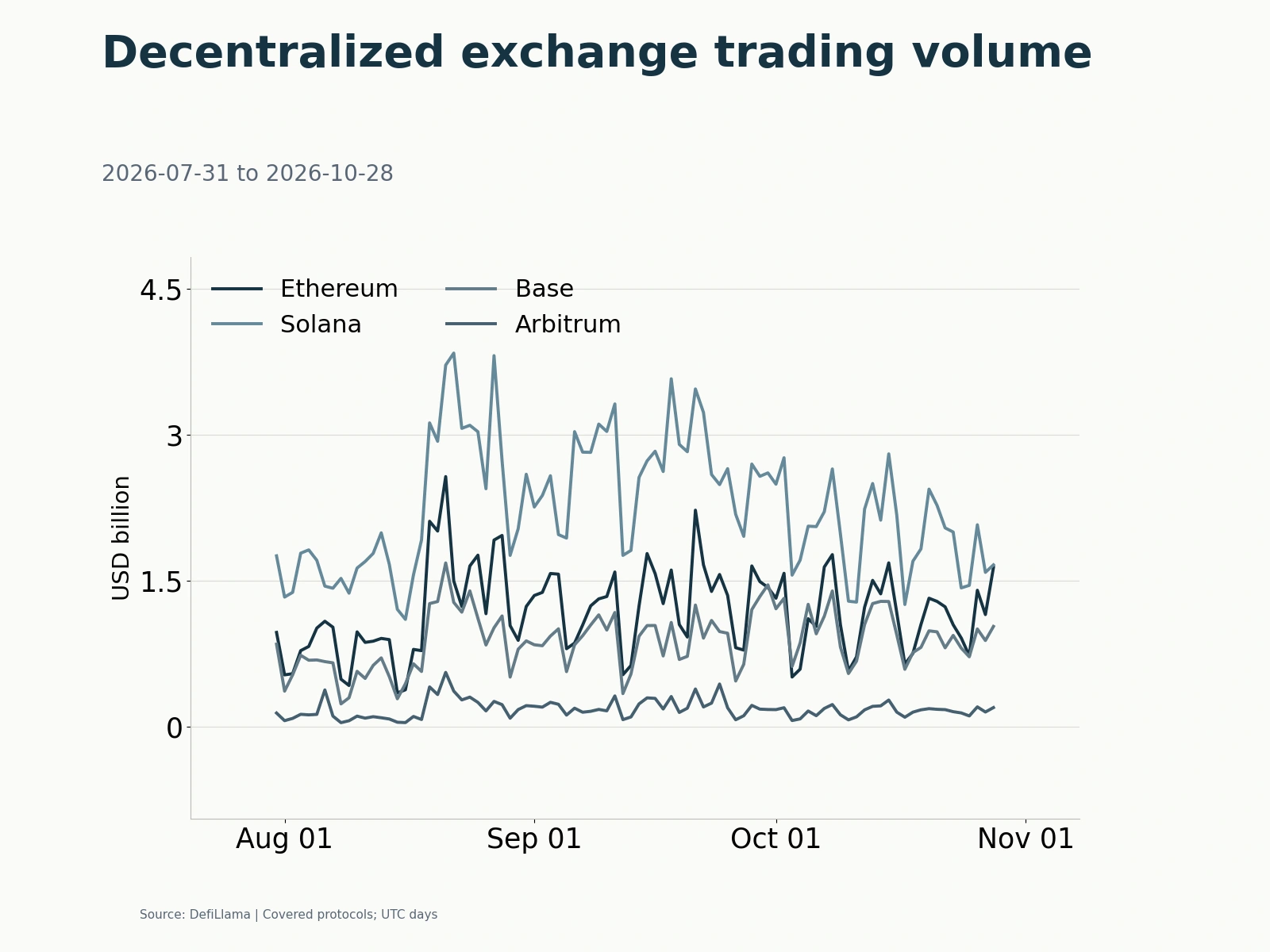
On October 28, 2026, Coincall highlighted recent reversals in ETF subscriptions and redemptions, together with the approaching month-end options expiry, as key trading considerations. The available data reveal a divided funding picture: U.S. spot Bitcoin ETFs have returned to net inflows, while Ether ETFs continue to see net outflows; circulating dollar stablecoin supply is contracting; and perpetual futures funding rates remain positive, leaving longs paying to maintain their positions. A partial return of allocation capital has yet to become a market-wide expansion in crypto funding.
Bitcoin ETFs receive US$286.3 million in two days; Ether ETFs lose US$148.8 million
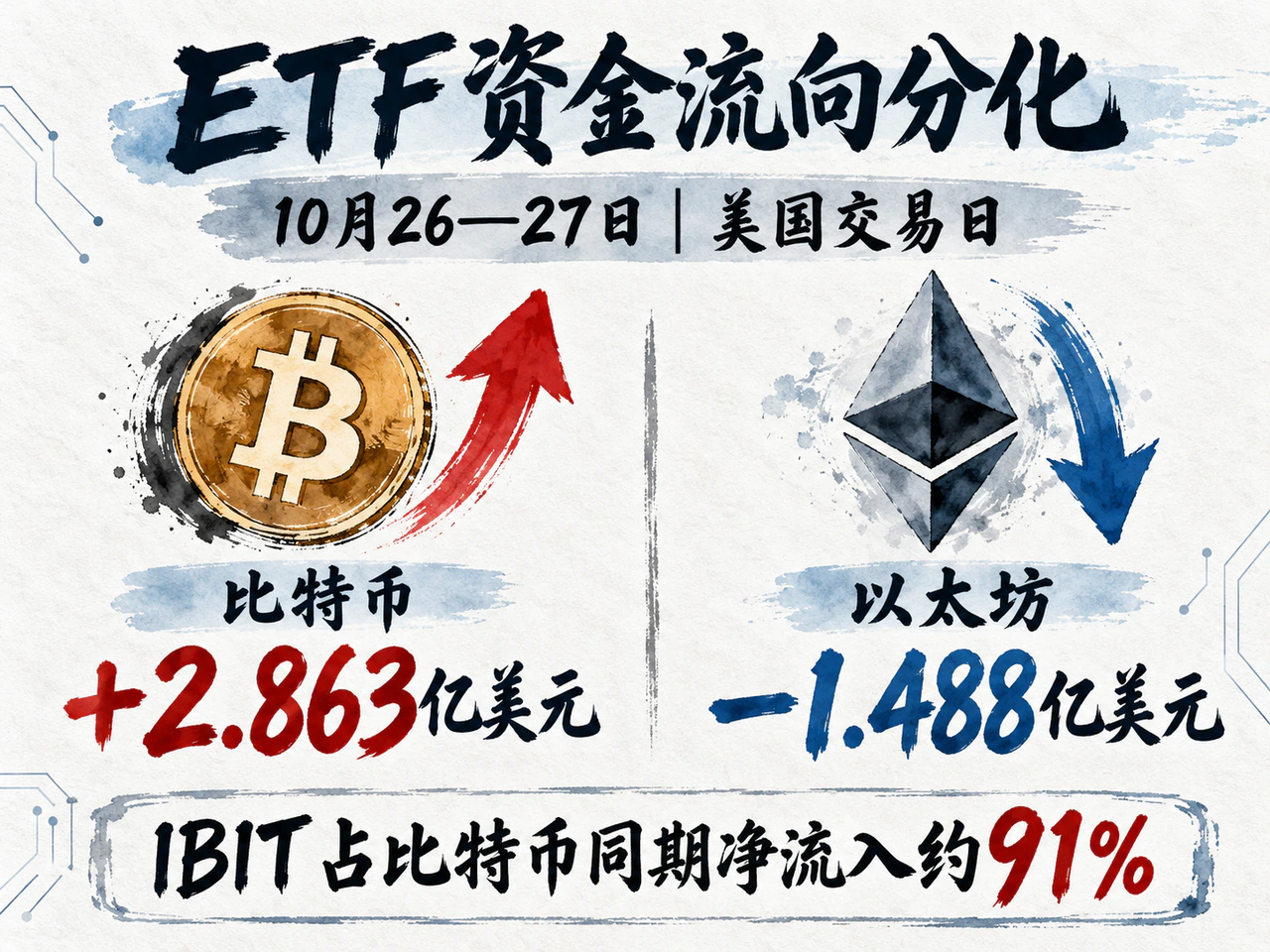
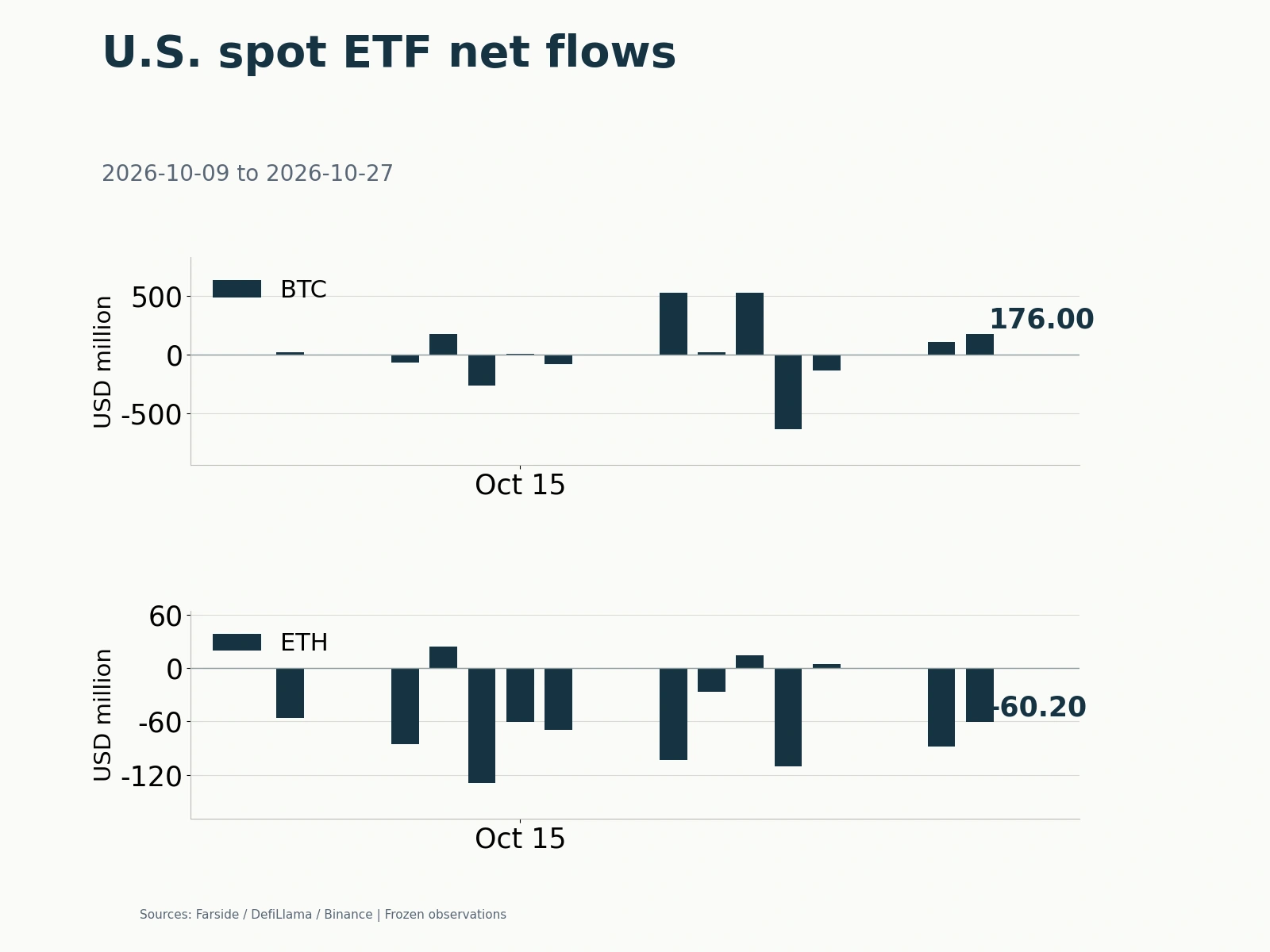
Farside's fully reported U.S. trading-day data show net inflows of US$176 million into U.S. spot Bitcoin ETFs on October 27, following US$110.3 million on October 26, for a two-day total of US$286.3 million. Subscriptions were concentrated in BlackRock's IBIT, which received US$110.3 million and US$151.5 million on the two days. Fidelity's FBTC received US$24.5 million on October 27. IBIT accounted for approximately 91% of the aggregate two-day net inflow, leaving buying concentrated in a handful of large products.
These purchases followed substantial redemptions. Bitcoin ETFs received US$524.8 million on October 21, then lost US$635.6 million on October 22 and another US$137.9 million on October 23. The combined outflow over the latter two days was US$773.5 million. Inflows over the first two trading days of this week offset only about 37% of that amount. Consecutive inflows have improved near-term demand, but their size still points to a recovery in progress.
Across the seven U.S. trading days from October 19 to October 27, Bitcoin ETFs recorded cumulative net inflows of US$587.5 million. A positive total despite large interim redemptions suggests that allocation demand retains some resilience, while daily flows remain volatile. The next questions are whether net inflows persist and whether subscriptions spread to more products. One strong day's subscriptions are insufficient evidence that buying has stabilized.
Ether ETFs continued to record net outflows: US$88.6 million on October 26 and US$60.2 million on October 27, a combined US$148.8 million. BlackRock's ETHA lost US$104.7 million and US$93.3 million on those days, while Fidelity's FETH received US$16.1 million and US$28.6 million, partially offsetting redemptions. From October 19 to October 27, Ether ETFs lost a cumulative US$369.5 million.
Although both types of ETF trade through conventional securities accounts, their flows are moving in different directions. Bitcoin ETFs have regained support, while new subscriptions to Ether ETFs remain insufficient to offset redemptions from major products. Assessing institutional demand requires more than asking whether money is entering crypto ETFs. It also requires identifying the assets and products receiving that money, and whether it stays for several consecutive trading days.
Stablecoin supply falls 1.60% over a month as perpetual funding exceeds its seven-day average

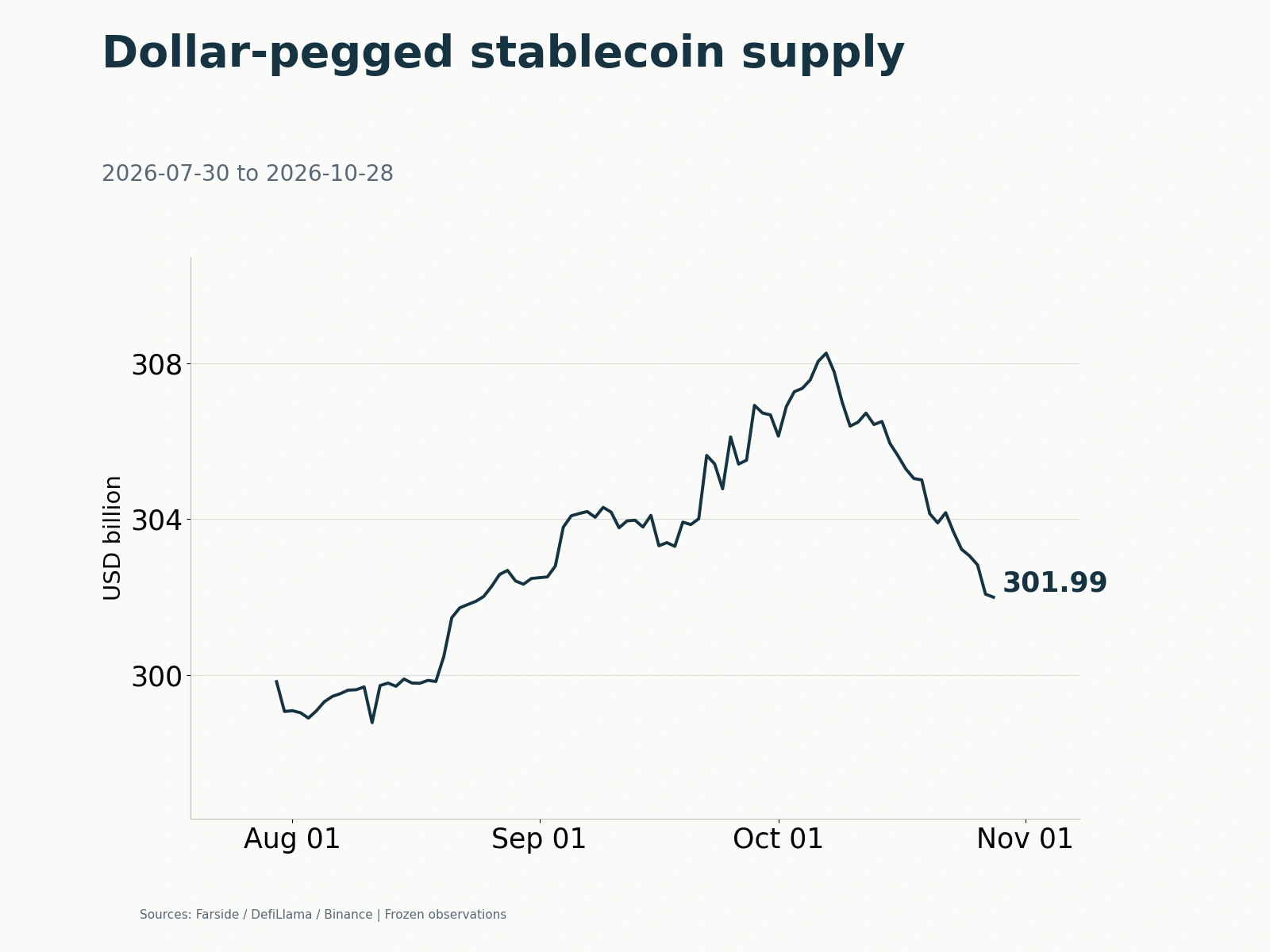
Beyond ETF flows, the dollar funding base within crypto is also shrinking. DefiLlama's historical series shows circulating dollar-pegged stablecoin supply falling from US$306.918 billion on September 28 to US$301.994 billion at 00:00 UTC on October 28. The reported monthly decline was approximately US$4.925 billion, or 1.60%. Supply fell by about US$1.908 billion over the week from October 21 to October 28 and by approximately US$78.3 million in the latest day.
These figures measure the circulating supply of dollar-pegged stablecoins. Stablecoins support trade settlement, derivatives margin and on-chain payments, so their outstanding supply forms part of the funding base available for those activities. Continued contraction means that broader market funding has not expanded alongside the recovery in Bitcoin ETF demand. If the price rebound mainly relies on reallocating existing capital, its durability will depend more heavily on buying spreading beyond a small number of assets and products.
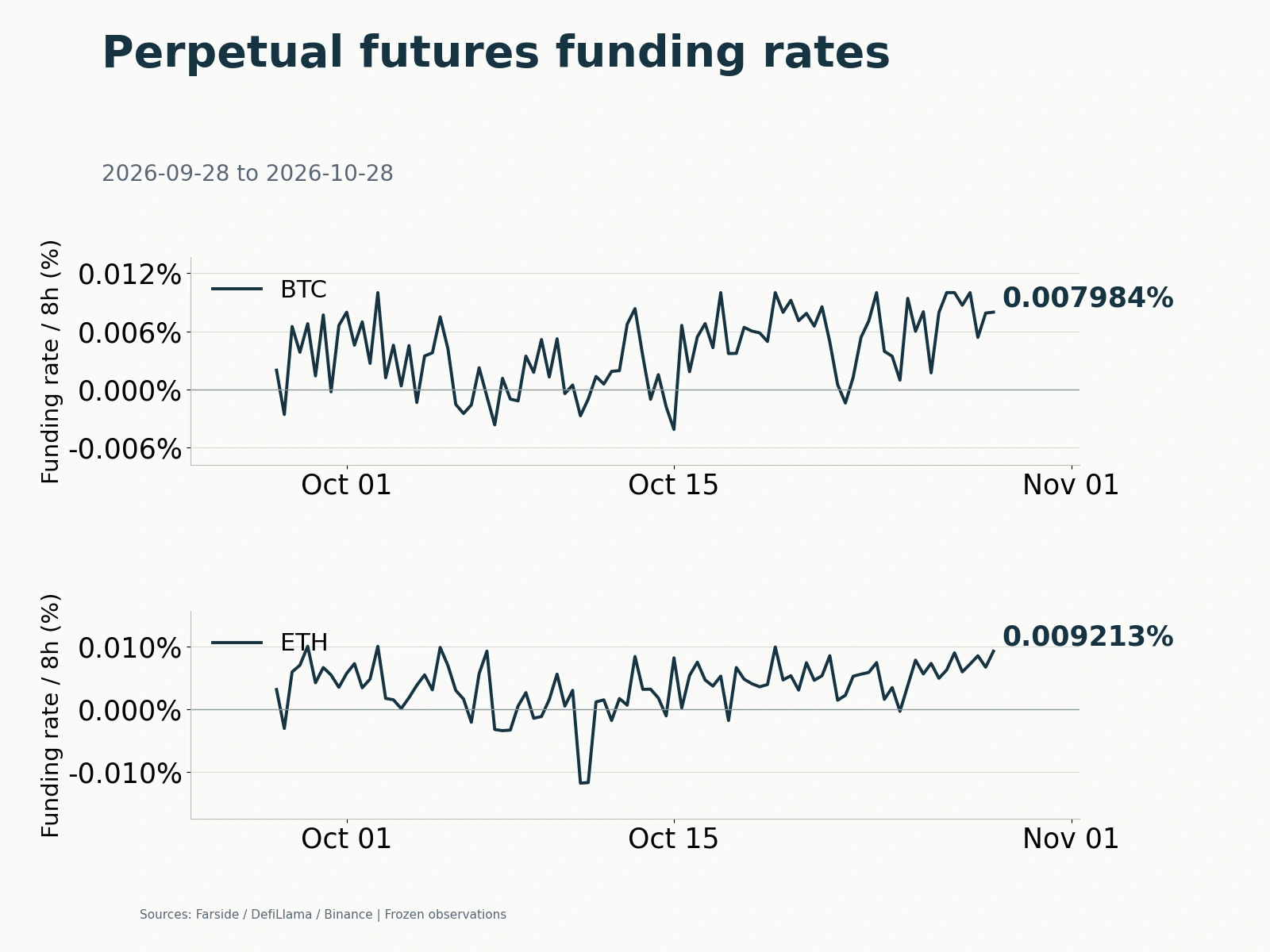
Positive funding rates on perpetual futures show that longs are still paying to hold positions. Binance BTCUSDT perpetual funding rates at 00:00, 08:00 and 16:00 UTC on October 28 were 0.005373%, 0.007890% and 0.007984%. The corresponding ETHUSDT rates were 0.008495%, 0.006678% and 0.009213%. Each figure is the rate for a single eight-hour settlement; a positive rate means longs pay shorts.
The average of the three BTCUSDT funding rates that day was approximately 0.00708%, above the roughly 0.00591% average for the latest 21 settlements through 16:00 UTC on October 28. ETHUSDT's daily average of about 0.00813% was also above its corresponding seven-day average of approximately 0.00545%.
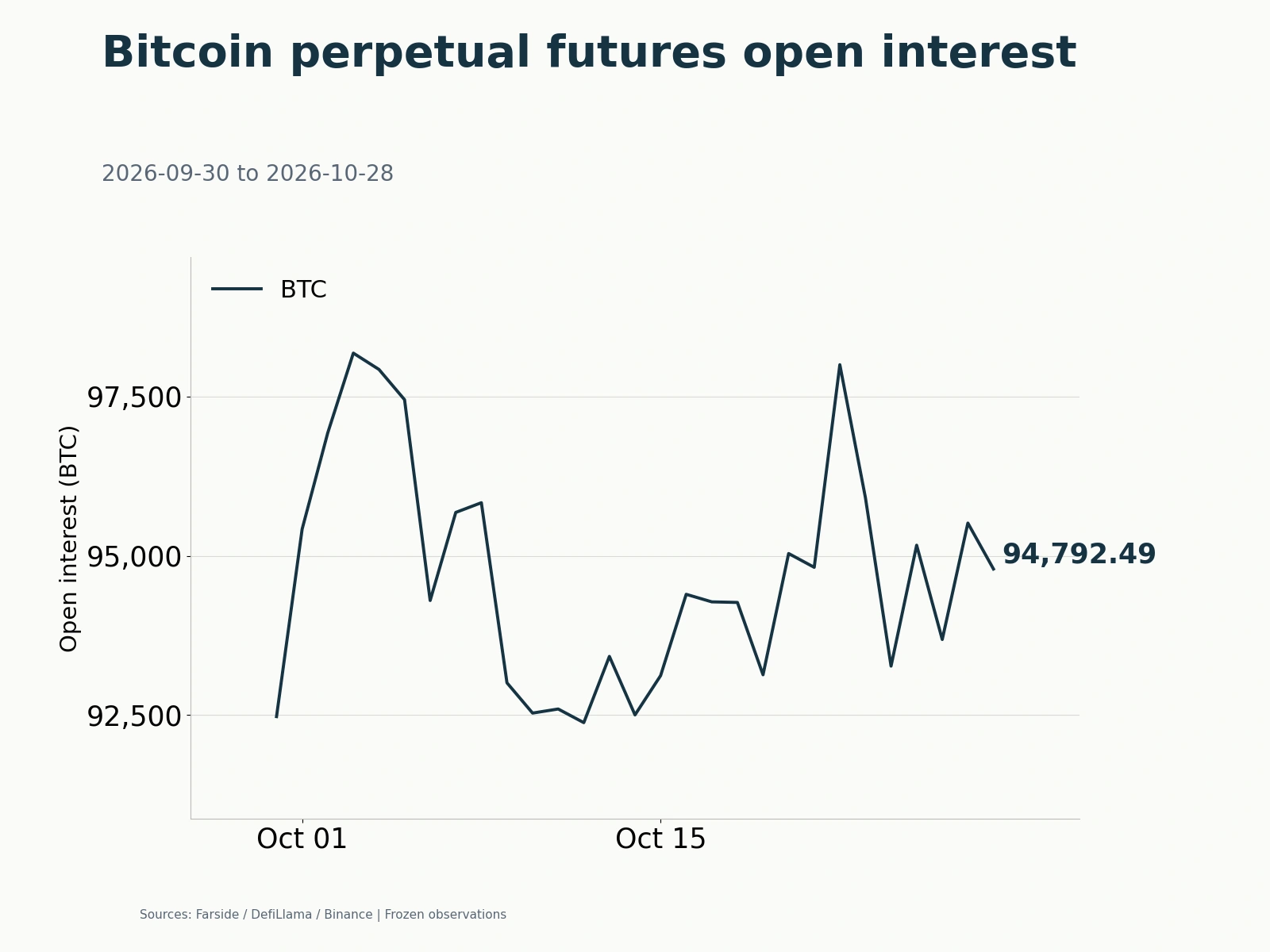
Open interest contracted at the same time. Binance BTCUSDT open interest fell from approximately 98,000 BTC at 00:00 UTC on October 22 to about 94,800 BTC at 00:00 UTC on October 28, a decline of roughly 3.3%. Its notional value fell from around 8.237 billion USDT to 7.666 billion USDT, down approximately 6.9%. The decline in coin-denominated open interest shows that the fall in notional value reflected position reductions as well as price changes.
With positions shrinking while funding remains positive, longs that stay in the market continue to bear carrying costs. Coincall also noted that the October 30 month-end options expiry falls close to this week's policy events, concentrating adjustments in short-dated options positions. Against a backdrop of divided allocation flows and declining stablecoin supply, the durability of recent buying depends on whether ETF inflows broaden, stablecoin supply stops falling, and open interest starts growing again despite higher financing costs.