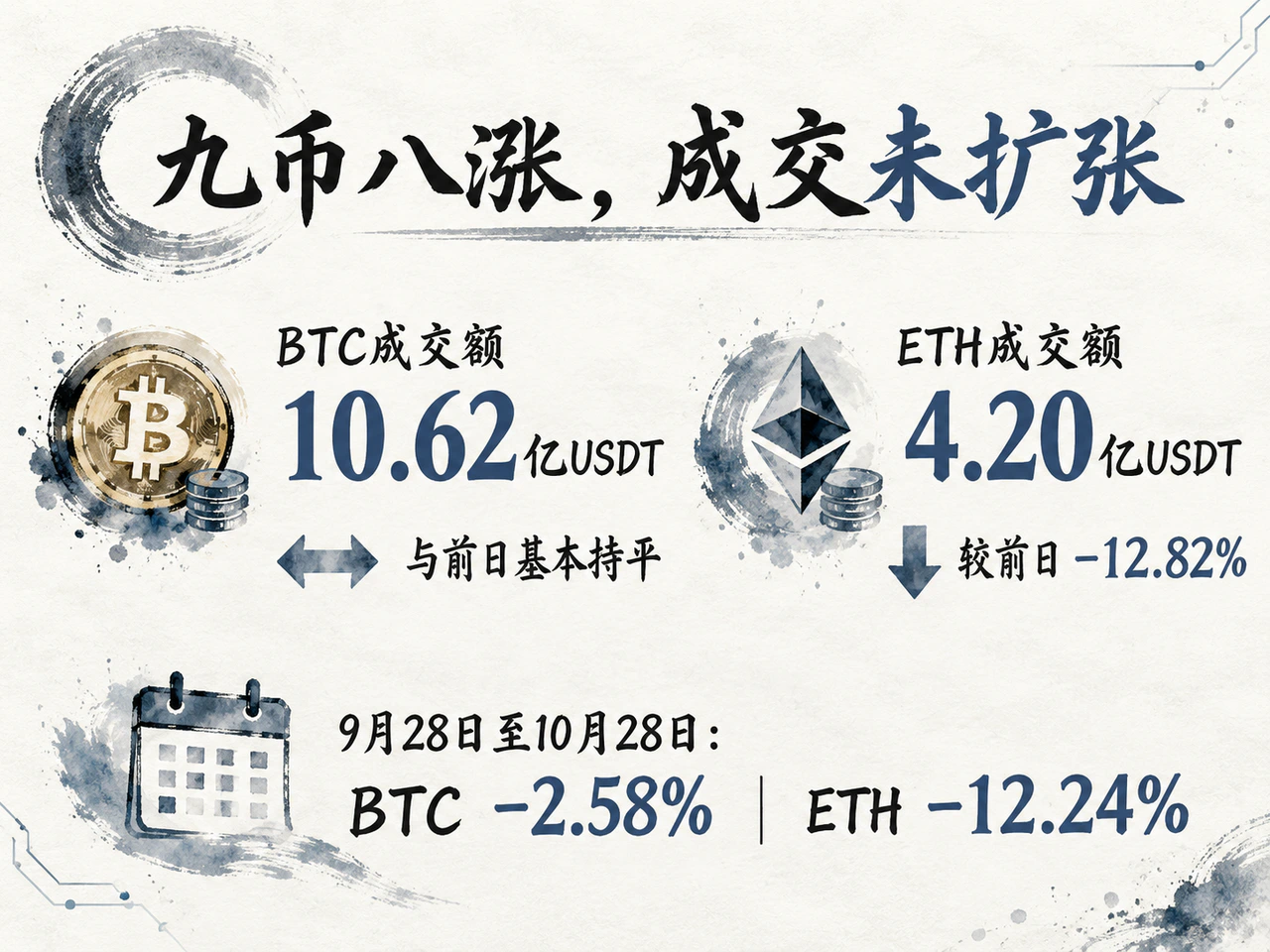
On October 28, 2026, the Federal Reserve left interest rates unchanged and crypto prices edged higher. Based on Binance spot markets quoted in USDT and UTC daily candles, eight of the nine highly liquid assets selected at the start of this research rose, while one fell. Bitcoin and Ether closed up 0.54% and 0.40%, respectively. Yet Bitcoin turnover was essentially unchanged from the previous day, and Ether turnover fell 12.82%. The price recovery has yet to attract a corresponding expansion in trading.
Eight coins advance, but turnover lags and monthly losses persist
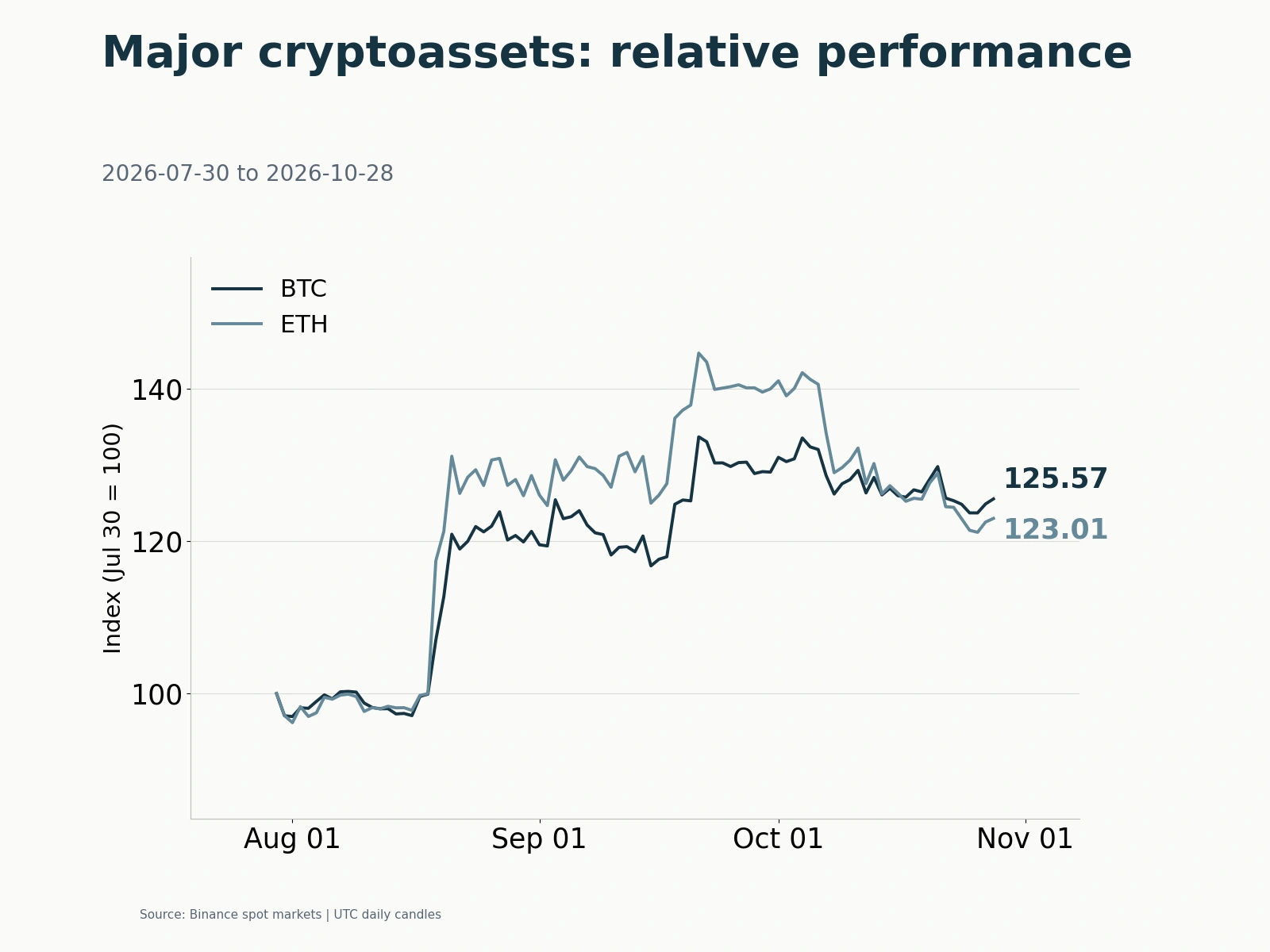
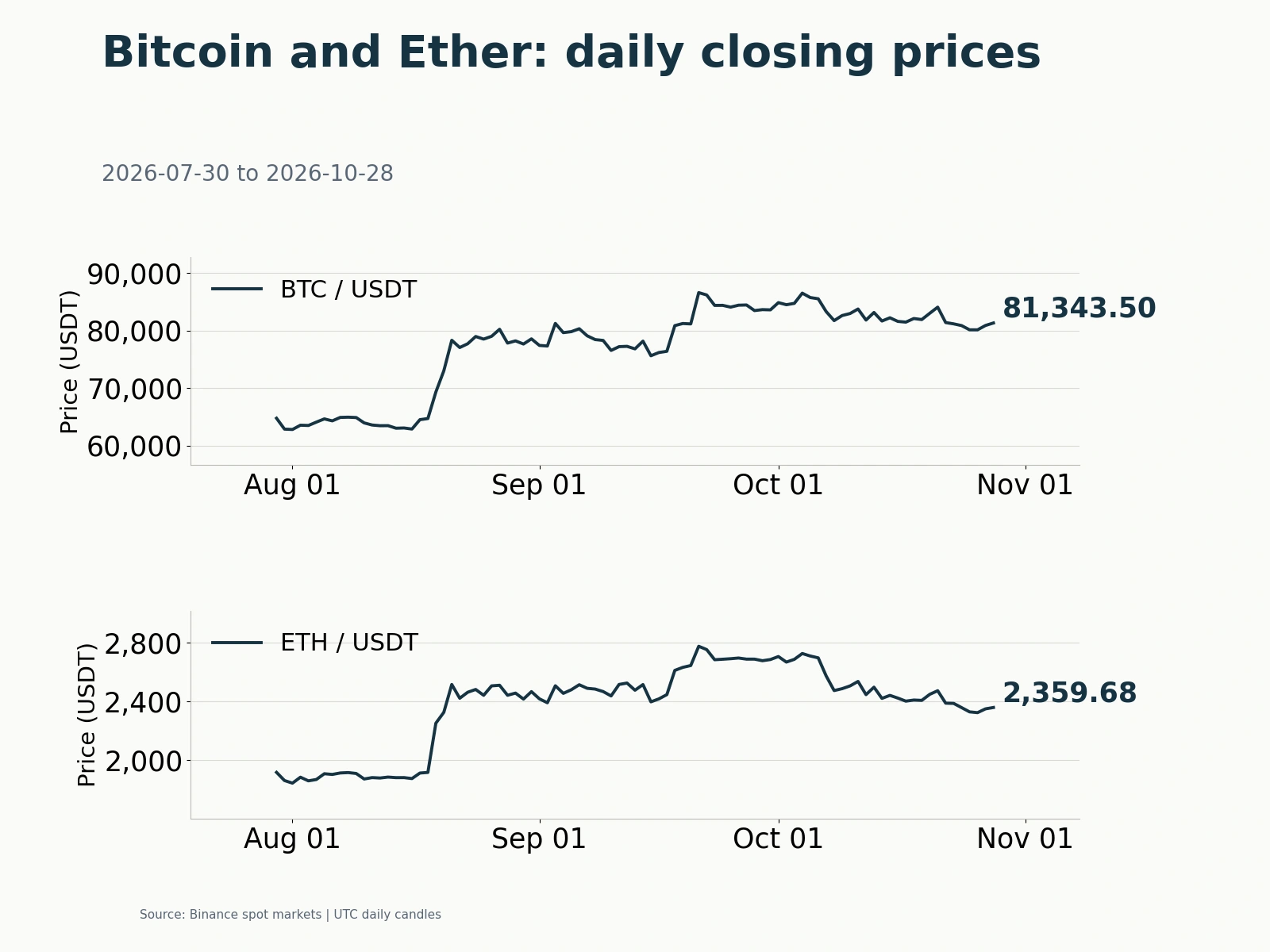
The October 28 UTC trading day ran from 8 a.m. on October 28 to 8 a.m. on October 29 in Beijing. Bitcoin closed at 81,343.50 USDT after trading between 80,397.14 and 81,823.00 USDT. Ether closed at 2,359.68 USDT within a daily range of 2,323.20–2,391.55 USDT. Both finished below their intraday highs.
LINK led the nine-asset sample with a 2.04% gain, followed by BNB at 2.00%. XRP declined 0.40%, the only asset in the sample to close lower.
| Asset | Closing price (USDT) | Daily change |
|---|---|---|
| BTC | 81,343.50 | +0.54% |
| ETH | 2,359.68 | +0.40% |
| BNB | 759.85 | +2.00% |
| SOL | 102.44 | +1.08% |
| XRP | 1.3260 | -0.40% |
| DOGE | 0.07977 | +0.87% |
| ADA | 0.2061 | +0.05% |
| LINK | 11.819 | +2.04% |
| AVAX | 9.006 | +0.50% |
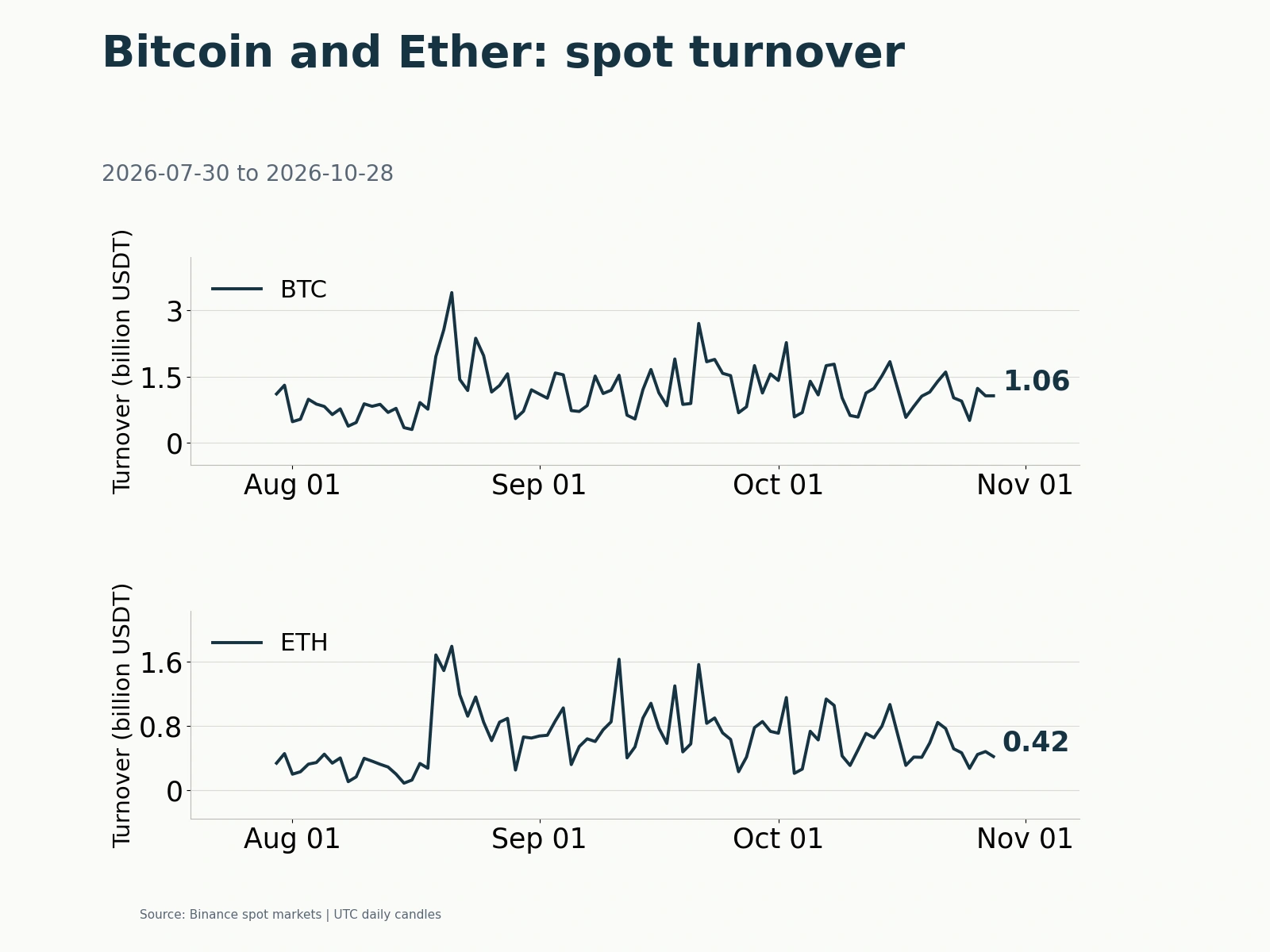
Turnover did not expand alongside prices. Binance BTC/USDT turnover totaled 1.062 billion USDT, essentially unchanged from the previous day. ETH/USDT turnover was 420 million USDT, down 12.82%. Ether's rebound, in particular, lacked support from more active spot trading.
The one-day rebound has not reversed the monthly weakness. Between September 28 and October 28, Bitcoin's closing price fell 2.58%, Ether lost 12.24%, and SOL and LINK declined 13.84% and 23.51%, respectively. LINK led the daily gains but was still down 23.51% over the month. A single day's buying cannot yet be treated as a change in the monthly trend.
Ether also remained weak in relative terms. Calculated from the two USDT closing prices, ETH/BTC stood at approximately 0.02901, down 9.91% over the preceding 30 days. CoinGecko's market snapshot, updated before this edition's close, put Bitcoin's share of total crypto market capitalization at about 59.48%, still close to three-fifths. Together with relative prices, this suggests that the recovery mainly reflects some major tokens following a steadier Bitcoin. Capital has yet to rotate persistently into more volatile assets.
The rate hold was largely priced in; sustained buying remains elusive
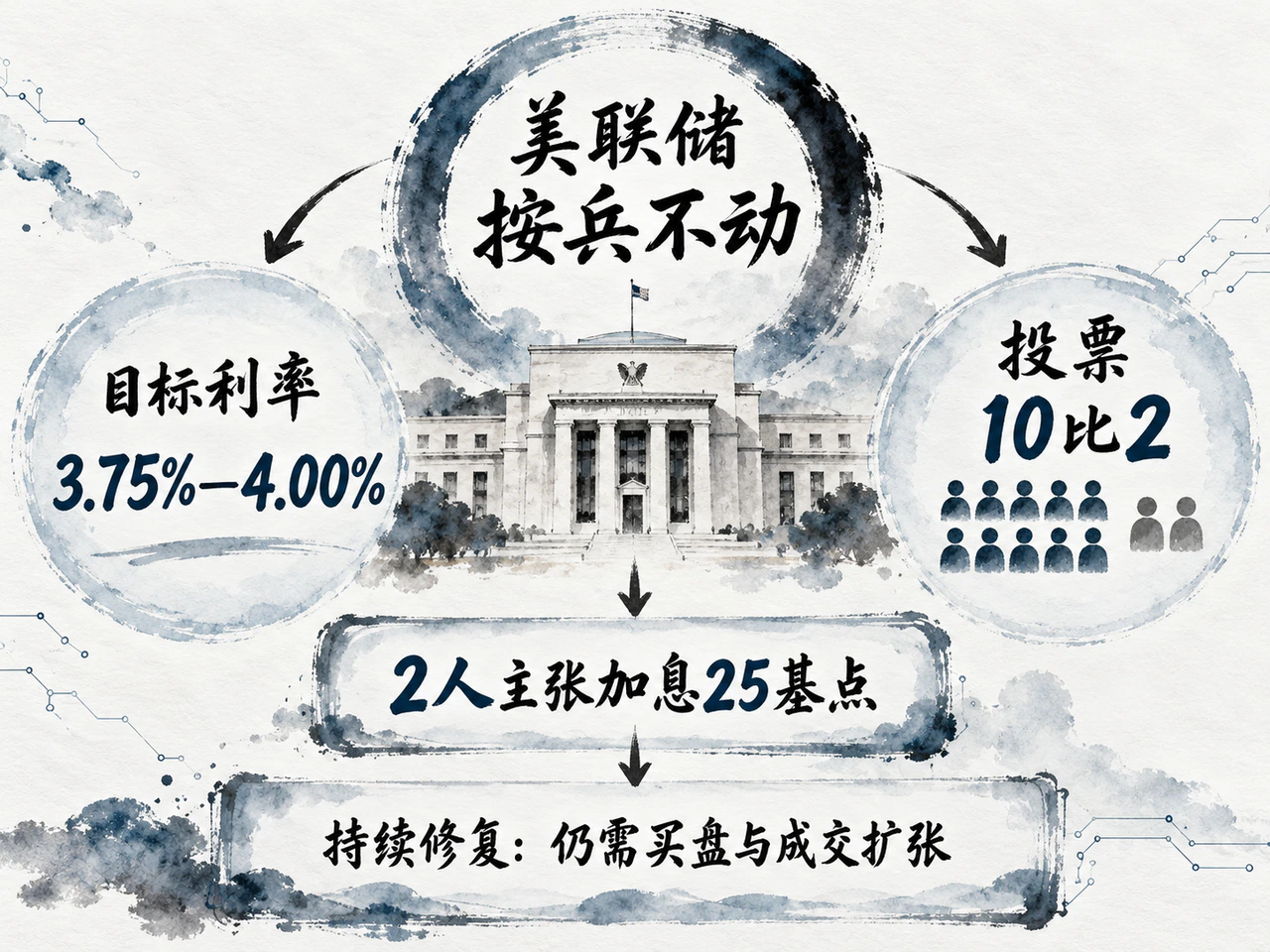
The Fed voted 10–2 to keep its federal funds target range at 3.75%–4.00%. Its statement described economic expansion as strong and inflation as still elevated. The two dissenters preferred a 25-basis-point increase. This pause did not rule out further tightening.
In its post-decision coverage, Decrypt reported that interest-rate futures had implied roughly a 90% probability of an unchanged rate before the meeting. Bitcoin rose only slightly in the minutes after the announcement. With a hold already widely expected, the focus shifted to the future path of rates rather than the decision itself. As long as risk-free rates remain high, the opportunity cost of holding a non-interest-bearing asset persists. Traders using leverage to amplify returns are also unlikely to see a substantial decline in financing costs.
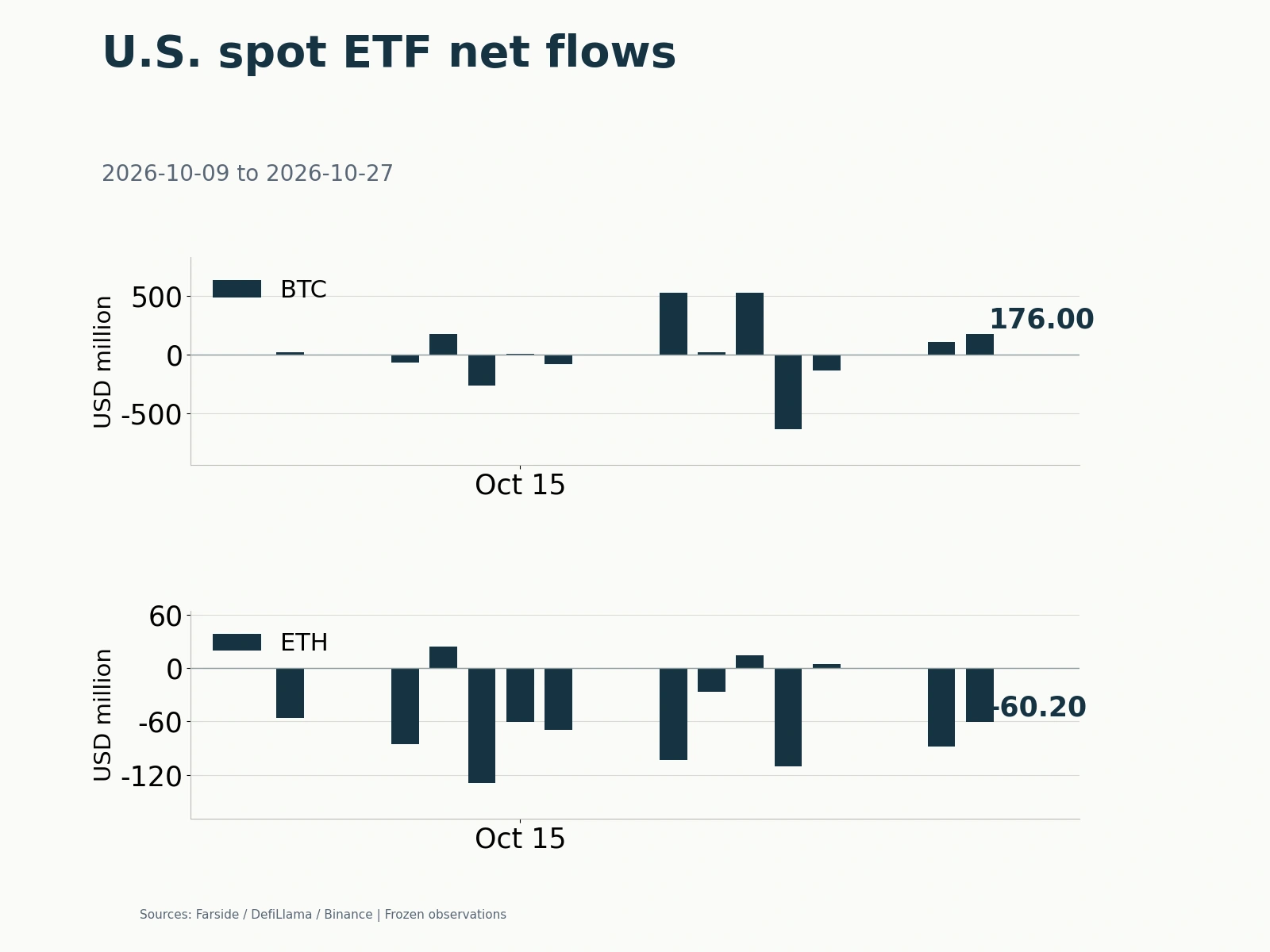
That constraint interacts with supply and demand within crypto. Research published by Glassnode on October 28 found limited recent incremental demand from U.S. spot Bitcoin ETFs. Long-term holders still owned a substantial amount of Bitcoin acquired above the prevailing price, and the US$84,000–85,000 area had repeatedly capped rallies. The same research found progressively smaller realized losses during recent pullbacks, suggesting that selling pressure at lower prices had eased. Weak buying alongside diminishing selling pressure helps explain a range-bound market with little momentum for an upside breakout.
Investment firms' long-term optimism is compatible with this short-term calm. In its updated long-term capital market assumptions released that day, Bitwise set a Bitcoin price target of US$1.6 million for 2036 and assumed that institutions would allocate 1%–5% of their portfolios to Bitcoin over the next decade. That forecast rests on institutional adoption, scarce supply and long-term asset allocation, and requires capital to enter gradually over many years. The report also warned that Bitcoin could still suffer significant drawdowns, identifying risks including quantum computing, AI-driven advances in mathematics and regulatory reversals.
The immediate market is trading interest rates and marginal buying, while the long-term forecast concerns the composition of ownership. Sustained inflows and expanding turnover are needed to connect the two. Two signals deserve attention: whether a rising Bitcoin price brings stronger spot turnover, and whether the monthly relative weakness of ETH/BTC and other major tokens begins to narrow. If prices keep rising on subdued turnover, the rebound may slow as higher-cost holders look to sell. If prices and turnover improve together, broad daily gains have a better chance of developing into a sustained recovery.