By the morning of October 11, Beijing time, policy and institutional reporting from October 10 followed two themes. The CFTC was accelerating a federal framework for event contracts as prediction-market and derivatives platforms moved toward licensed operations. Crypto finance was also expanding into payments and long-term protection, clarifying custody and compliance responsibilities across business models.
CFTC proposes treating event contracts as swaps; Blockchain.com seeks DCM and FCM licenses
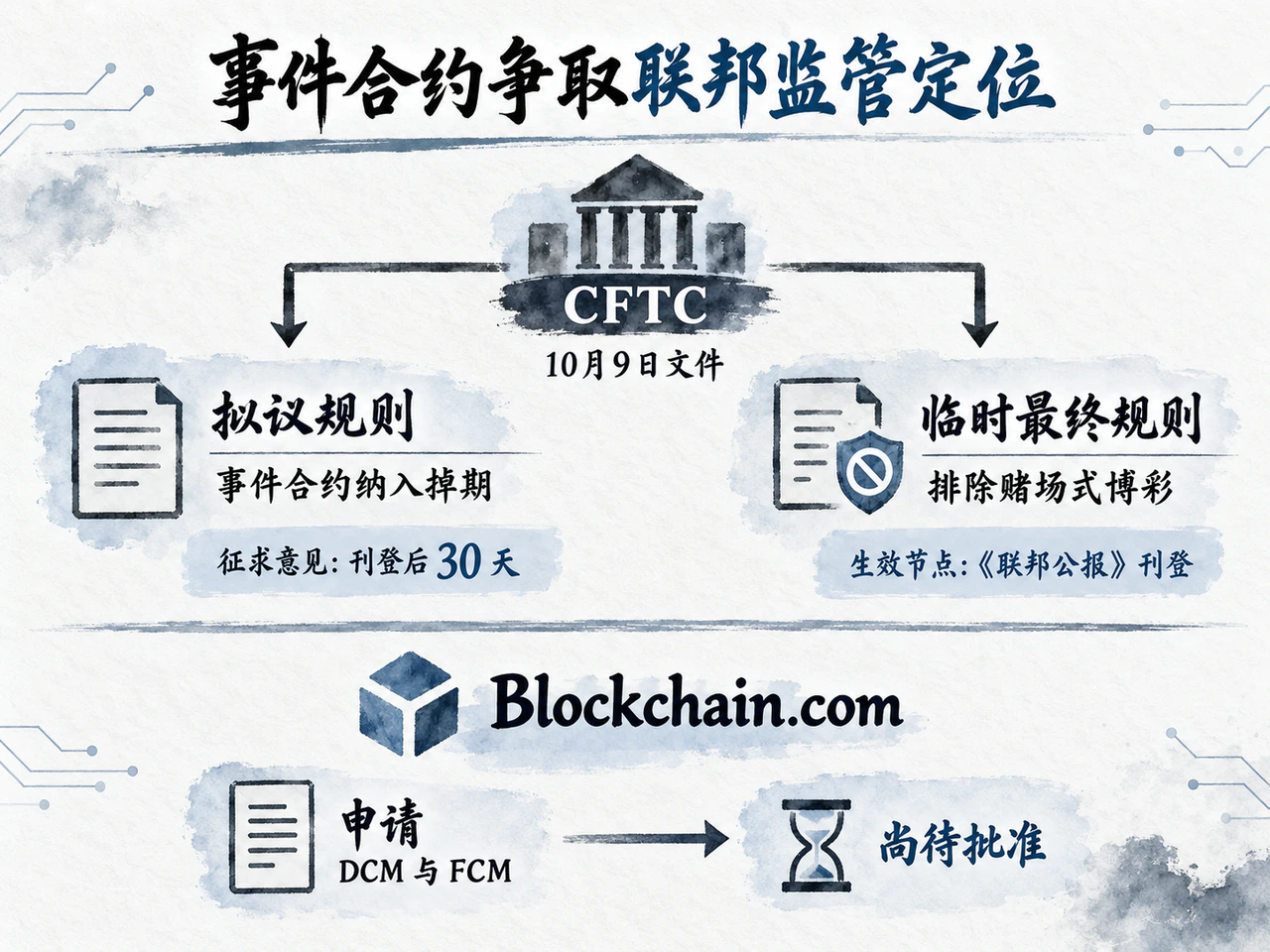
Decrypt reported on October 10 that the CFTC had issued two rule documents a day earlier to define federal boundaries for event contracts. A proposed rule would include contracts covering sports, politics, culture, weather and other events within the swap definition, with comments due 30 days after Federal Register publication. An interim final rule expressly excluded traditional sports betting and casino-style gaming from swaps and would take effect upon Federal Register publication.
Including event contracts in the swap definition is the key legal basis for the CFTC to strengthen federal regulatory leadership. Chair Michael Selig argued that they were commodity derivatives within its statutory jurisdiction. The proposal was not yet final, judicial disputes over interstate prediction markets and product classification continued, and platforms were pursuing license applications.
Licensing was becoming a prerequisite for compliant business. Follow-up media reports on October 10 covered applications the company confirmed to CNBC on October 9: Blockchain.com had applied for designated contract market status and futures commission merchant registration with the CFTC, covering venue operation and derivatives brokerage respectively. It planned event contracts and crypto derivatives for US retail and institutional clients. Having previously offered prediction markets and perpetuals to some international users through offshore partnerships, it now sought domestic US licenses and an integrated gateway for asset management, derivatives and event contracts.
Hong Kong reiterates payment and lending licensing boundaries; Meanwhile raises $37.5 million to expand Bitcoin life insurance
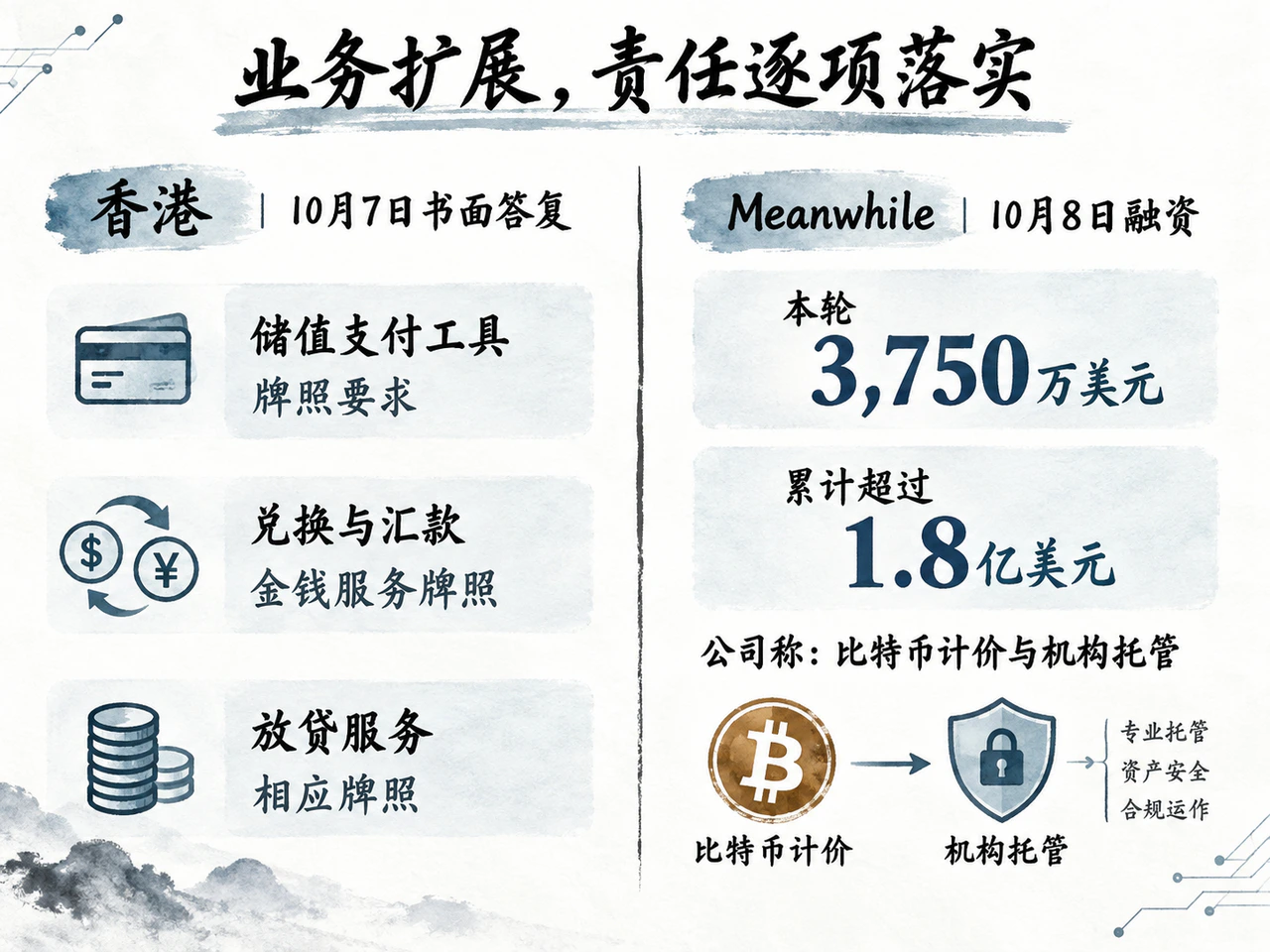
Aggregated payment and credit platforms face regulation that looks through to each underlying activity. On October 10, crypto.news cited the Hong Kong government's October 7 written Legislative Council reply: absent statutory exemptions, issuing or operating stored-value facilities, money changing or cross-border remittances as a money service operator, and buy-now-pay-later services involving lending each fall under separate licensing regimes. From January 2024 to September 2026, the HKMA received 16 complaints of suspected unlicensed SVF operation; 1 was substantiated and the complainant reported no financial loss. Separate licensing means an integrated front end still requires funds custody, currency conversion and credit responsibilities to be fulfilled for each regulated activity.
Another dimension of institutionalization is embedding Bitcoin in long-term wealth protection. Decrypt reported that Bitcoin life insurer Meanwhile announced a $37.5 million financing on October 8, led by Bain Capital Crypto, taking cumulative funding above $180 million. The company says its balance sheet, reserves and audited financial statements are denominated in Bitcoin, with policyholders' Bitcoin held by regulated institutional custodians. It currently offers single-premium whole-life policies to high-net-worth non-US clients and says it has signed 15 brokerages, reaching offshore wealth centers including Singapore, Hong Kong, the UAE and Switzerland.
From event contracts to cross-border payments and whole-life insurance, these cases show institutions experimenting with expansion in specific businesses, using licensed status, segregated custody and long-term contractual performance to extend financial services.
Click Read Original for full details.