During the 24 hours through the morning of October 11, Beijing time, conflict spillover materially disrupted Middle Eastern aviation hubs and vital waterways. On October 10 local time, King Khalid International Airport in the Saudi capital was attacked. Saudi aviation authorities reported 12 deaths and 309 injuries, and the airport suspended all operations. President Trump subsequently said he was considering direct participation in strikes on the Houthis. Russia confirmed conveying Iran's ceasefire position to Washington, but deadlocked fighting in Yemen, compromised Saudi airspace security and an Iranian Revolutionary Guards claim that a tanker struck a mine in Hormuz left the region facing a further escalation test.
Riyadh aviation hub closes after attack; US assesses direct strikes on Houthis
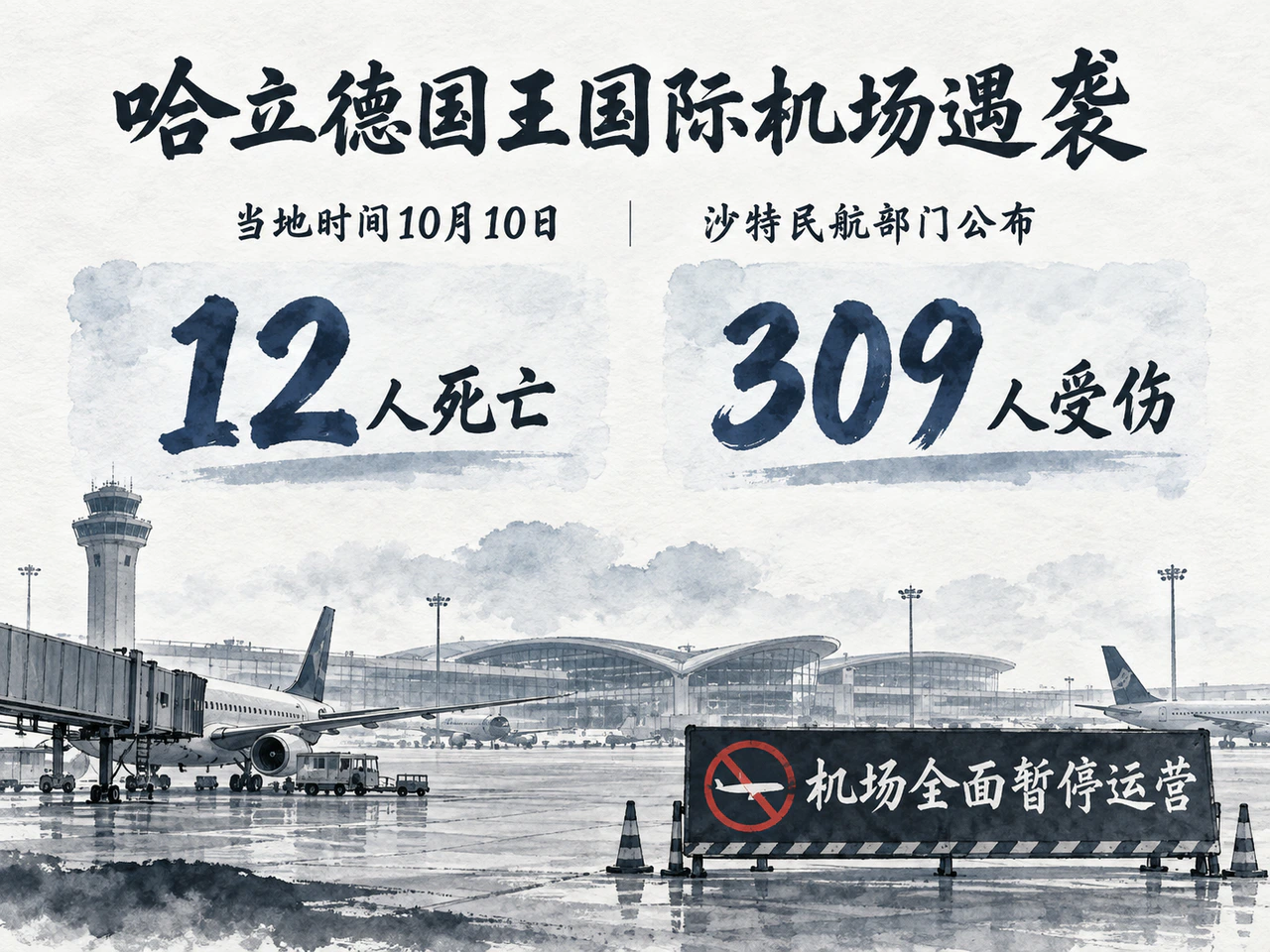
Reuters reported that this was King Khalid International Airport's third attack that week. Saudi aviation authorities identified the dead as 4 Saudis, 2 Bangladeshis and 1 citizen each of the United States, Jordan, Palestine, Syria, Sudan and Egypt. Sources said casualties were evacuated by ambulance and helicopter, some critically injured; travelers confirmed that parts of the ceiling near waiting areas collapsed.
The closure caused widespread cancellations and diversions of international flights into and out of Riyadh. The US embassy in Saudi Arabia issued a security alert urging citizens to avoid the airport and surrounding area; British, Irish and Canadian embassies issued similar advice. The head of the Houthi media office subsequently claimed responsibility for forcing Riyadh airport to close.
The attack on a major civilian hub prompted Washington to reassess intervention options. Asked outside the White House whether the US would join Saudi action against the Houthis, Trump said Washington would assess the situation and decide. His remarks put direct US involvement in Yemen airstrikes on the table.
On the ground, fighting in Yemen's interior remained centered on Taiz. An October 10 ISW-CTP report, citing frontline military accounts, said government forces repelled a Houthi offensive around Wadi al-Dabab southwest of the city, with heavy fighting around Mount Sabir and Najd Qasim to the south. The think tanks said Houthi claims to have consolidated parts of the province lacked cross-verifiable corroboration. The ground stalemate sustains the escalation dynamic between Saudi-backed coalition air operations and Houthi long-range attacks.
Russia conveys Tehran's ceasefire intentions as strait security faces fresh uncertainty

Indirect diplomatic channels continued sending signals amid intensifying confrontation. Kremlin spokesman Dmitry Peskov said October 10 that, after coordinating with Iranian President Masoud Pezeshkian, President Putin conveyed Iran's views on ending the conflict during a call with Trump the previous day. AFP said Russia disclosed neither specific Iranian terms nor the US response.
This indicates Tehran was still using a third-party major power to communicate negotiating boundaries to Washington. A gap remains between exchanging intentions and establishing binding operational arrangements. Substantive mediation progress depends on credible commitments over Yemen operations and shipping security, while attacks on Saudi civilian aviation raise pressure on the US and regional allies to retaliate.
Asymmetric risks to energy routes resurfaced the same day. Reuters, citing Iranian state media, reported that the Islamic Revolutionary Guard Corps said a tanker struck a mine while transiting Hormuz, exploded and caught fire. The statement did not identify the vessel, its flag registry or casualties.
The main forward indicators are whether US deliberations on Houthi strikes become direct action and when Riyadh's international airport can resume safe operations. Direct US involvement in Yemen would transmit geopolitical pressure further into the core US-Iran agenda. A gradual reopening and declining intensity of attacks on civilian infrastructure would give Russia's ceasefire channel room to translate into substantive de-escalation.
Key developments
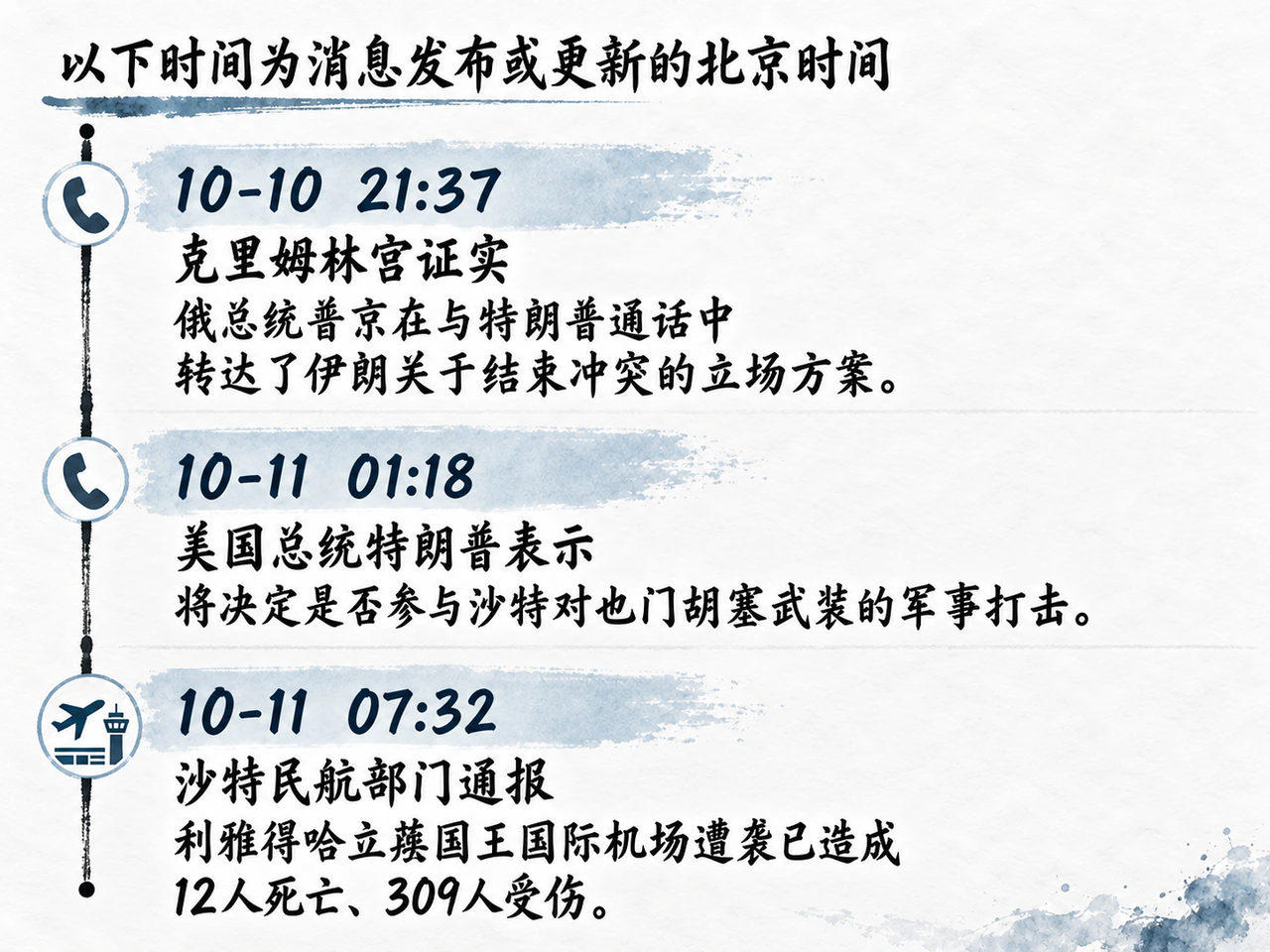
Times below are publication or update times in Beijing time.
| Key developments |
|---|
| 10-11 07:32Saudi aviation authorities report 12 dead and 309 injured in the attack on Riyadh's King Khalid International Airport. All operations are suspended, with widespread arrival and departure cancellations or diversions. |
| 10-11 04:17ISW, citing local battlefield reports, says Yemeni government forces repelled a Houthi offensive southwest of Taiz, with heavy fighting on the city's southern flank. Houthi claims of expanded control lack independent corroboration. |
| 10-11 01:25Iran's Revolutionary Guards claim a tanker struck a mine and caught fire in Hormuz, without disclosing its name, flag or casualty details. |
| 10-11 01:18President Trump says Washington is assessing the Riyadh airport attack and will decide whether to join Saudi military strikes against Yemen's Houthis. |
| 10-11 00:29The US embassy in Saudi Arabia issues an urgent alert over the Riyadh airport attack, advising citizens to avoid the airport and nearby areas and confirm flight status with airlines. |
| 10-10 21:37The Kremlin confirms Putin conveyed Iran's position on ending the conflict during a call with Trump. Specific demands and the US response were not disclosed. |