By the morning of October 13, Beijing time, Middle Eastern security threats continued to disrupt core transport infrastructure and international shipping. Saudi aviation authorities extended the complete shutdown of Riyadh's King Khalid International Airport. Riyadh intercepted another ballistic missile that evening, and Delta postponed a direct route. Delayed reports disclosed on Monday that as many as five merchant ships had been attacked in the Strait of Hormuz and off Oman further worsened navigation-risk assessments. Iran confirmed it was exchanging proposals with Washington through intermediaries including Qatar and Pakistan. But the United States wanted nuclear issues addressed from the outset, while Iran wanted shipping security restored first, preventing diplomacy from producing an executable navigation-safety mechanism.
Riyadh airport closure extended and air defenses investigated; renewed alerts postpone international direct flights until 2027

On October 12, Saudi aviation authorities announced the continued suspension of all operations at King Khalid International Airport to inspect facilities and prepare for reopening. After Saturday's fatal attack closed the airport, reports on Sunday continued to put casualties at one dead and eleven injured. Airspace disruption had extended into the new week.
Air-raid sirens and explosions were heard in Riyadh again on the evening of October 12. The Saudi-led coalition reported intercepting a Houthi ballistic missile. A Houthi spokesman claimed the missile struck the airport accurately and that drones also attacked the Khamis Mushait military base in southern Saudi Arabia. The accounts differed, and actual impacts and damage had not been independently cross-verified.
Air-defense pressure prompted a Saudi military review of warning and interception mechanisms. The Associated Press, citing two regional officials, said the preliminary investigation focused on the Houthis' combined use of multiple drones, cruise missiles and ballistic missiles to penetrate defenses, and why warning systems had not sounded earlier. Saudi Arabia's energy minister publicly said there would be a corresponding response.
The continuing infrastructure threat directly undermined commercial aviation confidence. Delta announced that its Atlanta–Riyadh nonstop route, originally due to launch this month, would be postponed until March 2027. For Saudi Arabia's long-term plans to attract business and investment, the hub airport's ability to operate safely and consistently had become a key external measure of regional risk.
Fighting in Yemen intensified as well. AFP, citing military sources on both sides, reported fierce clashes over the past 24 hours in the strategic southwestern city of Taiz, killing at least 22 government troops and 40 Houthi fighters, with Houthi reinforcements continuing. The city is important to the strategic corridor toward Aden, and its prolonged siege worsened medical and fuel shortages. Houthi health authorities also reported airstrikes at two locations in Sanaa, killing one and injuring twelve, and accused Saudi Arabia, which did not immediately confirm the operation.
Delayed reports of attacks on five merchant ships; nuclear-agenda sequencing blocks a Hormuz reopening mechanism
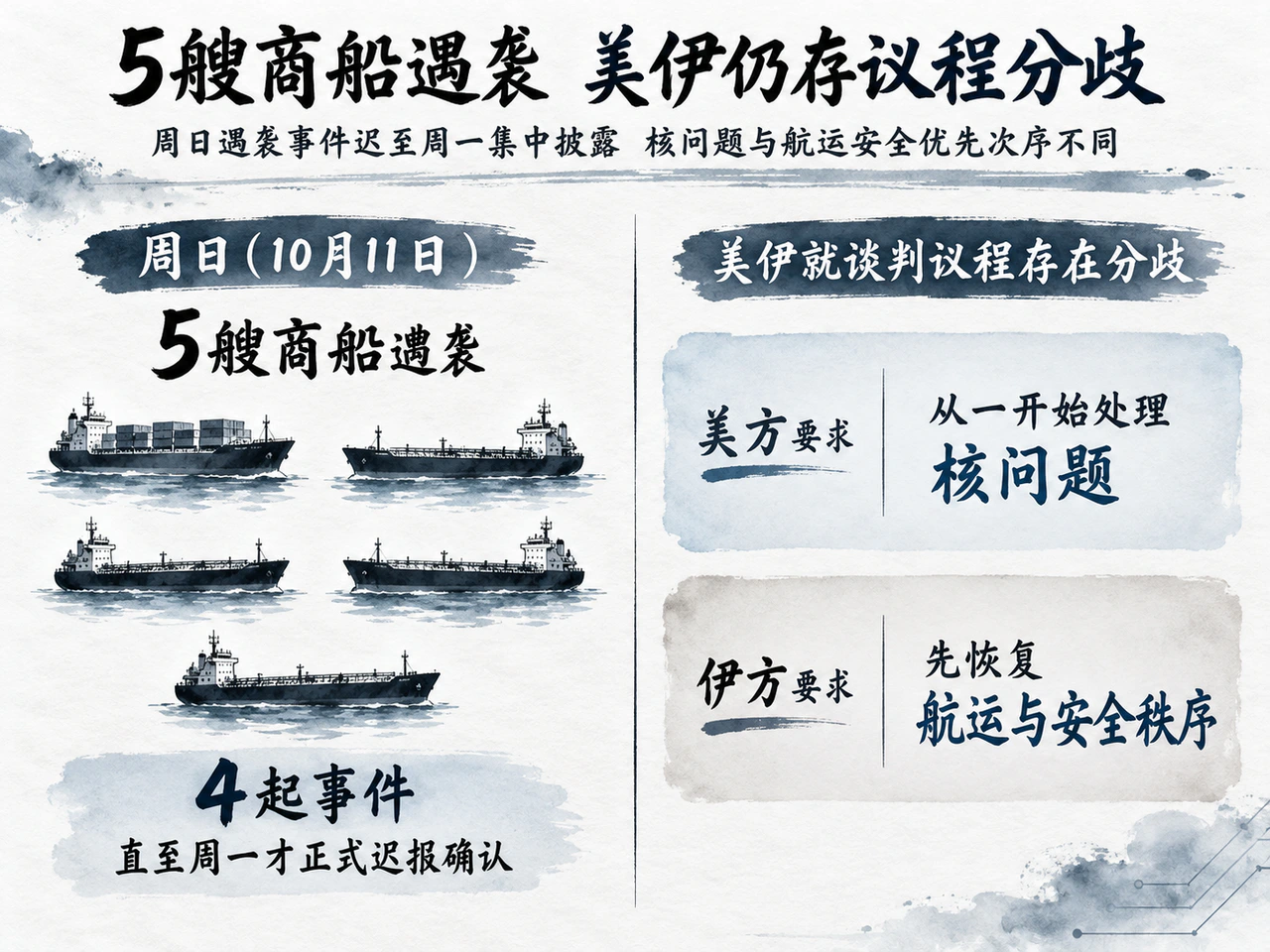
At sea, delayed incident reports exposed security risks together. UK Maritime Trade Operations disclosed that five merchant ships—one container ship and four tankers—were attacked on Sunday, October 11, in the Strait of Hormuz and near Sohar, Oman. Four incidents were formally confirmed only in delayed reports on Monday. Off Sohar, a drone attacked a tanker and local authorities urgently assisted the crew's evacuation; hull damage and environmental effects were still being assessed. Attacks extending to anchorages meant ships faced threats throughout queuing, transit and port calls.
Iran's Revolutionary Guard claimed the same day to have struck three supertankers in the previous 48 hours, without identifying them. Their relationship to the ships in UKMTO reports was unclear. With navigation permissions, military-blockade risk and actual attacks all in play, shipowners and carriers could not restore normal schedules solely on one channel's safety assurances.
On diplomacy, Iranian Foreign Ministry spokesman Esmaeil Baghaei confirmed October 12 that Iran was reviewing the U.S. response to its strait proposal and would submit its reply through mediators including Pakistan and Qatar once the review was complete.
Reuters reported that the central obstacle was agenda priority: Washington insisted on including nuclear issues from the outset, while Tehran explicitly demanded that navigation and security in Hormuz be restored first. On the nuclear issue, Baghaei said negotiations must not return to square one and described the earlier Cairo agreement as a thing of the past. Crisis resolution therefore faced both a contest over ceasefire terms and a fundamental disagreement over whether earlier negotiating frameworks remained applicable.
Britain accuses the Revolutionary Guard and imposes sanctions, adding European security disputes to mediation obstacles
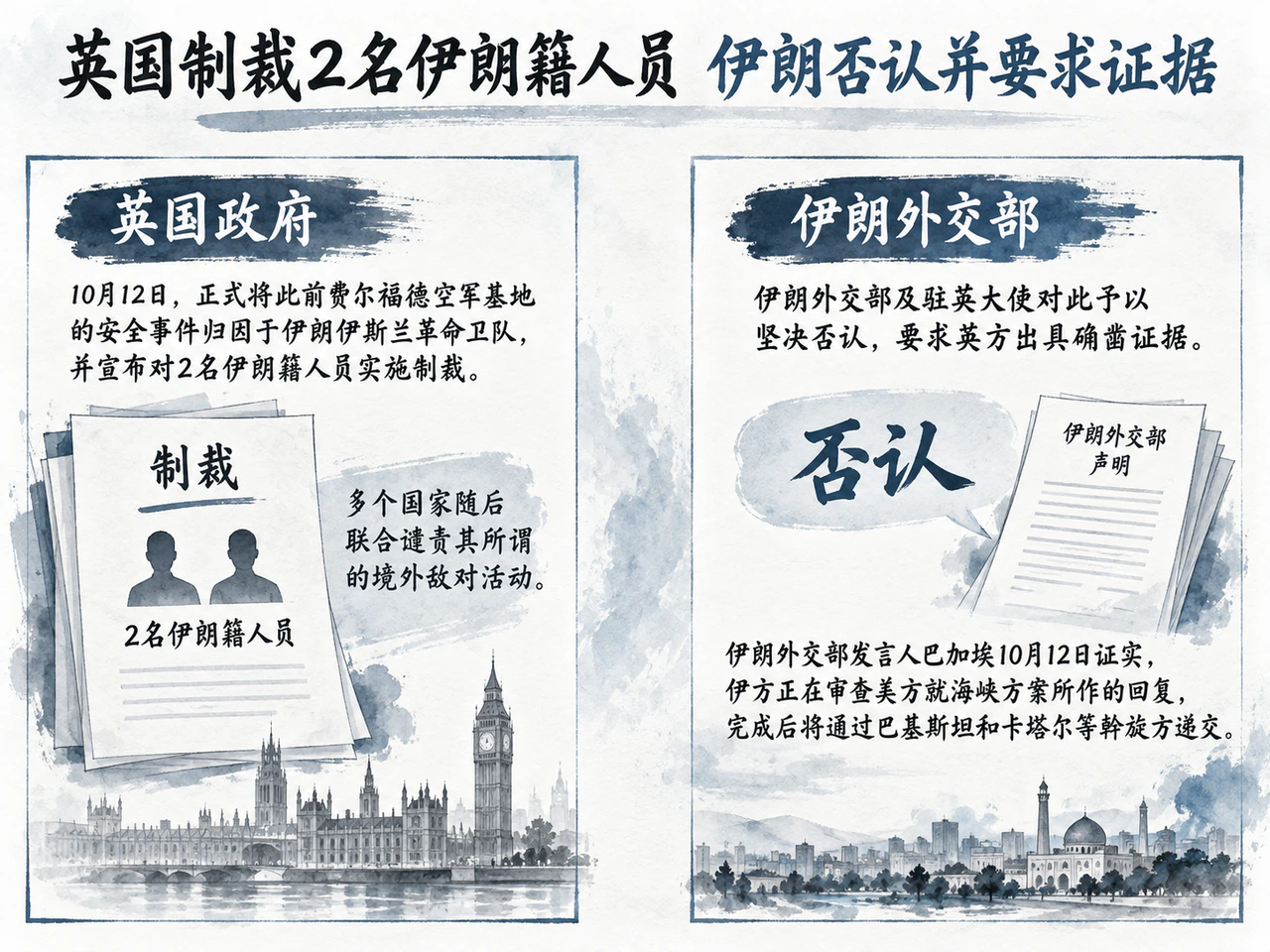
The conflict's spillovers were reaching European diplomacy and security. On October 12, the British government formally attributed an earlier security incident at RAF Fairford to Iran's Islamic Revolutionary Guard Corps and sanctioned two Iranian nationals. Several countries then jointly condemned what they described as hostile activity abroad. Iran's Foreign Ministry and ambassador to Britain firmly denied the accusation and demanded concrete evidence.
European accusations and countermeasures added political resistance to already difficult U.S.–Iran communication. The situation was evolving across Saudi airport security, ground fighting in Yemen, blocked navigation and Western sanctions. Meaningful easing depended on sustained airport reopening, secure merchant passage, and a workable U.S.–Iran agreement on the negotiating agenda.
Key developments
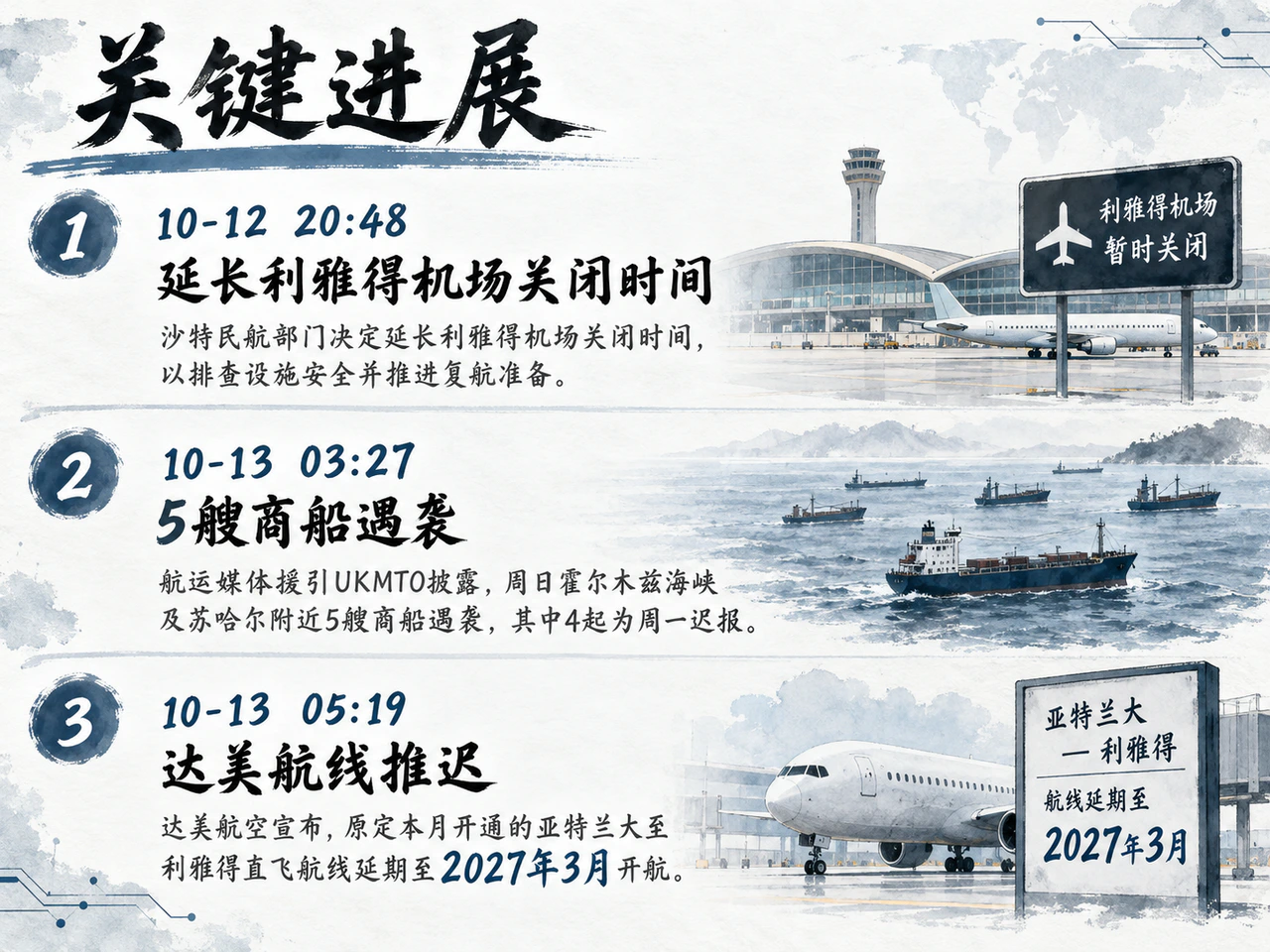
All times below are Beijing time, in reverse order of reporting or disclosure.
| Key developments |
|---|
Media cited two regional officials as saying Saudi Arabia was investigating coordinated air-defense interception and warning responses during the Riyadh airport attack. |
Delta announced that its Atlanta–Riyadh nonstop service, originally due to start this month, was postponed until March 2027. |
Iran's Foreign Ministry denied Britain's accusations over the RAF Fairford incident and demanded concrete evidence. |
The Houthis claimed a ballistic missile hit Riyadh airport and drones attacked a southern Saudi base; damage had not been independently confirmed. |
Shipping media, citing UKMTO, reported five merchant ships attacked on Sunday in Hormuz and near Sohar, including four incidents reported late on Monday. |
Air-threat sirens and explosions were heard in Riyadh; the Saudi coalition reported intercepting a Houthi ballistic missile. |
Britain sanctioned two Iranians for alleged hostile activity abroad; Iranian representatives in Britain denied involvement in the base incident. |
Iran's Revolutionary Guard claimed attacks on three supertankers over the previous two days; independent vessel-by-vessel cross-checks were still lacking. |
Saudi Arabia's energy minister promised a corresponding response to the attacks, while King Khalid International Airport remained closed. |
Saudi aviation authorities extended Riyadh airport's closure to inspect facilities and prepare for reopening. |
Baghaei said Iran would not allow talks to return to square one and explicitly called the earlier Cairo agreement a thing of the past. |
Media, citing military sources on both sides in Yemen, reported at least 62 combatants killed in Taiz fighting over the previous 24 hours. |
Houthi health authorities reported strikes on two Sanaa locations, killing one and injuring twelve, and accused Saudi Arabia. |
Iran's Foreign Ministry said it was reviewing Washington's response to the strait proposal and would reply through intermediaries afterward. |


