On October 13, on-chain trading activity and the pace of capital deployment showed structural divergence. DefiLlama data showed a double-digit rebound in daily decentralized exchange (DEX) volume, although weekly activity continued to cool. Total value locked (TVL) across major chains generally edged lower, with Base slightly ahead of Solana. Yield-bearing assets and cross-border payments meanwhile showed stronger capital retention and turnover efficiency. With spot trading lacking sustained momentum, putting idle existing balances to work and improving capital efficiency are becoming core supports for on-chain business.
An 11% Daily DEX Rebound Fails to Mask Weekly Weakness as Lending and Yield-Bearing Assets Show Retention Value
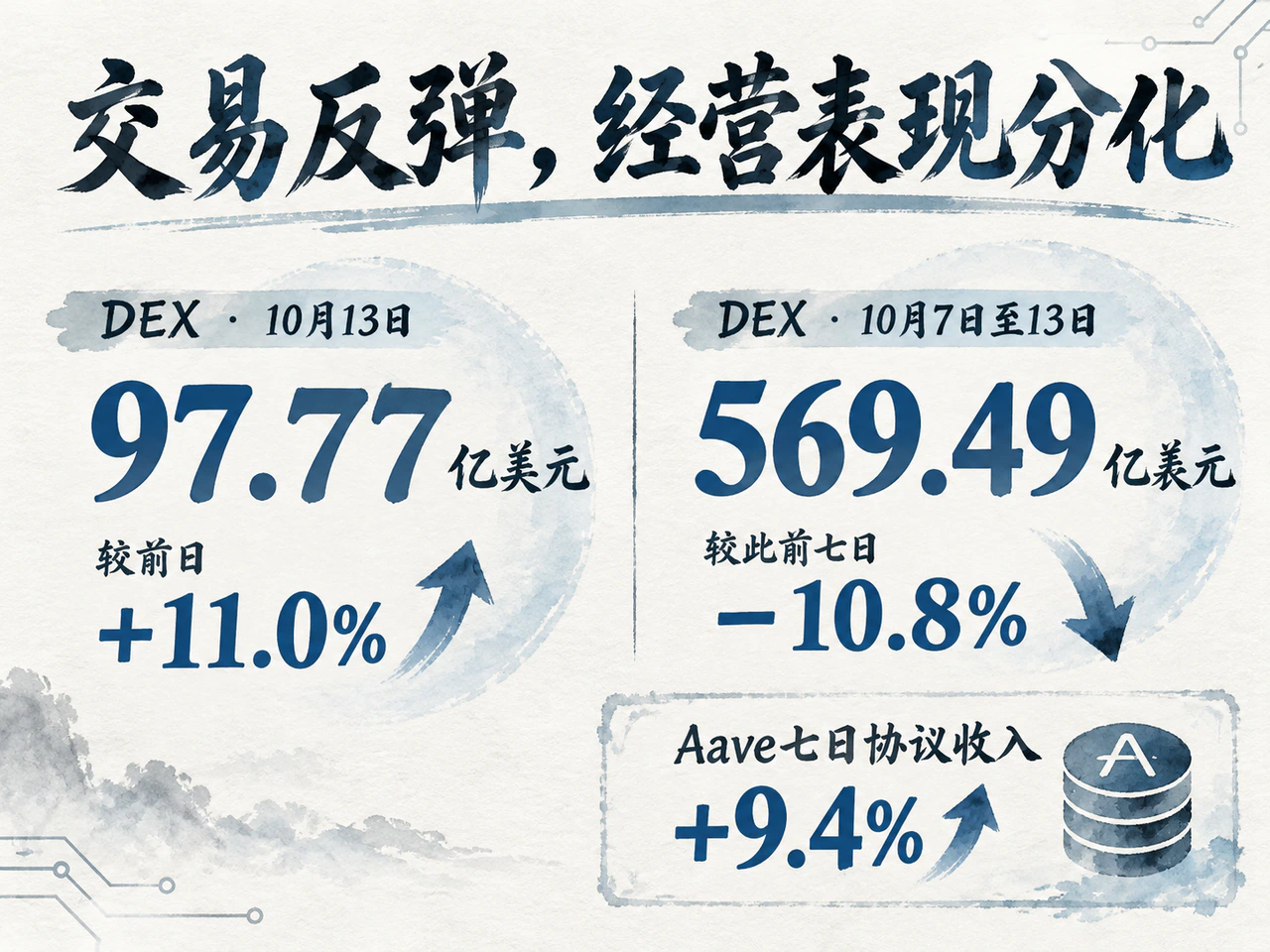
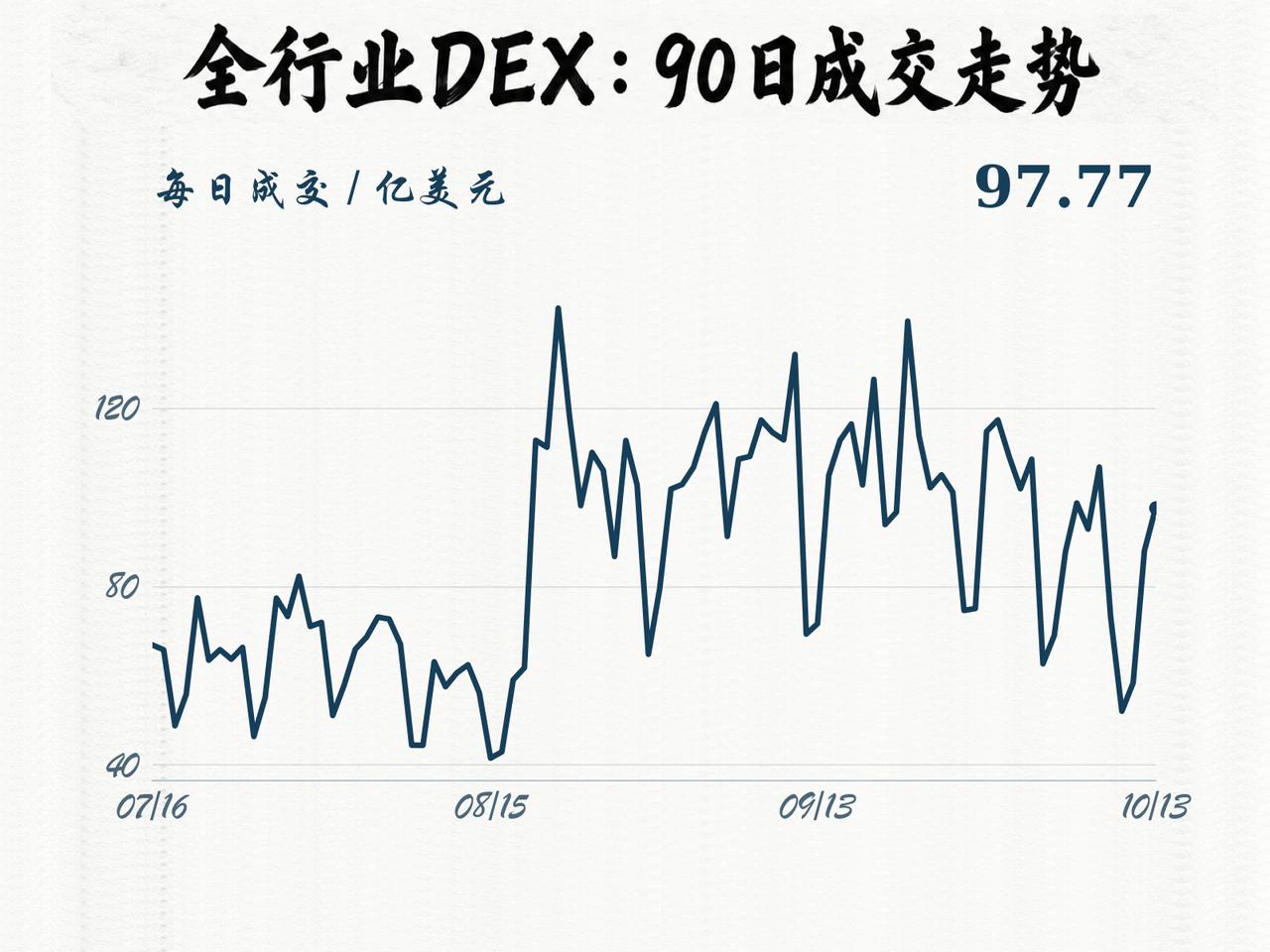
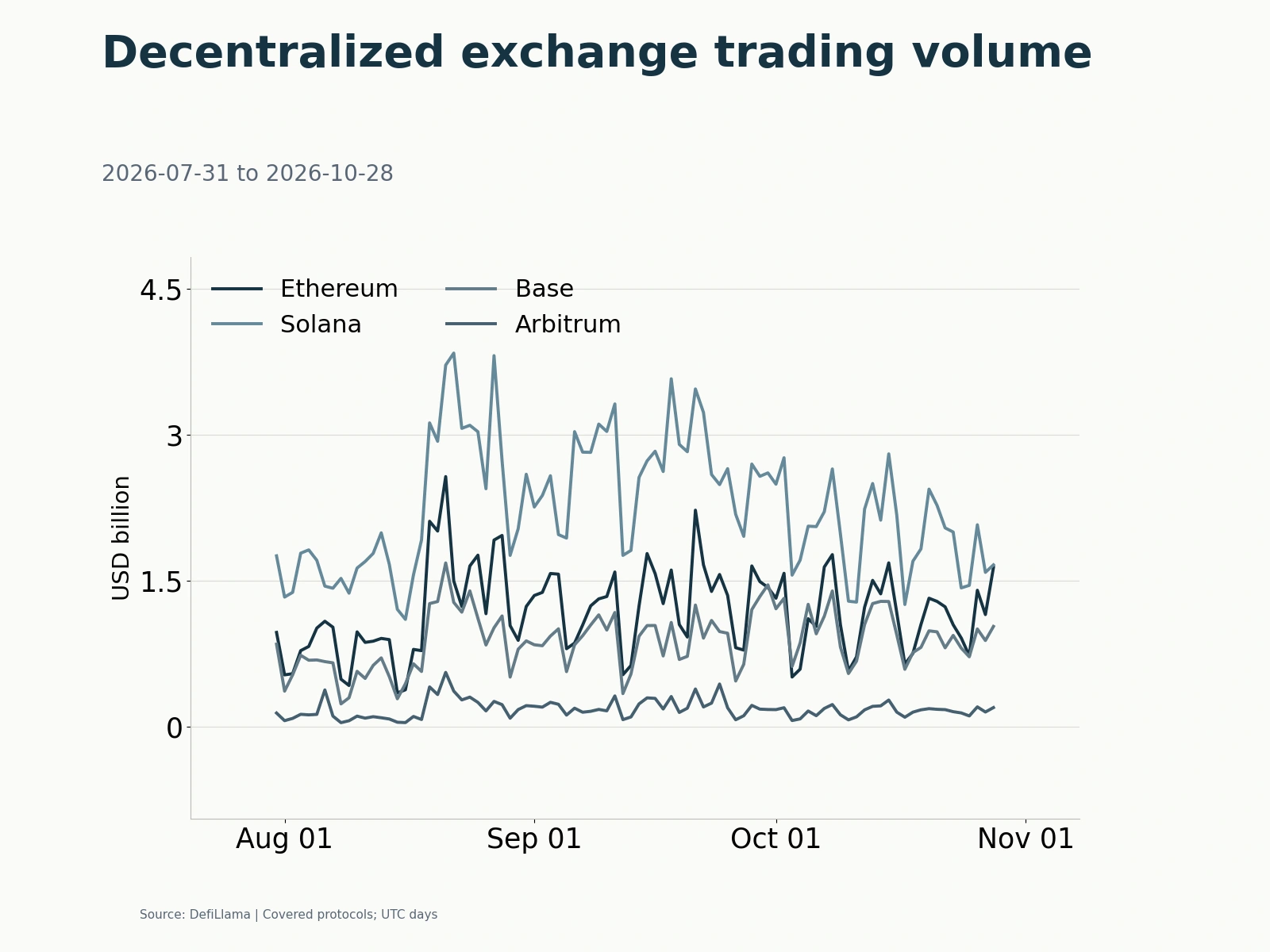
On DefiLlama's UTC daily basis, tracked DEX volume reached $9.777 billion on October 13, up 11.0% from October 12's $8.809 billion. Over the longer window, however, cumulative DEX turnover during October 7–13 was $56.949 billion, down 10.8% from the preceding seven full days. The one-day rebound had therefore not changed the recent downward shift in the overall level of activity.
The distribution of on-chain capital also diverged. As of October 13, Ethereum DeFi TVL was $51.141 billion, down 1.1% from the previous period, while Solana TVL fell 3.0% to $6.034 billion. Ethereum Layer 2 networks were relatively resilient: Base slipped only 0.4% to $6.214 billion, slightly exceeding Solana in dollar terms, while Arbitrum rose 1.0% to $1.396 billion. TVL changes combine asset valuation effects with net deposits and withdrawals, mainly showing relative positions across networks amid shifts in capital balances and valuations.
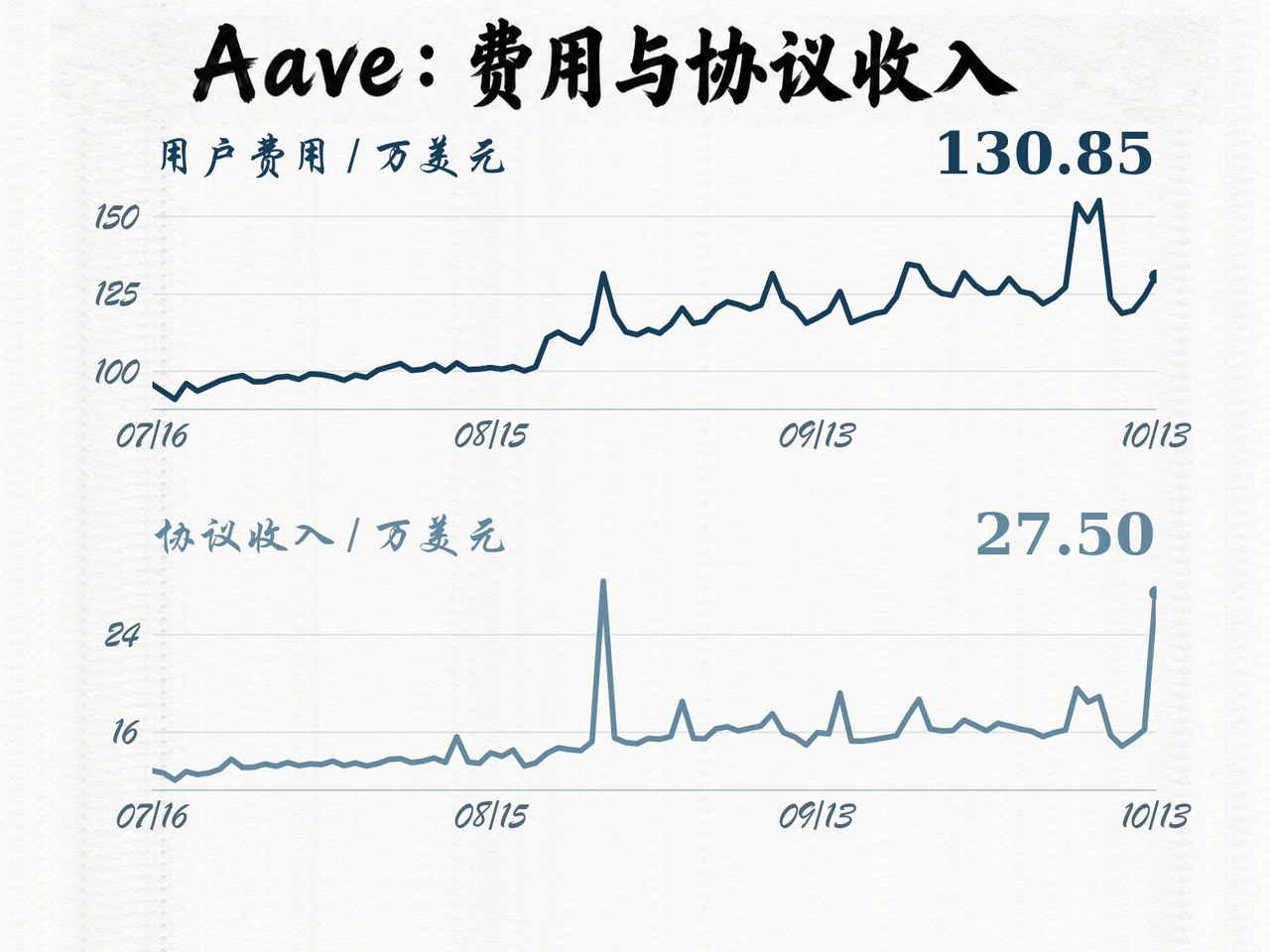
Lending and real-world asset tokenization (RWA) showed firmer operating resilience than secondary-market trading. Aave recorded $1.3085 million in user fees on October 13, up 5.3% from the previous period. Cumulative fees during October 7–13 reached $9.2087 million, up 1.4%, while protocol revenue was $1.2712 million, up 9.4%. Even as spot turnover demand slowed, lending protocols maintained stable cash-flow capture through credit demand.
In asset management, Ondo disclosed on October 13 that its tokenized products totaled $3 billion, covering USDY, OUSG and tokenized US Treasury ETFs, including more than $2.3 billion in yield-bearing stablecoin USDY. USDY converts short-term Treasury yields into digital assets that can accrue income in wallets, trade on-chain and serve as DeFi collateral. It offers a nonspeculative use for idle funds and makes underlying asset quality, fiat redemption channels and rights structures central competitive barriers for asset-management protocols.
Axiym Settlements Exceed $2 Billion as Just-in-Time Liquidity Replaces Traditional Prefunding
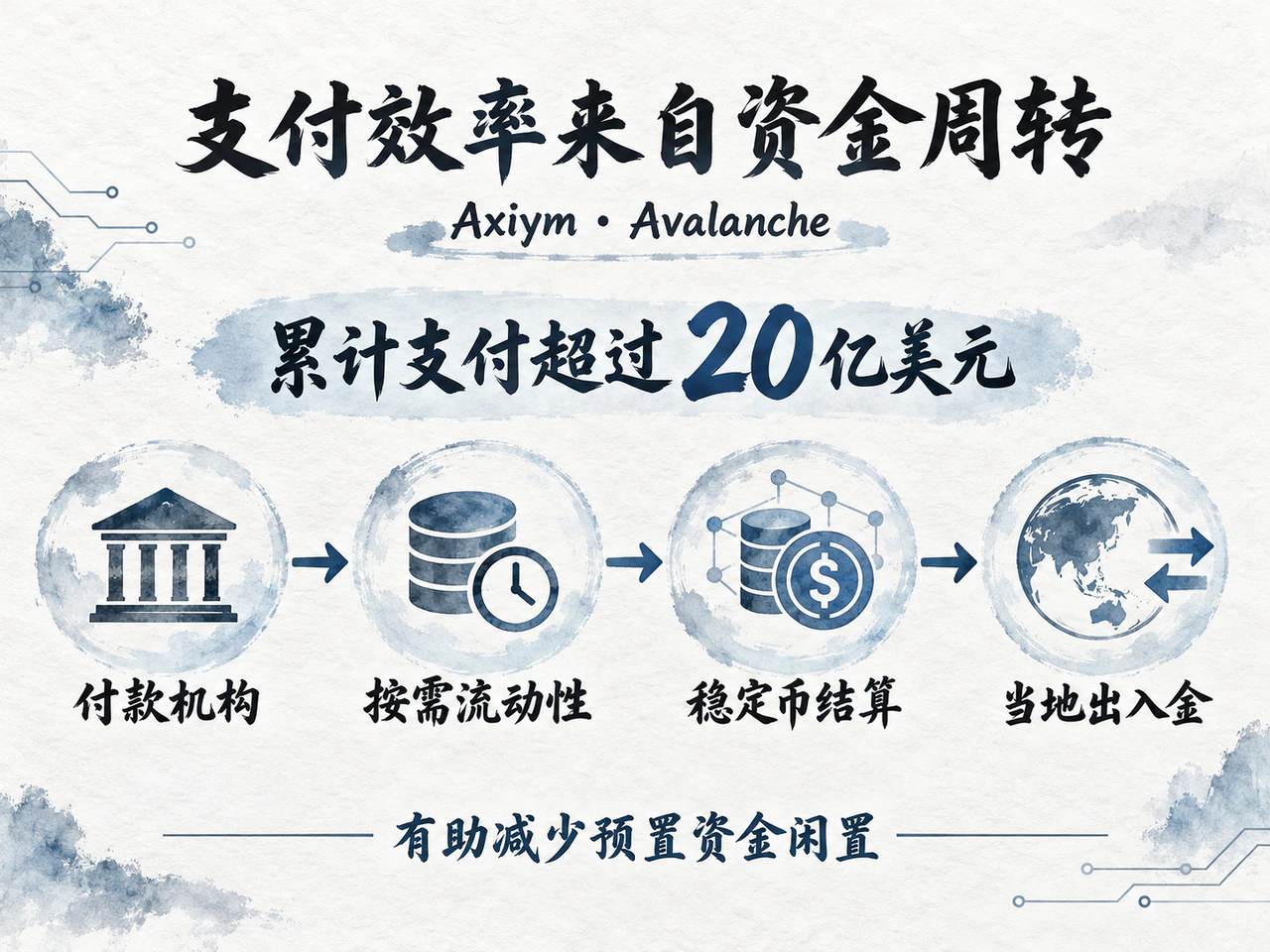
Beyond secondary-market asset turnover, cross-border payments are creating real commercial demand for on-chain settlement. Crypto Briefing reported on October 13 that payment network Axiym had processed more than $2 billion in cumulative stablecoin payments through Avalanche. This represents significant growth from the $132 million figure Avalanche disclosed in April 2025.
Traditional cross-border payments have long been constrained by prefunded Nostro/Vostro accounts. Remittance firms must spread advance balances across clearing points worldwide, leaving substantial operating capital idle and inefficiently utilized. Axiym primarily serves licensed remittance and payment institutions. Its Just-in-Time Liquidity model deploys stablecoin liquidity when payment instructions are generated, completes on-chain settlement and connects to local fiat entry and exit channels. The model can reduce institutions' own working capital tied up across channels and potentially increase the turnover frequency of each unit of operating funds.
For the underlying public chain, expanding payments broadens settlement use cases but also raises questions about value capture. Low network fees are a prerequisite for scaling payments, so billions of dollars of payment volume may generate relatively limited base-layer fees. The business value of this model lies mainly in the prefunding costs remittance firms may save, and the spreads and pricing room liquidity providers may capture when deploying funds.
October 13 market and business data show on-chain applications evolving according to their respective commercial economics: DEXs depend on frequent turnover, lending on genuine credit demand and risk pricing, and cross-border payments on rapid capital turnover and low channel costs. During the broader trading slowdown, applications that improve capital efficiency in practical terms and establish sustainable distribution mechanisms form the foundation of on-chain economic resilience.
Click Read Original for full details.