By the morning of October 15, Beijing time, the Middle East conflict's impact on shipping and onshore energy facilities was intensifying simultaneously. Maritime information disclosed on October 14 showed frequent attacks in and around the Strait of Hormuz, with one container ship reportedly sunk. The same day, Saudi Arabia announced the interception of a Houthi ballistic missile aimed at Riyadh. Although Gulf oil shipments had previously recovered, the latest escalation was undermining shipowners' and carriers' confidence in resuming voyages.
Iranian officials plan to expand ship attacks into the Gulf of Oman; October's 23 attacks include a cargo ship sinking

Reuters on October 14 quoted two senior Iranian officials as saying that about ten days earlier Iran had begun changing the methods and timing of attacks on ships violating its navigation restrictions. It planned to expand operations into the Gulf of Oman and beyond, intending to keep oil prices high and influence U.S. midterm elections. By continually disrupting commercial shipping, Tehran was seeking to raise the cost to Washington of restoring energy exports.
On reconnaissance and targeting, a U.S. military official told Reuters that after damage to some Iranian radar capabilities, the Islamic Revolutionary Guard Corps had turned to unarmed observers on small boats to identify targets, including U.S. warships. U.S. Central Command confirmed on October 14 that American forces had destroyed an Iran-linked dhow engaged in surveillance and target designation in the Gulf of Oman the previous week. Its crew had safely left before the vessel was destroyed. The use of small boats makes maritime identification, surveillance and attack chains more dispersed.
The tactical changes have already had direct consequences in ship sinkings. Reuters cited maritime security sources on October 14 as saying that the Singapore-flagged container ship GFS Pride sank after being hit by a projectile. Another vessel, the bulk carrier Cape Dao, attacked on September 23, was reported to be sinking. Iran's Revolutionary Guards also said a cargo ship struck a mine and sank on the morning of October 14, a claim not independently confirmed.
AFP's October 14 compilation of maritime-agency and security-company data showed at least ten vessels attacked in and around Hormuz since October 11, with 23 attacks recorded in October. In September, however, Al Jazeera had cited Kpler data showing Gulf oil transit through the strait excluding Iran recovering to more than 80% of its prewar level. Recovering volumes alongside more frequent attacks show that practical shipping capacity exists but security remains fragile. If owners cut voyages again, rising war-risk premiums, crew allowances and detour costs will further hinder recovery.
Saudi Arabia intercepts missile aimed at Riyadh; Houthis threaten further attacks on airports and oil facilities

As maritime conflict escalated, cross-border fighting between Saudi Arabia and Yemen's Houthis intensified again. On October 14, the Saudi-led coalition said it had intercepted and destroyed a Houthi ballistic missile aimed at Riyadh. Houthi military spokesman Yahya Saree warned that day that attacks on Saudi international airports and oil infrastructure would continue in the coming days and told relevant personnel to evacuate.
The exchange followed escalation on the evening of October 13. The Saudi-led coalition had announced strikes on oil facilities in Sanaa, Dhamar, Saada and elsewhere in Yemen that it said supported Houthi operations. The Saudi energy ministry later reported a limited fire at a Saudi Aramco administrative building in the Eastern Province, with no casualties. A fire in an administrative building differs from interrupted crude production, but persistent threats to airports and energy facilities were already increasing the costs of organizing and accessing local commercial activity. Media, citing diplomats, said Saudi Arabia was preparing online participation options for this month's Riyadh investment forum, along with alternative air and land itineraries.
The humanitarian impact on Yemeni civilians was more severe. The World Food Programme said on October 14 that fighting had left about 800,000 people struggling to obtain lifesaving food aid, with many areas of Taiz inaccessible. Blocked aid routes were further worsening the survival pressures on families already burdened by displacement and high food prices.
UN proposes Hormuz fertilizer corridor, potentially operational within ten days if Washington and Tehran agree
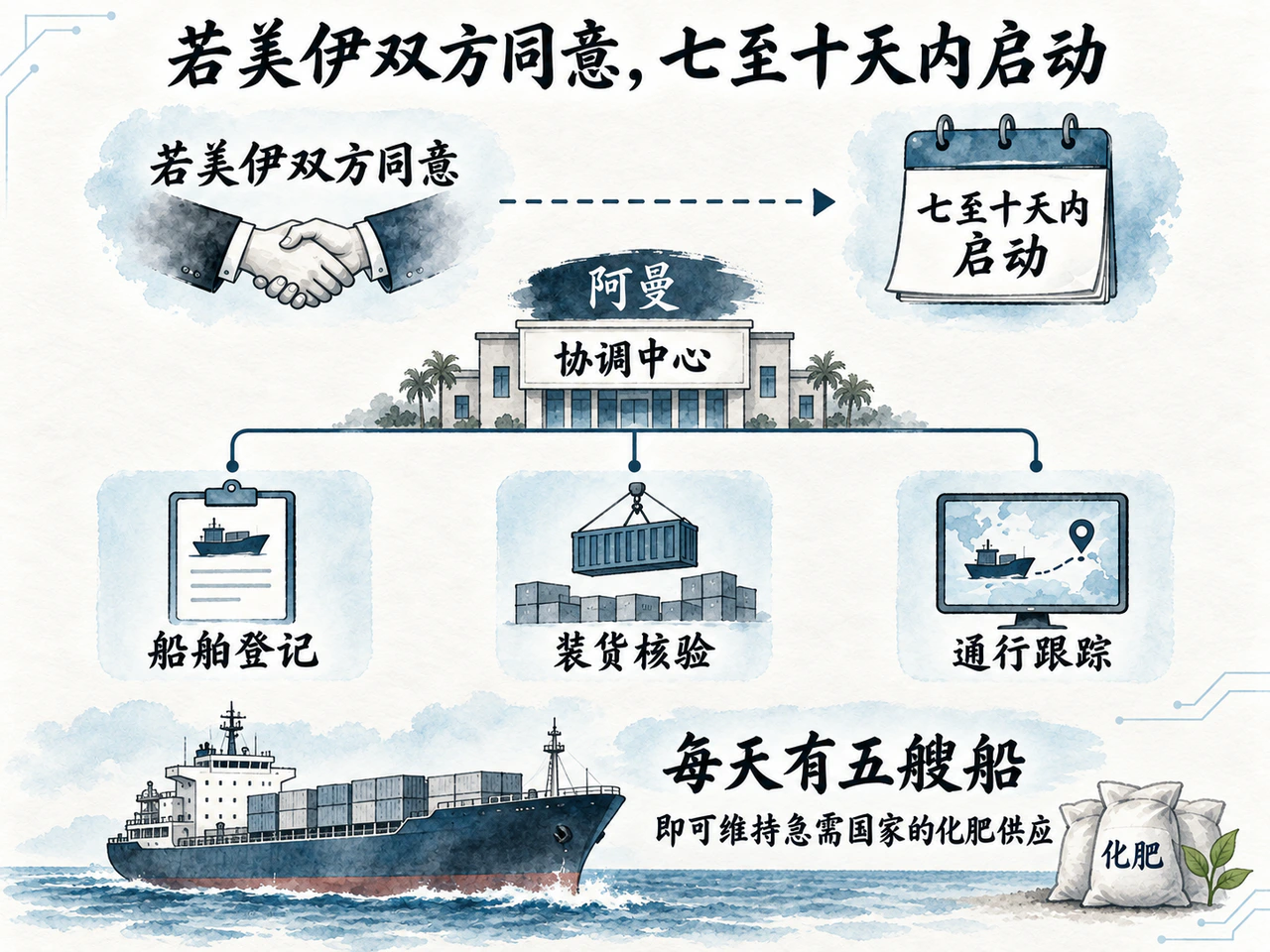
Diplomatic efforts over the regional conflict continued. Lebanon's presidency said on October 14 that President Joseph Aoun had spoken with Iranian Foreign Minister Abbas Araghchi that day, with both supporting diplomatic solutions to regional conflict. To address the Hormuz shipping bottleneck, the UN was advancing a more specific, dedicated transit arrangement.
UN Under-Secretary-General Jorge Moreira da Silva said on October 14 that a UN-backed fertilizer shipping mechanism could begin within seven to ten days if the United States and Iran agreed. Under the current proposal, a coordination center in Oman would handle vessel registration, cargo verification and passage tracking. Allowing five ships through each day would maintain fertilizer supplies to countries in urgent need.
The proposal's urgency stems from the agricultural production cycle. Even if fertilizer eventually reaches its destination port, missing the planting season directly affects current-season farm inputs and subsequent harvests. With a comprehensive ceasefire or navigation agreement still difficult to achieve, whether a limited corridor for humanitarian and agricultural supplies can be implemented first will determine how far this shipping crisis transmits into global food supply.
| Key developments — Beijing time |
|---|
| 10-15The U.S. military disclosed on October 14 that it had destroyed a dhow in the Gulf of Oman the previous week that it said was conducting Iranian surveillance and target designation. It said the crew had safely evacuated first. |
| 10-15Yemen's foreign minister said he had requested U.S. training and intelligence support and expanded sanctions against the Houthis. |
| 10-15AFP's compilation of maritime information showed at least ten ships attacked in and around Hormuz since October 11, with 23 attacks recorded since the start of October. |
| 10-15The World Food Programme said fighting in Yemen had left about 800,000 people struggling to obtain food assistance, with many areas of Taiz inaccessible. |
| 10-15 00:08UN Under-Secretary-General da Silva said a fertilizer transit mechanism could begin within seven to ten days of U.S. and Iranian agreement. Five ship passages daily could maintain supplies for countries in urgent need. |
| 10-14Lebanon's presidency said President Aoun spoke with Iranian Foreign Minister Araghchi, with both supporting diplomacy to end regional conflict. |
| 10-14A British maritime agency disclosed that two other vessels had been hit by unidentified projectiles on October 13. Both continued sailing after minor damage, with no casualties reported. |
| 10-14 20:45Reuters cited maritime security sources as saying the Singapore-flagged container ship GFS Pride sank after a projectile strike. The bulk carrier Cape Dao, attacked on September 23, was reported to be sinking. |
| 10-14Iran's Revolutionary Guards claimed that a cargo ship struck a mine and sank that morning. The claim had not been independently confirmed. |
| 10-14The Houthis said they would continue attacking Saudi international airports and oil infrastructure in the coming days and told relevant personnel to evacuate. |
| 10-14The Saudi-led coalition announced that it had intercepted and destroyed a Houthi ballistic missile aimed at Riyadh. |
| 10-14 15:32Reuters quoted two senior Iranian officials as saying Iran had changed its ship-attack tactics and timing and planned to extend operations into the Gulf of Oman and beyond. |