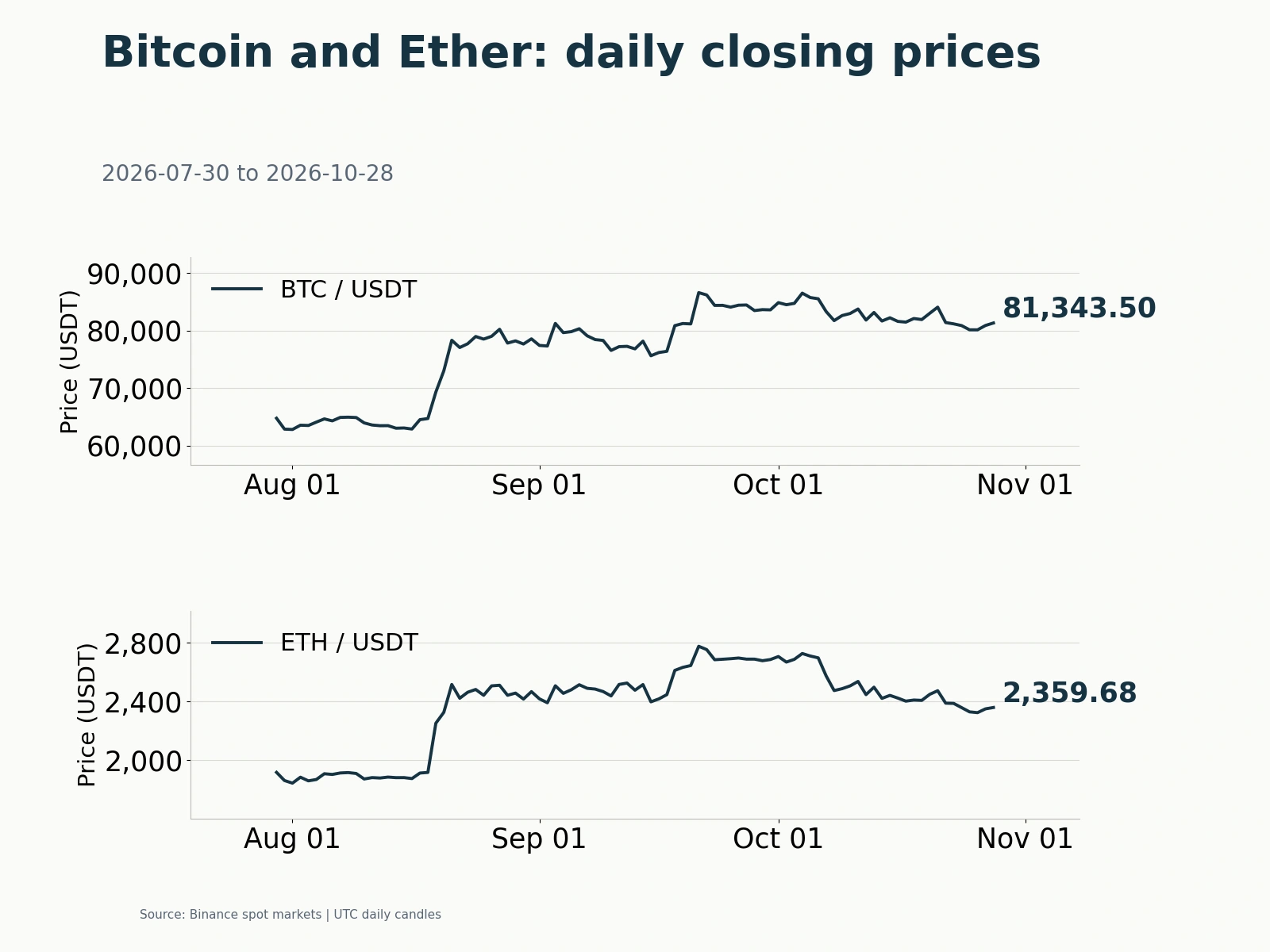
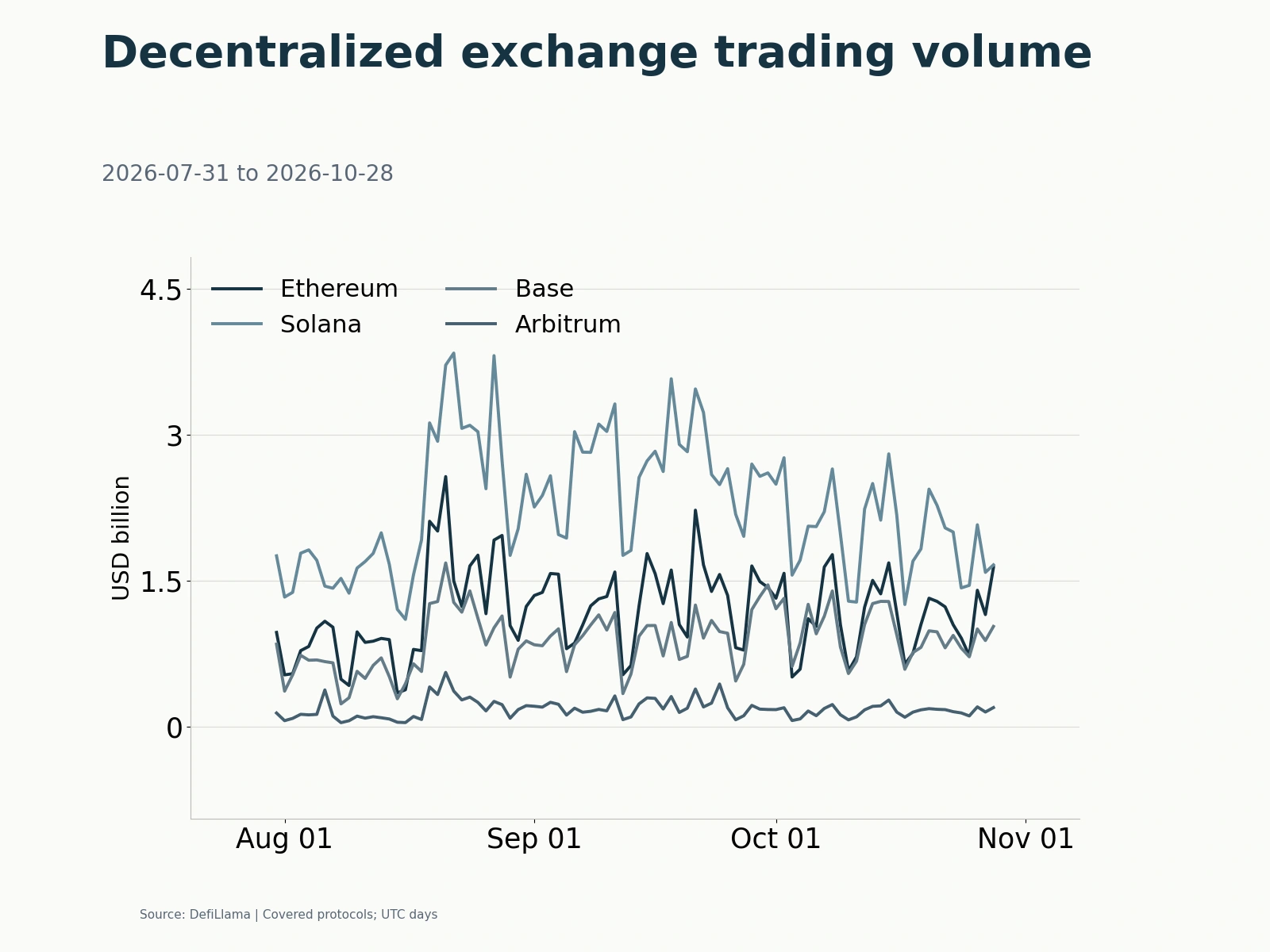
As of the morning of October 16 Beijing time, spot allocation capital continued to leave the crypto market, while derivatives positioning diverged. In the latest fully disclosed US trading session, October 14, both US Bitcoin and Ethereum ETFs returned to net outflows, and total dollar stablecoin supply also edged lower over the preceding week. During the October 15 UTC trading day, however, Bitcoin contract open interest on Binance recovered while Ethereum positions contracted markedly. Off-exchange allocation capital had yet to provide sustained support, and leveraged capital within exchanges was rebalancing in different directions after large liquidations. Market stabilization consequently became more dependent on incremental buying.
One day of US ETF redemptions erases the preceding day's inflows; weekly stablecoin supply falls $1.8 billion
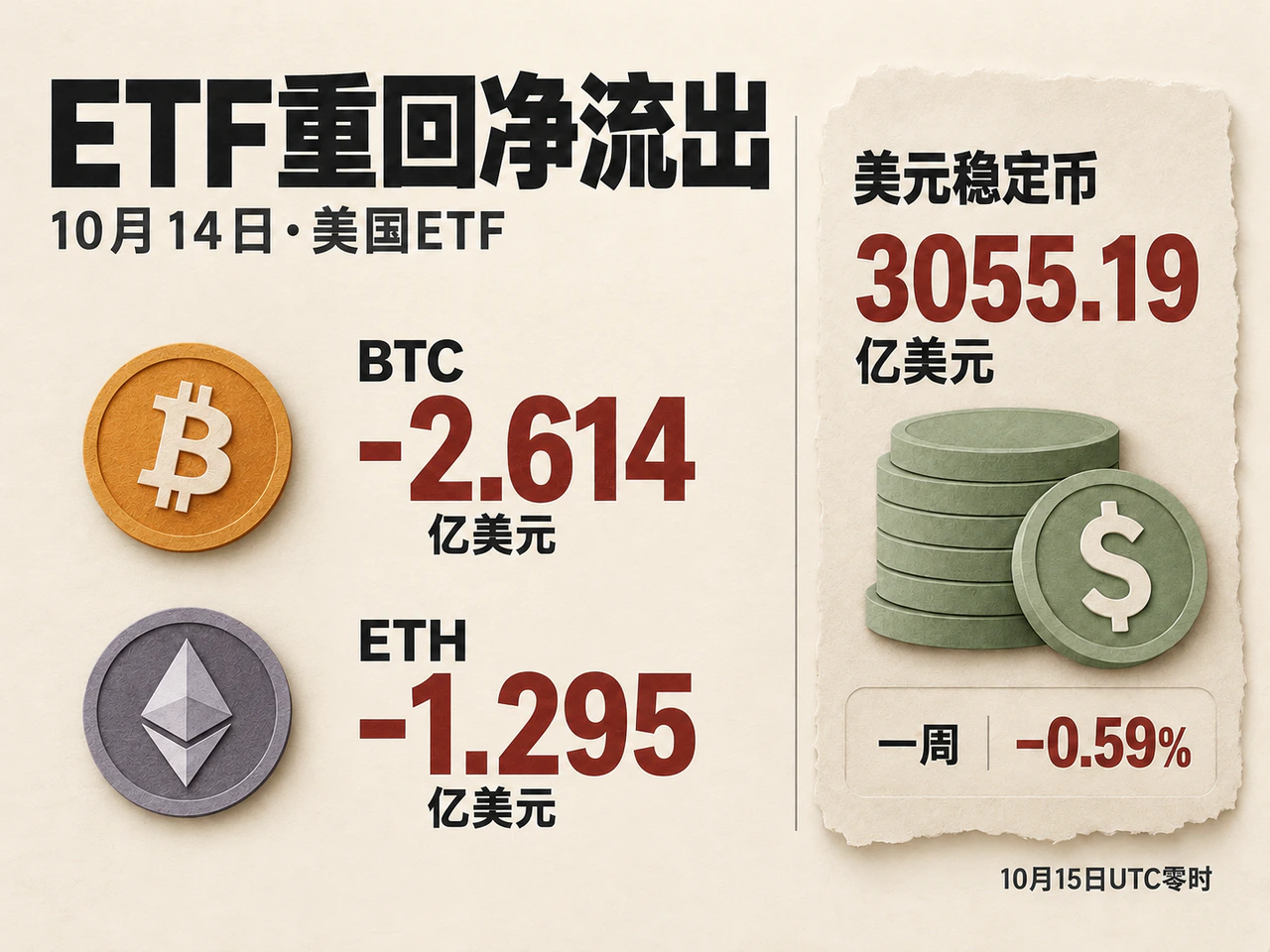
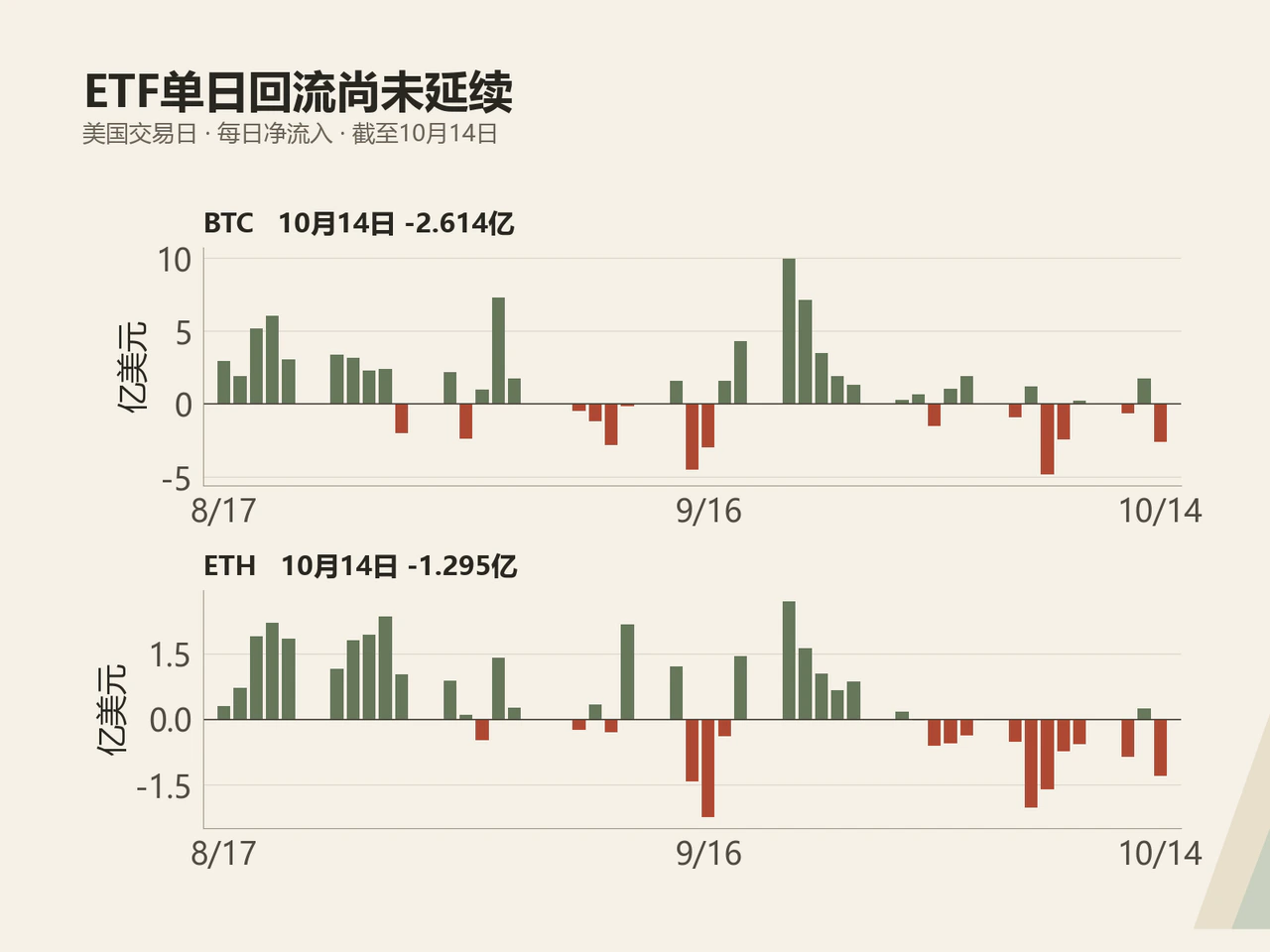
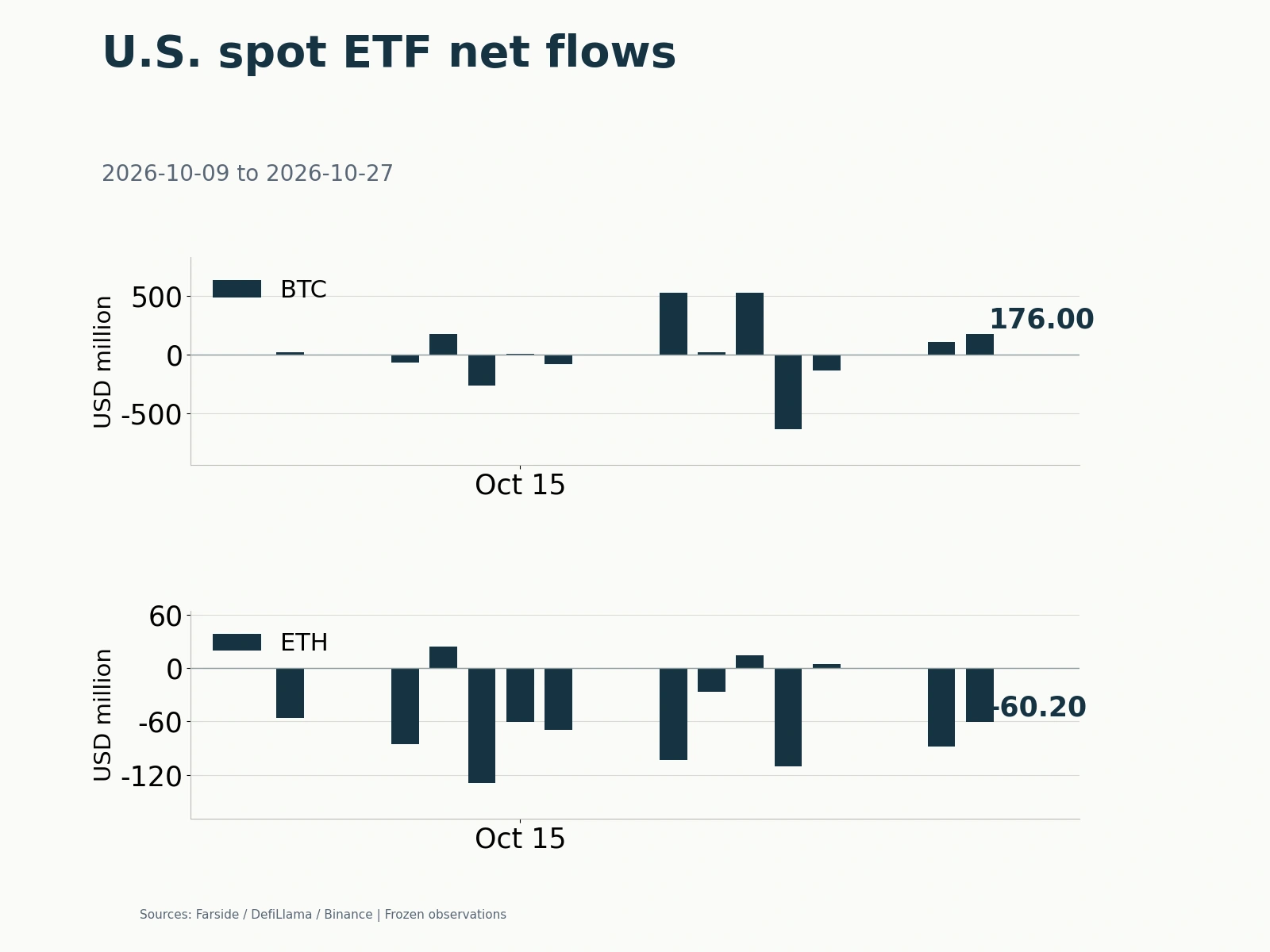
Farside data show aggregate net outflows of $261.4 million from US Bitcoin ETFs and $129.5 million from Ethereum ETFs in the October 14 US trading session. On October 13, the two product groups had attracted $175.7 million and $24.8 million respectively, but the 14th's redemptions completely erased that one-day return of capital. Redemptions on the 14th were concentrated in leading funds: among Bitcoin ETFs, FBTC lost $152.7 million and IBIT $110.9 million, while BITB alone recorded a small $2.2 million net inflow. Among Ethereum ETFs, ETHA lost $109.8 million and Grayscale's ETH $18.8 million.
Over the three trading days from October 12 through 14, Bitcoin and Ethereum ETFs recorded cumulative net outflows of $151.1 million and $190.1 million respectively. Over the ten sessions from October 1 through 14, the totals reached $537.4 million and $825.1 million. Ethereum ETFs had net outflows in nine of those ten sessions, briefly turning positive only on the 13th. Persistent redemptions from mainstream products show that new off-exchange allocations were insufficient to offset withdrawals of existing capital. Short-term price recovery needed more buying within exchanges to absorb selling.
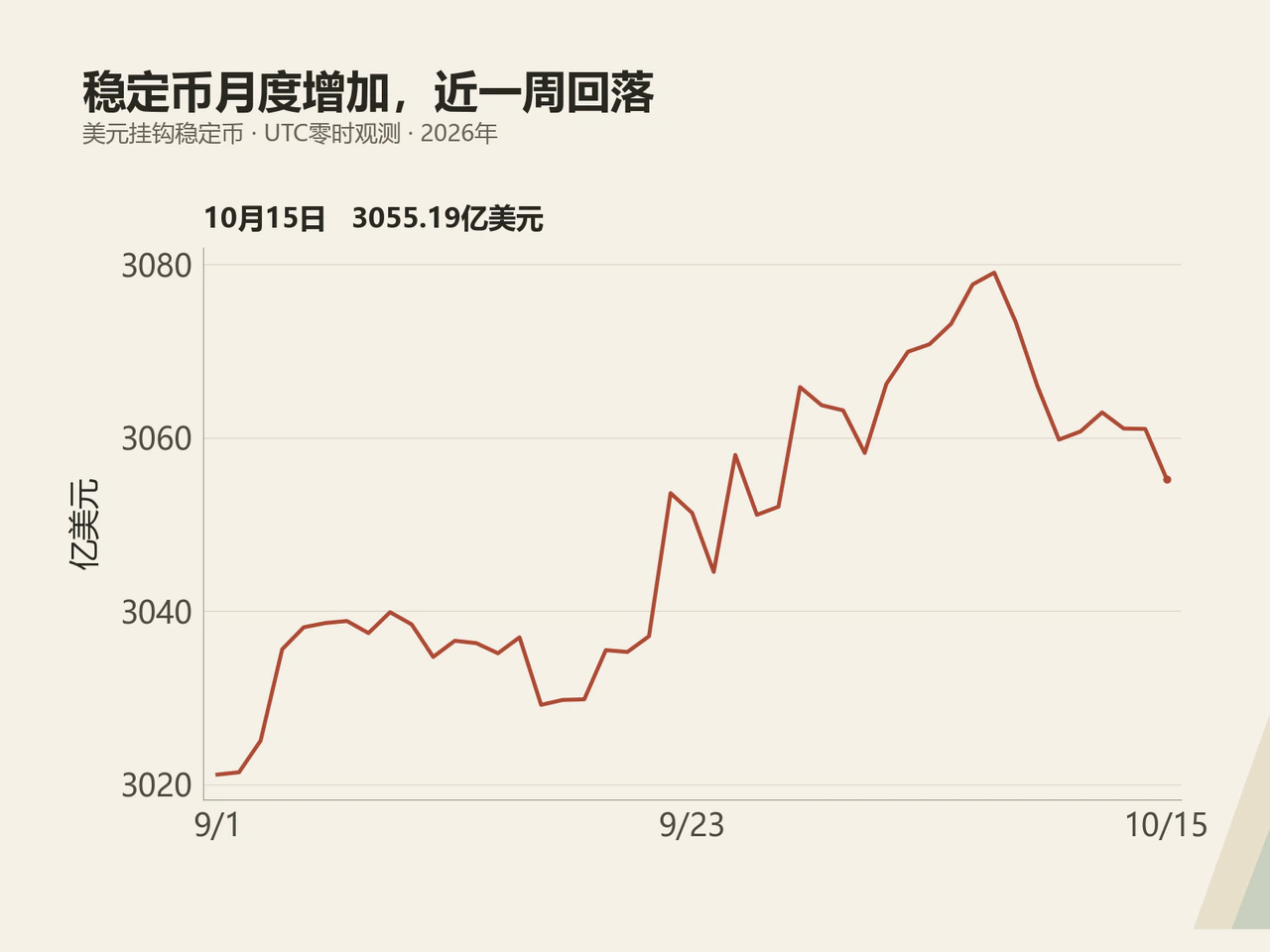
Short-term liquidity in dollar stablecoins was also tight. DefiLlama data as of 00:00 UTC on October 15 put the aggregate market capitalization of dollar-pegged stablecoins at approximately $305.519 billion, down $1.814 billion, or about 0.59%, from October 8. USDC circulation fell from $73.854 billion to $72.792 billion, a weekly contraction of $1.062 billion and the main source of the recent decline. USDT fell from $184.348 billion to $184.015 billion, a decrease of about $333 million.
Compared with September 15, the same stablecoin total was still approximately $1.821 billion higher, an increase of about 0.60%. The pattern was mild monthly expansion followed by a decline over the latest week, indicating slower near-term incremental momentum. Stablecoins serve trading settlement, derivatives margin and payments, so whether existing dollar positions become crypto buying still depends on holders' risk appetite. With persistent ETF outflows compounded by weekly stablecoin contraction, a material improvement in spot demand remained to be seen.
After nearly $1 billion in futures liquidations, Binance Bitcoin open interest rises 1.37% and Ethereum falls 4.95%
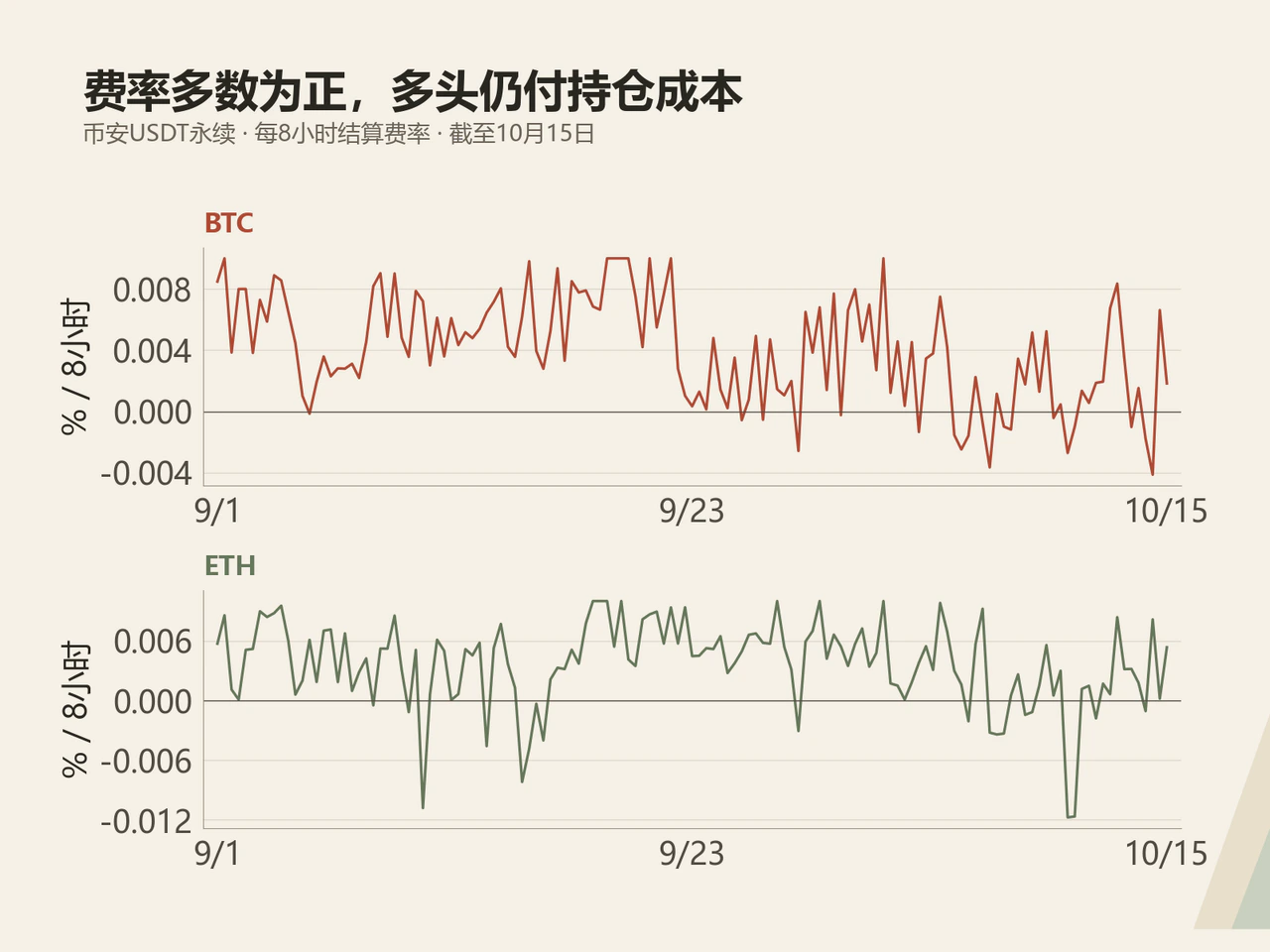
Derivatives positioning diverged after large forced liquidations. CoinDesk's intraday observation published October 15 put market-wide crypto futures liquidations at nearly $1 billion over its rolling 24-hour window, sharply higher than approximately $136 million the preceding day. Ethereum long liquidations were about $200 million and Bitcoin long liquidations about $115 million. Ethereum longs suffered the heavier forced-liquidation shock, with margin and liquidation mechanisms amplifying market volatility.
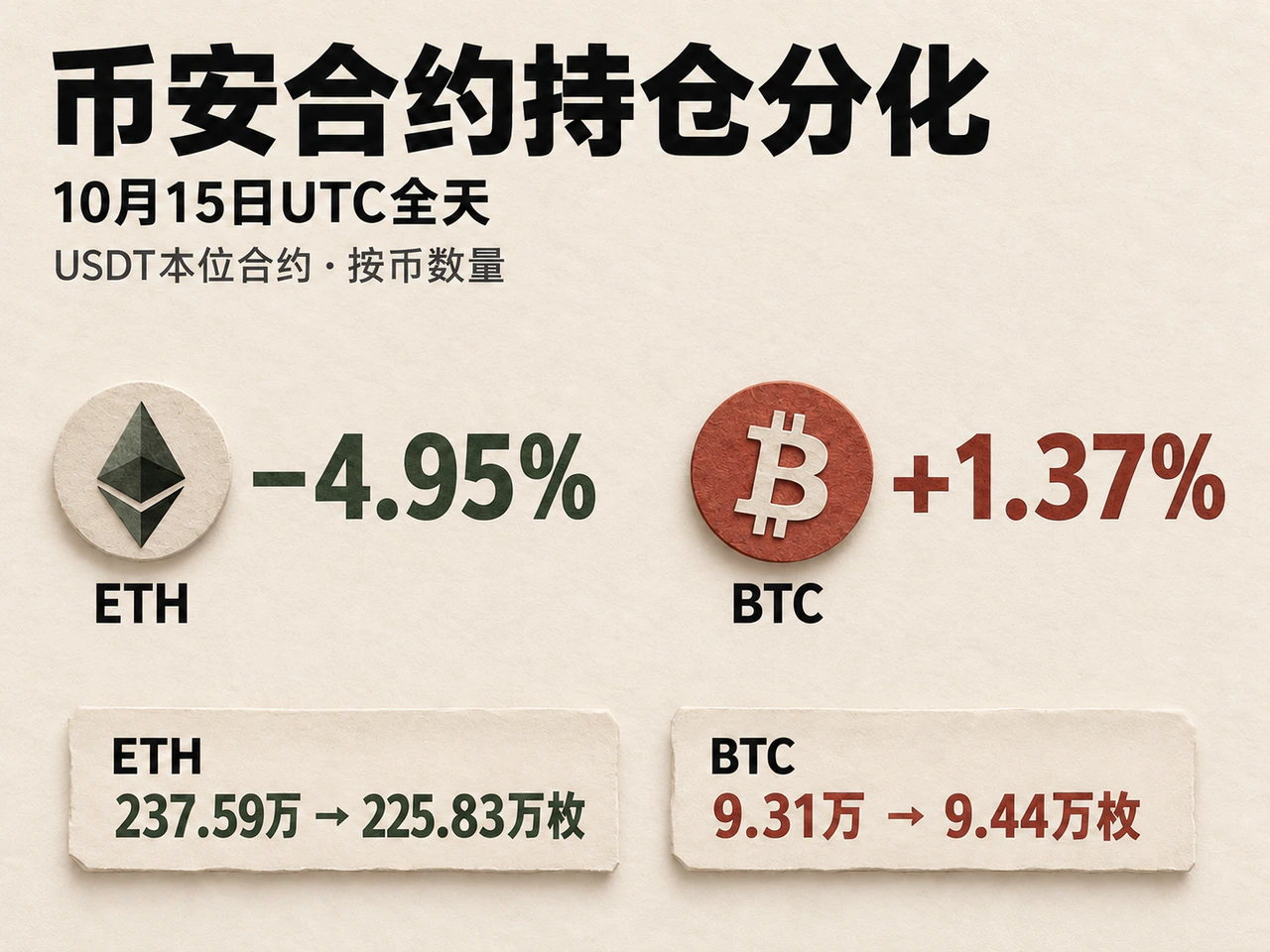
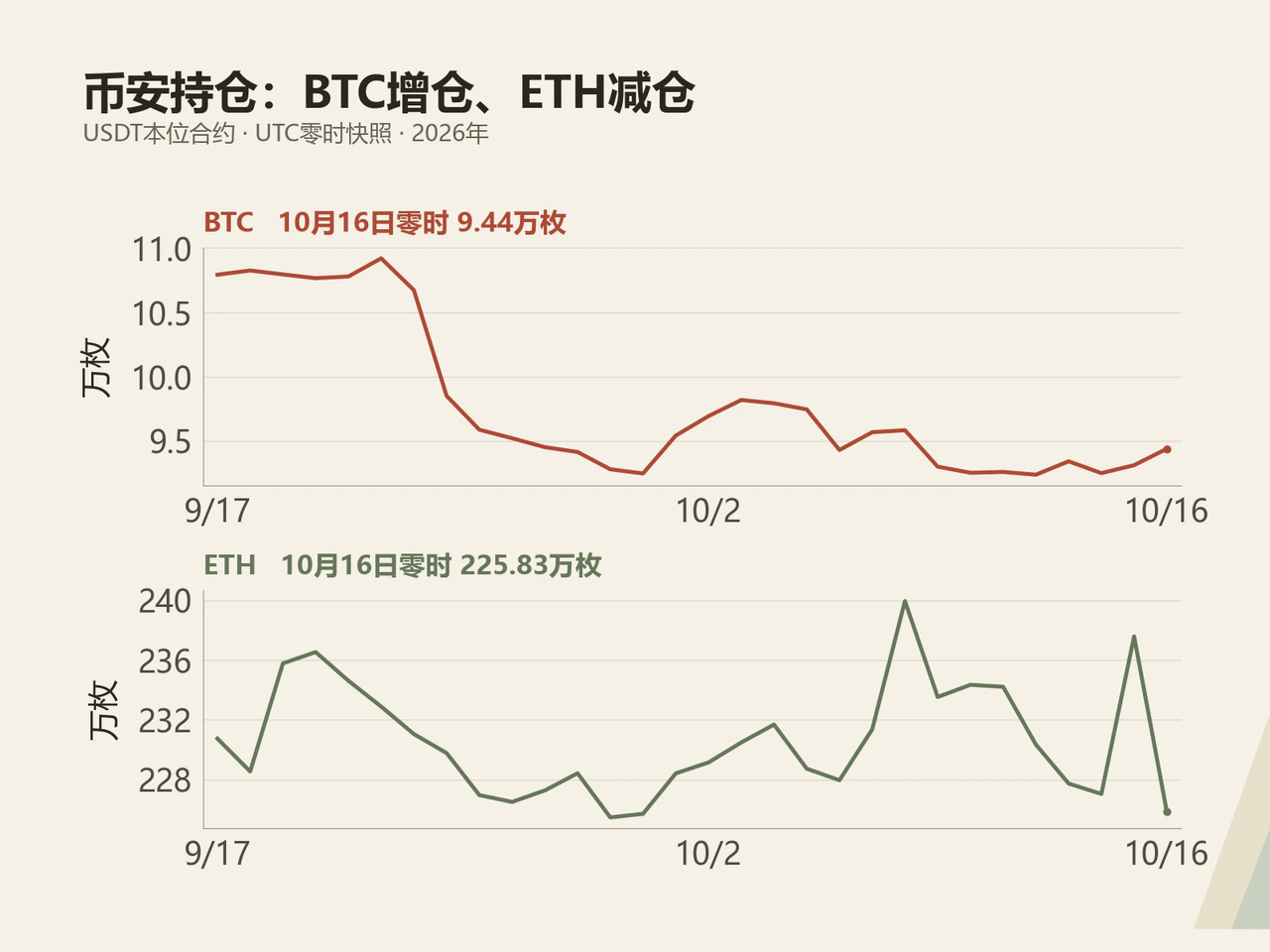
Binance's daily snapshots of USDT-margined contract positions show that from 00:00 UTC on October 15 to 00:00 UTC on the 16th, Bitcoin open interest rose from approximately 93,100 BTC to 94,400 BTC, an increase of 1.37%. Ethereum open interest fell from approximately 2.3759 million ETH to 2.2583 million ETH, down 4.95%. Measured in coin quantities, removing the effect of price fluctuations on notional position values, new positions were still entering Bitcoin while Ethereum underwent a clear contraction. The two assets' sensitivity to subsequent price volatility was diverging.
Funding rates indicated that derivatives had not shifted to one-sided shorting. At 00:00 UTC on October 15, the Binance Bitcoin USDT perpetual settled at −0.004135%, followed by two positive settlements of 0.006617% and 0.001828%. Ethereum's three funding settlements that day were all positive, meaning longs continued paying shorts to hold positions. Expanding Bitcoin open interest coincided with funding turning positive, reflecting active competition between longs and shorts. Ethereum's positive funding after position reduction meant remaining longs still bore holding costs.
Options also corroborated this divergence. CoinDesk's observations that day showed active Bitcoin contracts on Deribit spanning both calls above the market price and puts, with two-way bullish and bearish trading. Ethereum's most-traded options were more concentrated in puts, indicating more pronounced demand for downside protection.
Overall, near-term stabilization hinged on whether spot allocation demand could realign with derivatives positions. A return to consecutive net inflows into US ETFs would provide external capital to absorb exchange positions. Conversely, if spot allocations remained weak while Bitcoin contract positions kept accumulating, leverage could still amplify price swings. Ethereum's position reduction helped release some crowded-long pressure, but a material demand recovery still needed confirmation from better ETF flows and returning exchange-based buying.
Click “Read Original” for the full details.