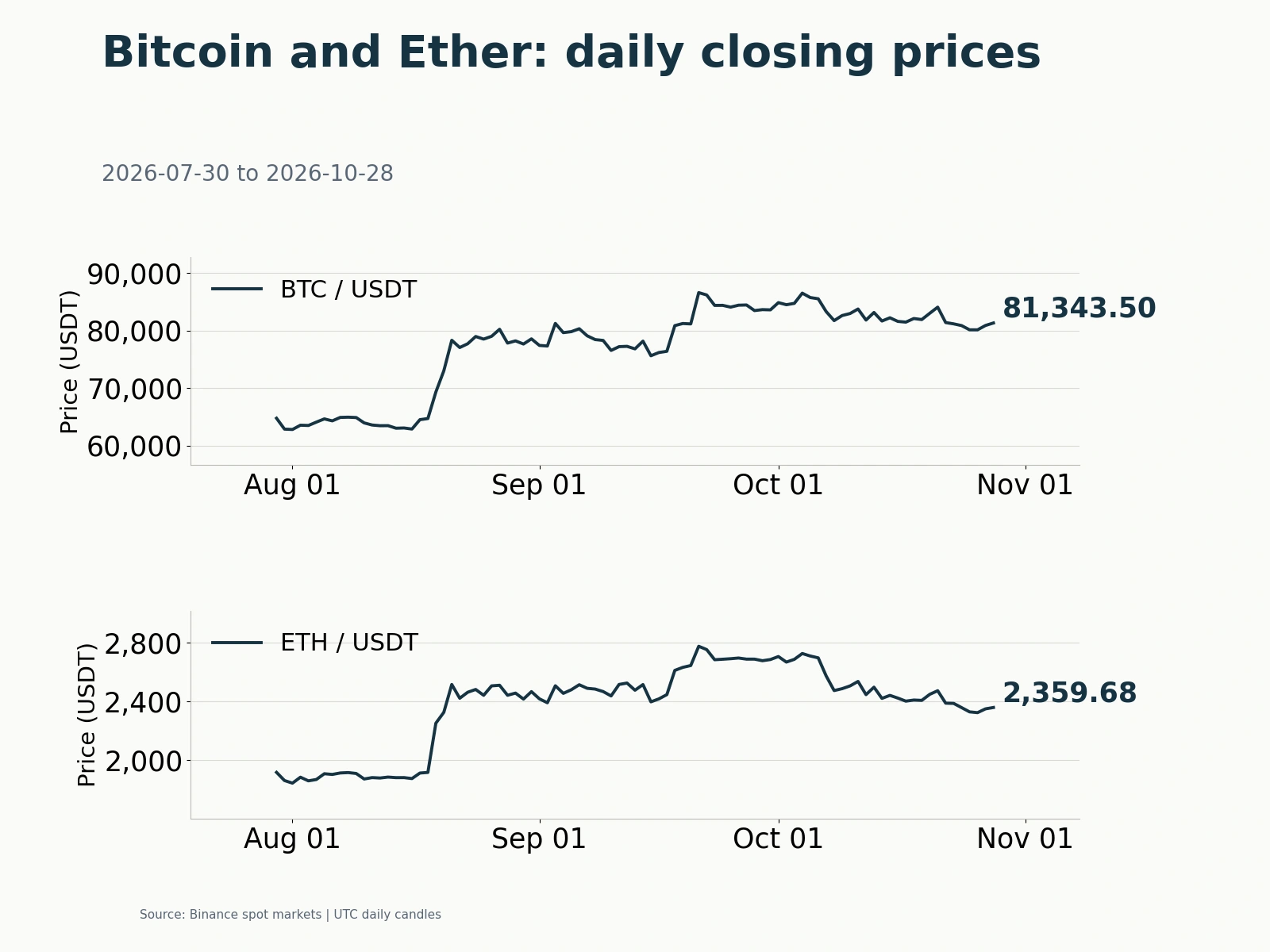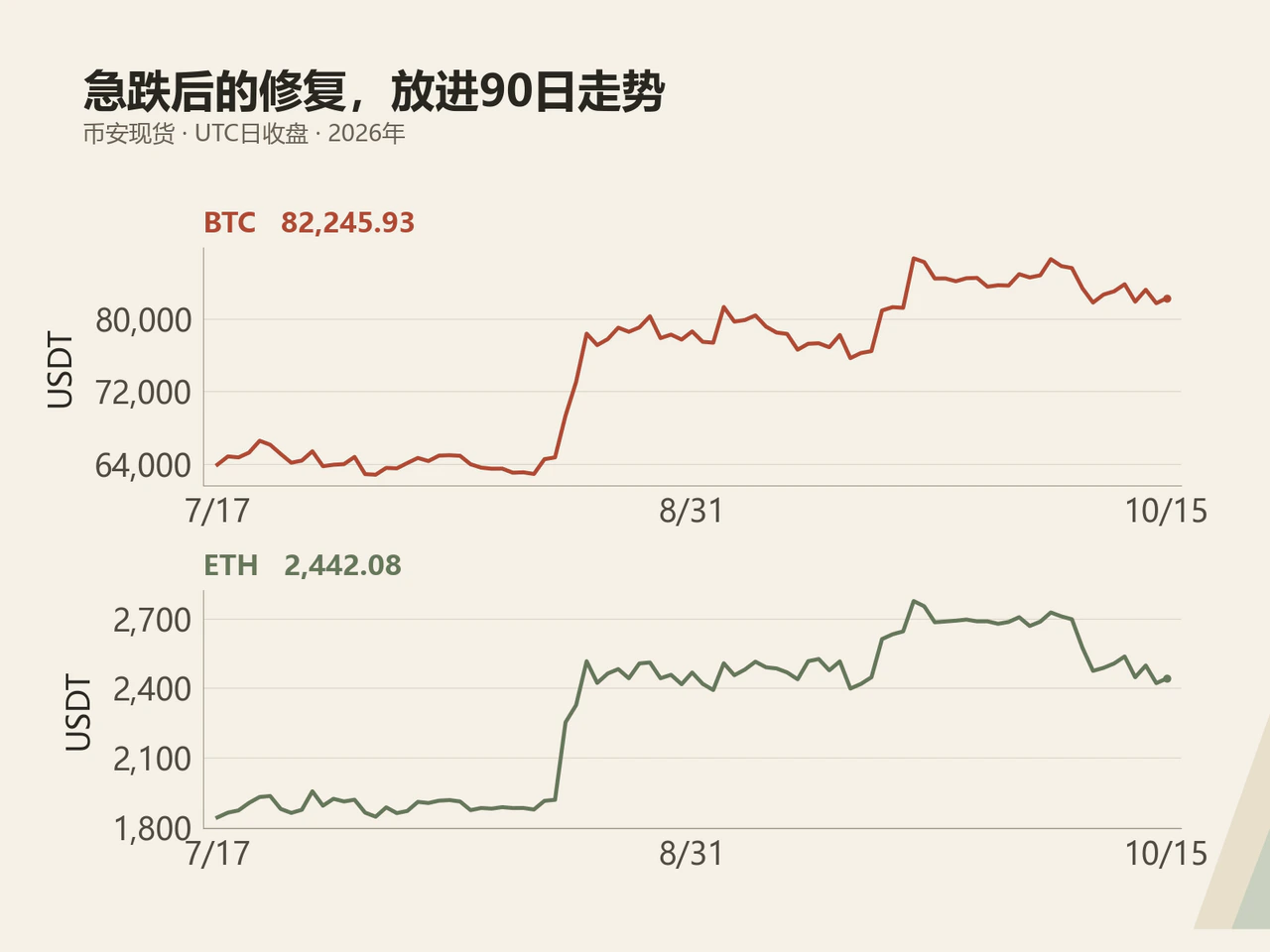
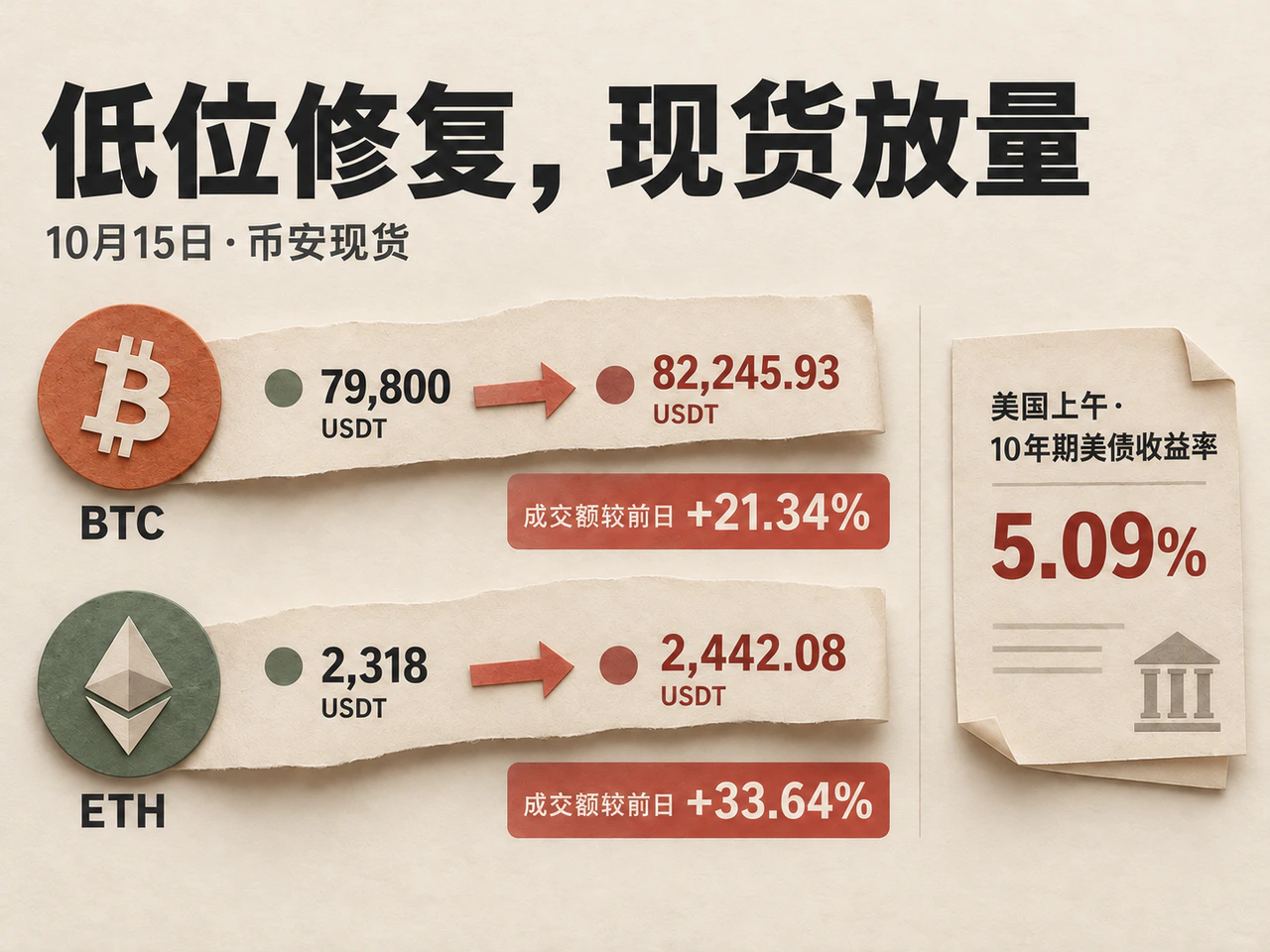
On October 15, crypto markets staged a V-shaped recovery after a macroeconomic inflation shock and a steep Asian equity selloff. On Binance's UTC spot daily candles, which closed at 8 a.m. Beijing time on October 16, Bitcoin briefly broke below 80,000 USDT to a low of 79,800 USDT, before finishing at 82,245.93 USDT, up 0.69% from the previous day. Ether touched an intraday low of 2,318 USDT and closed at 2,442.08 USDT, up 0.85%. Resurgent U.S. inflation and plunging Asian technology stocks weighed on risk appetite in the first half of the session; falling Treasury yields later gave markets breathing room. Although most major tokens turned positive by the close, recent differences in relative strength persisted.
Lower Treasury yields ease inflation and Asian equity shocks; Bitcoin and Ether recover intraday losses on higher turnover
The sharp intraday volatility began with U.S. inflation data released the previous day. The Bureau of Labor Statistics reported that September's consumer price index rose 0.6% month on month, while annual inflation increased from 3.4% in August to 3.7%. Gasoline prices jumped 9.1% from the previous month, contributing more than half of the overall monthly increase. Annual core CPI inflation also rose from 2.4% to 2.6%. Broad price pressures beyond energy forced investors to reassess how long, and how firmly, the Federal Reserve would maintain restrictive policy.
The repricing of interest-rate expectations directly hit volatile assets. CoinDesk reported during October 15 trading that the market-implied probability of an October rate increase had jumped from about 22% before the inflation release to nearly 47%, before falling back to around 26%. Selling in Asian equities intensified the intraday decline. According to the Associated Press, concerns that debt-funded AI investment could struggle under high interest rates helped push South Korea's composite index down 7.6% and Japan's Nikkei 225 down 4.9%. With financing costs expected to rise and cross-market selling pressure mounting, traders first cut highly volatile, less liquid positions, leaving smaller-cap tokens with particularly sharp intraday losses.
The turning point came in Treasuries. The Associated Press reported during the U.S. morning that safe-haven buying pushed the 10-year Treasury yield down from 5.19% late Wednesday to 5.09%, even though other economic releases that day still signaled inflation and demand pressures. Lower long-term yields eased valuation discount-rate pressure on risk assets. Yet the growth and credit concerns drawing funds into government bonds also limited buyers' willingness to chase prices, producing an uneven rebound.
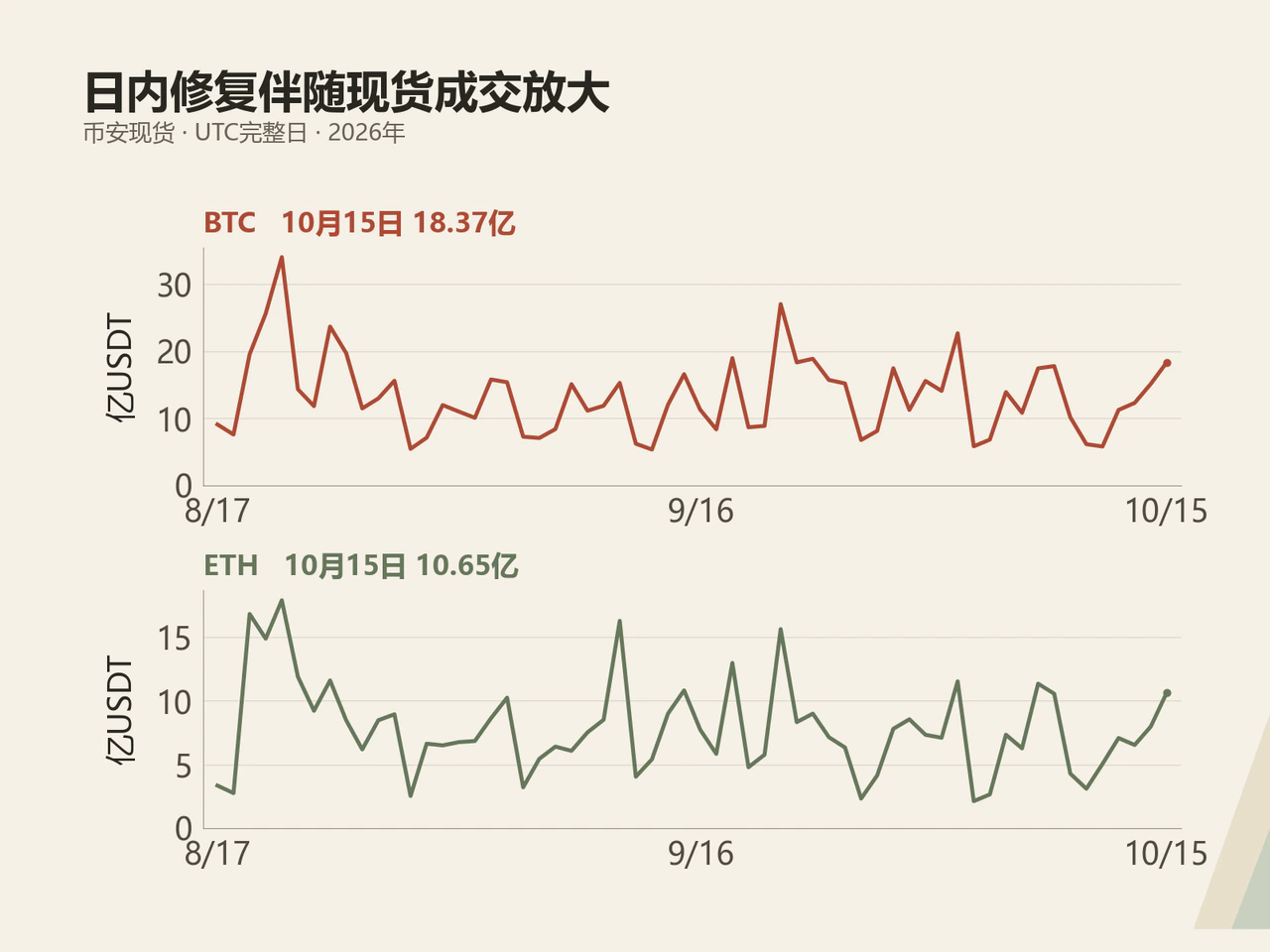
The sharp selloff and recovery came with heavier spot turnover and concentrated derivatives deleveraging. Binance spot data showed daily BTC/USDT turnover of 1.837 billion USDT, up 21.34% from the previous day, and ETH/USDT turnover of 1.065 billion USDT, up 33.64%. From their intraday lows to the close, Bitcoin rebounded about 3.1% and Ether about 5.4%. In derivatives, Bitcoin.com cited CoinGlass's then-current rolling 24-hour figures showing approximately $929 million of marketwide contract liquidations, including more than $777 million in long positions. Concentrated liquidation of highly leveraged longs amplified the decline, while also reducing selling pressure during the subsequent recovery.
Five of eight major tokens rise, but 30-day divergence persists; PYTH outperforms on its buyback mechanism
Of the eight liquid tokens in the fixed observation set—BTC, ETH, BNB, SOL, XRP, DOGE, ADA and LINK—five rose and three fell at the October 15 close. Beyond Bitcoin and Ether, SOL gained 1.10%, while XRP and LINK edged up 0.25% and 0.22%. BNB and ADA closed slightly lower, and DOGE fell 0.87%. Returning funds favored selected major tokens and had yet to spread broadly to high-beta speculative assets.
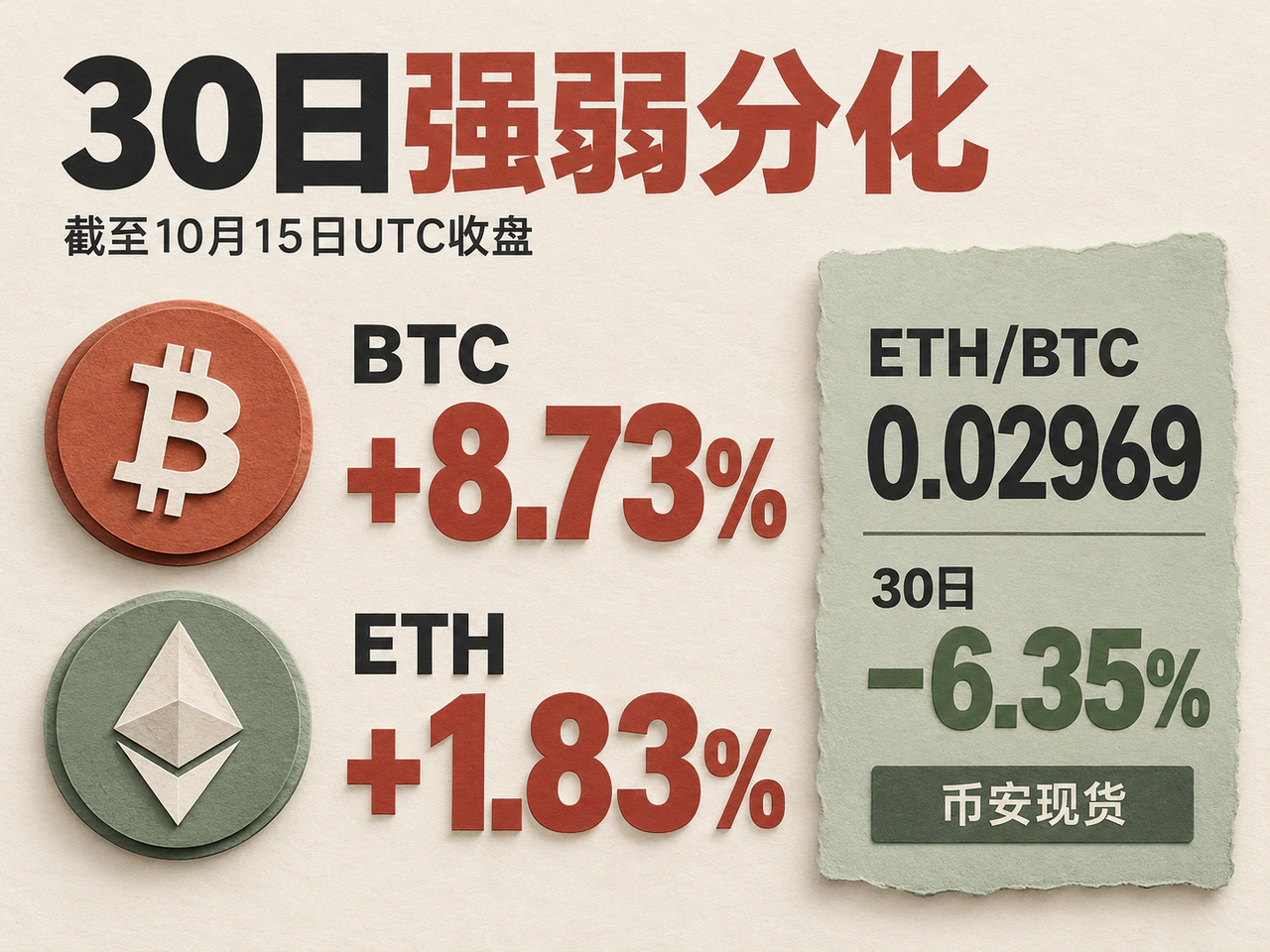
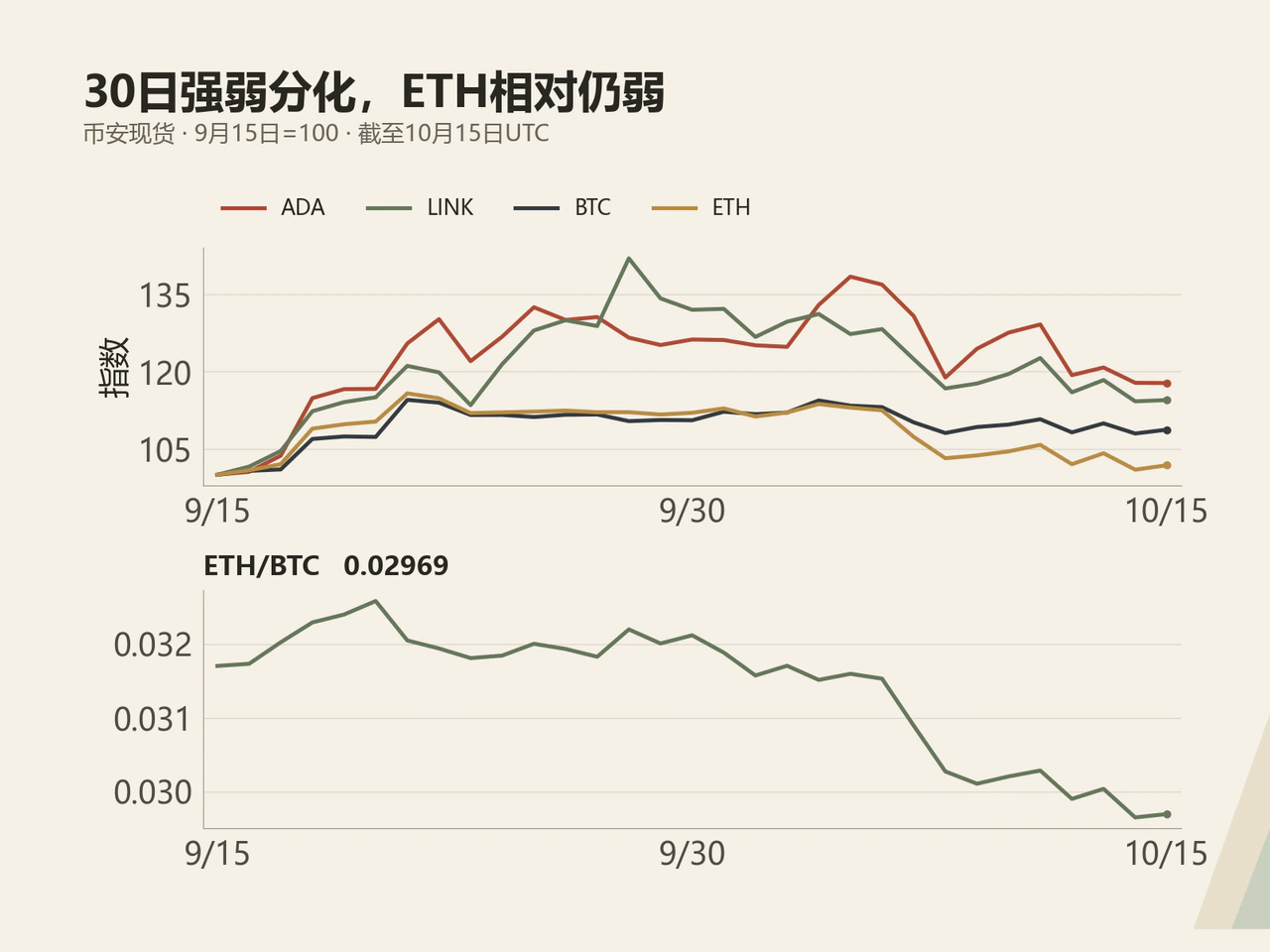
The differences become clearer over a month. Based on Binance USDT spot closing prices, ETH/BTC stood at 0.02969 that day, down about 6.35% over the past 30 days. Bitcoin gained 8.73% over the same period, while Ether rose only 1.83%; Ether's slight outperformance on October 15 recovered only a small portion of its recent relative weakness. Other major tokens also diverged markedly over 30 days: ADA and LINK gained 17.76% and 14.47%, SOL rose 8.84%, and DOGE added just 1.34%. Earlier gains did not translate mechanically into greater resilience that day, reflecting continued rotation of existing funds among assets.
Beyond the macroeconomic theme, projects with mechanisms for capturing token value showed independent price moves. CoinDesk recorded PYTH rising about 2.8% against the market during October 15 trading, extending its gains since a governance vote passed on October 8. Pyth DAO had approved using all product revenue it receives to repurchase PYTH. Unchained further clarified that the buyback funding specifically comprised the revenue share allocated to the DAO, rather than total protocol product revenue. Directly converting protocol revenue into secondary-market buying helped the token remain relatively resilient amid widespread losses.
Overall, the October 15 reversal was driven mainly by falling Treasury yields and a technical recovery after long liquidations. Catalysts specific to individual tokens have yet to spark broad rotation. Whether the rebound can turn from an intraday recovery into a sustained advance still depends on Bitcoin stabilizing above 80,000 USDT, ETH/BTC reversing its monthly decline, and further expansion in the breadth of major-token gains and spot buying.
Click Read Original for the full details.