By the morning of October 16, Beijing time, Hormuz shipping risks and spillover from the Yemen conflict continued together. Merchant vessels kept passing through the strait, but a tanker caught fire in a Gulf of Oman exclusion zone, showing that disabling tracking did not remove attack risk. Houthi attacks on the presidential palace area in Aden and continued harassment of Saudi airports had forced postponement of the EU-GCC summit and an international sporting event. Qatar and Pakistan continued mediating US-Iran contacts around safe Hormuz passage in exchange for lifting the blockade of Iranian ports, as well as nuclear arrangements, while both sides maintained military pressure.
More than 40 merchant ships transit Hormuz in a day; disabling tracking still fails to avert attacks
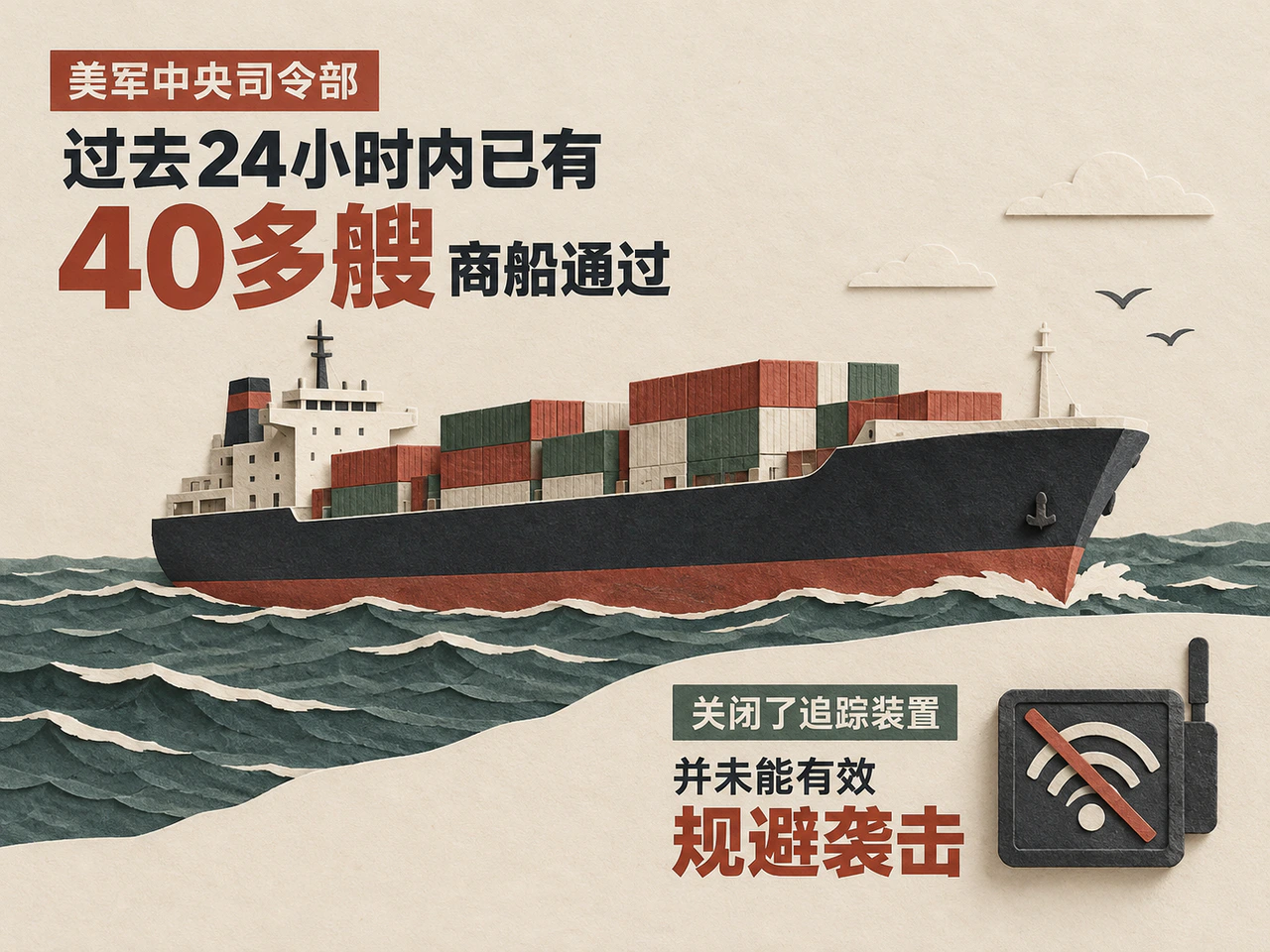
The US and Iran maintained conflicting claims over control of Hormuz on October 15. Iranian naval official Sayyari again claimed the strait was closed and ships needed coordination with Iran to pass. US Central Command countered that the US and regional partners controlled it and that more than 40 merchant vessels had passed in the previous 24 hours.
Maritime-security monitoring showed the strait remained navigable, but attack risk stayed high. Shipping media cited the Joint Maritime Information Center's daily notice as maintaining a severe threat level. Iran had attributed the earlier sinking of container ship GFS Pride to a mine; the US military said an Iranian Revolutionary Guard projectile struck it and it sank under tow. The center said no evidence currently supported the mine explanation, while still advising vessels to watch for potential mine-laying.
Disabling positioning signals also failed to ensure safe navigation. Iran's military reported on the 15th that a tanker with tracking switched off caught fire in an Iranian-designated Gulf of Oman exclusion zone. Greek maritime-risk firm Marisks said all three merchant ships confirmed attacked that week had disabled tracking at the time. That practice had not effectively averted attacks, leaving owners with additional route-selection and crew-safety costs.
Houthis hit Aden's presidential palace and attack Riyadh airport 20 times this month, delaying EU summit and international tournament

Attack frequency and spillovers toward Yemen and Saudi Arabia increased together. On October 15, the Houthis attacked the Maashiq presidential palace area in Yemen's temporary capital Aden, reaching the internationally recognized government's core offices. Yemen's government said guards were killed but the prime minister and other leaders present were safe. The Houthis claimed to have targeted a military operations command led by Saudi officers.
Aerial threats inside Saudi Arabia continued. The Saudi-led coalition said on the 15th that the Houthis had attacked Riyadh's King Khalid International Airport 20 times that month, and that it intercepted a cruise missile in the Medina region that day. A Houthi spokesman denied attacking Medina but again warned airlines that Saudi airports and airspace were unsafe, except airspace associated with Mecca and Medina.
Heavy air-defense pressure forced several international diplomatic and commercial activities to be delayed. The EU postponed the second EU-GCC summit, originally scheduled for October 24 in Riyadh. The Asian Tour also postponed the Saudi International golf tournament planned for November 18–21. European countries were meanwhile increasing protection for regional shipping and energy facilities. EU foreign-policy chief Kallas called for more member-state vessels for Operation Aspides to escort merchant shipping through Bab el-Mandeb and the Red Sea. France's Foreign Ministry said agreed assistance to protect Saudi oil facilities was being implemented.
Mediation links safe passage to lifting the port blockade; US prepares new strike options
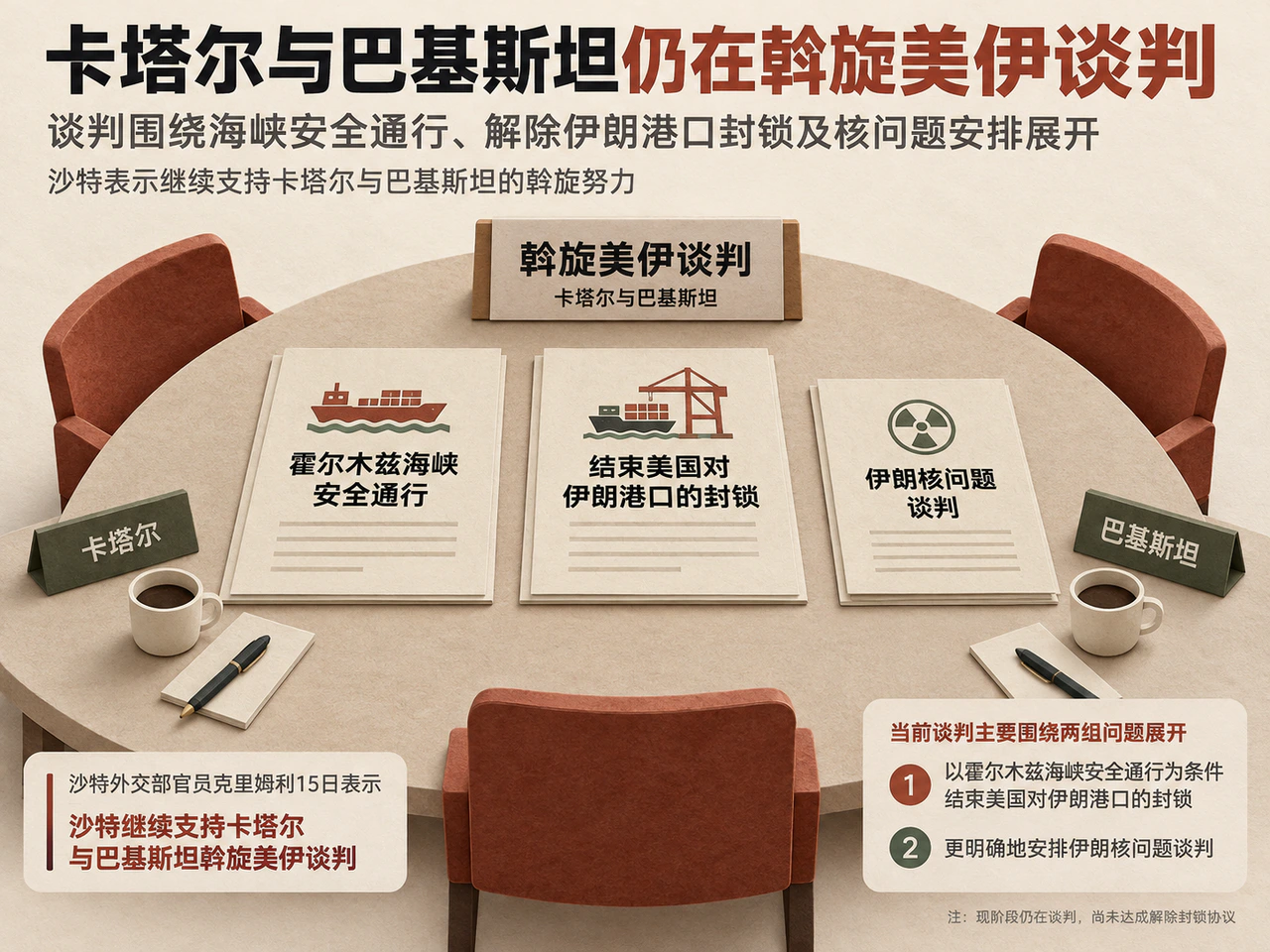
Diplomacy continued alongside disagreement and military deterrence. Saudi Foreign Ministry official Krimly said on the 15th that Saudi Arabia continued supporting Qatari and Pakistani mediation. Talks focused on two issues: ending the US blockade of Iranian ports in return for safe Hormuz passage, and clarifying arrangements for Iranian nuclear negotiations. Krimly also criticized Iran's slow response and insufficient proposals.
Away from the negotiating table, both countries strengthened military leverage. Media cited multiple US officials as saying the military had prepared new strike options, including possible use of the GBU-43/B large air-blast bomb against Iranian energy facilities and nuclear-related sites. The plans awaited the president's decision; the White House had not confirmed specific options and the Pentagon said it planned for a range of contingencies. Iranian parliament speaker Qalibaf said the same day that Iran must prepare for war even while negotiating. With both sides talking and preparing for conflict, even progress on limited passage arrangements would leave meaningful de-escalation dependent on an executable overall package covering the blockade, shipping safety and nuclear issues.
Key developments

| Key developments (Beijing time) |
|---|
| 10-16 07:16A Saudi Foreign Ministry official said mediation covered safe strait passage, ending the blockade of Iranian ports and arrangements for nuclear talks; Saudi Arabia continued supporting Qatar and Pakistan's efforts. |
| 10-16 02:26The Asian Tour postponed the Saudi International golf tournament scheduled for November 18–21 in Riyadh. |
| 10-16 01:47Lebanon's presidency said Aoun spoke with Rubio, asking the US to press Israel to halt operations in southern Lebanon and implement the June agreement. |
| 10-16 01:00The Saudi-led coalition said the Houthis had attacked Riyadh's King Khalid International Airport 20 times this month. |
| 10-16 00:14The Associated Press reported Yemen's government as saying missile and drone attacks on the Aden presidential palace area killed guards, while government leaders present were safe. The Houthis claimed to have struck a Saudi military operations body. |
| 10-15 23:50A Houthi spokesman again warned airlines of danger at Saudi airports and in its airspace, while exempting airspace associated with Mecca and Medina. |
| 10-15 22:40EU foreign-policy chief Kallas called for more member-state ships to expand merchant escorts in Bab el-Mandeb and the Red Sea. |
| 10-15 22:01Iran's military said a tanker with tracking disabled caught fire in its designated Gulf of Oman exclusion zone. |
| 10-15 19:30The EU postponed the EU-GCC summit scheduled for October 24 in Riyadh. |
| 10-15 18:00The Saudi-led coalition said it intercepted a cruise missile in the Medina region; the Houthis denied attacking Medina. |
| 10-15 16:08Marisks said all three merchant ships confirmed attacked that week had disabled tracking at the time, warning that switching off signals still did not avert attacks. |
| 10-15 12:01Media cited US officials as saying new strike options, including large air-blast bombs, had been prepared and awaited the president's decision. |
| 10-15 10:52Iranian parliament speaker Qalibaf said Iran must remain prepared for war during negotiations. |