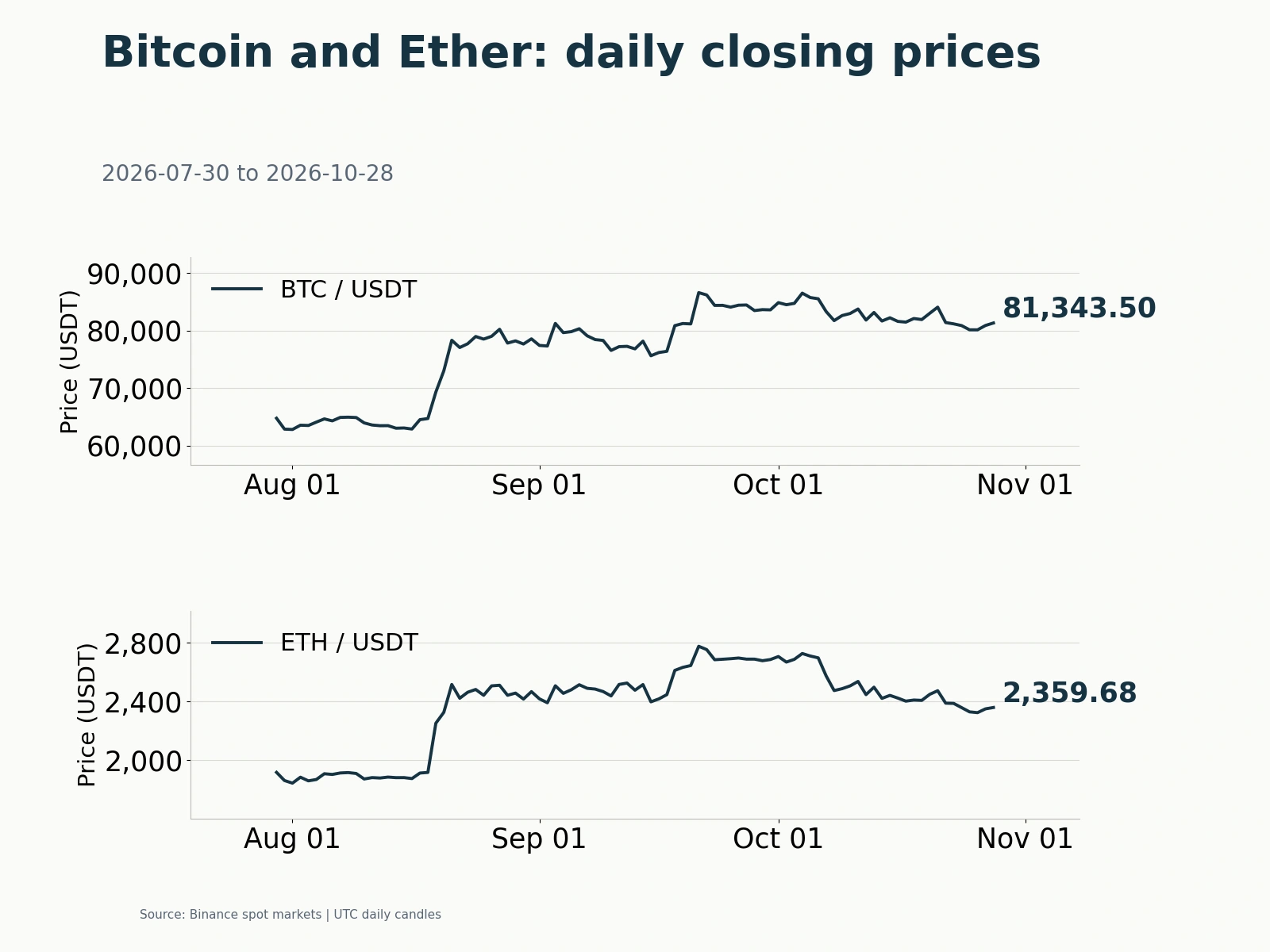
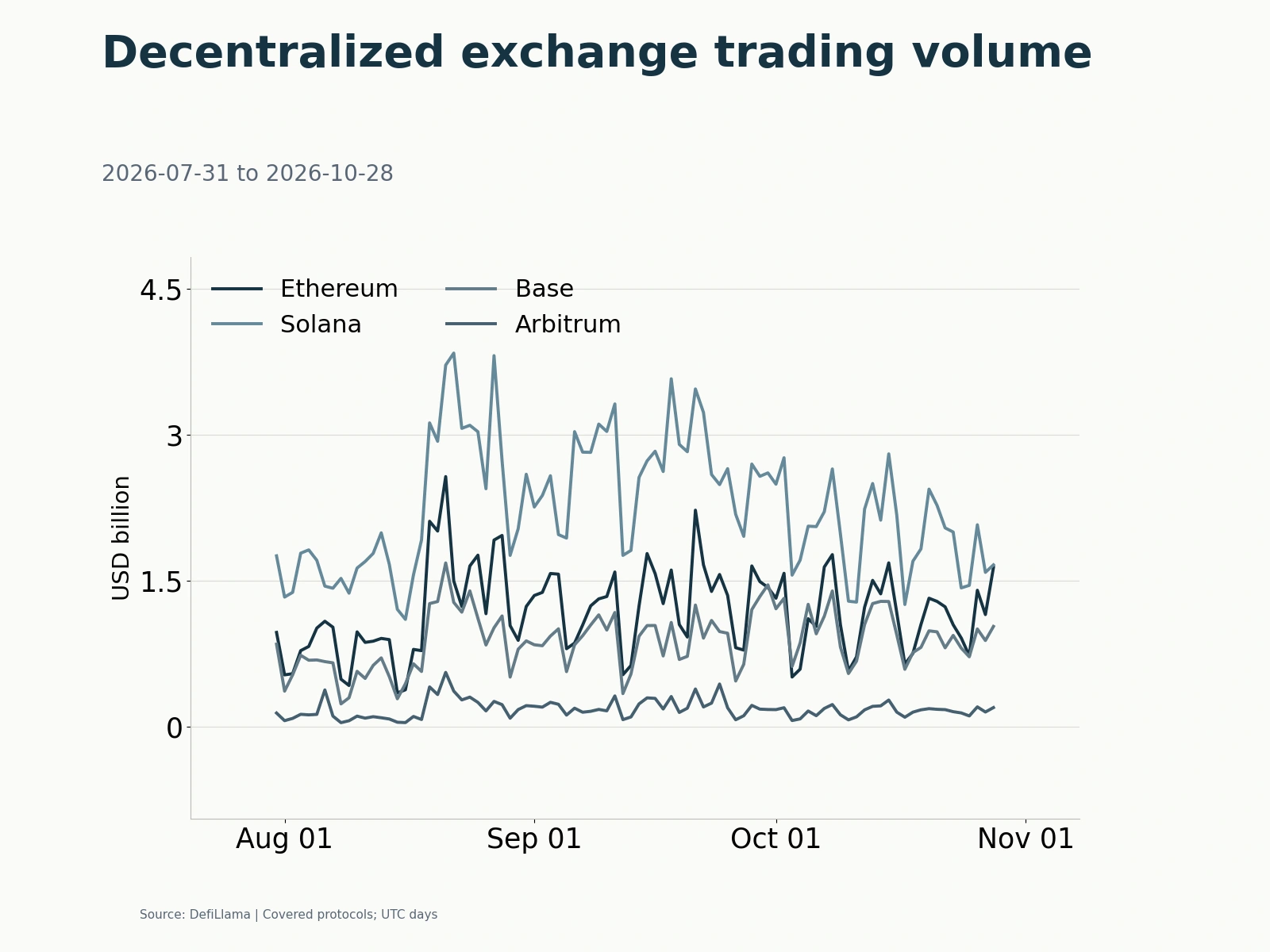
By the morning of October 17, Beijing time, crypto funding conditions remained in consolidation after position reductions. On October 15, the latest U.S. equity trading day with complete reports, spot Bitcoin ETFs barely returned to small net inflows, while spot Ethereum ETFs continued to face redemptions. Dollar stablecoin supply had contracted over the week, and Binance Bitcoin derivatives positions had stabilized after earlier declines. Derivatives deleveraging pressure was easing, but spot markets had yet to attract sustained new money. Improvement still consisted mainly of reduced selling pressure.
A $5.1 million daily Bitcoin ETF inflow cannot reverse monthly weakness; stablecoins shrink $1.377 billion in a week

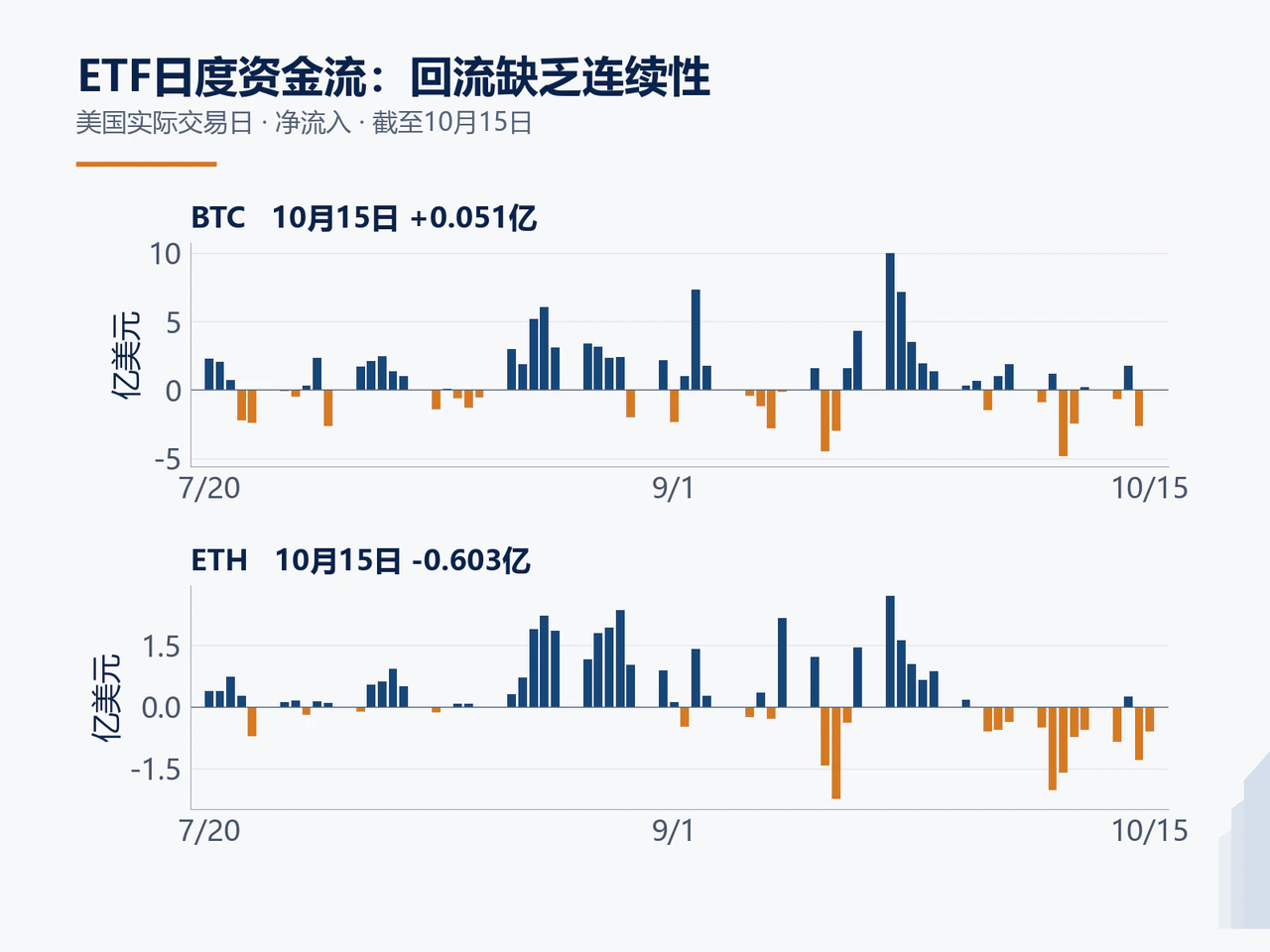
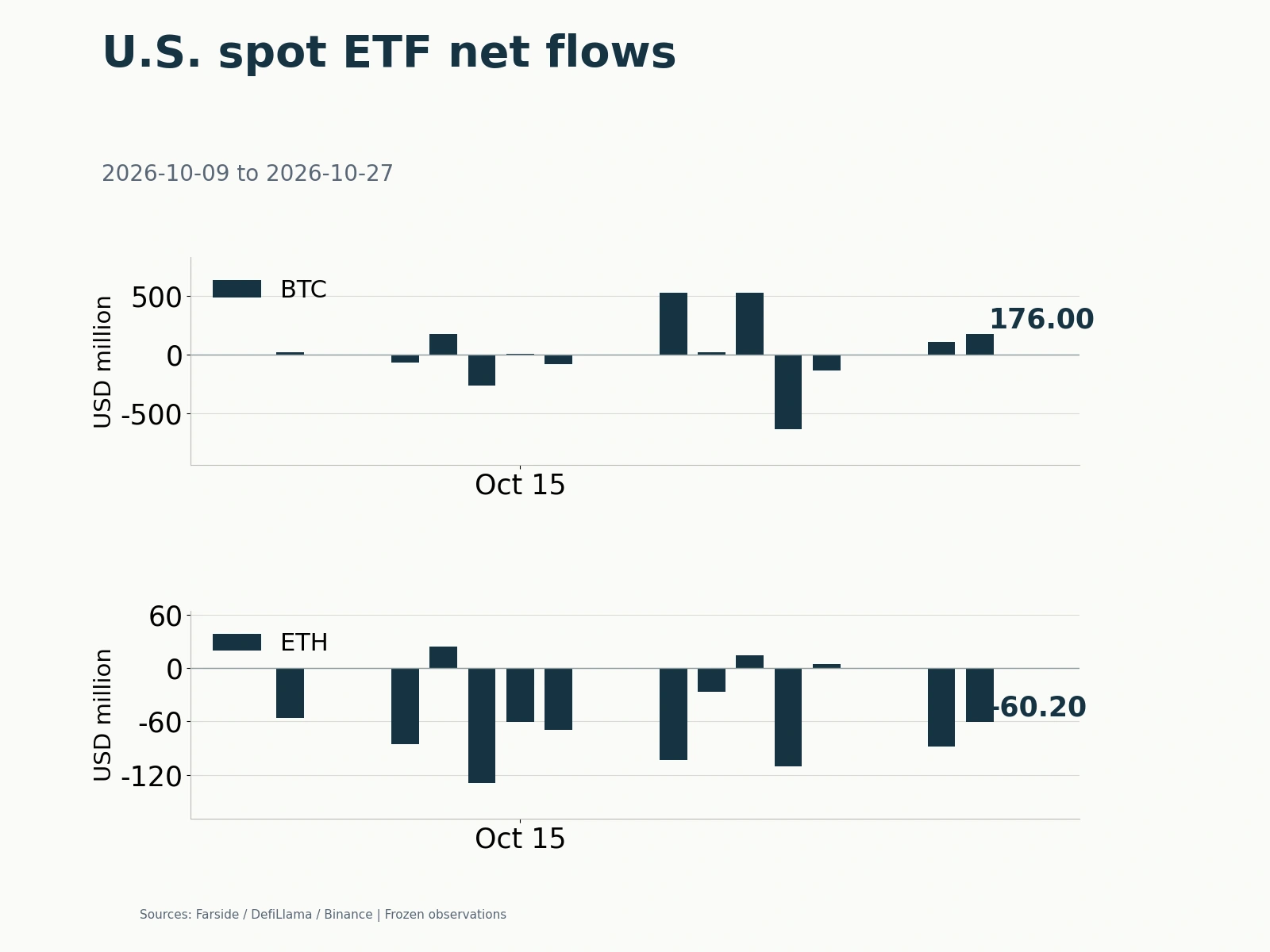
Farside data showed U.S. spot Bitcoin ETFs received net inflows of $5.1 million on October 15, U.S. Eastern time. BlackRock's IBIT took in $16.8 million, offsetting outflows of $4.1 million from Invesco's BTCO and $7.6 million from Grayscale's BTC. New demand was highly concentrated in one product, leaving the industry only slightly above subscription-redemption balance. Over a longer period, the $175.7 million inflow on October 13 was swallowed by $261.4 million of outflows on October 14. The four trading days from October 12 to 15 recorded combined net outflows of $146 million; October's cumulative outflow through the 15th reached $532.3 million. Occasional positive days had not reversed the allocation outflow trend. Slower daily redemptions merely reduce marginal spot selling; sustained net subscriptions are needed for stable buying support.
Outflows from spot Ethereum ETFs were more pronounced. On October 15 they lost a net $60.3 million: BlackRock's ETHA lost $44.4 million and Grayscale's ETHE $18.3 million, while only Fidelity's FETH recorded an inflow, of $2.4 million. Cumulative outflows were $250.4 million over October 12–15 and $885.4 million for October through the 15th. Both major assets faced institutional allocation withdrawals, but Ethereum ETFs suffered greater absolute outflows from a smaller asset base, leaving their funding recovery well behind Bitcoin's.
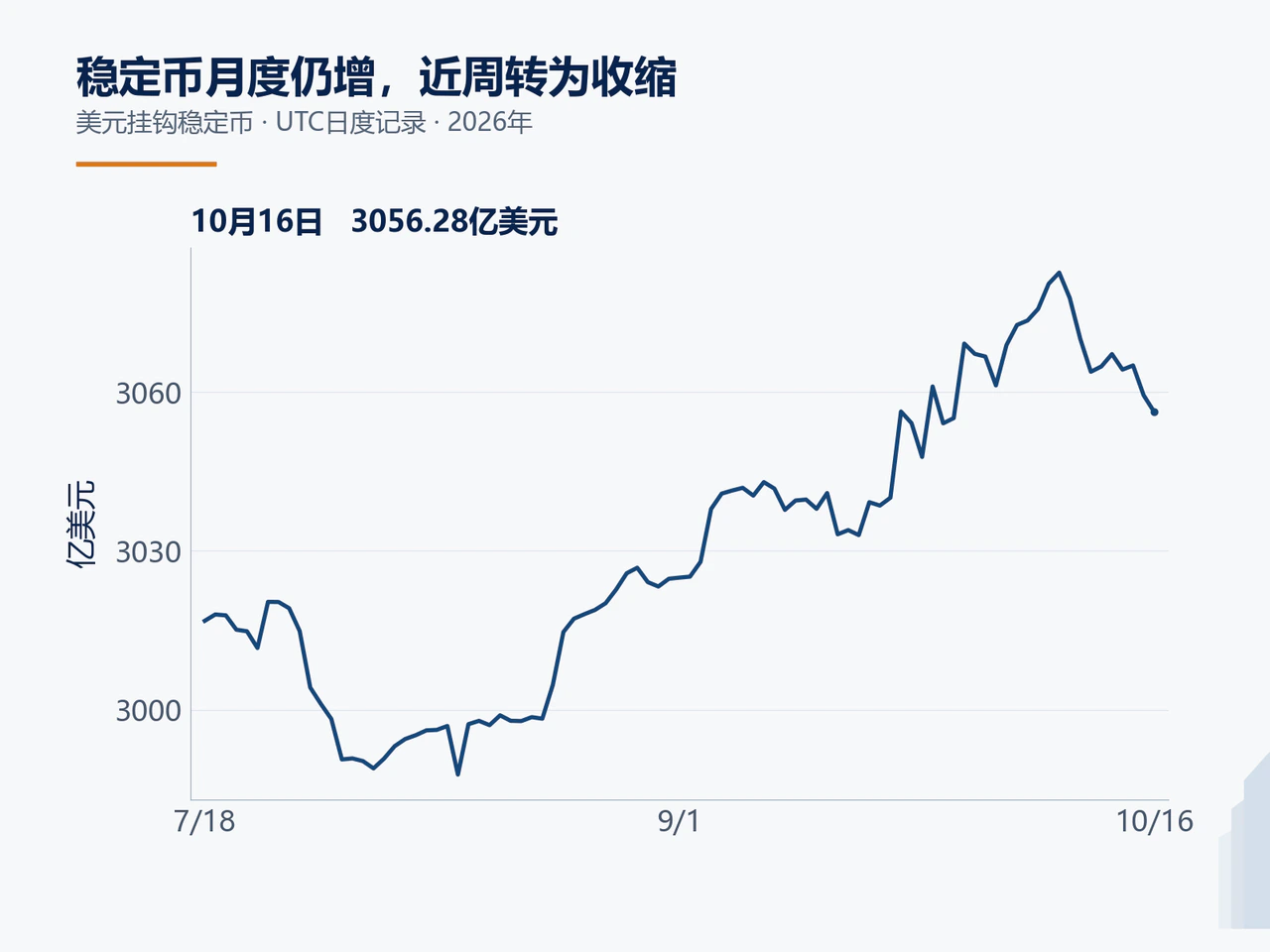
Crypto-market dollar liquidity also tightened at the margin. DefiLlama daily records through October 16 showed dollar-pegged stablecoin circulating supply of approximately $305.628 billion. This was $2.314 billion above September 16 and $3.949 billion above July 18, but $1.377 billion below October 9, a decline of approximately 0.45%. Short-term liquidity accumulated during three months of modest expansion was being returned. Spot ETF flows reflect allocation demand from traditional securities accounts, while stablecoin supply represents the crypto-native pool for trading settlement and collateral. With both channels weakening, spot demand depended more on existing market capital taking risk again, with limited impetus from outside inflows.
Binance BTC open interest stabilizes after falling more than 12% over 30 days; perpetual funding stays positive

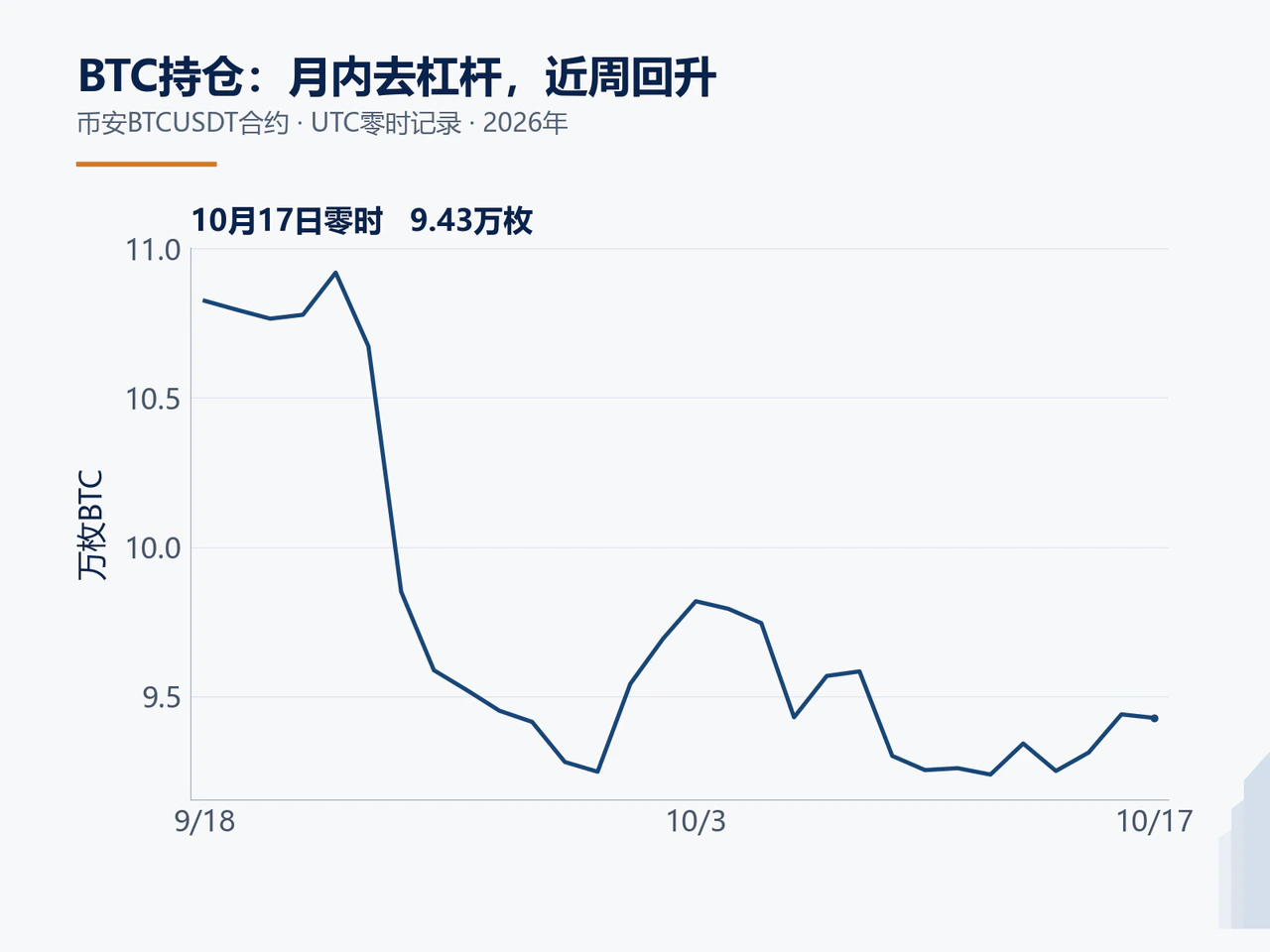
Binance BTCUSDT daily derivatives records showed open interest equivalent to approximately 94,300 Bitcoin at the October 16 UTC close, down just 0.13% from the previous day. Price changes reduced its notional value from 7.759 billion USDT to approximately 7.691 billion USDT. Across the past 30 daily observations, positions had fallen a cumulative 12.90% from approximately 108,200 Bitcoin on September 18, a clear deleveraging path. Open interest had nevertheless recovered and flattened over the latest week, suggesting a transition after the sharp reduction to a contest between closures and new positions.
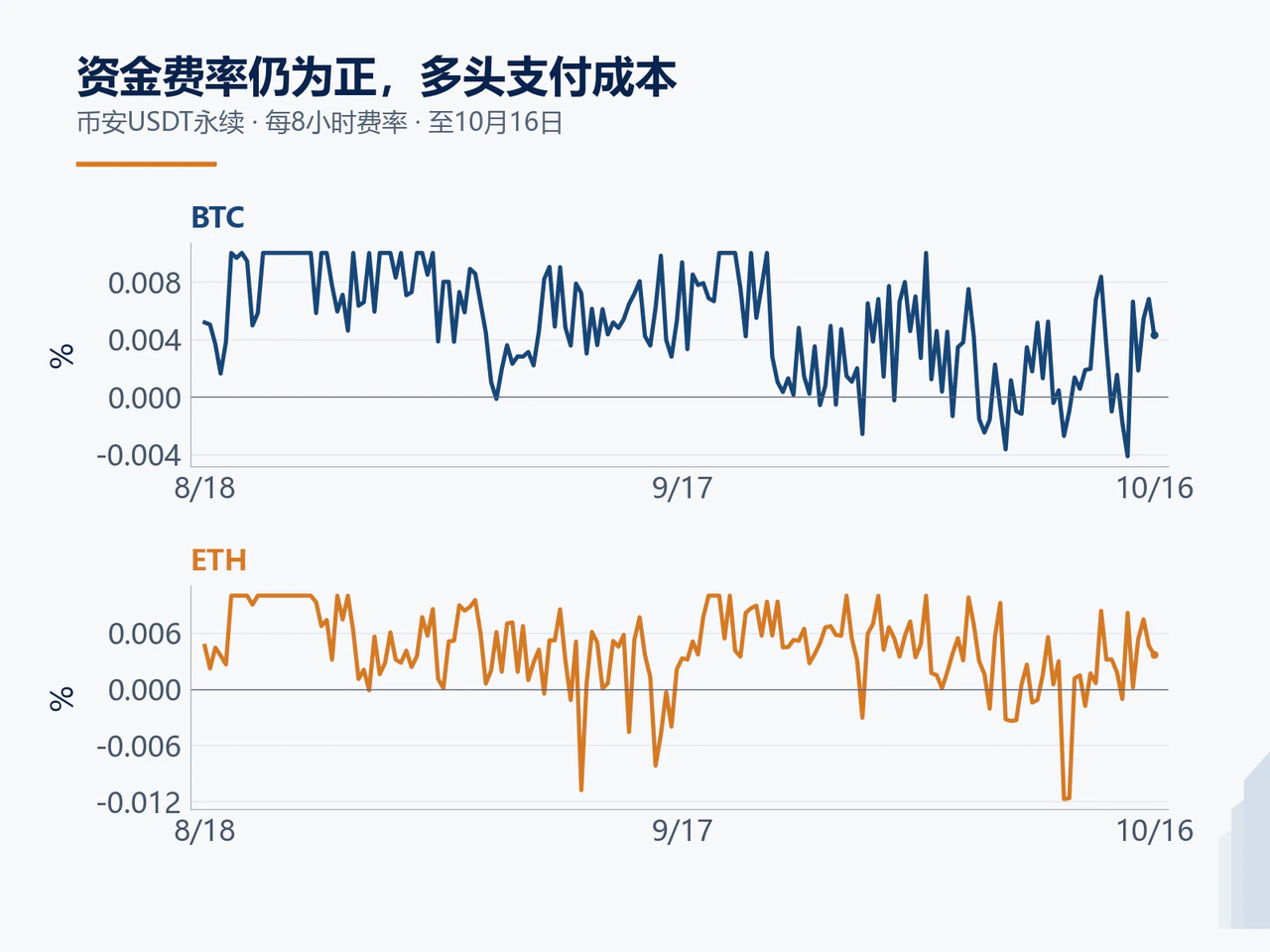
All three Binance perpetual funding settlements, each eight hours apart, remained positive on October 16 UTC. BTCUSDT rates were 0.005429%, 0.006803% and 0.004313%; ETHUSDT rates were 0.007466%, 0.004648% and 0.003670%. Absolute levels were low, but the earlier price correction had not driven funding at this venue persistently negative. Longs continued paying shorts to hold positions, indicating that leveraged capital's long bias had not fully reversed.
The options term structure combined near-term defense with longer-term bullishness. In its October 15 analysis, Bitfinex said puts dominated Bitcoin open interest expiring October 16, while calls were larger for the October 30 expiry. Options positions also include sellers and portfolio hedges. The structure therefore primarily suggested that derivatives traders were protecting against short-term drawdowns while retaining exposure to event-driven moves near month-end; it could not readily be translated into spot buying.
Earlier position reductions had reduced the risk of cascading liquidations, but the market remained in post-deleveraging consolidation. Bitcoin ETF redemption pressure eased temporarily, Ethereum allocation outflows continued, derivatives positions stopped falling and stablecoin supply contracted slightly. A shift from defense to meaningful allocation increases still required sustained spot ETF inflows and renewed stablecoin expansion.
Click Read Original for more details.