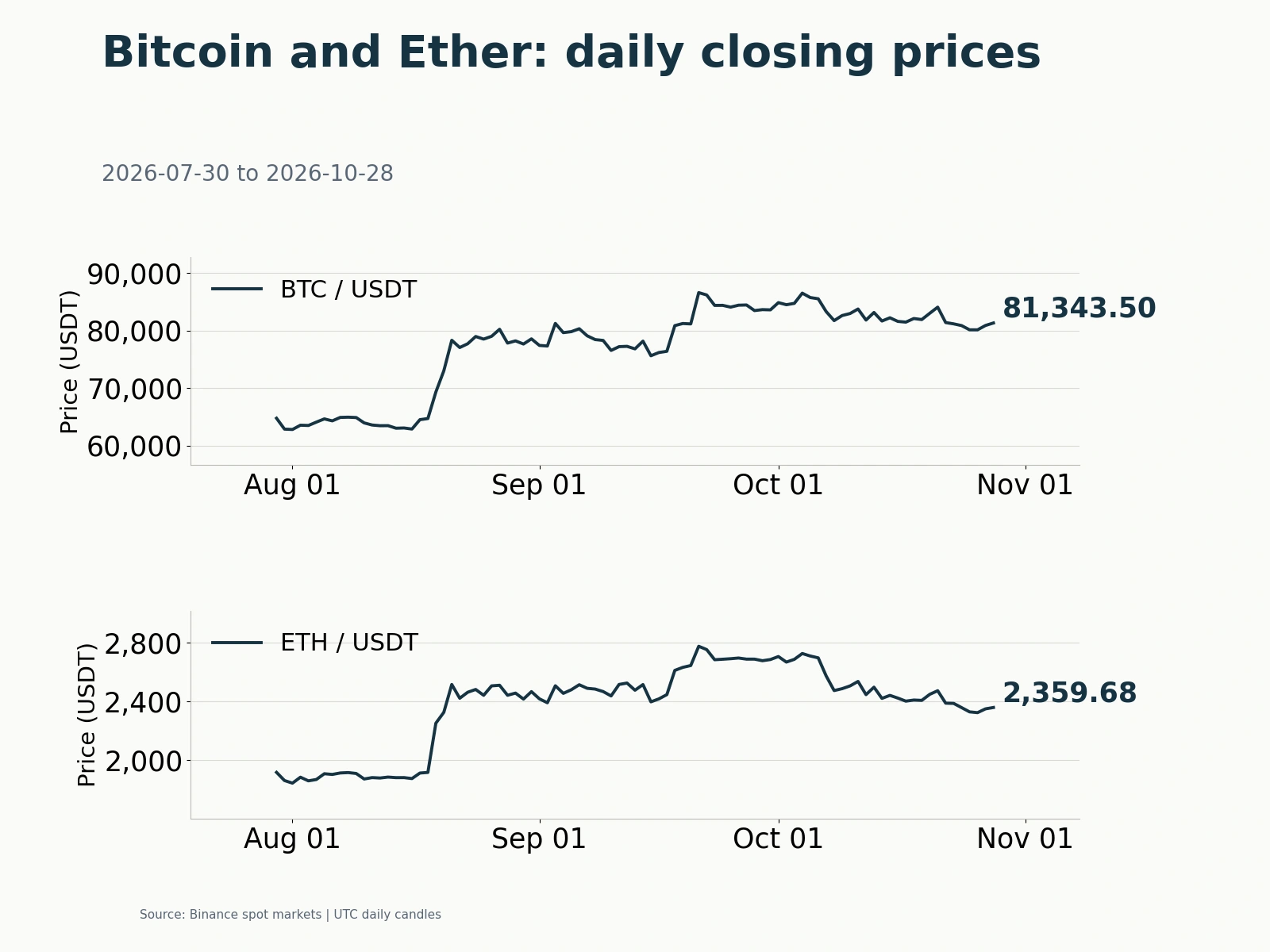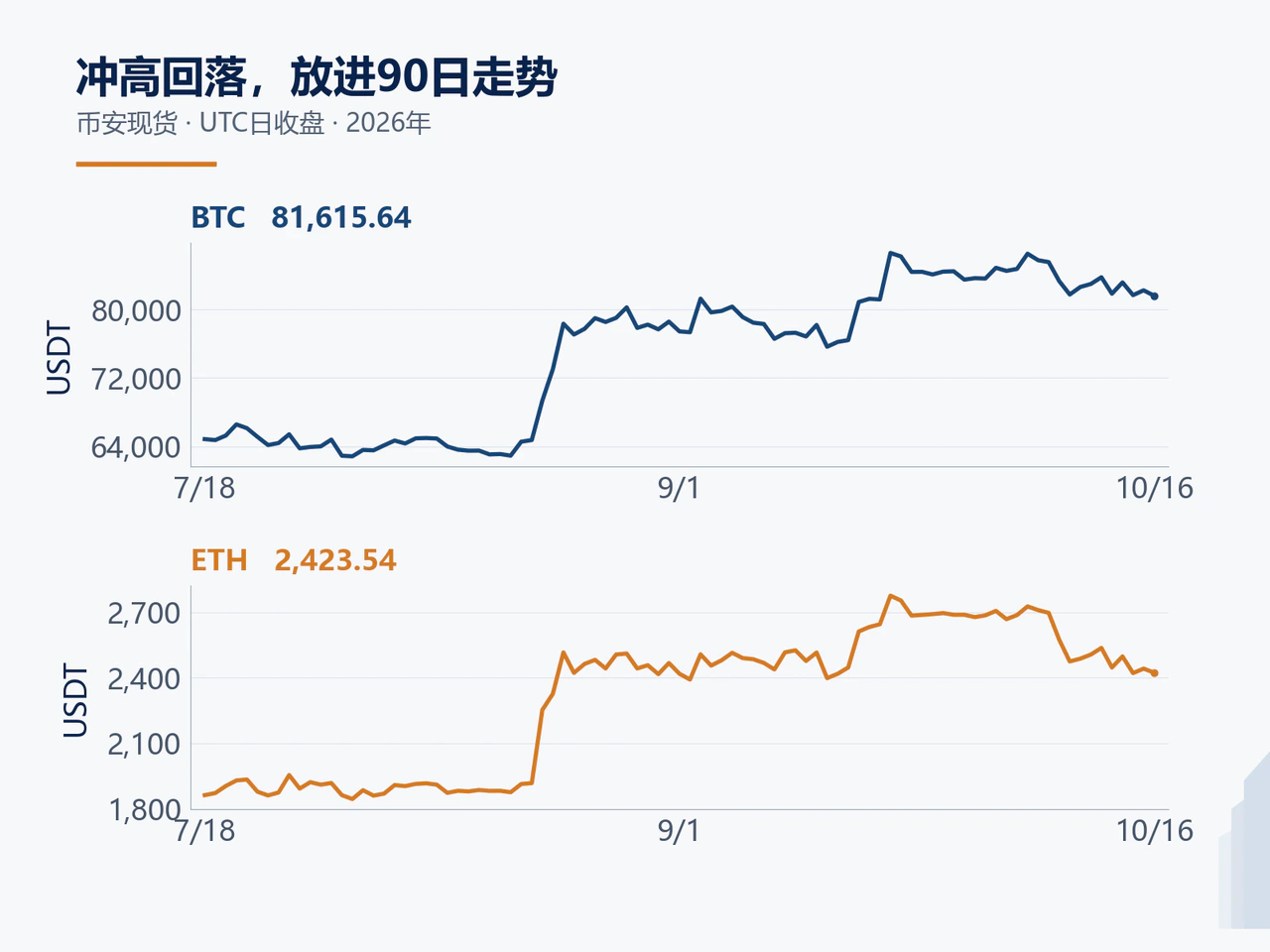
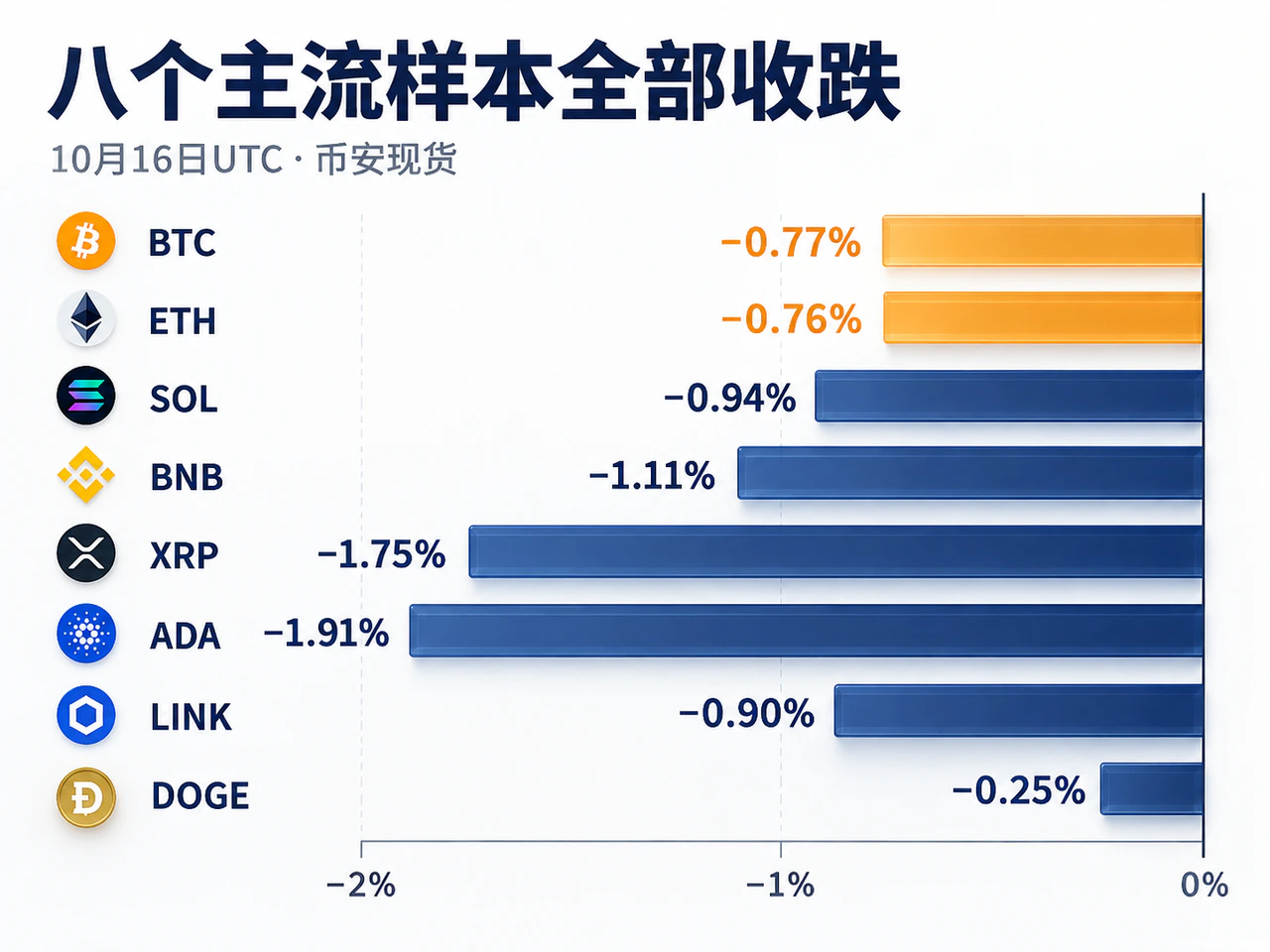
On October 16, Bitcoin and Ethereum gave up earlier gains. A morning recovery as markets digested inflation shocks reversed during U.S. stock trading as technology shares fell and oil rose. Binance spot UTC daily candles, closing at 08:00 on October 17 Beijing time, showed Bitcoin at 81,615.64 USDT, down 0.77% from the previous close, and Ethereum at 2,423.54 USDT, down 0.76%. Their daily losses were similar, but their paths over the past month diverged markedly, with capital still favoring Bitcoin.
The market faces both near-term cross-asset pressure and a medium-term test of follow-on buying. Intraday, crypto and U.S. equities are jointly constrained by rising energy prices and interest rates. Over a longer horizon, the equity-financing environment for listed token-holding companies is changing, potentially affecting incremental buying capacity. Bitcoin has held recent lows and moving-average support, but broader stabilization still requires stronger turnover and wider buying participation.
U.S. equities and oil interrupt morning recovery; major coins fall on lighter volume
Major crypto assets initially extended their recovery during the morning. Yahoo Finance's U.S. morning report said Bitcoin and Ethereum continued rebounding after two stronger inflation reports this week. Bitcoin reached 82,940.81 USDT intraday and Ethereum touched 2,494 USDT. Once U.S. stock trading began, however, selling pressure from equities and energy markets regained control.
CoinDesk's successive reports said U.S. technology losses widened during the morning, pulling Bitcoin lower. Oil rose further in the afternoon and Treasury yields climbed from their intraday lows. The Nasdaq closed down 2.15%, while the VIX jumped about 22%. Higher oil reinforced expectations of sticky inflation, and rising rates increased the opportunity cost of holding risk assets. Together they interrupted the morning rebound. Bitcoin at times attempted to stabilize as equity losses widened and did not fully track them, but still reached an intraday low of 80,809.25 USDT; Ethereum also retreated toward 2,400 USDT.
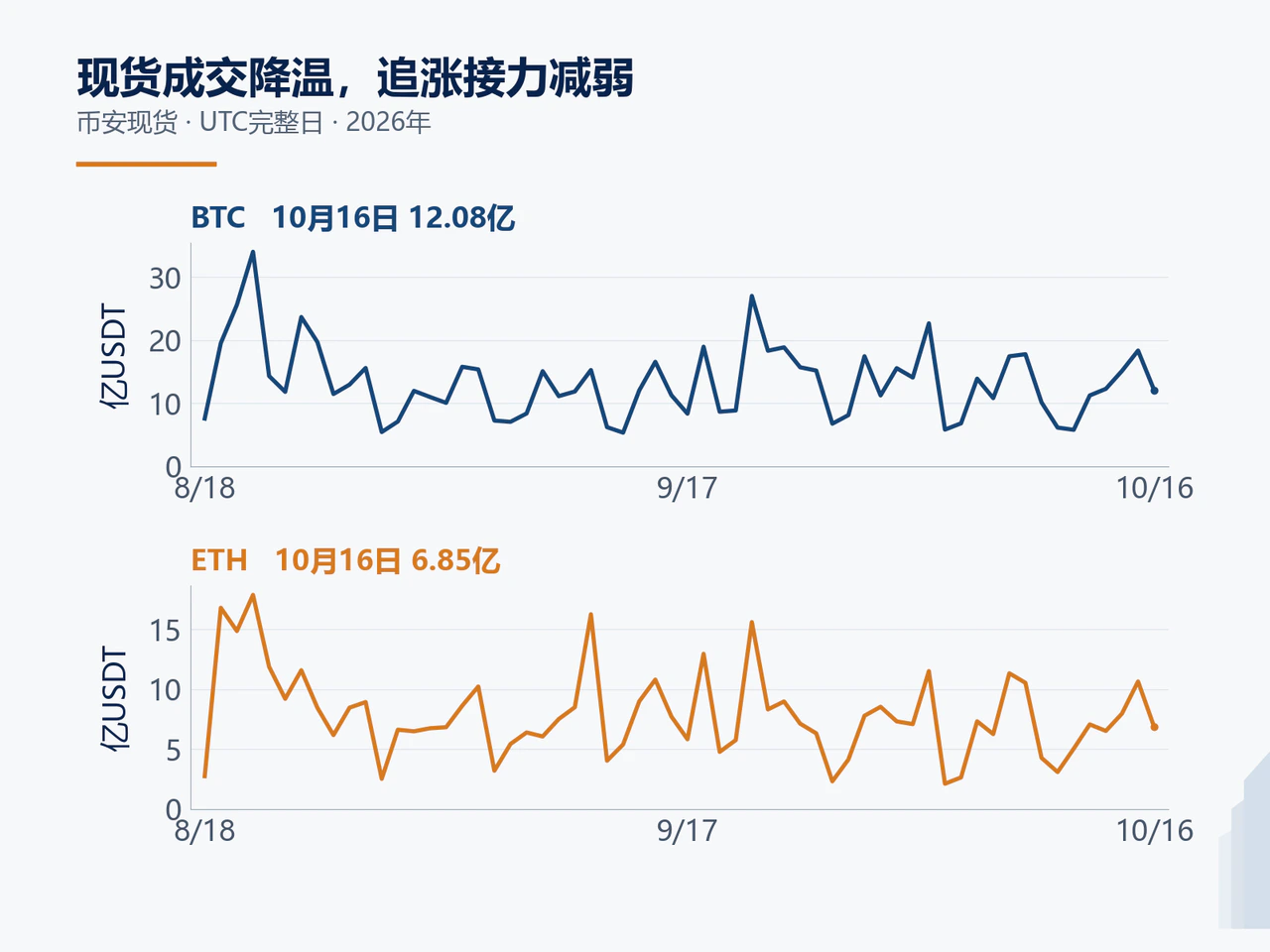
Volume and breadth also showed limited willingness to chase gains. Binance BTC/USDT spot turnover was 1.208 billion USDT, down 34.20% from the previous trading day; ETH/USDT turnover was 685 million USDT, down 35.64%. The lighter-volume decline indicates both a cooling of the previous day's intense turnover and the failure of intraday rallies to attract fresh funds, limiting upside momentum. All eight highly liquid spot samples closed lower. Alongside Bitcoin and Ethereum, SOL fell 0.94%, BNB 1.11%, XRP 1.75%, ADA 1.91%, LINK 0.90% and DOGE 0.25%. Apart from isolated theme-driven intraday moves, core assets generally lacked active position-building demand.
Technically, some support remained below daily prices. Bitcoin's low was above the previous day's 79,800 USDT, and its close was slightly above the roughly 81,285 USDT average of the preceding 50 complete trading days. CoinDesk's morning analysis identified the 50-day moving average as a key support watched by the market. The closing-price cushion above that average was thin, however; holding it will help determine whether the recent consolidation is absorbing earlier gains or developing into a deeper correction.
ETH/BTC falls over 6% in a month; concentrated flows and MSCI rules test follow-on buying
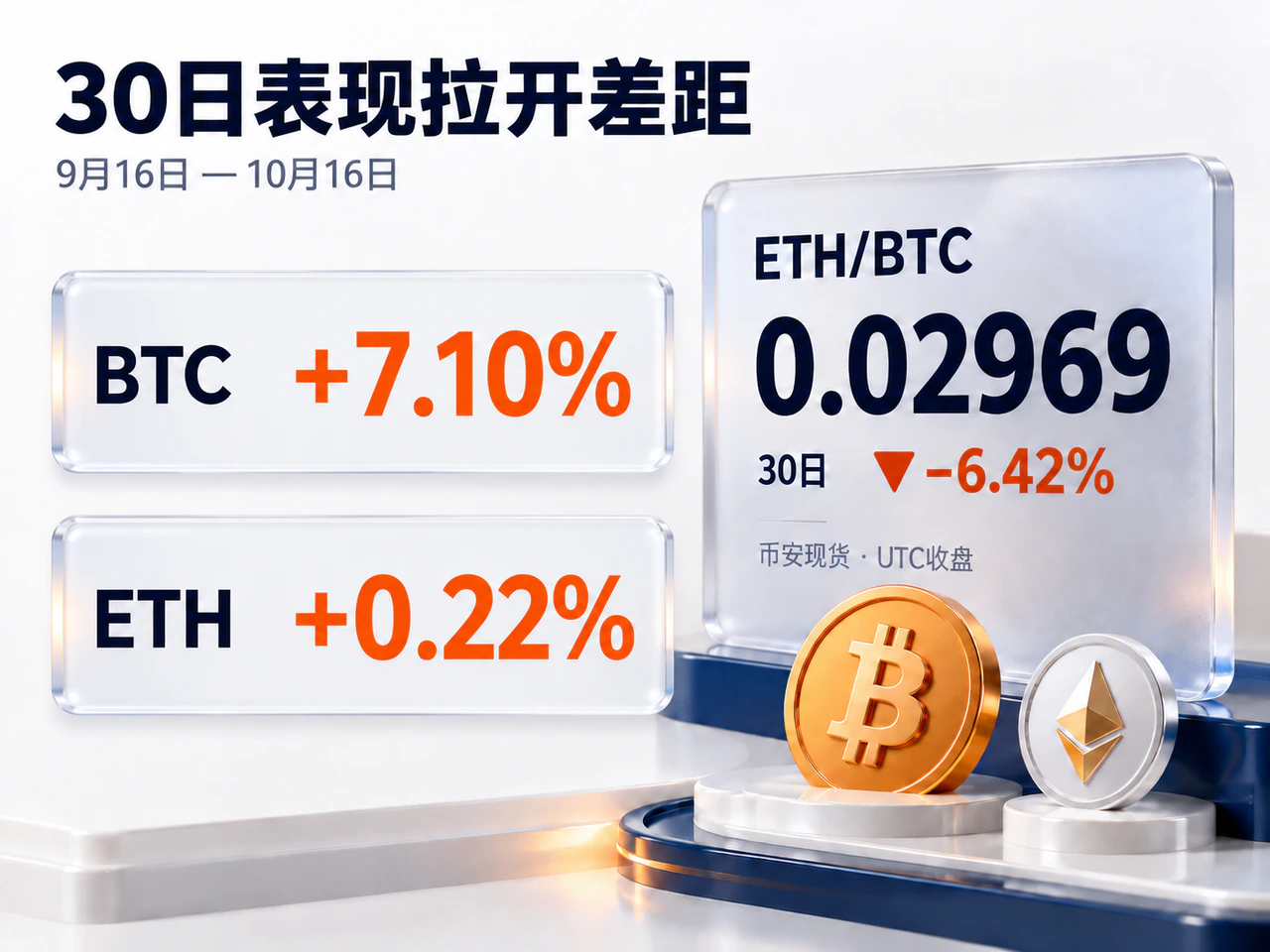
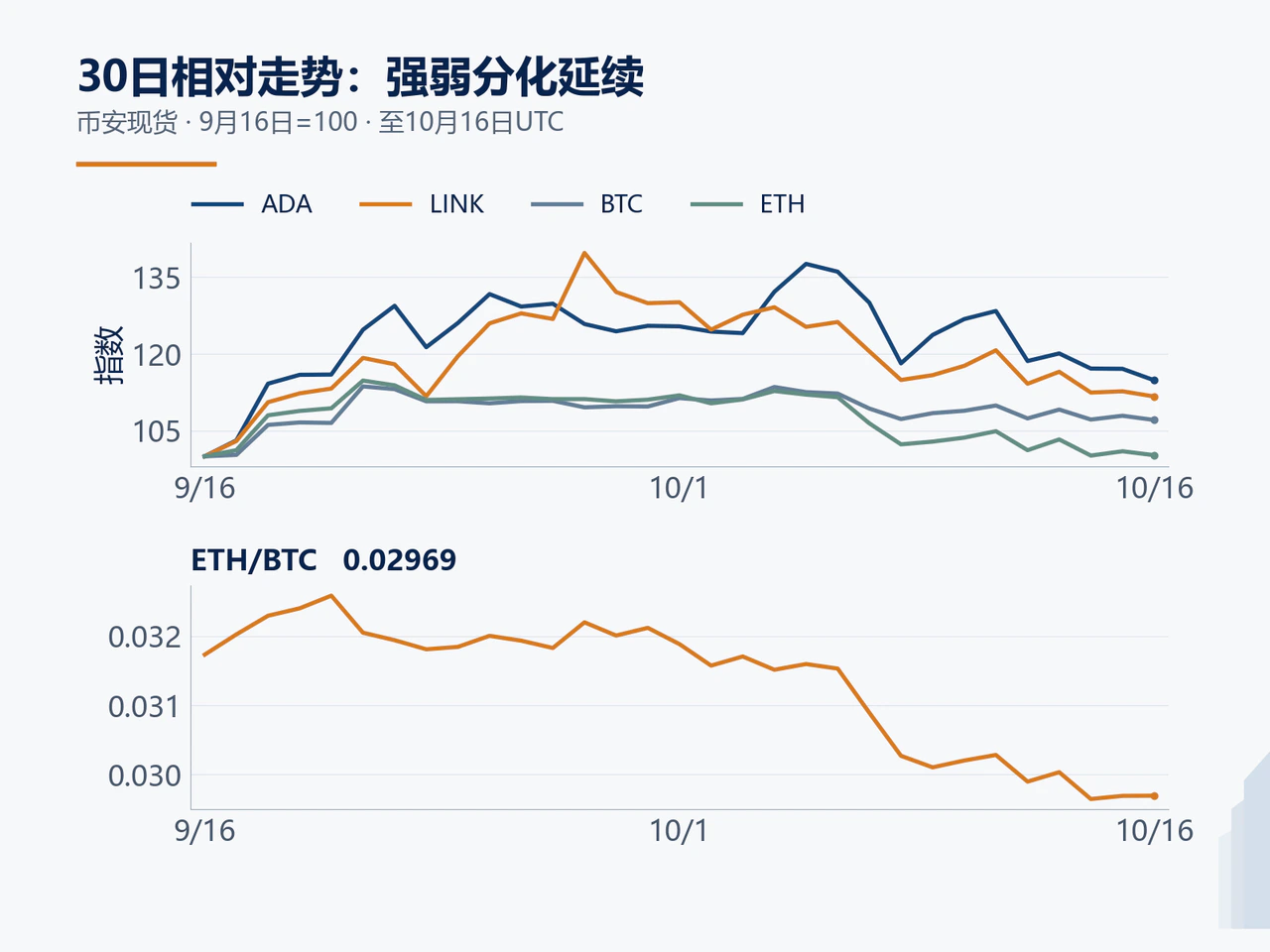
Over 30 days, September 16–October 16, leadership diverged more clearly. Bitcoin gained 7.10%, while Ethereum rose just 0.22%. The ETH/BTC closing ratio fell to 0.02969, down 6.42% from 30 days earlier; the shared October 16 decline did not alter that trend. SOL rose 5.87% over the same 30 days, LINK 11.69% and ADA 14.86%, showing that performance did not simply follow market-cap rankings. A preference for safety among core assets coexisted with pockets of higher-beta gains.
This divergence is closely tied to the nature of market capital. Coinbase's monthly research published October 2 said September trading volume expanded much faster than open interest, with altcoins' share of contract positions also rising. Earlier activity was thus driven more by derivatives trading and had not broadly become durable spot allocation. Persistent ETH/BTC weakness over the past month confirms that trading enthusiasm for volatile assets did not improve relative allocation demand for Ethereum. Whether rebounds persist depends on whether high-frequency activity converts into sustained spot buying.
Another influence on medium-term demand is the financing environment of listed token-holding companies. On the evening of October 15, MSCI announced changes to index eligibility rules for non-operating companies, with the final list due November 11 and implementation after the November 30 close. On October 16, investors debated potential removal risks for companies including Strategy and Metaplanet. Passive-fund rebalancing following exclusion concerns their shares and does not directly mean those companies sell Bitcoin. Lower passive demand can, however, depress share prices and valuations and tighten their ability to refinance through equity or debt to buy coins. Higher financing hurdles directly limit future purchases for companies dependent on capital markets to expand. Even with existing holdings unchanged, expectations of future incremental institutional demand face reassessment.
Sentiment remains divided over whether cooling activity offers a buying opportunity. Analyst Willy Woo recently advanced a contrarian bullish view based on declining search interest; October 16 reports also noted search traffic shifting toward traders. Weak search interest can inform sentiment but does not necessarily become actual invested capital. A move from support at lower levels to a substantive recovery still depends on three tests: Bitcoin holding its 50-day average, spot volume expanding again during rallies, and Ethereum and other major coins reversing their relative weakness.
Click Read Original for full details.