As of the morning of October 17 Beijing time, military and shipping risks around Iran were rising together. Tehran's military directly tied reopening the Strait of Hormuz to the United States leaving the Middle East, while daily oil flows through the strait fell again from late-September levels. In Yemen and the Red Sea theater, Aden airport and the government palace were hit in successive attacks, while Saudi air defenses continued intercepting missiles and drones.
Military ties reopening Hormuz to U.S. withdrawal; oil flows fall to 12.6 million barrels a day

On October 16, Iranian military spokesman Mohammad Akraminia said Hormuz would reopen if the United States left the Middle East, with regional countries jointly establishing security arrangements; otherwise, Iran would force the United States to leave. The same day, President Masoud Pezeshkian reiterated in meetings with the Armenian and Georgian prime ministers that Iran did not seek nuclear weapons and remained ready for dialogue, but would not submit to external coercion; he also criticized U.S. sanctions. The presidential statements on dialogue included no ceasefire or navigation plan, while the military's linkage of passage to U.S. withdrawal and a regional security architecture raised the threshold for restoring normal traffic.
Maritime friction was also extending east of Hormuz. On October 16, Iran's navy reported finding a burning tanker in a self-declared “restricted zone” in the Gulf of Oman, alleging that it had switched off its tracking system and attempted to pass without coordination.
Persistent harassment of shipping had produced a cumulative impact on energy transport. Based on UK Maritime Trade Operations (UKMTO) notices, the BBC counted 12 vessels reporting attacks from October 5–11, up from 10 the previous week, with six on October 11 alone. The report also cited Kpler data showing oil flows through Hormuz at about 12.6 million barrels a day on October 13, below roughly 15 million in late September and the prewar baseline of about 17 million. Escorts and routes along the Omani coast had previously helped traffic recover, but more frequent attacks and spreading risks were again obstructing the repair.
Aden airport and government compound hit in succession; Saudi Arabia intercepts multiple missiles and drones
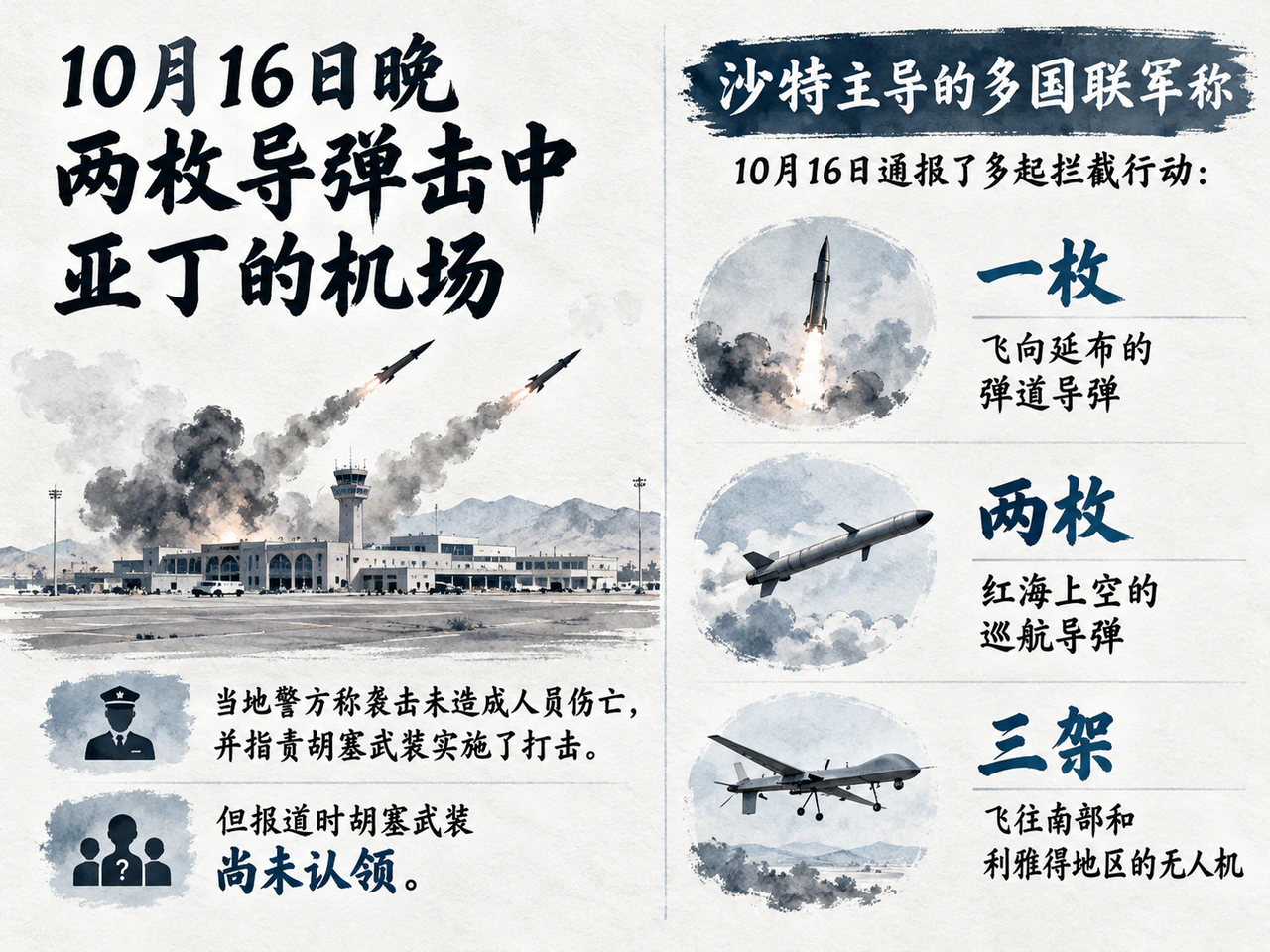
Political and transport hubs in southern Yemen were struck on consecutive days. The Associated Press reported that two missiles hit the airport in the port city of Aden on the evening of October 16 local time. Local police said there were no casualties and blamed the Houthis, who had not claimed responsibility at the time of reporting. A security official and an air-traffic controller said military units supporting Yemen's internationally recognized government were stationed in the area hit.
Further details of casualties from the previous day's October 15 attack around Aden's government palace emerged on October 16. Yemeni government officials said at least five people, including guards and staff, were killed and more than ten injured. The Houthis claimed that attack, saying they targeted a military operations headquarters connected to Saudi forces.
Cross-border attacks and interceptions around Saudi Arabia were also frequent. On October 16, the Saudi-led coalition reported intercepting a ballistic missile headed toward Yanbu, two cruise missiles over the Red Sea and three drones flying toward southern Saudi Arabia and the Riyadh region. Responding to Saudi allegations, Iran's Foreign Ministry denied involvement in Houthi attacks on Saudi Arabia that day and again offered to mediate.
Key developments
| Key developments |
|---|
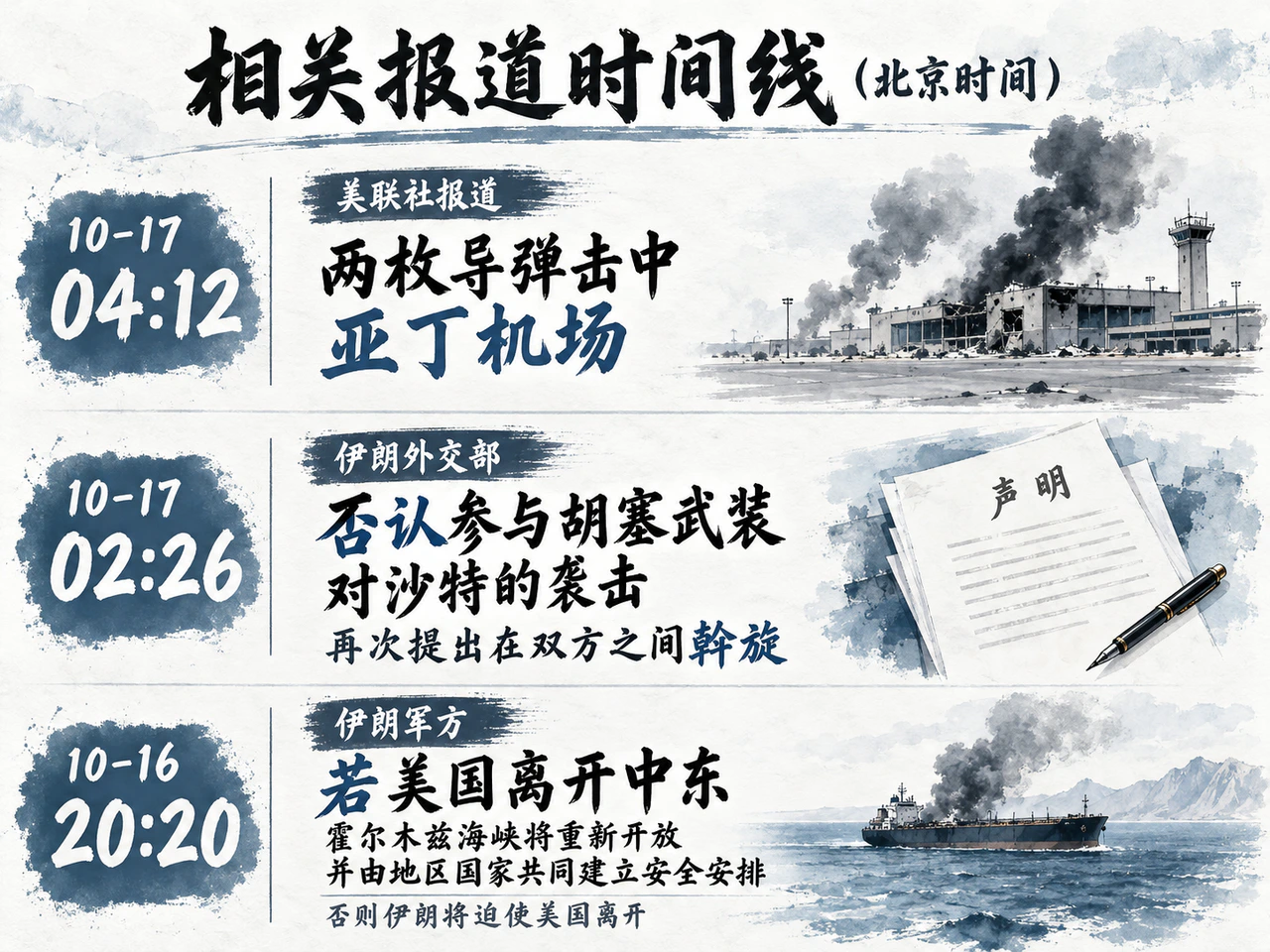
| 10-17 04:12 Beijing timeAP reported that two missiles hit Aden airport. Police said there were no casualties and blamed the Houthis, who had not claimed responsibility at that time. |
| 10-17 02:26 Beijing timeIran's Foreign Ministry denied involvement in Houthi attacks on Saudi Arabia and again offered to mediate between the sides. |
| 10-17 00:47 Beijing timeIn a meeting with Georgia's prime minister, President Pezeshkian said Iran did not seek nuclear weapons and was always ready for dialogue, but rejected external coercion. |
| 10-16 23:40 Beijing timeYemeni government officials said the previous day's attack around Aden's government palace killed at least five people and injured more than ten; the Houthis had claimed responsibility. |
| 10-16 22:50 Beijing timeThe Saudi-led coalition said it intercepted one ballistic missile headed toward Yanbu, two cruise missiles over the Red Sea and three drones in southern Saudi Arabia and the Riyadh region. |
| 10-16 20:20 Beijing timeIran's navy said it found a burning tanker in a Gulf of Oman “restricted zone,” alleging that it had switched off tracking and attempted uncoordinated passage. |
| 10-16 20:20 Beijing timeIran's military spokesman said Hormuz would reopen if the United States left the Middle East, with regional countries jointly establishing security arrangements. |
| 10-16 13:00 Beijing timeThe BBC counted 12 vessels reporting attacks during October 5–11, up from ten the previous week; Kpler data showed Hormuz oil flows down to about 12.6 million barrels/day on October 13. |


